Results by title
3388 books match the query 'Fiction' and 233 start with s

South Pole Station
Ashley Shelby
University of Minnesota Press, 2024
A New York TimesBook Review Editors’ Choice
A Shelf Awareness Best Book of the Year
Hudson Booksellers Book of the Year
One of the New York Post’s Best Books of the Summer
One of The Millions’s Most Anticipated Books of the Year
IndieNext Pick
A Time Magazine “What to Read Now” Selection
A wry novel set at the edge of the earth about the courage it takes to band together, even as everything around you falls apart
Unmoored by a recent family tragedy, Cooper Gosling is adrift at thirty and on the verge of ruining her career. So when the opportunity arises to join the National Science Foundation’s Artists & Writers Program in Antarctica, she jumps at the chance—and finds herself in the company of others who are just abnormal enough for Polar life, a group of eccentrics motivated by desires as ambiguous as her own. When they are joined by a fringe scientist who claims climate change is a hoax, the Polies’ already-imbalanced community is rattled, bringing them to the center of a global controversy and threatening the ancient ice chip they call home.
South by Southwest
24 Stories from Modern TexasEdited by Don Graham
University of Texas Press, 1986
These Texas stories are among the best produced by the state's writers in the mid-twentieth century. Selected above all for their artistic excellence and their narrative mastery, they also present a vital picture of the Southwest in microcosm, as revealed in its largest state.
Texas and Texas writing moved from a Southern orientation in the 1940s—reflected here in works by William Goyen, William Humphrey, and others—to the strong Southwestern flavor of stories by such authors as Larry McMurtry and A. C. Greene to, finally, urban or Sunbelt Texas, mirrored in the edgy, sometimes experimental prose of Doug Crowell, William Harrison, and Peter LaSalle.
Here are stories by such celebrated authors as Paul Horgan and William A. Owens, as well as startling, in some cases previously unpublished work by writers like Harryette Mullen, Naomi Shihab Nye, Pat Ellis Taylor, and Thomas Zigal. A few stories may already be favorites—Larry McMurtry's "There Will Be Peace in Korea," Amado Muro's "Cecilia Rosas." Many others have become classics, such as Vassar Miller's poignantly autobiographical "Pact," Hughes Rudd's hilarious record of grade school fieldtrips, R. E. Smith's gripping story of a Houstonian's life-changing encounter with nature, and Dave Hickey's astonishing account of an old cowboy's imprisonment . . . in a bathtub.
Bill Brett, James Crumley, Linda West Eckhardt, Robert Flynn, Mary Gray Hughes, Carolyn Osborn—all are represented here by stories guaranteed to banish stereotypes and boredom and to enlarge one's vision of the Lone Star State. Anyone who thinks that oil wells and big hair define Texas will find out differently in the dazzling short fiction presented in South by Southwest.
South of Luck
Jim Guhl
University of Wisconsin Press, 2021
Hoping there are enough miles between the Twin Cities and dusty Milltown, Milo sets about trying to make the most of life without running water and electricity while trying to better understand his own place in the world and what it all means. His tough-guy act softens as he blends into the community and befriends an endearing group of small-town folks. And that’s lucky for him, because to stay safe, he’s going to need all the help he can get.
Soutine’s Last Journey
Ralph Dutli
Seagull Books, 2019
August 6, 1943. Chaim Soutine, a Jewish painter from Belorussia and a contemporary of Chagall, Modigliani, and Picasso, is hidden in a hearse that’s traveling from a small town on the Loire towards Nazi-occupied Paris. Suffering from a stomach ulcer, he urgently needs a life-saving operation. But the hearse must avoid the occupiers’ checkpoints, and it becomes increasingly likely that he will not survive the journey.
In a stream of extraordinary images, the morphine-induced artist hallucinates and remembers his life. He dreams of his childhood in Smilovichi near Minsk; his beginnings as a painter in Vilna; his arrival in 1913 in the art capital of the world, Paris, where he befriends Modigliani; and his survival of years of struggle and finding sudden success, only to be persecuted and forced into hiding when the Nazis invade. Back in the present, the painter believes that the power of milk is the only possible remedy for his ulcer. In his mind, he is traveling to a “white paradise”—a strange clinic where a “god in white” declares him healed but forbids him to paint. But for Soutine, neither paradise nor salvation exists if he cannot paint. So, he begins to paint again in secret, willing to pay the price of discovery.
A brilliant biographical novel about childhood, longing, friendship, bodily pain, and the wounds of exile, Ralph Dutli’s Soutine’s Last Journey is ultimately an exploration of language and the power of art.
Special Delivery
Epistolary Modes in Modern FictionLinda S. Kauffman
University of Chicago Press, 1992
Kauffman first considers male writers whose works, testing the boundaries of genre and gender, imitate love letters: Viktor Shklovsky's Zoo, Vladimir Nabokov's Lolita, Roland Barthes's A Lover's Discourse, and Jacques Derrida's The Post Card. She then turns to three novels by women who are more preoccupied with politics than passion: Doris Lessing's The Golden Notebook, Alice Walker's The Color Purple, and Margaret Atwood's The Handmaid's Tale. By juxtaposing these "women's productions" with the men's "production of Woman," Special Delivery dismantles the polarities between male and female, theory and fiction, high and low culture, male critical theory, and feminist literary criticism. Kauffman demonstrates how all seven texts mercilessly expose the ideology of individualism and romantic love; each presents alternate paradigms of desire, wrested from Oedipus, grounded in history and politics, giving epistolarity a distinctively postmodern stamp.

Special Election
StoriesBrock Clarke
Acre Books, 2025
In Special Election, ingenious fictions target our all-too-familiar preoccupations and vulnerabilities—belonging, (dis)engagement, the struggle for self-worth, the difficulty of loving and being loved, the banality and absurdity of existence. Brock Clarke’s rapier wit, inexhaustible imagination, and brilliant leaps of illogic transform his characters’ desperation and distress into tragicomic delight. In the title story, Lawrence Welk is ousted from heaven to run for governor in present-day North Dakota. In “One Goes Where One Is Needed,” we follow the former Provisional Coalition Administrator of post-liberation Iraq, now a youth ski instructor at Okemo Mountain in Vermont. In “The Slim Jim,” the protagonist finds himself (literally and figuratively) very slowly choking to death on a frozen microwavable burrito.
“There is something wrong with me,” states the narrator of “The Big Book of Useless Saturdays.” This could be said of all the characters in Special Election, and through loopy misdirection and mordant observation, Clarke devotes himself to showing his characters and his readers exactly what is wrong. Yet the sharpness of his attention and lavish ludicrousness of his storylines belie a sneaking affection for this imperfect, disappointing world filled with imperfect, disappointing humans. Though Clarke has been compared to such greats as Barthelme, Bellow, and Saunders, the nine stories in Special Election vibrate at a frequency all his own, showcasing the strengths of one of our most gifted comic writers.
Speculative Fiction for Dreamers
A Latinx AnthologyEdited by Alex Hernandez, Matthew David Goodwin, and Sarah Rafael García with a Preface by Frederick Luis Aldama
The Ohio State University Press, 2021
Finalist, 2022 World Fantasy Awards
Finalist, 2022 Ignyte Awards
Finalist, 2022 Utopia Awards
In a tantalizing array of new works from some of the most exciting Latinx creators working in the speculative vein today, Speculative Fiction for Dreamers extends the project begun with a previous anthology, Latinx Rising (The Ohio State University Press, 2020), to showcase a new generation of writers. Spanning diverse forms, settings, perspectives, and styles, but unified by their drive to imagine new Latinx futures, these stories address the breadth of contemporary Latinx experiences and identities while exuberantly embracing the genre’s ability to entertain and surprise. With new work for new audiences in their teens and up, and especially for Latinx people navigating their identities in the ever-shifting, sometimes perilous, but always promising cultural landscape of the US, this book is for dreamers—and DREAMers—everywhere.
Contributors: Grisel Y. Acosta, Stephanie Adams-Santos, Frederick Luis Aldama, William Alexander, Nicholas Belardes, Louangie Bou-Montes, Lisa M. Bradley, Eliana Buenrostro, Diana Burbano, Pedro Cabiya, Steve Castro, Fernando de Peña, Scott Russell Duncan, Samy Figaredo, Tammy Melody Gomez, J. M. Guzman, Ernest Hogan, Pedro Iniguez, Ezzy G. Languzzi, Patrick Lugo, Roxanne Ocasio, Daniel Parada, Stephanie Nina Pitsirilos, Reyes Ramirez, Julia Rios, Sara Daniele Rivera, Roman Sanchez, Tabitha Sin, Alex Temblador, Rodrigo Vargas, Laura Villareal, Sabrina Vourvoulias, Karlo Yeager Rodriguez
Spider Love Song and Other Stories
Nancy Au
Acre Books, 2019
Au excels at inhabiting the minds and hearts of children and the elderly. In the title story, Sophie Chu dresses daily in her increasingly shabby elephant costume to ensure her missing parents recognize her upon their return. In “The Unfed,” a village elder seeks to revive, with her dimming magic, a mountain community struck by tragedy. “Louise” follows, with deceptive hilarity (involving a one-eyed duck), the nuanced give and take between May Zhou and Lai, dissimilar yet passionate partners considering parenthood. The volume also offers sparkling speculative work that taps into the strength of nature—fox spirits and fire beetles, swollen rivers and rippling clouds—to showcase the sometimes surreal transformations of Au’s protagonists.
Spider Love Song and Other Stories treads the fault line that forms between lovers, families, friends, cultures—exposing injuries and vulnerabilities, but also the strength and courage necessary to recast resentment and anger into wonder and power. Au’s lyrical style, humor, and tender attention to her characters’ fancies and failings make this powerful debut a delight to read.
Spider Woman Stories
G. M. Mullett
University of Arizona Press, 1979
"This is a fine introduction to Hopi mythology and values. It recreates an authentic poetic spirit and makes the reader eager to read more Hopi tales." —New Mexico Humanities Review
Spiral of Silence
A NovelElvira Sánchez-Blake; Translated from the Spanish by Lorena Terando; Foreword by Debra A. Castillo
Northwestern University Press, 2019
A multigenerational epic, Spiral of Silence (Espiral de Silencios) opens in the early 1980s, as peace and amnesty agreements spark optimism and hope. We meet Norma, a privileged, upper-class woman who is married to an army general; Maria Teresa (Mariate), a young rebel who loves a guerrilla fighter and navigates commitments to motherhood and revolutionary activism; and Amparo, a woman who comes of age later, and carries the confusion and dislocation of a younger generation. Each contends with the consequences of war and violence on her life; each is empowered through community-building and working for change.
Few authors have considered the role of women in Colombia during this wartime period, and Sánchez-Blake's nuanced exploration of gender and sexism—framed by conflict and social upheaval—distinguishes the novel. Drawing on stories from women who have worked within organizations in Colombia to end state violence, Spiral of Silence celebrates resistance, reinvention, and how women create and protect their families and communities.
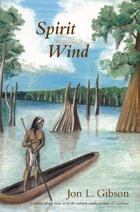
Spirit Wind
Jon L. Gibson
University of Alabama Press, 2009
A coming-of-age story set in the isolated, murky swamps of Louisiana.
When the mighty wind blows through the swamps of southern Louisiana, it changes not only the land, but the inhabitants as well. Just such a wind brought a lone infant into the care of the Chitimacha Indians deep in the Atchafalaya swamp. Raised by the tribal holy man, Storm Rider grows to adolescence as a respected tribal member, steeped in the wisdom and traditions of his adopted people. Their clan competitions, life-cycle rituals, social interactions, and subsistence labors are well explained in this historical novel.
When captured by an enemy raiding party, Storm Rider and his nemesis, the village bully, forge a bond that delivers them from danger and charts their futures. Love, hate, friendship, and loyalty ride the dark bayou waters and converge at the sacred Rain Tree. Swamps, hurricanes, cannibals, and unforgettable characters are interwoven as tightly as one of old Cane Basket's watertight baskets in this anthropologically accurate story of American Indian cultures in conflict.
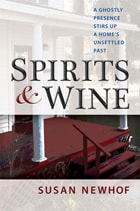
Spirits and Wine
Susan Newhof
University of Michigan Press, 2011
"A graceful, elegantly told ghost story that is at times frightening, at times heartwarming, often quite funny, and always an engrossing and fascinating read."
---Rodney Vaccaro, Emmy Award–winning Hollywood screenwriter and producer
"I started Friday night and got up Saturday morning with a desire to get back to it to finish. In my experience, if I wake up and the first thing on my mind is getting back to a book, it's a good book."
---Bryan Uecker, co-owner of The Book Nook & Java Shop, Montague, Michigan
"A spellbinding mystery of timeless love, loss, and a house that held all the answers. I couldn't put it down."
---Judith Evans Thomas, coauthor of the Born to Shop travel books
"Living in a 100-year old Michigan farmhouse myself, I was totally pulled into the real possibilities Newhof's characters found themselves in. Ghosts and real life haunts made for a compelling read."
---Robbyn Smith van Frankenhuyzen, author of the series Hazel Ridge Farm Stories
"Spirits and Wine is a can't-put-down novel that feels less like fiction and more like sharing a glass of wine with your best friends who go on to disclose the deeply disturbing, deadly things occurring in the lovely old house they planned to restore. Susan Newhof writes truthfully and with beautiful care, evoking the icy appeal of a small lakeshore town in Michigan while revealing the wretched secrets that cling to one dwelling. After reading this harrowing tale in one sitting, I am dying to ask the author---did these menacing events really happen . . . to you?"
---Jerrilyn Farmer, author of the best-selling Madeline Bean Mysteries
"If only the walls could talk---and they do in Susan Newhof's thrilling Spirits and Wine. Readers, be prepared for an absorbing adventure into John and Anna's journey to solve a century-old mystery wrapped within the walls of their newly purchased 'dream home.' Told creatively in tandem, the couple's story of life in pursuit of truth will leave you wondering just where the fact ends and the fiction begins. Keep the lights on and enjoy!"
---Beckey Burgoyne, author of Perfectly Amanda: Gunsmoke's "Miss Kitty"---To Dodge and Beyond
It's a mystery and a ghost story, all wrapped up in one.
A newly married couple buys an old house in a small lakeshore town in West Michigan and finds it haunted by the dramatic secrets of its past inhabitants. As the couple settles in, disturbing events prompt them to investigate who those residents were, what happened to them, and why one spirit remains active. Could the Spanish influenza epidemic in the region, which resulted in the deaths of an unprecedented number of young, healthy adults in Michigan and elsewhere in 1918---19, and the resulting slew of orphans, have something to do with the spirit now haunting their house?
They are determined to discover the truth about their house, even if it jeopardizes their own safety.

Sport
A NovelMick Cochrane
University of Minnesota Press, 2003
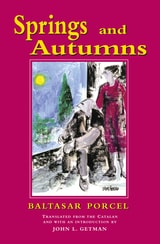
Springs and Autumns
Baltasar Porcel
University of Arkansas Press, 2000
Springs and Autumns is a compelling novel that chronicles, through the voices of several family members, the intriguing history of an extended Majorcan family. The novel is set in Orlandis (a fictional version of Porcel’s hometown) on the island of Majorca. Even though the novel rises from this specific, exotic island setting, Springs and Autumns ultimately appeals to universal human emotions.
John German has captured the rhythm and poetic nature of Porcel’s prose in his translation of Springs and Autumns. Working from Porcel’s original Catalan and Spanish versions of the text, Getman manages to remain faithful to the feel and tone of Porcel’s narrative while at the same time creating an exceptionally lucid English version.
Although the entire novel takes place as the family gathers at Taltavull Hall for a Christmas Eve dinner, the reader is conveyed to places as far away as South America and Asia, learning along the way about murder, love, rape, incest, travel, discovery, regret, and forgiveness. Porcel accomplishes this through a narrative strategy that pieces together a complex mosaic of the family’s history, with each new narrative layer adding insight to the previous narratives, ultimately creating a complex and engaging novel.
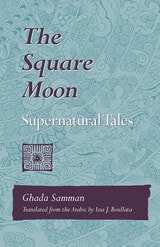
Square Moon
Supernatural TalesGhadah Samman
University of Arkansas Press, 1999
Marking collisions of culture and character, these ten short stories arise at the frontiers where Arabic tradition melds with both the modern European world and a Gothic strata of the supernatural. The resultant mix sparks tensions between the sexes, between identities, and between experimental forms of storytelling and strict narrative.
In Samman’s fiction, matchmakers still come to call but lovers go bungee jumping. A schizophrenic has a discussion with one of his personalities about murder and relationships with women. Avoiding ghosts both real and imagined, a war exile confronts class structure; the art of Paris; and the trials of being a woman, an Arab, and a writer in a country and culture not her own. The spirit of a strangled lover tells the story of his murder and of the web of love, beauty, lust, and loathing that brought about his demise.
First published in Beirut in 1994 and now ably rendered into English, Samman’s The Square Moon mixes the ghoulish with the everyday, the playful and witty with the terrifying, intermingling surprise endings, uncommon turns of plot, and the strange but realistic details of the characters’ lives.

St. Austin Review, Truth in Fiction
The Art of the Novel, Vol. 10 No. 3Joseph Pearce and Robert Asch
St. Augustine's Press, 2010
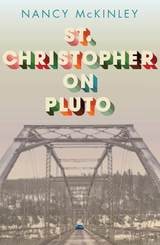
St. Christopher on Pluto
Nancy McKinley
West Virginia University Press, 2020
*2021 Colorado Book Awards Finalist, Literary Fiction*
MK and Colleen get reacquainted while working at different stores in a bankrupt mall. Way back, the women went to Catholic school together and collaborated on racy letters to a soldier in Vietnam who thought they were much older than seventh graders—a ruse that typifies later shenanigans, usually brought on by red-headed Colleen, a self-proclaimed “Celtic warrior.”
After ditching Colleen’s car to collect the insurance, they drive from one unexpected event to the next in Big Blue, MK’s Buick clunker with a St. Christopher statue glued to the dash. The glow-in-the-dark icon guides them past the farm debris, mine ruins, and fracking waste of the northern brow of Appalachia. Yet their world is not a dystopia. Rather, MK and Colleen show why, amid all the desperation, there is still a community of hope, filled with people looking out for their neighbors and with survivors who offer joy, laughter, and good will.
St. Elmo
Or, Saved at LastAugusta Jane Evans
University of Alabama Press, 1992
The nineteenth-century Southern novel that transformed romance, virtue, and redemption into literary legend.
St. Elmo was the most famed and beloved novel by Augusta Jane Evans, a June 2015 inductee into the Alabama Writers Hall of Fame. First published in 1866, Evans’s rich tale of the relationship between the dashing and worldly St. Elmo and Edna Earl, an exemplar of virtuous Southern womanhood, sold over a million copies in four months and became one of the nineteenth century’s most influential novels.
This edition includes an introduction by Evans scholar Diane Roberts about the enduring relevance and legacy of St. Elmo as a work of literature as well as a reflection of gender roles and the seismic societal changes taking place in the United States in the aftermath of the Civil War.

Star Lake Saloon and Housekeeping Cottages
A NovelSara Rath
University of Wisconsin Press, 2006
When Hannah unexpectedly inherits her uncle's rundown resort, she must head to the northwoods to close up and sell the business. But the only interested buyer is Ingold, an international mining company, and Hannah finds herself reluctantly operating the resort while trapped in the midst of a treacherous dispute between Ingold and Uncle Hal's activist friends.
From safeguarding the wilderness to pursuing elusive new love interests, Hannah has plenty to engage her imagination at Star Lake. A new aspect of her personality emerges, one that is surprisingly courageous and compassionate. Throughout this humorous, elegantly plotted adventure with its appealing characters and lyrical depictions of nature, Hannah encounters the inevitability of change—in herself and in the nostalgic landscape of the deep North.
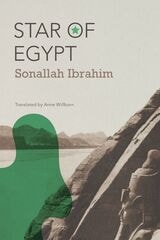
Star of August
Sonallah Ibrahim
Seagull Books, 2026
In the summer of 1965, a journalist newly released from prison finds himself stranded at the sprawling site of the Aswan High Dam, the flagship project of Gamal Abdel Nasser’s modern Egypt. Amid oppressive heat, unreliable transport, a mysterious epidemic, and the oppressive gaze of state surveillance, he confronts a dramatic transformation underway: villages erased, communities displaced, and a rich past disappearing beneath the waters of a new lake. As the journalist journeys south along the Nile, his observations illuminate a key moment in Cold War politics and a society wrestling with the promises and perils of progress.
Originally published in Arabic in 1974, Star of August is a masterwork by Sonallah Ibrahim—a writer who lived through these upheavals firsthand—and a timeless exploration of ideology, power, and the price of change.
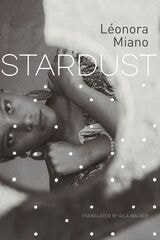
Stardust
Léonora Miano
Seagull Books, 2026
At just twenty-three, Louise finds herself stranded in a Paris shelter with her baby, Bliss, in her arms while battling homelessness, racism, and the struggles that come with being a female immigrant trying to keep her dignity alive. Yet amid the chaos, Louise encounters a fragile network of mothers and survivors from the Maghreb and sub-Saharan Africa, each carrying their own story of violence, addiction, and resilience.
Based on a pivotal moment in author Léonora Miano’s own life, Stardust is a luminous story of the quiet power of choosing life. The novel was first composed over twenty years ago and remained unpublished for years. Now, Miano invites readers into her world, shedding light on the invisible corners of French society and offering a moving meditation on motherhood, dignity, and renewal.
Starship Tahiti
PoemsBrandon Dean Lamson
University of Massachusetts Press, 2013
The poems in Brandon Dean Lamson's first volume, Starship Tahiti, explore imprisoned bodies and the tension between captivity and imagination. Beginning on Rikers Island, the book traces a creation myth in reverse, moving from prison to the spacious arches of Grand Central Station to the shores of the Chesapeake Bay.
Lamson examines themes of violence, gender, and identity in various real and imagined settings where inmates read Antigone, Howlin' Wolf sings in a black barbershop, and Metallica records burn on a Viking altar. Throughout these shifts, the poems construct fractured narratives that subvert linear storytelling. The layering of voice and imagery in this collection transgresses boundaries between the secular and the sacred, and between the communal and the personal. As the speaker of “Portland Bardo” says, “The fragile, in between state of larvae hatching / is no less desirable than full bloom in a city of roses, if such a city can ever be found.”
Starvation Shore
Laura Waterman
University of Wisconsin Press, 2019
Drawing upon historic records, diaries, and letters of the men who inhabited the makeshift shelter they called Camp Clay, Laura Waterman reimagines the true story of polar explorers fighting for their lives and their sanity under dehumanizing conditions. This gripping, tragic tale of hunger, fear, and hope is told through the eyes of men at their worst—and most desperate—moments.

State Fair
Phil Stong
University of Iowa Press, 1996
First published in the spring of 1932, Phil Strong's whimsical and wise State Fair was an immediate success. Hollywood released a film that fall starring Will Rogers as Abel Frake and a champion hog from an Iowa farm as the famous Blue Boy, “the finest Hampshire stud boar in the world.” In 1945 Rodgers and Hammerstein's musical motion picture launched such memorable songs as “It Might as Well Be Spring.” In 1962 a movie musical with Pat Boone and Ann-Margret was set at the Texas State Fair. And in 1995 a highly entertaining adaptation of the 1945 musical premiered at the Iowa State Fair before moving on to Broadway. This paperback edition of State Fair, with a new foreword by Robert McCown, reprints the original novel in all it exuberance and freshness. On the surface State Fair simply recounts the adventures of the close-knit Frake family at the Iowa State Fair in the late 1920s, but Strong's universal morality tale has much to reveal to anyone willing to read between the lines. The book shocked some readers in 1932, but most were captivated by the Frakes' good-natured integrity and applauded their spirit. Readers today will find the same joy, liveliness, and insight in this new edition ofState Fair.
Staying On
A NovelPaul Scott
University of Chicago Press, 1977
"Staying On far transcends the events of its central action. . . . [The work] should help win for Scott . . . the reputation he deserves—as one of the best novelists to emerge from Britain's silver age."—Robert Towers, Newsweek
"Scott's vision is both precise and painterly. Like an engraver cross-hatching in the illusion of fullness, he selects nuances that will make his characters take on depth and poignancy."—Jean G. Zorn, New York Times Book Review
"A graceful comic coda to the earlier song of India. . . . No one writing knows or can evoke an Anglo-Indian setting better than Scott."—Paul Gray, Time
"Staying On provides a sort of postscript to [Scott's] deservedly acclaimed The Raj Quartet. . . . He has, as it were, summoned up the Raj's ghost in Staying On. . . . It is the story of the living death, in retirement, and the final end of a walk-on character from the quartet. . . . Scott has completed the task of covering in the form of a fictional narrative the events leading up to India's partition and the achievement of independence in 1947. It is, on any showing, a creditable achievement."—Malcolm Muggeridge, New York Times Book Review
Steady Diet of Nothing
Cynthia Cruz
Four Way Books, 0
Beyond their den’s walls, the market reigns, and the societal structure of infinite calculation and infinite exchange has rendered contemporary life meaningless. As Toby and Candy separately descend into drug addiction and prostitution, they find their efforts to defy the American economic superstructure futile, and Candy, again, is alone. “I’m going to die in here, I say, to no one.” The transcription of a mute prayer, Steady Diet of Nothing is a stark, vital work that requires our attention. “I’m awake or else I’m dreaming,” Candy narrates. “There’s a knock on the door. The phone rings forever but I can’t put the receiver down.” It keeps the line open as long as it can.

Stella Manhattan
Silviano Santiago
Duke University Press, 1994
After being forced from his native country by an unforgiving father who embodies the authoritarian temper of the Brazilian dictatorship and is embarrassed by his son’s homosexuality and transvestism, Stella Manhattan, alter ego of Eduardo da Costa e Silva, lands a job in the Brazilian consulate with the help of his father’s friend, Colonel Valdevinos Vianna. Eduardo is also recruited by Vianna to help him bring his own alter ego, the sadomasochist Black Widow, out of the closet. Transformed by black leather, the Black Widow cruises the streets and bars of New York in search of American flesh. Surrounding the relationship between these two men is a group of Brazilian guerrillas who attempt to press Eduardo into their service in order to entrap the colonel. The guerrillas are at the center of a network of revolutionaries, from the Cubans to the Black Panthers and the Young Lords. Virtually apolitical, Eduardo/Stella is drawn by desire into the conflict between the Brazilian government and its communist opposition.
Eduardo also gets caught in the designs of other memorable characters of various sexual and political persuasions: the reactionary professor Aníbal, confined to a wheelchair, who enjoys watching his wife Leila make love with men she picks up on the street; and Paco, alias La Cucaracha, a flamboyant queen, a rabid anti-Castro Cuban exile, and the most sympathetic of this gallery of outcasts.
Working through two complex themes—politics and sex—Santiago sets the action in New York to emphasize the interaction of the seemingly contradictory impulses of liberation and Americanization that Brazil underwent in the late 1960s. As in Manuel Puig’s Kiss of the Spider Woman, political and sexual liberation cut two ways—neither one necessarily compatible with the other. Exploring the complexities of repression that affect all forms of identity, Santiago mingles tragedy and farce as international intrigues are played out in New York’s Latino and black neighborhoods, and the genteel world of international diplomacy is thrust into the milieu of urban gay street life.
Stendhal
Fiction and the Themes of FreedomVictor Brombert
University of Chicago Press, 2017
For Brombert, Stendhal’s work is deeply personal; elsewhere, he has written about the myriad connections between Stendhal’s ironic inquiries into identity and his own boyhood in France on the brink of World War II. Proceeding via careful and nuanced readings of passages from Stendhal’s fiction and autobiography, Brombert pays particular attention to style, tone, and meaning. Paradoxically, Stendhal’s heroes often feel most free when in prison, and in a statement of stunning relevance for our contemporary world, Brombert contends that Stendhal is far clearer than any writer before him on the “crisis and contradictions of modern humanism that . . . render political freedom illusory.” Featuring a new introduction in which Brombert explores his earliest encounters with Stendhal—the beginnings of his “affair” during a year spent as a Fulbright scholar in Rome—Stendhal remains a spirited, elegant, and resonant account.
Stigmata of Bliss
Three NovellasKlaus Merz
Seagull Books, 2017
Jacob Asleep introduces a family marked by illness, eccentricity, and a child’s death. In A Man’s Fate, a moment of inattention on a mountainous hike upends a teacher’s life and his understanding of mortality. And finally, The Argentine traces the fluctuations of memory and desire in a man’s journey around the world. In each novella, Merz takes readers on a profound and intimate journey. Read as a whole, the works complement, enrich, and echo each other.
Still Life with Plums
Short StoriesMarie Manilla
West Virginia University Press, 2010
Still True
Maggie Ginsberg
University of Wisconsin Press, 2022
When ten-year-old Charlie Taylor arrives at Jack’s workshop shortly thereafter, he’s not the first kid in town to need help with a flat tire, and Jack gladly makes the repair to his bike. The Taylors are new to Anthem, and Jack soon discovers that Charlie and his mom, Claire, are struggling to fit in, even as Charlie’s dad, Dan, is thriving in his new job. Extending friendship and kindness, as well as introductions around the local café, Jack assumes a grandfatherly role. What he doesn’t see is the drinking that Claire hides from everyone, or the secret son that Lib has allowed to move into her house and the growing attraction between Claire and Matt. When the terrible events of a fateful evening threaten everyone’s carefully crafted lives, Jack, Lib, and their new friends must each determine the value of truth for the ones they love.
Still Waters in Niger
Kathleen Hill
Northwestern University Press, 2001
A New York Times Notable Book for 1999
Best Fiction of 1999, the Los Angeles Times Book Review
Starred review, Publishers Weekly
Finalist for 1998 Dublin IMPAC Literary Award
The narrator of this book is an Irish-American woman who returns to the West African country of Niger where she had lived seventeen years earlier as the wife of an academic and the mother of three young daughters. Now she is visiting her eldest daughter, Zara, who has herself returned to Africa during a season of devastating drought and is working in a village clinic that cares for women and children suffering from starvation.
Still Waters in Niger is a beautifully observed account of a return to a place at once exotic and familiar, as well as a tale of inner discovery. As the narrator reacquaints herself with her daughter and with the Africa of her past, she meets other mothers and their children. With her own memories of young motherhood strong, she becomes aware of the strikingly similar ways in which the impassioned and often difficult bonds between mothers and daughters are revealed across the divide of cultures. Hill paints a compelling portrait of a community of women grounded in kinship and care for their children, a society characterized not only by pain and exhaustion but by humor, delicacy, and strength. Filled with vivid, elegant descriptions and meditations on hunger, poverty, the desert, women, memory, and the love between mothers and daughters, Still Waters in Niger is the haunting story of a woman looking simultaneously backward and forward.
Stitch
Richard Stern
Northwestern University Press, 2004

Stone Baby
StoriesMichelle Sacks
Northwestern University Press, 2017
Working on a large canvas that encompasses the extremes of rural Africa and urban London, material poverty and the surfeit of privilege, Sacks writes stories peopled by characters whose lives occasionally crisscross, with a protagonist in one story playing a deceptively small role in another. The stories artfully illuminate the rich interconnections and clashes that occur as her characters strike out boldly, yet find themselves at the mercy of capricious waves of circumstance.
Stone Baby explores movement, loss, and reinvention in the lives of people who are in the wrong place, in the wrong body, perhaps in the wrong life—it encapsulates an engrossing and urgent message in our age of migration and dislocation.
Stories No One Hopes Are about Them
A. J. Bermudez
University of Iowa Press, 2022
At once playfully dark and slyly hopeful, Stories No One Hopes Are about Them explores convergences of power, privilege, and place. Characters who are ni de aquí, ni de allá—neither from here nor there—straddle competing worlds, disrupt paradigms, and transition from objects of other people’s stories to active subjects and protagonists of their own. Narratives of humanity and environment entwine with nuanced themes of colonization, queerness, and evolution at the forefront. Big things happen in this collection. But it’s also a collection of small intimacies: misremembered names, chipped teeth, and private rituals; unexpected alliances and barely touched knees beneath uniform skirts; minutiae of the natural world; incidents that quietly, achingly, and delightfully transgress the familiar.
Stories Of An Imaginary Childhood
Melvin Jules Bukiet
University of Wisconsin Press, 2002
In Stories of an Imaginary Childhood Melvin Jules Bukiet inscribes the world that might have been his own if not for the catastrophe that destroyed most of Jewish life in eastern Europe during the 1940s. Set before the Holocaust in the tiny Polish shtetl of Proszowice, each interconnected story follows the young protagonist through the pleasures and humiliations of childhood and the rites of manhood, as he fights against historical, social, and psychological forces that threaten to pull him down.
"Bukiet proves that he is an expert at the [short story] form. His stories lift and soar, encompassing a world of truth in just a few pages. His characters have flesh and life. . . . Bukiet’s topics are varied and universal: first love, growing up, trying to get along with people who are different. Each of these is approached with great humor and a deep respect for life experience."—Daniel Neman, Richmond News Leader
"Jewish-American fiction of a new order, one able to bring the best that has been thought and said about voice and literary texture to the service of a world with richer meaning and a deeper resonance."—Sanford Pinsker, Midstream
"Bukiet is enchanting, original, and thoroughly irresistible in any disguise. Stories of an Imaginary Childhood is an extraordinary achievement, an immensely enjoyable collection of truly remarkable tales."—Susan Miron, Miami Herald
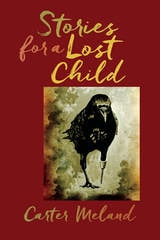
Stories for a Lost Child
Carter Meland
Michigan State University Press, 2017
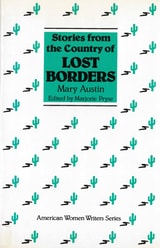
Stories from the Country of Lost Borders by Mary Austin
Pryse, Marjorie
Rutgers University Press, 1987
In The Land of Little Rain, Austin's attention to natural detail allows her to write prose that is geologically, biologically, and botanically accurate at the same time that it offers metaphorical insight into human emotional and spiritual experience. In Lost Borders, Austin focuses on both white and Indian women's experiences in the desert, looks for the sources of their deprivation, and finds them in the ways life betrays them, usually in the guise of men. She offers several portraits of strong women characters but ultimately identifies herself with the desert, which she personifies as a woman.
Stories from the Round Barn
Jacqueline Dougan Jackson
Northwestern University Press, 2000
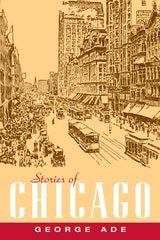
Stories of Chicago
George Ade
University of Illinois Press, 1941
Ade was hailed by such contemporaries as Mark Twain, H. L. Mencken, and William Dean Howells, and the stories contained in this volume showcase the full spectrum of his skills: his keen eye for the absurd and sublime moments of daily urban life, his ear for the vernacular, his shrewd understanding of the Midwestern character, and above all his firm belief that all of human life was worthy literary subject matter.
This volume includes many lively and evocative drawings by John T. McCutcheon, Ade's college classmate and friend who came to be known as "the Dean of American Cartoonists." Also included is an introduction by Franklin J. Meine, incorporating interviews with Ade and letters from John McCutcheon, Mark Twain, and Ade's managing editor, Charles H. Dennis.
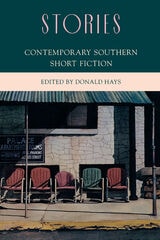
Stories
Contemporary Southern Short FictionDonald Hays
University of Arkansas Press, 1989
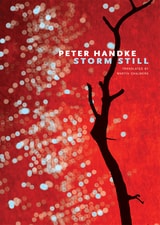
Storm Still
Peter Handke
Seagull Books, 2018
In Storm Still, Handke’s most recent work, he returns to the land of his birth, the Austrian province of Carinthia. There on the Jaunfeld, the plain at the center of Austria’s Slovenian settlement, the dead and the living of a family meet and talk. Composed as a series of monologues, Storm Still chronicles both the battle of the Slovene minority against Nazism and their love of the land. Presenting a panorama that extends back to the author’s bitter roots in the region, Storm Still blends penetrating prose and poetic drama to explore Handke’s personal history, taking up themes from his earlier books and revisiting some of their characters. In this book, the times of conflict and peace, war and prewar, and even the seasons themselves shift and overlap. And the fate of an orchard comes to stand for the fate of a people.

Storm Warnings
Science Fiction Confronts the FutureGeorge E Slusser
Southern Illinois University Press, 1987
These 17 original essays, written for the sixth Eaton Conference on Fantasy and Science Fiction, explore the uses, origins, and forms of future fiction. The contributors are George E. Slusser, Paul Alkon, Marie-Hélène Huet, Howard V. Hendrix, Bradford Lyau, Gregory Benford, José Manuel Mota, Frederik Pohl, George Hay, Colin Greenland, John Huntington, Elizabeth Maslen, W. M. S. and Claire Russell, T. A. Shippey, Kenneth V. Bailey, Gary Kern, and Frank McConnell.
The essays address the question “Do we call up images of future societies in order to prepare for them, or to forestall their ever coming into existence?”
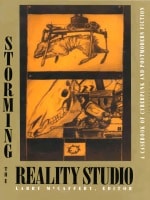
Storming the Reality Studio
A Casebook of Cyberpunk & Postmodern Science FictionLarry McCaffery, ed.
Duke University Press, 1992
By bringing together original fiction by well-known contemporary writers (William Burroughs, Thomas Pynchon, Don DeLillo, Kathy Acker, J. G. Ballard, Samuel R. Delany), critical commentary by some of the major theorists of postmodern art and culture (Jacques Derrida, Fredric Jameson, Timothy Leary, Jean-François Lyotard), and work by major practitioners of cyberpunk (William Gibson, Rudy Rucker, John Shirley, Pat Cadigan, Bruce Sterling), Storming the Reality Studio reveals a fascinating ongoing dialog in contemporary culture.
What emerges most strikingly from the colloquy is a shared preoccupation with the force of technology in shaping modern life. It is precisely this concern, according to McCaffery, that has put science fiction, typically the province of technological art, at the forefront of creative explorations of our unique age.
A rich opporunity for reading across genres, this anthology offers a new perspective on the evolution of postmodern culture and ultimately shows how deeply technological developments have influenced our vision and our art.
Selected Fiction contributors: Kathy Acker, J. G. Ballard, William S. Burroughs, Pat Cadigan, Samuel R. Delany, Don DeLillo, William Gibson, Harold Jaffe, Richard Kadrey, Marc Laidlaw, Mark Leyner, Joseph McElroy, Misha, Ted Mooney, Thomas Pynchon, Rudy Rucker, Lucius Shepard, Lewis Shiner, John Shirley, Bruce Sterling, William Vollman
Selected Non-Fiction contributors: Jean Baudrillard, Jacques Derrida, Joan Gordon, Veronica Hollinger, Fredric Jameson, Arthur Kroker and David Cook, Timothy Leary, Jean-François Lyotard, Larry McCaffery, Brian McHale, Dave Porush, Bruce Sterling, Darko Suvin, Takayuki Tatsumi

Storms of Denali
Nicholas O'Connell
University of Alaska Press, 2012
Reaching 20,320 feet into and above the clouds, the peak of Denali is the highest and coldest summit in North America. In this novel of adventure, adversity, and ambition by renowned mountaineer and writer Nicholas O’Connell, four men set out to conquer it. Among the sharply drawn team members is narrator John Walker, a family man trying to choose between domestic stability and mountaineering’s uncertain glory. In the course of their ascent the group battles avalanches, fierce winds, and mind-numbing cold before their bond begins to splinter, leading inexorably to tragedy.
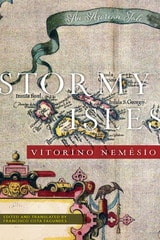
Stormy Isles
An Azorean TaleVitorino Nemésio, Edited and translated by Francisco Cota Fagundes
Tagus Press, 2019
Story Of A Clam
Visionary FictionSir John Templeton
Templeton Press, 2001
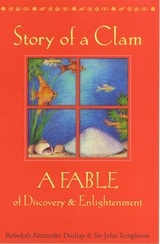
Story of a Clam is a special, magical tale of an egotistical clam who thinks he and his community are the center of the universe. It offers us the artistry of the written word, creating an adventure in evolving consciousness. In an exciting series of events, the clam becomes aware that "there is more to life than you presently know and experience."
Story and Situation
Narrative Seduction and the Power of FictionRoss Chambers
University of Minnesota Press, 1984
Ross Chambers shifs the emphasis to precisely the play of authority and mastery by focusing on the narrative situation or the “point” of telling a story in given context. He studies the relation between teller and listener in a set of French, English, and American short stories from the nineteenth and early twentieth centuries and detects in that relationship the key to the power of fiction. In each of these stories, the author identifies the narrative situation by recourse to the metaphor of seduction, a phenomenon Chambers finds characteristic of literary production in the modern period.
“Story and Situation is a powerful work of criticism, the best work in short narrative I know, and will redirect critics’ attention to a form which has always engaged readers but has recently been neglected by literary theorists. . . . It is clear, assured, and intelligently paced.”-Jonathan Culler, Cornell University
Story of a Stammer
Gábor Vida
Seagull Books, 2022
In the novel Story of a Stammer, Gábor Vida asks a fundamental question: Where does stammering come from? In the process of answering this question, he discovers that an entire historical period and an entire world have been stammering, too. Through Vida’s eyes, we see that stammering comprises all the lies accumulated over time and over generations because nobody had ever articulated what they felt or thought, nor done what they really wanted. Nobody, Vida shows, had ever told the truth.
Describing life in the 1970s and ’80s under Romanian Communist dictator Nicolae Ceauçescu’s authoritarian regime, Vida writes with disarming honesty, breaking taboos and chronicling the ways in which tyranny and exploitation seep into family relationships. The novel charts the first two decades of a young Hungarian man’s life in Romania, telling a story of coming to terms with a stammer, loneliness, and an unstimulating environment where religion, alcoholism, and suicide are the most common escape strategies. A Bildungsroman, a novel about Transylvania, a chronicle of minority life, a sociological analysis of cultural identity, and ultimately a deeply personal account of a historical era, Story of a Stammer is a major contribution to contemporary Hungarian literature—an unfailingly serious yet humorously delightful witness to a turbulent period in recent history.
Straight Outta Compton
Ricardo Cortez Cruz
University of Alabama Press, 1992
Straight Outta Compton is about living large, living in the fast lane. It raps to its readers about being black, being born and raised in the L.A. ghetto, being so-called "Niggaz 4-Life," being sweet on black life (for those in it, the beat goes on). It focuses on the lives of two black men, Rooster and Clive-nem, who grow up together in Compton. He and Rooster split up, fall into rival gangs-the Bloods and the Crips-and being to hate each other. Clive has other problems besides Rooster-namely, Compton. He thinks that he's made a girl pregnant. He's involved with gangs.
Straight Outta Compton samples from all aspects of black life in its search to have its characters find what rapper Heavy D. would call a, "Peaceful Journey." It wasn't just written; it was mixed by a DJ, and the result is hyped!