Results by title
3258 books match the query 'Performing Arts' and 306 start with s
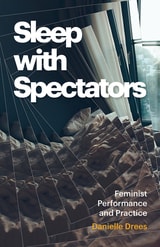
Sleep with Spectators
Feminist Performance and PracticeDanielle Drees
University of Minnesota Press, 2026
A rejuvenating look at sleep’s integral role in feminist practice, critique, and imagination
Inequality is notoriously exhausting to confront, but through theater, performance art, and theory, feminist artists and thinkers have explored a radical counter to this exhaustion: sleep. Centering creative work on this restorative practice, Sleep with Spectators is a refreshing and visionary counterhistory of feminism that offers sleep as a tool for imagining new ways of living—ones that prioritize not only rest but also care and interdependence.
Taking performance as a unique means of perceiving private and unconscious aspects of daily life, Danielle Drees draws from opera, plays, and avant-garde theater to find instances of sleep and sleeplessness as novel embodiments of core feminist concerns. Among her subjects are Sarah Kane’s free verse text 4.48 Psychosis; María Irene Fornés’s queer drama of racial–sexual transformation, Enter THE NIGHT; and Regina José Galindo’s America’s Family Prison, in which Galindo, her partner, and their baby spent twenty-four hours in a “family-sized” cell rented from a private prison outfitter. Adeptly engaging this fascinating collection of international archival material through the lenses of Marxist feminism, trans and queer studies, and disability studies, Sleep with Spectators illuminates how sleep performances reveal and critique inequalities rooted in gender, sexuality, race, class, and disability.
Idiosyncratic and interdisciplinary, Sleep with Spectators charts an original path through the feminist performance archive, presenting new ways of indexing injustice and interrogating the political conditions of rest.
Retail e-book files for this title are screen-reader friendly.
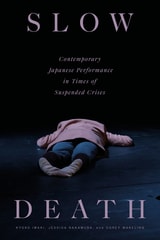
Slow Death
Contemporary Japanese Performance in Times of Suspended CrisesKyoko Iwaki, Jessica Nakamura, Corey Wakeling
Northwestern University Press, 2027
Bringing together performance studies, critical theory, and contemporary Japanese cultural studies to offer an unsettling glimpse into a global future of crisis already arriving
Slow Death examines contemporary artistic practice as a form of active engagement with the condition of “slow death”: the diffused feeling of decline with no end in sight. The theater and performance artists discussed here confront the realities of a state that is no longer tenable, rehearsing slow death’s modalities, probing its implications, and imagining possible endpoints through dramaturgy. As these artists show, the very notion of progress—whether framed as a march toward a hopeful future or a retreat into the comforts of a nostalgic past—carries an inescapable irony. Both trajectories seem equally unsustainable, rendering any prospect of radical transformation elusive. This sense of endless suspendedness emerges as a pervasive motif across the artworks discussed, such as the anticapitalist performance spaces created by Tanino Kurō and the queer feminist dramaturgy of Ichihara Satoko. Yet, as coauthors Kyoko Iwaki, Jessica Nakamura, and Corey Wakeling identify throughout, to enact slow death in performance is not to capitulate to despair but to expose its structure and, in doing so, uncover latent forms of everyday resistance.

Slow TV
An Analysis of Minute-by-Minute Television in NorwayRoel Puijk
Intellect Books, 2020
“Slow TV” refers to a form of broadcasting long events for their entire duration, preferably in real time. Popularized by the Norwegian Broadcasting Corporation (NRK), the form became a phenomenon in 2009 after NRK’s broadcast of a seven-hour train ride between Bergen and Oslo. Since then, slow TV programming has gained traction outside of Norway on television stations around the world and via streaming services like Netflix.
In this academic study, Roel Puijk combines quantitative and qualitative research methods to explore different aspects of the Norwegian slow TV phenomenon, from the programming’s production and development to its viewing and ultimate reception. Puijk relates slow TV to media events and media tourism, discussing its effects on cultural and economic developments and its evolving relationship to local and national identity. The result is an illuminating interdisciplinary study of media innovation and its effects on contemporary culture.
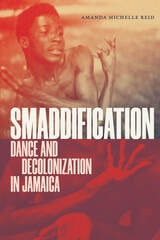
Smaddification
Dance and Decolonization in JamaicaAmanda Michelle Reid
Duke University Press, 2026
Small Nation, Global Cinema
The New Danish CinemaMette Hjort
University of Minnesota Press, 2005
Hjort offers two key strategies underwriting the transformation and globalization of contemporary Danish cinema—the processes of cultural circulation and the psychological efficacy of heritage. Exploring the Dogma 95 movement initiated by Lars von Trier and Thomas Vinterberg as well as films by Erik Clausen, Gabriel Axel, Henning Carlsen, and Ole Bornedal, among others, Hjort examines means for cinematic globalization specific to Denmark, but then evolves her investigation into a truly comparative framework encompassing references to Hong Kong, Latin America, and Hollywood filmmaking. Providing a fresh way of looking at cultural influence in the era of globalization, Hjort’s concept of “small” nation points as much to the dynamics of recognition, indifference, and participation as it does to more common measures of population size, economic strength, or linguistic reach.
Mette Hjort is professor of intercultural studies at Aalborg University.

Small-Screen Supers
Adaptation, Sexuality, and Politics in Superhero TelevisionEdited by Anna F. Peppard and Dru Jeffries
University of Texas Press, 0
The first collected volume to define superhero television as a distinct cultural phenomenon, broadening horizons of what superhero stories have been and might become.
Superhero films dominate Hollywood and recent studies of popular culture. Superheroes are also abundant on television, and have been for decades, yet critics have largely neglected this intersection of genre and medium. Small-Screen Supers gathers an international group of scholars who, for the first time, examine superhero television as a distinct cultural and artistic phenomenon.
Informed by a range of critical perspectives, contributors examine animated and live-action shows aimed at children, teens, and adults, combining scholarship on popular contemporary programming with analysis of less-successful shows from the recent and distant past. Collectively, the anthology emphasizes how superhero television has reflected, informed, and transformed American culture and media. In particular, Small-Screen Supers argues that superhero TV—more so than film—foregrounds demographic diversity and social critique. Whether interpreting the 1980s cartoon Spider-Man and His Amazing Friends as a queer sitcom, underscoring the progressive politics of Supergirl, or investigating pandemic-inspired subjectivities in Werewolf by Night, the authors reflect on superhero television as a unique mode of expression with important implications for understanding American popular culture.

Smut and Sandwiches
A History of Stag FilmRussell Sheaffer
Duke University Press, 2027
So Much Wasted
Hunger, Performance, and the Morbidity of ResistancePatrick Anderson
Duke University Press, 2010
So What, or How to Make Films with Words
Alexander García Düttmann
Northwestern University Press, 2023
Images, whether filmic or not, cannot be replaced by words. Yet words can make images. This is the general thesis underlying So What, a collection of essays on canonical filmmakers like Luchino Visconti and Orson Welles; more experimental directors, such as Marguerite Duras and Albert Serra; and visual artists, including Hollis Frampton and Agnes Martin. Alexander García Düttmann aims to make their films as if they did not precede his text, capturing their idea and experience.
If the relationship between filmic image and text is a heterogeneous one, then this heterogeneity must leave a trace. This is why the book’s chapters are organized not according to historical periods or on the basis of film theories but rather by single concepts that function like dictionary entries. The chapters adopt different forms, blurring the lines between art and philosophy. So What is a practical exercise in “making films with words,” inviting readers to draw out insights from its conceptual play.
So What compiles previously untranslated and hard-to-find essays into a single volume, one that represents the absorbing and singular thought process of a major contemporary philosopher.
Social Choreography
Ideology as Performance in Dance and Everyday MovementAndrew Hewitt
Duke University Press, 2005
Hewitt focuses on the period between the mid-nineteenth century and the early twentieth and considers dancers and social theorists in Germany, Britain, France, and the United States. Analyzing the arguments of writers including Friedrich Schiller, Theodor Adorno, Hans Brandenburg, Ernst Bloch, and Siegfried Kracauer, he reveals in their thinking about the movement of bodies a shift from an understanding of play as the condition of human freedom to one prioritizing labor as either the realization or alienation of embodied human potential. Whether considering understandings of the Charleston, Isadora Duncan, Nijinsky, or the famous British chorus line the Tiller Girls, Hewitt foregrounds gender as he uses dance and everyday movement to rethink the relationship of aesthetics and social order.
Socially Engaged Creative Practice
Contemporary Case StudiesEdited by Jess Moriarty and Kate Aughterson
Intellect Books, 2024
Each chapter of Socially Engaged Creative Practice focuses on an individual or group’s mode of working and methodological practice of performance across a range of modes, disciplines, and media, from community opera to online queer performance; from anti-racist classroom pedagogy to 1980s cabaret in nightclubs; from community art projects in schools to community writing projects in transport interchanges. The performers, writers, and creators represented here engage and grapple with contemporary performance as a situated practice and as a problem.
The personal perspective of each performer—as directors, librettists, producers, and writers—is explicitly located in a community, and the book offers a series of case studies detailing socially engaged work that aligns with concepts of performance and community.
Sociology on Film
Postwar Hollywood's Prestige CommodityCagle, Chris
Rutgers University Press, 2016
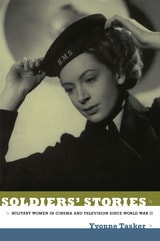
Soldiers' Stories
Military Women in Cinema and Television since World War IIYvonne Tasker
Duke University Press, 2011
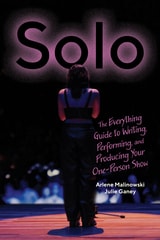
Solo
The Everything Guide to Writing, Performing, and Producing Your One-Person ShowArlene Malinowski and Julie Ganey
Northwestern University Press, 2026
The art of solo performance has exploded in the last twenty years as an immediate and accessible art form. The number of solo festivals grows every year, and artists are hungry for the opportunity to center their own voices and experiences. Solo is designed to feed that hunger.
Seasoned theater educators and performers Arlene Malinowski and Julie Ganey have compiled an invaluable guide for students and practitioners alike. Topics include high-stakes narratives, compelling characters, and the role of narrators, as well as practical exercises, interviews with performers at every stage of their careers, and examples from real one-person shows. Performers will also find advice on collaborating with directors, incorporating technical elements, and producing and marketing strategies.
Whether you’re just starting out or are a seasoned professional looking to refine your show-in-progress, Solo is an essential volume for anyone ready to bring their story to life onstage.
Somatic Movement Dance Therapy
The Healing Art of Self-regulation and Co-regulationAmanda Williamson
Intellect Books, 2023
In this detailed anatomical text, Amanda Williamson shares her therapeutic practice, rooted in self-regulation, co-regulation, cardio-ception, breath awareness, soft-tissue-rolling in gravity, fascial release, and the importance of parasympathetic ease-and-release. The book attends to key body systems in detail, and how sense-perception of living tissues increases fluid flow and supports fascial health. It is grounded in detailed experiential encounters with afferent sensing, consciously sensed motor expression, interoception, proprioception, the vagus nerve, the cranial bones and nerves, scapulae, sacrum, fascia, and the nervous system. Clients and students share qualitative refl ections after sense-perceiving the state of their living tissues and easing tight tonus through self-regulatory movement.
Somatic Movement Dance Therapy pays detailed attention to applied experiential anatomy and physiology, improvisation underpinned by somatic awareness, the art of directing one’s awareness and attending gently to living breathing tissues, resting egoic mind and settling in the heart. The integral importance and compassion of the co-regulatory embodied witness is shared in this book. Williamson shares processes throughout that ease stress, depression, and anxiety.
Collective foreword from Sarah Whatley, Daniel Deslauriers, Celeste Snowber, and Karin Rugman.
Somatics in Dance, Ecology, and Ethics
The Flowing Live PresentSondra Fraleigh
Intellect Books, 2024
Somatics in Dance, Ecology, and Ethics explores the relationships between self, world, and earth to understand the experience of being alive and corporeal. In doing so, Sondra Fraleigh develops a philosophy of an ethical world gaze that promises to enliven the senses. Chapters borrow from wide-ranging intellectual influences—phenomenology, Buddhism, butoh, dialogics, aesthetics, poetry, feminism, ecology, and more—Fraleigh describes the ways somatics can help people to feel well, practice empathetic communication, and recognize the psychic, unpredictable edges of experience as they move. An interview with Amanda Williamson complements the chapters. “The body is the fascinating home for all our dispositions,” Fraleigh tells hers. “Spiritual qualities are embodied. We dance and sing them into being.”
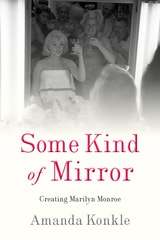
Some Kind of Mirror
Creating Marilyn MonroeKonkle, Amanda
Rutgers University Press, 2019
Some Kind of Mirror offers the first extended scholarly analysis of Marilyn Monroe’s film performances, examining how they united the contradictory discourses about women’s roles in 1950s America. Amanda Konkle suggests that Monroe’s star persona resonated with audiences precisely because it engaged with the era’s critical debates regarding femininity, sexuality, marriage, and political activism. Furthermore, she explores how Monroe drew from the techniques of Method acting and finely calibrated her performances to better mirror her audience’s anxieties and desires.
Drawing both from Monroe’s filmography and from 1950s fan magazines, newspaper reports, and archived film studio reports, Some Kind of Mirror considers how her star persona was coauthored by the actress, the Hollywood publicity machine, and the fans who adored her. It is about why 1950s America made Monroe a star, but it is also about how Marilyn defined an era.
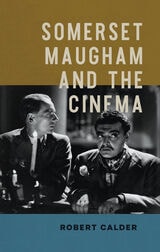
Somerset Maugham and the Cinema
Robert Calder
University of Wisconsin Press, 2024
This study of the famous author explores the relationship between literature and film, what is involved in adaptation, and how best to judge films based on celebrated books. Robert Calder, the world’s leading scholar of Maugham’s work, offers fascinating production histories, insight into both fortunate and misguided casting decisions, shrewd analyses of performances and film techniques, and summaries of public and critical responses. Maugham’s characters were often conflicted, iconoclastic, and morally out of step with their times, which may have accounted for the popularity of his fiction. Most of Maugham’s works could be adapted to satisfy the tastes of moviegoers and the demands of the Hays Office censors, if not the expectations of their author.
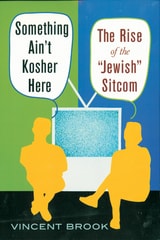
Something Ain't Kosher Here
The Rise of the 'Jewish' SitcomBrook, Vincent
Rutgers University Press, 2003
From 1989 through 2002 there was an unprecedented surge in American sitcoms featuring explicitly Jewish lead characters, thirty-two compared to seven in the previous forty years. Several of these—Mad About You, The Nanny, and Friends—were among the most popular and influential of all shows over this period; one program—Seinfeld—has been singled out as the “defining” series of the nineties. In addition, scriptwriters have increasingly created “Jewish” characters, although they may not be perceived to be by the show’s audience, Rachel Green on Friends being only one example.
In Something Ain’t Kosher Here, Vincent Brook asks two key questions: Why has this trend appeared at this particular historical moment and what is the significance of this phenomenon for Jews and non-Jews alike? He takes readers through three key phases of the Jewish sitcom trend: The early years of television before and after the first Jewish sitcom, The Goldbergs’, appeared; the second phase in which America found itself “Under the Sign of Seinfeld”; and the current era of what Brook calls “Post- Jewishness.”
Interviews with key writers, producers, and “showrunners” such as David Kohan, (Will and Grace), Marta Kauffman (Friends and Dream On), Bill Prady (Dharma and Greg), Peter Mehlman and Carol Leifer (Seinfeld), and close readings of individual episodes and series provoke the inescapable conclusion that we have entered uncharted “post-Jewish” territory. Brook reveals that the acceptance of Jews in mainstream white America at the very time when identity politics have put a premium on celebrating difference reinforces and threatens the historically unique insider/outsider status of Jews in American society. This paradox upsets a delicate balance that has been a defining component of American Jewish identity.
The rise of the Jewish sitcom represents a broader struggle in which American Jews and the TV industry, if not American society as a whole, are increasingly operating at cross-purposes— torn between the desire to celebrate unique ethnic identities, yet to assimilate: to assert independence, yet also to build a consensus to appeal to the widest possible audience. No reader of this book will ever be able to watch these television programs in quite the same way again.
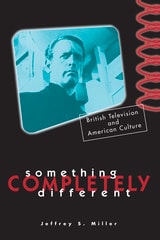
Something Completely Different
British Television And American CultureJeffrey S. Miller
University of Minnesota Press, 2000
The first comprehensive study of the influence British programming had on American television.
The first comprehensive study of the influence British programming had on American television.
Between Emma Peel and the Ministry of Silly Walks, British television had a significant impact on American popular culture in the 1960s and 1970s. In Something Completely Different, Jeffrey Miller offers the first comprehensive study of British programming on American television, discussing why the American networks imported such series as The Avengers and Monty Python’s Flying Circus; how American audiences received these uniquely British shows; and how the shows’ success reshaped American television.Miller’s lively analysis covers three genres: spy shows, costume dramas, and sketch comedies. In addition to providing his close readings of the series themselves, Miller considers the networks’ packaging of the programs for American viewers and the influences that led to their acceptance, including the American television industry’s search for new advertising revenue and the creation of PBS.Something Completely Different concludes with a discussion of the American programs and genres that owed their existence to British progenitors. Miller convincingly argues that much of what came to define American television by 1980 was in fact British in origin, a contention that casts a new light on traditional discussions of American cultural imperialism.ISBN 0-8166-3240-5 Cloth £31.00 $44.95xxISBN 0-8166-3241-3 Paper £12.50 $17.95x208 Pages 17 black-and-white photos 5 7/8 x 9 JanuaryTranslation inquiries: University of Minnesota Press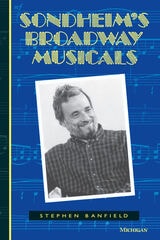
Sondheim's Broadway Musicals
Stephen Banfield
University of Michigan Press, 1995
Sondheim's Broadway Musicals is the first book to take an in-depth look at Sondheim's work. Stephen Banfield examines each of Sondheim's musicals for Broadway, from West Side Story and Gypsy to the 1987 musical Into the Woods, and includes A Funny Thing Happened on the Way to the Forum, Company, Follies, Anyone Can Whistle, A Little Night Music, Pacific Overtures, Merrily We Roll Along, Sweeney Todd, and Sunday in the Park with George. Banfield also discusses Sondheim's other work, such as the 1991 show Assassins and his music for the 1990 film Dick Tracy--for which "Sooner or Later" won him an Academy Award for Best Song.
"Banfield seems almost to hear Sondheim's music with Sondheim's ears. This extremely valuable work discusses Sondheim's early training and subsequent career, his general compositional concerns, and his style. The meat of the book is a musical-dramatic analysis of his musicals . . . . For each musical, Banfield places the work and its components in a historical and typological text. He also treats in welcome detail the musical profile or universe of each show: Sondheim's use of generative intervals or interval complexes as source material, motifs that reappear in various guises in various songs, the sound world that defines the musical's emotional mind. The book will be as useful to those who are cool to Sondheim's work as to his fans." --Choice
Sonic Strategies
Performing Mexico's War on Drugs, Mourning, and FeminicideChristina Baker
Vanderbilt University Press, 2023
In Sonic Strategies, author Christina Baker highlights the tactics employed by contemporary performance artists in Mexico in response to the violence surrounding the nation’s War on Drugs. The introduction opens with a description of the 2007 reenactment of the Grito, or “cry,” of independence, a moment fraught with sonic sparring, setting the stage for how each subsequent chapter focuses on themes related to war and violence. Each chapter focuses on the works of one or more performance artist, and taken together, the case studies illuminate how critiques of the nation’s rising death tolls, governmental corruption, and gendered violence very literally sound, whether in Música de balas, a post-dramatic piece by Hugo Salcedo; the lamentations of the nation’s Antigones in works by Violeta Luna and Lukas Avendaño; satirical revisions of Mexican Golden Age film in the cabaret piece Nosotras las proles; or the story of transfeminicide in César Enríquez’s La Prietty Guoman by way of US pop music.
Written in an accessible style grounded in theater studies but interdisciplinary by design, Sonic Strategies will appeal to literary critics, students, musicologists, and theater and performance scholars alike. By paying close attention to planned and spontaneous sounds within live and textual experiences, Sonic Strategies contends that conscientious listening reveals dynamic practices that reside beyond the linguistic and embodied gesture.
Sophia Loren
Moulding the StarPauline Small
Intellect Books, 2009
In films from Houseboat to The Millionairess to Two Women, Sophia Loren established herself as an actress whose stardom spanned Italy, Europe, and finally Hollywood. Hers was a highly original rise to fame for a European film actress, and in Sophia Loren, Pauline Small highlights a unique career which transcended Italian film culture.
Sophia Loren is the first book to explore in detail the transfer of Loren’s stardom from Italy to Hollywood and the reasons for her American success, particularly during the 1960s. Looking individually at Loren’s major films and drawing on rare archival materials in Italy, Small provides a thorough exploration of the commercial and cultural forces that combined to ensure Loren’s enduring star status.
Perfect for scholars and aficionados of 1960s Italian and American film, Sophia Loren is a fascinating look at one of the major personalities of modern cinema.
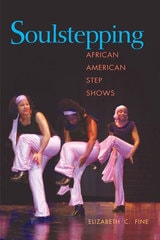
Soulstepping
African American Step ShowsElizabeth C. Fine
University of Illinois Press, 2002
Sound Design and Science Fiction
By William Whittington
University of Texas Press, 2007
Sound is half the picture, and since the 1960s, film sound not only has rivaled the innovative imagery of contemporary Hollywood cinema, but in some ways has surpassed it in status and privilege because of the emergence of sound design.
This in-depth study by William Whittington considers the evolution of sound design not only through cultural and technological developments during the last four decades, but also through the attitudes and expectations of filmgoers. Fans of recent blockbuster films, in particular science fiction films, have come to expect a more advanced and refined degree of film sound use, which has changed the way they experience and understand spectacle and storytelling in contemporary cinema.
The book covers recent science fiction cinema in rich and compelling detail, providing a new sounding of familiar films, while offering insights into the constructed nature of cinematic sound design. This is accomplished by examining the formal elements and historical context of sound production in movies to better appreciate how a film sound track is conceived and presented.Whittington focuses on seminal science fiction films that have made specific advances in film sound, including 2001: A Space Odyssey, THX 1138, Star Wars, Alien, Blade Runner (original version and director's cut), Terminator 2: Judgment Day and The Matrix trilogy and games—milestones of the entertainment industry's technological and aesthetic advancements with sound.
Setting itself apart from other works, the book illustrates through accessible detail and compelling examples how swiftly such advancements in film sound aesthetics and technology have influenced recent science fiction cinema, and examines how these changes correlate to the history, theory, and practice of contemporary Hollywood filmmaking.
Sound Objects
James A. Steintrager and Rey Chow, editors
Duke University Press, 2019
Contributors. Georgina Born, Michael Bull, Michel Chion, Rey Chow, John Dack, Veit Erlmann, Brian Kane, Jairo Moreno, John Mowitt, Pooja Rangan, Gavin Steingo, James A. Steintrager, Jonathan Sterne, David Toop
Sound Reporting, Second Edition
The NPR Guide to Broadcast, Podcast and Digital JournalismJerome Socolovsky
University of Chicago Press, 2024
A lot has changed in media in recent years, but one thing that remains steadfast is National Public Radio’s (NPR) position as a trusted source of news in the United States. Now producing dozens of shows and podcasts, plus livestreams and coverage on other media platforms, NPR is the leading authority on reporting, writing, and delivering audio news and storytelling to today's diverse audiences. In this completely revised guide, audio journalism trainer Jerome Socolovsky offers a look into just how NPR does it, following the same journey a story would from idea to the moment it reaches its listeners.
Based on more than eighty interviews with producers, reporters, editors, hosts, and other NPR staffers, Sound Reporting reveals how stories get pitched; how they are reported, produced, written, edited, voiced, and tailored to multiple media formats; and how shows and podcasts are put together. It begins with a presentation of NPR's values and includes a new chapter on journalist safety, a topic of timely importance. Podcasts, now part of the mainstream of the media universe, are treated alongside traditional programs throughout.
In these pages, the voices of NPR staff offer a glimpse into their profession. Discover how correspondent Ruth Sherlock overcame seemingly insurmountable odds as she raced to the scene of a devastating earthquake in Turkey, the four main ways Ramtin Arablouei incorporates music into podcasts, and how “Weekend Edition” host Ayesha Rascoe touches listeners so deeply she received a pair of homemade potholders in the mail from one of them. Reading this book is like sitting in a room full of top-notch producers, seasoned correspondents, trusted hosts, and rigorous editors—all telling you inspiring stories about their craft to help you learn from their experience.
At a time when the legitimacy and authority of journalism are under critique, transparency into how the news is made is more important than ever. This book offers a fascinating look behind the scenes at a premier public media organization and will be a trusted resource for anyone in or exploring a future in audio journalism.
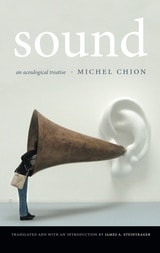
Sound
An Acoulogical TreatiseMichel Chion
Duke University Press, 2016
Sound
Dialogue, Music, and EffectsKalinak, Kathryn
Rutgers University Press, 2015
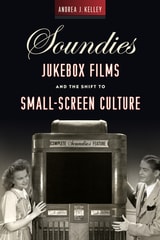
Soundies Jukebox Films and the Shift to Small-Screen Culture
Kelley, Andrea J
Rutgers University Press, 2018
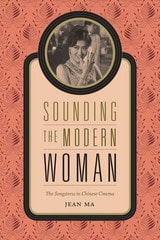
Sounding the Modern Woman
The Songstress in Chinese CinemaJean Ma
Duke University Press, 2015
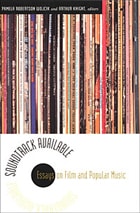
Soundtrack Available
Essays on Film and Popular MusicPamela Robertson Wojcik and Arthur Knight, eds.
Duke University Press, 2001
With a cross-cultural emphasis, the contributors focus on movies that use popular songs from a variety of genres, including country, bubble-gum pop, disco, classical, jazz, swing, French cabaret, and showtunes. The films discussed range from silents to musicals, from dramatic and avant-garde films to documentaries in India, France, England, Australia, and the United States. The essays examine both “nondiegetic” music in film—the score playing outside the story space, unheard by the characters, but no less a part of the scene from the perspective of the audience—and “diegetic” music—music incorporated into the shared reality of the story and the audience. They include analyses of music written and performed for films, as well as the now common practice of scoring a film with pre-existing songs. By exploring in detail how musical patterns and structures relate to filmic patterns of narration, character, editing, framing, and mise-en-scene, this volume demonstrates that pop music is a crucial element in the film experience. It also analyzes the life of the soundtrack apart from the film, tracing how popular music circulates and acquires new meanings when it becomes an official soundtrack.
Contributors. Rick Altman, Priscilla Barlow, Barbara Ching, Kelley Conway, Corey Creekmur, Krin Gabbard, Jonathan Gill, Andrew Killick, Arthur Knight, Adam Knee, Jill Leeper, Neepa Majumdar, Allison McCracken, Murray Pomerance, Paul Ramaeker, Jeff Smith, Pamela Robertson Wojcik, Nabeel Zuberi
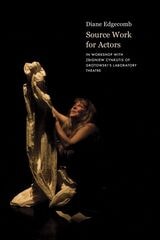
Source Work for Actors
Diane Edgecomb
Seagull Books, 2025
The legacy of Polish theatre director Jerzy Grotowski and the skills of his legendary actors come to life in this personal account of a workshop and intensive with Laboratory Theatre master actor Zbigniew Cynkutis. Drawing from her extensive notes and recordings, Diane Edgecomb takes us to the heart of the workshop experience as a young actor determined to make this process her own. Cynkutis guides the participants to a deep understanding of his artistic philosophy and craft, giving them invaluable tools and sources to enrich their acting. Stimulated by a developing series of tasks, Laboratory Theatre training exercises, and by Cynkutis’ startling demonstrations, the group is challenged to bring their whole selves to the work and to reimagine what is possible in theatre.
The intensive proceeds from exercises familiar to those who have studied Grotowski to innovative explorations of dramatic text and character which draw from theatre sources based in the primal energies of nature. Those who have been mystified by academic writings on the work of the Laboratory Theatre will find this personal story refreshing and accessible, filled with advice and exercises grounded in the rich conversational style of a charismatic master actor. Links to audio files of Cynkutis speaking as he leads the work lend an invaluable immersive element to the book.
This compelling volume bears witness to the power of a deeply visceral form of theatre and illustrates why the work of Grotowski and his actors has had such a profound impact on generations of theatre artists. It is sure to stimulate students, challenge directors and inspire innovative work.
South African Cinema 1896-2010
Martin Botha
Intellect Books, 2012
Taking an inclusive approach to South African film history, this volume represents an ambitious attempt to analyze and place in appropriate sociopolitical context the aesthetic highlights of South African cinema from 1896 to the present. Thoroughly researched and fully documented by renowned film scholar Martin Botha, the book focuses on the many highly creative uses of cinematic form, style, and genre as set against South Africa’s complex and often turbulent social and political landscape. Included are more than two hundred illustrations and a look at many aspects of South African film history that haven’t been previously documented.
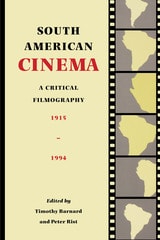
South American Cinema
A Critical Filmography, 1915-1994Edited by Timothy Barnard and Peter Rist
University of Texas Press, 1999
Originally issued in hardcover in 1996 by Garland Publishing, this important reference work is now available in paperback for a wider audience. A distinguished team of contributors has compiled entries on 140 significant South American feature films from the silent era until 1994. The entries discuss each film's subject matter, critical reception, and social and political contexts, as well as its production, distribution, and exhibition history, including technical credits. The entries are grouped by country and arranged chronologically. Both fiction and documentary films (some no longer in existence) are included, as well as extensive title, name, and subject indexes and glossaries of film and foreign terms.
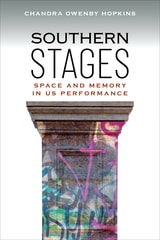
Southern Stages
Space and Memory in US PerformanceHopkins, Chandra
University of Iowa Press, 2025
Through the eyes of actors and everyday people, Southern Stages offers an engaging new model for interrogating the performance of southernness, as well as how memory and imagination intersect in spaces that have shaped hundreds of years of American history. Chandra Owenby Hopkins employs cultural memory and lived realities of Black and white communities to examine the earliest and most enduring southern stages: the playhouse and the public square.
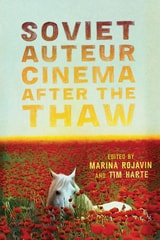
Soviet Auteur Cinema After the Thaw
Edited by Marina Rojavin and Tim Harte
University of Wisconsin Press, 2027
Following Stalin’s death, Soviet film—like Soviet culture—changed in meaningful ways. Emerging from a system that had stymied individual, creative voices, prominent directors now found their own respective styles, as they embraced their personal visions to produce works that diverged significantly from the mainstream. Grounded in auteur theory, this volume explores how these filmmakers expressed themselves through creative cinematic means rather than through a narrow emphasis on narrative or in accordance with popular—and governmental—whims.
Each chapter focuses on a specific filmmaker, from well-known auteurs Aleksei German Sr., Kira Muratova, Andrei Tarkovsky, Sergei Parajanov, and Larisa Shepit’ko, to others less familiar in the West: Sergei Solovyov, Roman Balayan, Otar Iosseliani, Tengiz Aduladze, and Ali Khamraev. Hailing from a range of Soviet republics, they all impacted the Soviet cinematic sphere despite harsh censorship and the repression of artists throughout the nation. By integrating cinematic and theoretical perspectives into a discussion of auteur Soviet films, this volume illuminates the significance of a cinematic trend that took place in both Soviet culture and international film history.
Contributors: Robert Efird, Tim Harte, Lilya Kaganovsky, David Gomiero Molina, Lida Oukaderova, Elizabeth A. Papazian, Marina Rojavin, Rita Safariants, Sydney Stotter, Sergey Toymentsev
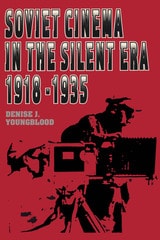
Soviet Cinema in the Silent Era, 1918–1935
By Denise J. Youngblood
University of Texas Press, 1991
The golden age of Soviet cinema, in the years following the Russian Revolution, was a time of both achievement and contradiction, as reflected in the films of Eisenstein, Pudovkin, and Kuleshov. Tensions ran high between creative freedom and institutional constraint, radical and reactionary impulses, popular and intellectual cinema, and film as social propaganda and as personal artistic expression. In less than a decade, the creative ferment ended, subjugated by the ideological forces that accompanied the rise of Joseph Stalin and the imposition of the doctrine of Socialist Realism on all the arts.
Soviet Cinema in the Silent Era, 1918–1935 records this lost golden age. Denise Youngblood considers the social, economic, and industrial factors that influenced the work of both lesser-known and celebrated directors. She reviews all major and many minor films of the period, as well as contemporary film criticism from Soviet film journals and trade magazines. Above all, she captures Soviet film in a role it never regained—that of dynamic artform of the proletarian masses.
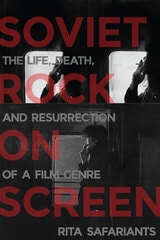
Soviet Rock on Screen
The Life, Death, and Resurrection of a Film GenreRita Safariants
University of Wisconsin Press, 2026
In Soviet Rock on Screen, Rita Safariants chronicles the birth, life, death, and resurrection of a genre that rapidly became one of the most readily recognized cultural signifiers of the perestroika era and which continues to reflect and codify Russian culture. During their initial heyday in the 1980s, rock films were influenced by and encouraged the cultural shifts of perestroika and the incipient political storm. Today, Safariants argues, the reemergence and reconfiguration of the genre indicates the extent to which Soviet-era cultural emblems inform Russian national identity and obliquely support the current political repression under Putin.
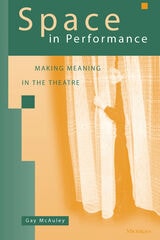
Space in Performance
Making Meaning in the TheatreGay McAuley
University of Michigan Press, 2000
The book's theoretical and methodological framework is both semiotic and phenomenological, based in part from the seminal work of Anne Ubersfeld, from direct observation of the rehearsal process, and from documentation and analysis of professional performances. The situation of the academic observer in the rehearsal room has much in common with that of the ethnographer in the field, and contemporary ethnographic practice provides a third theoretical and methodological perspective to this study.
Performance studies is an emerging discipline, and it is still evolving appropriate methodologies. The multi-faceted approach adopted here will engage theater and performance studies specialists, those concerned with modes of representation in contemporary culture, and students of theater, semiotics, architecture, set design, acting and performance theory. It also offers a great deal to theater practitioners as well as to spectators interested in deepening their appreciation of theater art. It is written in a simple, accessible way, and the theory always emerges from descriptions of practice.
"An excellent study that imaginatively summarizes, synthesizes, and intelligently critiques a wide range of previous theory and practice while making an important new contribution to the field of theater studies." --Marvin Carlson, City University of New York
Gay McAuley is Director of the Centre for Performance Studies, University of Sydney.
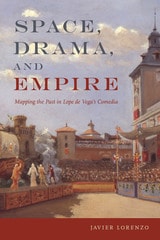
Space, Drama, and Empire
Mapping the Past in Lope de Vega's ComediaJavier Lorenzo
Bucknell University Press, 2023
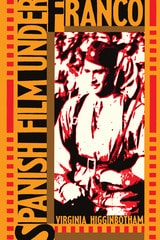
Spanish Film Under Franco
By Virginia Higginbotham
University of Texas Press, 1988
How does a totalitarian government influence the arts, and how do the arts respond? Spanish Film Under Franco raises these important questions, giving English speakers a starting point in their study of Spanish cinema.
After a brief overview of Spanish film before Franco, the author proceeds to a discussion of censorship as practiced by the Franco regime. The response of directors to censorship—the “franquista aesthetic,” or “aesthetic of repression,” with its highly metaphorical, oblique style—is explored in the works of Luis Buñuel, Carlos Saura, Juan Antonio Bardem, Luis García Berlanga, and other important directors.
Virginia Higginbotham combines historical perspective with detailed critical analysis and interpretation of many famous Franco-era films. She shows how directors managed to evade the censors and raise public awareness of issues relating to the Spanish Civil War and the repressions of the Franco regime.
Film has always performed an educational function in Spain, reaching masses of poor and uneducated citizens. And sometimes, as this study also reveals, Spanish film has been ignored when the questions it raised became too painful or demanding.
The author concludes with a look at post-Franco cinema and the directions it has taken. For anyone interested in modern Spanish film, this book will be essential reading.
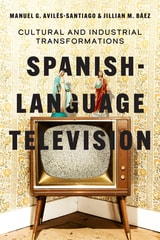
Spanish-Language Television
Cultural and Industrial TransformationsManuel G. Avilés-Santiago and Jillian M. Báez
University of Texas Press, 2025
How Spanish-language television networks continue to thrive in a rapidly changing media landscape.
The US television industry has suffered blow after blow amid media convergence and the rise of streaming. Those legacy broadcasters that survive are much diminished and highly dependent on live programming—the last redoubt of old media. There is an exception, though: Spanish-language television is thriving.
Spanish-Language Television surveys the Latinx media landscape to better appreciate why Univision and Telemundo have flourished while others faltered. Manuel G. Avilés-Santiago and Jillian M. Báez show that the major Spanish-language networks are unusually flexible and open to innovation in hopes of reaching new demographics. Univision and Telemundo were early to streaming. To appeal to “billennial” audiences—bilingual millennials—who threatened to stray from TV, they rebuilt the telenovela, which now features social commentary, diverse characters, and genre crossovers. Today’s reality programs defy old norms of linguistic correctness, and the airwaves are becoming less hospitable to racism and sexism, resulting in rising ratings and ad revenues. The first book-length treatment of reception patterns in Latinx TV, Spanish-Language Television deepens our understanding of new media in a moment of transformation and possibility.
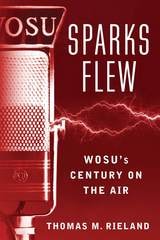
Sparks Flew
WOSU's Century on the AirThomas M. Rieland
The Ohio State University Press, 2019
Sparks Flew is a rich story of creative, tenacious men and women working in a new medium that commercial enterprises soon dominated. At any moment in time, educational broadcasting could have failed if not for a few land-grant institutions like The Ohio State University and prominent stations like WOSU that supported the medium. Sparks Flew is the untold story, a century in the making, of one institution and one educational station that represent the roots of today’s public broadcasting system.
Speak Peace
Words of Wisdom, Work, and WonderLynette Ford
Parkhurst Brothers, Inc., 2019
Speaking Our Selves
New Plays by African WomenAsiimwe Deborah Kawe and Robert H. Vorlicky, Editors
University of Michigan Press, 2025
The plays within Speaking Our Selves confront a range of ideas and issues, including women embracing the potential of agency in often contested subject positions; confronting their historical object positions in worlds of devastating patriarchal authority; resisting toxic masculinity and persistent, oppressive binaries of gender roles; finding power in communities of women; increasing their acumen in financial, business, and economic spheres; facing tensions between traditional religious tenets and efforts toward secularization; living with perpetual acts of violence toward their bodies; and the rising mental health issues among girls and women across the continent. Readers and audiences are challenged by these plays not to be passive witnesses by observing from safe vantage points, but rather to be active participants in the stories being told.
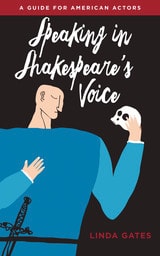
Speaking in Shakespeare's Voice
A Guide for American ActorsLinda Gates
Northwestern University Press, 2019
Speaking in Shakespeare's Voice: A Guide for American Actors is a book for undergraduate and graduate students of acting as well as for the professional who would like to perform Shakespeare with the skill of a classical actor. It is also valuable for European actors interested in performing Shakespeare in American English and British actors who would like to explore Shakespeare from an American perspective.
This guide focuses on the technical elements of voice and speech, including breathing, resonance, and diction, as well as providing an introduction to verse speaking and scansion and to Shakespeare’s rhetorical devices, such as antithesis, alliteration, onomatopoeia, irony, metaphor, and wordplay. These topics are annotated with examples from Shakespeare’s plays to demonstrate how an actor can apply the lessons to actual performance. The book also explores the history of Shakespearean performance in the United States and provides guidance on current editions of Shakespeare’s text from the Folio to online Open Source Shakespeare. A helpful appendix offers examples of two-person scenes and contextualized monologues.
Speaking in Tongues
Languages at Play in the TheatreMarvin Carlson
University of Michigan Press, 2010
The book begins by investigating various "levels" of language-high and low style, prose and poetry-and the ways in which these have been used historically to mark social positions and relationships. It next considers some of the political and historical implications of dialogue theatre, as well as theatre that literally employs several languages, from classical Greek examples to the postmodern era. Carlson treats with special attention the theatre of the postcolonial world, and especially the triangulation of the local language, the national language, and the colonial language, drawing on examples of theatre in the Caribbean, Africa, Australia, and New Zealand. Finally, Carlson considers the layering of languages in the theatre, such as the use of supertitles or simultaneous signing.
Speaking in Tongues draws important social and political conclusions about the role of language in cultural power, making a vital contribution to the fields of theatre and performance.
Marvin Carlson is Sidney E. Cohn Professor of Theatre and Comparative Literature, CUNY Graduate Center. He is author of Performance: A Critical Introduction; Theories of the Theatre: A Historical and Critical Survey, from the Greeks to the Present; and The Haunted Stage: The Theatre as Memory Machine, among many other books.
Speaking of Abortion
Television and Authority in the Lives of WomenAndrea L. Press and Elizabeth R. Cole
University of Chicago Press, 1999
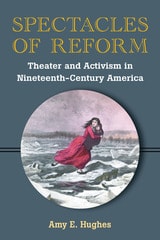
Spectacles of Reform
Theater and Activism in Nineteenth-Century AmericaAmy E. Hughes
University of Michigan Press, 2014
In the nineteenth century, long before film and television arrived to electrify audiences with explosions, car chases, and narrow escapes, it was America's theaters that offered audiences such thrills, with "sensation scenes" of speeding trains, burning buildings, and endangered bodies, often in melodramas extolling the virtues of temperance, abolition, and women's suffrage. In Spectacles of Reform , Amy E. Hughes scrutinizes these peculiar intersections of spectacle and reform, revealing that spectacle plays a crucial role in American activism. By examining how theater producers and political groups harnessed its power and appeal, Hughes suggests that spectacle was—and remains—central to the dramaturgy of reform.
Engaging evidence from lithographs to children's books to typography catalogs, Hughes traces the cultural history of three famous sensation scenes—the drunkard suffering from the delirium tremens, the fugitive slave escaping over a river, and the victim tied to the railroad tracks—assessing how they conveyed, allayed, and denied concerns about the rights and responsibilities of citizenship. These images also appeared in printed propaganda, suggesting that the coup de théâtre was an essential part of American reform culture. Additionally, Hughes argues that today's producers and advertisers continue to exploit the affective dynamism of spectacle, reaching an even broader audience through film, television, and the Internet.
To be attuned to the dynamics of spectacle, Hughes argues, is to understand how we see. Consequently, Spectacles of Reform will interest not only theater historians, but also scholars and students of political, literary, and visual culture who are curious about how U.S. citizens saw themselves and their world during a pivotal period in American history.