Results by title
2916 books match the query 'Politics and government' and 172 start with s
Strategic Party Government
Why Winning Trumps IdeologyGregory Koger and Matthew J. Lebo
University of Chicago Press, 2017
In Strategic Party Government, Koger and Lebo argue that Congress is now primarily a forum for partisan competition. In order to avoid losing, legislators unite behind strong party leaders, even when they do not fully agree with the policies their party is advocating. They do so in the belief that party leaders and voters will reward them for winning—or at least trying to win—these legislative contests. And as the parties present increasingly united fronts, partisan competition intensifies and pressure continues to mount for a strong party-building strategy—despite considerable disagreement within the parties.
By bringing this powerful but underappreciated force in American politics to the forefront, Koger and Lebo provide a new interpretation of the problems facing Congress that is certain to reset the agenda for legislative studies.
Strike!
Twenty Days in 1970 When Minneapolis Teachers Broke the LawWilliam D. Green
University of Minnesota Press, 2022
When viewed from our turbulent times, the Minneapolis of fifty years ago might seem serene, but Minneapolis schoolteachers of the day remember it quite differently. It was, author William D. Green said of their recollections, as if they’d been through war. This book recreates twenty days in April 1970 when a then-illegal strike by Minneapolis’s public school teachers marked a singular moment of cultural upheaval—and forever changed the city’s politics, labor law, educational climate, and the right to collective bargaining.
Since the inception of public education in Minnesota, teachers were expected to pursue their vocation out of civic spirit, with low wages, no benefits, and no job security. Strike! describes the history and circumstances leading to the teachers’ extraordinary action, which pitted the progressive and conservative teachers’ unions against each other—and both against the all-powerful school district, a hostile governor and state legislature, and a draconian Minnesota law. Capturing the intense emotions and heated rivalries of the strike, Green profiles the many actors involved, the personal and professional stakes, and the issues of politics, law, and the business of education.
Informed by interviews, firsthand accounts, news reports, and written records, Strike! brings to life a pivotal moment not just for Minneapolis’s teachers but for the city itself, whose government, school system, and culture would, in a complex but inexorable way, change course for good.
Strolling in the Ruins
The Caribbean's Non-sovereign Modern in the Early Twentieth CenturyFaith Smith
Duke University Press, 2023
Strong Soldiers, Failed Revolution
The State and Military in Burma, 1962-88Yoshihiro Nakanishi
National University of Singapore Press, 2013
The tatmadaw’s anti-communist propaganda during the 1950s was a key element in state ideology under the Ne Win regime, and the direct participation of tatmadaw officers in the Burma Socialist Programme Party and government ministries at the national and local level transformed the political party system and civilian bureaucracy. Personal relationships — between Ne Win and the tatmadaw officer corps, and within the military — were central to the growing influence of the military, and to the outcome of the political crisis and subsequent military coup d’état in 1988.
Nakanishi’s discussion of these processes reveals many heretofore-unknown facts about this “dark age” in the country’s political history, and highlights its institutional legacy for the post-1988 military regime and the reformist government that succeeded it. His thought-provoking conclusions are significant for Southeast Asia specialists and for students of politics generally, and his insights will be useful for anyone seeking to engage with Myanmar as it comes to terms with an outside world it once kept at arm’s length.
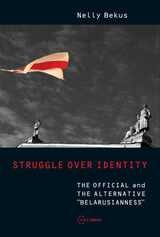
Struggle over Identity
The Official and the Alternative "Belarusianness"Nelly Bekus
Central European University Press, 2010
Rejecting the cliché about “weak identity and underdeveloped nationalism,” Bekus argues for the co-existence of two parallel concepts of Belarusianness—the official and the alternative one—which mirrors the current state of the Belarusian people more accurately and allows for a different interpretation of the interconnection between the democratization and nationalization of Belarusian society.
The book describes how the ethno-symbolic nation of the Belarusian nationalists, based on the cultural capital of the Golden Age of the Belarusian past (17th century) competes with the “nation” institutionalized and reified by the numerous civic rituals and social practices under the auspices of the actual Belarusian state.
Comparing the two concepts not only provides understanding of the logic that dominates Belarusian society’s self-description models, but also enables us to evaluate the chances of alternative Belarusianness to win this unequal struggle over identity.
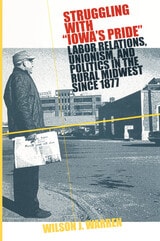
Struggling With Iowas Pride
Labor Relations, Unionism, and Politics in the Rural Midwest since 1877Warren, Wilson J.
University of Iowa Press, 2000
Recognized between 1880 and 1910 by its trademark label "Iowa's Pride," John Morrell and Company is best known for contributing one of the most important local unions to the progressive United Packinghouse Workers of America. During the 1930s and 1940s, its members pursued a militant brand of unionism. By the early 1950s, the local's militancy became a source of contention among the membership. By explaining the effect of Morrell-Ottumwa's union leaders on local and state Democratic politics, especially in the development of the Congress of Industrial Organizations' Iowa State Industrial Union Council and the AFL-CIO's Iowa Federation of Labor, Wilson Warren makes an important contribution to the literature on labor's involvement in the Democratic party's ascendancy across much of the industrial North following World War II.
This history of Ottumwa's meatpacking workers provides insights into the development of several forms of labor relations, including the evangelical Christian paternalism, welfare capitalism, and unionism that were distinctive to one blue-collar community but that also reflected workers' experiences in many other rural midwestern industrial communities. By carefully analyzing all relevant labor and industrial sources and by revealing the deeply held aspirations and concerns expressed by both workers and managers, Warren constructs a window through which Iowa's industrial and labor history over the past 120 years can be viewed.
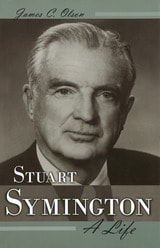
Stuart Symington
A LifeJames C. Olson
University of Missouri Press, 2003
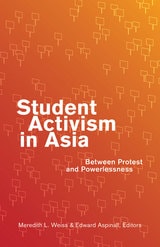
Student Activism in Asia
Between Protest and PowerlessnessMeredith L. Weiss
University of Minnesota Press, 2012
Since World War II, students in East and Southeast Asia have led protest movements that toppled authoritarian regimes in countries such as Indonesia, South Korea, and Thailand. Elsewhere in the region, student protests have shaken regimes until they were brutally suppressed—most famously in China’s Tiananmen Square and in Burma. But despite their significance, these movements have received only a fraction of the notice that has been given to American and European student protests of the 1960s and 1970s. The first book in decades to redress this neglect, Student Activism in Asia tells the story of student protest movements across Asia.
Taking an interdisciplinary, comparative approach, the contributors examine ten countries, focusing on those where student protests have been particularly fierce and consequential: China, Japan, Hong Kong, Taiwan, South Korea, Indonesia, Burma, Malaysia, Thailand, and the Philippines. They explore similarities and differences among student movements in these countries, paying special attention to the influence of four factors: higher education systems, students’ collective identities, students’ relationships with ruling regimes, and transnational flows of activist ideas and inspirations.
The authors include leading specialists on student activism in each of the countries investigated. Together, these experts provide a rich picture of an important tradition of political protest that has ebbed and flowed but has left indelible marks on Asia’s sociopolitical landscape.
Contributors: Patricio N. Abinales, U of Hawaii, Manoa; Prajak Kongkirati, Thammasat U, Thailand; Win Min, Vahu Development Institute; Stephan Ortmann, City U of Hong Kong; Mi Park, Dalhousie U, Canada; Patricia G. Steinhoff, U of Hawaii, Manoa; Mark R. Thompson, City U of Hong Kong; Teresa Wright, California State U, Long Beach.
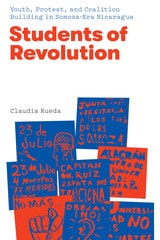
Students of Revolution
Youth, Protest, and Coalition Building in Somoza-Era NicaraguaBy Claudia Rueda
University of Texas Press, 2019
Students played a critical role in the Sandinista struggle in Nicaragua, helping to topple the US-backed Somoza dictatorship in 1979—one of only two successful social revolutions in Cold War Latin America. Debunking misconceptions, Students of Revolution provides new evidence that groups of college and secondary-level students were instrumental in fostering a culture of insurrection—one in which societal groups, from elite housewives to rural laborers, came to see armed revolution as not only legitimate but necessary.
Drawing on student archives, state and university records, and oral histories, Claudia Rueda reveals the tactics by which young activists deployed their age, class, and gender to craft a heroic identity that justified their political participation and to help build cross-class movements that eventually paralyzed the country. Despite living under a dictatorship that sharply curtailed expression, these students gained status as future national leaders, helping to sanctify their right to protest and generating widespread outrage while they endured the regime’s repression. Students of Revolution thus highlights the aggressive young dissenters who became the vanguard of the opposition.
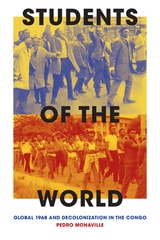
Students of the World
Global 1968 and Decolonization in the CongoPedro Monaville
Duke University Press, 2022
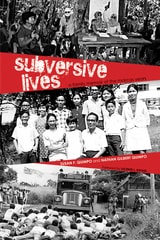
Subversive Lives
A Family Memoir of the Marcos YearsSusan F. Quimpo
Ohio University Press, 2016
From the 1960s to the 1990s, seven members of the Quimpo family dedicated themselves to the anti-Marcos resistance in the Philippines, sometimes at profound personal cost. In this unprecedented memoir, eight siblings (plus one by marriage) tell their remarkable stories in individually authored chapters that comprise a family saga of revolution, persistence, and, ultimately, vindication, even as easy resolution eluded their struggles.
Subversive Lives tells of attempts to smuggle weapons for the New People’s Army (the armed branch of the Communist Party of the Philippines); of heady times organizing uprisings and strikes; of the cruel discovery of one brother’s death and the inexplicable disappearance of another (now believed to be dead); and of imprisonment and torture by the military. These stories show the sacrifices and daily heroism of those in the movement. But they also reveal its messy legacies: sons alienated from their father; daughters abused by the military; friends betrayed; and revolutionary affection soured by intractable ideological differences.
The rich and distinctive contributions span the martial law years of Ferdinand Marcos’s rule. Subversive Lives is a riveting and accessible primer for those unfamiliar with the era, and a resonant history for those with a personal connection to what it meant to be Filipino at that time, or for anyone who has fought political repression.

Succession to High Office in Botswana
Three Case StudiesJack Parson
Ohio University Press, 1990
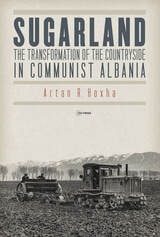
Sugarland
The Transformation of the Countryside in Communist AlbaniaArtan R. Hoxha
Central European University Press, 2023
In this historical monograph on non-urban communist Albania, Artan Hoxha discusses the ambitious development project that turned a swampland into a site of sugar production after 1945. The author seeks to free the history of Albanian communism from the stereotypes that still circulate about it with stigmas of an aberration, paranoia, extreme nationalism, and xenophobia.
This micro-history of the agricultural and industrial transformation of a zone in southeastern Albania, explores a wide range of issues including modernization, development, and social, cultural, and economic policies. In addition to analyzing the collectivization of agriculture, Hoxha shows how communism affected the lives of ordinary rural people. As elsewhere in the Communist Bloc, the Albanian regime borrowed developmental projects from the past and implemented them using social mobilization and a command economy. The abundant archival resources along with interviews in the field attest to the authorities’ efforts to increase consumption and to radically transform people’s tastes. But the book argues that despite the repressive environment, people involved in the sugar project were not simply passive receivers of models from the nation's capital. The author also describes that—in defiance of Cold War bipolarity—technological requirements and social policy considerations required a degree of engagement with the broader world.
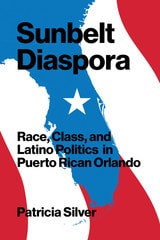
Sunbelt Diaspora
Race, Class, and Latino Politics in Puerto Rican OrlandoBy Patricia Silver
University of Texas Press, 2020
2021 — Silver Medal, Raul Yzaguirre Best Political/Current Affairs Book – International Latino Book Awards, Latino Literacy Now
An in-depth look at an emerging Latino presence in Orlando, Florida, where Puerto Ricans and others navigate differences of race, class, and place of origin in their struggle for social, economic, and political belonging.
Puerto Ricans make up half of Orlando-area Latinos, arriving from Puerto Rico as well as from other long-established diaspora communities to a place where Latino politics has long been about Cubans in Miami. Together with other Latinos from multiple places, Puerto Ricans bring diverse experiences of race and class to this Sunbelt city. Tracing the emergence of the Puerto Rican and Latino presence in Orlando from the 1940s through an ethnographic moment of twenty-first-century electoral redistricting, Sunbelt Diaspora provides a timely prism for viewing how differences of race, class, and place play out in struggles to claim political, social, and economic ground for Latinos.
Drawing on over a decade of ethnographic, oral history, and archival research, Patricia Silver situates her findings in Orlando’s historically black-white racial landscape, post-1960s claims to “color-blindness,” and neoliberal celebrations of individualism. Through the voices of diverse participants, Silver brings anthropological attention to the question of how social difference affects collective identification and political practice. Sunbelt Diaspora asks what constitutes community and how criteria for membership and legitimate representation are negotiated.
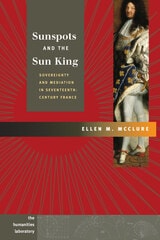
Sunspots and the Sun King
Sovereignty and Mediation in Seventeenth-Century FranceEllen M. McClure
University of Illinois Press, 2006
Mediation, monarchy, and Louis XIV's attempts to legitimize his reign
In order to assert his divine right, Louis XIV missed no opportunity to identify himself as God’s representative on earth. However, in Sunspots and the Sun King Ellen McClure explores the contradictions inherent in attempting to reconcile the logical and mystical aspects of divine right monarchy. McClure analyzes texts devoted to definitions of sovereignty, presents a meticulous reading of Louis XIV’s memoirs to the crown prince, and offers a novel analysis of diplomats and ambassadors as the mediators who preserved and transmitted the king’s authority. McClure asserts that these discussions, ranging from treatises to theater, expose incommensurable models of authority and representation permeating almost every aspect of seventeenth-century French culture.

Survival Pending Revolution
The History of the Black Panther PartyPaul Alkebulan
University of Alabama Press, 2007
Survival of a Perverse Nation
Morality and Queer Possibility in ArmeniaTamar R. Shirinian
Duke University Press, 2024
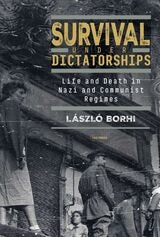
Survival under Dictatorships
Life and Death in Nazi and Communist RegimesLászló Borhi
Central European University Press, 2024
A complex array of individual responses to the abuse of power by the state is represented in this book in three horrific episodes in the history of East-Central Europe. The three events followed each other within a span of about ten years: the deportation and murder of Hungarian Jews in Nazi death and labor camps; the Arrow Cross terrorist rule in Budapest; and finally the Stalinist terror in Hungary and East-Central Europe. Through the prism of survival, László Borhi explores the relationship between the individual and power, attempting to understand the mechanism of oppression and terror produced by arbitrary, unbridled power through the experience of normal people.
Despite the obvious peculiarities of time and place, the Hungarian cases convey universal lessons about the Holocaust, Nazism, and Stalinism. In the author's conception, the National Socialist and Stalinist experiences are linked on several levels. Both regimes defended their visions of the future against social groups whom they saw as implacable enemies of those visions, and who therefore had to be destroyed for sake of social perfection. Furthermore, the social practices of National Socialism were passed on. And although Stalinism was imposed by a foreign power, some of the survival skills for coping with it were rehearsed under the previous hellish experience.
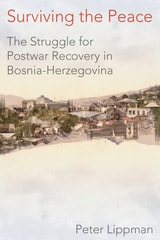
Surviving the Peace
The Struggle for Postwar Recovery in Bosnia-HerzegovinaPeter Lippman
Vanderbilt University Press, 2019
Essential reading for students of the former Yugoslavia and anyone interested in postwar or post-genocide studies, Surviving the Peace is an instant classic of long-form reporting, an impossible accomplishment without a lifetime of dedication to a place and people.
Peter Lippman's website is http://survivingthepeace.org/.
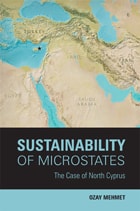
Sustainability of Microstates
The Case of North CyprusOzay Mehmet
University of Utah Press, 2009
Utah Series in Middle East Studies
This interdisciplinary study discusses the development, economics, and politics of North Cyprus, a divided state since 1960 when sovereignty was surrendered by the British to both Greek and Turkish Cypriots. Mehmet works to demonstrate that, as a microstate with an area of just 3,442 square kilometers, North Cyprus possesses certain inherent comparative economic advantages in the service sectors that enable it to be sustainable in today's rapidly globalizing and competitive economic world.
Mehmet bases his arguments for the potential sustainability of North Cyprus on the concept of economic rationalism, in which participating parties work to optimize their own self-interest. In an ethnic conflict like that of North Cyprus, the logic of optimization demands a rational, free, and objective balancing of competing interests to reach an agreed solution. The economic rationalist approach sharply contrasts with the highly emotional political, historical, cultural, and legal approaches that have thus far dominated the study and discussion of the Cyprus problem, approaches that have largely resulted in a protracted conflict.
While recognizing the negative forces of ethnic tension and the very real possibility of a continued divided Cyprus state, Sustainability of Microstates nevertheless remains hopeful, designed to unleash the forces of convergence that may be deduced from economic rationalism, and unwavering in its conviction of the ultimate sustainability of North Cyprus.
Symbiotic Antagonisms
Competing Nationalisms in TurkeyAyse Kadioglu
University of Utah Press, 2011
Utah Series in Middle East Studies
Today, nationalism and nationalist sentiments are becoming more and more pronounced, creating a global emergence of ethno-nationalist and religious fundamentalist identity conflicts. In the post-9/11 era of international terrorism, it is appropriate to suggest that nationalism will retain its central place in politics and local and world affairs for the foreseeable future. It is in this vein that there has been a recent upsurge of interest concerning the power of nationalist tendencies as one of the dominant ideologies of modern times.
Symbiotic Antagonisms looks at the state-centric mode of modernization in Turkey that has constituted the very foundation on which nationalism has acquired its ideological status and transformative power. The book documents a symposium held at Sabanci University, presenting nationalism as a multidimensional, multiactor-based phenomenon that functions as an ideology, a discourse, and a political strategy. Turkish, Kurdish, and Islamic nationalisms are systematically compared in this timely and significant work.
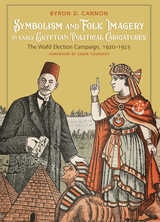
Symbolism and Folk Imagery in Early Egyptian Political Caricatures
The Wafd Election Campaign, 1920–1923Byron D. Cannon, Foreword by Samir Toubassy
University of Utah Press, 2019
Art is politics and politics is art in this study of post–World War I caricature art in Egypt and Egyptian politics. This book explores the complex meaning and significance of caricature art drawn to support the ascendant Egyptian Wafdpolitical party and its push for independence from British colonial control. The works of previously neglected Egyptian lithographers are also explored, especially those who adopted sophisticated European techniques while experimenting with a variety of new styles during a remarkable period in Egyptian history.
Caricature art by Wafd party artists was almostsui generis. It is distinguished especially by its sincere use of iconic, folkloric imagery, intended to rally nationalistic sentiments among an emerging Egyptian electorate that included many nonliterate citizens. Cannon’s research breathes new life into an influential yet largely forgotten artistic movement in Egypt, one that deserves recognition for its contribution to Egypt’s share of modern Middle East cultural history. Includes full color reproductions.