Results by title
4127 books match the query 'Science' and 313 start with s
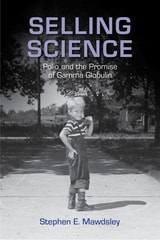
Selling Science
Polio and the Promise of Gamma GlobulinMawdsley, Stephen E
Rutgers University Press, 2016
Drawing on oral history interviews, medical journals, newspapers, meeting minutes, and private institutional records, Selling Science sheds light on the ethics of scientific conduct, and on the power of marketing to shape public opinion about medical experimentation.

Semiconductor Lasers and Diode-based Light Sources for Biophotonics
Peter E. Andersen
The Institution of Engineering and Technology, 2019

Sensations
French Archaeology between Science and Spectacle, 1890–1940Daniel J. Sherman
University of Chicago Press, 2025
For well over a century, from Heinrich Schliemann’s sensational discoveries at Troy in the 1880s, through the Tutankhamun excavations of the 1920s, to the recent LIDAR-aided uncovering of lost Maya cities, archaeology has made headlines. In this new history of archaeology and its archival traces, Daniel J. Sherman treats the friction between science and spectacle as constitutive of the field. By exploring two long-running controversies that roiled the French archaeological world and its wider public in the first third of the twentieth century, he gives the science/media relationship a unique place in the history of archaeology—and its present.
The first controversy involves a dispute over the conduct of excavations at Carthage in Tunisia, then under French colonial rule. In the second, accusations of forgery clouded what seemed to be a stunning Neolithic find at a hamlet called Glozel, in the Auvergne region in central France. The affair divided the scholarly community and attracted enormous media attention across Europe and North America. Both controversies occurred at a transitional moment between what has been called the heroic age of archaeology, dominated by explorers and adventurers with little specialized training, and the beginnings of its professionalization. As Sherman shows, the two affairs put the methods, procedures, and networks of archaeology in the spotlight and profoundly shaped its history.
Sensing Qualia
Solving the Hard Problem of ConsciousnessPaul G. Skokowski
University of Chicago Press, 2026
Philosophers of mind and neuroscientists often debate what they call the hard problem of consciousness, that is, how we might account for qualia—our subjective experiences of phenomena like color, taste, pain, smell, and more. In Sensing Qualia, Paul G. Skokowski surveys the most influential theories of mind since Descartes in order to establish a new theory he calls sensory naturalism, which recognizes the senses as natural detectors of physical properties in the world.
Drawing on neuroscience, physics, and philosophy, Skokowski provides a naturalistic framework for studying qualia in the physical world and explores the limits of qualia in androids and AI. The result is a compelling explanation of qualia for anyone curious about the nature of conscious experience in humans and AI.

Sensorimotor Integration
Edited by Carl Gans and Philip S. Ulinski
University of Chicago Press, 1992
"This volume would be a valuable addition to any comparative anatomist's bookshelf, and one that should be of great interest to comparative neurobiologists and neuroanatomists alike."—Katherine V. Fite, Quarterly Review of Biology
Sensory Experiments
Psychophysics, Race, and the Aesthetics of FeelingErica Fretwell
Duke University Press, 2020

Sentimental Savants
Philosophical Families in Enlightenment FranceMeghan K. Roberts
University of Chicago Press, 2016
Sentimental Savants is the first book to explore the place of the family among the savants of the French Enlightenment, a group that openly embraced their families and domestic lives, even going so far as to test out their ideas—from education to inoculation—on their own children. Meghan K. Roberts delves into the lives and work of such major figures as Denis Diderot, Émilie Du Châtelet, the Marquis de Condorcet, Antoine Lavoisier, and Jérôme Lalande to paint a striking portrait of how sentiment and reason interacted in the eighteenth century to produce not only new kinds of knowledge but new kinds of families as well.

Serengeti II
Dynamics, Management, and Conservation of an EcosystemEdited by A. R. E. Sinclair and Peter Arcese
University of Chicago Press, 1995
Building on the groundwork laid by the classic Serengeti: Dynamics of an Ecosystem, published in 1979 by the University of Chicago Press, this new book integrates studies of the ecosystem at every level—from the plants at the bottom of the visible food chain, to the many species of herbivores and predators, to the system as a whole. Drawing on new data from many long-term studies and from more recent research initiatives, and applying new theory and computer technology, the contributors examine the large-scale processes that have produced the Serengeti's extraordinary biological diversity, as well as the interactions among species and between plants and animals and their environment. They also introduce computer modeling as a tool for exploring these interactions, employing this new technology to test and anticipate the effects of social, political, and economic changes on the entire ecosystem and on particular species, and so to shape future conservation and management strategies.
Serengeti III
Human Impacts on Ecosystem DynamicsEdited by A. R. E. Sinclair, Craig Packer, Simon A. R. Mduma, and John M. Fryxel
University of Chicago Press, 2008

Serengeti IV
Sustaining Biodiversity in a Coupled Human-Natural SystemEdited by Anthony R. E. Sinclair, Kristine L. Metzger, Simon A. R. Mduma, and John M. Fryxell
University of Chicago Press, 2015
Serengeti IV, the latest installment in a long-standing series on the region’s ecology and biodiversity, explores the role of our species as a source of both discord and balance in Serengeti ecosystem dynamics. Through chapters charting the complexities of infectious disease transmission across populations, agricultural expansion, and the many challenges of managing this ecosystem today, this book shows how the people and landscapes surrounding crucial protected areas like Serengeti National Park can and must contribute to Serengeti conservation. In order to succeed, conservation efforts must also focus on the welfare of indigenous peoples, allowing them both to sustain their agricultural practices and to benefit from the natural resources provided by protected areas—an undertaking that will require the strengthening of government and education systems and, as such, will present one of the greatest conservation challenges of the next century.
Serengeti
Dynamics of an EcosystemEdited by A. R. E. Sinclair and M. Norton-Griffiths
University of Chicago Press, 1979

Service as Mandate
How American Land-Grant Universities Shaped the Modern World, 1920–2015Edited by Alan I Marcus
University of Alabama Press, 2015
From their founding, land-grant schools have provided educational opportunities to millions, producing many of the nation’s scientific, technical, and agricultural leaders and spawning countless technological and agricultural innovations. Nevertheless, their history has not always been smooth or without controversy or setbacks. These vital centers of learning and research have in fact been redefined and reconceptualized many times and today bear only a cursory resemblance to their original incarnations.
The thirteen essays in this collection explore such themes as the emphasis on food science and home economics, the country life movement, the evolution of a public research system, the rise of aerospace engineering, the effects of the GI Bill, the teaching of military science, the sustainable agriculture movement, and the development of golf-turf science. Woven together, these expertly curated scenes, vignettes, and episodes powerfully illustrate these institutions’ ability to flex and adapt to serve the educational needs of an ever-changing American citizenry.
By dint of their mission to remedy social, economic, and technical problems; to improve standards of living; and to enhance the quality of life, land-grant universities are destined and intended to be agents of change—a role that finds them at times both celebrated and hotly contested, even vilified. A readable and fascinating exploration of land-grant universities, Service as Mandate offers a vital exploration of these dynamic institutions to educators, policy makers, students, and the wider communities that land-grant universities serve.
Serving the Reich
The Struggle for the Soul of Physics under HitlerPhilip Ball
University of Chicago Press, 2014
After World War II, most scientists in Germany maintained that they had been apolitical or actively resisted the Nazi regime, but the true story is much more complicated. In Serving the Reich, Philip Ball takes a fresh look at that controversial history, contrasting the career of Peter Debye, director of the Kaiser Wilhelm Institute for Physics in Berlin, with those of two other leading physicists in Germany during the Third Reich: Max Planck, the elder statesman of physics after whom Germany’s premier scientific society is now named, and Werner Heisenberg, who succeeded Debye as director of the institute when it became focused on the development of nuclear power and weapons.
Mixing history, science, and biography, Ball’s gripping exploration of the lives of scientists under Nazism offers a powerful portrait of moral choice and personal responsibility, as scientists navigated “the grey zone between complicity and resistance.” Ball’s account of the different choices these three men and their colleagues made shows how there can be no clear-cut answers or judgment of their conduct. Yet, despite these ambiguities, Ball makes it undeniable that the German scientific establishment as a whole mounted no serious resistance to the Nazis, and in many ways acted as a willing instrument of the state.
Serving the Reich considers what this problematic history can tell us about the relationship between science and politics today. Ultimately, Ball argues, a determination to present science as an abstract inquiry into nature that is “above politics” can leave science and scientists dangerously compromised and vulnerable to political manipulation.

Severe Storms and Society
Seeking Resilience and Understanding Human Behavior in Meteorology, the Weather Enterprise, and PublicsJack R. Friedman, Daphne S. LaDue, Laura Myers, and Melissa J. Lamkin
American Meteorological Society, 2021

Sewall Wright and Evolutionary Biology
William B. Provine
University of Chicago Press, 1986
"In Sewall Wright and Evolutionary Biology . . . Provine has produced an intellectual biography which serves to chart in considerable detail both the life and work of one man and the history of evolutionary theory in the middle half of this century. Provine is admirably suited to his task. . . . The resulting book is clearly a labour of love which will be of great interest to those who have a mature interest in the history of evolutionary theory."-John Durant, ;ITimes Higher Education Supplement;X

Sex Isn't Real
The Invention of an Incoherent BinaryBeans Velocci
Duke University Press, 2026

Sex Itself
The Search for Male and Female in the Human GenomeSarah S. Richardson
University of Chicago Press, 2013

Sex and Death
An Introduction to Philosophy of BiologyKim Sterelny and Paul E. Griffiths
University of Chicago Press, 1999
Informed answers to questions like these, critical to our understanding of ourselves and the world around us, require both a knowledge of biology and a philosophical framework within which to make sense of its findings. In this accessible introduction to philosophy of biology, Kim Sterelny and Paul E. Griffiths present both the science and the philosophical context necessary for a critical understanding of the most exciting debates shaping biology today. The authors, both of whom have published extensively in this field, describe the range of competing views—including their own—on these fascinating topics.
With its clear explanations of both biological and philosophical concepts, Sex and Death will appeal not only to undergraduates, but also to the many general readers eager to think critically about the science of life.

Sex and Scientific Inquiry
Edited by Sandra Harding and Jean F. O'Barr
University of Chicago Press, 1987

Sex in Development
Science, Sexuality, and Morality in Global PerspectiveVincanne Adams and Stacy Leigh Pigg, eds.
Duke University Press, 2005
Sex in Development combines the cultural analysis of sexuality, critiques of global development, and science and technology studies. Whether considering the resistance encountered by representatives of an American pharmaceutical company attempting to teach Russian doctors a “value free” way to offer patients birth control or the tension between Tibetan Buddhist ideas of fertility and the modernization schemes of the Chinese government, these essays show that attempts to make sex a universal moral object to be managed and controlled leave a host of moral ambiguities in their wake as they are engaged, resisted, and reinvented in different ways throughout the world.
Contributors. Vincanne Adams, Leslie Butt, Lawrence Cohen, Heather Dell, Vinh-Kim Nguyen, Shanti Parikh, Heather Paxson, Stacy Leigh Pigg, Michele Rivkin-Fish

Sex in an Age of Technological Reproduction
<i>ICSI<i/> and <i>Taboos<i/>Carl Djerassi
University of Wisconsin Press, 2008

Sex on the Kitchen Table
The Romance of Plants and Your FoodNorman C. Ellstrand
University of Chicago Press, 2018
In Sex on the Kitchen Table, Norman C. Ellstrand takes us on a vegetable-laced tour of this entire sexual adventure. Starting with the love apple (otherwise known as the tomato) as a platform for understanding the kaleidoscopic ways that plants can engage in sex, successive chapters explore the sex lives of a range of food crops, including bananas, avocados, and beets, finally ending with genetically engineered squash—a controversial, virus-resistant vegetable created by a process that involves the most ancient form of sex. Peppered throughout are original illustrations and delicious recipes, from sweet and savory tomato pudding to banana puffed pancakes, avocado toast (of course), and both transgenic and non-GMO tacos.
An eye-opening medley of serious science, culinary delights, and humor, Sex on the Kitchen Table offers new insight into fornicating flowers, salacious squash, and what we owe to them. So as we sit down to dine and ready for that first bite, let us say a special grace for our vegetal vittles: let’s thank sex for getting them to our kitchen table.

Sex, Drugs, and Sea Slime
The Oceans' Oddest Creatures and Why They MatterEllen Prager
University of Chicago Press, 2011
When viewed from a quiet beach, the ocean, with its rolling waves and vast expanse, can seem calm, even serene. But hidden beneath the sea’s waves are a staggering abundance and variety of active creatures, engaged in the never-ending struggles of life—to reproduce, to eat, and to avoid being eaten.
With Sex, Drugs, and Sea Slime, marine scientist Ellen Prager takes us deep into the sea to introduce an astonishing cast of fascinating and bizarre creatures that make the salty depths their home. From the tiny but voracious arrow worms whose rapacious ways may lead to death by overeating, to the lobsters that battle rivals or seduce mates with their urine, to the sea’s masters of disguise, the octopuses, Prager not only brings to life the ocean’s strange creatures, but also reveals the ways they interact as predators, prey, or potential mates. And while these animals make for some jaw-dropping stories—witness the sea cucumber, which ejects its own intestines to confuse predators, or the hagfish that ties itself into a knot to keep from suffocating in its own slime—there’s far more to Prager’s account than her ever-entertaining anecdotes: again and again, she illustrates the crucial connections between life in the ocean and humankind, in everything from our food supply to our economy, and in drug discovery, biomedical research, and popular culture.
Written with a diver’s love of the ocean, a novelist’s skill at storytelling, and a scientist’s deep knowledge, Sex, Drugs, and Sea Slime enchants as it educates, enthralling us with the wealth of life in the sea—and reminding us of the need to protect it.
Sex, Skulls, and Citizens
Gender and Racial Science in Argentina (1860-1910)Ashley Elizabeth Kerr
Vanderbilt University Press, 2020
PROSE Awards Subject Category Finalist—Biological Anthropology, Ancient History, and Archaeology, 2021
Best Nineteenth-Century Book Award, Latin American Studies Association Nineteenth-Century Section, 2021
Analyzing a wide variety of late-nineteenth-century sources, Sex, Skulls, and Citizens argues that Argentine scientific projects of the era were not just racial encounters, but were also conditioned by sexual relationships in all their messy, physical reality.
The writers studied here (an eclectic group of scientists, anthropologists, and novelists, including Estanislao Zeballos, Lucio and Eduarda Mansilla, Ramón Lista, and Florence Dixie) reflect on Indigenous sexual practices, analyze the advisability and effects of interracial sex, and use the language of desire to narrate encounters with Indigenous peoples as they try to scientifically pinpoint Argentina's racial identity and future potential.
Kerr's reach extends into history of science, literary studies, and history of anthropology, illuminating a scholarly time and place in which the lines betwixt were much blurrier, if they existed at all.
Sexual Nature/Sexual Culture
Edited by Paul R. Abramson and Steven D. Pinkerton
University of Chicago Press, 1995
Using as its center the idea that sexual pleasure is the primary motivational force behind human sexuality and that reproduction is simply a byproduct of the pleasurability of sex, this book examines sexuality at the individual, societal, and cultural levels. Beginning with a look at the evolution of sexuality in humans and other primates, the essays in the first section examine the sexual ingenuity of primates, the dominant theories of sexual behavior, the differences in male and female sexual interest and behavior, and the role of physical attractiveness in mate selection. The focus then shifts to biological approaches to sexuality, especially the genetic and hormonal origins of sexual orientation, gender, and pleasure.
The essays go on to look at the role of pleasure in different cultures. Included are essays on love among the tribespeople of the Brazilian rain forest and the regulation of adolescent sexuality in India. Finally, several contributors look at the methodological issues in the study of human sexuality, paying particular attention to the problems with research that relies on people's memories of their sexual experiences.
The contributors are Angela Pattatucci, Dean Hamer, David Greenberg, Frans de Waal, Mary McDonald Pavelka, Kim Wallen, Donald Symons, Heino Meyer-Bahlburg, Jean D. Wilson, Donald Tuzin, Lawrence Cohen, Thomas Gregor, Lenore Manderson, Robert C. Bailey, Alice Schlegel, Edward H. Kaplan, Richard Berk, Paul R. Abramson, Paul Okami, and Stephen D. Pinkerton.
Spanning the chasm of the nature versus nurture debate, Sexual Nature/Sexual Culture is a look at human sexuality as a complex interaction of genetic potentials and cultural influences. This book will be of interest to a wide range of readers—from scholars and students in psychology, anthropology, sociology, and history to clinicians, researchers, and others seeking to understand the many dimensions of sexuality.
"If we ever expect to solve the sexually based problems that modern societies face, we must encourage investigations of human sexual behavior. Moreover, those investigations should employ a broad range of disciplines—looking at sex from all angles, which is precisely what Sexual Nature, Sexual Culture does."—Mike May, American Scientist
"...This timely and relevant book reminds us that we cannot rely on simple solutions to complex problems. It represents a transdiciplinary approach integrating knowledge from diverse fields and provides the reader with a challenging and rewarding experience. Especially for those who are involved in teaching human sexuality to medical students and other health care professionals, this book is highly recommended."—Gerald Wiviortt, M.D., Journal of Nervous and Mental Disease
"In short, this volume contains much to stimulate, inform, and amuse, in varying proportions. What more can one ask?"—Pierre L. van den Berghe, Journal of the History of Sexuality
"...the book succeeds in bring together some of the sharpest thinkers in the field of human sexuality, and goes a long way toward clarifying the diverse perspectives that currently exist."—David M. Buss and Todd K. Shackelford, Quarterly Review of Biology

Sexual Visions
Images Of Gender In Science And Medicine Between The Eighteenth And Twentieth CenturiesLudmilla Jordanova
University of Wisconsin Press, 1993
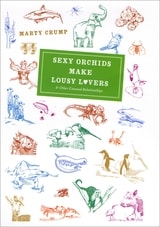
Sexy Orchids Make Lousy Lovers
& Other Unusual RelationshipsMarty Crump
University of Chicago Press, 2009
Vampire bats that regurgitate blood for roosting buddies. Mosquitoes that filch honeydew droplets from ants. Reptiles that enforce chastity on their lovers with copulatory plugs. Capuchin monkeys that use millipede secretions as mosquito repellent. The natural world is full of unusual relationships, and negotiation between life-forms striving to survive is evolution at its most diverse, entertaining, and awe-inspiring.
Picking up where her highly popular Headless Males Make Great Lovers left off, tropical field biologist Marty Crump takes us on another voyage of discovery into the world of unusual natural histories, this time focusing on extraordinary interactions involving animals, plants, fungi, and bacteria. Sexy Orchids Make Lousy Lovers& Other Unusual Relationships illuminates the ceaseless give-and-take between species. Occasionally, both interacting parties benefit, like when hornbills and dwarf mongooses hunt together for food. Other times, like when mites ride in hummingbirds’ nostrils to reach their next meal of nectar, one individual benefits and the other is neither helped nor harmed. But sometimes one individual benefits at the expense of the other; you need only recall your last sinus infection to understand how that works.
Throughout, Crump brings her trademark spunk and zest to these stories of intimate exchange. She introduces readers to penguins that babysit, pseudoscorpions that ride and mate under the wings of giant harlequin beetles, and parasitic fungi that bend insects to their will. A lively companion to Crump’s earlier work, Sexy Orchids Make Lousy Lovers& Other Unusual Relationships captures the bizarre and befuddling aspects of the behavior of animals, plants, and microbes. After this entertaining romp through the world of natural relationships, you’ll never look at an orchid the same way again.

Shakespearean Territories
Stuart Elden
University of Chicago Press, 2018

Shaking the Tree
Readings from Nature in the History of LifeEdited by Henry Gee
University of Chicago Press, 2000
Shaking the Tree brings together nineteen review articles written for Nature over the past decade by many of the major figures in paleontology and evolution, from Stephen Jay Gould to Simon Conway Morris. Each article is brief, accessible, and opinionated, providing "shoot from the hip" accounts of the latest news and debates. Topics covered include major extinction events, homeotic genes and body plans, the origin and evolution of the primates, and reconstructions of phylogenetic trees for a wide variety of groups. The editor, Henry Gee, gives new commentary and updated references.
Shaking the Tree is a one-stop resource for engaging overviews of the latest research in the history of life on Earth.

Shaky Foundations
The Politics-Patronage-Social Science Nexus in Cold War AmericaSolovey, Mark
Rutgers University Press, 2015
Numerous popular and scholarly accounts have exposed the deep impact of patrons on the production of scientific knowledge and its applications. Shaky Foundations provides the first extensive examination of a new patronage system for the social sciences that emerged in the early Cold War years and took more definite shape during the 1950s and early 1960s, a period of enormous expansion in American social science.
By focusing on the military, the Ford Foundation, and the National Science Foundation, Mark Solovey shows how this patronage system presented social scientists and other interested parties, including natural scientists and politicians, with new opportunities to work out the scientific identity, social implications, and public policy uses of academic social research. Solovey also examines significant criticisms of the new patronage system, which contributed to widespread efforts to rethink and reshape the politics-patronage-social science nexus starting in the mid-1960s.
Based on extensive archival research, Shaky Foundations addresses fundamental questions about the intellectual foundations of the social sciences, their relationships with the natural sciences and the humanities, and the political and ideological import of academic social inquiry.
Shaping Science and Technology Policy
The Next Generation of ResearchEdited by David H. Guston and Daniel Sarewitz
University of Wisconsin Press, 2006
With scientific progress occurring at a breathtaking pace, science and technology policy has never been more important than it is today. Yet there is a very real lack of public discourse about policy-making, and government involvement in science remains shrouded in both mystery and misunderstanding. Who is making choices about technology policy, and who stands to win or lose from these choices? What criteria are being used to make decisions and why? Does government involvement help or hinder scientific research?
Shaping Science and Technology Policy brings together an exciting and diverse group of emerging scholars, both practitioners and academic experts, to investigate current issues in science and technology policy. Essays explore such topics as globalization, the shifting boundary between public and private, informed consent in human participation in scientific research, intellectual property and university science, and the distribution of the costs and benefits of research.
Contributors: Charlotte Augst, Grant Black, Mark Brown, Kevin Elliott, Patrick Feng, Pamela M. Franklin, Carolyn Gideon, Tené N. Hamilton, Brian A. Jackson, Shobita Parthasarathy, Jason W. Patton, A. Abigail Payne, Bhaven Sampat, Christian Sandvig, Sheryl Winston Smith, Michael Whong-Barr

Shaping Science with Rhetoric
The Cases of Dobzhansky, Schrodinger, and WilsonLeah Ceccarelli
University of Chicago Press, 2001
In Shaping Science with Rhetoric, Leah Ceccarelli addresses such questions through close readings of three scientific monographs in their historical contexts—Theodosius Dobzhansky's Genetics and the Origin of Species (1937), which inspired the "modern synthesis" of evolutionary biology; Erwin Schrödinger's What Is Life? (1944), which catalyzed the field of molecular biology; and Edward O. Wilson's Consilience (1998), a so far not entirely successful attempt to unite the social and biological sciences. She examines the rhetorical strategies used in each book and evaluates which worked best, based on the reviews and scientific papers that followed in their wake.
Ceccarelli's work will be important for anyone interested in how interdisciplinary fields are formed, from historians and rhetoricians of science to scientists themselves.
Shaping Science
Organizations, Decisions, and Culture on NASA’s TeamsJanet Vertesi
University of Chicago Press, 2020
In Shaping Science, Janet Vertesi draws on a decade of immersive ethnography with NASA’s robotic spacecraft teams to create a comparative account of two great space missions of the early 2000s. Although these missions featured robotic explorers on the frontiers of the solar system bravely investigating new worlds, their commands were issued from millions of miles away by a very human team. By examining the two teams’ formal structures, decision-making techniques, and informal work practices in the day-to-day process of mission planning, Vertesi shows just how deeply entangled a team’s local organizational context is with the knowledge they produce about other worlds.
Using extensive, embedded experiences on two NASA spacecraft teams, this is the first book to apply organizational studies of work to the laboratory environment in order to analyze the production of scientific knowledge itself. Engaging and deeply researched, Shaping Science demonstrates the significant influence that the social organization of a scientific team can have on the practices of that team and the results they yield.

Sharks and People
Exploring Our Relationship with the Most Feared Fish in the SeaThomas P. Peschak
University of Chicago Press, 2008
A contributing photographer to National Geographic, Peschak is best known for his unusual photographs of sharks—his iconic image of a great white shark following a researcher in a small yellow kayak is one of the most recognizable shark photographs in the world. The other images gathered here are no less riveting, bringing us as close as possible to sharks in the wild. Alongside the photographs, Sharks and People tells the compelling story of the natural history of sharks. Sharks have roamed the oceans for more than four hundred million years, and in this time they have never stopped adapting to the ever-changing world—their unique cartilage skeletons and array of super-senses mark them as one of the most evolved groups of animals. Scientists have recently discovered that sharks play an important role in balancing the ocean, including maintaining the health of coral reefs. Yet, tens of millions of sharks are killed every year just to fill the demand for shark fin soup alone. Today more than sixty species of sharks, including hammerhead, mako, and oceanic white-tip sharks, are listed as vulnerable or in danger of extinction.
The need to understand the significant part sharks play in the oceanic ecosystem has never been so urgent, and Peschak’s photographs bear witness to the thrilling strength and unique attraction of sharks. They are certain to enthrall and inspire.

Shattering
Food, Politics, and the Loss of Genetic DiversityCary Fowler and Pat Mooney
University of Arizona Press, 1990
Large-scale agriculture has come to favor uniformity in food crops. More than 7,000 U.S. apple varieties once grew in American orchards; 6,000 of them are no longer available. Every broccoli variety offered through seed catalogs in 1900 has now disappeared. As the international genetics supply industry absorbs seed companies—with nearly one thousand takeovers since 1970—this trend toward uniformity seems likely to continue; and as third world agriculture is brought in line with international business interests, the gene pools of humanity's most basic foods are threatened.
The consequences are more than culinary. Without the genetic diversity from which farmers traditionally breed for resistance to diseases, crops are more susceptible to the spread of pestilence. Tragedies like the Irish Potato Famine may be thought of today as ancient history; yet the U.S. corn blight of 1970 shows that technologically based agribusiness is a breeding ground for disaster.
Shattering reviews the development of genetic diversity over 10,000 years of human agriculture, then exposes its loss in our lifetime at the hands of political and economic forces. The possibility of crisis is real; this book shows that it may not be too late to avert it.

Shells on a Desert Shore
Mollusks in the Seri WorldCathy Moser Marlett; Foreword by Richard S. Felger
University of Arizona Press, 2014
Shells on a Desert Shore describes the Seri knowledge of mollusks and includes names, folklore, history, uses, and much more. Cathy Moser Marlett’s research of several decades, conducted in the Seri language, builds on work begun in 1951 by her parents, Edward and Becky Moser. The language, spoken by fewer than a thousand people today, is considered endangered. Marlett presents what she has learned from Seri consultants over recent decades and also draws from her own childhood experiences while living in a Seri village. The information from the people who had lived as hunter-gatherers provides a window into a lifestyle no longer recalled from personal experience by most Seris today—and perhaps a window into the lives of other peoples who made the Gulf’s shores their home.
The book offers a wealth of information about Seri history, as well as species accounts of more than 150 mollusks from the Seri area on the central Gulf coast. Chapters describe how the people ate mollusks or used them medicinally, how the mollusks were named, and how their shells were used. The author provides several hundred detailed drawings and photographs, many of them archival.
Shells on a Desert Shore is a fresh, original presentation of a significant part of the Seri way of life. Unique because it is written from the perspective of a participant in the Seri culture, the book will stand as a definitive, irreplaceable work in ethnography, a time capsule of the Seri people and their connection to the sea.
Shepherd
A MemoirRichard Gilbert
Michigan State University Press, 2014

Shopping Our Way to Safety
How We Changed from Protecting the Environment to Protecting OurselvesAndrew Szasz
University of Minnesota Press, 2007
“Not long ago, people did not worry about the food they ate. They did not worry about the water they drank or the air they breathed. It never occurred to them that eating, drinking water, satisfying basic, mundane bodily needs might be a dangerous thing to do. Parents thought it was good for their kids to go outside, get some sun.
“That’s all changed now.” —from the Introduction
Many Americans today rightly fear that they are constantly exposed to dangerous toxins in their immediate environment: tap water is contaminated with chemicals; foods contain pesticide residues, hormones, and antibiotics; even the air we breathe, outside and indoors, carries invisible poisons. Yet we have responded not by pushing for governmental regulation, but instead by shopping. What accounts for this swift and dramatic response? And what are its unintended consequences?
Andrew Szasz examines this phenomenon in Shopping Our Way to Safety. Within a couple of decades, he reveals, bottled water and water filters, organic food, “green” household cleaners and personal hygiene products, and “natural” bedding and clothing have gone from being marginal, niche commodities to becoming mass consumer items. Szasz sees these fatalistic, individual responses to collective environmental threats as an inverted form of quarantine, aiming to shut the healthy individual in and the threatening world out.
Sharply critiquing these products’ effectiveness as well as the unforeseen political consequences of relying on them to keep us safe from harm, Szasz argues that when consumers believe that they are indeed buying a defense from environmental hazards, they feel less urgency to actually do something to fix them. To achieve real protection, real security, he concludes, we must give up the illusion of individual solutions and together seek substantive reform.
Andrew Szasz is professor and chair of the department of sociology at the University of California at Santa Cruz and author of the award-winning EcoPopulism (Minnesota, 1994).
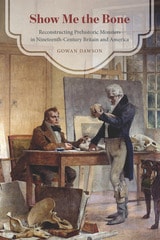
Show Me the Bone
Reconstructing Prehistoric Monsters in Nineteenth-Century Britain and AmericaGowan Dawson
University of Chicago Press, 2016
Show Me the Bone tells the story of the rise and fall of this famous claim, tracing its fortunes from Europe to America and showing how it persisted in popular science and literature and shaped the practices of paleontologists long after the method on which it was based had been refuted. In so doing, Gowan Dawson reveals how decisively the practices of the scientific elite were—and still are—shaped by their interactions with the general public.

Sickness and Health in America
Readings in the History of Medicine and Public HealthEdited by Judith W. Leavitt and Ronald L. Numbers
University of Wisconsin Press, 1997

Sidereus Nuncius, or The Sidereal Messenger
Galileo Galilei
University of Chicago Press, 1989
"[Sidereus nunclus] has never before been made available in its entirety in a continuous form, with full notes and comment. The introduction, translation and notes by Van Helden are a splendid example of the best scholarship and fullest accessibility. . . . we can now truly get to grips with the phenomenon of Galileo and what his life and work should mean to us today."—Robert Temple, Nature

Sidereus Nuncius, or The Sidereal Messenger
Galileo Galilei
University of Chicago Press, 2015
Albert Van Helden’s beautifully rendered and eminently readable translation is based on the Venice 1610 edition’s original Latin text. An introduction, conclusion, and copious notes place the book in its historical and intellectual context, and a new preface, written by Van Helden, highlights recent discoveries in the field, including the detection of a forged copy of Sidereus Nuncius, and new understandings about the political complexities of Galileo’s work.

Sidewalk City
Remapping Public Space in Ho Chi Minh CityAnnette Miae Kim
University of Chicago Press, 2015
With Sidewalk City, Annette Miae Kim provides the first multidisciplinary case study of sidewalks in a distinctive geographical area. She focuses on Ho Chi Minh City, Vietnam, a rapidly growing and evolving city that throughout its history, her multicultural residents have built up alternative legitimacies and norms about how the sidewalk should be used. Based on fieldwork over 15 years, Kim developed methods of spatial ethnography to overcome habitual seeing, and recorded both the spatial patterns and the social relations of how the city’s vibrant sidewalk life is practiced.
In Sidewalk City, she transforms this data into an imaginative array of maps, progressing through a primer of critical cartography, to unveil new insights about the importance and potential of this quotidian public space. This richly illustrated and fascinating study of Ho Chi Minh City’s sidewalks shows us that it is possible to have an aesthetic sidewalk life that is inclusive of multiple publics’ aspirations and livelihoods, particularly those of migrant vendors.

Signal Processing and Machine Learning for Brain-Machine Interfaces
Toshihisa Tanaka
The Institution of Engineering and Technology, 2018

Signs in America's Auto Age
Signatures of Landscape and PlaceJohn A. & Keith A. Jakle & Sculle
University of Iowa Press, 2004

Silviculture and Ecology of Western U.S. Forests
John D. Bailey
Oregon State University Press, 2015
Silviculture and Ecology of Western U.S. Forests, Second Edition, is a text for students, professional forest managers, and scientists that summarizes both early and contemporary research and principles relevant to the silviculture, ecology, and multi-purpose management of western U. S. forests. Based on its authors’ significant experiences and contributions in the field, as well as nearly 1000 additional references, Silviculture and Ecology remains the only text that focuses on silviculture in western U.S. forests—providing background and basis for current biological, ecological, and managerial practices.
Detailed chapters on fire, tree growth, and management of complex stand structures, as well as shrub ecology and an ecosystem framework, are bolstered in the second edition. A new series of case studies illustrates how silvicultural practices are developed and modified as forests grow and new challenges and opportunities occur. Contemporary silvicultural practices, particularly pertaining to fire use, vegetation management, soil fertility, and fertilization have been updated, and modifications that enhance standard practices are demonstrated throughout the text.
In this comprehensive reference, readers entering the field will come to understand the significance of carefully managing forests by conscious design, and experienced silviculturists will benefit from the edition’s up-to-date information, providing forest users with a greater range of ecosystem services and consumable products alike.

Simplicity and Complexity
Pondering Literature, Science, and PaintingFloyd Merrell
University of Michigan Press, 1998

Singing with Invisible Worlds
Fermenting Sake on Microbial TimeMaya Hey
University of Minnesota Press, 2026
Rethinking life with microbes through the art of natural fermentation
Within us and around us, microbes are everywhere, constantly reshaping what it means to be human as we interact with them—sometimes knowingly, sometimes not. Singing with Invisible Worlds theorizes human–microbe relationships through a rare ethnographic account of the fermentation process at the 350-year-old Terada Honke, one of only two natural sake breweries in Japan.
Painting a vivid picture of how sake brewers collaborate with bacteria, molds, and yeasts, Maya Hey reveals that ambient microbes are not controlled but courted, cultivated, and deliberately choreographed. As the brewers adapt to shifting microbial dynamics, they engage in what Hey calls an “improvisational ethic”—a way of responding to the unknown with care and attentiveness through each phase of blooming and waning across weeks, months, and even centuries. In documenting these remarkable practices, Singing with Invisible Worlds offers an intimate, situated understanding of how we can come to know and live with microbial life, with implications for feminist theory, science and technology studies, and multispecies ethnography.
Unsettling simplistic notions of “good” or “bad” microbes, this book presents a compelling vision for planetary coexistence—one that starts not with grand solutions but with small, rhythmic acts of microscopic attunement.
Retail e-book files for this title are screen-reader friendly with images accompanied by short alt text and/or extended descriptions.

Sir Aurel Stein
Archaeological ExplorerJeannette Mirsky
University of Chicago Press, 1977
"[Mirsky] has digested the correspondence, and she quotes so skillfully that her book will save many people the trouble of reading Stein's own exhaustive and exhausting volumes. Definitive."—Larry McMurtry, Washington Post
"A first-rate and unique biography of one of the more significant explorers of Central Asia and the Indo-Iranian borderlands. . . . Mirsky has recreated not only the life of an intrepid explorer but the spirit of the times."—Choice
"Mirsky has performed a signal service in distilling the life, travels, and letters of Aurel Stein into a manageable, graceful, and meaningful synthesis."—Theodore A. Wertime, Technology and Culture
Sir John's Vision
What Do We Know? What Is There to Learn?Davies
Templeton Press, 2018
This volume is a result of that meeting—a collection of thirteen essays written by experts in fields that most fascinated Sir John. The contributors assess the Foundation’s fidelity to its founder’s intent, chart promising avenues for future grantmaking, and champion Sir John’s contrarian mission of unlocking life’s deepest mysteries.
The members of the John Templeton Foundation are the custodians of Sir John’s vision—bold in its aspiration; humble in its approach—charged with using the tools of science to advance the frontiers of the spirit. May the essays collected here serve as inspiration as we carry that vision forward.