Results by title
3576 books match the query 'American' and 241 start with s
Sugar
Andrea Cohen
Four Way Books, 2026
About Sugar, David Orr has said: “Andrea Cohen’s ninth collection is elegantly precise—but this isn’t the precision of a meticulously arranged garden or tidy bookshelf. Rather, Cohen’s nimble, exacting lines are like guide ropes strung up the sides of an icy mountain: Her precision manages risk, and the risk leads to startling vistas. An entire relationship dynamic unfolds in the five monosyllables of ‘Proximity’: ‘She died / Of my wounds.’ In ‘Ghosting,’ the ambiguity of departure—the way in which lives and loves sometimes cease without concluding—is captured in all its shades of gray: ‘Any ghost will / tell you— // the last thing / we mean // to do / is leave you.’ We sometimes think of poems as recreating experience, but Cohen’s work reminds us that poetry, at its most patient and compassionate, is also a way of discerning. Sugar brings us a step closer to the sun; it helps us to orient ourselves, but more than that, it helps us to see.”
Sum of the Parts
The Mathematics and Politics of Region, Place, and WritingKent C Ryden
University of Iowa Press, 2011

Sunday Houses the Sunday House
Elizabeth Hughey
University of Iowa Press, 2007
In Sunday Houses the Sunday House, Elizabeth Hughey embraces the possibility that we can learn as much from objects as we can from other people, from the inanimate as much as the animate. Each poem descends upon a place and a time, takes a few notes, and then leaves quietly without slamming any doors. Sunday Houses the Sunday House reveals what the world is like when your attention is focused elsewhere, when your head is turned the other way.
In ineffably beautiful verse, Hughey captures moments in time and place with confidence but without being judgmental. Although it may seem that the scope of these poems is rather small—a good party, a couple of eggs, a housekeeper's daydream—they reveal both a deep intelligence and a spirit of whimsy. Gertrude Stein wrote that she wanted to be "drunk with nouns," and in a sense that is what Hughey has accomplished here.
Sunday Rising
Patricia Clark
Michigan State University Press, 2013

Sunflower Facing The Sun
Greg Pape
University of Iowa Press, 1992
Superman
The Persistence of an American IconGordon, Ian
Rutgers University Press, 2017
Superman: Persistence of an American Icon examines the many iterations of the character in comic books, comic strips, radio series, movie serials, feature films, television shows, animation, toys, and collectibles over the past eight decades. Demonstrating how Superman’s iconic popularity cannot be attributed to any single creator or text, comics expert Ian Gordon embarks on a deeper consideration of cultural mythmaking as a collective and dynamic process. He also outlines the often contentious relationships between the various parties who have contributed to the Superman mythos, including corporate executives, comics writers, artists, nostalgic commentators, and collectors.
Armed with an encyclopedic knowledge of Superman’s appearances in comics and other media, Gordon also digs into comics archives to reveal the prominent role that fans have played in remembering, interpreting, and reimagining Superman’s iconography. Gordon considers how comics, film, and TV producers have taken advantage of fan engagement and nostalgia when selling Superman products. Investigating a character who is equally an icon of American culture, fan culture, and consumer culture, Superman thus offers a provocative analysis of mythmaking in the modern era.
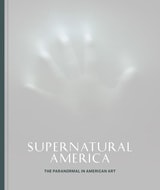
Supernatural America
The Paranormal in American ArtEdited by Robert Cozzolino
University of Chicago Press, 2021
Featuring artists from James McNeill Whistler and Kerry James Marshall to artist/mediums who made images with spirits during séances, this catalog covers more than two hundred years of the supernatural in American art. Here we find works that explore haunting, UFO sightings, and a broad range of experiential responses to other worldly contact.
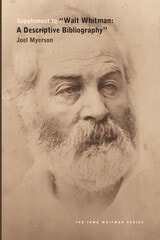
Supplement to “Walt Whitman
A Descriptive Bibliography”Joel Myerson
University of Iowa Press, 2011
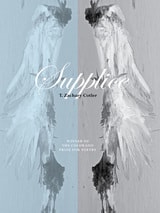
Supplice
T. Zachary Colter
University Press of Colorado, 2014
Winner of the 2014 Colorado Prize for Poetry, Supplice is the second installment in T. Zachary Cotler’s sonnet sequence that began with Sonnets to the Humans.These are amatory sonnets, but with love and rhyme tortured into broken and boneset textures. Supplice herself, the dark lady of these poems, is difficult to pin down with an epithet. Is she the angel of reality, banality, popular culture, pornography, uncertainty, or economic and environmental crisis? She has something to do with the history of cruelty and pain, with the devaluation of traditional ideas of beauty, and with the silence and science that have replaced divinity.
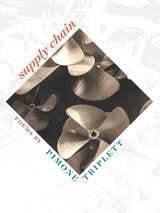
Supply Chain
Pimone Triplett
University of Iowa Press, 2017
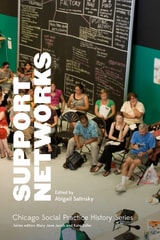
Support Networks
Edited by Abigail Satinsky
School of the Art Institute of Chicago, 2014
The contributors to this collection explore how the city continues to inform and shape contemporary cultural work and the development of informal organizations. Many of the authors are contributors to the scene themselves, having envisioned, founded, and activated these new ways of working. The unconventional systems explored in Support Networks call attention to stories and experiences often overlooked in this history. Ranging from artists’ reflections to essays, interviews, and ephemera, these perspectives challenge existing narratives and foreground underrepresented voices. Through more than twenty-five diverse examples of community building, activism, and catalytic projects, readers will find the inspiration they need to build their own counter-institutions.
Support Networks is part of the new Chicago Social Practice History series, edited by Mary Jane Jacob and Kate Zeller in the Department of Exhibitions and Exhibition Studies at the School of the Art Institute of Chicago (SAIC).
Supremely Tiny Acts
A Memoir of a DaySonya Huber
The Ohio State University Press, 2021
“I think we have to get to the real, to catch the facts we have, to hold on to what we see. . . .in this time where lies are currency,” Sonya Huber writes in her book-length essay Supremely Tiny Acts: A Memoir of a Day. On the theory that naming the truths of quotidian experience can counter the dangerous power of lies, she carefully recounts two anxiety-fueled days one fall. On the first, she is arrested as part of a climate protest in Times Square. On the other, she must make it to her court appearance while also finding time to take her son to get his learner's permit. Paying equal attention to minor details, passing thoughts, and larger political concerns around activism and parenting in the Trump-era United States, Huber asks: How can one simultaneously be a good mother, a good worker, and a good citizen? As she reflects on the meaning of protest and on whiteness and other forms of privilege within political activism, Huber offers a wry, self-aware, and stirring testament to the everyday as a seedbed for meaningful change.
Surveille
Caitlin Roach
University of Wisconsin Press, 2024
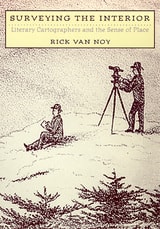
Surveying The Interior
Literary Cartographers And The Sense Of PlaceRick Van Noy
University of Nevada Press, 2003
From a cartographer who wrote to a writer who mapped, the literary significance of surveying is revealed in this study of human relationships to the landscape. From the very beginning, American literature was closely intertwined with surveying. In Surveying the Interior, Rick Van Noy explores the ways that four American literary cartographers—Henry David Thoreau, Clarence King, John Wesley Powell, and Wallace Stegner—concerned themselves with what it means to map or survey a place and what it means to write about it. In the process, he helps define the ways by which space enters the human psyche as definable place, as well as the ways by which physical landscape is transmuted into a sense of place as an intimate, personal manifestation of both physical and existential realities.
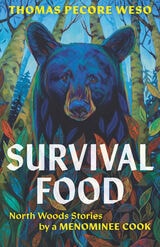
Survival Food
North Woods Stories by a Menominee CookThomas Pecore Weso
Wisconsin Historical Society Press, 2023
In these coming-of-age tales set on the Menominee Indian Reservation of the 1980s and 1990s, Thomas Pecore Weso explores the interrelated nature of meals and memories. As he puts it, “I cannot separate foods from the moments in my life when I first tasted them.” Weso’s stories recall the foods that influenced his youth in northern Wisconsin: subsistence meals from hunted, fished, and gathered sources; the culinary traditions of the German, Polish, and Swedish settler descendants in the area; and the commodity foods distributed by the government—like canned pork, dried beans, and powdered eggs—that made up the bulk of his family’s pantry. His mom called this “survival food.”
These stories from the author’s teen and tween years—some serious, some laugh-out-loud funny—will take readers from Catholic schoolyards to Native foot trails to North Woods bowling alleys, while providing Weso’s perspective on the political currents of the era. The book also contains dozens of recipes, from turtle soup and gray squirrel stew to twice-baked cheesy potatoes. This follow-up to Weso’s Good Seeds: A Menominee Indian Food Memoir is a hybrid of modern foodways, Indigenous history, and creative nonfiction from a singular storyteller.
2024 Wisconsin Library Association Outstanding Achievement Award
2024 PEN Oakland Josephine Miles Award for Excellence
Silver winner of the 2023 Midwest Book Award for Cookbooks/Crafts/Hobbies
Thomas Pecore Weso’s Survival Food was selected by the Wisconsin Center for the Book as the Wisconsin entry in the “Great Reads from Great Places” program of the Library of Congress.
“This book is not only about survival food, but about the singular beauty, creativity, and fortitude that comes out of that survival.”
—Chef Sean Sherman, author, The Sioux Chef’s Indigenous Kitchen
“Survival Food is interesting because it’s one part cookbook, three parts memoir, one part history, and one part multidisciplinary exploration of its setting, northern Wisconsin."
—James Norton, The Cookbook Test
“Nothing brings people together like good food and good stories. There’s an abundance of both in Thomas Pecore Weso’s latest memoir. As Weso attests, food can bring back happy, loving memories of times that were far from happy. Even a tray of funeral sandwiches brings a kind of comfort. This is a wonderful, honest portrait of northeastern Wisconsin, enlightening even to those of us who call this area home.”
—Jared Santek, Founder & Artistic Director, Write On Door County
“Survival Food provides ample nourishment for the mind and body. . . . The stories, told with humor and affection, are complemented by recipes ranging from mouth-watering instructions for cooking wild asparagus to ever-so-interesting advice for preparing bear stew.”
—Lucille Lang Day, author of Birds of San Pancho and Other Poems of Place and coeditor of Red Indian Road West: Native American Poetry from California
“His grandmother cooked according to Native traditions; his mother, ‘a nontraditional college student during my teens,’ resorted to instant meals. His grandfather was town constable and days spent with him brought Weso to the meatloaf, sausage and sauerkraut of German and Polish neighbors. Uncle Buddy’s flash car brings buckwheat pancakes to Weso’s mind, and he lived for a time near Cheese Box Curve—so called after a truck hauling dairy products overturned. Weso includes a few recipes, but mostly, Survival Food is an entertaining look back at life in Wisconsin’s rural north.”
—David Luhrssen, Shepherd Express
“Survival Food: North Woods Stories by a Menominee Cook by Thomas Pecore Weso is a posthumous sequel to his celebrated collection of family stories, Good Seeds: A Menominee Food Memoir. . . . Rich with captivating tales that include driving a convertible on logging roads, agreeing on terms before throwing eggs at passing cars, and his grandmother’s brief stay in a jailhouse she’d later purchase, Weso’s entries offer readers catharsis—demonstrating how to laugh, boast, debate, eat, mourn, and heal.”
—Ryan Winn, College of Menominee Nation, Tribal College Journal
Survival Food
North Woods Stories by a Menominee CookThomas Pecore Weso
Wisconsin Historical Society Press, 2025
In these coming-of-age tales set on the Menominee Indian Reservation of the 1980s and 1990s, Thomas Pecore Weso explores the interrelated nature of meals and memories. As he puts it, “I cannot separate foods from the moments in my life when I first tasted them.” Weso’s stories recall the foods that influenced his youth in northern Wisconsin: subsistence meals from hunted, fished, and gathered sources; the culinary traditions of the German, Polish, and Swedish settler descendants in the area; and the commodity foods distributed by the government—like canned pork, dried beans, and powdered eggs—that made up the bulk of his family’s pantry. His mom called this “survival food.”
These stories from the author’s teen and tween years—some serious, some laugh-out-loud funny—will take readers from Catholic schoolyards to Native foot trails to North Woods bowling alleys, while providing Weso’s perspective on the political currents of the era. The book also contains dozens of recipes, from turtle soup and gray squirrel stew to twice-baked cheesy potatoes. This follow-up to Weso’s Good Seeds: A Menominee Indian Food Memoir is a hybrid of modern foodways, Indigenous history, and creative nonfiction from a singular storyteller.
2024 Wisconsin Library Association Outstanding Achievement Award
2024 PEN Oakland Josephine Miles Award for Excellence
Silver winner of the 2023 Midwest Book Award for Cookbooks/Crafts/Hobbies
Thomas Pecore Weso’s Survival Food was selected by the Wisconsin Center for the Book as the Wisconsin entry in the “Great Reads from Great Places” program of the Library of Congress.
“This book is not only about survival food, but about the singular beauty, creativity, and fortitude that comes out of that survival.”
—Chef Sean Sherman, author, The Sioux Chef’s Indigenous Kitchen
“Survival Food is interesting because it’s one part cookbook, three parts memoir, one part history, and one part multidisciplinary exploration of its setting, northern Wisconsin."
—James Norton, The Cookbook Test
“Nothing brings people together like good food and good stories. There’s an abundance of both in Thomas Pecore Weso’s latest memoir. As Weso attests, food can bring back happy, loving memories of times that were far from happy. Even a tray of funeral sandwiches brings a kind of comfort. This is a wonderful, honest portrait of northeastern Wisconsin, enlightening even to those of us who call this area home.”
—Jared Santek, Founder & Artistic Director, Write On Door County
“Survival Food provides ample nourishment for the mind and body. . . . The stories, told with humor and affection, are complemented by recipes ranging from mouth-watering instructions for cooking wild asparagus to ever-so-interesting advice for preparing bear stew.”
—Lucille Lang Day, author of Birds of San Pancho and Other Poems of Place and coeditor of Red Indian Road West: Native American Poetry from California
“His grandmother cooked according to Native traditions; his mother, ‘a nontraditional college student during my teens,’ resorted to instant meals. His grandfather was town constable and days spent with him brought Weso to the meatloaf, sausage and sauerkraut of German and Polish neighbors. Uncle Buddy’s flash car brings buckwheat pancakes to Weso’s mind, and he lived for a time near Cheese Box Curve—so called after a truck hauling dairy products overturned. Weso includes a few recipes, but mostly, Survival Food is an entertaining look back at life in Wisconsin’s rural north.”
—David Luhrssen, Shepherd Express
“Survival Food: North Woods Stories by a Menominee Cook by Thomas Pecore Weso is a posthumous sequel to his celebrated collection of family stories, Good Seeds: A Menominee Food Memoir. . . . Rich with captivating tales that include driving a convertible on logging roads, agreeing on terms before throwing eggs at passing cars, and his grandmother’s brief stay in a jailhouse she’d later purchase, Weso’s entries offer readers catharsis—demonstrating how to laugh, boast, debate, eat, mourn, and heal.”
—Ryan Winn, College of Menominee Nation, Tribal College Journal

Surviving Literary Suicide
Jeffrey Berman
University of Massachusetts Press, 1999
An exploration of the relationship between literature and life, this study examines the effect on readers of “suicidal literature”—novels and poems that depict, and sometimes glorify, the act of suicide. Beginning with a discussion of the growing incidence of suicide in American culture, Jeffrey Berman investigates the portrayal of suicide in the works of four authors who later took their own lives—Virginia Woolf, Ernest Hemingway, Sylvia Plath, and Anne Sexton— and two who did not—Kate Chopin and William Styron. In each case Berman discusses the writer's shifting attitude toward suicide, the tendency of critics to romanticize fictional suicide, and the impact of writing about suicide on the artist's own life. At the same time, Berman draws on his experiences as a teacher of these writings, analyzing student reactions to “literary suicide” as recorded in class diaries—responses ranging from grief and confusion to anger and guilt. By looking at the connection between real and imagined suicide, Berman seeks to shed fresh light on a subject long enshrouded in silence, fear, and mystery.
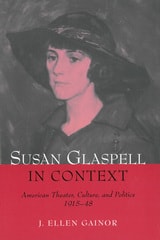
Susan Glaspell in Context
American Theater, Culture, and Politics, 1915-48J. Ellen Gainor
University of Michigan Press, 2003

Susan Glaspell
Essays on Her Theater and FictionLinda Ben-Zvi, Editor
University of Michigan Press, 1995
The career of Susan Glaspell (1876-1948), the American playwright and novelist, follows closely the trajectory of other "reclaimed" American women writers of the century such as Kate Chopin, Charlotte Perkins Gilman, and Zora Neale Hurston. She was well known in her time, effaced from canonical consideration after her death, and rediscovered years later through the surfacing of one work around which critical attention has focused. Glaspell was a respected international playwright and novelist who amassed some of the most impressive credentials in American theater history, including the Pulitzer Prize in 1931. Over the past fifteen years, she has been rediscovered through the work of leading feminist scholars; and her one-act play Trifles and its short story form, "A Jury of Her Peers," have become classics. This book is the first collection devoted to the study of the body of Glaspell's work. Essays by leading playwrights and scholars provide an array of perspectives on the writer and her work. The book features the first complete Glaspell bibliography, including original reviews of her plays and fiction and recent critical studies of her writing.
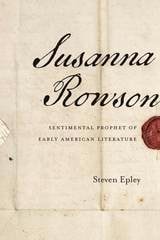
Susanna Rowson
Sentimental Prophet of Early American LiteratureSteven Epley
Northwestern University Press, 2016
Sustainability
A Love StoryNicole Walker
The Ohio State University Press, 2018
This book is for the burnt-out environmentalist, the lazy environmentalist, the would-be environmentalist. It’s for those who believe the planet is dying. For those who believe they are dying. And for those who question what it means to live and love sustainably, and maybe even with hope.
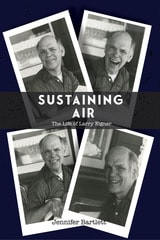
Sustaining Air
The Life of Larry EignerJennifer Bartlett
University of Alabama Press, 2023
The biography of a poet seminal to postwar American poetry
The poet Larry Eigner (1927–1996) was a key figure in New American poetry, which grew out of the Black Mountain School and San Francisco Renaissance, and a major influence on the Language poets. Eigner also had cerebral palsy as the result of an accident at birth. It is fortuitous that the poet lived his life in two locations vibrant in both poetics and disability activism. Except for brief periods attending camp and school, he lived with his parents in Swampscott, Massachusetts, until the age of 51. Later, he moved to Berkeley, California, at the height of the disability rights movement. In the 1950s, Eigner attended Camp Jened, which later became famous in the film Crip Camp.
Bartlett’s biography covers every significant phase of Eigner’s life: his childhood and young adulthood when he began typing poems with one finger on the manual typewriter that was a bar mitzvah gift; his first publications and the maturation of his poetic interests through correspondence with poets of the era; and after his move to Berkeley, the ever-expanding circle of friends, poets, caretakers, and collaborators he established there. The result is a deeply insightful account of an utterly distinctive voice whose influence widens and deepens with each new generation that encounters him.
Suture and Narrative
Deep Intersubjectivity in Fiction and FilmGeorge Butte
The Ohio State University Press, 2017
Suture and Narrative: Deep Intersubjectivity in Fiction and Film by George Butte offers a new phenomenological understanding of how fiction and film narratives use particular techniques to create and represent the experience of community. Butte turns to the concept of suture from Lacanian film theory and to the work of Merleau-Ponty to contribute a deeper and broader approach to intersubjectivity for the field of narrative theory.
Butte’s approach allows for narratives that represent insight as well as blindness, love, and loss, locating these connections and disconnections in narratological techniques that capture the crisscrossing of perspectives, such as those in fiction’s free indirect discourse and in the oblique angle of film’s shot/reverse shot convention. Butte studies the implications of this chiasmus in the novels and film adaptations of later Henry James works, Barrie’s Peter Pan tales and film adaptations, and the films Silence of the Lambsand Nothing But a Man. Suture’s story in the twentieth century, according to Butte, is a story of the loss of immediacy and community. Yet in concluding this, Butte finds optimism in the Coen brothers’ Raising Arizona as well as in Why Be Happy When You Could Be Normal? by Jeanette Winterson and Marc Webb’s film (500) Days of Summer.
Swamp Candles
Ralph Burns
University of Iowa Press, 1996
In his convincing and highly accomplished fifth book, Ralph Burns draws on his deep practice and experience. His tones, forms, and subjects are various and striking, and the work of a poet mature and courageous enough to range through the full spectrum of his emotions.
Sometimes Burns is haunted by the strength and fallibility of the Christian tradition, and in many of his poems he explores the conflicts between individuals and the larger world—the mystery and responsibility of choice, consequence and inconsequence, “the terror of being taken.”
Swan Hammer
An Instructor’s Guide to MirrorsMaggie Graber
Michigan State University Press, 2022
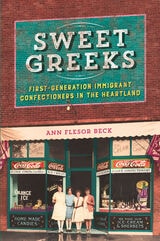
Sweet Greeks
First-Generation Immigrant Confectioners in the HeartlandAnn Flesor Beck
University of Illinois Press, 2020
Ann Flesor Beck's charming personal account recreates the atmosphere of her grandfather's candy kitchen with its odors of chocolate and popcorn and the comings-and-goings of family members. "The Store" represented success while anchoring the business district of Gus's chosen home. It also embodied the Midwest émigré experience of chain migration, immigrant networking, resistance and outright threats by local townspeople, food-related entrepreneurship, and tensions over whether later generations would take over the business.
An engaging blend of family memoir and Midwest history, Sweet Greeks tells how Greeks became candy makers to the nation, one shop at a time.
Sweet Home, Saturday Night
PoemsDavid Baker
University of Arkansas Press, 1991
Sweet Repetition
Cynthia Cruz
University of Chicago Press, 2025
Integrating Lacanian and Freudian psychoanalysis, continental philosophy, and the works of other poets, this collection explores narrative through abstraction and considers how repetition holds both the power to constrain and to generate. Freud explains how what we repress—what we know but don’t want to acknowledge—reappears in our actions through repetition. Through slips of the tongue or selective memory, we engage with what our unconscious knows, finding knowledge through unknowing. The psychoanalytic session is centered on bringing forth repressed knowledge through acts of unknowing—speaking without thinking—which brings one closer to recognizing an obscured desire.
The poetry of Sweet Repetition works in ways akin to the psychoanalytic act. These pulsing poems follow the definitions of the word revolution—to revolve, change direction, unroll, unwind, happen again, repeat, orbit around. Images and words reappear in the motion of Cynthia Cruz’s poems, inviting us into their revolutionary, political, and cumulative effects.
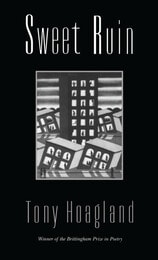
Sweet Ruin
Tony Hoagland
University of Wisconsin Press, 1992
Tony Hoagland captures the recognizably American landscape of a man of his generation: sex, friendship, rock and roll, cars, high optimism, and disillusion. With what Robert Pinsky has called “the saving vulgarity of American poetry,” Hoagland’s small biographies of destruction reveal that defeat is a natural prelude to grace and loss a kind of threshold to freedom.
“A remarkable book. Without any rhetorical straining, with a disarming witty directness, these poems manage to transform every subject they touch, from love to politics, reaching out from the local and the personal to place the largest issues in the context of feeling. It’s hard to think of a recent book that succeeds with equal grace in fusing the truth-telling and the lyric impulse, clarity and song, in a way that produces such consistent pleasure and surprise.”—Carl Dennis
“This is wonderful poetry: exuberant, self-assured, instinct with wisdom and passion.”—Carolyn Kizer
“There is a fine strong sense in these poems of real lives being lived in a real world. This is something I greatly prize. And it is all colored, sometimes brightly, by the poet’s own highly romantic vision of things, so that what we may think we already know ends up seeming rich and strange.”—Donald Justice
“In Sweet Ruin, we’re banging along the Baja of our little American lives, spritzing truth from our lapels, elbowing our compadres, the Seven Deadly Sins. Maybe we’re unhappy in a less than tragic way, but our ruin requires of us a love and understanding and loyalty just as deep and sweet as any tragic hero’s. And it’s all the more poignant in a sad and funny way because the purpose of this forced spiritual march, Hoagland seems to be saying, is to leave ourselves behind. Undoubtedly, you will recognize among the body count many of your selves.”—Jack Myers
Sweet Will
Philip Levine
University of Iowa Press, 2013
The poems, including the long meditation of more than five hundred lines, “A Poem with No Ending,” are beautiful and essential. Restored to print, they will resonate with readers who love both the earlier and the later work of one of our most important poets.
Sweetwater, Storms, and Spirits
Stories of the Great LakesSelected and Edited by Victoria Brehm
University of Michigan Press, 1991
Native American legends, shipping tales, folklore, and myths spanning the last 150 years are gathered together for the first time in this collection. The presence of Native American culture, the unpredictable climate, the dangerous closeness of the shoreline, and the bloody history of shipping on the Lakes contribute greatly to the uniqueness of maritime literature on the Lakes.
Sweetwater, Storms, and Spirits will appeal to those interested in both Native American literature and history and Great Lakes maritime history, and to those who simply enjoy a good maritime tale. The collection is a seabag of different kinds of stories, myths, and tales that together create a picture of life as it has been lived on the Great Lakes.
Swimming At Midnight
Selected Shorter PoemsJohn Matthias
Ohio University Press, 1995
Swimming at Midnight collects the short and middle-length poems from John Matthias’s earlier books together with twenty poems that have previously appeared only in magazines. It is published simultaneously with Beltane at Aphelion, which includes all of Matthias’s longer poems. The two books together represent some thirty years of his work.
The poems in Swimming at Midnight range from early lyrics written in American during the late 1960s to meditative poems dealing with historical, geographical and cultural themes deriving from Matthias’s years in England in the seventies and eighties; they include the epistolary poems from Turns, “Poem for Cynouai” from Crossing, “A Wind in Roussillon” from Northern Summer, and the formal experiments engaging issues of poetics and metaphysics for which Matthias is well known. The book concludes with a section of new poems and translations dealing both with the public world of modern history and the private experience of life in the century’s final decade. The last poem of all connects the work in Swimming at Midnight with the last of the long poems in Beltane at Aphelion.
Critics have been warm in their praise of Matthias’s work. Robert Duncan called his early poetry “the work of a Goliard—one of those wandering souls out of a Dark Age in our own time,” and Guy Davenport has said that his recent work makes him “one of the leading poets in the USA.” D. M. Thomas in the TLS admired the “virtuosity” of Turns and the way “life presses into the poems,” while John Fuller in the same journal found the poems in Crossing “bursting with a masterful intelligence.” In a long essay on Northern Summer, Jeremy Hooker wrote: “In his combination of lyrical and discursive voices, as in subject and concern, Matthias has an exciting range…He writes in some poems from a tension between a scribe’s respect for the integrity of his materials and a magician’s freedom to transform them, and in many poems he brings together the contrasting gifts and is fully present as himself, both scribe and magician.”
Swoon
Victoria Redel
University of Chicago Press, 2003
Sylvia Plath and the Mythology of Women Readers
Janet Badia
University of Massachusetts Press, 2011
Janet Badia investigates the evolution of this narrative, tracing its origins, exposing the gaps and elisions that have defined it, and identifying it as a bullying mythology whose roots lie in a long history of ungenerous, if not outright misogynistic, rhetoric about women readers that has gathered new energy from the backlash against contemporary feminism.
More than just an exposé of our cultural biases against women readers, Badia's research also reveals how this mythology has shaped the production, reception, and evaluation of Plath's body of writing, affecting everything from the Hughes family's management of Plath's writings to the direction of Plath scholarship today. Badia discusses a wide range of texts and issues whose significance has gone largely unnoticed, including the many book reviews that have been written about Plath's publications; films and television shows that depict young Plath readers; editorials and fan tributes written about Plath; and Ted and (daughter) Frieda Hughes's writings about Plath's estate and audience.
Symmetry
Marc Straus
Northwestern University Press, 2000
Sympathetic Magic
Amy Fleury
Southern Illinois University Press, 2013
Amy Fleury’s bewitching new collection of poems, Sympathetic Magic, unveils the everyday manifestations of sympathy as well as the connections wrought by “sympathetic magic”—that indelible tether that binds people, places, and objects across time and distance. Fleury’s lyrics journey across the landscapes of childhood and old age, body and spirit, past and future, exploring the boundless permutations of sympathy as it appears in the most surprising locations. Connections reveal themselves in the aggressive silence of the small town or the round penmanship of a loved one, and echo throughout the solitude and regeneration of the forest as well as the antiseptic air of the hospital. At the center of these travels lies the narrator, stretching her limbs from the heart of the heartland, her body a compass summoning us from all directions, emphasizing with tender simplicity that “we all live under the self-same moon, no matter the phase.”
Syncopations
The Stress of Innovation in Contemporary American PoetryJed Rasula
University of Alabama Press, 2004
Syncopations is an analysis of the sustaining vitality behind contemporary American poetry from 1975 to the present day by one of the most astute observers and critics in the field. The 12 essays reflect Jed Rasula’s nearly 30 years of advocacy on behalf of “opening the field” of American poetry.
From the Beats and the Black Mountain poets in the 1950s and 1960s to the impact of language poetry, the specter of an avant-garde has haunted the administrative centers of poetic conservatism. But the very concept of avant-garde is misleading, implying organized assault. Incentives for change can be traced to other factors, including the increased participation of women, critical theory’s self-reflection, and a growing interest in the book as a unit of composition. Syncopations addresses these and other issues evident in the work of such poets and critics as Clayton Eshleman, Marjorie Perloff, Ronald Johnson, Clark Coolidge, Nathaniel Mackey, and Robin Blaser. Its chapters range in modes and include close readings, sociological analysis, philosophical-aesthetic meditations, and career appraisals.
By examining both exemplary innovators and the social context in which innovation is either resisted, acclaimed, or taken for granted, Rasula delivers an important conceptual chronicle of the promise of American poetry.
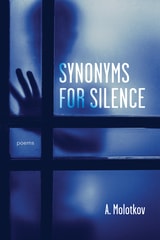
Synonyms for Silence
A. Molotkov
Acre Books, 2019
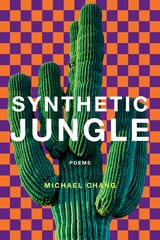
Synthetic Jungle
PoemsMichael Chang
Northwestern University Press, 2023
A vital breath of life arrives in American poetry with Synthetic Jungle, the latest collection from acclaimed poet Michael Chang. With poems in a register both hilarious and scathing, Synthetic Jungle effortlessly bashes convention while simultaneously rebuilding the language we use to communicate our fears and joys.
Synthetic Jungle is a collection written by a brilliant jester who winks at you as you catch their every reference before sharing a laugh at your own self-satisfaction. Themes of identity, sexuality, and literacy play out in a dizzying rhythm of microtheaters. Readers will find themselves giggling, snorting, and guffawing their way through this work: whether at a repudiation of the literary landscape or a critique of a failing justice system, to laugh along with Chang is to recognize your mistakes and, ultimately, grow from them.
Fractal and kinetic in the quick-witted spirit of John Ashbery and Emily Dickinson, Chang’s tender poems dance around, between, and through the personal and philosophical. Synthetic Jungle is as sweet as it is grand, and beneath its sarcastic grin reverberates an immense, open heart.
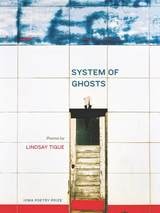
System of Ghosts
Lindsey Tigue
University of Iowa Press, 2016
Rooted in the personal, the speaker of this collection moves through society and history, with the aim of firmly placing herself within her own life and loss. Facts become an essential bridge between spatial and historical boundaries. She connects us to the disappearance of species, abandoned structures, and heartbreak—abandoned spaces that tap into the searing grief woven into society’s public places. There is solace in research, one system this collection uses to examine the isolation of contemporary life alongside personal, historical, and ecological loss. While her poems are intimate and personal, Tigue never turns away from the larger contexts within which we all live.
System of Ghosts is, at its core, an act of reaching out—across time, space, history, and across the room.
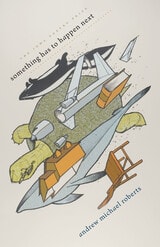
something has to happen next
andrew michael roberts
University of Iowa Press, 2009
Working with brevity and compression, Andrew Michael Roberts first imagines how small he can go with a poem and still maintain some sort of emotional or imagistic center. Then, released from this limitation, the rest of his playful, unexpected poems expand to fill a world with imagery, emotion, and sound.
What Roberts calls “simply a book of small poems” grew out of his obsessions with time and catastrophe and love and abandonment—what is always possible, almost attained, but lost at the last minute. When something ends or when everything ends, something else must always happen next—what will it be, and who will be there to name and love and destroy it?