Results by title
5448 books match the query 'History and criticism' and 403 start with s
Songbooks
The Literature of American Popular MusicEric Weisbard
Duke University Press, 2021

Songprints
The Musical Experience of Five Shoshone WomenJudith Vander
University of Illinois Press, 1988
Perspectives on the twentieth-century lives of Shoshone women musicians
The musical lives of Native American women have experienced a century of cultural change and constancy. Judith Vander takes readers to the Shoshone of Wyoming's Wind River Reservation to meet five generations of Shoshone women. Vander’s conversations with Emily, Angelina, Alberta, Helene, and Lenore capture their distinct personalities as they share their thoughts, feelings, and attitudes toward their music.
Vander transcribes and analyzes seventy-five songs that the women sing. Each woman possesses a unique songprint—a repertoire distinctive to her culture, age, and personality. As Vander shows, the context of Shoshone social and religious ceremonies offers insights into the rise of the Native American Church, the emergence and popularity of the contemporary powwow, and the changing, enlarging role of women. In addition, two eyewitnesses accounts of Ghost Dance songs and performances elaborate on the function and meaning of the Ghost Dance among the Wind River Shoshones.
2nd Place from the Pauline Alderman Prize for New Scholarship on Women in Music from the International Congress on Women in Music. Winner of an ASCAP Deems Taylor Award, 1989.
Songs in Black and Lavender
Race, Sexual Politics, and Women's MusicEileen M. Hayes, Foreword by Linda Tillery
University of Illinois Press, 2010

Songs of Degrees
Essays on Contemporary Poetry and PoeticsJohn Taggart
University of Alabama Press, 1994

Songs of Power and Prayer in the Columbia Plateau
The Jesuit, the Medicine Man, and the Indian Hymn SingerChad S. Hamill
Oregon State University Press, 2012
In Chad Hamill’s narrative, a Jesuit and his two Indian “grandfathers”—one a medicine man, the other a hymn singer—engage in a collective search for the sacred. The priest becomes a student of the medicine man. The medicine man becomes a Catholic. The Indian hymn singer brings indigenous songs to the Catholic mass. Using song as a thread, these men weave together two worlds previously at odds, realizing a promise born two centuries earlier within the prophecies of Circling Raven and Shining Shirt.
Songs of Power and Prayer reveals how song can bridge worlds: between the individual and Spirit, the Jesuits and the Indians. Whether sung in an indigenous ceremony or adapted for Catholic Indian services, song abides as a force that strengthens Native identity and acts as a conduit for power and prayer.
A First Peoples: New Directions in Indigenous Studies book
Sonic Mobilities
Producing Worlds in Southern ChinaAdam Kielman
University of Chicago Press, 2022
Guangzhou is a large Chinese city like many others. With a booming economy and abundant job opportunities, it has become a magnet for rural citizens seeking better job prospects as well as global corporations hoping to gain a foothold in one of the world’s largest economies. This openness and energy have led to a thriving popular music scene that is every bit the equal of Beijing’s. But the musical culture of Guangzhou expresses the city’s unique cosmopolitanism. A port city that once played a key role in China’s maritime Silk Road, Guangzhou has long been an international hub. Now, new migrants to the city are incorporating diverse Chinese folk traditions into the musical tapestry.
In Sonic Mobilities, ethnomusicologist Adam Kielman takes a deep dive into Guangzhou's music scene through two bands, Wanju Chuanzhang (Toy Captain) and Mabang (Caravan), that express ties to their rural homelands and small-town roots while forging new cosmopolitan musical connections. These bands make music that captures the intersection of the global and local that has come to define Guangzhou, for example by writing songs with a popular Jamaican reggae beat and lyrics in their distinct regional dialects mostly incomprehensible to their audiences. These bands create a sound both instantly recognizable and totally foreign, international and hyper-local. This juxtaposition, Kielman argues, is an apt expression of the demographic, geographic, and political shifts underway in Guangzhou and across the country. Bridging ethnomusicology, popular music studies, cultural geography, and media studies, Kielman examines the cultural dimensions of shifts in conceptualizations of self, space, publics, and state in a rapidly transforming the People’s Republic of China.
Sonic Spaces of the Karoo
The Sacred Music of a South African Coloured CommunityMarie Jorritsma
Temple University Press, 2011
Sonic Spaces of the Karoo is a pioneering study of the sacred music of three coloured (the apartheid designation for people "not white or native") people's church congregations in the rural town of Graaff-Reinet, South Africa. Jorritsma's fieldwork involves an investigation of the choruses, choir music, and hymns of the Karoo region to present a history of the people's traditional, religious, and cultural identity in song. This music is examined as part of a living archive preserved by the community in the face of a legacy of slavery and colonial as well as apartheid oppression.
Jorritsma's findings counteract a lingering stereotype that coloured music is inferior to European or African music and that coloured people should not or do not have a cultural identity. Sonic Spaces of the Karoo seeks to eradicate that bias and articulate a more legitimate place for these people in the contemporary landscape of South Africa.
Sonorous Passages
Black Maternal Soundings and the Liberation ImaginaryMeina Yates-Richard
Duke University Press, 2026
Sophocles' Philoctetes and the Great Soul Robbery
Norman Austin
University of Wisconsin Press, 2011
Norman Austin brings both keen insight and a life-long engagement with his subject to this study of Sophocles’ late tragedy Philoctetes, a fifth-century BCE play adapted from an infamous incident during the Trojan War. In Sophocles’ “Philoctetes” and the Great Soul Robbery, Austin examines the rich layers of text as well as context, situating the play within the historical and political milieu of the eclipse of Athenian power. He presents a study at once of interest to the classical scholar and accessible to the general reader. Though the play, written near the end of Sophocles’ career, is not as familiar to modern audiences as his Theban plays, Philoctetes grapples with issues—social, psychological, and spiritual—that remain as much a part of our lives today as they were for their original Athenian audience.
Soul Covers
Rhythm and Blues Remakes and the Struggle for Artistic Identity (Aretha Franklin, Al Green, Phoebe Snow)Michael Awkward
Duke University Press, 2007
Awkward sees Franklin’s early album Unforgettable: A Tribute to Dinah Washington, released shortly after Washington’s death in 1964, as an attempt by a struggling young singer to replace her idol as the acknowledged queen of the black female vocal tradition. He contends that Green’s album Call Me (1973) reveals the performer’s attempt to achieve formal coherence by uniting seemingly irreconcilable aspects of his personal history, including his career in popular music and his religious yearnings, as well as his sense of himself as both a cosmopolitan black artist and a forlorn country boy. Turning to Snow’s album Second Childhood (1976), Awkward suggests that through covers of blues and soul songs, Snow, a white Jewish woman from New York, explored what it means for non-black enthusiasts to perform works considered by many to be black cultural productions. The only book-length examination of the role of remakes in American popular music, Soul Covers is itself a refreshing new take on the lives and work of three established soul artists.
Soul Music
Tracking the Spiritual Roots of Pop from Plato to MotownJoel Rudinow
University of Michigan Press, 2010
"Exceptionally illuminating and philosophically sophisticated."
---Ted Cohen, Professor of Philosophy, University of Chicago
"In this audacious and long-awaited book, Joel Rudinow takes seriously a range of interrelated issues that most music theorizing is embarrassed to tackle. People often ask me about music and spirituality. With Soul Music, I can finally recommend a book that offers genuine philosophical insight into the topic."
---Theodore Gracyk, Professor of Philosophy, Minnesota State University Moorhead
The idea is as strange as it is commonplace---that the "soul" in soul music is more than just a name, that somehow the music truly taps into something essential rooted in the spiritual notion of the soul itself. Or is it strange? From the civil rights movement and beyond, soul music has played a key, indisputable role in moments of national healing. Of course, American popular music has long been embroiled in controversies over its spiritual purity (or lack thereof). But why? However easy it might seem to dismiss these ideas and debates as quaint and merely symbolic, they persist.
In Soul Music: Tracking the Spiritual Roots of Pop from Plato to Motown, Joel Rudinow, a philosopher of music, takes these peculiar notions and exposes them to serious scrutiny. How, Rudinow asks, does music truly work upon the soul, individually and collectively? And what does it mean to say that music can be spiritually therapeutic or toxic? This illuminating, meditative exploration leads from the metaphysical idea of the soul to the legend of Robert Johnson to the philosophies of Plato and Leo Strauss to the history of race and racism in American popular culture to current clinical practices of music therapy.
Joel Rudinow teaches in the Philosophy and Humanities Departments at Santa Rosa Junior College and is the coauthor of Invitation to Critical Thinking and the coeditor of Ethics and Values in the Information Age.
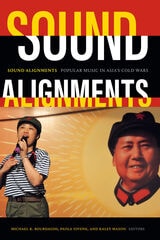
Sound Alignments
Popular Music in Asia's Cold WarsMichael K. Bourdaghs, Paola Iovene, and Kaley Mason, editors
Duke University Press, 2021
Contributors. Marié Abe, Michael K. Bourdaghs, Paola Iovene, Nisha Kommattam, Jennifer Lindsay, Kaley Mason, Anna Schultz, Hyunjoon Shin, C. J. W.-L. Wee, Hon-Lun (Helan) Yang, Christine R. Yano, Qian Zhang
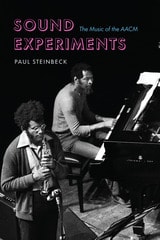
Sound Experiments
The Music of the AACMPaul Steinbeck
University of Chicago Press, 2022
Founded on Chicago’s South Side in 1965 and still thriving today, the Association for the Advancement of Creative Musicians (AACM) is the most influential collective organization in jazz and experimental music. In Sound Experiments, Paul Steinbeck offers an in-depth historical and musical investigation of the collective, analyzing individual performances and formal innovations in captivating detail. He pays particular attention to compositions by Muhal Richard Abrams and Roscoe Mitchell, the Association’s leading figures, as well as Anthony Braxton, George Lewis (and his famous computer-music experiment, Voyager), Wadada Leo Smith, and Henry Threadgill, along with younger AACM members such as Mike Reed, Tomeka Reid, and Nicole Mitchell.
Sound Experiments represents a sonic history, spanning six decades, that affords insight not only into the individuals who created this music but also into an astonishing collective aesthetic. This aesthetic was uniquely grounded in nurturing communal ties across generations, as well as a commitment to experimentalism. The AACM’s compositions broke down the barriers between jazz and experimental music and made essential contributions to African American expression more broadly. Steinbeck shows how the creators of these extraordinary pieces pioneered novel approaches to instrumentation, notation, conducting, musical form, and technology, creating new soundscapes in contemporary music.
Sound Knowledge
Music and Science in London, 1789-1851Edited by J. Q. Davies and Ellen Lockhart
University of Chicago Press, 2017
Sound Knowledge examines how scientific truth was accrued by means of visual and aural experience, and, in turn, how musical knowledge was located in relation to empirical scientific practice. James Q. Davies and Ellen Lockhart gather work by leading scholars to explore a crucial sixty-year period, beginning with Charles Burney’s ambitious General History of Music, a four-volume study of music around the globe, and extending to the Great Exhibition of 1851, where musical instruments were assembled alongside the technologies of science and industry in the immense glass-encased collections of the Crystal Palace. Importantly, as the contributions show, both the power of science and the power of music relied on performance, spectacle, and experiment. Ultimately, this volume sets the stage for a new picture of modern disciplinarity, shining light on an era before the division of aural and visual knowledge.

Sound Sentiment
Peter Kivy
Temple University Press, 1989

Sound System
The Political Power of MusicDave Randall
Pluto Press, 2017
Sound System is the story of one musician's journey to discover what makes music so powerful. Dave Randall uses his insider's knowledge of the industry to shed light on the secrets of celebrity, commodification and culture.
This is a book of raves, riots and revolution. From the Glastonbury Festival to the Arab Spring, Pop Idol to Trinidadian Carnival, Randall finds political inspiration across the musical spectrum and poses the question: how can we make music serve the interests of the many, rather than the few?
Published in partnership with the Left Book Club.
Sound Tracks
A Musical ABC, Volumes 1-3Michael Jarrett
Temple University Press, 1998
Spinning off from the "Definition of Sound" column he wrote for Pulse! magazine, Michael Jarrett mixes astute music criticism, an engaging writing style, and a wicked sense of humor to produce three alphabets that will provoke readers to rethink all sorts of popular music. Inventive and whimsical, these small essays coalesce around a serious purpose -- writing about contemporary culture in a way that is meaningful to electronic-age readers and listeners.
Take, for example, the entry on ambient music: like all of the entries in the book, it is preceded by evocative album art that amplify the definition; this one lists related videos as well. But it also presents an interview with Carla Bley and Steve Swallow on the influential music of Erik Satie. Under the Ls, producer George Avakian talks about how the technology that made LPs possible changed the music industry, and Pat Metheny talks about the challenges of sequencing an LP from a musician's point of view. The entry for Carol (as in traditional songs for Christmas and the Middle Age dance craze) opens into a riff on cultural roots and survivals that invokes Chuck Berry's classic song.
Whether it is read start to finish or sampled, Sound Tracks is a book that music lovers and students of contemporary culture will applaud.
Sound and Form in Modern Poetry
Second EditionHarvey Gross and Robert McDowell
University of Michigan Press, 1996
Poet, critic, and editor Robert McDowell has updated this classic text in the light of the poetic and critical developments of the last three decades. Segments on Dickinson, Robinson, Frost, Jeffers, and Lowell, among other poets, have been greatly expanded, and Ashbery, Creeley, Ginsberg, Hall, Kees, Kumin, Levertov, Levine, O'Hara, Plath, Rich, Simpson, and Wilbur added, among others. The epilogue discusses a new generation of poets whose works will likely be read well into the next century-- among others, Thomas M. Disch, Rita Dove, Dana Gioia, Emily Grosholz, Mark Jarman, Molly Peacock, Gjertrud Schnackenberg, Timothy Steele, Mary Swander, and Marilyn Nelson Waniek.
Over the last ten years, the most inspiring topic of conversation and argument among poets and their readers has been the resurgence of narrative and traditional forms. The new Sound and Form in Modern Poetry is a seminal text in this discussion, examining not only this movement but all of the important developments (Dadaism, Surrealism, Imagism, Language Poetry, and the Confessional School) that have defined our poetry in the twentieth century and have set the stage for poetry's continued life in the twenty-first. The original Sound and Form in Modern Poetry enjoyed extensive classroom use as a text; the revised version promises to be even more accessible, and more essential, for years to come.
The late Harvey Gross was Professor of Comparative Literature, State University of New York at Stony Brook.
Robert McDowell is publisher and editor of Story Line Press, and is also poet, critic, translator, fiction writer, and essayist.
Sound and Sentiment
Birds, Weeping, Poetics, and Song in Kaluli Expression, 3rd edition with a new introduction by the authorSteven Feld
Duke University Press, 2012
Sound and Silence
My Experience with China and LiteratureYan Lianke
Duke University Press, 2024
Soundies Jukebox Films and the Shift to Small-Screen Culture
Kelley, Andrea J
Rutgers University Press, 2018
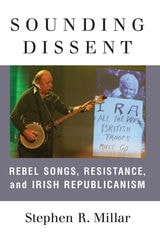
Sounding Dissent
Rebel Songs, Resistance, and Irish RepublicanismStephen R. Millar
University of Michigan Press, 2020
Sounding Dissent draws on three years of sustained fieldwork within Belfast's rebel music scene, in-depth interviews with republican musicians, contemporary audiences, and former paramilitaries, as well as diverse historical and archival material, including songbooks, prison records, and newspaper articles, to understand the history of political violence in Ireland.The book examines the potential of rebel songs to memorialize a pantheon of republican martyrs, and demonstrates how musical performance and political song not only articulate experiences and memories of oppression and violence, but also play a central role in the reproduction of conflict and exclusion in times of peace.
Sounding Human
Music and Machines, 1740/2020Deirdre Loughridge
University of Chicago Press, 2023
From the mid-eighteenth century on, there was a logic at work in musical discourse and practice: human or machine. That discourse defined a boundary of absolute difference between human and machine, with a recurrent practice of parsing “human” musicality from its “merely mechanical” simulations. In Sounding Human, Deirdre Loughridge tests and traverses these boundaries, unmaking the “human or machine” logic and seeking out others, better characterized by conjunctions such as and or with.
Sounding Human enters the debate on posthumanism and human-machine relationships in music, exploring how categories of human and machine have been continually renegotiated over the centuries. Loughridge expertly traces this debate from the 1737 invention of what became the first musical android to the creation of a “sound wave instrument” by a British electronic music composer in the 1960s, and the chopped and pitched vocals produced by sampling singers’ voices in modern pop music. From music-generating computer programs to older musical instruments and music notation, Sounding Human shows how machines have always actively shaped the act of music composition. In doing so, Loughridge reveals how musical artifacts have been—or can be—used to help explain and contest what it is to be human.
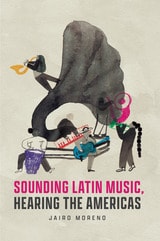
Sounding Latin Music, Hearing the Americas
Jairo Moreno
University of Chicago Press, 2023
Many in the United States believe Latin American musicians make “Latin music”—which carries with it a whole host of assumptions, definitions, and contradictions. In their own countries, these expatriate musicians might generate immense national pride or trigger suspicions of “national betrayals.” The making, sounding, and hearing of “Latin music” brings into being the complex array of concepts that constitute “Latin Americanism”—its fissures and paradoxes, but also its universal aspirations. Taking as its center musicians from or with declared roots in Latin America, Jairo Moreno presents us with an innovative analysis of how and why music emerges as a necessary but insufficient shorthand for defining and understanding Latin American, Latinx, and American experiences of modernity.
This close look at the growth of music-making by Latin American and Spanish-speaking musicians in the United States at the turn of the twenty-first century reveals diverging understandings of music’s social and political possibilities for participation and belonging. Through the stories of musicians—Rubén Blades, Shakira, Arturo O’Farrill and the Afro-Latin Jazz Orchestra, and Miguel Zenón—Sounding Latin Music, Hearing the Americas traces how artists use music to produce worlds and senses of the world at the ever-transforming conjunction of Latin America and the United States.
Sounding Off
Rhythm, Music, and Identity in West African and Caribbean Francophone NovelsJulie Huntington
Temple University Press, 2009
Huntington’s analysis shows how these writers and others challenge the aesthetic and political conventions that privilege written texts over orality and invite readers-listeners to participate in critical dialogues—to sound off, as it were, in local and global communities.
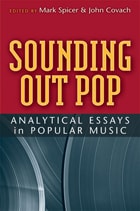
Sounding Out Pop
Analytical Essays in Popular MusicMark Spicer and John Covach, editors
University of Michigan Press, 2010
"A variety of approaches are brought to bear on fascinating repertoire, but with the underlying aim of better understanding some brilliant music. There’s nothing more exciting in music writing than something which entices you to listen to what’s familiar to you in a new way, and this collection brings such excitement in abundance."
---Allan Moore, author of Jethro Tull: Aqualung and Rock: The Primary Text
"These essays bring together a remarkable range of tools and perspectives to such diverse topics and contexts as the behind-the-scenes collaborations of composers, performers, arrangers, producers and engineers; pop culture; narratology; and race, politics and gender. The reader continuously benefits from a complementary lineup of sensitive ears that discover novelty in the familiar, exposing the heart of many rock and pop classics through imaginative and authoritative prose."
---Walter Everett, author of The Foundations of Rock and The Beatles as Musicians
The nine essays in Sounding Out Pop work together to map the myriad styles and genres of the pop-rock universe through detailed case studies that confront the music from a variety of engaging, thought-provoking perspectives---from historical to music-analytic, aesthetic to ethnographic, with several authors drawing liberally from ideas in other disciplines. The range of bands and artists covered is as vast and varied as the more than fifty-year history of pop and rock music, from the Coasters and Roy Orbison to Marvin Gaye, Bob Dylan, Radiohead, Beck, Genesis, Tori Amos, and the Police. Together these diverse essays cover a broad spectrum of studies ideally suited for classroom use and for other readers interested in gaining a deeper knowledge of the way popular music works.
Mark Spicer is Associate Professor and Director of Undergraduate Studies in Music at Hunter College and the Graduate Center, City University of New York. His writings have appeared in Contemporary Music Review, Gamut, Music Theory Online, twentieth-century music, and other scholarly journals and essay collections.
John Covach is Professor of Music at the University of Rochester and Professor of Theory at the Eastman School of Music. He is the author of the college textbook What's That Sound? An Introduction to Rock and Its History and the coeditor of Understanding Rock, American Rock and the Classical Music Tradition, and Traditions, Institutions, and American Popular Music.
Cover art credit: © iStockphoto.com/Aleksandar Dickov
Sounding Real
Musicality and American Fiction at the Turn of the Twentieth CenturyCristina L. Ruotolo
University of Alabama Press, 2013
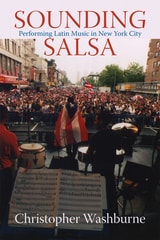
Sounding Salsa
Performing Latin Music in New York CityChristopher Washburne
Temple University Press, 2008
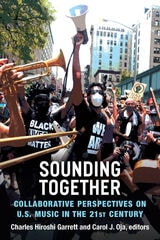
Sounding Together
Collaborative Perspectives on U.S. Music in the 21st CenturyCharles Hiroshi Garrett and Carol J. Oja, Editors
University of Michigan Press, 2021
Sounding Together: Collaborative Perspectives on U.S. Music in the Twenty-21st Century is a multi-authored, collaboratively conceived book of essays that tackles key challenges facing scholars studying music of the United States in the early twenty-first century. This book encourages scholars in music circles and beyond to explore the intersections between social responsibility, community engagement, and academic practices through the simple act of working together. The book’s essays—written by a diverse and cross-generational group of scholars, performers, and practitioners—demonstrate how collaboration can harness complementary skills and nourish comparative boundary-crossing through interdisciplinary research. The chapters of the volume address issues of race, nationalism, mobility, cultural domination, and identity; as well as the crisis of the Trump era and the political power of music. Each contribution to the volume is written collaboratively by two scholars, bringing together contributors who represent a mix of career stages and positions. Through the practice of and reflection on collaboration, Sounding Together breaks out of long-established paradigms of solitude in humanities scholarship and works toward social justice in the study of music.
Sounds Beyond
Arvo Pärt and the 1970s Soviet UndergroundKevin C. Karnes
University of Chicago Press, 2021
In Sounds Beyond, Kevin C. Karnes studies the interconnected alternative music and art scenes in the USSR during the second half of the 1970s, revealing the audacious origins of some of Estonian composer Arvo Pärt’s most famous music. Karnes shows how Pärt’s work was created within a vital yet forgotten culture of collective experimentation, the Soviet underground.
Mining archives and oral history from across the former USSR, Sounds Beyond carefully situates modes of creative experimentation within their late socialist contexts. In documenting Pärt’s work, Karnes reveals the rich creative culture that thrived covertly in the USSR and the network of figures that made underground performances possible: students, audio engineers, sympathetic administrators, star performers, and aspiring DJs. Sounds Beyond advances a new understanding of Pärt’s music as an expression of the aesthetic and religious commitments shared, nurtured, and celebrated by many in Soviet underground circles. At the same time, this story attests to the lasting power of Pärt’s music. Dislodging the mythology of the solitary creative genius, Karnes shows that Pärt’s work would be impossible without community.
Sounds English
TRANSNATIONAL POPULAR MUSICNabeel Zuberi
University of Illinois Press, 2001
Zuberi looks at how the sounds, images, and lyrics of English popular music generate and critique ideas of national belonging, recasting the social and even the physical landscapes of cities like Manchester and London. The Smiths and Morrissey play on romanticized notions of the (white) English working class, while the Pet Shop Boys map a "queer urban Britain" in the AIDS era. The techno-culture of raves and dance clubs incorporates both an anti-institutional do-it-yourself politics and emergent leisure practices, while the potent mix of technology and creativity in British black music includes local conditions as well as a sense of global diaspora. British Asian musicians, drawing on Afrodiasporic and South Asian traditions, seek a sense of place in Britain as commercial interests try to pin down an image of them to market.
Sounds English shows how popular music complicates cherished notions of Englishness as it activates cultural outsiders and taps into a sense of not belonging. Alert and readable, Zuberi's wide-ranging discussion includes the performers Oasis, Blur, Tricky, Massive Attack, Goldie, A Guy Called Gerald, Roni Size, Bally Sagoo, Funˆdaˆmental, Echobelly, Cornershop, Talvin Singh, and others.
Sounds from the Other Side
Afro–South Asian Collaborations in Black Popular MusicElliott H. Powell
University of Minnesota Press, 2020
A sixty-year history of Afro–South Asian musical collaborations
From Beyoncé’s South Asian music–inspired Super Bowl Halftime performance, to jazz artists like John and Alice Coltrane’s use of Indian song structures and spirituality in their work, to Jay-Z and Missy Elliott’s high-profile collaborations with diasporic South Asian artists such as the Panjabi MC and MIA, African American musicians have frequently engaged South Asian cultural productions in the development of Black music culture. Sounds from the Other Side traces such engagements through an interdisciplinary analysis of the political implications of African American musicians’ South Asian influence since the 1960s.
Elliott H. Powell asks, what happens when we consider Black musicians’ South Asian sonic explorations as distinct from those of their white counterparts? He looks to Black musical genres of jazz, funk, and hip hop and examines the work of Miles Davis, John Coltrane, Rick James, OutKast, Timbaland, Beyoncé, and others, showing how Afro–South Asian music in the United States is a dynamic, complex, and contradictory cultural site where comparative racialization, transformative gender and queer politics, and coalition politics intertwine. Powell situates this cultural history within larger global and domestic sociohistorical junctures that link African American and South Asian diasporic communities in the United States.
The long historical arc of Afro–South Asian music in Sounds from the Other Side interprets such music-making activities as highly political endeavors, offering an essential conversation about cross-cultural musical exchanges between racially marginalized musicians.
Sounds of the Citizens
Dancehall and Community in JamaicaAnne M. Galvin
Vanderbilt University Press, 2014
Galvin highlights the unique alliance between the dancehall industry and community development efforts. As the central role of the state in supporting communities has diminished, the rise of private efforts such as dancehall becomes all the more crucial. The tension, however, between those involved in the industry and those within the neighborhoods is palpable and often dangerous. Amidst all this, individual Jamaicans interact with the dancehall industry and its culture to find their own paths of employment, social identity, and sexual mores.
As Sounds of the Citizens illustrates, the world of entertainment in Jamaica is serious business and uniquely positioned as a powerful force within the community.
Sounds of the Modern Nation
Music, Culture, and Ideas in Post-Revolutionary MexicoAlejandro L. Madrid
Temple University Press, 2008
Sounds of the Modern Nation explores the development of modernist and avant-garde art music styles and aesthetics in Mexico in relation to the social and cultural changes that affected the country after the 1910-1920 revolution. Alejandro Madrid argues that these modernist works provide insight into the construction of individual and collective identities based on new ideas about modernity and nationality. Instead of depicting a dichotomy between modernity and nationalism, Madrid reflects on the multiple intersections between these two ideas and the dialogic ways through which these notions acquired meaning.
Madrid challenges the view that Latin American modernist music and other art were mere imitations of European trends, advancing instead the argument that Latin American artists resignified European ideas according to their specific historical and cultural circumstances. His work shows how microtonal and futurist music, modernist and avant-garde aesthetics, as well as indigenist and indianist ideas, entered a process of negotiation that ultimately shaped the ideological framework of twentieth-century Mexico.
Sounds of the Underground
A Cultural, Political and Aesthetic Mapping of Underground and Fringe MusicStephen Graham
University of Michigan Press, 2016
Soundscapes of Liberation
African American Music in Postwar FranceCeleste Day Moore
Duke University Press, 2021
Soundtrack Available
Essays on Film and Popular MusicPamela Robertson Wojcik and Arthur Knight, eds.
Duke University Press, 2001
With a cross-cultural emphasis, the contributors focus on movies that use popular songs from a variety of genres, including country, bubble-gum pop, disco, classical, jazz, swing, French cabaret, and showtunes. The films discussed range from silents to musicals, from dramatic and avant-garde films to documentaries in India, France, England, Australia, and the United States. The essays examine both “nondiegetic” music in film—the score playing outside the story space, unheard by the characters, but no less a part of the scene from the perspective of the audience—and “diegetic” music—music incorporated into the shared reality of the story and the audience. They include analyses of music written and performed for films, as well as the now common practice of scoring a film with pre-existing songs. By exploring in detail how musical patterns and structures relate to filmic patterns of narration, character, editing, framing, and mise-en-scene, this volume demonstrates that pop music is a crucial element in the film experience. It also analyzes the life of the soundtrack apart from the film, tracing how popular music circulates and acquires new meanings when it becomes an official soundtrack.
Contributors. Rick Altman, Priscilla Barlow, Barbara Ching, Kelley Conway, Corey Creekmur, Krin Gabbard, Jonathan Gill, Andrew Killick, Arthur Knight, Adam Knee, Jill Leeper, Neepa Majumdar, Allison McCracken, Murray Pomerance, Paul Ramaeker, Jeff Smith, Pamela Robertson Wojcik, Nabeel Zuberi
Soundworks
Race, Sound, and Poetry in ProductionAnthony Reed
Duke University Press, 2021
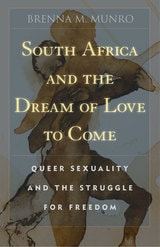
South Africa and the Dream of Love to Come
Queer Sexuality and the Struggle for FreedomBrenna M. Munro
University of Minnesota Press, 2012
After apartheid, South Africa established a celebrated new political order that imagined the postcolonial nation as belonging equally to the descendants of indigenous people, colonizing settlers, transported slaves, indentured laborers, and immigrants. Its constitution, adopted in 1996, was the first in the world to include gays and lesbians as full citizens. Brenna M. Munro examines the stories that were told about sexuality, race, and nation throughout the struggle against apartheid in order to uncover how these narratives ultimately enabled gay people to become imaginable as fellow citizens. She also traces how the gay, lesbian, or bisexual person appeared as a stock character in the pageant of nationhood during the transition to democracy. In the process, she offers an alternative cultural history of South Africa.
Munro asserts that the inclusion of gay people made South Africans feel “modern”—at least for a while. Being gay or being lesbian was reimagined in the 1990s as distinctly South African, but the “newness” that made these sexualities apt symbols for a transformed nation can also be understood as foreign and un-African. Indeed, a Western-style gay identity is often interpreted through the formula “gay equals modernity equals capitalism.” As South Africa’s reentrance into the global economy has failed to bring prosperity to the majority of its citizens, homophobic violence has been on the rise.
Employing a wide array of texts—including prison memoirs, poetry, plays, television shows, photography, political speeches, and the postapartheid writings of Nobel Laureates Nadine Gordimer and J. M. Coetzee—Munro reports on how contemporary queer activists and artists are declining to remain ambassadors for the “rainbow nation” and refusing to become scapegoats for the perceived failures of liberation and liberalism.
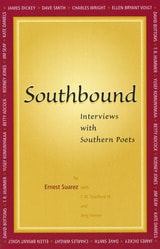
Southbound
Interviews with Southern PoetsEdited by Ernest Suarez, T. W. Stanford III, & Amy Verner
University of Missouri Press, 1999
"There's a real flowering, I think, of southern poetry right now, . . . assembling at the edges of everything." This observation by Pulitzer Prize-winning poet Charles Wright reflects upon the continuing vibrancy and importance of the southern poetic tradition. Although the death of James Dickey in 1997 left southern poetry without a recognizably dominant voice, an array of other vibrant voices continue to be heard and recognized. Southbound: Interviews with Southern Poets provides detailed discussion of the art and craft of poetry by many writers who promise to keep southern poetry vital into the twenty-first century.
Beginning with an interview with the late literary giant James Dickey, Southbound collects the ideas and insights of both well-known and rising southern poets, including Dave Smith, Charles Wright, Ellen Bryant Voigt, Yusef Komunyakaa, and Rodney Jones. Suarez's guiding principle for conducting and revising the interviews was to let the poets express themselves as clearly and fully as possible. Each interview is ultimately defined by the poet's own personality and voice, yet all explore similar themes—the relationship between technique and subject, the nature of the southern canon and each poet's place in it, and the state of contemporary poetry. As Dave Smith relates, "My sense of appreciation of what life means or could mean, whatever I know about life, stems from a sense of place, a sense of the ghostliness of meaning." It is this sense of place and meaning that Suarez allows each poet to convey truthfully in his interviews.
Including a brief introduction to each interview and a bibliography of primary and secondary sources for each poet, Southbound is a useful tool for scholars and a springboard for casual readers. More important, this collection of interviews makes a significant contribution to the tradition of southern poetry and its most prominent voices.
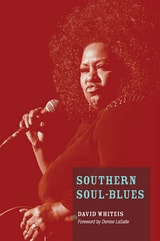
Southern Soul-Blues
David Whiteis
University of Illinois Press, 2013
Examining the history and development of southern soul from its modern roots in the 1960s and 1970s, David Whiteis highlights some of southern soul's most popular and important entertainers and provides first-hand accounts from the clubs, show lounges, festivals, and other local venues where these performers work. Profiles of veteran artists such as Denise LaSalle, the late J. Blackfoot, Latimore, and Bobby Rush--as well as contemporary artists T. K. Soul, Ms. Jody, Sweet Angel, Willie Clayton, and Sir Charles Jones--touch on issues of faith and sensuality, artistic identity and stereotyping, trickster antics, and future directions of the genre. These revealing discussions, drawing on extensive new interviews, also acknowledge the challenges of striving for mainstream popularity while still retaining the cultural and regional identity of the music and maintaining artistic ownership and control in the age of digital dissemination.
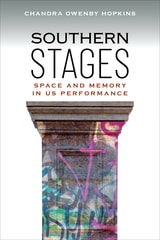
Southern Stages
Space and Memory in US PerformanceHopkins, Chandra
University of Iowa Press, 2025
Through the eyes of actors and everyday people, Southern Stages offers an engaging new model for interrogating the performance of southernness, as well as how memory and imagination intersect in spaces that have shaped hundreds of years of American history. Chandra Owenby Hopkins employs cultural memory and lived realities of Black and white communities to examine the earliest and most enduring southern stages: the playhouse and the public square.
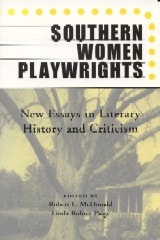
Southern Women Playwrights
New Essays in History and CriticismEdited by Robert McDonald and Linda Rohrer Paige
University of Alabama Press, 2001
This timely collection addresses the neglected state of scholarship on southern women dramatists by bringing together the latest criticism on some of the most important playwrights of the 20th century.
Coeditors Robert McDonald and Linda Rohrer Paige attribute the neglect of southern women playwrights in scholarly criticism to "deep historical prejudices" against drama itself and against women artists in general, especially in the South. Their call for critical awareness is answered by the 15 essays they include in Southern Women Playwrights, considerations of the creative work of universally acclaimed playwrights such as Beth Henley, Marsha Norman, and Lillian Hellman (the so-called "Trinity") in addition to that of less-studied playwrights, including Zora Neale Hurston, Carson McCullers, Alice Childress, Naomi Wallace, Amparo Garcia, Paula Vogel, and Regina Porter.
This collection springs from a series of associated questions regarding the literary and theatrical heritage of the southern woman playwright, the unique ways in which southern women have approached the conventional modes of comedy and tragedy, and the ways in which the South, its types and stereotypes, its peculiarities, its traditions-both literary and cultural-figure in these women's plays. Especially relevant to these questions are essays on Lillian Hellman, who resisted the label "southern writer," and Carson McCullers, who never attempted to ignore her southernness.
This book begins by recovering little-known or unknown episodes in the history of southern drama and by examining the ways plays assumed importance in the lives of southern women in the early 20th century. It concludes with a look at one of the most vibrant, diverse theatre scenes outside New York today-Atlanta.

Southwell's Sphere
The Influence of England's Secret PoetGary M. Bouchard
St. Augustine's Press, 2016
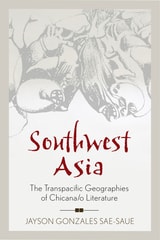
Southwest Asia
The Transpacific Geographies of Chicana/o LiteratureJayson Gonzales Sae-Saue
Rutgers University Press, 2016
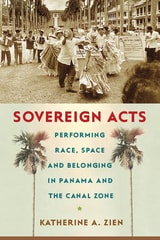
Sovereign Acts
Performing Race, Space, and Belonging in Panama and the Canal ZoneZien, Katherine A.
Rutgers University Press, 2017
Winner of the 2017 Annual Book Prize from the Canadian Association of Latin American and Caribbean Studies (CALACS)
Sovereign Acts explores how artists, activists, and audiences performed and interpreted sovereignty struggles in the Panama Canal Zone, from the Canal Zone’s inception in 1903 to its dissolution in 1999. In popular entertainments and patriotic pageants, opera concerts and national theatre, white U.S. citizens, West Indian laborers, and Panamanian artists and activists used performance as a way to assert their right to the Canal Zone and challenge the Zone’s sovereignty, laying claim to the Zone’s physical space and imagined terrain.
By demonstrating the place of performance in the U.S. Empire’s legal landscape, Katherine A. Zien transforms our understanding of U.S. imperialism and its aftermath in the Panama Canal Zone and the larger U.S.-Caribbean world.

Sovereign Fictions
Poetics and Politics in the Age of Russian RealismIlya Kliger
University of Chicago Press, 2024
The nineteenth-century novel is generally assumed to owe its basic social imaginaries to the ideologies, institutions, and practices of modern civil society. In Sovereign Fictions, Ilya Kliger asks what happens to the novel when its fundamental sociohistorical orientation is, as in the case of Russian realism, toward the state. Kliger explores Russian realism’s distinctive construals of sociality through a broad range of texts from the 1830s to the 1870s, including major works by Tolstoy, Dostoevsky, Gogol, Pushkin, Lermontov, Goncharov, and Turgenev, and several lesser-known but influential books of the period, including Alexander Druzhinin’s Polinka Saks (1847), Aleksei Pisemsky’s One Thousand Souls (1858), and Vasily Sleptsov’s Hard Times (1865). Challenging much current scholarly consensus about the social dynamics of nineteenth-century realist fiction, Sovereign Fictions offers an important intervention in socially inflected theories of the novel and in current thinking on representations of power and historical poetics.
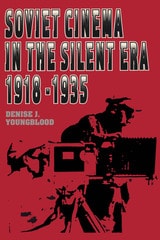
Soviet Cinema in the Silent Era, 1918–1935
By Denise J. Youngblood
University of Texas Press, 1991
The golden age of Soviet cinema, in the years following the Russian Revolution, was a time of both achievement and contradiction, as reflected in the films of Eisenstein, Pudovkin, and Kuleshov. Tensions ran high between creative freedom and institutional constraint, radical and reactionary impulses, popular and intellectual cinema, and film as social propaganda and as personal artistic expression. In less than a decade, the creative ferment ended, subjugated by the ideological forces that accompanied the rise of Joseph Stalin and the imposition of the doctrine of Socialist Realism on all the arts.
Soviet Cinema in the Silent Era, 1918–1935 records this lost golden age. Denise Youngblood considers the social, economic, and industrial factors that influenced the work of both lesser-known and celebrated directors. She reviews all major and many minor films of the period, as well as contemporary film criticism from Soviet film journals and trade magazines. Above all, she captures Soviet film in a role it never regained—that of dynamic artform of the proletarian masses.
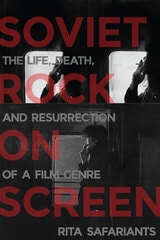
Soviet Rock on Screen
The Life, Death, and Resurrection of a Film GenreRita Safariants
University of Wisconsin Press, 2026
In Soviet Rock on Screen, Rita Safariants chronicles the birth, life, death, and resurrection of a genre that rapidly became one of the most readily recognized cultural signifiers of the perestroika era and which continues to reflect and codify Russian culture. During their initial heyday in the 1980s, rock films were influenced by and encouraged the cultural shifts of perestroika and the incipient political storm. Today, Safariants argues, the reemergence and reconfiguration of the genre indicates the extent to which Soviet-era cultural emblems inform Russian national identity and obliquely support the current political repression under Putin.
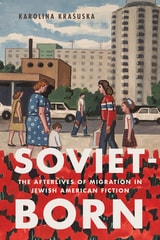
Soviet-Born
The Afterlives of Migration in Jewish American FictionKarolina Krasuska
Rutgers University Press, 2024
Entering an immigrant, Soviet-born standpoint creates an alternative and sometimes complementary pattern of how the Eastern and Central European past and present resonate with American Jewishness. The novels, short stories, and graphic novels considered here often stage strikingly fresh variations on key older themes, including cultural geography, the memory of World War II and the Holocaust, communism, gender and sexuality, genealogy, and finally, migration. Soviet-Born demonstrates how these diasporic writers, with their critical stance toward identity categories, open up the field of what is canonically Jewish American to broader contemporary debates.
This book is also freely available online as an open-access digital edition.