Results by title
4030 books match the query 'Language Arts & Disciplines' and 263 start with s
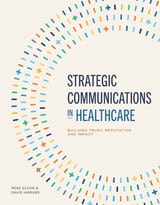
Strategic Communications in Healthcare
Building Trust, Reputation, and ImpactEdited by Rose Glenn and David Jarrard
Michigan Publishing Services, 2027
Strategic Communications in Healthcare: Building Trust, Reputation and Impact is a landmark textbook that combines innovative approaches to communication with the enduring principles that drive effectiveness, influence, and results. Drawing on the real-world expertise of nationally recognized leaders Rose Glenn and David Jarrard—along with a who’s who of senior healthcare communicators and educators—this hands-on guide brings together trust-building, messaging, crisis response, culture, brand, patient experience, research, measurement, AI, and more foundational elements into a cohesive framework for students and professionals alike.

Strategic Planning for Public Libraries
Joy L. Fuller
American Library Association, 2021
Strategic Planning for Public Libraries is a complete planning toolkit. This book provides a framework that any library, whether it serves urban, suburban, or rural communities, can use as a basis for its strategic planning.
Supported by research conducted across more than 200 public library professionals and in-depth interviews with more than twenty library directors and leaders throughout the country, this book addresses some of the key areas of strategic planning that librarians care about most:
- Engaging the community
- Measuring progress against the plan
- Reaching non-users
- Creating a living document that can be continually updated
- How to conduct a community assessment
- Engaging staff
Strategic Planning for Results
Sandra Nelson
American Library Association, 2008
Strategic Planning for Social Media in Libraries
Sarah K. Steiner
American Library Association, 2012
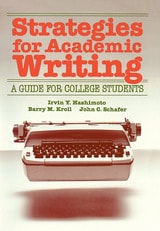
Strategies for Academic Writing
A Guide for College StudentsIrvin Y. Hashimoto, Barry M. Kroll, and John C. Schafer
University of Michigan Press, 1982

Strawberries and Technologies
How Media Transforms Farmworker Communities in Southern CaliforniaCarlos Jimenez Jr.
University of Illinois Press, 2027
Carlos Jimenez Jr. looks at the lives of farmworkers living at the intersection of agriculture and digital technologies. As he tells the workers’ stories, Jimenez shows how technology like non-commercial radio and autonomous robots offer chances to create, experiment, dream, develop new skills, and participate in civic life, yet also power the automation that may replace their jobs. The simultaneous processes of stabilization with visibility, and destabilization with invisibility, drive an ongoing evolution that continually redefines contemporary farmworker life.
Enlightening and richly detailed, Strawberries and Technologies provides an on-the-ground report of the surprising role of digital communication in farmworker communities.
Streaming Video Resources for Teaching, Learning, and Research
Julie A. American Library Association
American Library Association, 2014

Streets of a Million Martyrs
Everyday Poetics and Politics in Urban AlgeriaStephanie Love
University of Chicago Press, 0
Follows ordinary people as they move through the Algerian city of Oran, navigating the politically charged context of postcolonialism.
In this book, anthropologist Stephanie Love examines ordinary Algerians’ hope for a better future through what she calls “everyday urban poetics,” focusing on the country’s second-largest city of Oran. Examining linguistic forms including placenames, jokes, metaphors, anecdotes, and code-switches along with urban forms including monuments, buildings, and street layouts, Love shows how popular imaginaries of resistance are inscribed in Oran’s language and cityscapes.
Love argues that these everyday urban poetics constitute a street-based language that has helped Algerians find ways around oppressive censorship, reckon with painful pasts, and develop what she views as a politically fertile creative insurgency. This is particularly true in the wake of the 2019 uprising known as Hirak (“the movement”) that found Algerians challenging the legitimacy of the postcolonial regime through large-scale demonstrations and protests. Analyzing phenomena as diverse as efforts to preserve buildings and monuments, the informal renaming of streets and landmarks, and the development of women-led associations encouraging education and open discourse, Love shows how new forms of political life can be developed and sharpened in everyday speech.
Structure, Alignment and Optimality in Swedish
Peter Sells
CSLI, 2001
Structures for Organizing Knowledge
Exploring Taxonomies, Ontologies, and Other SchemaJune Abbas
American Library Association, 2010

Student Engagement and Information Literacy
Craig Gibson
Assoc of College & Research Libraries, 2011
Student Engagement and Information Literacy
Craig Gibson
Assoc of College & Research Libraries, 2011
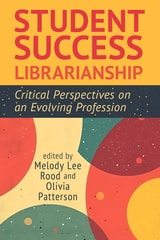
Student Success Librarianship
Critical Perspectives on an Evolving ProfessionMelody Lee Rood
Assoc of College & Research Libraries, 2025
Student Success Librarianship: Critical Perspectives on an Evolving Profession examines this position through a critical lens and provides insight and advice to help the profession work toward a positive evolution of this important role. In three sections—Theory, Praxis, and Research—chapters written by student success librarians explore how to articulate, set boundaries for, and bring our humanity to the role; address student mental health and provide multilingual resources and support; and map both the current state of student success and a vision for its future.
Student success librarians can feel alone in both their love for and critiques of their profession and their roles within it. Student Success Librarianship can help you celebrate your work, find areas of improvement, and offers validation and inspiration.
Student Wellness And Acad Libraries Case Studies And Activity
Sara Holder
Assoc of College & Research Libraries, 2020
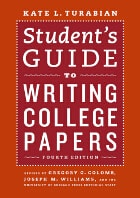
Student's Guide to Writing College Papers
Fourth EditionKate L. Turabian
University of Chicago Press, 2010
High school students, two-year college students, and university students all need to know how to write a well-reasoned, coherent research paper—and for decades Kate Turabian’s Student’s Guide to Writing College Papers has helped them to develop this critical skill. In the new fourth edition of Turabian’s popular guide, the team behind Chicago’s widely respected The Craft of Research has reconceived and renewed this classic for today’s generation. Designed for less advanced writers than Turabian’s Manual of Writers of Research Papers, Theses, and Dissertations, Seventh Edition, Gregory G. Colomb and Joseph M. Williams here introduce students to the art of defining a topic, doing high-quality research with limited resources, and writing an engaging and solid college paper.
The Student’s Guide is organized into three sections that lead students through the process of developing and revising a paper. Part 1, "Writing Your Paper," guides students through the research process with discussions of choosing and developing a topic, validating sources, planning arguments, writing drafts, avoiding plagiarism, and presenting evidence in tables and figures. Part 2, "Citing Sources," begins with a succinct introduction to why citation is important and includes sections on the three major styles students might encounter in their work—Chicago, MLA, and APA—all with full coverage of electronic source citation. Part 3, "Style," covers all matters of style important to writers of college papers, from punctuation to spelling to presenting titles, names, and numbers.
With the authority and clarity long associated with the name Turabian, the fourth edition of Student’s Guide to Writing College Papers is both a solid introduction to the research process and a convenient handbook to the best practices of writing college papers. Classroom tested and filled with relevant examples and tips, this is a reference that students, and their teachers, will turn to again and again.
Student's Manual to Accompany The United States Since 1865 by Foster Rhea Dulles
Prepared by Warren A. Beck
University of Michigan Press, 1963
Students Lead The Library
The Importance Of StudentCarissa Tomlinson
Assoc of College & Research Libraries, 2016
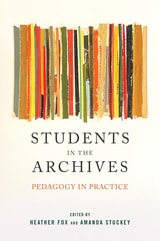
Students in the Archives
Pedagogy in PracticeEdited by Heather Fox and Amanda Stuckey
University of Illinois Press, 2026
The contributors examine approaches that integrate exhibitions with archived artifacts, collections, recovery, and digital humanities projects. Throughout, they connect these approaches to conversations about using archived materials in teaching and learning. The essays also feature observations about the work produced from collaborations and provide resources for sustaining future archival pedagogy. Topics include teaching in the twenty-first century; ways to support inclusivity, accessibility, and equity through engagements with digital and non-digital sources; and partnerships across disciplines, grade levels, and learning spaces through the collaborative relationships that emerge from archival teaching.
Interdisciplinary and up-to-date, Students in the Archives reveals how engagement with archived artifacts and collections opens spaces for conversations about the historical, social, and political contexts embedded in their productions and dissemination.
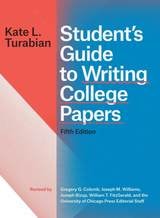
Student’s Guide to Writing College Papers, Fifth Edition
Kate L. Turabian
University of Chicago Press, 2019
This new edition includes fresh examples of research topics, clarified terminology, more illustrations, and new information about using online sources and citation software. It features updated citation guidelines for Chicago, MLA, and APA styles, aligning with the latest editions of these popular style manuals. It emphasizes argument, research, and writing as extensions of activities that students already do in their everyday lives. It also includes a more expansive view of what the end product of research might be, showing that knowledge can be presented in more ways than on a printed page.
Friendly and authoritative, the fifth edition of Student’s Guide to Writing College Papers combines decades of expert advice with new revisions based on feedback from students and teachers. Time-tested and teacher-approved, this book will prepare students to be better critical thinkers and help them develop a sense of inquiry that will serve them well beyond the classroom.

Studies in Austronesian Linguistics
Mis Sea#76Richard Mcginn
Ohio University Press, 1986
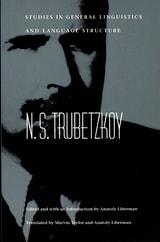
Studies in General Linguistics and Language Structure
N.S. Trubetzkoy
Duke University Press, 2001
Translated by Marvin Taylor and Anatoly Liberman
N. S. Trubetzkoy (1890–1939) is generally celebrated today as the creator of the science of phonology. While his monumental Grundzüge der Phonologie was published posthumously and contains a summary of Trubetzkoy’s late views on the linguistic function of speech sounds, there has, until now, been no practical way to trace the development of his thought or to clarify the conclusions appearing in that later work. With the publication of Studies in General Linguistics and Language Structure, not only will linguists have that opportunity, but a collection of Trubetzkoy’s work will appear in English for the first time.
Translated from the French, German, and Russian originals, these articles and letters present Trubetzkoy’s work in general and on Indo-European linguistics. The correspondence reprinted here, also for the first time in English, is between Trubetzkoy and Roman Jakobson. The resulting collection offers a view of the evolution of Trubetzkoy’s ideas on phonology, the logic in laws of linguistic geography and relative chronology, and the breadth of his involvement with Caucasian phonology and the Finno-Ugric languages.
A valuable resource, this volume will make Trubetzkoy’s work available to a larger audience as it sheds light on problems that remain at the center of contemporary linguistics.
Studies in Language and Information
John Perry
CSLI, 2019
Studies in Relational Grammar 1
Edited by David M. Perlmutter
University of Chicago Press, 1983
The basic ideas of relational grammar can be simply stated. First, grammatical relations such as 'subject of,' 'direct object of,' and 'indirect object of,' are needed to characterize the class of grammatical constructions in the clausal syntax of natural languages, to formulate universals of grammar, and to construct adequate and insightful grammars of individual languages. Second, the range of linguistic variation in word order and case patterns makes it impossible to define grammatical relations in terms of phrase structure configurations or case. Rather, grammatical relations must be taken as primitive notions of linguistic theory.
The papers collected here take up the first of these ideas. They lay out the basic theoretical constructs of relational grammar and discuss three areas of grammar—advancement construction, raising, and clause union. In his introduction, Perlmutter discusses each of the papers—most of which are published here for the first time—and places them in the context of the whole of linguistic study.
Studies in Relational Grammar 2
Edited by David M. Perlmutter and Carol Rosen
University of Chicago Press, 1984
This volume shows how theory and data interact. Ideas such as the Unaccusative Hypothesis and the 1-Advancement Exclusiveness Law have led to new discovering, both cross-linguistic and language-internal, which in turn shed light on such questions as the linkage between semantic roles and initial grammatical relations. New solutions to some long-standing problems follow from relational grammar's restrictive clause-structure typology: impersonal passive is an advancement to subject, antipassive a demotion from subject to direct object, and the "dative subject" phenomenon a demotion to indirect object. These analyses find corroboration in a variety of languages, as do other claims, notably that there exist rules (even of case-marking and verb agreement) that refer to nonfinal grammatical relations. While all these findings bear on the basic problem of syntactic representation, the two opening papers confront that issue directly, arguing that linguistic theory must recognize distinct syntactic levels expressed in terms of grammatical relations.
Relational grammar has brought theory together with data from the most diverse languages. It has significantly expanded the data base syntactic theory must account for and has brought its results to bear on fundamental questions of theory design.
Studies in Relational Grammar 3
Edited by Paul M. Postal and Brian D. Joseph
University of Chicago Press, 1990
Edited by Paul M. Postal and Brian D. Joseph, this volume is the third in a series highlighting work in Relational Grammar. It extends the foundational studies of the first two volumes to refine and modify the insights, analyses, and theoretical devices developed in earlier connections, while at the same time providing support for some of the earlier constructs and claims.
Of the nine papers, four treat various aspects of advancements to and demotions from indirect object; three deal with raising and clause union constructions, in which initial immediate constituents of one structure are nonimmediate constituents of another; and two are concerned with problems in the description and formalization of verbal agreement systems. The nine articles cover languages ranging from Chamorro to English, French, Georgian, Greek, Japanese, Kek'chi, Korean, Southern Tiwa, Spanish, and Tzotzil.
Studying Students
A Second LookNancy Fried Foster
Assoc of College & Research Libraries, 2014
Studying Students
A Second LookNancy Fried Foster
Assoc of College & Research Libraries, 2014
Studying Students
The Undergraduate Research Project at the University of RochesterNancy Fried Foster
Assoc of College & Research Libraries, 2011
Studying Students
The Undergraduate Research Project at the University of RochesterNancy Fried Foster
Assoc of College & Research Libraries, 2011
Style and Story
Literary Methods for Writing NonfictionStephen J. Pyne
University of Arizona Press, 2018
Style and Story is for those who wish to craft nonfiction texts that do more than simply relay facts and arguments. Pyne explains how writers can employ literary tools and strategies to have art and craft add value to their theme. With advice gleaned from nearly a dozen years of teaching writing to graduate students, Pyne offers pragmatic guidance on how to create powerful nonfiction, whether for an academic or popular audience.
Each chapter offers samples that span genres, showcasing the best kinds of nonfiction writing. Pyne analyzes these examples that will help writers understand how they can improve their nonfiction through their choice of voice, words, structure, metaphors, and narrative. Pyne builds on his previous guide, Voice and Vision, expanding the range of topics to include openings and closings, humor and satire, historical writing, setting scenes, writing about technical matters and deep details, long and short narration, reading for craft, and thoughts on writing generally. He also includes in this volume a set of exercises to practice writing techniques.
Style and Story will be treasured by anyone, whether novice or expert, who seeks guidance to improve the power of their nonfiction writing.
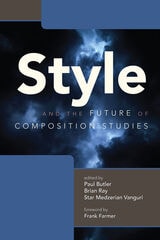
Style and the Future of Composition Studies
Paul Butler
Utah State University Press, 2020
Many college writing teachers operate under the belief that style still refers primarily to the kinds of issues discussed in Strunk and White’s popular but outdated book The Elements of Style. This work not only challenges this view but also offers theories and pedagogies from diverse perspectives that help teachers and students develop strategic habits and mindsets to negotiate languages, genres, and discourse conventions. The chapters explore the ways in which style directly affects—and is affected by—multiple sources of shifting disciplinary inquiry, contributing new insights by drawing on research in cultural studies, sociolinguistics, discourse studies, translingualism, and writing across the curriculum, as well as new approaches to classical rhetorical theory.
The reemergence of stylistic inquiry can be used dynamically to produce new insights not only about emerging disciplinary interests but also about the study of style as a kind of language in and of itself. Style and the Future of Composition Studies demonstrates that style deserves to be a central focus of writing teaching. More than just the next style collection, the book advocates for style’s larger prominence in composition discussions generally. It will be of interest to a broad range of students and scholars of writing studies, as well as a wider set of readers in academe.
Contributors:
Cydney Alexis, Laura Aull, Anthony Box, Jimmy Butts, Mike Duncan, William FitzGerald, Melissa Goldthwaite, Eric House, TR Johnson, Almas Khan, Zak Lancaster, Eric Leake, Andrea Olinger, Thomas Pace, Jarron Slater, Jonathan Udelson

Style as Argument
Contemporary American NonfictionChirs Anderson
Southern Illinois University Press, 1987
Taking the position that style has a value in its own right, that language forms a major component of the story a nonfiction writer has to tell, Anderson analyzes the work of America’s foremost practitioners of New Journalism—Tom Wolfe, Truman Capote, Norman Mailer, and Joan Didion.
Anderson does for nonfiction what insightful critics have long been doing for fiction and poetry. His approach is rhetorical, and his message is that the rhetoric of Wolfe, Capote, Mailer, and Didion is a direct response to the problem of trying to convey to a general audience the sublime, inexplicable, or private and intuitive experiences that conventional rhetoric cannot evoke.
The emphasis in this book is on style, not genre, and the analysis characterizes the distinctive styles of four American writers, showing how the richness and complexity of their prose discloses an important argument about the value of language itself. Their prose is complex, nuanced, layered, affecting, always aware of itself as style. This self-consciousness, Anderson contends, prepares the reader to regard style as argument, a “tacit but powerful statement about the value of form as form, style as style.”
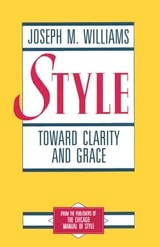
Style
Toward Clarity and GraceJoseph M. Williams
University of Chicago Press, 1990
"Buy Williams's book. And dig out from storage your dog-eared old copy of The Elements of Style. Set them side by side on your reference shelf."—Barbara Walraff, Atlantic
"Let newcoming writers discover this, and let their teachers and readers rejoice. It is a practical, disciplined text that is also a pleasure to read."—Christian Century
"An excellent book....It provides a sensible, well-balanced approach, featuring prescriptions that work."—Donald Karzenski, Journal of Business Communication
"Intensive fitness training for the expressive mind."—Booklist
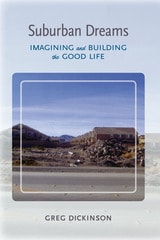
Suburban Dreams
Imagining and Building the Good LifeGreg Dickinson
University of Alabama Press, 2014
2016 CHOICE OUTSTANDING ACADEMIC TITLE AND JANE JACOBS URBAN COMMUNICATION BOOK AWARD FINALIST
Explores how the suburban imaginary, composed of the built environment and imaginative texts, functions as a resource for living out the “good life”
Starting with the premise that suburban films, residential neighborhoods, chain restaurants, malls, and megachurches are compelling forms (topos) that shape and materialize the everyday lives of residents and visitors, Greg Dickinson’s Suburban Dreams offers a rhetorically attuned critical analysis of contemporary American suburbs and the “good life” their residents pursue.
Dickinson’s analysis suggests that the good life is rooted in memory and locality, both of which are foundations for creating a sense of safety central to the success of suburbs. His argument is situated first in a discussion of the intersections among buildings, cities, and the good life and the challenges to these relationships wrought by the twentieth and twenty-first centuries. The argument then turns to rich, fully-embodied analyses of suburban films and a series of archetypal suburban landscapes to explore how memory, locality, and safety interact in constructing the suburban imaginary. Moving from the pastoralism of residential neighborhoods and chain restaurants like Olive Garden and Macaroni Grill, through the megachurch’s veneration of suburban malls to the mixed-use lifestyle center’s nostalgic invocation of urban downtowns, Dickinson complicates traditional understandings of the ways suburbs situate residents and visitors in time and place.
The analysis suggests that the suburban good life is devoted to family. Framed by the discourses of consumer culture, the suburbs often privilege walls and roots to an expansive vision of worldliness. At the same time, developments such as farmers markets suggest a continued striving by suburbanites to form relationships in a richer, more organic fashion.
Dickinson’s work eschews casually dismissive attitudes toward the suburbs and the pursuit of the good life. Rather, he succeeds in showing how by identifying the positive rhetorical resources the suburbs supply, it is in fact possible to engage with the suburbs intentionally, thoughtfully, and rigorously. Beyond an analysis of the suburban imaginary, Suburban Dreams demonstrates how a critical engagement with everyday places can enrich daily life. The book provides much of interest to students and scholars of rhetoric, communication studies, public memory, American studies, architecture, and urban planning.
Successful Community Outreach
A How-To-Do-It Manual for LibrariansBarbara Blake
American Library Association, 2011
Successfully Serving the College Bound
Africa S. Hands
American Library Association, 2014
Sudden Position Guide to Cataloging & Metadata
Jeremy Myntti
American Library Association, 2021
Sudden Selector's Guide to Government Publications
Alexandra Simons
American Library Association, 2017
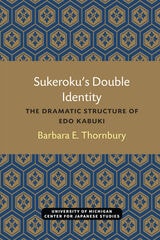
Sukeroku’s Double Identity
The Dramatic Structure of Edo KabukiBarbara E. Thornbury
University of Michigan Press, 1982
Summer Matters
Making All Learning CountElizabeth M. McChesney
American Library Association, 2017
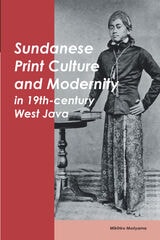
Sundanese Print Culture and Modernity in 19th Century West Java
Mikihiro Moriyama
National University of Singapore Press, 2005
Starting with the 'discovery' of Sundanese by Europeans in the early 19th century, Mikihiro Moriyama follows the developments in the ensuing century when a small group of Dutch scholars and colonial officials reshaped the language and its literature over the next one hundred years. Schools taught Sundanese, and printed materials based on western concepts began to influence indigenous writing and oral tradition. The imposition of European standards of literary aesthetics shaped a modernity that rejected traditional knowledge in favour of rational and empirical paradigms. Interest in traditional poetry and its mythologies declined, and new forms of prose, including novels, captured the attention of the reading public. These materials promoted useful knowledge and morality, and encouraged deference and loyalty towards colonial authority.
Early in the 20th century, the establishment of the Commissie voor de Inlandsche School- en Volkslectuur (Committee for Indigenous Schoolbooks and Popular Reading Books), a government-subsidised institution, provided the growing number of literate people in the Indies with 'good' and 'appropriate' reading materials. Its development marked the end of an era when Sundanese writing competed with Western-style schools and publications, and signalled the triumph of the new colonial modernity.
Supercharged Storytimes
An Early Literacy Planning and Assessment GuideKathleen Campana
American Library Association, 2016

Superchurch
The Rhetoric and Politics of American FundamentalismJonathan J. Edwards
Michigan State University Press, 2015

Superman and Son
Schoenstein, Ralph
Rutgers University Press, 1995
"To Ralph Schoenstein, his father was the New York version of Superman: 'Not a mild-mannered reporter who put on a cape in a telephone booth, but a commanding editor who could use a telephone booth to get tickets to any sold-out Broadway show.' Father Paul was city editor of Hearst's New York Journal-American, the U.S.'s biggest evening paper through the '40s and '50s. . . . This affectionate memoir evokes a giant of great animal magnetism. . . a filial, funny book that Superman would have loved--and that anyone might admire."--Time Magazine
"Enjoy a sneaking look back at the days when newspapering was a game as well as a trade, when the world paraded through a newspaper's door without security passes, when scoop-hungry city editors not only breathed fire, they inhaled, Schoenstein's gem of a memoir brings it all back in a rush of wit and longing."--Columbia Journalism Review
"Father and son literature goes back to the Bible . . . but I doubt whether there has ever been anything quite like Schoenstein's memoir. Certainly nothing as funny, warm, and poignant all at once."--Los Angeles Times
Publisher's Note: This book was previously titled Citizen Paul: The Story of Father and Son, published in 1978 and out of print for many years. It was an Alternate Selection of the Book of the Month Club.
Supplement to the Handbook of Middle American Indians, Volume 2
LinguisticsVictoria Reifler Bricker, general editor
University of Texas Press, 1984
The sixteen-volume Handbook of Middle American Indians, completed in 1976, has been acclaimed the world over as the single most valuable resource ever produced for those involved in the study of Mesoamerica. When it was determined in 1978 that the Handbook should be updated periodically, well-known cultural anthropologist Victoria Reifler Bricker was selected to be general editor.
This second volume of the Supplement is devoted to Mesoamerican languages. It differs in both scope and content from its forerunner, Volume 5 of the Handbook of Middle American Indians: Linguistics, which presents a general survey of Middle American linguistics and descriptions of Classical Nahuatl, Yucatec, Quiche, Popoluca, Zapotec, Mazatec, Pame, and Chontal de Oaxaca.
The aim of the present volume is to provide detailed sketches of five additional languages: Mixe, Chichimeco Jonaz, Choltí, Tarascan, and Huastec. All the grammatical sketches deal with the phonology, morphology, and syntax of the languages treated; most cover discourse as well. Taken together, these new essays represent a substantial enrichment of the earlier Handbook volume on linguistics. Alone, the Supplement stands as an invaluable reference guide for all who are interested in learning about these important and heretofore poorly treated languages of Middle America.
Supporting Diversity through Collection Evaluation, Development, and Weeding
Erika Barber
Assoc of College & Research Libraries, 2024
Supporting Diversity through Collection Evaluation, Development, and Weeding: CLIPP #48
contains a thorough literature review and bibliography, analysis and discussion of survey results, and sample library collection development policies; diversity, equity, and justice statements; and a harmful content policy.
There are emerging practices for evaluating collection diversity and for diversifying collections via acquisitions, but the question of how collection diversity factors into weeding—either in theory or in practice—has not been thoroughly explored. CLIPP #48 provides a comprehensive survey of how diversity-enhancing collection management practices have filtered into the day-to-day work of average small and medium-sized academic libraries, and offers models for library workers who want to incorporate diversity concerns and policies into collection management practices.
Supporting International Writing Studies Research
Cultivating Capacity through International ExchangesTiane Donahue
University Press of Colorado, 2025
Shedding light on international and transnational writing studies, this edited collection addresses the complexities of research and writing across global contexts. Based on the observation that knowledge-making transcends national borders and is contingent upon the interplay of local cultures and practices, the contributors to the volume contradict the notion that knowledge circulates freely in a “flat world.” Presenting diverse perspectives on writing research, they showcase the need for mutual understanding across borders and reflect the rich tapestry of writing research traditions worldwide, emphasizing interconnectedness and collective insight rather than hierarchical models of knowledge dissemination. Supporting International Writing Studies Research encourages readers and researchers to engage with and respect scholarship beyond English-language contexts, advocates for collaborative global dialogues in writing education, and underscores the importance of continued efforts to incorporate diverse scholarly voices and methodologies in the evolving landscape of writing studies.
Supporting Neurodiverse Students in Academic Libraries
Amanda Boyer
Assoc of College & Research Libraries, 2025
In five parts, Supporting Neurodiverse Students in Academic Libraries offers practical advice that can be easily implemented and scaled to various types, sizes, and budgets of libraries.
- Instruction
- Services
- Cross-Campus Collaborations
- Resources
- Spaces
Chapters include effective practices for students with autism spectrum disorder, brain trauma, and PTSD, but also depression, anxiety, and other mental health disorders. Supporting Neurodiverse Students in Academic Libraries demonstrates the power of working alongside students to create welcoming spaces, services, and resources that can help all students succeed.
Supporting Student Parents in the Academic Library
Designing Spaces, Policies, and ServicesKelsey Keyes
Assoc of College & Research Libraries, 2024
Supporting Student Parents in the Academic Library: Designing Spaces, Policies, and Services is part toolkit, part treatise, and part call to action. In four parts:
- The Higher Education Landscape
- The Role of Academic Libraries
- Looking Outward to Community, For-Profit, and International Organizations
- Evaluating Needs and Measuring Success
Student parents can feel unwelcome and invisible in their institutions. And for every student parent who is struggling to complete an education despite these hurdles, there are many others who have not been able to find a way. Supporting Student Parents is a guide to engaging with and aiding the student parents in your libraries and leading the charge in making your institutions more family friendly.
Supporting Today’s Students in the Library
Strategies for Retaining and Graduating International, Transfer, First-Generation, and Re-Entry StudentsNgoc-Yen Tran
Assoc of College & Research Libraries, 2019