Results by title
3785 books match the query 'Poetry' and 342 start with s
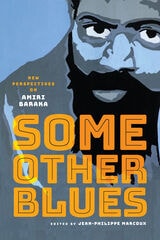
Some Other Blues
New Perspectives on Amiri BarakaEdited by Jean-Philippe Marcoux
The Ohio State University Press, 2021
(Include contributors if space allows) Contributors: Tony Bolden, Jeremy Glick, William J. Harris, Benjamin Lee, Aidan Levy, John Lowney, Jean-Philippe Marcoux, Kim McMillon, Fred Moten, Michael New, Aldon Lynn Nielsen, Amy Abugo Ongiri, Gregory Pierrot, Howard Rambsy II, Emily Ruth Rutter, Anthony Reed, Lauri Scheyer, Kathy Lou Schultz, Michael Simanga, James Smethurst, Laura Vrana, Tyrone Williams, Kalamu ya Salaam.

Somebody Else
Arthur Rimbaud in Africa 1880-91Charles Nicholl
University of Chicago Press, 1999
In this compelling biography, Charles Nicholl pieces together the shadowy story of Rimbaud's life as a trader, explorer, and gunrunner in Africa. Following his fascinating journey, Nicholl shows how Rimbaud lived out that mysterious pronouncement of his teenage years: "Je est un autre"—I is somebody else.
"Rimbaud's fear of stasis never left him. 'I should like to wander over the face of the whole world,' he told his sister, Isobelle, 'then perhaps I'd find a place that would please me a little.' The tragedy of Rimbaud's later life, superbly chronicled by Nicholl, is that he never really did."—London Guardian
"Nicholl has excavated a mosaic of semi-legendary anecdotes to show that they were an essential part of the poet's journey to become 'somebody else.' Not quite biography, not quite travel book, in the end Somebody Else transcends both genres."—Sara Wheeler, Daily Telegraph
"At the end of Somebody Else Rimbaud is more interesting and more various than before: he is not less mysterious, but he is more real."—Susannah Clapp, Observer Review
Someone Else's Hunger
Isabella DeSendi
Four Way Books, 2025
The expansive mercy of DeSendi's breath-taking images is never more apparent than the moment they turn, as when she heralds the avian frenzy "in the moment right after a purge": "always the miracle of birds arriving," "a messy flurry…curious if any piece of me could be salvaged, was still good enough to be taken home to the other starlings to eat." This speaker's ability to see the tenacious tenderness that drives the scavenger, to recognize its creative intelligence for nourishment, belies the resuscitative artistry that never abandons her as she turns carrion into continuance, coming alive again. Someone Else's Hunger subverts the revenge to recovery plot, arguing that the truest testament to the speaker's inner strength is the resilience it took to survive. DeSendi formally moves between restraint and excess, illustrating the great courage required to relinquish the control she won back when she became the master of her suffering. But the reward of risking exposure, daring to open herself to the world and let herself feed off it? Abundance. The arrival of spring and "with it the audacious dirt," this realization that "sometimes / in the breaking I am bettering / and in the bettering I am free."
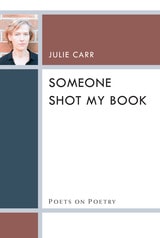
Someone Shot My Book
Julie Carr
University of Michigan Press, 2018
Carr’s essays push past familiar boundaries between the personal/confessional and experimental/conceptual strains in American poetry. Pressing philosophical inquiries into the nature of gender, motherhood, fear, the body, and violence up against readings of twentieth- and twenty-first-century poets, she asks us to consider the political and affective work of poetry in a range of contexts. Carr reports on her own practices, examining her concerns for research and narrative against her investment in lyric, as well as her history as a dancer and her work as curator and publisher. Carr’s breadth of inquiry moves well beyond the page, yet remains grounded in languages possibilities.
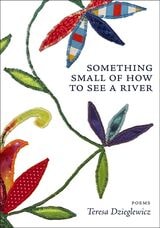
Something Small of How to See a River
Teresa Dzieglewicz
Tupelo Press, 2025
Something Small of How to See a River interrogates the idea of narrative. Who gets to tell a story and what does it mean when the official story, the story told by the governor, the police, or the local media, is a fundamentally dishonest one? The poems collected here meditate on failure: how systems fail us and our environment, how whiteness fails to hold itself accountable, how future generations and the land are being failed—and how, in the face of all this, the Standing Rock movement was not a failure. At the heart of this collection is the strength, care, and radical joy of the movement, which shines through and against the violence.
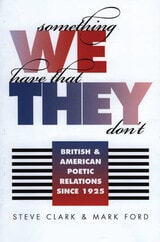
Something We Have That They Don't
British and American Poetic Relations since 1925Steve & Mark Clark & Ford
University of Iowa Press, 2004
(I like the way the English spell it
They’re so clever about some things
Probably smarter generally than we are
Although there is supposed to be something
We have that they don’'t—'don’t ask me
What it is. . . .)
—John Ashbery, “Tenth Symphony”
Something We Have That They Don’t presents a variety of essays on the relationship between British and American poetry since 1925. The essays collected here all explore some aspect of the rich and complex history of Anglo-American poetic relations of the last seventy years. Since the dawn of Modernism poets either side of the Atlantic have frequently inspired each other’s developments, from Frost’s galvanizing advice to Edward Thomas to rearrange his prose as verse, to Eliot’s and Auden’s enormous influence on the poetry of their adopted nations (“whichever Auden is,” Eliot once replied when asked if he were a British or an American poet, “I suppose, I must be the other”); from the impact of Charles Olson and other Black Mountain poets on J. H. Prynne and the Cambridge School, to the widespread influence of Frank O'Hara and Robert Lowell on a diverse range of contemporary British poets. Clark and Ford’s study aims to chart some of the currents of these ever-shifting relations. Poets discussed in these essays include John Ashbery, W. H. Auden, Elizabeth Bishop, T. S. Eliot, Mark Ford, Robert Graves, Thom Gunn, Lee Harwood, Geoffrey Hill, Michael Hofmann, Susan Howe, Robert Lowell, and W. B. Yeats.
“Poetry and sovereignty,” Philip Larkin remarked in an interview of 1982, “are very primitive things”: these essays consider the ways in which even seemingly very “unprimitive” poetries can be seen as reflecting and engaging with issues of national sovereignty and self-interest, and in the process they pose a series of fascinating questions about the national narratives that currently dominate definitions of the British and American poetic traditions.
This innovative and exciting new collection will be of great interest to students and scholars of British and American poetry and comparative literature.
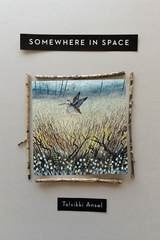
Somewhere in Space
Talvikki Ansel
The Ohio State University Press, 2015
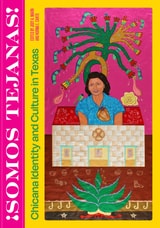
Somos Tejanas!
Chicana Identity and Culture in TexasEdited by Jody A. Marín and Norma E. Cantú
University of Texas Press, 2025
2026 Outstanding Book Award for Non-Fiction, National Association for Chicana and Chicano Studies (NACCS) Tejas Foco
2026 Silver Medal for the Dolores Huerta Best Cultural & Community Themed Book – English, Conference on Latin American History (CLAH)
An expansive volume on Tejana identity and Tejanidad told through personal narratives, poetry, and essays.
Being Tejanx is different than just being from Texas. Being Tejanx means you are a border subject. Being Tejanx means living in and from a certain history of oppression, possibility, activism, and cultural-linguistic hybridity arising within the US-Mexico borderland that is home. And being Tejanx means something in particular if you are a woman.
In ¡Somos Tejanas!, editors Norma E. Cantú and Jody A. Marín assemble contemporary Tejanx writers who provide firsthand accounts of their experience of identity, enriching the field of Tejanx studies through an encounter with gender and sexuality. The contributions, including personal and scholarly essays, poems, criticism, and artworks, explore the heterogeneity of Tejana identity and the sociopolitical movements, stories, dances, music, and athletic feats that mark Tejanidad. Authors contemplate the history and memory of segregation in Texas, the struggles of surviving the unnatural disaster and blackouts of 2021 amid the global pandemic of COVID-19, and the drug-war violence and ever-tightening immigration restrictions that strangle a transborder way of life shared by millions. An unrepentant act of expression from women under attack by state policymakers, this collection dispels the silence imposed by colonial erasure.
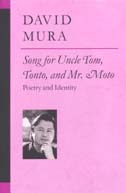
Song for Uncle Tom, Tonto, and Mr. Moto
Poetry and IdentityDavid Mura
University of Michigan Press, 2002
Mura's writings recently have been at the center of various debates concerning race and literary standards. In this book, he argues the need for a more complicated and diverse set of literary standards than the canon has previously allowed, an opening up to the many voices that are "great within us." He contends that, when placed against a gathering awareness of a world literature, particularly in the so-called Third World, the boundaries of the traditional Anglo-American canon and its present-day proponents like Harold Bloom come to be seen as too narrow and parochial, reenacting the "tribal" label that many throw now at the advocates of multiculturalism.
Beyond its theoretical underpinnings, Song for Uncle Tom, Tonto, and Mr. Moto charts the wayward course of Mura's own development as a poet. In three interviews, Mura provides readings of his own work and discusses various issues of technique and form.
David Mura is a poet, memoirist, essayist, playwright, writer of fiction, performance artist, and literary critic. He is author of The Colors of Desire, After We Lost Our Way, and Turning Japanese: Memoirs of a Sansei.
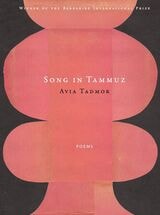
Song in Tammuz
Avia Tadmor
Tupelo Press, 2026
Winner of the International Berkshire Prize, this collection draws from an incredible range of literary forms, from familiar couplets and tercets to footnotes, dictionary definitions, and luminous lyric fragments.
While stylistically daring, even virtuosic, Avia Tadmor’s stunning debut is unified by its enduring engagement with questions of language and alterity. What does it mean to be othered by and through language? What happens when grammar, syntax, and the concepts of identity housed within them are at odds? Does a revolutionary message demand new forms of discourse? “I can say it through the distance of this other tongue,” Tadmor writes.
Indeed, she considers the role of language—from conceptual framework to vast storehouse of history, culture, and inheritance—in shaping the self, ultimately revealing our agency within a grammar and syntax we did not choose. As Tadmor writes, “Her pen is a stronghold, a lighthouse / flickering late in July.”
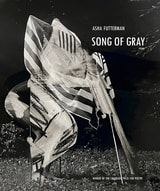
Song of Gray
Asha Futterman
University Press of Colorado, 2025
These poems build new logic systems. Futterman stands at her grandmother’s grave and proclaims, “how powerful how dense and naked how inaccurate.” With quiet, deadpan, and piercing language, Song of Gray offers earnest, felt relationships to race, empathy, pleasure, and nonsense.
“There wasn’t a sunrise / just gray / then brighter gray.” In Song of Gray, blackness is not definite—it is an ambivalent hole as much as an area of hope. Blackness is a song of gray
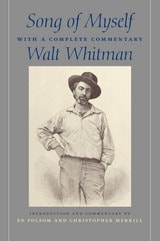
Song of Myself
With a Complete CommentaryWalt Whitman
University of Iowa Press, 2016
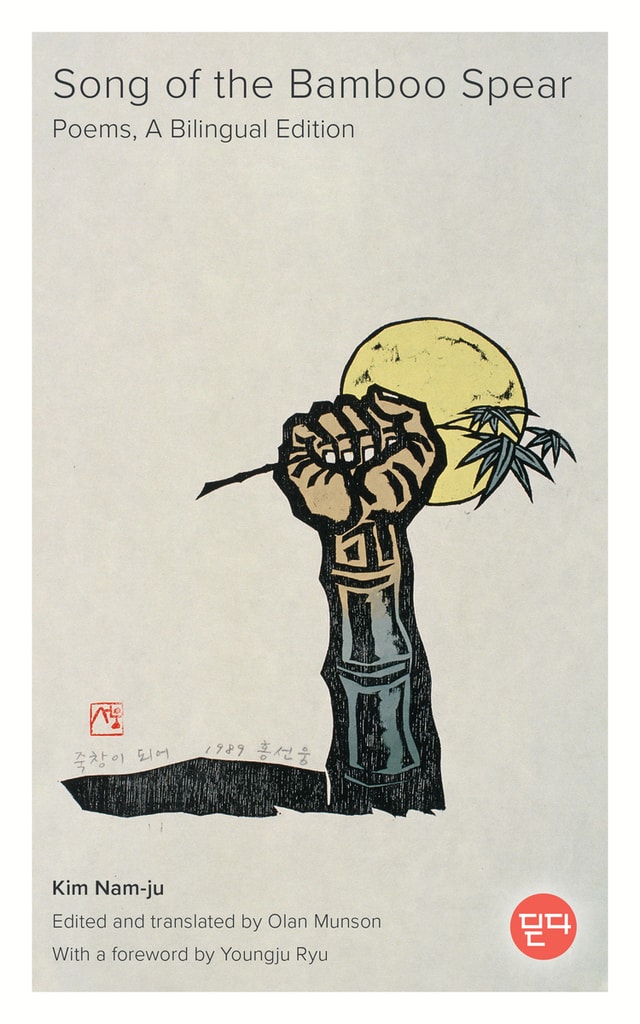
Song of the Bamboo Spear
Poems, A Bilingual EditionNam-ju Kim (1945–1994)
Rutgers University Press, 2027
This book debuts selected poetry by Kim Nam-ju (1946–1994) in English translation, along with the original Korean. Referred to as the “Che Guevara of South Korea,” and self-described a “warrior poet,” Kim Nam-ju remains, to this day, an enduring voice of the 1970s and 80s cultures of anti-authoritarian resistance in South Korea. Kim was arrested in 1979 for his involvement with the “South Josǒn” National Liberation Front, a leftist underground group organizing against the Yushin regime. Kim wrote prolifically while in prison (1979-1988), at times by etching his poems into scraps of foil, milk carton, or cigarette packages. The work he produced in prison alone totals around 360 poems. This bilingual volume selects 65 poems from Kim's oeuvre, sampling across many different chapters of the poet’s career. Readers will find autobiographical reflections on his childhood, love poems, missives from the prison cell, commemorations of the Kwangju Uprising, the poet’s calls to arms, and more.
이 책은 김남주 시인(1946~1994)의 시 65편을 한국어 원문과 함께 영문 번역으로 처음 선보인다. ‘한국의 체 게바라’로 불리며 스스로를 ‘전사 시인’이라 칭했던 김남주는 오늘날까지도 한국의 1970·80년대 반독재 저항운동을 대표하는 사라지지 않는 목소리로 남아 있다. 김남주는 유신정권에 맞서 결성된 좌파 지하조직 ‘남조선민족해방전선준비위원회’에 가담한 혐의로 1979년에 체포되었다. 1979년부터 1988년에 이르는 수감 기간에도 꾸준히 창작 활동을 이어갔으며, 때로는 은박지 조각이나 우유곽, 담뱃갑 등에 시를 새겨 집필하기도 하였다. 이 시기에 쓴 작품만 해도 360여 편에 이른다. 이 영역시집은 시인의 전체 작품 중에서 65편의 시를 엄선하여 시인의 생애와 창작 활동의 다양한 시기를 아우르는 시적 여정을 한눈에 보여준다. 독자들은 시인의 어린 시절에 대한 자전적인 회고, 사랑의 시, 옥중 서한, 5·18 광주항쟁을 추모하는 시, 민중의 투쟁을 촉구하는 시 등 다양한 작품을 만나볼 수 있을 것이다.
English-Korean Bilingual Edition
영-한 이중언어판
This book is published with the support of the Literature Translation Institute of Korea (LTI Korea)
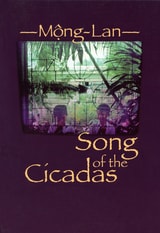
Song of the Cicadas
Anne Mong-Lan Pham
University of Massachusetts Press, 2001
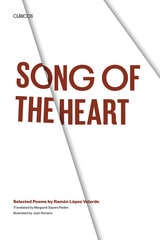
Song of the Heart
Selected Poems by Ramón López VelardeBy Ramón López Velarde
University of Texas Press, 1995
Ramón López Velarde (1888-1921) was one of the most Mexican of Mexican poets, whose sense of history found expression in many poems, including his best-known "La suave Patria" ("Sweet Land"). This bilingual collection, drawn primarily from Poesías completas y el minutero, offers English-language readers our first book-length introduction to his poetry.
Often called a "poet of the provinces," López Velarde gives us a glimpse into a slower and more gentle way of life. His poems present the contrast between city and hometown and between urban and pastoral landscapes. Through these contrasts runs the thread of religious faith, while urgency of language informs the entire body of his poetic production.
Original, specially commissioned drawings by noted contemporary Mexican artist Juan Soriano complement the poems. This combination of poetry and art speaks to universal emotions; indeed the poetry of López Velarde belongs to everyone who sings the Song of the Heart.
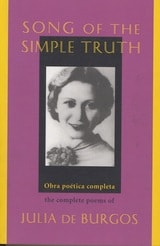
Song of the Simple Truth
The Complete Poems of Julia de BurgosJulia de Burgos
Northwestern University Press, 1995
Song-Poems from Xanadu
J. I. Crump
University of Michigan Press, 1993
Song-Poems from Xanadu
J. I. Crump
University of Michigan Press, 1993
Songlines in Michaeltree
NEW AND COLLECTED POEMSMichael S. Harper
University of Illinois Press, 2000
Hailed by critics as a distinctive and powerful presence in contemporary American poetry, Michael S. Harper is an artist and a truth teller who tempers his astonishing technical virtuosity with a compassionate and healing vision. A keen observer and a potent commentator, Harper calls a complacent society vigorously to account while cradling the wounded and remembering the lost.
Calling Harper "one of the finest poets of our time . . . [and] one of the most human and humane,"
George Cuomo of the San Francisco Examiner and Chronicle observed, "Harper's poetry has drawn its vitality from the incredible energy of his language and the honesty of his perceptions." Songlines in Michaeltree is a magnificent celebration of Harper's continuing, unstinting gifts.
Songs
Derek Henderson
University Press of Colorado, 2014
The poems in Derek Henderson’s Songs are “translations” of a film cycle of the same name, shot by American filmmaker Stan Brakhage (1933–2003) to document his and his family’s life in Colorado in the mid-1960s. Where Brakhage’s films provide a subjective visual record of his experience bewildered by the eye, these poems let language bewilder the space a reader enters through the ear. Henderson tenders the visual experience of Brakhage’s films—films of the domestic and the wild, the private and political, the local and global—into language that insists on the ultimate incapacity of language—or of image—to fully document the comfort and the violence of intimacy. Songs expresses the ecstasy we so often experience in the company of family, but it just as urgently attests to ecstasy’s turbulent threat to family’s stability. Like Brakhage’s films, Henderson’s poems carry across into language and find family in every moment, even the broken ones, all of them abounding in hope.
Songs for Two Voices
Bruce Smith
University of Chicago Press, 2004
As Smith's speakers wander through the detritus of American materialism-encountering jazz, football, drag, class war, Reaganomics, and Vietnam-the poems dramatize the contradictions and peculiarities of growing up male in Cold War America, both sensing promise and suffering disillusion.
Each poem here speaks in two voices: one that attacks and one that cowers, one voice that leads while the other follows. But Smith's subjects are unencumbered by form, and their voices blossom in duet: the idealized lover is also a betrayer, the man is also a girl. These binaries of statement and contradiction give birth to a third voice in the unrealized possibilities of the two.
A mesmerizing follow-up to 2000's The Other Lover, Smith's Songs for Two Voices is carnal yet fiercely intellectual, laid out with the self-confidence of a poet who can invoke Mozart and Coltrane, Anna Akhmatova and John Wayne, Teddy Roosevelt and Augustine in the same incendiary breath.
Songs of Degrees
Essays on Contemporary Poetry and PoeticsJohn Taggart
University of Alabama Press, 1994
Songs of Life and Hope/Cantos de vida y esperanza
Rubén Darío
Duke University Press, 2004
Written over the course of seven years and in many locales in Latin America and Europe, the poems in Cantos de vida y esperanza reflect both Darío’s anguished sense of modern life and his ecstatic visions of transcendence, freedom, and the transformative power of art. They reveal Darío’s familiarity with Spanish, French, and English literature and the wide range of his concerns—existential, religious, erotic, and socio-political. Derusha and Acereda’s translation renders Darío’s themes with meticulous clarity and captures the structural and acoustic dimensions of the poet’s language in all its rhythmic sonority. Their introduction places this singular poet—arguably the greatest to emerge from Latin America in modern literature—and his best and most widely known work in historical and literary context. An extensive glossary offers additional information, explaining terms related to modernismo, Hispanic history, mythological allusions, and artists and writers prominent at the turn of the last century.
Songs of Love and Grief
A Bilingual Anthology in the Verse Forms of the OriginalsHeinrich Heine
Northwestern University Press, 1995
Sonnets and Other Poems
Luis de Camões, Translated by Richard Zenith
Tagus Press, 2009
This revised and updated bilingual edition of Sonnets and Other Poems offers a cross-section of lyric poetry by Portugal's Luís de Camões, author of The Lusiads (1572), the great Renaissance epic memoralizing Vasco da Gama's inaugural voyage to India (1497-99). A selection of forty sonnets is followed by poems using other metrical patterns and rhyme schemes, including terza rima, ottava rima, the sestina, the canzone, and the redondilha, a verse form typical of Portuguese poetry. Richard Zenith's fluid renditions, far from attempting to "update" Camões, closely adhere to the original text, employing modern English but resisting the temptation to expand on the relatively small and simple lexicon of the Portuguese. Along with discussing his method of translation, Zenith's illuminating introduction shows how Camões's life and work were intimately entwined.
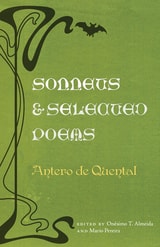
Sonnets and Selected Poems
Antero de Quental, Edited by Onésimo T. Almeida and Mario Pereira
Tagus Press, 2022
Grappling with metaphysical questions of suffering, death, and infinity, Antero de Quental’s sonnets have been widely celebrated by writers and intellectuals around the world, with Fernando Pessoa calling him “one of the greatest poets of the nineteenth century.” Irreverent and nonconformist, Antero became the ideologue and moving spirit behind the group of progressive intellectuals known as the Generation of 1870 who rebelled against tradition and attempted to reverse Portugal’s intellectual stagnation. This is the first bilingual (Portuguese-English) edition of Antero's sonnets and poems, as well as the first to assemble the translations by Aubrey F. G. Bell, Roy Campbell, Richard Garnett, George Monteiro, S. Griswold Morley, Fernando Pessoa, Edgar Prestage, and Richard Zenith in a single volume.
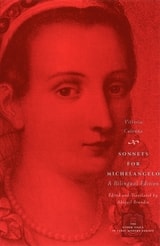
Sonnets for Michelangelo
A Bilingual EditionVittoria Colonna
University of Chicago Press, 2005
This book presents for the very first time a body of Colonna's verse that reveals much about her poetic aims and outlook, while also casting new light on one of the most famous friendships of the age. Sonnets for Michelangelo, originally presented in manuscript form to her close friend Michelangelo Buonarroti as a personal gift, illustrates the striking beauty and originality of Colonna's mature lyric voice and distinguishes her as a poetic innovator who would be widely imitated by female writers in Italy and Europe in the sixteenth century. After three centuries of relative neglect, this new edition promises to restore Colonna to her rightful place at the forefront of female cultural production in the Renaissance.

Sonnets of Love and Death
Jean De Sponde
Northwestern University Press, 2001
Sonnets to Orpheus
Rainer Maria Rilke
University of Scranton Press, 2007
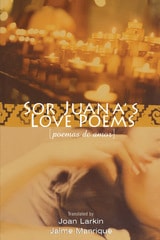
Sor Juana's Love Poems
Sor Juana Inés de la Cruz; Translated by Joan Larkin and Jaime Manrique
University of Wisconsin Press, 2003
These exquisite love poems, some of them clearly addressed to women, were written by the visionary and passionate genius of Mexican letters, the seventeenth-century nun Sor Juana Inés de la Cruz. In this volume they are translated into the idiom of our own time by poets Joan Larkin and Jaime Manrique. Some of them are rooted in Renaissance courtly conventions; others are startlingly ahead of their time, seemingly modern in the naked power of the complex sexual feelings they address.
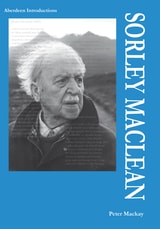
Sorley MacLean
Peter Mackay
Aberdeen University Press, 2010
Soul Over Lightning
Ray Gonzalez
University of Arizona Press, 2014
Gonzalez shows his profound respect for other people, species, places, elements, and histories. Illusions to religious imagery knock against those of the natural world—feathers and rocks—creating a complex tableau of objects and feelings. Employing the image-driven approach for which he is renowned, in this collection Gonzalez is taut, using poetics that are fully formed. Even as the poems weave together highly intellectual, refined subject matter, the language remains accessible.
The book is divided into three parts. The first section offers Gonzalez’s most personal work yet, meditating on aging, forgetting, and the reader. The next section is more outward looking, as Gonzalez takes on great artists from both Old World and New World traditions. Finally, in the last section, Gonzalez opens himself up, reflecting in very personal ways on the everyday, such as a return from a hospital stay or a visit to the doctor.
Soul Over Lightning weaves together elements of Native American and Chicano/a narratives, inspired by the landscape of the desert Southwest and the experience of living on the border. It offers a new supernarrative that lifts spirits and yet remains grounded in a timeless search for home and truth.
Sound Fury
PoemsMark Levine
University of Iowa Press, 2022
Sound and Form in Modern Poetry
A Study of Prosody from Thomas Hardy to Robert LowellHarvey Gross
University of Michigan Press, 1964
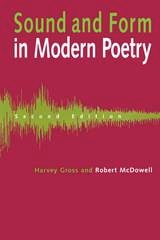
Sound and Form in Modern Poetry
Second EditionHarvey Gross and Robert McDowell
University of Michigan Press, 1996
Poet, critic, and editor Robert McDowell has updated this classic text in the light of the poetic and critical developments of the last three decades. Segments on Dickinson, Robinson, Frost, Jeffers, and Lowell, among other poets, have been greatly expanded, and Ashbery, Creeley, Ginsberg, Hall, Kees, Kumin, Levertov, Levine, O'Hara, Plath, Rich, Simpson, and Wilbur added, among others. The epilogue discusses a new generation of poets whose works will likely be read well into the next century-- among others, Thomas M. Disch, Rita Dove, Dana Gioia, Emily Grosholz, Mark Jarman, Molly Peacock, Gjertrud Schnackenberg, Timothy Steele, Mary Swander, and Marilyn Nelson Waniek.
Over the last ten years, the most inspiring topic of conversation and argument among poets and their readers has been the resurgence of narrative and traditional forms. The new Sound and Form in Modern Poetry is a seminal text in this discussion, examining not only this movement but all of the important developments (Dadaism, Surrealism, Imagism, Language Poetry, and the Confessional School) that have defined our poetry in the twentieth century and have set the stage for poetry's continued life in the twenty-first. The original Sound and Form in Modern Poetry enjoyed extensive classroom use as a text; the revised version promises to be even more accessible, and more essential, for years to come.
The late Harvey Gross was Professor of Comparative Literature, State University of New York at Stony Brook.
Robert McDowell is publisher and editor of Story Line Press, and is also poet, critic, translator, fiction writer, and essayist.
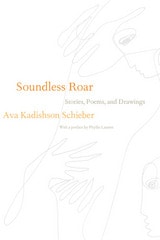
Soundless Roar
Stories, Poems, and DrawingsAva Kadishson Schieber
Northwestern University Press, 2002
Schieber's drawings, paintings, poetry, and prose are all intimate reflections of one another. Her experience forged the unusual sense of time that shapes Schieber's stories. In her preface, Phyllis Lassner writes: "The timetable of Ava's stories often consists of circles within circles, of patterns of an intertwined past, the past present of hiding, and the present looking back at those distinctly separate but inseparable pasts."
Soundworks
Race, Sound, and Poetry in ProductionAnthony Reed
Duke University Press, 2021
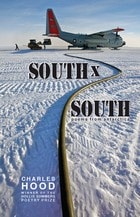
South × South
Poems from AntarcticaCharles Hood
Ohio University Press, 2013
A vivid and insightful look at the culture and terrain of Antarctica, as well as the people who choose to live and work there, South × South celebrates and explores life at the extreme edge of our planet. Blending travel narrative, historical research, and the surprises of magical realism, Hood presents life in Antarctica and the history of polar aviation as both a miracle of achievement yet also as a way to understand humanity’s longing to be creatures of the heavens as well as the earth. South × South is poetry at its most inventive and surprising, insisting that the world is stranger and more glorious than we ever might have guessed.
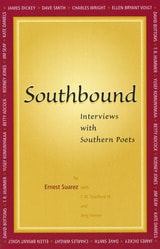
Southbound
Interviews with Southern PoetsEdited by Ernest Suarez, T. W. Stanford III, & Amy Verner
University of Missouri Press, 1999
"There's a real flowering, I think, of southern poetry right now, . . . assembling at the edges of everything." This observation by Pulitzer Prize-winning poet Charles Wright reflects upon the continuing vibrancy and importance of the southern poetic tradition. Although the death of James Dickey in 1997 left southern poetry without a recognizably dominant voice, an array of other vibrant voices continue to be heard and recognized. Southbound: Interviews with Southern Poets provides detailed discussion of the art and craft of poetry by many writers who promise to keep southern poetry vital into the twenty-first century.
Beginning with an interview with the late literary giant James Dickey, Southbound collects the ideas and insights of both well-known and rising southern poets, including Dave Smith, Charles Wright, Ellen Bryant Voigt, Yusef Komunyakaa, and Rodney Jones. Suarez's guiding principle for conducting and revising the interviews was to let the poets express themselves as clearly and fully as possible. Each interview is ultimately defined by the poet's own personality and voice, yet all explore similar themes—the relationship between technique and subject, the nature of the southern canon and each poet's place in it, and the state of contemporary poetry. As Dave Smith relates, "My sense of appreciation of what life means or could mean, whatever I know about life, stems from a sense of place, a sense of the ghostliness of meaning." It is this sense of place and meaning that Suarez allows each poet to convey truthfully in his interviews.
Including a brief introduction to each interview and a bibliography of primary and secondary sources for each poet, Southbound is a useful tool for scholars and a springboard for casual readers. More important, this collection of interviews makes a significant contribution to the tradition of southern poetry and its most prominent voices.
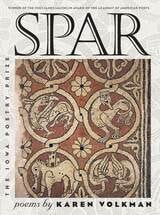
Spar
Karen Volkman
University of Iowa Press, 2002
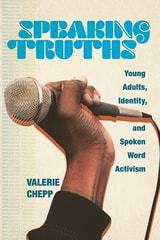
Speaking Truths
Young Adults, Identity, and Spoken Word ActivismValerie Chepp
Rutgers University Press, 2022
Drawing upon detailed observations and in-depth interviews, Chepp tells the story of a diverse group of young adults from Washington, D.C. who use spoken word to create a more just and equitable world. Outlining the contours of this approach, she interrogates spoken word activism’s emphasis on personal storytelling and “truth,” the strategic uses of aesthetics and emotions to politically engage across difference, and the significance of healing in sustainable movements for change. Weaving together their poetry and personally told stories, Chepp shows how poets tap into the beautiful, emotional, personal, and therapeutic features of spoken word to empathically connect with others, advance intersectional and systemic analyses of inequality, and make social justice messages relatable across a diverse public. By creating allies and forging connections based on friendship, professional commitments, lived experiences, emotions, artistic kinship, and political views, this activist approach is highly integrated into the everyday lives of its practitioners, online and face-to-face.
Chepp argues that spoken word activism is a product of, and a call to action against, the neoliberal era in which poets have come of age, characterized by widening structural inequalities and increasing economic and social vulnerability. She illustrates how this deeply personal and intimate activist approach borrows from, builds upon, and diverges from previous social movement paradigms. Spotlighting the complexity and mutual influence of modern-day activism and the world in which it unfolds, Speaking Truths contributes to our understanding of contemporary social change-making and how neoliberalism has shaped this political generation’s experiences with social injustice.
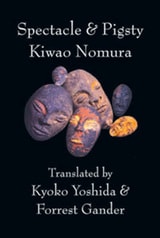
Spectacle & Pigsty
Kiwao Nomura
Omnidawn, 2011
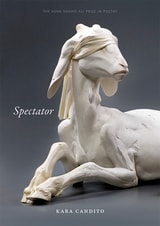
Spectator
Kara Candito
University of Utah Press, 2014
Although it ends with a marriage, Kara Candito’s second poetry collection is anything but a comedy. At the book’s center is the struggle of a U.S. citizen and a Mexican citizen to find a common space and language in their relationship while navigating the U.S. immigration system, a process that sometimes requires magical thinking just to endure. By employing a kind of documentary poetics that views the application process through different angles and perspectives, Candito crafts discourses around xenophobia, otherness, and national and ethnic identity.
“In the waiting room of the third government office, / you will invent your own religion,” writes Candito in “Ars Amatoria: So You Want to Marry a Foreign National,” a tragicomic sequence written in Roman-numeric fragments reminiscent of an official document’s formatting. Interspersed with moments of lyric urgency (“I am here to suffer more beautifully”) and disconcerting cinematic observation (“One wore an assault rifle across his back, // another pointed a video camera at our faces.”), Spectator charts the plural self’s course through a world of airplane travel, drug wars, and customs forms.
From Italy to Boston, Lorca’s Granada to New York, and the dusty streets of Mexico City to the snowy parking lots of the Midwest, the speakers of Spectator probe the jagged boundaries between past and present, observer and observed, and political and personal. As such, the book is an homage to anyone who’s been displaced or redefined by bureaucratic systems of power.
The poem "Monologue during a Blackout" (which appears in Spectator) was the winner of a Pushcart Award in 2014.
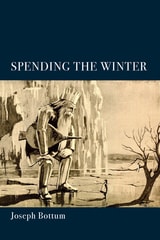
Spending the Winter
A Poetry CollectionJoseph Bottum
St. Augustine's Press, 2022
“Poems so severely beautiful that they become unforgettable after one reading. . . . If you’re a reader who loves poetry whatever mood it’s in, just open Spending the Winter anywhere to find poems that hurt, enlighten, and delight.” —Rhina P. Espaillat, author of Rehearsing Absence and winner of the T.S. Eliot Prize
“Joseph Bottum is a brilliant formalist, and to read him is to enter the world of the tried-and-true classics, all achieved with an amazingly contemporary ring. His Spending the Winter is a delight. Here is a poetry of elegy, humor, wit, political savvy, and vast learning.” —Paul Mariani, author The Great Wheel and winner of the John Ciardi Award
“Joseph Bottum’s Spending the Winter is a throwback to a time when lovers of poetry outside the literary establishment looked for poetry of depth, wit, and craft from the likes of Auden and Larkin. This is poetry from another age—an age when we expected intellectual, religious, and literary significance from our verse.” —A.M. Juster, author of Wonder and Wrath and winner of the Willis Barnstone Translation Prize
“Spending the Winter is a word-lover’s dream: Joseph Bottum’s poems pierce, probe, dazzle, and delight. They will open the eyes of your soul.” —Karen Swallow Prior, author of On Reading Well
“When reading Spending the Winter, I recalled C.S. Lewis’s description of joy as a wanting for something that is beyond this world. There’s a sense in these poems that things around us are fleeting, yet for that reason, the poems ask us to pay all the more attention.” —Jessica Hooten Wilson, author of Giving the Devil his Due

Spill
Bruce Smith
University of Chicago Press, 2018
Spill is a book in contradictions, embodying helplessness in the face of our dual citizenship in the realms of trauma and gratitude, artistic aspiration and political reality. The centerpiece of this collection is a lyrical essay that recalls the poet’s time working at the Federal Penitentiary at Lewisburg in the 1960s. Mentored by the insouciant inmate S, the speaker receives a schooling in race, class, and culture, as well as the beginning of an apprenticeship in poetry. As he and S consult the I Ching, the Book of Changes, the speaker becomes cognizant of other frequencies, other identities; poetry, divination, and a synchronous, alternative reading of life come into focus. On either side of this prose poem are related poems of excess and witness, of the ransacked places and of new territories that emerge from the monstrous. Throughout, these poems inhabit rather than resolve their contradictions, their utterances held in tension “between the hemispheres of songbirds and the hemispheres of men.”
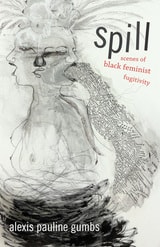
Spill
Scenes of Black Feminist FugitivityAlexis Pauline Gumbs
Duke University Press, 2016

Spinoza in Her Youth
Norma Cole
Omnidawn, 2002
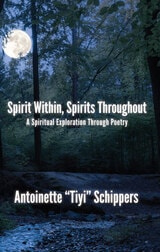
Spirit Within, Spirits Throughout
A Spiritual Exploration Through PoetryAntoinette M. Schippers
Parkhurst Brothers, Inc., 2022
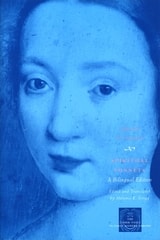
Spiritual Sonnets
A Bilingual EditionGabrielle de Coignard
University of Chicago Press, 2003
Spiritual Sonnets presents the first English translation of 129 of Coignard's highly autobiographical poems, giving us a startlingly intimate view into the life and mind of this Renaissance woman. The sonnets are all written "in the shadow of the Cross" and include elegies, penitential lyrics, Biblical meditations, and more. Rich with emotion, Coignard's poems reveal anguished moments of loneliness and grief as well as ecstatic experiences of mystical union. They also reveal her mastery of sixteenth-century literary conventions and spiritual traditions.
This edition, printed in bilingual format with Melanie E. Gregg's translations facing the French originals, will be welcomed by teachers and students of poetry, French literature, women's studies, and religious and Renaissance studies.
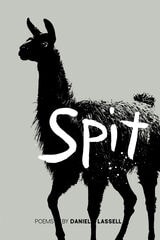
Spit
Daniel Lassell
Michigan State University Press, 2021