Results by title
8812 books match the query 'Political Science' and 537 start with s
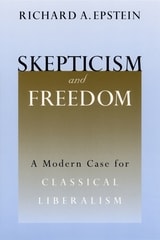
Skepticism and Freedom
A Modern Case for Classical LiberalismRichard A. Epstein
University of Chicago Press, 2003
He begins by laying out his own vision of the key principles of classical liberalism: respect for the autonomy of the individual, a strong system of private property rights, the voluntary exchange of labor and possessions, and prohibitions against force or fraud. Nonetheless, he not only recognizes but insists that state coercion is crucial to safeguarding these principles of private ordering and supplying the social infrastructure on which they depend. Within this framework, Epstein then shows why limited government is much to be preferred over the modern interventionist welfare state.
Many of the modern attacks on the classical liberal system seek to undermine the moral, conceptual, cognitive, and psychological foundations on which it rests. Epstein rises to this challenge by carefully rebutting each of these objections in turn. For instance, Epstein demonstrates how our inability to judge the preferences of others means we should respect their liberty of choice regarding their own lives. And he points out the flaws in behavioral economic arguments which, overlooking strong evolutionary pressures, claim that individual preferences are unstable and that people are unable to adopt rational means to achieve their own ends. Freedom, Epstein ultimately shows, depends upon a skepticism that rightly shuns making judgments about what is best for individuals, but that also avoids the relativistic trap that all judgments about our political institutions have equal worth.
A brilliant defense of classical liberalism, Skepticism and Freedom will rightly be seen as an intellectual landmark.

Skin Color, Power, and Politics in America
Mara Cecilia Ostfeld
Russell Sage Foundation, 2022
Ostfeld and Yadon surveyed over 1,300 people about their political views, including party affiliation, their opinions on welfare, and the importance of speaking English in the U.S. The authors created a matrix grounded in their “Roots of Race” framework, which predicts the relationship between skin color and political attitudes for each ethnoracial group based on the blurriness of the group’s boundaries and historical levels of privilege. They draw upon three distinct measures of skin color to conceptualize the relationship between skin color and political views: “Machine-Rated Skin Color,” measured with a light-reflectance meter; “Self-Assessed Skin Color,” using the Yadon-Ostfeld Skin Color Scale; and “Skin Color Discrepancy,” the difference between one’s Machine-Rated and Self-Assessed Skin Color.
Ostfeld and Yadon examine patterns that emerge among these measures, and their relationships with life experiences and political stances. Among Latinos, a group with relatively blurry group boundaries and low levels of historical privilege, the authors find a robust relationship between political views and Self-Assessed Skin Color. Latinos who overestimate the lightness of their skin color are more likely to hold conservative views on current racialized political issues, such as policing. Latinos who overestimate the darkness of their skin color, on the other hand, are more likely to hold liberal political views. As America’s major political parties remain divided on issues of race, this suggests that for Latinos, self-reported skin color is used as a means of aligning oneself with valued political coalitions.
African Americans, another group with low levels of historical privilege but with more clearly defined group boundaries, demonstrated no significant relationship between skin color and political attitudes. Thus, the lived experiences associated with being African American appeared to supersede the differences in life experiences due to skin color.
Whites, a group with more historical privilege and increasingly blurry group boundaries, showed a clear relationship between machine-assessed skin color and attitudes on political issues. Those with darker Machine-Rated Skin Color are more likely to hold conservative views, suggesting that they are responding to the threat of losing their privilege in a multicultural society.
At a time when the U.S. is both more diverse and politically divided, Skin Color, Power, and Politics in Americais a timely account of the ways in which skin color and politics are intertwined.
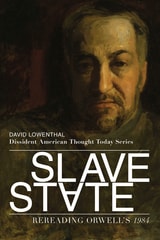
Slave State
Rereading Orwell's 1984David Lowenthal
St. Augustine's Press, 2021
There is no positive political message in 1984, argues Lowenthal, but there is positive moral message that is nearly always overlooked by commentators. “Through the movement of the novel, Orwell tries to impress on the passions, hearts and minds of his readers the most valuable lessons concerning the right and wrong way to live. With the decline of Christianity’s influence in forming the moral sense of the West and the concomitant increase in power hunger, wielding instruments born of modern enlightenment, what mankind most needed was moral guidance, conveyed not abstractly, through philosophy, but in such a way as to grip the whole soul.”
But can Orwell be trusted as a guide to the goodness in human nature? Lowenthal says he can be, and more. He gives us a sketch of the intellectual process that compels Orwell to ultimately outgrow Marxism, his detection and rejection of totalitarian regimes (above all in Communism), and in what way the principles of liberalism of his day were given warning labels by a writer who was not a formally educated political philosopher. Laced with relativism, any current of thought that does not acknowledge the proper ends of man will be effaced by the next master of the masses. Lowenthal echoes Orwell when he says, “we have abandoned inculcating good citizenship, higher ideals and a sense of personal worth in the schools, encouraging instead an aimless low-level conformist ‘individuality’ just waiting to be harnessed together and directed. Given these conditions, can we be sure we have left the conditions to the horrors of 1984 far behind as mere fiction?”
Orwell and Lowenthal are unlikely co-collaborators, unless one perceives how much alike in their exhortations to fellow man they are. The steady tenor of their hard warning is made possible by a hope-soaked confidence that, in utter sobriety, is repulsed by anything that threatens human freedom and dignity. This book is required reading for anyone who believes in the return of socialism. Indeed, any recent university graduate should be debriefed by Lowenthal before entering the real world.

Slave of Allah
Zacarias Moussaoui Vs the USAKatherine C. Donahue
Pluto Press, 2007
The book begins with his arrest and moves to the courtroom, telling the tale of Moussaoui's struggle with his defense lawyers and raising questions about his ability to be "represented" given his national and personal identity. Donahue explores his background in France as the son of Moroccan immigrants and follows him to London, Afghanistan, and Malaysia as he joins the growing fraternity of an Islam without borders. He acquires an extra-national identity in which his loyalty is no longer constituted by his national identity, but by his allegiance to fundamental Islam.

Slavery and Secession in Arkansas
A Documentary HistoryJames J. Gigantino
University of Arkansas Press, 2015
The absorbing documents collected in Slavery and Secession in Arkansas trace Arkansas’s tortuous road to secession and war. Drawn from contemporary pamphlets, broadsides, legislative debates, public addresses, newspapers, and private correspondence, these accounts show the intricate twists and turns of the political drama in Arkansas between early 1859 and the summer of 1861. From an early warning of what Republican political dominance would mean for the South, through the initial rejection of secession, to Arkansas’s final abandonment of the Union, readers, even while knowing the eventual outcome, will find the journey both suspenseful and informative.
Revealing both the unique features of the secession story in Arkansas and the issues that Arkansas shared with much of the rest of the South, this collection illustrates how Arkansans debated their place in the nation and, specifically, how the defense of slavery—as both an assurance of continued economic progress and a means of social control—remained central to the decision to leave the Union and fight alongside much of the South for four bloody years of civil war.

Slavery and Sentiment
The Politics of Feeling in Black Atlantic Antislavery Writing, 1770-1850Christine Levecq
University of New Hampshire Press, 2008
Levecq examines liberalism and republicanism, the main Anglo-American political ideologies of the period, in the antislavery texts of a range of African-American and Afro-British authors. Disclosing the political content hitherto unexamined in this kind of writing, she shows that while the overall story is one of increased liberalization of ideology on both sides of the Atlantic, the republican ideal persisted, particularly among black authors with transatlantic connections.
Demonstrating that such writers as Phillis Wheatley, Ignatius Sancho, Olaudah Equiano, Frederick Douglass, and Mary Prince were men and women of their times, Levecq provides valuable new insight into the ideological world of black Atlantic writers and puts them, for the first time, on modernity’s political map.

Slavery and the Invention of Dutch Art
Caroline Fowler
Duke University Press, 2025
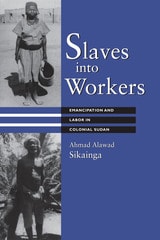
Slaves into Workers
Emancipation and Labor in Colonial SudanBy Ahmad Alawad Sikainga
University of Texas Press, 1996
Unlike African slavery in Europe and the Americas, slavery in the Sudan and other parts of Africa persisted well into the twentieth century. Sudanese slaves served Sudanese masters until the region was conquered by the Turks, who practiced slavery on a larger, institutional scale. When the British took over the Sudan in 1898, they officially emancipated the slaves, yet found it impossible to replace their labor in the country’s economy.
This pathfinding study explores the process of emancipation and the development of wage labor in the Sudan under British colonial rule. Ahmad Sikainga focuses on the fate of ex-slaves in Khartoum and on the efforts of the colonial government to transform them into wage laborers. He probes into what colonial rule and city life meant for slaves and ex-slaves and what the city and its people meant for colonial officials.
This investigation sheds new light on the legacy of slavery and the status of former slaves and their descendants. It also reveals how the legacy of slavery underlies the current ethnic and regional conflicts in the Sudan. It will be vital reading for students of race relations and slavery, colonialism and postcolonialism, urbanization, and labor history in Africa and the Middle East.

Slaves of the State
Black Incarceration from the Chain Gang to the PenitentiaryDennis Childs
University of Minnesota Press, 2015
The Thirteenth Amendment to the United States Constitution, passed in 1865, has long been viewed as a definitive break with the nation’s past by abolishing slavery and ushering in an inexorable march toward black freedom. Slaves of the State presents a stunning counterhistory to this linear narrative of racial, social, and legal progress in America.
Dennis Childs argues that the incarceration of black people and other historically repressed groups in chain gangs, peon camps, prison plantations, and penitentiaries represents a ghostly perpetuation of chattel slavery. He exposes how the Thirteenth Amendment’s exception clause—allowing for enslavement as “punishment for a crime”—has inaugurated forms of racial capitalist misogynist incarceration that serve as haunting returns of conditions Africans endured in the barracoons and slave ship holds of the Middle Passage, on plantations, and in chattel slavery.
Childs seeks out the historically muted voices of those entombed within terrorizing spaces such as the chain gang rolling cage and the modern solitary confinement cell, engaging the writings of Toni Morrison and Chester Himes as well as a broad range of archival materials, including landmark court cases, prison songs, and testimonies, reaching back to the birth of modern slave plantations such as Louisiana’s “Angola” penitentiary.
Slaves of the State paves the way for a new understanding of chattel slavery as a continuing social reality of U.S. empire—one resting at the very foundation of today’s prison industrial complex that now holds more than 2.3 million people within the country’s jails, prisons, and immigrant detention centers.
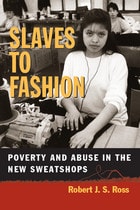
Slaves to Fashion
Poverty and Abuse in the New SweatshopsRobert J. S. Ross
University of Michigan Press, 2004
---Tom Hayden
"Slaves to Fashion is a remarkable achievement, several books in one: a gripping history of sweatshops, explaining their decline, fall, and return; a study of how the media portray them; an analysis of the fortunes of the current anti-sweatshop movement; an anatomy of the global traffic in apparel, in particular the South-South competition that sends wages and working conditions plummeting toward the bottom; and not least, a passionate declaration of faith that humanity can find a way to get its work done without sweatshops. This is engaged sociology at its most stimulating."
---Todd Gitlin
". . . unflinchingly portrays the reemergence of the sweatshop in our dog-eat-dog economy."
---Los Angeles Times
Just as Barbara Ehrenreich's Nickel and Dimed uncovered the plight of the working poor in America, Robert J. S. Ross's Slaves to Fashion exposes the dark side of the apparel industry and its exploited workers at home and abroad. It's both a lesson in American business history and a warning about one of the most important issues facing the global capital economy-the reappearance of the sweatshop.
Vividly detailing the decline and tragic rebirth of sweatshop conditions in the American apparel industry of the twentieth century, Ross explains the new sweatshops as a product of unregulated global capitalism and associated deregulation, union erosion, and exploitation of undocumented workers. Using historical material and economic and social data, the author shows that after a brief thirty-five years of fair practices, the U.S. apparel business has once again sunk to shameful abuse and exploitation.
Refreshingly jargon-free but documented in depth, Slaves to Fashion is the only work to estimate the size of the sweatshop problem and to systematically show its impact on apparel workers' wages. It is also unique in its analysis of the budgets and personnel used in enforcing the Fair Labor Standards Act.
Anyone who is concerned about this urgent social and economic topic and wants to go beyond the headlines should read this important and timely contribution to the rising debate on low-wage factory labor.
Slavoj Zizek
A Critical IntroductionIan Parker
Pluto Press, 2004
'This is not simply the best critical introduction to Zizek – in a much more radical sense, this is the only critical introduction to Zizek. Parker's study is much more than an important contribution to the ongoing debate: it redefines its very terms.' Yannis Stavrakakis, author of 'Lacan and the Political'
'A sharp, clear and radical analysis.' Christian Ingo Lenz Dunker, Professor of Psychoanalytic Theory and Lacanian Psychoanalyst, Sao Paulo, Brazil.
Since the publication of his first book in English in 1989, Slavoj Zizek has quickly become one of the most widely read and contentious intellectuals alive today. With dazzling wit and tremendous creativity he has produced innovative and challenging explorations of Lacan, Hegel and Marx, and used his insights to exhilarating effect in analyses of popular culture.
While Zizek is always engaging, he is also elusive and even contradictory. It can be very hard to finally determine where he stands on a particular issue. Is Zizek Marxist or Post-Marxist? How seriously should we take his recent turn to Christianity?
Slavoj Zizek: A Critical Introduction shows the reader a clear path through the twists and turns of Zizek's writings. Ian Parker takes Zizek's treatment of Hegel, Lacan and Marx in turn and outlines and assesses Zizek's interpretation and extension of these thinkers' theories. While Parker is never hastily dismissive of Zizek's innovations, he remains critical throughout, aware that the energy of Zizek's writing can be bewitching and beguiling as well as engaging and profound.

Slices and Lumps
Division and Aggregation in Law and LifeLee Anne Fennell
University of Chicago Press, 2019
Lee Anne Fennell explores how both types of challenges—carving out useful slices and assembling useful lumps—surface in myriad contexts, from hot button issues like conservation and eminent domain to developments in the sharing economy to personal struggles over work, money, time, diet, and exercise. Yet the significance of configuration is often overlooked, leading to missed opportunities for improving our lives. With a technology-fueled entrepreneurial explosion underway that is dividing goods, services, and jobs in novel ways, and as urbanization and environmental threats raise the stakes for assembling resources and cooperation, this is an especially exciting and crucial time to confront questions of slicing and lumping. The future of the city, the workplace, the marketplace, and the environment all turn on matters of configuration, as do the prospects for more effective legal doctrines, for better management of finances and health, and more. This book reveals configuration’s power and potential—as a unifying concept and as a focus of public and private innovation.
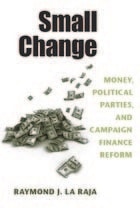
Small Change
Money, Political Parties, and Campaign Finance ReformRaymond J. La Raja
University of Michigan Press, 2010
Reformers lament that, with every effort to regulate the sources of campaign funding, candidates creatively circumvent the new legislation. But in fact, political fundraisers don't need to look for loopholes because, as Raymond J. La Raja proves, legislators intentionally design regulations to gain advantage over their partisan rivals.
La Raja traces the history of the U.S. campaign finance system from the late nineteenth century through the passage of the Bipartisan Campaign Reform Act (BCRA) of 2002. Then, using the 2004 presidential election as a case study, he compares the ways in which Democrats and Republicans adapted their national fund-raising and campaigning strategies to satisfy BCRA regulations. Drawing upon this wealth of historical and recent evidence, he concludes with recommendations for reforming campaign finance in ways that promote fair competition among candidates and guarantee their accountability to voters.
Small Change offers an engaging account of campaign finance reforms' contradictory history; it is a must-read for anyone concerned about influence of money on democratic elections.
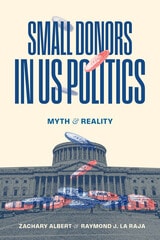
Small Donors in US Politics
Myth and RealityZachary Albert and Raymond J. La Raja
University of Chicago Press, 2026
A myth-busting investigation of small donors: who they are, how they spend their money, and whose campaigns actually benefit from their donations.
Many political reformers argue that more robust small donor participation in US campaigns would reduce the influence of the wealthiest Americans and improve political responsiveness to ordinary citizens. Drawing on extensive data, including surveys and campaign records, Zachary Albert and Raymond J. La Raja largely dispel this myth, offering the first comprehensive portrait to date of small donors in US elections.
Although small donor contributions to high-profile, national races have increased markedly since 2018, the US campaign finance system allows for even larger sums of money from Super PACs and other independent spending groups. Moreover, small donors are mostly similar to their larger contributor counterparts: both are socioeconomically advantaged, strongly partisan, ideologically extreme, and distinct from non-donors. Small donors can also be impulsive: they tend to give mostly to high-profile candidates on the ideological extremes, empowering media celebrities and norm-breakers rather than consensus-builders, and they underinvest in competitive and down-ballot races. Importantly, the candidates who rely most heavily on small donor support are not necessarily better legislators or representatives.
Yet, the story is not entirely bleak. Small donors bring energy and resources, especially for challengers and outsider candidates. The book shows how reforms could channel this energy more productively—by strengthening political parties, emphasizing local representation, and creating systems that broaden participation beyond the most ideological citizens.
Timely, accessible, and grounded in data, Small Donors in US Politics reveals both the promise and the peril of small donor politics—and what it will take to make money in politics serve democracy, not undermine it.

Small Places, Large Issues
An Introduction to Social and Cultural AnthropologyThomas Hylland Eriksen
Pluto Press, 2015
Small Privatization
The Transformation of Retail Trade and Consumer Services in the Czech Republic, Hungary and PolandRoman Frydman
Central European University Press, 1994

Smart Governance
Governing the Global Knowledge SocietyHelmut Willke
Campus Verlag, 2007
In the wake of globalization, national governments are becoming increasingly interdependent, and knowledge is arguably becoming the most valuable form of capital. Helmut Willke’s Smart Governance offers a new perspective on global governance from the vantage point of a global knowledge society.
Employing a case study of the global financial system and an analysis of several governance regimes, Willke contends that markets, legal systems, and morality must evolve to cope with uncertainty, build capacities, and achieve resilience. Smart Governance will change the way economists, historians, and political scientists view international cooperation.
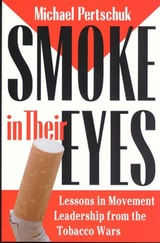
Smoke in Their Eyes
Lessons in Movement Leadership from the Tobacco WarsMichael Pertschuk
Vanderbilt University Press, 2001
A lifelong public health leader and tobacco control advocate, Pertschuk provides uncommon insight into the movement and its opposition. Questions that reveal themselves here can be applied to public advocacy as a whole: how can movement leaders gauge and best employ popular support? Who has legitimacy to speak on behalf of a particular public cause? And perhaps most crucially, how is it possible for those whose cause is a moral one to strike political compromise? With a narrative as compelling as the issues it raises, Smoke in Their Eyes will be of great interest to everyone from students of public advocacy and political science to general readers.

Smokestacks in the Hills
Rural-Industrial Workers in West VirginiaLouis Martin
University of Illinois Press, 2015
As Martin shows, access to land in and around steel and pottery towns allowed residents to preserve rural habits and culture. Workers in these places valued place and local community. Because of their belief in localism, an individualistic ethic of "making do," and company loyalty, they often worked to place limits on union influence. At the same time, this localism allowed workers to adapt to the dictates of industrial capitalism and a continually changing world on their own terms--and retain rural ways to a degree unknown among their urbanized peers. Throughout, Martin ties these themes to illuminating discussions of capital mobility, the ways in which changing work experiences defined gender roles, and the persistent myth that modernizing forces bulldozed docile local cultures.
Revealing and incisive, Smokestacks in the Hills reappraises an overlooked stratum of American labor history and contributes to the ongoing dialogue on shifts in national politics in the postwar era.

Smoldering Ashes
Cuzco and the Creation of Republican Peru, 1780-1840Charles F. Walker
Duke University Press, 1999
Peru’s Indian majority and non-Indian elite were both opposed to Spanish rule, and both groups participated in uprisings during the late colonial period. But, at the same time, seething tensions between the two groups were evident, and non-Indians feared a mass uprising. As Walker shows, this internal conflict shaped the many struggles to come, including the Tupac Amaru uprising and other Indian-based rebellions, the long War of Independence, the caudillo civil wars, and the Peru-Bolivian Confederation. Smoldering Ashes not only reinterprets these conflicts but also examines the debates that took place—in the courts, in the press, in taverns, and even during public festivities—over the place of Indians in the republic. In clear and elegant prose, Walker explores why the fate of the indigenous population, despite its participation in decades of anticolonial battles, was little improved by republican rule, as Indians were denied citizenship in the new nation—an unhappy legacy with which Peru still grapples.
Informed by the notion of political culture and grounded in Walker’s archival research and knowledge of Peruvian and Latin American history, Smoldering Ashes will be essential reading for experts in Andean history, as well as scholars and students in the fields of nationalism, peasant and Native American studies, colonialism and postcolonialism, and state formation.

Smothered and Covered
Waffle House and the Southern ImaginaryTy Matejowsky
University of Alabama Press, 2023
A critical meditation of the iconic 24-7 roadside chain and its place in the southern imaginary
Waffle House has long been touted as an icon of the American South. The restaurant’s consistent foregrounding as a resonant symbol of regional character proves relevant for understanding much about the people, events, and foodways shaping the sociopolitical contours of today’s Bible Belt. Whether approached as a comedic punchline on the Internet, television, and other popular media or elevated as a genuine touchstone of messy American modernity, Waffle House, its employees, and everyday clientele do much to transcend such one-dimensional characterizations, earning distinction in ways that regularly go unsung.
Smothered and Covered: Waffle House and the Southern Imaginary is the first book to socioculturally assess the chain within the field of contemporary food studies. In this groundbreaking work, Ty Matejowsky argues that Waffle House’s often beleaguered public persona is informed by various complexities and contradictions. Critically unpacking the iconic eatery from a less reductive perspective offers readers a more realistic and nuanced portrait of Waffle House, shedding light on how it both reflects and influences a prevailing southern imaginary—an amorphous and sometimes conflicting collection of images, ideas, attitudes, practices, linguistic accents, histories, and fantasies that frames understandings about a vibrant if also paradoxical geographic region.
Matejowsky discusses Waffle House’s roots in established southern foodways and traces the chain’s development from a lunch-counter restaurant that emerged across the South. He also considers Waffle House’s place in American and southern popular culture, highlighting its myriad depictions in music, television, film, fiction, stand-up comedy, and sports. Altogether, Matejowsky deftly and persuasively demonstrates how Waffle House serves as a microcosm of today’s South with all the accolades and criticisms this distinction entails.
Snarl
In Defense of Stalled Traffic and Faulty NetworksRuth A. Miller
University of Michigan Press, 2014
Ruth A. Miller excavates a centuries-old history of nonhuman and nonbiological constitutional engagement and outlines a robust mechanical democracy that challenges existing theories of liberal and human political participation. Drawing on an eclectic set of legal, political, and automotive texts from France, Turkey, and the United States, she proposes a radical mechanical re-articulation of three of the most basic principles of democracy: vitality, mobility, and liberty.
Rather than defending a grand theory of materialist or posthumanist politics, or addressing abstract concepts or “things” writ large, Miller invites readers into a self-contained history of constitutionalism situated in a focused discussion of automobile traffic congestion in Paris, Istanbul, and Boston. Within the mechanical public sphere created by automotive space, Snarl finds a model of democratic politics that transforms our most fundamental assumptions about the nature, and constitutional potential, of life, movement, and freedom.
So Much to Be Angry About
Appalachian Movement Press and Radical DIY Publishing, 1969–1979Shaun Slifer
West Virginia University Press, 2021
In a remarkable act of recovery, So Much to Be Angry About conjures an influential but largely obscured strand in the nation’s radical tradition—the “movement” printing presses and publishers of the late 1960s and 1970s, and specifically Appalachian Movement Press in Huntington, West Virginia, the only movement press in Appalachia. More than a history, this craft- and activist-centered book positions the frontline politics of the Appalachian Left within larger movements in the 1970s. As Appalachian Movement Press founder Tom Woodruff wrote: “Appalachians weren’t sitting in the back row during this struggle, they were driving the bus.”
Emerging from the Students for a Democratic Society chapter at Marshall University, and working closely with organizer and poet Don West, Appalachian Movement Press made available an eclectic range of printed material, from books and pamphlets to children’s literature and calendars. Many of its publications promoted the Appalachian identity movement and “internal colony” theory, both of which were cornerstones of the nascent discipline of Appalachian studies. One of its many influential publications was MAW, the first feminist magazine written by and for Appalachian women.
So Much to Be Angry About combines complete reproductions of five of Appalachian Movement Press’s most engaging publications, an essay by Shaun Slifer about his detective work resurrecting the press’s history, and a contextual introduction to New Left movement publishing by Josh MacPhee. Amply illustrated in a richly produced package, the volume pays homage to the graphic sensibility of the region’s 1970s social movements, while also celebrating the current renaissance of Appalachia’s DIY culture—in many respects a legacy, Slifer suggests, of the movement publishing documented in his book.

So We Died
A Memoir of Life and Death in the Ghetto of Šiauliai, LithuaniaLevi Shalit, translated and edited by Veronica Belling, Ellen Cassedy, and Andrew Cassel, introduction by Veronica Belling, afterword by Justin Cammy
University of Alabama Press, 2025
In the shadow of death, Levi Shalit wrote to remember—so we would never forget.
So We Died: A Memoir of Life and Death in the Ghetto of Šiauliai, Lithuania (Azoy zaynen mir geshtorbn) is a powerful eyewitness account of the Shavl ghetto during the Nazi occupation of Lithuania. Written in Yiddish by Levi Shalit and available now for the first time in English, the work fills a stark void in historical records.
Shalit divided his work into four sections. In the first, he describes the German invasion of Šiauliai, the murder of thousands of Jews in the city and surrounding countryside, and the forced relocation of the surviving Jews into the Shavl ghetto. In the second, he describes daily life in the ghetto in engrossing detail. In the third, titled “The Masada Book,” Shalit describes ghetto residents’ attempt to organize a resistance group of which he himself was a member. In the fourth, he narrates the transformation of the ghetto into a concentration camp and the seizure and deportation of the community’s children.
Few accounts of the Shavl ghetto survived the war. Shalit’s work offers English-language readers a rare insight into a vital chapter of history. The translators artfully reveal Shalit’s literary prowess and the ways he illuminated the Shavl ghetto’s daily struggles, false hopes, and atrocities.
More than an account of a previously overlooked episode in Holocaust history, So We Died is a testament to the enduring power of the human spirit in the face of unspeakable tragedy. It offers keen insight into a time of war, fascism, and resistance. A must-read for anyone seeking understanding and remembrance.
Soccer's Neoliberal Pitch
The Sport's Power, Profit, and Discursive PoliticsJohn M. Sloop
University of Alabama Press, 2023
A powerful cultural critique of soccer’s public rhetoric
American sports agnostics might raise an eyebrow at the idea that soccer represents a staging ground for cultural, social, and political possibility. It is just another game, after all, in a society where mass-audience spectator sports largely avoid any political stance other than a generic, corporate-friendly patriotism. But John M. Sloop picks up on the work of Laurent Dubois and others to see in American soccer—a sport that has achieved immense participation and popularity despite its struggle to establish major league status—a game that permits surprisingly diverse modes of thinking about national identity because of its marginality.
As a rhetorician who draws on both critical theory and culture, Sloop seeks to read soccer as the game intersects with gender, race, sexuality, and class. The result of this engagement is a sense of both enormous possibility and real constraint. If American soccer offers more possibility because of its marginality, looking at how those possibilities are constrained can provide valuable insights into neoliberal logics of power, profit, politics, and selfhood.
In Soccer’s Neoliberal Pitch, Sloop analyzes a host of soccer-adjacent phenomena: the equal pay dispute between the US women’s national team and the US Soccer Federation, the significance of hooligan literature, the introduction of English soccer to American TV audiences, the strange invisibility of the Mexican soccer league despite its consistent high TV ratings, and the reading of US national teams as “underdogs” despite the nation’s quasi-imperial dominance of the Western hemisphere. An invaluable addition to a growing bookshelf on soccer titles, Soccer’s Neoliberal Pitch serves as a model for critical cultural work with sports, with appeal to not only sports studies, but cultural studies, communication, and even gender studies classrooms.

Sociability and Its Enemies
German Political Theory After 1945Jakob Norberg
Northwestern University Press, 2014
Social Capital Online
Alienation and AccumulationKane X. Faucher
University of Westminster Press, 2018
What is ‘social capital’? The enormous positivity surrounding it conceals the instrumental economic rationality underpinning the notion as corporations silently sell consumer data for profit. Status chasing is just one aspect of a process of transforming qualitative aspects of social interactions into quantifiable metrics for easier processing, prediction, and behavioural shaping.
A work of critical media studies, Social Capital Online examines the idea within the new ‘network spectacle’ of digital capitalism via the ideas of Marx, Veblen, Debord, Baudrillard and Deleuze. Explaining how such phenomena as online narcissism and aggression arise, Faucher offers a new theoretical understanding of how the spectacularisation of online activity perfectly aligns with the value system of neoliberalism and its data worship. Even so, at the centre of all, lie familiar ideas – alienation and accumulation – new conceptions of which he argues are vital for understanding today’s digital society.
Social Capital in the City
Community and Civic Life in Philadelphiaedited by Richardson Dilworth
Temple University Press, 2006
Social Casework
A Problem-Solving ProcessHelen Harris Perlman
University of Chicago Press, 1957

Social Contract, Discourse on the Virtue Most Necessary for a Hero, Political Fragments, and Geneva Manuscript
Jean-Jacques Rousseau
Dartmouth College Press, 1994

Social Contracts Under Stress
The Middle Classes of America, Europe, and Japan at the Turn of the CenturyOlivier Zunz
Russell Sage Foundation, 2002

Social Democracy in Manitoba
A History of the CCF/NDPNelson Wiseman
University of Manitoba Press, 1983
Social Enterprise
A Global ComparisonEdited by Janelle A. Kerlin
University Press of New England, 2009
Social Exchange
Barter as Economic and Cultural Activism in Medellín, ColombiaBrian J. Burke
Rutgers University Press, 2022
Social Experimentation
Edited by Jerry A. Hausman and David A. Wise
University of Chicago Press, 1985
The first section of the book looks at four types of experiments and what each accomplished. Frank P. Stafford examines the negative income tax experiments, Dennis J. Aigner considers the experiments with electricity pricing based on time of use, Harvey S. Rosen evaluates housing allowance experiments, and Jeffrey E. Harris reports on health experiments. In the second section, addressing experimental design and analysis, Jerry A. Hausman and David A. Wise highlight the absence of random selection of participants in social experiments, Frederick Mosteller and Milton C. Weinstein look specifically at the design of medical experiments, and Ernst W. Stromsdorfer examines the effects of experiments on policy. Each chapter is followed by the commentary of one or more distinguished economists.

Social History and African Environments
William Beinart
Ohio University Press, 2003
The explosion of interest in African environmental history has stimulated research and writing on a wide range of issues facing many African nations.
This collection represents some of the finest studies to date. The general topics include African environmental ideas and practices; colonial science, the state and African responses; and settlers and Africans' culture and nature. The contributors are Emmanuel Kreike, Karen Middleton, Innocent Pikirayi, Terence Ranger, JoAnn McGregor, Helen Tilley, Grace Garswell, John McCracken, Ingrid Yngstrom, David Bunn, Sandra Swart, Robert J. Gordon, and Jane Carruthers.
Social History of Economic Decline
Business, Politics, and Work in TrentonCumbler, John T.
Rutgers University Press, 1989
Social Inequality
Kathryn Neckerman
Russell Sage Foundation, 2004
Social Justice in Diverse Suburbs
History, Politics, and ProspectsChristopher Niedt
Temple University Press, 2013
Editor Christopher Niedt and his contributors shed light on organizing and conflict in the suburbs with historical and contemporary case studies. Chapters address topical issues ranging from how suburbanites actively fought school segregation to industrial pollution and displacement along the suburban-rural fringe. Social Justice in Diverse Suburbs also considers struggles for integration and environmental justice as well as efforts to preserve suburban history and organize immigrant communities.
Contributors include: Douglas R. Appler, Aaron Cavin, Nancy A. Denton, Lisa Feldstein, Casey Gallagher, Anne Galletta, Joseph Gibbons, Robert Gioielli, Lucas Owen Kirkpatrick, JoAnna Mitchell-Brown, Manuel Pastor, john a. powell, Jason Reece, Alex Schafran, June Williamson, and the editor.
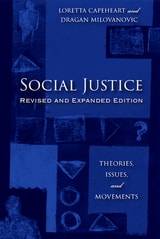
Social Justice
Theories, Issues, and Movements (Revised and Expanded Edition)Loretta Capeheart
Rutgers University Press, 2020
Theories of social justice are presented in an accessible fashion to encourage engagement of students, activists, and scholars with these important lines of inquiry. Issues are analyzed utilizing various theories for furthering engagement in possibilities. Struggles for justice -- from legal cases to on the ground movements -- are presented for historical context and to inform the way forward.
Social Logic Of Politics
Personal Networs As Contextsedited by Alan S. Zuckerman
Temple University Press, 2005
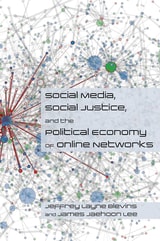
Social Media, Social Justice and the Political Economy of Online Networks
Jeffrey Layne Blevins and James Jaehoon Lee
University of Minnesota Press, 2021
Next Generation e-book nonfiction 2023 Indie Book Award Prize.
While social network analyses often demonstrate the usefulness of social media networks to affective publics and otherwise marginalized social justice groups, this book explores the domination and manipulation of social networks by more powerful political groups. Jeffrey Layne Blevins and James Lee look at the ways in which social media conversations about race turn politically charged, and in many cases, ugly. Studies show that social media is an important venue for news and political information, while focusing national attention on racially involved issues. Perhaps less understood, however, is the effective quality of this discourse, and its connection to popular politics, especially when Twitter trolls and social media mobs go on the attack.
Taking on prominent case studies from the past few years, including the Ferguson protests and the Black Lives Matter movement, the 2016 presidential election, and the rise of fake news, this volume presents data visualization sets alongside careful scholarly analysis. The resulting volume provides new insight into social media, legacy news, and social justice.
Social Mobility in Kerala
Modernity and Identity in ConflictFilippo Osella and Caroline Osella
Pluto Press, 2000
Social Movements and Political Power
Emerging Forms of Radicalism in the WestCarl Boggs
Temple University Press, 1989
Social Movements in the World-System
The Politics of Crisis and TransformationJackie Smith
Russell Sage Foundation, 2012
Social Norms
Michael Hechter
Russell Sage Foundation, 2001
Social Norms and Economic Institutions
Kenneth J. Koford and Jeffrey B. Miller, Editors
University of Michigan Press, 1991
Social Programs that Work
Jonathan Crane
Russell Sage Foundation, 1998
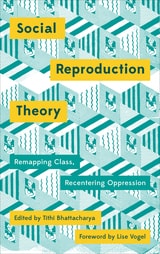
Social Reproduction Theory
Remapping Class, Recentring OppressionEdited by Tithi Bhattacharya
Pluto Press, 2017
“Every socialist needs to read it now.”—Socialist Action
Social Reproduction Theory is probably the first book to draw on the recent resurgent interest in developing a coherent Marxist-Feminist understanding of everyday life under capitalism. The ten essays here address a range of questions, with each contributor tackling the thorny problem of explaining just what social reproduction theory is. Though they do not always agree, each wrestles with the new and old questions that continue to be raised by feminists and theorists.
Readers new to the issues will learn much from the variety of points of view offered here. Those who have lived through previous women’s liberation debates will find novel answer to old questions and examples that illustrate new points and previous points of view.
Crystallizing the essential principles of social reproductive theory, this anthology provides long-overdue analysis of everyday life under capitalism. It focuses on issues such as childcare, healthcare, education, family life, and the roles of gender, race, and sexuality—all of which are central to understanding the relationship between exploitation and social oppression. Chapters include:
*Introduction: Mapping Social Reproduction Theory by Tithi Bhattacharya
*Crisis of Care? On the Social-Reproductive Contradictions of Contemporary Capitalism by Nancy Fraser
*Without Reserves by Salar Mohandesi and Emma Teitelman
*How Not to Skip Class: Social Reproduction of Labor and the Global Working Class by Tithi Bhattacharya
* Children, Childhood and Capitalism: A Social Reproduction Perspective by Susan Ferguson
*Mostly Work, Little Play: Social Reproduction, Migration, and Paid Domestic Work Montreal by Carmen Teeple Hopkins
*Pensions and Social Reproduction by Serap Saritas Oran
*Body Politics: The Social Reproduction by Alan Sears
rom Social Reproduction Feminism to the Women's Strike by Cinzia Arruzza
Tithi Bhattacharya brings together some of the leading writers and theorists, including Lise Vogel, Nancy Fraser, and Susan Ferguson, in order for us to better understand social relations and how to improve them in the fight against structural oppression.
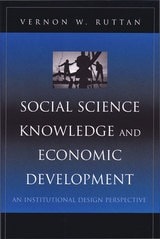
Social Science Knowledge and Economic Development
An Institutional Design PerspectiveVernon W. Ruttan
University of Michigan Press, 2003
With its emphasis on interdisciplinarity, Social Science Knowledge and Economics Developmentis important reading for social scientists, development economists, and in the development studies classroom.
Vernon W. Ruttan is Regents Professor Emeritus in the Department of Applied Economics at the University of Minnesota.