Results by title
4038 books match the query 'Social aspects' and 325 start with s
Sounds of the Underground
A Cultural, Political and Aesthetic Mapping of Underground and Fringe MusicStephen Graham
University of Michigan Press, 2016

Soundtracks of Asian America
Navigating Race through Musical PerformanceGrace Wang
Duke University Press, 2015
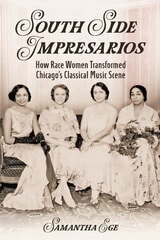
South Side Impresarios
How Race Women Transformed Chicago's Classical Music SceneSamantha Ege
University of Illinois Press, 2024
Ege focuses on composers like Florence Price, Nora Holt, and Margaret Bonds not as anomalies but as artists within an expansive cultural flowering. Overcoming racism and sexism, Black women practitioners instilled others with the skill and passion to make classical music while Race women like Maude Roberts George, Estella Bonds, Neota McCurdy Dyett, and Beulah Mitchell Hill built and fostered institutions central to the community. Ege takes readers inside the backgrounds, social lives, and female-led networks of the participants while shining a light on the scene’s audiences, supporters, and training grounds. What emerges is a history of Black women and classical music in Chicago and the still-vital influence of the world they created.
A riveting counter to a history of silence, South Side Impresarios gives voice to an overlooked facet of the Black Chicago Renaissance.
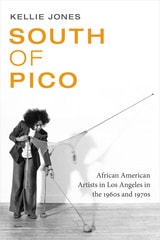
South of Pico
African American Artists in Los Angeles in the 1960s and 1970sKellie Jones
Duke University Press, 2017
In South of Pico Kellie Jones explores how the artists in Los Angeles's black communities during the 1960s and 1970s created a vibrant, productive, and engaged activist arts scene in the face of structural racism. Emphasizing the importance of African American migration, as well as L.A.'s housing and employment politics, Jones shows how the work of black Angeleno artists such as Betye Saar, Charles White, Noah Purifoy, and Senga Nengudi spoke to the dislocation of migration, L.A.'s urban renewal, and restrictions on black mobility. Jones characterizes their works as modern migration narratives that look to the past to consider real and imagined futures. She also attends to these artists' relationships with gallery and museum culture and the establishment of black-owned arts spaces. With South of Pico, Jones expands the understanding of the histories of black arts and creativity in Los Angeles and beyond.
Southern Heritage on Display
Public Ritual and Ethnic Diversity within Southern RegionalismEdited by Celeste Ray
University of Alabama Press, 2002
W. J. Cash's 1941 observation that “there are many Souths and many cultural traditions among them” is certainly validated by this book. Although the Civil War and its “lost cause” tradition continues to serve as a cultural root paradigm in celebrations, both uniting and dividing loyalties, southerners also embrace a panoply of public rituals—parades, cook-offs, kinship homecomings, church assemblies, music spectacles, and material culture exhibitions—that affirm other identities. From the Appalachian uplands to the Mississippi Delta, from Kentucky bluegrass to Carolina piedmont, southerners celebrate in festivals that showcase their diverse cultural backgrounds and their mythic beliefs about themselves.
The ten essays of this cohesive, interdisciplinary collection present event-centered research from various fields of study—anthropology, geography, history, and literature—to establish a rich, complex picture of the stereotypically “Solid South.” Topics include the Mardi Gras Indian song cycle as a means of expressing African-American identity in New Orleans; powwow performances and Native American traditions in southeast North Carolina; religious healings in southern Appalachian communities; Mexican Independence Day festivals in central Florida; and, in eastern Tennessee, bonding ceremonies of melungeons who share Indian, Scots Irish, Mediterranean, and African ancestry. Seen together, these public heritage displays reveal a rich “creole” of cultures that have always been a part of southern life and that continue to affirm a flourishing regionalism.
This book will be valuable to students and scholars of cultural anthropology, American studies, and southern history; academic and public libraries; and general readers interested in the American South. It contributes a vibrant, colorful layer of understanding to the continuously emerging picture of complexity in this region historically depicted by simple stereotypes.

Sovereigns, Quasi Sovereigns, and Africans
Race and Self-Determination in International LawSiba N’Zatioula Grovogui
University of Minnesota Press, 1996
Sovereigns, Quasi Sovereigns, and Africans was first published in 1996. Minnesota Archive Editions uses digital technology to make long-unavailable books once again accessible, and are published unaltered from the original University of Minnesota Press editions.
In this trenchant critique, Siba N'Zatioula Grovogui demonstrates the failure of international law to address adequately the issues surrounding African self-determination during decolonization. Challenging the view that the only requirement for decolonization is the elimination of the legal instruments that provided for direct foreign rule, Sovereigns, Quasi Sovereigns, and Africans probes the universal claims of international law.
Grovogui begins by documenting the creation of the "image of Africa" in European popular culture, examining its construction by conquerors and explorers, scientists and social scientists, and the Catholic Church. Using the case of Namibia to illuminate the general context of Africa, he demonstrates that the principles and rules recognized in international law today are not universal, but instead reflect relations of power and the historical dominance of specific European states.
Grovogui argues that two important factors have undermined the universal applicability of international law: its dependence on Western culture and the way that international law has been structured to preserve Western hegemony in the international order. This dependence on Europeandominated models and legal apparatus has resulted in the paradox that only rights sanctioned by the former colonial powers have been accorded to the colonized, regardless of the latter's needs. In the case of Namibia, Grovogui focuses on the discursive strategies used by the West and their southern African allies to control the legal debate, as well as the tactics used by the colonized to recast the terms of the discussion.
Grovogui blends critical legal theory, historical research, political economy, and cultural studies with profound knowledge of contemporary Africa in general and Namibia in particular. Sovereigns, Quasi Sovereigns, and Africans represents the very best of the new scholarship, moving beyond narrow disciplinary boundaries to illuminate issues of decolonization in Africa.
Siba N'Zatioula Grovogui is assistant professor of political science at Johns Hopkins University. He previously practiced law in his native Guinea.
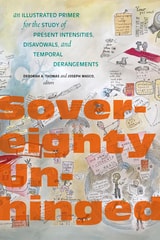
Sovereignty Unhinged
An Illustrated Primer for the Study of Present Intensities, Disavowals, and Temporal DerangementsDeborah A. Thomas and Joseph Masco, editors
Duke University Press, 2023
Contributors. Alex Blanchette, Yarimar Bonilla, Jessica Cattelino, María Elena García, Akhil Gupta, Lochlann Jain, Purnima Mankekar, Joseph Masco, Michael Ralph, Danilyn Rutherford, Arjun Shankar, Kristen L. Simmons, Deborah A. Thomas, Leniqueca A. Welcome, Kaya Naomi Williams, Jessica Winegar
Space and Pluralism
Can Contemporary Cities Be Places of Tolerance?Stefano Moroni
Central European University Press, 2016

Space and Time under Persecution
The German-Jewish Experience in the Third ReichGuy Miron
University of Chicago Press, 2023
In Space and Time under Persecution, Guy Miron considers how social exclusion, economic decline, physical relocation, and, later, forced evictions, labor, and deportation under Nazi rule forever changed German Jews’ experience of space and time. Facing ever-mounting restrictions, German Jews reimagined their worlds—devising new relationships to traditional and personal space, new interpretations of their histories, and even new calendars to measure their days. For Miron, these tactics reveal a Jewish community’s attachment to German bourgeois life as well as their defiant resilience under Nazi persecution.
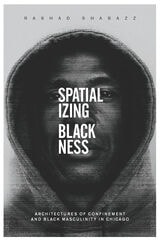
Spatializing Blackness
Architectures of Confinement and Black Masculinity in ChicagoRashad Shabazz
University of Illinois Press, 2015
A geographic study of race and gender, Spatializing Blackness casts light upon the ubiquitous--and ordinary--ways carceral power functions in places where African Americans live. Moving from the kitchenette to the prison cell, and mining forgotten facts from sources as diverse as maps and memoirs, Rashad Shabazz explores the myriad architectures of confinement, policing, surveillance, urban planning, and incarceration. In particular, he investigates how the ongoing carceral effort oriented and imbued black male bodies and gender performance from the Progressive Era to the present. The result is an essential interdisciplinary study that highlights the racialization of space, the role of containment in subordinating African Americans, the politics of mobility under conditions of alleged freedom, and the ways black men cope with--and resist--spacial containment.
A timely response to the massive upswing in carceral forms within society, Spatializing Blackness examines how these mechanisms came to exist, why society aimed them against African Americans, and the consequences for black communities and black masculinity both historically and today.
Speaking Mexicano
Dynamics of Syncretic Language in Central MexicoJane H. Hill and Kenneth C. Hill
University of Arizona Press, 1986
"The genius of this work is the integration of the linguistic analysis with the cultural and political analysis."—Latin American Anthropology Review
Speaking Up, Speaking Out
Lived Experiences of Non-Tenure-Track Faculty in Writing StudiesJessica Edwards
Utah State University Press, 2020
Each chapter suggests tangible ways that writing departments and supporters can be more thoughtful about their policies and practices as they work to create more equitable spaces for NTTF. Speaking Up, Speaking Out considers the rhetorical power of labeling and asserts why contingent faculty, for far too long, have been compared to and against TT faculty and often encouraged to reach the same or similar productivity with scholarship, teaching, and service that TT faculty produce. The myopic ideas about what is valued and whose position is deemed more important impacts contingent faculty in ways that, as contributors in this collection share, effect and affect faculty productivity, emotional health, and overall community involvement.
Contributors: Norah Ashe-McNalley, Sarah Austin, Rachel Azima, Megan Boeshart Burelle, Peter Brooks, Denise Comer, Jessica Cory, Liz Gumm, Brendan Hawkins, Heather Jordan, Nathalie Joseph, Julie Karaus, Christopher Lee, John McHone, Angie McKinnon Carter, Dauvan Mulally, Seth Myers, Liliana M. Naydan, Linda Shelton, Erica Stone, Elizabeth Vincelette, Lacey Wootton
Speaking into the Air
A History of the Idea of CommunicationJohn Durham Peters
University of Chicago Press, 1999
"This is a most interesting and thought-provoking book. . . . Peters maintains that communication is ultimately unthinkable apart from the task of establishing a kingdom in which people can live together peacefully. Given our condition as mortals, communication remains not primarily a problem of technology, but of power, ethics and art." —Antony Anderson, New Scientist
"Guaranteed to alter your thinking about communication. . . . Original, erudite, and beautifully written, this book is a gem." —Kirkus Reviews
"Peters writes to reclaim the notion of authenticity in a media-saturated world. It's this ultimate concern that renders his book a brave, colorful exploration of the hydra-headed problems presented by a rapid-fire popular culture." —Publishers Weekly
What we have here is a failure-to-communicate book. Funny thing is, it communicates beautifully. . . . Speaking Into the Air delivers what superb serious books always do-hours of intellectual challenge as one absorbs the gradually unfolding vision of an erudite, creative author." —Carlin Romano, Philadelphia Inquirer
Speaking of Alabama
The History, Diversity, Function, and Change of LanguageEdited by Thomas E. Nunnally
University of Alabama Press, 2019
Thomas E. Nunnally’s fascinating volume presents essays by linguists who examine with affection and curiosity the speech varieties occurring both past and present across Alabama. Taken together, the accounts in this volume offer an engaging view of the major features that characterize Alabama’s unique brand of southern English.
Written in an accessible manner for general readers and scholars alike, Speaking of Alabama includes such subjects as the special linguistic features of the Southern drawl, the “phonetic divide” between north and south Alabama, “code-switching” by African American speakers in Alabama, pejorative attitudes by Alabama speakers toward their own native speech, the influence of foreign languages on Alabama speech to the vibrant history and continuing influence of non-English languages in the state, as well as ongoing changes in Alabama’s dialects.
Adding to these studies is a foreword by Walt Wolfram and an afterword by Michael B. Montgomery, both renowned experts in southern English, which place both the methodologies and the findings of the volume into their larger contexts and point researchers to needed work ahead in Alabama, the South, and beyond. The volume also contains a number of useful appendices, including a guide to the sounds of Southern English, a glossary of linguistic terms, and online sources for further study.
Language, as presented in this collection, is never abstract but always examined in the context of its speakers’ day-to-day lives, the driving force for their communication needs and choices. Whether specialist or general reader, Alabamian or non-Alabamian, all readers will come away from these accounts with a deepened understanding of how language functions between individuals, within communities, and across regions, and will gain a new respect for the driving forces behind language variation and language change.
Speaking of Race and Class
The Student Experience at an Elite CollegeElizabeth Aries
Temple University Press, 2012
In Speaking of Race and Class, the follow-up volume to her groundbreaking Race and Class Matters at an Elite College, Elizabeth Aries completes her four-year study of diversity at a prestigious liberal arts college. Here, the 58 students—affluent, lower-income, black, and white—that Aries has interviewed since they were Amherst freshmen provide a complete picture of what and how each group learned about issues of race and class.
Aries presents the students’ personal perceptions of their experiences. She reveals the extent to which learning from diversity takes place on campus, and examines the distinct challenges that arise for students living in this heterogeneous community. Aries also looks more broadly at how colleges and universities across the country are addressing the challenges surrounding diversity. Speaking of Race and Class testifies to the programming and practices that have proven successful.

Special Care
Medical Decisions at the Beginning of LifeFred M. Frohock
University of Chicago Press, 1986
But there is a dark underside to the exercise of these skills. A growing number of babies live only to be tethered to life-support systems, unconscious or suffering incessant pain for years and sometimes for the duration of their lives. The ethical issues raised by these children are among the most difficult in our society. Should life be maintained no matter what its quality? Or is there a point at which treatment should be stopped on humane grounds? Who is to make decisions on continuing or ending therapy for damaged children? Is the law a suitable instrument for regulating medical decisions in intensive care nurseries? Should the growing cost of intensive care influence therapy decisions?
Special Care explores the moral and legal issues in neonatal intensive care. Fred M. Frohock spent four months in a special care nursery, observing the daily actions of doctors and nurses and interviewing staff and parents of patients. This engaging, human drama is told through the author's own journal entries interspersed with generous excerpts from taped interviews that display the practical reasoning of staff and parents as they address the moral problems raised by intensive care medicine. Several case studies of infants highlight the often contradictory directions in which medical staffs are pulled and the painful decisions that doctors and parents together are often called upon to make. The result is a book that reconstructs the ordinary life of a neonatal nursery and presents the moral views of those who are most intimately involved in therapy decisions.
This book is an urgently needed entry in the current discussions of treatment for badly damaged babies. Frohock argues that our tradition of rights language, which rests on the premise that we know what a human being is, is inappropriate when dealing with the paradoxes of decision making in neonatal nurseries. Calling for a new moral vocabulary better adapted to the world of medicine, he introduces the notion of harm in place of rights, a concept drawn from medicine's Hippocratic oath that pledges to "do no harm," as a way to begin framing questions and making decisions. Special Care will interest anyone who wants to understand medical decisions at the margins of human life.
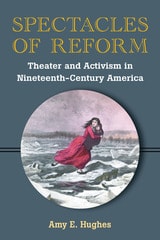
Spectacles of Reform
Theater and Activism in Nineteenth-Century AmericaAmy E. Hughes
University of Michigan Press, 2014
In the nineteenth century, long before film and television arrived to electrify audiences with explosions, car chases, and narrow escapes, it was America's theaters that offered audiences such thrills, with "sensation scenes" of speeding trains, burning buildings, and endangered bodies, often in melodramas extolling the virtues of temperance, abolition, and women's suffrage. In Spectacles of Reform , Amy E. Hughes scrutinizes these peculiar intersections of spectacle and reform, revealing that spectacle plays a crucial role in American activism. By examining how theater producers and political groups harnessed its power and appeal, Hughes suggests that spectacle was—and remains—central to the dramaturgy of reform.
Engaging evidence from lithographs to children's books to typography catalogs, Hughes traces the cultural history of three famous sensation scenes—the drunkard suffering from the delirium tremens, the fugitive slave escaping over a river, and the victim tied to the railroad tracks—assessing how they conveyed, allayed, and denied concerns about the rights and responsibilities of citizenship. These images also appeared in printed propaganda, suggesting that the coup de théâtre was an essential part of American reform culture. Additionally, Hughes argues that today's producers and advertisers continue to exploit the affective dynamism of spectacle, reaching an even broader audience through film, television, and the Internet.
To be attuned to the dynamics of spectacle, Hughes argues, is to understand how we see. Consequently, Spectacles of Reform will interest not only theater historians, but also scholars and students of political, literary, and visual culture who are curious about how U.S. citizens saw themselves and their world during a pivotal period in American history.

Spectacular Disappearances
Celebrity and Privacy, 1696-1801Julia H. Fawcett
University of Michigan Press, 2016
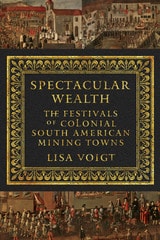
Spectacular Wealth
The Festivals of Colonial South American Mining TownsBy Lisa Voigt
University of Texas Press, 2016
Bridging print culture and performance, Spectacular Wealth draws on eighteenth-century festival accounts to explore how colonial residents of the silver-mining town of Potosí, in the viceroyalty of Peru, and the gold-mining region of Minas Gerais, in Brazil, created rich festive cultures that refuted European allegations of barbarism and greed. In her examination of the festive participation of the towns’ diverse inhabitants, including those whose forced or slave labor produced the colonies’ mineral wealth, Lisa Voigt shows how Amerindians, Afro-descendants, Europeans, and creoles displayed their social capital and cultural practices in spectacular performances.
Tracing the multiple meanings and messages of civic festivals and religious feast days alike, Spectacular Wealth highlights the conflicting agendas at work in the organization, performance, and publication of festivals. Celebrants and writers in mining boomtowns presented themselves as far more than tributaries yielding mineral wealth to the Spanish and Portuguese empires, using festivals to redefine their reputations and to celebrate their cultural, spiritual, and intellectual wealth.
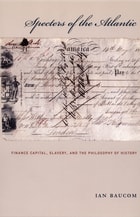
Specters of the Atlantic
Finance Capital, Slavery, and the Philosophy of HistoryIan Baucom
Duke University Press, 2005
Baucom contends that the massacre and the trials that followed it bring to light an Atlantic cycle of capital accumulation based on speculative finance, an economic cycle that has not yet run its course. The extraordinarily abstract nature of today’s finance capital is the late-eighteenth-century system intensified. Yet, as Baucom highlights, since the late 1700s, this rapacious speculative culture has had detractors. He traces the emergence and development of a counter-discourse he calls melancholy realism through abolitionist and human-rights texts, British romantic poetry, Scottish moral philosophy, and the work of late-twentieth-century literary theorists. In revealing how the Zong tragedy resonates within contemporary financial systems and human-rights discourses, Baucom puts forth a deeply compelling, utterly original theory of history: one that insists that an eighteenth-century atrocity is not past but present within the future we now inhabit.
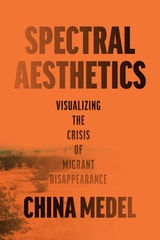
Spectral Aesthetics
Visualizing the Crisis of Migrant DisappearanceChina Medel
University of Texas Press, 2026
Analyzing how artists reimagine migrant disappearance and visibility at the US–Mexico border.
In the mid-1990s, the US government implemented Prevention through Deterrence, a major buildup of troops, walls, and surveillance around El Paso and San Diego. Cut off from these crucial urban crossings, migrants flowed into the dangerous surrounding deserts, where some ten thousand have since died. This is all according to plan: Pentagon documents describe the strategy of funneling migrants toward “mortal danger.”
In this bracing critique, China Medel explores the aesthetics enabling and resisting the crisis of migrant death. The nation-state’s performance of sovereignty along the border, predicated on mass casualties, is tolerated and even celebrated, thanks to the images in our heads of racialized and therefore criminal bodies, made invisible as they disintegrate in the baking sand. Spectral Aesthetics shows how state officials and mainstream media, relying on postracial ideologies and white-supremacist agendas, collectively foster this picture of a brown body so abject that it is disposable. In close readings of artworks contesting this murderous visual regime, Medel discovers an alternative kind of sight, one emphasizing the ghostly traces of the dead. These are images not of the individual “alien” but of life itself, indisposable.
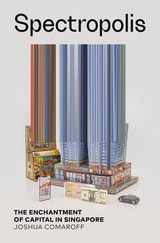
Spectropolis
The Enchantment of Capital in SingaporeJoshua Comaroff
University of Minnesota Press, 2025
How economic transformation and the spirit world collide in hypermodern Singapore
In Singapore, the financial center of Southeast Asia, hyperurbanization and commercial development exist alongside enduring belief in the economic power of ghosts: in their ability to control the flows of money and value and to determine the outcome of investments and wagers. Spectropolis explores the unlikely collusion of these two systems, demonstrating both the productive role of popular beliefs in the modern world and the surprising correlations between “late” capitalism and the workings of the spirit realm.
Detailing the logic and practices of Singapore’s ghost economy—from performing exorcisms on real estate development sites to offering money and commodities to the dead as a hedge against precarious real-world transactions—Joshua Comaroff shows how speculative finance, largely governed by chance and volatility, is understood via its inherently spectral qualities. Through the influence of Chinese Buddhist-Taoist thought, the movement of capital is placed under the sway of cosmology and geomancy, resulting in a built environment that is both technologically advanced and quite literally enchanted.
Based on detailed case studies and years of extensive fieldwork, Spectropolis argues for the power of popular belief systems to theorize contemporary socioeconomic conditions and to give form to collective affect as well as shared aspirations and anxieties. As Comaroff demonstrates, the uniquely all-consuming nature of Singapore’s tightly compressed urban economy is such that it may subsume even that which lies beyond the threshold of life itself.
Retail e-book files for this title are screen-reader friendly with images accompanied by short alt text and/or extended descriptions.
Speculative Communities
Living with Uncertainty in a Financialized WorldAris Komporozos-Athanasiou
University of Chicago Press, 2022
In Speculative Communities, Aris Komporozos-Athanasiou examines the ways that speculation has moved beyond financial markets to shape fundamental aspects of our social and political lives. As ordinary people make exceptional decisions, such as the American election of a populist demagogue or the British vote to leave the European Union, they are moving from time-honored and -tested practices of governance, toward the speculative promise of a new, more uncertain future. This book shows how even our methods of building community have shifted to the speculative realm as social media platforms enable and amplify our volatile wagers.
For Komporozos-Athanasiou, “to speculate” means increasingly “to connect,” to endorse the unknown pre-emptively, and often daringly, as a means of social survival. Grappling with the question of how more uncertainty can lead to its full-throated embrace rather than dissent, Speculative Communities shows how finance has become the model for society writ large. As Komporozos-Athanasiou argues, virtual marketplaces, new social media, and dating apps bring finance’s opaque infrastructures into the most intimate realms of our lives, leading to a new type of speculative imagination across economy, culture, and society.
Speech and Song at the Margins of Global Health
Zulu Tradition, HIV Stigma, and AIDS Activism in South AfricaSteven P. Black
Rutgers University Press, 2019
Sport and Neoliberalism
Politics, Consumption, and CultureDavid L. Andrews
Temple University Press, 2012
Offering new approaches to thinking about sports and political ideologies, Sport and Neoliberalism explores the structures, formations, and mechanics of neoliberalism. The editors and contributors to this original and timely volume examine the intersection of sport as a national pastime and also an engine for urban policy—e.g., stadium building—as well as a powerful force for influencing our understanding of the relationship between culture, politics, and identity.
Sport and Neoliberalism examines the ways the neoliberal project creates priorities for civic society and how, in effect, it turns many aspects of sport into a vehicle of public governance. From the relationship between sport and the neo-liberal state, through the environmental dimensions of neo-liberal sport, to the political biopolitics of obesity, the essays in this volume explore the ways in which the “logics” of neoliberalism are manifest as powerful public pedagogies through the realm of popular culture.
Contributors include: Michael Atkinson, Ted Butryn, C. L. Cole, Norman Denzin, Grant Farred, Jessica Francombe, Caroline Fusco, Michael D. Giardina, Mick Green, Leslie Heywood, Samantha King, Lisa McDermott, Mary G. McDonald, Toby Miller, Mark Montgomery, Joshua I. Newman, Jay Scherer, Kimberly S. Schimmel, and Brian Wilson
In the series Sporting, edited by Amy Bass

Sports Illusion, Sports Reality
A Reporter's View of Sports, Journalism, and SocietyLeonard Koppett
University of Illinois Press, 1994
ever written, I'd like to see the book that beats it. . . . Should be
read by every sports fan or -- for that matter -- social critic."
--From a five-star review, West Coast Review of Books.
"Explores its subject so thoroughly and demolishes so many commonly
held assumptions that after reading it even the most knowledgeable fans
(and some journalists) should feel like drunks who have suddenly been
forced to sober up."
-- Chicago Tribune
"Required reading for anyone who calls himself a fan."
-- Chicago Sun-Times
"An invaluable contribution to sports literature."
-- Howard Cosell
Sports in Africa, Past and Present
Todd Cleveland
Ohio University Press, 2020
These groundbreaking essays demonstrate how Africans past and present have utilized sports to forge complex identities and shape Africa’s dynamic place in the world.
Since the late nineteenth century, modern sports in Africa have both reflected and shaped cultural, social, political, economic, generational, and gender relations on the continent. Although colonial powers originally introduced European sports as a means of “civilizing” indigenous populations and upholding then current notions of racial hierarchies and “muscular Christianity,” Africans quickly appropriated these sporting practices to fulfill their own varied interests. This collection encompasses a wide range of topics, including women footballers in Nigeria, Kenya’s world-class long-distance runners, pitches and stadiums in communities large and small, fandom and pay-to-watch kiosks, the sporting diaspora, sports pedagogy, sports as resistance and as a means to forge identity, sports heritage, the impact of politics on sports, and sporting biography.

SportsWars
Athletes in the Age of AquariusDavid Zang
University of Arkansas Press, 2001

Sportsex
Toby Miller
Temple University Press, 2002
Miller pays particular attention to the way celebrity is considered around the world through a number of different athletic activities. Along the way he also offers his own personal connection to sport as both a researcher and recipient of its abuses and pleasures.
In a world where everything is considered in its relationship to globalization, sport is one of the few arenas of social life that can be concretely seen in international terms. Sportsex opens that world up in a way that is accessible and significant for anyone interested in the shape of our emerging world culture.
Spreading the Word
Poetry and the Survival of Community in AmericaRoss Talarico
Duke University Press, 1995
Drawing on his workshops in Rochester, Talarico describes a unique approach for eliciting poetry from people of many ages and backgrounds—particularly underpriviledged urban kids and the elderly. The process—from dialogue to self-expression to publication to public event—illuminates the urgency and meaning of releasing the spirit captured in each man and woman and child’s experience. "Some people say that Ross Talarico has done the impossible," the Today Show remarked of his success in Rochester; and with this book Talarico offers the same opportunity to others. Teachers, community leaders, parents, and children will be able to follow his practical, hands-on approach to encouraging self-expression in diverse, even unlikely, settings. They will see here how poetry is indeed relevant, ever more crucial to our identity as the culture evolves—how it is, finally, the place where the inarticulate can come to speak for themselves.

Squee from the Margins
Fandom and RaceRukmini Pande
University of Iowa Press, 2018
Rukmini Pande’s examination of race in fan studies is sure to make an immediate contribution to the growing field. Until now, virtually no sustained examination of race and racism in transnational fan cultures has taken place, a lack that is especially concerning given that current fan spaces have never been more vocal about debating issues of privilege and discrimination.
Pande’s study challenges dominant ideas of who fans are and how these complex transnational and cultural spaces function, expanding the scope of the field significantly. Along with interviewing thirty-nine fans from nine different countries about their fan practices, she also positions media fandom as a postcolonial cyberspace, enabling scholars to take a more inclusive view of fan identity. With analysis that spans from historical to contemporary, Pande builds a case for the ways in which non-white fans have always been present in such spaces, though consistently ignored.
Stacked Decks
Building Inspectors and the Reproduction of Urban InequalityRobin Bartram
University of Chicago Press, 2022
Though we rarely see them at work, building inspectors have the power to significantly shape our lives through their discretionary decisions. The building inspectors of Chicago are at the heart of sociologist Robin Bartram’s analysis of how individuals impact—or attempt to impact—housing inequality. In Stacked Decks, she reveals surprising patterns in the judgment calls inspectors make when deciding whom to cite for building code violations. These predominantly white, male inspectors largely recognize that they work within an unequal housing landscape that systematically disadvantages poor people and people of color through redlining, property taxes, and city spending that favor wealthy neighborhoods. Stacked Decks illustrates the uphill battle inspectors face when trying to change a housing system that works against those with the fewest resources.
Stadium City
Sports and Media Infrastructure in the United StatesHelen Morgan Parmett
University of Illinois Press, 2025
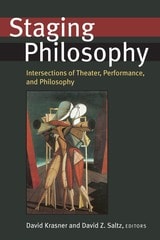
Staging Philosophy
Intersections of Theater, Performance, and PhilosophyDavid Krasner and David Z. Saltz, Editors
University of Michigan Press, 2010
Staging Philosophy raises issues of critical importance by providing case studies of various philosophical movements and schools of thought, including aesthetics, analytic philosophy, phenomenology, deconstruction, critical realism, and cognitive science. The essays, which are organized into three sections—history and method, presence, and reception—take up fundamental issues such as spectatorship, empathy, ethics, theater as literature, and the essence of live performance. While some essays challenge assertions made by critics and historians of theater and performance, others analyze the assumptions of manifestos that prescribe how practitioners should go about creating texts and performances. The first book to bridge the disciplines of theater and philosophy, Staging Philosophy will provoke, stimulate, engage, and ultimately bring theater to the foreground of intellectual inquiry while it inspires further philosophical investigation into theater and performance.
David Krasner is Associate Professor of Theater Studies, African American Studies, and English at Yale University. His books include A Beautiful Pageant: African American Theatre, Drama, and Performance in the Harlem Renaissance, 1910-1920 and Renaissance, Parody, and Double Consciousness in African American Theatre, 1895-1910. He is co-editor of the series Theater: Theory/Text/Performance.
David Z. Saltz is Professor of Theatre Studies and Head of the Department of Theatre and Film Studies at the University of Georgia. He is coeditor of Theater Journal and is the principal investigator of the innovative Virtual Vaudeville project at the University of Georgia.
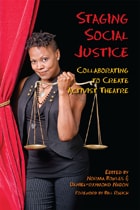
Staging Social Justice
Collaborating to Create Activist TheatreEdited by Norma Bowles and Daniel-Raymond Nadon
Southern Illinois University Press, 2013
Normal.dotm0011901163SIU Press195141012.00false18 pt18 pt00falsefalsefalseFringe Benefits, an award-winning theatre company, collaborates with schools and communities to create plays that promote constructive dialogue about diversity and discrimination issues. Staging Social Justice is a groundbreaking collection of essays about Fringe Benefits’ script-devising methodology and their collaborations in the United States, Australia, Canada and the United Kingdom. The anthology also vividly describes the transformative impact of these creative initiatives on participants and audiences. By reflecting on their experiences working on these projects, the contributing writers—artists, activists and scholars—provide the readerwith tools and inspiration to create their own theatre for social change.
“Contributors to this big-hearted collection share Fringe Benefits’ play devising process, and a compelling array of methods for measuring impact, approaches to aesthetics (with humor high on the list), coalition and community building, reflections on safe space, and acknowledgement of the diverse roles needed to apply theatre to social justice goals. The book beautifully bears witness to both how generative Fringe Benefits’ collaborations have been for participants and to the potential of engaged art in multidisciplinary ecosystems more broadly.”—Jan Cohen-Cruz, editor of Public: A Journal of Imagining America

Staging Tradition
John Lair and Sarah Gertrude KnottMichael Ann Williams
University of Illinois Press, 2006
Lair and Knott's discovery of new developments in theater and entertainment during the 1920s led the pair to careers that kept each of them center stage. Inspired by programs such as WLS's Barn Dance and the success of early folk events, Lair promoted Kentucky musicians. Knott staged her own radically inclusive festival, which included Native and African American traditions and continues today as the National Folk Festival. Michael Ann Williams shows how Lair and Knott fed the public's fascination with the "art of the common man" and were in turn buffeted by cultural forces that developed around and beyond them.
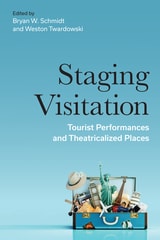
Staging Visitation
Tourist Performances and Theatricalized PlacesBryan Schmidt and Weston Twardowski
University of Michigan Press, 2026
Staging Visitation frames tourism and travel as complex social performances that shape identities, communities, and global imaginaries. This volume proposes “visitation” as a framework that emphasizes the participatory and relational dimensions of travel. While tourism is often pejoratively framed as a commodified or exploitative leisure activity for those with means, its reality is far more nuanced. Tourism stages heritage, provokes encounters across cultural divides, and prompts both visitors and hosts to negotiate values and identities—all while sustaining economies (and the power relations they produce) at global and local scales.
From museums and theme parks to festivals and influencer culture, the essays in this volume trace how transitory encounters—embodied, affective, and historically layered—build travel destinations into theatricalized places. These essays bring theater and performance studies into conversation with cultural geography, sociology, anthropology, and media studies to demonstrate how tourism functions as both a stage and a repertoire for modern life.
Staging Visitation argues that travel is not only about movement across space, but also about the performance of culture itself—its preservation, reinvention, and transformation.

Standing Our Ground
Women, Environmental Justice, and the Fight to End Mountaintop RemovalJoyce M. Barry
Ohio University Press, 2012
Standing Our Ground: Women, Environmental Justice, and the Fight to End Mountaintop Removal examines women’s efforts to end mountaintop removal coal mining in West Virginia. Mountaintop removal coal mining, which involves demolishing the tops of hills and mountains to provide access to coal seams, is one of the most significant environmental threats in Appalachia, where it is most commonly practiced.
The Appalachian women featured in Barry’s book have firsthand experience with the negative impacts of Big Coal in West Virginia. Through their work in organizations such as the Coal River Mountain Watch and the Ohio Valley Environmental Coalition, they fight to save their mountain communities by promoting the development of alternative energy resources. Barry’s engaging and original work reveals how women’s tireless organizing efforts have made mountaintop removal a global political and environmental issue and laid the groundwork for a robust environmental justice movement in central Appalachia.
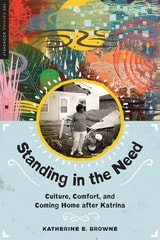
Standing in the Need
Culture, Comfort, and Coming Home After KatrinaBy Katherine E. Browne
University of Texas Press, 2015
Standing in the Need presents an intimate account of an African American family’s ordeal after Hurricane Katrina. Before the storm struck, this family of one hundred fifty members lived in the bayou communities of St. Bernard Parish just outside New Orleans. Rooted there like the wild red iris of the coastal wetlands, the family had gathered for generations to cook and share homemade seafood meals, savor conversation, and refresh their interconnected lives.
In this lively narrative, Katherine Browne weaves together voices and experiences from eight years of post-Katrina research. Her story documents the heartbreaking struggles to remake life after everyone in the family faced ruin. Cast against a recovery landscape managed by outsiders, the efforts of family members to help themselves could get no traction; outsiders undermined any sense of their control over the process. In the end, the insights of the story offer hope. Written for a broad audience and supported by an array of photographs and graphics, Standing in the Need offers readers an inside view of life at its most vulnerable.
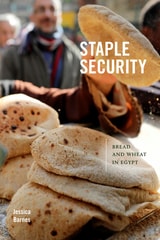
Staple Security
Bread and Wheat in EgyptJessica Barnes
Duke University Press, 2022
Star Charting
Bess Matassa
Duke University Press, 2026
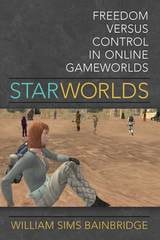
Star Worlds
Freedom Versus Control in Online GameworldsWilliam Sims Bainbridge
University of Michigan Press, 2016
The four “star worlds” explored in this book illustrate the dilemmas concerning the role of technology as liberator or oppressor in our postindustrial society, and represent computer simulations of future possibilities of human experience. Bainbridge considers the relationship between a real person and the role that person plays, the relationship of an individual to society, and the relationship of human beings to computing technology. In addition to collecting ethnographic and quantitative data about the social behavior of other players, he has immersed himself in each of these worlds, role-playing 14 avatars with different skills and goals to gain new insights into the variety of player experience from a personal perspective.
Stare in the Darkness
The Limits of Hip-hop and Black PoliticsLester K. Spence
University of Minnesota Press, 2010
A growing number of black activists and artists claim that rap and hip-hop are the basis of an influential new urban social movement. Simultaneously, black citizens evince concern with the effect that rap and hip-hop culture exerts on African American communities. According to a recent Pew survey conducted on the opinions of Black Americans, 71 percent of blacks think that rap is a bad influence. To what extent are African American hopes and fears about hip-hop’s potential political power justified? In Stare in the Darkness, Lester K. Spence answers this question using a blend of neoliberal analysis, survey data, experiments, and case studies.
Spence finds that rap does in fact influence black political attitudes. However, rap also reproduces rather than critiques neoliberal ideology. Furthermore, black activists seeking to create an innovative model of hip-hop politics are hamstrung by their reliance on outmoded forms of organizing. By considering the possibilities inherent in the most prolific and prominent activities of hip-hop politics, Stare in the Darkness reveals, in a clear and practical manner, the political consequences of rap culture for black publics.
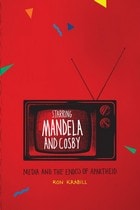
Starring Mandela and Cosby
Media and the End(s) of ApartheidRon Krabill
University of Chicago Press, 2010
During the worst years of apartheid, the most popular show on television in South Africa—among both Black and White South Africans—was The Cosby Show. Why did people living under a system built on the idea that Black people were inferior and threatening flock to a show that portrayed African Americans as comfortably mainstream? Starring Mandela and Cosby takes up this paradox, revealing the surprising impact of television on racial politics.
The South African government maintained a ban on television until 1976, and according to Ron Krabill, they were right to be wary of its potential power. The medium, he contends, created a shared space for communication in a deeply divided nation that seemed destined for civil war along racial lines. At a time when it was illegal to publish images of Nelson Mandela, Bill Cosby became the most recognizable Black man in the country, and, Krabill argues, his presence in the living rooms of white South Africans helped lay the groundwork for Mandela’s release and ascension to power.
Weaving together South Africa’s political history and a social history of television, Krabill challenges conventional understandings of globalization, offering up new insights into the relationship between politics and the media.
State Repression and the Labors of Memory
Elizabeth Jelin
University of Minnesota Press, 2003
A timely exploration of the nature of memory and its political uses
Hearing the news from South America at the turn of the millennium can be like traveling in time: here are the trials of Pinochet, the searches for “the disappeared” in Argentina, the investigation of the death of former president Goulart in Brazil, the Peace Commission in Uruguay, the Archive of Terror in Paraguay, a Truth Commission in Peru. As societies struggle to come to terms with the past and with the vexing questions posed by ineradicable memories, this wise book offers guidance.
Combining a concrete sense of present urgency and a theoretical understanding of social, political, and historical realities, State Repression and the Labors of Memory fashions tools for thinking about and analyzing the presences, silences, and meanings of the past. With unflappable good judgment and fairness, Elizabeth Jelin clarifies the often muddled debates about the nature of memory, the politics of struggles over memories of historical injustice, the relation of historiography to memory, the issue of truth in testimony and traumatic remembrance, the role of women in Latin American attempts to cope with the legacies of military dictatorships, and problems of second-generation memory and its transmission and appropriation. Jelin’s work engages European and North American theory in its exploration of the various ways in which conflicts over memory shape individual and collective identities, as well as social and political cleavages. In doing so, her book exposes the enduring consequences of repression for social processes in Latin America, and at the same time enriches our general understanding of the fundamentally conflicted and contingent nature of memory.
State of Empowerment
Low-Income Families and the New Welfare StateCarolyn Barnes
University of Michigan Press, 2020
On weekday afternoons, dismissal bells signal not just the end of the school day but also the beginning of another important activity: the federally funded after-school programs that offer tutoring, homework help, and basic supervision to millions of American children. Nearly one in four low-income families enroll a child in an after-school program. Beyond sharpening students’ math and reading skills, these programs also have a profound impact on parents. In a surprising turn—especially given the long history of social policies that leave recipients feeling policed, distrusted, and alienated—government-funded after-school programs have quietly become powerful forces for political and civic engagement by shifting power away from bureaucrats and putting it back into the hands of parents. In State of Empowerment Carolyn Barnes uses ethnographic accounts of three organizations to reveal how interacting with government-funded after-school programs can enhance the civic and political lives of low-income citizens.
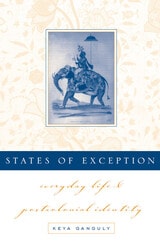
States Of Exception
Everyday Life and Postcolonial IdentityKeya Ganguly
University of Minnesota Press, 2001
Explores the conflict between capitalism and tradition in an immigrant community.
A philosophical anthropology of everyday experience, this book is also a deeply informed and thought-provoking reflection on the work of cultural critique. States of Exception looks into a community of immigrants from India living in southern New Jersey—a group to whom the author, as a daughter of two of its members, enjoyed unprecedented access.
Her position allows Keya Ganguly to approach the culture of a middle-class group (albeit one that is marginalized by racial prejudice), while the group’s relatively comfortable and protected style of life offers unusual insight into the concept of the everyday and the sense in which a seemingly commonplace existence can be understood as in crisis: a state of exception. Thus, Ganguly draws on the work of the Frankfurt School, particularly Walter Benjamin and Theodor Adorno, to explore the possibilities of a dialectical critique of the everyday—a state of exception informing ordinary yet crisis-ridden narratives of the self under late capitalism.
States of Belonging
Immigration Policies, Attitudes, and InclusionTomas R. Jimenez
Russell Sage Foundation, 2021
Arizona and New Mexico are historically and demographically similar, but they differ in their immigration policies. Arizona has enacted unwelcoming policies towards immigrants, restricting the access of immigrants to state resources, social services, and public institutions. New Mexico is more welcoming, actively seeking to protect the rights of immigrants and extending access to state resources and institutions. The authors draw on an original survey and in-depth interviews of a cross-section of each state’s population to illustrate how these differing approaches affect the sense of belonging not only among immigrants, but among the U.S.-born as well.
Respondents in Arizona, regardless of whether they were foreign- or native-born or their ethno-racial background, agreed that the state is unwelcoming to immigrants, and they pointed to Arizona’s restrictive policies as the primary factor. The sense of rejection perceived by Latinos in Arizona, including the foreign-born and the U.S.-born, was profound. They felt the effects of administrative and symbolic exclusions of the state’s unwelcoming policies as they went about their daily lives.
New Mexico’s more welcoming approach had positive effects on the Latino immigrant population, and these policies contributed to an increased sense of belonging among U.S.-born Latinos and U.S.-born whites as well. The authors show that exposure to information about welcoming policies is associated with an improved sense of belonging across most population groups. They also find that the primary dividing line when it came to reactions to welcoming policies was political, not ethno-racial. Only self-identified Republicans, Latino as well as white, showed reduced feelings of belonging.
States of Belonging demonstrates that welcoming policies cultivate a greater sense of belonging for immigrants and other state citizens, suggesting that policies aimed at helping immigrants gain a social, economic, and political foothold in this country can pay a broad societal dividend.
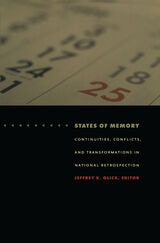
States of Memory
Continuities, Conflicts, and Transformations in National RetrospectionJeffrey K. Olick, ed.
Duke University Press, 2003
The contributors—including historians and social scientists—describe societies’ struggles to produce and then use ideas of what a “normal” past should look like. They examine claims about the genuineness of revolution (in fascist Italy and communist Russia), of inclusiveness (in the United States and Australia), of innocence (in Germany), and of inevitability (in Israel). Essayists explore the reputation of Confucius among Maoist leaders during China’s Cultural Revolution; commemorations of Martin Luther King Jr. in the United States Congress; the “end” of the postwar era in Japan; and how national calendars—in signifying what to remember, celebrate, and mourn—structure national identification. Above all, these essays reveal that memory is never unitary, no matter how hard various powers strive to make it so.
States of Memory will appeal to those scholars—in sociology, history, political science, cultural studies, anthropology, and art history-who are interested in collective memory, commemoration, nationalism, and state formation.
Contributors. Paloma Aguilar, Frederick C. Corney, Carol Gluck, Matt K. Matsuda, Jeffrey K. Olick, Francesca Polletta, Uri Ram, Barry Schwartz, Lyn Spillman, Charles Tilly, Simonetta Falasca Zamponi, Eviatar Zerubavel, Tong Zhang
States of Terror
History, Theory, LiteratureDavid Simpson
University of Chicago Press, 2019
Introducing the concept of the “fear-terror cluster,” Simpson is able to capture the wide range of terms that we have used to express extreme emotional states over the centuries—from anxiety, awe, and concern to dread, fear, and horror. He shows that the choices we make among such words to describe shades of feeling have seriously shaped the attribution of motives, causes, and effects of the word “terror” today, particularly when violence is deployed by or against the state. At a time when terror-talk is widely and damagingly exploited by politicians and the media, this book unpacks the slippery rhetoric of terror and will prove a vital resource across humanistic and social sciences disciplines.