Results by title
8113 books match the query 'Literary Criticism' and 542 start with s
Small Change
Women, Learning, Patriotism, 1750-1810Harriet Guest
University of Chicago Press, 2000
During the second half of the eighteenth century, the social role of educated women and the nature of domesticity were the focus of widespread debate in Britain. The emergence of an identifiably feminist voice in that debate is the subject of Harriet Guest's new study, which explores how small changes in the meaning of patriotism and the relations between public and private categories permitted educated British women to imagine themselves as political subjects.
Small Change considers the celebration of learned women as tokens of national progress in the context of a commercial culture that complicates notions of gender difference. Guest offers a fascinating account of the women of the bluestocking circle, focusing in particular on Elizabeth Carter, hailed as the paradigmatic learned and domestic woman. She discusses the importance of the American war to the changing relation between patriotism and gender in the 1770s and 1780s, and she casts new light on Mary Wollstonecraft's writing of the 1790s, considering it in relation to the anti-feminine discourse of Hannah More, and the utopian feminism of Mary Hays.
Smile of Discontent
Humor, Gender, and Nineteenth-Century British FictionEileen Gillooly
University of Chicago Press, 1999
Gillooly shows how such humor became, for mostly female writers at the time, an unobtrusive and prudent means of expressing discontent with a culture that was ideologically committed to restricting female agency and identity. If the aggression and emotional distance of irony and satire mark them as "masculine," then for Gillooly, the passivity, indirection, and sympathy of the humor she discusses render it "feminine." She goes on to disclose how the humorous tactics employed by writers from Burney to Wharton persist in the work of Barbara Pym, Anita Brookner, and Penelope Fitzgerald.
The book won the Barbara Perkins and George Perkins Award given by the Society for the Study of Narrative Literature.
Smollett's Britain
Jeremy Black
St. Augustine's Press, 2022
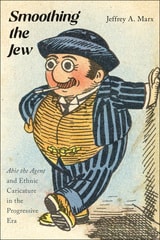
Smoothing the Jew
"Abie the Agent" and Ethnic Caricature in the Progressive EraJeffrey A. Marx
Rutgers University Press, 2024
Smoothing the Jew investigates how Jewish artists of the time attempted to “smooth over” these demeaning portrayals by focusing on the first Jewish comic strip published in English, Harry Hershfield’s Abie the Agent. Jeffrey Marx demonstrates how Hershfield created a Jewish protagonist who in part reassured nativists of the Jews’ ability to assimilate into American society while also encouraging immigrants and their children that, over time, they would be able to adopt American customs without losing their distinctly Jewish identity.

Snow on the Cane Fields
Women’s Writing and Creole SubjectivityJudith Raiskin
University of Minnesota Press, 1995
Snow on the Cane Fields was first published in 1995. Minnesota Archive Editions uses digital technology to make long-unavailable books once again accessible, and are published unaltered from the original University of Minnesota Press editions.
In a probing analysis of creole women's writing over the past century, Judith Raiskin explores the workings and influence of cultural and linguistic colonialism. Tracing the transnational and racial meanings of creole identity, Raiskin looks at four English-speaking writers from South Africa and the Caribbean: Olive Schreiner, Jean Rhys, Michelle Cliff, and Zoë Wicomb. She examines their work in light of the discourses of their times: nineteenth-century "race science" and imperialistic rhetoric, turn-of-the-century anti-Semitic sentiment and feminist pacifism, postcolonial theory, and apartheid legislation.
In their writing and in their multiple identities, these women highlight the gendered nature of race, citizenship, culture, and the language of literature. Raiskin shows how each writer expresses her particular ambivalences and divided loyalties, both enforcing and challenging the proprietary British perspective on colonial history, culture, and language. A new perspective on four writers and their uneasy places in colonial culture, Snow on the Cane Fields reveals the value of pursuing a feminist approach to questions of national, political, and racial identity.
Judith Raiskin is assistant professor of women's studies at the University of California, Santa Barbara.
So Ask
Essays, Conversations, and InterviewsPhilip Levine
University of Michigan Press, 2002
So Black and Blue
Ralph Ellison and the Occasion of CriticismKenneth W. Warren
University of Chicago Press, 2003
What would it mean to read Invisible Man as a document of Jim Crow America? Using Ralph Ellison's classic novel and many of his essays as starting points, Kenneth W. Warren illuminates the peculiar interrelation of politics, culture, and social scientific inquiry that arose during the post-Reconstruction era and persisted through the Civil Rights movement. Warren argues that Ellison's novel expresses the problem of who or what could represent and speak for the Negro in an age of limited political representation.
So Black and Blue shows that Ellison's successful transformation of these limits into possibilities has also, paradoxically, cast a shadow on the postsegregation world. What can be the direction of African American culture once the limits that have shaped it are stricken down? Here Warren takes up the recent, ongoing, and often contradictory veneration of Ellison's artistry by black writers and intellectuals to reveal the impoverished terms often used in discussions about the political and cultural future of African Americans. Ultimately, by showing what it would mean to take seriously the idea of American novels as creatures of their moment, Warren questions whether there can be anything that deserves the label of classic American literature.
So Long! Walt Whitman's Poetry of Death
Harold Aspiz
University of Alabama Press, 2005
Walt Whitman is unquestionably a great poet of the joys of living. But as Harold Aspiz demonstrates in this study, concerns with death and dying define Whitman’s career as a thinker, a poet, and a person. Through a close reading of Leaves of Grass, its constituent poems, particularly “Song of Myself,” and Whitman’s prose and letters, Aspiz charts how the poet’s exuberant celebration of life—the cascade of sounds, sights, and smells that erupt in his verse—is a consequence of his central concern: the ever-presence of death and the prospect of an afterlife.
Until now no one has studied as systematically the degree to which mortality informs Whitman’s entire enterprise as a poet. So Long! devotes particular attention to Whitman’s language and rich artistry in the context of the poet’s social and intellectual milieus. We see Whitman (and his many personae) as a folk prophet announcing a gospel of democracy and immortality; pondering death in alternating moods of acceptance and terror; fantasizing his own dying and his postmortem selfhood; yearning for mates and lovers while conscious of fallible flesh; agonizing over the omnipresence of death in wartime; patiently awaiting death; and launching imaginary journeys toward immortality and godhood.
So Long! is valuable for American literature collections, students and scholars of Whitman and 19th-century literature, and general readers interested in Whitman and poetry. By exploring Whitman's faith in death as a meaningful experience, we may understand better how the poet—whether personified as representative man, victim, hero, lover, or visionary—lived so completely on the edge of life.
So Much Wasted
Hunger, Performance, and the Morbidity of ResistancePatrick Anderson
Duke University Press, 2010
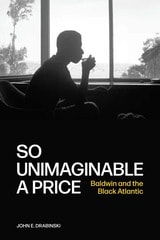
So Unimaginable a Price
Baldwin and the Black AtlanticJohn E. Drabinski
Northwestern University Press, 2026
James Baldwin’s nonfiction offers some of the most important and challenging thinking on the experience of race, history, and memory in the Black Atlantic world. Yet much of the scholarly literature on Baldwin’s writing reads his work from inside the sociocultural context of the United States, alongside key interlocutors like Richard Wright, Ralph Ellison, and Lorraine Hansberry. So Unimaginable a Price: Baldwin and the Black Atlantic shifts the critical frame, examining Baldwin’s work as part of a midcentury moment across the wider Atlantic world and tying his reflections to those of thinkers in the Caribbean and Africa to underscore the widening sense, as well as the particularity, of his critical claims. Who is Baldwin to the Atlantic world? And who, then, is Baldwin to the United States? John E. Drabinski recasts Baldwin as a Black Atlantic writer whose unique qualities as a thinker are enhanced by their similarities and differences with fellow writers of liberation in the global Black world.
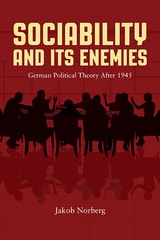
Sociability and Its Enemies
German Political Theory After 1945Jakob Norberg
Northwestern University Press, 2014

Social Contract, Discourse on the Virtue Most Necessary for a Hero, Political Fragments, and Geneva Manuscript
Jean-Jacques Rousseau
Dartmouth College Press, 1994
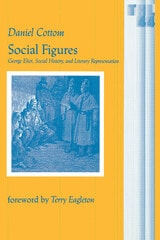
Social Figures
George Eliot, Social History, and Literary RepresentationDaniel Cottom
University of Minnesota Press, 1987
Centers on the discourse of the liberal intellectual as exemplified in the novels of George Eliot, whose awareness of her aesthetic and social task was keener than that of most Victorian writers.
“…Daniel Cottom has produced a readable, well-researched, and thoroughly referenced work that speaks to a broad scholarly audience composed of philosophers, psychologists, sociolinguists, literary critics, historians, sociologists, and anthropologists, to name but a few.” Anthropology and Humanism Quarterly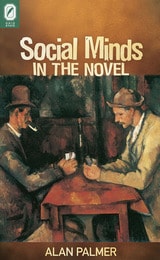
Social Minds in the Novel
Alan Palmer
The Ohio State University Press, 2010
Social Minds in the Novel is the highly readable sequel to Alan Palmer’s award-winning and much-acclaimed Fictional Minds. Here he argues that because of its undue emphasis on the inner, introspective, private, solitary, and individual mind, literary theory tells only part of the story of how characters in novels think. In addition to this internalist view, Palmer persuasively advocates an externalist perspective on the outer, active, public, social, and embodied mind. His analysis reveals, for example, that a good deal of fictional thought is intermental— joint, group, shared, or collective.
Social Minds in the NovelSocial minds are not of marginal interest; they are central to our understanding of fictional storyworlds. The purpose of this groundbreaking and important book is to put the complex and fascinating relationship between social and individual minds at the heart of narrative theory. The book will be of interest to scholars in narrative theory, cognitive poetics or stylistics, cognitive approaches to literature, philosophy of mind, social psychology, and the nineteenth-century novel.
focuses primarily on the epistemological and ethical debate in the nineteenth-century novel about the extent of our knowledge of the workings of other minds and the purposes to which this knowledge should be put. Palmer’s illuminating approach is pursued through skillful and provocative readings of Bleak House, Middlemarch, and Persuasion, and, in addition, Evelyn Waugh’s Men at Arms and Ian McEwan’s Enduring Love.
Social Semiotics As Praxis
Text, Social Meaning Making, and Nabokov’s AdaPaul J. Thibault
University of Minnesota Press, 1991
In Social Semiotics as Praxis, Paul J. Thibault rescues semiotics from terminal formalism by recognizing that the object of a semiotic inquiry is necessarily the way in which human beings, individually and collectively, make sense of their lives. Focusing on Vladimir Nabokov’s Ada, he develops a conception of social semiotics that is a form of both social action and political praxis.
Thibault’s principal intellectual sources are, among others, Bakhtin, Volosinov, Derrida, Foucault, Gramsci, Habermas, and Halliday. Thibault combines the work of Halliday in particular with is own theories of semiotics to explore the dynamics of quoting and reporting speech and to develop a critique of the categories of “self” and “representation.” Thibault accounts for the meaningful relationships constructed among texts and elaborates on the two main themes of relational levels in texts and the dynamics of contextualization to give voice to a unifying discourse for talking about social meaning making.
Socialist Joy in the Writing of Langston Hughes
Jonathan Scott
University of Missouri Press, 2007
Jonathan Scott has written the first book-length study to analyze the extraordinary range of Hughes’s creative output, showing that his unassailable reputation as one of America’s finest “folk poets” barely scratches the surface of his oeuvre. Scott offers a robust account of the relations between Hughes and political activism to show that Hughes’s direct involvement with the U.S. socialist movement of the 1920s and 1930s was largely responsible for the variety of his writing. Scott also contends that the goal of overthrowing white oppression produced a “socialist joy” that would express itself repeatedly in Hughes’s work during the anticommunist crusades of the 1950s and 1960s.
In his provocative study, Scott explores four areas of Hughes’s intellectual work: his relationship with Afro-Caribbean arts, Soviet Russia, and the Harlem Renaissance; his postwar newspaper writing for the African American press; his extensive cultural work as an anthologist; and his writings for young people. Through these analyses, Scott proposes the concept of “red, white, and black” as an alternative paradigm for appreciating Hughes in particular and the American scene in general.
Scott views Hughes not simply as a great author but as an American working-class intellectual trickster whose eccentric projects require a redefinition of the very concept of authorship. By focusing on Hughes’s intellectual method, Scott also contests the notion of reducing all African Americans to one undifferentiated social status beneath that of any class within the white oppressing group—a hallmark of racial oppression that has diminished, in the U.S. academy, Hughes’s international status.
As Scott persuasively argues, it is only through an understanding of Hughes’s literary method that we can undertake a thorough account of his prolific production during the cold war era. His book situates Hughes’s life and work in their proper contexts, both reconfirming Hughes’s reputation as an intellectual of the American Left and establishing his long-denied place in American studies as the most well-rounded writer of his time.
Socialist Realism without Shores
Thomas Lahusen and Evgeny Dobrenko, eds.
Duke University Press, 1997
The contributors here argue that socialist realism has never been a monolithic art form. Essays demonstrate, among other things, that its literature could accommodate psychoanalytic criticism; that its art and architecture could affect the aesthetic dictates of Moscow that made "Soviet" art paradoxically heterogeneous; and that its aesthetics could accommodate both high art and crafted kitsch. Socialist Realism without Shores also addresses the critical discourse provoked by socialist realism—Stalinist aesthetics, "anthropological" readings; ideology critique and censorship; and the sublimely ironic approaches adapted from sots art, the Soviet version of postmodernism.
Contributors. Antoine Baudin, Svetlana Boym, Greg Castillo, Katerina Clark, Evgeny Dobrenko, Boris Groys, Hans Günther, Julia Hell, Leonid Heller, Mikhail Iampolski, Thomas Lahusen, Régine Robin, Yuri Slezkine, Lily Wiatrowski Phillips, Xudong Zhang, Sergei Zimovets

Society and its Outsiders in the Novels of Jakob Wassermann
Katharina Volckmer
University of London Press, 2016
Soft Canons
American Women WritersKaren L. Kilcup
University of Iowa Press, 1999
Soft Matter
The Poetics of Weakness in Late Soviet SocialismJulia Vaingurt
Northwestern University Press, 2025
Identifies and examines a poetics of weakness in Soviet underground literature
Artists of the late Soviet era sought new, nonconformist ways of approaching literary fiction, arriving at weakness as a crucial principle of narrative and character formation. Julia Vaingurt argues that this counter-discourse of strategic weakness constituted both an aesthetic strategy and an ethical code, affording like-minded authors a feeling of recognition and commonality and uniting an international community of artists in resistance to the divisiveness of their worlds. Soft Matter: The Poetics of Weakness in Late Soviet Socialism explores the cultivation of weak subjectivity through modes such as gender subversion, queer holy foolishness, intoxication, madness, and writing disorders like graphomania and writer’s block. Identifying the poetics of weakness as formative for Soviet underground literature of the 1960s and ’70s, Vaingurt also traces the inheritance of a far older tradition within Russian culture of salutary weakness. As democratic deliberation continues to be under threat around the world, alternatives to the ubiquitous politics of force are an aesthetic, ethical, and ideological imperative.
Soft Weapons
Autobiography in TransitGillian Whitlock
University of Chicago Press, 2007
Azar Nafisi’s Reading Lolita in Tehran,Marjane Satrapi’s comics, and “Baghdad Blogger” Salam Pax’s Internet diary are just a few examples of the new face of autobiography in an age of migration, globalization, and terror. But while autobiography and other genres of life writing can help us attend to people whose experiences are frequently unseen and unheard, life narratives can also be easily co-opted into propaganda. In Soft Weapons, Gillian Whitlock explores the dynamism and ubiquity of contemporary life writing about the Middle East and shows how these works have been packaged, promoted, and enlisted in Western controversies.
Considering recent autoethnographies of Afghan women, refugee testimony from Middle Eastern war zones, Jean Sasson’s bestsellers about the lives of Arab women, Norma Khouri’s fraudulent memoir Honor Lost, personal accounts by journalists reporting the war in Iraq, Satrapi’s Persepolis, Nafisi’s book, and Pax’s blog, Whitlock explores the contradictions and ambiguities in the rapid commodification of life memoirs. Drawing from the fields of literary and cultural studies, Soft Weapons will be essential reading for scholars of life writing and those interested in the exchange of literary culture between Islam and the West.
Soldiers Once and Still
Ernest Hemingway, James Salter, and Tim O'BrienAlex Vernon
University of Iowa Press, 2007
Hemingway, Salter, and O’Brien form the core of Soldiers Once and Still because each represents a different warring generation of twentieth-century America: World War I with Hemingway, World War II and Korea with Salter, and Vietnam with O’Brien. Each author also represents a different literary voice of the twentieth century, from modern to mid-century to postmodern, and each presents a different battlefield experience: Hemingway as noncombatant, Salter as air force fighter pilot, and O’Brien as army grunt.
War’s pervasive influence on the individual means that, for veterans-turned-writers like Hemingway, Salter, and O’Brien, the war experience infiltrates their entire body of writing—their works can be seen not only as war literature but also as veterans’ literature. As such, their entire postwar oeuvre, regardless of whether an individual work explicitly addresses the war or the military, is open to Vernon’s exploration of war, society, gender, and literary history.
Vernon’s own experiences as a soldier, a veteran, a writer, and a critic inform this enlightening critique of American literature, offering students and scholars of American literature and war studies an invaluable tool for understanding war’s effects on the veteran writer and his society.
Soliciting Interpretation
Literary Theory and Seventeenth-Century English PoetryEdited by Elizabeth D. Harvey and Katharine Eisaman Maus
University of Chicago Press, 1990
In the first group of essays, David Norbrook, Annabel Patterson, John Guillory, Rosemary Kegl, and Stephen Orgel explore the various ways in which a text can be "political." Next, Arthur Marotti, Jane Tylus, and Jonathan Goldberg consider the circumstances of textual production and reception in the seventeenth century. Finally, Stanley Fish, Gordon Braden, Michael C. Schoenfeldt, and Maureen Quilligan discuss the particular forms of anxiety that result when seventeenth-century poets modify the traditional rhetoric of sexual desire to serve what seem to be erotic or religious purposes.
These essays, accompanied by an extensive editors' introduction, intersect less in their shared enthusiasm for particular authors or interpretative methods than in a common interest in particular critical issues. They present the most exciting work by critics redefining Renaissance studies.

Solidarity with the Other Beings on the Planet
Alice Walker, Ecofeminism, and Animals in LiteraturePamela B. June
Northwestern University Press, 2020
Grounded in ecofeminist theory, this literary analysis examines Walker’s evolving views on animals in relation to her discussions of other oppressed groups. Pamela B. June argues that Walker’s fiction can help readers understand and perhaps challenge American culture’s mistreatment of nonhuman animals. Walker has withstood criticism for her decision to abandon vegetarianism, and this book also problematizes the slippery territory of viewing writers as moral guides. Solidarity with the Other Beings on the Planet will appeal to readers in literary studies, ecofeminist studies, African American studies, and critical animal studies.
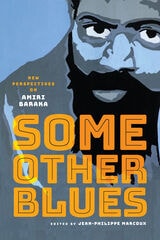
Some Other Blues
New Perspectives on Amiri BarakaEdited by Jean-Philippe Marcoux
The Ohio State University Press, 2021
(Include contributors if space allows) Contributors: Tony Bolden, Jeremy Glick, William J. Harris, Benjamin Lee, Aidan Levy, John Lowney, Jean-Philippe Marcoux, Kim McMillon, Fred Moten, Michael New, Aldon Lynn Nielsen, Amy Abugo Ongiri, Gregory Pierrot, Howard Rambsy II, Emily Ruth Rutter, Anthony Reed, Lauri Scheyer, Kathy Lou Schultz, Michael Simanga, James Smethurst, Laura Vrana, Tyrone Williams, Kalamu ya Salaam.

Some Words of Jane Austen
Stuart M. Tave
University of Chicago Press, 2019

Somebody Else
Arthur Rimbaud in Africa 1880-91Charles Nicholl
University of Chicago Press, 1999
In this compelling biography, Charles Nicholl pieces together the shadowy story of Rimbaud's life as a trader, explorer, and gunrunner in Africa. Following his fascinating journey, Nicholl shows how Rimbaud lived out that mysterious pronouncement of his teenage years: "Je est un autre"—I is somebody else.
"Rimbaud's fear of stasis never left him. 'I should like to wander over the face of the whole world,' he told his sister, Isobelle, 'then perhaps I'd find a place that would please me a little.' The tragedy of Rimbaud's later life, superbly chronicled by Nicholl, is that he never really did."—London Guardian
"Nicholl has excavated a mosaic of semi-legendary anecdotes to show that they were an essential part of the poet's journey to become 'somebody else.' Not quite biography, not quite travel book, in the end Somebody Else transcends both genres."—Sara Wheeler, Daily Telegraph
"At the end of Somebody Else Rimbaud is more interesting and more various than before: he is not less mysterious, but he is more real."—Susannah Clapp, Observer Review
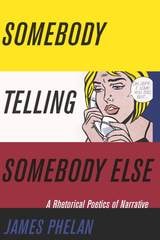
Somebody Telling Somebody Else
A Rhetorical Poetics of NarrativeJames Phelan
The Ohio State University Press, 2017
In doing so, he offers new readings of a wide range of narratives from Jane Austen’s Pride and Prejudice to Joan Didion’s The Year of Magical Thinking, from Joseph Conrad’s Lord Jim to George V. Higgins’s The Friends of Eddie Coyle, from Franz Kafka’s “Das Urteil” to Toni Morrison’s “Recitatif,” from David Small’s Stitches to Jhumpa Lahiri’s “Third and Final Continent,” from John O’Hara’s “Appearances” to Ian McEwan’s Enduring Love. Phelan contends that the standard view of narrative as a synthesis of story and discourse is inadequate to handle the complexities of narrative communication, and he demonstrates the greater explanatory power of his rhetorical view. Furthermore, Phelan gives new prominence to the presence and activity of the “somebody else,” as he shows that an audience’s unfolding responses to a narrative often influence its very construction.

Someone Shot My Book
Julie Carr
University of Michigan Press, 2018
Carr’s essays push past familiar boundaries between the personal/confessional and experimental/conceptual strains in American poetry. Pressing philosophical inquiries into the nature of gender, motherhood, fear, the body, and violence up against readings of twentieth- and twenty-first-century poets, she asks us to consider the political and affective work of poetry in a range of contexts. Carr reports on her own practices, examining her concerns for research and narrative against her investment in lyric, as well as her history as a dancer and her work as curator and publisher. Carr’s breadth of inquiry moves well beyond the page, yet remains grounded in languages possibilities.
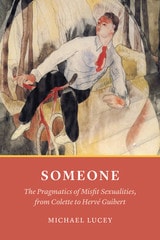
Someone
The Pragmatics of Misfit Sexualities, from Colette to Hervé GuibertMichael Lucey
University of Chicago Press, 2019
In Someone, Michael Lucey considers characters from twentieth-century French literary texts whose sexual forms prove difficult to conceptualize or represent. The characters expressing these “misfit” sexualities gravitate towards same-sex encounters. Yet they differ in subtle but crucial ways from mainstream gay or lesbian identities—whether because of a discordance between gender identity and sexuality, practices specific to a certain place and time, or the fleetingness or non-exclusivity of desire. Investigating works by Simone de Beauvoir, Colette, Jean Genet, and others, Lucey probes both the range of same-sex sexual forms in twentieth-century France and the innovative literary language authors have used to explore these evanescent forms.
As a portrait of fragile sexualities that involve awkward and delicate maneuvers and modes of articulation, Someone reveals just how messy the ways in which we experience and perceive sexuality remain, even to ourselves.
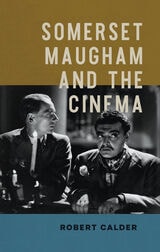
Somerset Maugham and the Cinema
Robert Calder
University of Wisconsin Press, 2024
This study of the famous author explores the relationship between literature and film, what is involved in adaptation, and how best to judge films based on celebrated books. Robert Calder, the world’s leading scholar of Maugham’s work, offers fascinating production histories, insight into both fortunate and misguided casting decisions, shrewd analyses of performances and film techniques, and summaries of public and critical responses. Maugham’s characters were often conflicted, iconoclastic, and morally out of step with their times, which may have accounted for the popularity of his fiction. Most of Maugham’s works could be adapted to satisfy the tastes of moviegoers and the demands of the Hays Office censors, if not the expectations of their author.
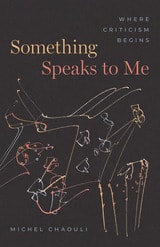
Something Speaks to Me
Where Criticism BeginsMichel Chaouli
University of Chicago Press, 2024
Criticism begins when we put down a book to tell someone about it. It is what we do when we face a work or event that bowls us over and makes us scramble for a response. As Michel Chaouli argues, criticism involves three moments: Something speaks to me. I must tell you about it. But I don’t know how. The heart of criticism, no matter its form, lies in these surges of thoughts and feelings. Criticism arises from the fundamental need to share what overwhelms us.
We tend to associate criticism with scholarship and journalism. But Chaouli is not describing professional criticism, but what he calls “poetic criticism”—a staging ground for surprise, dread, delight, comprehension, and incomprehension. Written in the mode of a philosophical essay, Something Speaks to Me draws on a wide range of writers, artists, and thinkers, from Kant and Schlegel to Merleau-Ponty, Bachelard, Barthes, and Cavell. Reflecting on these dimensions of poetic experience, Something Speaks to Me is less concerned with joining academic debates than communicating the urgency of criticism.
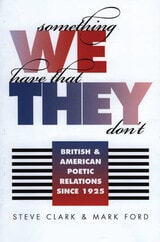
Something We Have That They Don't
British and American Poetic Relations since 1925Steve & Mark Clark & Ford
University of Iowa Press, 2004
(I like the way the English spell it
They’re so clever about some things
Probably smarter generally than we are
Although there is supposed to be something
We have that they don’'t—'don’t ask me
What it is. . . .)
—John Ashbery, “Tenth Symphony”
Something We Have That They Don’t presents a variety of essays on the relationship between British and American poetry since 1925. The essays collected here all explore some aspect of the rich and complex history of Anglo-American poetic relations of the last seventy years. Since the dawn of Modernism poets either side of the Atlantic have frequently inspired each other’s developments, from Frost’s galvanizing advice to Edward Thomas to rearrange his prose as verse, to Eliot’s and Auden’s enormous influence on the poetry of their adopted nations (“whichever Auden is,” Eliot once replied when asked if he were a British or an American poet, “I suppose, I must be the other”); from the impact of Charles Olson and other Black Mountain poets on J. H. Prynne and the Cambridge School, to the widespread influence of Frank O'Hara and Robert Lowell on a diverse range of contemporary British poets. Clark and Ford’s study aims to chart some of the currents of these ever-shifting relations. Poets discussed in these essays include John Ashbery, W. H. Auden, Elizabeth Bishop, T. S. Eliot, Mark Ford, Robert Graves, Thom Gunn, Lee Harwood, Geoffrey Hill, Michael Hofmann, Susan Howe, Robert Lowell, and W. B. Yeats.
“Poetry and sovereignty,” Philip Larkin remarked in an interview of 1982, “are very primitive things”: these essays consider the ways in which even seemingly very “unprimitive” poetries can be seen as reflecting and engaging with issues of national sovereignty and self-interest, and in the process they pose a series of fascinating questions about the national narratives that currently dominate definitions of the British and American poetic traditions.
This innovative and exciting new collection will be of great interest to students and scholars of British and American poetry and comparative literature.
Something and Nothingness
The Fiction of John Updike and John FowlesJohn Neary
Southern Illinois University Press, 1992
John Neary shows that the theological dichotomy of via negativa (which posits the authentic experience of God as absence, darkness, silence) and via affirmativa (which emphasizes presence, images, and the sounds of the earth) is an overlooked key to examining and comparing the works of John Fowles and John Updike.
Drawing on his extensive knowledge of both Christian and secular existentialism within the modern theology of Barth and Levinas and the contemporary critical theory of Derrida and J. Hillis Miller, Neary demonstrates the ultimate affinity of these authors who at first appear such opposites. He makes clear that Fowles’s postmodernist, metafictional experiments reflect the stark existentialism of Camus and Sartre while Updike’s social realism recalls Kierkegaard’s empirical faith in a generous God within a kind of Christian deconstructionism.
Neary’s perception of uncanny similarities between the two authors—whose respective careers are marked by a series of novels that structurally and thematically parallel each other—and the authors’ shared long-term interest in existentialism and theology support both his critical comparison and his argument that neither author is "philosophically more sophisticated nor aesthetically more daring."
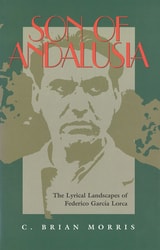
Son of Andalusia
The Lyrical Landscapes of Federico Garcia LorcaC. Brian Morris
Vanderbilt University Press, 1997
Andalusia was the central feature and influence in the life and writings of the twentieth-century author, musician, and artist, Federico Garcia Lorca. Rooted in his native region, which both captivated and shaped him, Lorca maintained that "The better a writer learns how to interpret the landscape, the greater the artist he will be." Blessed with an acute historical sense of a region where the past is both present and enduring, Lorca proved himself sensitive and articulate enough to interpret "the emotion of the landscape" in all of his creative work.
For Lorca, Andalusia was a landscape not only of place but of people. Through exhaustive research and painstaking readings in a wide range of anthologies of Andalusian folk culture and collections of popular verse, author C. Brian Morris reveals how Lorca transformed and veiled real people and real places in his poetry and drama. Exploring subjects ranging from medieval ballads to flower and plant lore, he further investigates the relationship between Lorca and the writings of other Andalusian-born authors, as well as traditional Andalusian poetry and song. Juxtaposing this material with well-chosen quotations from Lorca's works, Morris provides myriad examples of analogy and reminiscence that will inform and enlighten both general readers and Lorca specialists.
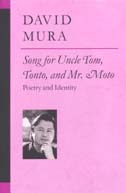
Song for Uncle Tom, Tonto, and Mr. Moto
Poetry and IdentityDavid Mura
University of Michigan Press, 2002
Mura's writings recently have been at the center of various debates concerning race and literary standards. In this book, he argues the need for a more complicated and diverse set of literary standards than the canon has previously allowed, an opening up to the many voices that are "great within us." He contends that, when placed against a gathering awareness of a world literature, particularly in the so-called Third World, the boundaries of the traditional Anglo-American canon and its present-day proponents like Harold Bloom come to be seen as too narrow and parochial, reenacting the "tribal" label that many throw now at the advocates of multiculturalism.
Beyond its theoretical underpinnings, Song for Uncle Tom, Tonto, and Mr. Moto charts the wayward course of Mura's own development as a poet. In three interviews, Mura provides readings of his own work and discusses various issues of technique and form.
David Mura is a poet, memoirist, essayist, playwright, writer of fiction, performance artist, and literary critic. He is author of The Colors of Desire, After We Lost Our Way, and Turning Japanese: Memoirs of a Sansei.
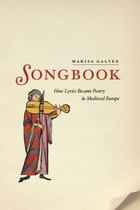
Songbook
How Lyrics Became Poetry in Medieval EuropeMarisa Galvez
University of Chicago Press, 2012
Today we usually think of a book of poems as composed by a poet, rather than assembled or adapted by a network of poets and readers. But the earliest European vernacular poetries challenge these assumptions. Medieval songbooks remind us how lyric poetry was once communally produced and received—a collaboration of artists, performers, live audiences, and readers stretching across languages and societies.
The only comparative study of its kind, Songbook treats what poetry was before the emergence of the modern category “poetry”: that is, how vernacular songbooks of the thirteenth to fifteenth centuries shaped our modern understanding of poetry by establishing expectations of what is a poem, what is a poet, and what is lyric poetry itself. Marisa Galvez analyzes the seminal songbooks representing the vernacular traditions of Occitan, Middle High German, and Castilian, and tracks the process by which the songbook emerged from the original performance contexts of oral publication, into a medium for preservation, and, finally, into an established literary object. Galvez reveals that songbooks—in ways that resonate with our modern practice of curated archives and playlists—contain lyric, music, images, and other nonlyric texts selected and ordered to reflect the local values and preferences of their readers. At a time when medievalists are reassessing the historical foundations of their field and especially the national literary canons established in the nineteenth century, a new examination of the songbook’s role in several vernacular traditions is more relevant than ever.
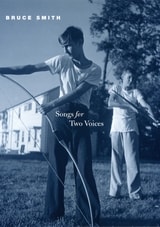
Songs for Two Voices
Bruce Smith
University of Chicago Press, 2004
As Smith's speakers wander through the detritus of American materialism-encountering jazz, football, drag, class war, Reaganomics, and Vietnam-the poems dramatize the contradictions and peculiarities of growing up male in Cold War America, both sensing promise and suffering disillusion.
Each poem here speaks in two voices: one that attacks and one that cowers, one voice that leads while the other follows. But Smith's subjects are unencumbered by form, and their voices blossom in duet: the idealized lover is also a betrayer, the man is also a girl. These binaries of statement and contradiction give birth to a third voice in the unrealized possibilities of the two.
A mesmerizing follow-up to 2000's The Other Lover, Smith's Songs for Two Voices is carnal yet fiercely intellectual, laid out with the self-confidence of a poet who can invoke Mozart and Coltrane, Anna Akhmatova and John Wayne, Teddy Roosevelt and Augustine in the same incendiary breath.
Songs of Degrees
Essays on Contemporary Poetry and PoeticsJohn Taggart
University of Alabama Press, 1994
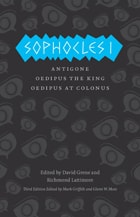
Sophocles I
The Theban Plays: Antigone, Oedipus the King, Oedipus at ColonusEdited and Translated by Mark Griffith, Glenn W. Most, David Grene, and Richmond Lattimore
University of Chicago Press, 2013
Sophocles I contains the plays “Antigone,” translated by Elizabeth Wyckoff; “Oedipus the King,” translated by David Grene; and “Oedipus at Colonus,” translated by Robert Fitzgerald.
Many years ago, the University of Chicago Press undertook a momentous project: a new translation of the Greek tragedies that would be the ultimate resource for teachers, students, and readers. They succeeded. Under the expert management of eminent classicists David Grene and Richmond Lattimore, those translations combined accuracy, poetic immediacy, and clarity of presentation to render the surviving masterpieces of Aeschylus, Sophocles, and Euripides in an English so lively and compelling that they remain the standard translations. The updated third editions of these classic works were designed to ensure that our Greek tragedies remain the leading English-language versions throughout the twenty-first century.
In this highly anticipated third edition, Mark Griffith and Glenn W. Most have carefully updated the translations to bring them even closer to the ancient Greek while retaining the vibrancy for which our English versions are famous. This edition also includes brand-new translations of Euripides’ Medea, The Children of Heracles, Andromache, and Iphigenia among the Taurians, fragments of lost plays by Aeschylus, and the surviving portion of Sophocles’s satyr-drama The Trackers. New introductions for each play offer essential information about its first production, plot, and reception in antiquity and beyond. In addition, each volume includes an introduction to the life and work of its tragedian, as well as notes addressing textual uncertainties and a glossary of names and places mentioned in the plays.
In addition to the new content, the volumes have been reorganized both within and between volumes to reflect the most up-to-date scholarship on the order in which the plays were originally written. The result is a set of handsome paperbacks destined to introduce new generations of readers to these foundational works of Western drama, art, and life.
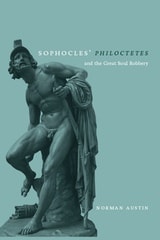
Sophocles' Philoctetes and the Great Soul Robbery
Norman Austin
University of Wisconsin Press, 2011
Norman Austin brings both keen insight and a life-long engagement with his subject to this study of Sophocles’ late tragedy Philoctetes, a fifth-century BCE play adapted from an infamous incident during the Trojan War. In Sophocles’ “Philoctetes” and the Great Soul Robbery, Austin examines the rich layers of text as well as context, situating the play within the historical and political milieu of the eclipse of Athenian power. He presents a study at once of interest to the classical scholar and accessible to the general reader. Though the play, written near the end of Sophocles’ career, is not as familiar to modern audiences as his Theban plays, Philoctetes grapples with issues—social, psychological, and spiritual—that remain as much a part of our lives today as they were for their original Athenian audience.
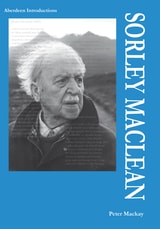
Sorley MacLean
Peter Mackay
Aberdeen University Press, 2010
Sound Objects
James A. Steintrager and Rey Chow, editors
Duke University Press, 2019
Contributors. Georgina Born, Michael Bull, Michel Chion, Rey Chow, John Dack, Veit Erlmann, Brian Kane, Jairo Moreno, John Mowitt, Pooja Rangan, Gavin Steingo, James A. Steintrager, Jonathan Sterne, David Toop
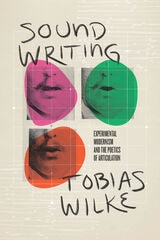
Sound Writing
Experimental Modernism and the Poetics of ArticulationTobias Wilke
University of Chicago Press, 2022
Avant-garde writers and artists of the twentieth century radically reconceived poetic language, appropriating scientific theories and techniques as they turned their attention to the physical process of spoken language. This modernist “sound writing” focused on the bodily production of speech, which it rendered in poetic, legible, graphic form.
Modernist sound writing aims to capture the acoustic phenomenon of vocal articulation by graphic means. Tobias Wilke considers sound writing from its inception in nineteenth-century disciplines like physiology and experimental phonetics, following its role in the aesthetic practices of the interwar avant-garde and through to its reemergence in the postwar period. These projects work with the possibility of crossing over from the audible to the visible, from speech to notation, from body to trace. Employing various techniques and concepts, this search for new possibilities played a central role in the transformation of poetry into a site of radical linguistic experimentation. Considering the works of writers and artists—including Raoul Hausmann, Kurt Schwitters, Viktor Shklovsky, Hugo Ball, Charles Olson, and Marshall McLuhan—Wilke offers a fresh look at the history of the twentieth-century avant-garde.
Sound and Form in Modern Poetry
A Study of Prosody from Thomas Hardy to Robert LowellHarvey Gross
University of Michigan Press, 1964
Sound and Form in Modern Poetry
Second EditionHarvey Gross and Robert McDowell
University of Michigan Press, 1996
Poet, critic, and editor Robert McDowell has updated this classic text in the light of the poetic and critical developments of the last three decades. Segments on Dickinson, Robinson, Frost, Jeffers, and Lowell, among other poets, have been greatly expanded, and Ashbery, Creeley, Ginsberg, Hall, Kees, Kumin, Levertov, Levine, O'Hara, Plath, Rich, Simpson, and Wilbur added, among others. The epilogue discusses a new generation of poets whose works will likely be read well into the next century-- among others, Thomas M. Disch, Rita Dove, Dana Gioia, Emily Grosholz, Mark Jarman, Molly Peacock, Gjertrud Schnackenberg, Timothy Steele, Mary Swander, and Marilyn Nelson Waniek.
Over the last ten years, the most inspiring topic of conversation and argument among poets and their readers has been the resurgence of narrative and traditional forms. The new Sound and Form in Modern Poetry is a seminal text in this discussion, examining not only this movement but all of the important developments (Dadaism, Surrealism, Imagism, Language Poetry, and the Confessional School) that have defined our poetry in the twentieth century and have set the stage for poetry's continued life in the twenty-first. The original Sound and Form in Modern Poetry enjoyed extensive classroom use as a text; the revised version promises to be even more accessible, and more essential, for years to come.
The late Harvey Gross was Professor of Comparative Literature, State University of New York at Stony Brook.
Robert McDowell is publisher and editor of Story Line Press, and is also poet, critic, translator, fiction writer, and essayist.
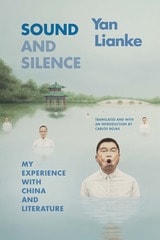
Sound and Silence
My Experience with China and LiteratureYan Lianke
Duke University Press, 2024
Sounding Off
Rhythm, Music, and Identity in West African and Caribbean Francophone NovelsJulie Huntington
Temple University Press, 2009
Huntington’s analysis shows how these writers and others challenge the aesthetic and political conventions that privilege written texts over orality and invite readers-listeners to participate in critical dialogues—to sound off, as it were, in local and global communities.
Sounding Real
Musicality and American Fiction at the Turn of the Twentieth CenturyCristina L. Ruotolo
University of Alabama Press, 2013
South Africa and the Dream of Love to Come
Queer Sexuality and the Struggle for FreedomBrenna M. Munro
University of Minnesota Press, 2012
After apartheid, South Africa established a celebrated new political order that imagined the postcolonial nation as belonging equally to the descendants of indigenous people, colonizing settlers, transported slaves, indentured laborers, and immigrants. Its constitution, adopted in 1996, was the first in the world to include gays and lesbians as full citizens. Brenna M. Munro examines the stories that were told about sexuality, race, and nation throughout the struggle against apartheid in order to uncover how these narratives ultimately enabled gay people to become imaginable as fellow citizens. She also traces how the gay, lesbian, or bisexual person appeared as a stock character in the pageant of nationhood during the transition to democracy. In the process, she offers an alternative cultural history of South Africa.
Munro asserts that the inclusion of gay people made South Africans feel “modern”—at least for a while. Being gay or being lesbian was reimagined in the 1990s as distinctly South African, but the “newness” that made these sexualities apt symbols for a transformed nation can also be understood as foreign and un-African. Indeed, a Western-style gay identity is often interpreted through the formula “gay equals modernity equals capitalism.” As South Africa’s reentrance into the global economy has failed to bring prosperity to the majority of its citizens, homophobic violence has been on the rise.
Employing a wide array of texts—including prison memoirs, poetry, plays, television shows, photography, political speeches, and the postapartheid writings of Nobel Laureates Nadine Gordimer and J. M. Coetzee—Munro reports on how contemporary queer activists and artists are declining to remain ambassadors for the “rainbow nation” and refusing to become scapegoats for the perceived failures of liberation and liberalism.