Results by title
239 books match the query 'Agriculture' and 49 start with t
Technology and Place
Sustainable Architecture and the Blueprint FarmBy Steven A. Moore
University of Texas Press, 2001
Developing "sustainable" architectural and agricultural technologies was the intent behind Blueprint Farm, an experimental agricultural project designed to benefit farm workers displaced by the industrialization of agriculture in the Rio Grande Valley of Texas. Yet, despite its promise, the very institutions that created Blueprint Farm terminated the project after just four years (1987-1991).
In this book, Steven Moore demonstrates how the various stakeholders' competing definitions of "sustainability," "technology," and "place" ultimately doomed Blueprint Farm. He reconstructs the conflicting interests and goals of the founders, including Jim Hightower and the Texas Department of Agriculture, Laredo Junior College, and the Center for Maximum Potential Building Systems, and shows how, ironically, they unwittingly suppressed the self-determination of the very farm workers the project sought to benefit. From the instructive failure of Blueprint Farm, Moore extracts eight principles for a regenerative architecture, which he calls his "nonmodern manifesto."
Tending the Garden State
Preserving Agriculture in New JerseyHarrison, Charles
Rutgers University Press, 2006
Early in the nineteenth century, an army colonel stood before a crowd at the Salem County Courthouse and ate buckets of tomatoes to prove that they were not poisonous. Ever since, the red vegetable of summer has played a starring role in New Jersey’s history. Although today visitors to the state are more likely to see smoke-spewing factories than acres of farmland or grazing cattle, the state’s legacy of agriculture and farming continues, and extends far beyond the popular Jersey tomato.
In Tending the Garden State, Charles Harrison tells the story of the state’s rich agricultural history from the time when Leni-Lenape Indians scratched the earth with primitive tools up through today. He recalls New Jersey’s rural past, traces the evolution of farming over the course of the twentieth century, and explains innovative approaches to protecting the industry.
Drawing on interviews with farmers, as well as researchers, professional planners, designers, and architects, Harrison discovers that despite the discouraging spread of suburban sprawl, the Garden State’s farming legacy is not as endangered as it may seem. Many residents care deeply about preserving New Jersey’s agricultural industry and are making great strides to keep the tradition alive for future generations. Some of these protective measures include new laws that encourage the conservation of land and research devoted to helping farmers make the most of their limited acreage. Innovative techniques such as high-tunnel farming, together with the growth of some very profitable farm specializations, such as turf grass, aquaculture, horticulture, and wine making, will enable farmers to remain active and successful in the state’s oldest industry.
Anyone interested in New Jersey’s history or, more broadly, in the history of American agriculture, will be delighted by Harrison’s engaging and readable account of farming in the Garden State.

The Agrarian Question Volume 1
Karl Kautsky
Pluto Press, 1988
Lenin described The Agrarian Question as the first systematic Marxist study of capitalism and agriculture and the most important event in economic literature since the third volume of Capital. This great work is regarded as Kautsky's main achievement and is a classic work of analysis.
Kautsky's pariah status in the eyes of revolutionary Marxists resulted in many years of neglect, but his role and work are now commanding great attention. The analysis of the transformation of peasant economies by capital in The Agrarian Question is now seen as particularly relevant to contemporary Third World peasant economies.
This remarkable translation, which brings out the humanity - and the humour - in Kautksy's writing, is more than a work of economic analysis: in a manner ahead of his time, Kautsky integrates questions of political strategy, ecology, sexuality and the family.
The illuminating reassessment of The Agrarian Question in the introduction by Professor Teodor Shanin and Hamza Alavi examines in detail the political context, Kautsky's own life, the development of Kautsky's ideas within the work, and its contribution to our understanding of the world today. This timely re-evaluation of Kautsky's significance is long overdue.
The Agrarian Question Volume 2
Karl Kautsky
Pluto Press, 1988
Lenin described The Agrarian Question as the first systematic Marxist study of capitalism and agriculture and the most important event in economic literature since the third volume of Capital. This great work is regarded as Kautsky's main achievement and is a classic work of analysis.
Kautsky's pariah status in the eyes of revolutionary Marxists resulted in many years of neglect, but his role and work are now commanding great attention. The analysis of the transformation of peasant economies by capital in The Agrarian Question is now seen as particularly relevant to contemporary Third World peasant economies.
This remarkable translation, which brings out the humanity - and the humour - in Kautksy's writing, is more than a work of economic analysis: in a manner ahead of his time, Kautsky integrates questions of political strategy, ecology, sexuality and the family.
The illuminating reassessment of The Agrarian Question in the introduction by Professor Teodor Shanin and Hamza Alavi examines in detail the political context, Kautsky's own life, the development of Kautsky's ideas within the work, and its contribution to our understanding of the world today. This timely re-evaluation of Kautsky's significance is long overdue.

The Agrarian Roots of Pragmatism
Paul B. Thompson
Vanderbilt University Press, 2000
Today, most historians, philosophers, political theorists, and scholars of rural America take a dim view of the agrarian ideal that farmers and farming occupy a special moral and political status in society. Agrarian rhetoric is generally seen as special pleading on the part of farmers seeking protection from labor reform and environmental regulation while continuing to receive direct payments and subsidies from the public till.
Agrarianism should not be viewed as a set of immutable claims about farming and political order, but as a tradition of moral and political philosophy that has evolved and deepened over the centuries. Agrarian naturalism--the belief that culture and conduct are conditioned by nature because they are of a piece with nature--becomes pragmatic naturalism, giving way to a new set of puzzles about how we are to understand the rural landscape and our responsibilities for its use. The agrarian idea that personality and sociability are integrated with the material transformation of the landscape can serve as the basis for a new, pragmatically grounded ethic of natural resources and rural development.
The essays in this volume critically analyze and revitalize agrarian philosophy by tracing its evolution in the classical American philosophy of key figures such as Franklin, Jefferson, Emerson, Thoreau, Dewey, and Royce. Three chapters address the belief that farming peoples develop moral virtue and a taste for democracy as it evolved in the American context, and four examine how a reconstitution of agrarian themes might invigorate our nation's thinking on environment, food, and rural development policy.
The Agrarian Roots of Pragmatism will be of broad interest to scholars of American philosophy, rural history, history of ideas, geography, and agricultural or natural resource policy.
The Behavioral Ecology of Efe Pygmy Men in the Ituri Forest, Zaire
Robert C. Bailey
University of Michigan Press, 1991

The Big Empty
The Great Plains in the Twentieth CenturyR. Douglas Hurt
University of Arizona Press, 2011
Using the voices of women homesteaders, agrarian socialists, Jewish farmers, Mexican meatpackers, New Dealers, and Native Americans, this book creates a sweeping survey of contested race relations, radical politics, and agricultural prosperity and decline during the twentieth century. This narrative shows that even though Great Plains history is fraught with personal and group tensions, violence, and distress, the twentieth century also brought about compelling social, economic, and political change.
The only book of its kind, this account will be of interest to historians studying the region and to anyone inspired by the story of the men and women who found an opportunity for a better life in the Great Plains.

The Broken Hoe
Cultural Reconfiguration in Biase Southeast NigeriaDavid Uru Iyam
University of Chicago Press, 1995
The Biase today face social and economic pressures that seriously strain their ability to cope with the realities of modern Nigeria. Iyam, an anthropologist and a Biase, examines the relationship between culture and development as played out in projects in local communities.
Western technologies and beliefs alone cannot ensure economic growth and modernization, Iyam shows, and should not necessarily be imposed on poor rural groups who may not be prepared to incorporate them; neither, however, is it possible to recover indigenous coping strategies given the complexities of the postcolonial world. A successful development strategy, Iyam argues, needs to strengthen local managerial capacity, and he offers suggestions as to how this can be done in a range of cultural and social settings.

The Buffalo Book
The Full Saga Of The American AnimalDavid A. Dary
Ohio University Press, 1989
The Business of Racism
Labor and Environment in Brazil's Racial CapitalismIan Carrillo
Duke University Press, 2026
The Cassava Transformation
Africa's Best-Kept SecretFelix I. Nweke
Michigan State University Press, 2002
Cassava is Africa's "poverty fighter" and second most important food crop. This book discusses Cassava's real role and traces research over the past 65 years. The "Cassava transformation" that is now underway in Africa has changed this traditional, reserve crop to a high-yield cash crop. However, Cassava is being neglected by governments and donor agencies because of myths and half-truths about its nutritional value and role in farm systems.
The Collectivization of Agriculture in Communist Eastern Europe
Comparison and EntanglementsConstantin Iordachi
Central European University Press, 2014
The Contradictions of Neoliberal Agri-Food
Corporations, Resistance, and Disasters in JapanKae Sekine
West Virginia University Press, 2016
Sekine and Bonanno stress the incompatibility of the requirements of neoliberalism with the structural and cultural conditions of Japanese agri-food. Local farmers’ and fishermen’s emphasis on community collective management of natural resources, they argue, clashes with neoliberalism’s focus on individualism and competitiveness. The authors conclude by pointing out the resulting fundamental contradiction: The lack of recognition of this incompatibility allows the continuous implementation of market solutions to problems that originate in these very market mechanisms.
The Depression Dilemmas of Rural Iowa, 1929-1933
Lisa L. Ossian
University of Missouri Press, 2012
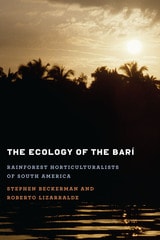
The Ecology of the Barí
Rainforest Horticulturalists of South AmericaBy Stephen Beckerman and Roberto Lizarralde
University of Texas Press, 2013
Inhabiting the rainforest of the southwest Maracaibo Basin, split by the border between Colombia and Venezuela, the Barí have survived centuries of incursions. Anthropologist Roberto Lizarralde began studying the Barí in 1960, when he made the first modern peaceful contact with this previously unreceptive people; he was joined by anthropologist Stephen Beckerman in 1970. The Ecology of the Barí showcases the findings of their singular long-term study.
Detailing the Barí’s relations with natural and social environments, this work presents quantitative subsistence data unmatched elsewhere in anthropological publications. The authors’ lengthy longitudinal fieldwork provided the rare opportunity to study a tribal people before, during, and after their aboriginal patterns of subsistence and reproduction were eroded by the modern world. Of particular interest is the book’s exploration of partible paternity—the widespread belief in lowland South America that a child can have more than one biological father. The study illustrates its quantitative findings with an in-depth biographical sketch of the remarkable life of an individual Barí woman and a history of Barí relations with outsiders, as well as a description of the rainforest environment that has informed all aspects of Barí history for the past five hundred years. Focusing on subsistence, defense, and reproduction, the chapters beautifully capture the Barí’s traditional culture and the loss represented by its substantial transformation over the past half-century.
The Economics of Agriculture, Volume 1
Selected Papers of D. Gale JohnsonEdited by John M. Antle and Daniel A. Sumner
University of Chicago Press, 1995
Volume 1 collects for the first time in one source Johnson's most important work. These classic papers explore the consequences of government intervention in United States and world agriculture; the economics of agricultural supply and of rural labor and human capital issues; and the analysis of agricultural productivity in poor countries, including the centrally planned economies of China and Eastern Europe. Models of precise reasoning and powerful empirical research, the papers cover a wide range of topics—from U.S. commodity price policy to the economics of population control and farm policy reform in China. Volume 1 includes a definitive bibliography of Johnson's published writings.
Volume 2 presents twenty-two papers by Johnson's former students and colleagues. International in scope, these papers explore themes and topics inspired by Johnson's work, including agricultural policy and U.S. farm prices; European Common Agricultural Policy; and agricultural and rural development in the Third World. Contributors to Volume 2 are David G. Abler, John M. Antle, Richard R. Barichello, Andrew P. Barkley, Karen Brooks, David S. Bullock, Robert E. Evenson, B. Delworth Gardner, Bruce L. Gardner, Dale M. Hoover, Wallace E. Huffman, Paul R. Johnson, Yoav Kislev, Justin Yifu Lin, Yair Mundlak, John Nash, Keijuro Otsuka, Willis Peterson, Todd E. Petzel, Vernon W. Ruttan, Maurice Schiff, G. Edward Schuh, Theodore W. Schultz, James Snyder, Vasant Sukhatme, Daniel A. Sumner, Vinod Thomas, George Tolley, and Alberto Valdes.
The Economics of Agriculture, Volume 2
Papers in Honor of D. Gale JohnsonEdited by John M. Antle and Daniel A. Sumner
University of Chicago Press, 1995
Volume 1 collects for the first time in one source Johnson's most important work. These classic papers explore the consequences of government intervention in United States and world agriculture; the economics of agricultural supply and of rural labor and human capital issues; and the analysis of agricultural productivity in poor countries, including the centrally planned economies of China and Eastern Europe. Models of precise reasoning and powerful empirical research, the papers cover a wide range of topics—from U.S. commodity price policy to the economics of population control and farm policy reform in China. Volume 1 includes a definitive bibliography of Johnson's published writings.
Volume 2 presents twenty-two papers by Johnson's former students and colleagues. International in scope, these papers explore themes and topics inspired by Johnson's work, including agricultural policy and U.S. farm prices; European Common Agricultural Policy; and agricultural and rural development in the Third World. Contributors to Volume 2 are David G. Abler, John M. Antle, Richard R. Barichello, Andrew P. Barkley, Karen Brooks, David S. Bullock, Robert E. Evenson, B. Delworth Gardner, Bruce L. Gardner, Dale M. Hoover, Wallace E. Huffman, Paul R. Johnson, Yoav Kislev, Justin Yifu Lin, Yair Mundlak, John Nash, Keijuro Otsuka, Willis Peterson, Todd E. Petzel, Vernon W. Ruttan, Maurice Schiff, G. Edward Schuh, Theodore W. Schultz, James Snyder, Vasant Sukhatme, Daniel A. Sumner, Vinod Thomas, George Tolley, and Alberto Valdes.
The Economics of Food Price Volatility
Edited by Jean-Paul Chavas, David Hummels, and Brian D. Wright
University of Chicago Press, 2014
The researchers who contributed to The Economics of Food Price Volatility address these and other questions. They examine the forces driving both recent and historical patterns in food price volatility, as well as the effects of various public policies in affecting this volatility. The chapters include studies of the links between food and energy markets, the impact of biofuel policy on the level and variability of food prices, and the effects of weather-related disruptions in supply. The findings shed light on the way price volatility affects the welfare of farmers, traders, and consumers.
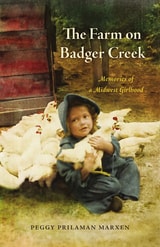
The Farm on Badger Creek
Memories of a Midwest GirlhoodPeggy Prilaman Marxen
Wisconsin Historical Society Press, 2021
The Fire Ant Wars
Nature, Science, and Public Policy in Twentieth-Century AmericaJoshua Blu Buhs
University of Chicago Press, 2004
With political intrigue, environmental tragedy, and such figures as Rachel Carson and E. O. Wilson, The Fire Ant Wars is a grippingly perceptive tale of changing social attitudes and scientific practices. Tracing the political and scientific eradication campaigns, Joshua Buhs's bracing study uses the saga as a means to consider twentieth-century American concepts of nature and environmental stewardship. In telling the story, Buhs explores how human concepts of nature evolve and how these ideas affect the natural and social worlds.
Spotlighting a particular issue to discuss larger questions of science, public perceptions, and public policy—from pre-environmental awareness to the activist years of the early environmental movement—The Fire Ant Wars will appeal to historians of science, environmentalists, and biologists alike.

The Fundamental Institution
Poverty, Social Welfare, and Agriculture in American Poor FarmsMegan Birk
University of Illinois Press, 2022
In-depth and innovative, The Fundamental Institution offers an overdue portrait of rural social welfare in the United States.
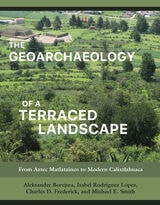
The Geoarchaeology of a Terraced Landscape
From Aztec Matlatzinco to Modern CalixtlahuacaAleksander Borejsza, Isabel Rodríguez López, Charles D. Frederick, and Michael E. Smith
University of Utah Press, 2021
Working at a settlement in the Toluca Valley of central Mexico, the authors used fieldwalking, excavation, soil and artifact analyses, maps, aerial photos, land deeds, and litigation records to reconstruct the changing landscape through time. Exploiting the methodologies and techniques of several disciplines, they bring context to eight centuries of the region’s agrarian history, exploring the effects of the Aztec and Spanish Empires, reform, and revolution on the physical shape of the Mexican countryside and the livelihoods of its people. Accessible to specialists and nonspecialists alike, this well-illustrated and well-organized volume provides a step-by-step guide that can be applied to the study of terraced landscapes anywhere in the world.
The four authors share an interest in terraced landscapes and have worked together and on their own on a variety of archaeological projects in Mesoamerica, the Mediterranean, Poland, and the United Kingdom.

The Ground at My Feet
Sustaining a Family and a ForestAnn Stinson
Oregon State University Press, 2021
The Ground at My Feet is a memoir about loss and grief as well as a portrait of a family, a region, and an industry. Combining personal story and research, Stinson weaves essays, poems, history, and science into a rich and layered account of life in a family forest in the Pacific Northwest. She maps interactions between the land and its people over two centuries: the Cowlitz peoples, homesteaders, and several generations of logging families who have worked the property. She follows her family’s logs as they become lumber for fence boards and suburban homes, touring a local cedar mill and traveling with her father to visit mills in Japan.
Stinson adds a landowner’s voice to conversations about the human tendency to demand more of the land than it can sustain. With its uniquely personal view of the Pacific Northwest’s timber and forestry heritage, The Ground at My Feet is an engaging addition to the literature of the landscape and ecology of the West.
The Intended and Unintended Effects of U.S. Agricultural and Biotechnology Policies
Edited by Joshua S. Graff Zivin and Jeffrey M. Perloff
University of Chicago Press, 2012
Using economic models and empirical analysis, this volume examines a wide range of agricultural and biofuel policy issues and their effects on American agricultural and related agrarian insurance markets. Beginning with a look at the distribution of funds by insurance programs—created to support farmers but often benefiting crop processors instead—the book then examines the demand for biofuel and the effects of biofuel policies on agricultural price uncertainty. Also discussed are genetically engineered crops, which are assuming an increasingly important role in arbitrating tensions between energy production, environmental protection, and the global food supply. Other contributions discuss the major effects of genetic engineering on worldwide food markets. By addressing some of the most challenging topics at the intersection of agriculture and biotechnology, this volume informs crucial debates.
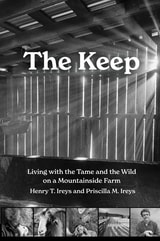
The Keep
Living with the Tame and the Wild on a Mountainside FarmHenry T. Ireys
West Virginia University Press, 2025
Written separately by wife and husband with distinctly separate voices, the book’s essays illustrate different perspectives of life on a farm dedicated to the compassionate treatment of livestock and a deep appreciation of nature’s complexities. Priscilla embraces the intensity of loving animals; Henry explores the mysteries of living in a beautiful place. And, in telling their tales, the authors provide a glimpse into their own marriage—as complicated, improbable, and enduring as life itself. The Keep—the term for “the strongest or central tower of a castle, acting as a final refuge”—is a love letter to an unexpected place and adopted lifestyle.
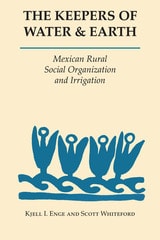
The Keepers of Water and Earth
Mexican Rural Social Organization and IrrigationBy Kjell I. Enge and Scott Whiteford
University of Texas Press, 1989
Agrarian reforms transformed the Mexican countryside in the late twentieth century but without, in many cases, altering fundamental power relationships. This study of the Tehuacán Valley in the state of Puebla highlights different strategies to manipulate the local implementation of federal government programs. With their very differing successes in the struggle to regain and maintain control of land and water rights, these strategies raise important questions about the meaning of the phrase "locally controlled development."
Because Mexico is dependent on irrigation for 45 percent of its cash crop production, national policy has focused on developing vast government controlled and financed irrigation systems. In the Tehuacán Valley, however, the inhabitants have developed a complex irrigation system without government aid or supervision. Yet, in contrast to most parts of Mexico, water rights can be bought and sold as a commodity, leading to accumulation, stratification, and emergence of a regional elite whose power is based on ownership of land and water. The analysis provides an important contribution to the understanding of local control.
The findings of this study will be important to a wide audience involved in the study of irrigation, local agricultural systems, and the interplay between local power structures and the national government in developing countries. The book also presents unique material on gravity-fed, horizontal wells, known as qanat in the Middle East, which had been unknown in the literature on Latin America before this book.
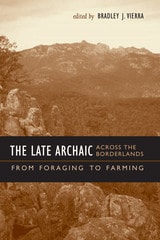
The Late Archaic across the Borderlands
From Foraging to FarmingEdited by Bradley J. Vierra
University of Texas Press, 2005
Why and when human societies shifted from nomadic hunting and gathering to settled agriculture engages the interest of scholars around the world. One of the most fruitful areas in which to study this issue is the North American Southwest, where Late Archaic inhabitants of the Sonoran and Chihuahuan Deserts of Mexico, Arizona, and New Mexico turned to farming while their counterparts in Trans-Pecos and South Texas continued to forage. By investigating the environmental, biological, and cultural factors that led to these differing patterns of development, we can identify some of the necessary conditions for the rise of agriculture and the corresponding evolution of village life.
The twelve papers in this volume synthesize previous and ongoing research and offer new theoretical models to provide the most up-to-date picture of life during the Late Archaic (from 3,000 to 1,500 years ago) across the entire North American Borderlands. Some of the papers focus on specific research topics such as stone tool technology and mobility patterns. Others study the development of agriculture across whole regions within the Borderlands. The two concluding papers trace pan-regional patterns in the adoption of farming and also link them to the growth of agriculture in other parts of the world.

The Making of the Northwest Forest Plan
The Wild Science of Saving Old Growth EcosystemsK. Norman Johnson
Oregon State University Press, 2023
Tree sitters. Logger protests. Dying timber towns. An iconic species on the brink. The Timber Wars consumed the Pacific Northwest in the late 1980s and early1990s and led political leaders to ask scientists for a solution. The Northwest Forest Plan was the result.
For most of the twentieth century, the central theme of federal forest management in the Pacific Northwest had been logging old-growth forests to provide a sustained yield of timber. During the 1970s and 1980s, however, a series of studies by young scientists highlighted the destructive impact of that logging on northern spotted owls, salmon, and the old-growth ecosystem itself.
Combining this new science with newly minted environmental laws like the Endangered Species Act, environmental activists obtained court injunctions to stop old-growth logging on federal land, setting off a titanic struggle in the Pacific Northwest to find a way to accommodate conservation imperatives as well as the logging that provided employment for tens of thousands of people. That effort involved years of controversy and debate, federal courts, five science assessments, Congress, and eventually the president of the United States. It led to creation of the Northwest Forest Plan, which sharply and abruptly shifted the primary goal of federal forestry toward conserving the species and ecosystems of old-growth forests. Scientists went from spectators to planners and guides, employing their latest scientific findings and expertise to create a forest plan for 20 million acres that would satisfy the courts. The largest upheaval in federal forest management in history had occurred, along with a precipitous decline in timber harvest, and there was no going back.
In this book, three of the scientists who helped craft that change tell the story as they know it: the causes, development, adoption, and implementation of the Northwest Forest Plan. The book also incorporates personal reflections from the authors, short commentaries and histories from key figures— including spotted owl expert Eric Forsman—and experiences from managers who implemented the Plan as best they could. Legal expert Susan Jane M. Brown helped interpret court cases and Debora Johnson turned spatial data into maps. The final chapters cover the Plan’s ongoing significance and recommendations for conserving forest and aquatic ecosystems in an era of megafires and climate change.
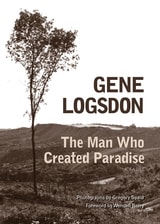
The Man Who Created Paradise
A FableGene Logsdon
Ohio University Press, 2001
Gene Logsdon’s The Man Who Created Paradise is a message of hope at a time when the very concept of earth stewardship is under attack. The fable, inspired by a true story, tells how Wally Spero looked at one of the bleakest places in America—a raw and barren strip-mined landscape—and saw in it his escape from the drudgery of his factory job. He bought an old bulldozer and used the machine to carve patiently, acre by acre, a beautiful little farm out of a seemingly worthless wasteland.
Wally’s story is a charming distillation of the themes that the late, beloved Gene Logsdon returned to again and again in his many books and hundreds of articles. Environmental restoration is the task of our time. The work of healing our land begins in our own backyards and farms, in our neighborhoods and our regions. Humans can turn the earth into a veritable paradise—if they really want to.
Noted photographer Gregory Spaid retraced the trail that Logsdon traveled when he was inspired to write The Man Who Created Paradise. His photographs evoke the same yearning for wholeness, for ties to land and community, that infuses the fable’s poetic prose.
The Marana Community in the Hohokam World
Suzanne K. Fish
University of Arizona Press, 1992
The Nature of the Future
Agriculture, Science, and Capitalism in the Antebellum NorthEmily Pawley
University of Chicago Press, 2020
The nostalgic mist surrounding farms can make it hard to write their history, encrusting them with stereotypical rural virtues and unrealistically separating them from markets, capitalism, and urban influences. The Nature of the Future dispels this mist, focusing on a place and period of enormous agricultural vitality—antebellum New York State—to examine the largest, most diverse, and most active scientific community in nineteenth-century America. Emily Pawley shows how “improving” farmers practiced a science where conflicting visions of the future landscape appeared and evaporated in quick succession. Drawing from US history, environmental history, and the history of science, and extensively mining a wealth of antebellum agricultural publications, The Nature of the Future reveals how improvers transformed American landscapes and American ideas of expertise, success, and exploitation from the ground up.
The Origins of Agriculture
An International PerspectiveEdited by C. Wesley Cowan and Patty Jo Watson
University of Alabama Press, 2006
The eight case studies in this book -- each a synthesis of available knowledge about the origins of agriculture in a specific region of the globe -- enable scholars in diverse disciplines to examine humanity's transition to agricultural societies. Contributors include: Gary W. Crawford, Robin W. Dennell, and Jack R. Harlan.

The Origins of Southwestern Agriculture
R. G. Matson
University of Arizona Press, 1991
The Perfection of Nature
Animals, Breeding, and Race in the RenaissanceMackenzie Cooley
University of Chicago Press, 2022
The Renaissance is celebrated for the belief that individuals could fashion themselves to greatness, but there is a dark undercurrent to this fêted era of history. The same men and women who offered profound advancements in European understanding of the human condition—and laid the foundations of the Scientific Revolution—were also obsessed with controlling that condition and the wider natural world.
Tracing early modern artisanal practice, Mackenzie Cooley shows how the idea of race and theories of inheritance developed through animal breeding in the shadow of the Spanish Empire. While one strand of the Renaissance celebrated a liberal view of human potential, another limited it by biology, reducing man to beast and prince to stud. “Race,” Cooley explains, first referred to animal stock honed through breeding. To those who invented the concept, race was not inflexible, but the fragile result of reproductive work. As the Spanish empire expanded, the concept of race moved from nonhuman to human animals. Cooley reveals how, as the dangerous idea of controlled reproduction was brought to life again and again, a rich, complex, and ever-shifting language of race and breeding was born.
Adding nuance and historical context to discussions of race and human and animal relations, The Perfection of Nature provides a close reading of undertheorized notions of generation and its discontents in the more-than-human world.
The Profit of the Earth
The Global Seeds of American AgricultureCourtney Fullilove
University of Chicago Press, 2017
Organized into three thematic parts, The Profit of the Earth is a narrative history of the collection, circulation, and preservation of seeds. Fullilove begins with the political economy of agricultural improvement, recovering the efforts of the US Patent Office and the nascent US Department of Agriculture to import seeds and cuttings for free distribution to American farmers. She then turns to immigrant agricultural knowledge, exploring how public and private institutions attempting to boost midwestern wheat yields drew on the resources of willing and unwilling settlers. Last, she explores the impact of these cereal monocultures on biocultural diversity, chronicling a fin-de-siècle Ohio pharmacist’s attempt to source Purple Coneflower from the diminishing prairie. Through these captivating narratives of improvisation, appropriation, and loss, Fullilove explores contradictions between ideologies of property rights and common use that persist in national and international development—ultimately challenging readers to rethink fantasies of global agriculture’s past and future.
The Rise of Women Farmers and Sustainable Agriculture
Carolyn Sachs, Mary Barbercheck, Kathryn Braiser, Nancy Ellen Kiernan, Anna Rachel Terman
University of Iowa Press, 2016
Pulling down the barriers that women face requires organizations and institutions to become informed by what the authors call a feminist agrifood systems theory (FAST). This framework values women’s ways of knowing and working in agriculture: emphasizing personal, economic, and environmental sustainability, creating connections through the food system, and developing networks that emphasize collaboration and peer-to-peer education. The creation and growth of a specific organization, the Pennsylvania Women’s Agricultural Network, offers a blueprint for others seeking to incorporate a feminist agrifood systems approach into agricultural programming. The theory has the potential to shift how farmers, agricultural professionals, and anyone else interested in farming think about gender and sustainability, as well as to change how feminist scholars and theorists think about agriculture.
The Safford Valley Grids
Prehistoric Cultivation in the Southern Arizona DesertWilliam E. Doolittle
University of Arizona Press, 2004
Between A.D. 750 and 1385, people gathered rocks from the tops of the terraces and rearranged them in grids of varying size and shape, averaging about 4 meters to 5 meters square. The grids captured rainfall and water accumulated under the rocks forming the grids. Agave was planted among the rocks, providing a dietary supplement to the maize and beans that were irrigated on the nearby bottom land, a survival crop when the staple crops failed, and possibly a trade commodity when yields were high. Stunning photographs by Adriel Heisey convey the vastness of the grids across the landscape.

The Sheep Book
A Handbook for the Modern Shepherd, Revised and UpdatedRon Parker
Ohio University Press, 2001
The Social Experience of Childhood in Ancient Mesoamerica
Traci Ardren
University Press of Colorado, 2015
Contributors examine material evidence, historical records, and iconography, productively criticizing the claim that children are invisible in the archaeological record and elucidating an ancient childhood comprising multiple and complex identities. They explore the methodological and theoretical difficulties created when investigating childhood - a category defined by each culture - in the archaeological record.
Sure to appeal widely to New World and Old World archaeologists and anthropologists, The Social Experience of Childhood in Ancient Mesoamerica opens up new avenues of research into the lives of this previously overlooked yet remarkably large population.
Contributors include Traci Ardren, Ximena Chávez Balderas, Billie Follensbee, Byron Hamann, Scott R. Hutson, Rosemary A. Joyce, Stacie M. King, Jeanne Lopiparo, Patricia McAnany, Geoffrey G. McCafferty, Sharisse D. McCafferty, Juan Alberto Román Berrelleza, Rebecca Storey, Rissa M. Trachman, Fred Valdez Jr.

The Steger Homestead Kitchen
Simple Recipes for an Abundant LifeWill Steger
University of Minnesota Press, 2021
Personal and simple, earthy and warm—recipes and stories from the Steger Wilderness Center in Minnesota’s north woods
The Steger Homestead Kitchen is an inspiring and down-to-earth collection of meals and memories gathered at the Homestead, the home of the Arctic explorer and environmental activist Will Steger, located in the north woods near Ely, Minnesota. Founded in 1988, the Steger Wilderness Center was established to model viable carbon-neutral solutions, teach ecological stewardship, and address climate change. In her role as the Homestead’s chef, Will’s niece Rita Mae creates delicious and hearty meals that become a cornerstone experience for visitors from all over the world, nourishing them as they learn and share their visions for a healthy and abundant future.
Now, with this new book, home chefs can make Rita Mae’s simple, hearty meals to share around their own homestead tables. Interwoven with dozens of mouth-watering recipes—for generous breakfasts (Almond Berry Griddlecakes), warming lunches (Northwoods Mushroom Wild Rice Soup), elegant dinners (Spatchcock Chicken with Blueberry Maple Glaze), desserts (Very Carrot Cake), and snacks (Steger Wilderness Bars)—are Will Steger’s exhilarating stories of epic adventures exploring the Earth’s most remote and endangered regions.
The Steger Homestead Kitchen opens up the Wilderness Center’s hospitality, its heart and hearth, providing the practical advice and inspiration to cook up a good life in harmony with nature.
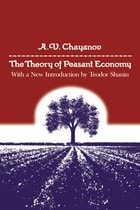
The Theory of Peasant Economy
A. V. Chayanov
University of Wisconsin Press, 1986
The work of A. V. Chayanov is today drawing more attention among Western scholars than ever before. Largely ignored in his native Russia because they differed from Marxist-Leninist theory, and neglected in the West for more than forty years, Chayanov’s sophisticated theories were at last published in English in 1966. That trenchant is reprinted in this Wisconsin paperback edition, which includes a new introduction by the sociologist Teodor Shanin, of the University of Manchester, one of the world’s leading Chayanov scholars. The Wisconsin edition will be essential reading for political scientists, anthropologists, and all whose interests include peasant studies, Third World development, and women’s studies.
"The past two decades have seen the emergence of a whole new field called 'peasant studies' and, along with those of Karl Marx, Chayanov's ideas have been central to its development. . . . The publishers are to be commended for re-issuing the book with both old and new introductions and making it available as an affordable paperback for students. The work is a classic."—Times Higher Education Supplement
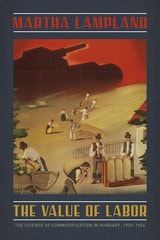
The Value of Labor
The Science of Commodification in Hungary, 1920-1956Martha Lampland
University of Chicago Press, 2016
Lampland trains her eye on the scientific claims of modern economic modeling, using Hungary’s unique vantage point to show how theories, policies, and techniques for commodifying agrarian labor that were born in the capitalist era were adopted by the socialist regime as a scientifically designed wage system on cooperative farms. Paying attention to the specific historical circumstances of Hungary, she explores the ways economists and the abstract notions they traffic in can both shape and be shaped by local conditions, and she compellingly shows how labor can be commodified in the absence of a labor market. The result is a unique account of economic thought that unveils hidden but necessary continuities running through the turbulent twentieth century.

The World of Soy
Edited by Christine M. Du Bois, Sidney Mintz, and Chee-Beng Tan
University of Illinois Press, 2007
As the most ecologically efficient and economical source of complete protein in human food, soy is gradually attracting more use in the American diet for its nutritional and financial value. Derived from soybean plants--the leading export crop of the United States and the world's most traded crop--soy produced for human consumption is part of a global enterprise affecting the likes of farmers, economists, dieticians, and grocery shoppers. An international group of expert food specialists--including an agricultural economist, an agricultural sociologist, a former Peace Corps development expert, and numerous food anthropologists and agricultural historians--discusses important issues central to soy production and consumption: genetically engineered soybeans, increasing soybean cultivation, soyfood marketing techniques, the use of soybeans as an important soil restorative, and the rendering of soybeans for human consumption.
Contributors are Katarzyna Cwiertka, Christine M. Du Bois, H. T. Huang, Lawrence Kaplan, Jian-Hua Mao, Sidney W. Mintz, Akiko Moriya, Can Van Nguyen, Donald Z. Osborn, Erino Ozeki, Myra Sidharta, Ivan Sergio Freire de Sousa, Chee-Beng Tan, and Rita de Cássia Milagres Teixeira Vieira.
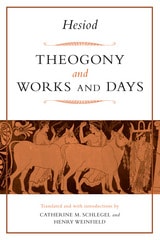
Theogony and Works and Days
Hesiod
University of Michigan Press, 2006
"This Schlegel-Weinfield translation of Hesiod is superbly crafted: compelling, unforgettable poetry to be read aloud with delight and gratitude."
—Allen Mandelbaum, Endowed Kenan Professor of Humanities, Wake Forest University
"This exciting and unique collaboration between a classical philologist and a poet will not just provide insight into archaic Greek society, but also offer something new: the opportunity to experience the richness of Hesiod's style, language, and modes of thought with remarkable fidelity to the ancient Greek. Weinfield and Schlegel make Hesiod sing."
—Carole Newlands, Classics Department, University of Wisconsin
"Schlegel and Weinfield have produced one of the most remarkable of a current resurgence of translations from the classics, allowing the modern world to hear a poet who may have known Homer. Hesiod’s song makes us understand why the Greeks thought a poet could draw dolphins through the seas or raise the walls of Thebes. Weinfield translates by ear and transfers what he hears to the page, resonant fourteeners, a worthy echo of the past."
Catherine Schlegel is Associate Professor of Classics, University of Notre Dame. Henry Weinfield is Professor and Chair of Liberal Studies, University of Notre Dame, and translator of The Collected Poems of Stephane Mallarme.
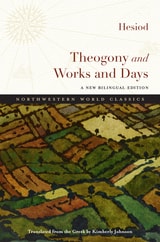
Theogony and Works and Days
A New Bilingual EditionHesiod, Translated from the Greek by Kimberly Johnson
Northwestern University Press, 2017
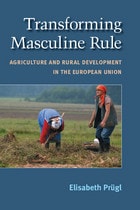
Transforming Masculine Rule
Agriculture and Rural Development in the European UnionElisabeth Prügl
University of Michigan Press, 2011
"The premise of mainstreaming gender is to bring equality concerns into every aspect of policy-making, and this brave book offers a close look at how feminists have taken up the challenge to transform the hidden dynamics of male domination in agricultural policy in Europe. In contrast to the automatic assumption that (neo)liberal policy always works against women’s interests, Prügl demonstrates the potential for feminist ju-jitsu to take advantage of multiple levels of governance to empower women in some circumstances. Although feminists were not always successful, the story of their efforts to remake agricultural policy should encourage activists to look for points of leverage in this and other contested and changing multilevel power systems."
---Myra Marx Ferree, University of Wisconsin
"Information on policy development, conflicts about improving the status of farm women, and using rural development policies to foster gender equality is hard to access in English and extremely useful for researchers concerned with the specifics of gender equality policy in the EU."
---Alison Woodward, Institute for European Studies, Vrije Universiteit Brussel
"This book is a must-read for scholars interested in the gendered process of global restructuring. Elisabeth Prügl succeeds superbly in teasing out the power politics involved in European agricultural policy. Through the lens of a feminist-constructivist approach, she makes visible the multiple mechanisms of gendered power within the state. This very lucid narrative is a milestone in a new generation of feminist theoretical scholarship."
---Brigitte Young, University of Muenster, Germany
Taking West and East Germany as case studies, Elisabeth Prügl shows how European agricultural policy has cemented long-standing gender-based inequalities and how feminists have used liberalization as an opportunity to challenge such inequalities. Through a comparison of the EU’s rural development program known as LEADER as it played out in the Altmark region in the German East and in the Danube/Bavarian Forest region in the West, Prügl provides a close-up view of the power politics involved in government policies and programs.
In identifying mechanisms of power (refusal, co-optation, compromise, normalization, and silencing of difference), Prügl illustrates how these mechanisms operate in arguments over gender relations within the state. Her feminist-constructivist approach to global restructuring as a gendered process brings into view multiple levels of governance and the variety of gender constructions operating in different societies. Ultimately, Prügl offers a new understanding of patriarchy as diverse, contested, and in flux.
Jacket photograph: © iStockphoto.com/Wojtek Kryczka
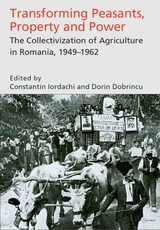
Transforming Peasants, Property and Power
The Collectivization of Agriculture in Romania, 1949–1962Dorin Dobrincu
Central European University Press, 2009
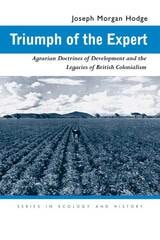
Triumph of the Expert
Agrarian Doctrines of Development and the Legacies of British ColonialismJoseph Morgan Hodge
Ohio University Press, 2007
The most striking feature of British colonialism in the twentieth century was the confidence it expressed in the use of science and expertise, especially when joined with the new bureaucratic capacities of the state, to develop natural and human resources of the empire.
Triumph of the Expert is a history of British colonial doctrine and its contribution to the emergence of rural development and environmental policies in the late colonial and postcolonial period. Joseph Morgan Hodge examines the way that development as a framework of ideas and institutional practices emerged out of the strategic engagement between science and the state at the climax of the British Empire. Hodge looks intently at the structural constraints, bureaucratic fissures, and contradictory imperatives that beset and ultimately overwhelmed the late colonial development mission in sub-Saharan Africa, south and southeast Asia, and the Caribbean.
Triumph of the Expert seeks to understand the quandaries that led up to the important transformation in British imperial thought and practice and the intellectual and administrative legacies it left behind.
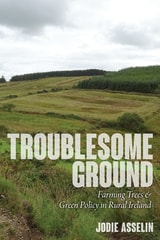
Troublesome Ground
Farming Trees and Green Policy in Rural IrelandJodie Asselin
University Press of Colorado, 2025
Through ethnographic description, Asselin illuminates how ephemeral worlds of green discourse and development plans manifest in rural areas, demonstrating the lived consequences of today’s competing demands on marginal regions. Troublesome Ground is a significant contribution to the anthropology of rural Ireland while offering insights into the wider realities of conflicting development and conservation strategies in global contemporary rural landscapes.