Results by title
402 books match the query 'American poetry' and 80 start with t
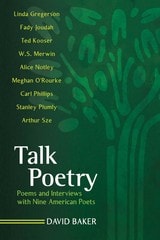
Talk Poetry
Poems and Interviews with Nine American PoetsDavid Baker
University of Arkansas Press, 2012
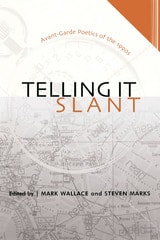
Telling It Slant
Avant Garde Poetics of the 1990SMark Wallace
University of Alabama Press, 2001
The finest essays from the newest generation of critics and poet-critics are gathered together in this volume documenting the growth in readership and awareness of avant-garde poetries.
This collection demonstrates the breadth and openness of the field of avant-garde poetry by introducing a wide range of work in poetics, theory, and criticism from emerging writers. Examining the directions innovative poetry has taken since the emergence and success of the Language movement, the essays discuss new forms and the reorientation of older forms of poetry in order to embody present and ongoing involvements. The essays center around four themes: the relation between poetics and contemporary cultural issues; new directions for avant-garde practices; in-depth explorations of current poets and their predecessors; and innovative approaches to the essay form or individual poetics.
Diverging from the traditional, linear argumentative style of academic criticism, many of the essays in this collection instead find critical forms more subtly related to poetry. Viewed as a whole, the essays return to a number of shared issues, namely poetic form and the production of present-day poetry. While focusing on North American poetry, the collection does reference the larger world of contemporary poetics, including potential biases and omissions based on race and ethnicity.
This is cutting-edge criticism at its finest, essential reading for students and scholars of avant-garde poetry, of interest to anyone interested in contemporary American literature and poetry.
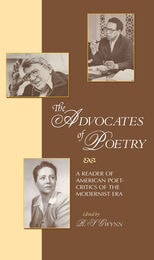
The Advocates of Poetry
A Reader of American Poet-Critics of the Modernist EraR S Gwynn
University of Arkansas Press, 1996

The Age of Discovery
Alan Michael Parker
Tupelo Press, 2020
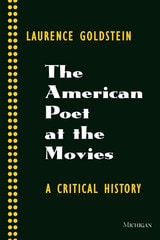
The American Poet at the Movies
A Critical HistoryLaurence Goldstein
University of Michigan Press, 1995
As an increasingly popular genre of modern poetry, and one that permits a unique view of this century's dominant art form, the movie poem has needed an explanatory book like this one. As cinema and television continue to wield extraordinary influence over the lives of all Americans, the efforts of poets to understand the visual culture will come to be appreciated as central to the task of modern and postmodern literature. This critical history is an important and timely contribution to the study of American literature and American institutions.
"One of the impressive things about the book is that while pursuing the seemingly narrow category of poems-about-movies, Goldstein is able to raise and illuminate virtually all the key issues surrounding the poetry of the period." - Roger Gilbert, Cornell University
". . . a discerning book, combining criticism and social history. It satisfies scholarly standards while appealing to general readers." - Philip French, coeditor of the Faber Book of Movie Verse
"In this work, [Goldstein] provides a new way of looking at American poets, both familiar and neglected. The approach is chronological and thematic, and films are seen from black, gay, Jewish, and feminist as well as middle-class white perspectives." Library Journal
Laurence Goldstein is editor of the Michigan Quarterly Review and Professor of English, University of Michigan.
The Arrival
Daniel Simko
Four Way Books, 2009
The Black Arts Enterprise and the Production of African American Poetry
Howard Rambsy II
University of Michigan Press, 2013
The outpouring of creative expression known as the Black Arts Movement of the 1960s and 1970s spawned a burgeoning number of black-owned cultural outlets, including publishing houses, performance spaces, and galleries. Central to the movement were its poets, who in concert with editors, visual artists, critics, and fellow writers published a wide range of black verse and advanced new theories and critical approaches for understanding African American literary art.
The Black Arts Enterprise and the Production of African American Poetry offers a close examination of the literary culture in which BAM's poets (including Amiri Baraka, Nikki Giovanni, Sonia Sanchez, Larry Neal, Haki Madhubuti, Carolyn Rodgers, and others) operated and of the small presses and literary anthologies that first published the movement's authors. The book also describes the role of the Black Arts Movement in reintroducing readers to poets such as Langston Hughes, Robert Hayden, Margaret Walker, and Phillis Wheatley.
Focusing on the material production of Black Arts poetry, the book combines genetic criticism with cultural history to shed new light on the period, its publishing culture, and the writing and editing practices of its participants. Howard Rambsy II demonstrates how significant circulation and format of black poetic texts—not simply their content—were to the formation of an artistic movement. The book goes on to examine other significant influences on the formation of Black Arts discourse, including such factors as an emerging nationalist ideology and figures such as John Coltrane and Malcolm X.
The Blues Muse
Race, Gender, and Musical Celebrity in American PoetryEmily Ruth Rutter
University of Alabama Press, 2018
A critical analysis of the poetic representations and legacies of five landmark blues artists
The Blues Muse: Race, Gender, and Musical Celebrity in American Poetry focuses on five key blues musicians and singers—Gertrude “Ma” Rainey, Bessie Smith, Billie Holiday, Robert Johnson, and Lead Belly—and traces the ways in which these artists and their personas have been invoked and developed throughout American poetry. This study spans nearly one hundred years of literary and musical history, from the New Negro Renaissance to the present.
Emily Ruth Rutter not only examines blues musicians as literary touchstones or poetic devices, but also investigates the relationship between poetic constructions of blues icons and shifting discourses of race and gender. Rutter’s nuanced analysis is clear, compelling, and rich in critical assessments of these writers’ portraits of the musical artists, attending to their strategies and oversights.
The Book of Life
Joseph Campana
Tupelo Press, 2019
The Book of the Dead
Muriel Rukeyser
West Virginia University Press, 2018
Published for the first time alongside photographs by Nancy Naumburg, who accompanied Rukeyser to Gauley Bridge in 1936, this edition of The Book of the Dead includes an introduction by Catherine Venable Moore, whose writing on the topic has been anthologized in Best American Essays.
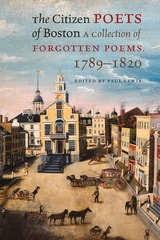
The Citizen Poets of Boston
A Collection of Forgotten Poems, 1789–1820Edited by Paul Lewis
University Press of New England, 2016
The Collaborative Artist's Book
Evolving Ideas in Contemporary Poetry and ArtAlexandra J. Gold
University of Iowa Press, 2023
The Collaborative Artist’s Book offers a rare glimpse into collaborations between poets and painters from 1945 to the present, and highlights how the artist’s book became a critical form for experimental American artists in the twentieth and twenty-first centuries. Alexandra Gold provides a broad overview of the artist’s book form and the many ongoing debates and challenges, from the disciplinary to the institutional, that these forms continue to pose.
Gold presents five case studies and details not only how each individual collaboration came to be but how all five together engage and challenge conventional ideals about art, subjectivity, poetry, and interpersonal relations, as well as complex social questions related to gender and race. Taking several of these books out of special collections libraries and museum archives and making them available to a broad readership, Gold brings to light a whole genre that has been largely forgotten or neglected.
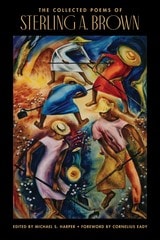
The Collected Poems of Sterling A. Brown
Sterling A. Brown; Edited by Michael S. Harper; With a New Foreword by Cornelius Eady
Northwestern University Press, 2020
Edited by the late distinguished poet Michael S. Harper, this classic collection includes a new foreword by award-winning poet Cornelius Eady and the original introduction by Michael S. Harper, as well as introductions to Southern Road by James Weldon Johnson and Sterling Stuckey. The result is a tour de force by one of the most distinctive poets in American letters.
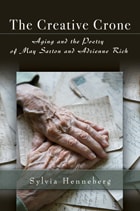
The Creative Crone
Aging and the Poetry of May Sarton and Adrienne RichSylvia Henneberg
University of Missouri Press, 2010
The Cultural Politics of Slam Poetry
Race, Identity, and the Performance of Popular Verse in AmericaSusan B. A. Somers-Willett
University of Michigan Press, 2010
"For a lucid and thorough 'real-world' analysis of the movement from the ground-up--including its history, aesthetics, and culture, there is surely no better place to start than Somers-Willett's trailblazing book."
--- Jerome Sala, Pleiades
"Finally, a clear, accurate, and thoroughly researched examination of slam poetry, a movement begun in 1984 by a mixed bag of nobody poets in Chicago. At conception, slam poetry espoused universal humanistic ideals and a broad spectrum of participants, and especially welcome is the book's analysis of how commercial marketing forces succeeded in narrowing public perception of slam to the factionalized politics of race and identity. The author's knowledge of American slam at the national level is solid and more authentic than many of the slammers who claim to be."
---Marc Kelly Smith, founder/creator of the International Poetry Slam movement
The cultural phenomenon known as slam poetry was born some twenty years ago in white working-class Chicago barrooms. Since then, the raucous competitions have spread internationally, launching a number of annual tournaments, inspiring a generation of young poets, and spawning a commercial empire in which poetry and hip-hop merge.
The Cultural Politics of Slam Poetry is the first critical book to take an in-depth look at slam, shedding light on the relationships that slam poets build with their audiences through race and identity performance and revealing how poets come to celebrate (and at times exploit) the politics of difference in American culture.
With a special focus on African American poets, Susan B. A. Somers-Willett explores the pros and cons of identity representation in the commercial arena of spoken word poetry and, in doing so, situates slam within a history of verse performance, from blackface minstrelsy to Def Poetry. What's revealed is a race-based dynamic of authenticity lying at the heart of American culture. Rather than being mere reflections of culture, Somers-Willett argues, slams are culture---sites where identities and political values get publicly refigured and exchanged between poets and audiences.
Susan B. A. Somers-Willett is a decade-long veteran of slam and teaches creative writing and poetics as an Assistant Professor of English at Montclair State University. She is the author of two books of poetry, Quiver and Roam. Visit the author's website at: http://www.susansw.com/.
Photo by Jennifer Lacy.
The Dance of the Intellect
Studies in the Poetry of the Pound TraditionMarjorie Perloff
Northwestern University Press, 1996
The Ecology of Modernism
American Environments and Avant-Garde PoeticsJoshua Schuster
University of Alabama Press, 2015
In his opening passage, Schuster boldly invokes lines from Walt Whitman’s “Crossing Brooklyn Ferry,” which echo as a paean to pollution: “Burn high your fires, foundry chimneys! cast black shadows at nightfall!” Schuster labels this theme “regeneration through pollution” and demonstrates how this motif recurs in modernist compositions. This tolerance for, if not actual exultation of, the by-products of industrialization hindered modernist American artists, writers, and musicians from embracing environmentalist agendas.
Schuster provides specific case studies focusing on Marianne Moore and her connection of fables with animal rights; Gertrude Stein and concepts of nature in her avant-garde poetics; early blues music and poetry and the issue of how environmental disasters (floods, droughts, pestilence) affected black farmers and artists in the American South; and John Cage, who extends the modernist avant-garde project formally but critiques it at the same time for failing to engage with ecology. A fascinating afterword about the role of oil in modernist literary production rounds out this work.
Schuster masterfully shines a light on the modernist interval between the writings of bucolic and nature-extolling Romantics and the emergence of a self-conscious green movement in the 1960s. This rewarding work shows that the reticence of modernist poets in the face of resource depletion, pollution, animal rights, and other ecological traumas is highly significant.
The Ethics and Poetics of Alterity in Asian American Poetry
Xiaojing Zhou
University of Iowa Press, 2006
Poetry by Asian American writers has had a significant impact on the landscape of contemporary American poetry, and a book-length critical treatment of Asian American poetry is long overdue. In this groundbreaking book, Xiaojing Zhou demonstrates how many Asian American poets transform the conventional “I” of lyric poetry—based on the traditional Western concept of the self and the Cartesian “I”—to enact a more ethical relationship between the “I” and its others.
Drawing on Emmanuel Levinas’s idea of the ethics of alterity—which argues that an ethical relation to the other is one that acknowledges the irreducibility of otherness—Zhou offers a reconceptualization of both self and other. Taking difference as a source of creativity and turning it into a form of resistance and a critical intervention, Asian American poets engage with broader issues than the merely poetic. They confront social injustice against the other and call critical attention to a concept of otherness which differs fundamentally from that underlying racism, sexism, and colonialism. By locating the ethical and political questions of otherness in language, discourse, aesthetics, and everyday encounters, Asian American poets help advance critical studies in race, gender, and popular culture as well as in poetry.
The Ethics and Poetics of Alterity is not limited, however, to literary studies: it is an invaluable response to the questions raised by increasingly globalized encounters across many kinds of boundaries.
The Poets
Marilyn Chin, Kimiko Hahn, Myung Mi Kim, Li Young Lee, Timothy Liu, David Mura, and John Yau
The Fate of Difficulty in the Poetry of Our Time
Edited by Charles Altieri and Nicholas D. Nace
Northwestern University Press, 2017
The essays in this volume include poets writing on the works of a younger generation (Lyn Hejinian on Paolo Javier, Bob Perelman on Rachel Zolf, Roberto Tejada on Rosa Alcalá), influential writers addressing the work of peers (Ben Lerner on Maggie Nelson, Michael W. Clune on Aaron Kunin), critics making imaginative leaps to encompass challenging work (Brian M. Reed on Sherwin Bitsui, Siobhan Philips on Juliana Spahr), and younger scholars coming to terms with poets who continue to govern new poetic experimentation (Joseph Jeon on Myung Mi Kim, Lytle Shaw on Lisa Robertson).
In pairings that are both intuitive (Marjorie Perloff on Craig Dworkin) and unexpected (Langdon Hammer on Srikanth Reddy), The Fate of Difficulty in the Poetry of Our Time illuminates the myriad pathways and strategies for exploring difficult poetry of the present.
The Feminist Avant-Garde In American Poetry
Elisabeth A. Frost
University of Iowa Press, 2005
The Feminist Avant-Garde in American Poetry offers a historical and theoretical account of avant-garde women poets in America from the 1910s through the 1990s and asserts an alternative tradition to the predominantly male-dominated avant-garde movements. Elisabeth Frost argues that this alternative lineage distinguishes itself by its feminism and its ambivalence toward existing avant-garde projects; she also thoroughly explores feminist avant-garde poets' debts and contributions to their male counterparts.
The Ghost of Meter
Culture and Prosody in American Free VerseAnnie Finch
University of Michigan Press, 1993
Population and environment are topics of intense current discussion and international action. Population growth rates have given rise to the metaphor of an exploding bomb, and accounts of oil spills, droughts, and rainforest destruction appear daily in the news. Despite the crowded agenda, observes Gayl Ness, the relationships between population and the environment still defy clear and comprehensive understanding. While they are closely intertwined in real life, they are separate in much of our thought and action. The contributors to this volume explore the basis of this separation and offer ways to integrate these closely interconnected areas, providing a forum for dialogue between those who support the interests of each. Topics covered include population-environment dynamics in historical perspective; constraints on sustainable growth in agricultural production; population as concept and parameter in the modeling of deforestation; powers and limits of the state and technology; resource control, fertility, and migration; and an ecosystem approach to the study of coastal areas.
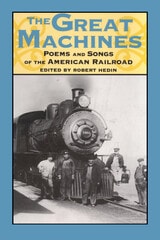
The Great Machines
Poems and Songs from the Age of the American RailroadRobert Hedin
University of Iowa Press, 1996
Here, for the first time, is a feast for anyone who has ever been beguiled by the trains that formerly thrummed through the landscapes of our lives. This entertaining and evocative anthology presents the amazing variety of poems and songs written about the American railroad in the last century and a half. Comprised of selections from both oral and written traditions, the volume celebrates the historical and cultural significance of this marvel of engineering skills. Hedin's anthology allows all readers, from the most avid railroad buff to anyone who has fond memories of train travel, to enjoy the romance of trains.
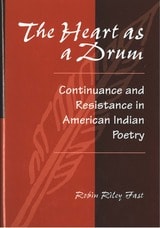
The Heart as a Drum
Continuance and Resistance in American Indian PoetryRobin Riley Fast
University of Michigan Press, 2000
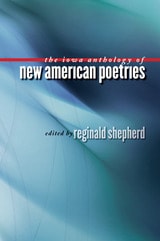
The Iowa Anthology of New American Poetries
Reginald Shepherd
University of Iowa Press, 2004
This landmark collection features emerging poets who combine a commitment to innovation and experimentation with a love for the lyric tradition, whose poetry transcends “mainstream” and avant-garde practice to create new and exciting poetic territories.
These new American poetries for the twenty-first century and beyond reach back toward the Modernists and even earlier lyric poetries (such as those of Wyatt, Donne, Keats, and Dickinson) and, simultaneously, reach forward to poetic possibilities not yet realized or even imagined. Most of the poets included here have won publication prizes, awards, and fellowships, and some have had their work anthologized. Others are at earlier stages of recognition but have published in major journals. All are writing highly accomplished work that will soon find a wider audience.
One distinguishing feature of this collection is the inclusion of substantial artistic statements from each contributor, in which the poets discuss their works, their influences, their aims, and their poetics. These statements are invaluable in giving readers a point of entry to the poems and can contribute to the development of a conversation among American poets that transcends questions of “craft” to address fundamental issues of poetry as an artistic practice.
Shepherd, a leading poet, essayist, and literary critic, is uniquely situated to bring us this important collection: young enough to feel the spirit of newer poets and yet established enough to bring a more experienced eye and a wider view to this groundbreaking project.The Iowa Anthology of New American Poetries highlights some of the most exciting, vital, and productive tendencies in contemporary American poetry and will be a significant milestone for students and teachers of poetry as well as for the general reader.
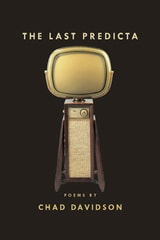
The Last Predicta
Chad Davidson
Southern Illinois University Press, 2008
The Last Predicta is Chad Davidson's searing collection of poetry dedicated to endings of all varieties. From odes to the corporate cornucopia of Target and the aggressive cheer of a Carnival cruise, to emotive examinations of Caravaggio's The Calling of St. Matthew or flies circling a putrescent bowl of forgotten fruit, Davidson weaves a lyrical web of apocalyptic scenarios and snapshots of pop culture. Throughout the volume appear cataclysms large and small, whether the finality of a minute passed or the deaths of a thousand swans at Seneca Lake in 1912. Images of King Kong, Starburst candies, and the Brady Bunch swim with mythological figures, Roman heroes, and dead animals as Davidson deftly explores the relationship between the mundane and the profound. At the center of the collection sits the Predicta television itself, "the lives blooming there in Technicolor," at once futuristic and nostalgic in its space age prophecy.
Moving in their very simplicity, these poems resonate with discoveries that belie their seemingly ordinary wellsprings. Chad Davidson's stunning collection repeatedly explores the moment of revelation and all its accompanying aftermaths. The Last Predicta leads readers to ponder all manner of predictions, endings, and everything that follows.
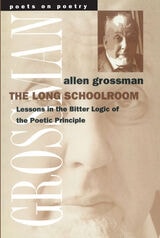
The Long Schoolroom
Lessons in the Bitter Logic of the Poetic PrincipleAllen Grossman
University of Michigan Press, 1997
The jist of what he learned--of what his "lessons" taught him--was (in the sentence of Oliver Wendell Holmes): "Where most men have died, there is the greatest interest." According to Grossman, violence arises not merely from the "barbarian" outside of the culture the poet serves, but from the inner logic of that culture; not, as he would now say, from the defeat of cultural membership but from the terms of cultural membership itself.
Grossman analyzes the "bitter logic of the poetic principle" as it is articulated in exemplary texts and figures, including Bede's Caedmon and Milton. But the heart of The Long Schoolroom is American, ranging from essays on Whitman and Lincoln to an in-depth review of the work of Hart Crane. His final essays probe the example of postmodern Jewish and Christian poetry in this country, most notably the work of Robert Lowell and Allen Ginsburg, as it searches for an understanding of "holiness" in the production and control of violence.
Allen Grossman is author of The Ether Dome and Other Poems: New and Selected, The Sighted Singer: Two Works on Poetry for Readers and Writers (with Mark Halliday), and most recently, The Philosopher's Window. He is Mellon Professor in the Humanities at The Johns Hopkins University.
The Lyric Now
James Longenbach
University of Chicago Press, 2020
In poet and critic James Longenbach’s title, the word “now” does double duty, evoking both a lyric sense of the present and twentieth-century writers’ assertion of “nowness” as they crafted their poetry in the wake of Modernism. Longenbach examines the fruitfulness of poetic repetition and indecision, of naming and renaming, and of the evolving search for newness in the construction, history, and life of lyrics. Looking to the work of thirteen poets, from Marianne Moore and T. S. Eliot through George Oppen and Jorie Graham to Carl Phillips and Sally Keith, and several musicians, including Virgil Thomson and Patti Smith, he shows how immediacy is constructed through language. Longenbach also considers the life and times of these poets, taking a close look at the syntax and diction of poetry, and offers an original look at the nowness of lyrics.
The Made Thing
An Anthology of Contemporary Southern PoetryLeon Stokesbury
University of Arkansas Press, 2000
The Muse is Music
Jazz Poetry from the Harlem Renaissance to Spoken WordMeta DuEwa Jones
University of Illinois Press, 2013
This wide-ranging, ambitiously interdisciplinary study traces jazz's influence on African American poetry from the Harlem Renaissance to contemporary spoken word poetry. Examining established poets such as Langston Hughes, Ntozake Shange, and Nathaniel Mackey as well as a generation of up-and-coming contemporary writers and performers, Meta DuEwa Jones highlights the intersections of race, gender, and sexuality within the jazz tradition and its representation in poetry. Applying prosodic analysis to emphasize the musicality of African American poetic performance, she examines the gendered meanings evident in collaborative performances and in the criticism, images, and sounds circulating within jazz cultures.
The Music of Thought in the Poetry of George Oppen and William Bronk
Henry Weinfield
University of Iowa Press, 2009
From his careful readings of Oppen’s and Bronk’s poetry to his fascinating examination of the letters they exchanged, Weinfield provides important aesthetic, epistemological, and historical insights into their poetry and poetic careers. In bringing together for the first time the work of two of the most important poets of the postwar generation, The Music of Thought not only illuminates their poetry but also raises important questions about American literary history and the categories in terms of which it has generally been interpreted.
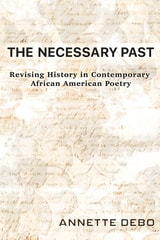
The Necessary Past
Revising History in Contemporary African American PoetryAnnette Debo
Northwestern University Press, 2024
“Poets are lyric historians,” proclaimed Langston Hughes. Today, historical poetry offers a lyric history necessary to our current moment—poetry with the power to correct the past, realign the present, and create a more hopeful, or even hoped-for, future. The Necessary Past: Revising History in Contemporary African American Poetry focuses on six of today’s most celebrated poets: Elizabeth Alexander, Natasha Trethewey, A. Van Jordan, Kevin Young, Frank X Walker, and Camille T. Dungy. Their works reimagine the interiority of Black historical figures like the so-called Venus Hottentot Sara Baartman and the would-be spelling champion MacNolia Cox, the African American Native Guard who fought in the Civil War and the unknown victims of domestic violence, Jack Johnson and Jean-Michel Basquiat, Medgar Evers and those freed and enslaved in the early nineteenth century. These poets shift the power dynamic in revising our shared history, reconfiguring who speaks and whose stories are told, and writing a past that frees readers to change the present and envision a more just future.
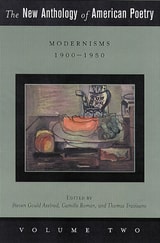
The New Anthology of American Poetry
Modernisms: 1900-1950Edited by Steven Gould Axelrod and Camille Roman
Rutgers University Press, 2005
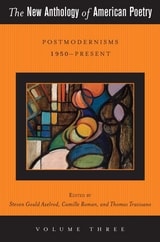
The New Anthology of American Poetry
Postmodernisms 1950-PresentAxelrod, Steven Gould
Rutgers University Press, 2012
Steven Gould Axelrod, Camille Roman, and Thomas Travisano continue the standard of excellence set in Volumes I and II of this extraordinary anthology. Volume III provides the most compelling and wide-ranging selection available of American poetry from 1950 to the present. Its contents are just as diverse and multifaceted as America itself and invite readers to explore the world of poetry in the larger historical context of American culture.
Nearly three hundred poems allow readers to explore canonical works by such poets as Elizabeth Bishop, Robert Lowell, and Sylvia Plath, as well as song lyrics from such popular musicians as Bob Dylan and Queen Latifah. Because contemporary American culture transcends the borders of the continental United States, the anthology also includes numerous transnational poets, from Julia de Burgos to Derek Walcott. Whether they are the works of oblique avant-gardists like John Ashbery or direct, populist poets like Allen Ginsberg, all of the selections are accompanied by extensive introductions and footnotes, making the great poetry of the period fully accessible to readers for the first time.
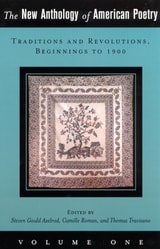
The New Anthology of American Poetry
Traditions and Revolutions, Beginnings to 1900Edited by Steven Gould Axelrod, Camille Roman, and Thomas Travisano
Rutgers University Press, 2002
Volume I begins with a generous selection of Native American materials, then spans the years from the establishment of the American colonies to about 1900, a world on the brink of World War I and the modern era. Part One focuses on poetry from the very beginnings through the end of the eighteenth century. The expansion and development of a newly forged nation engendered new kinds of poetry. Part Two includes works from the early nineteenth century through the time of the Civil War. The poems in Part Three reflect the many issues affecting a nation undergoing tumultuous change: the Civil War, immigration, urbanization, industrialization, and cultural diversification.
Such well-recognized names as Anne Bradstreet, Edward Taylor, Phillis Wheatley, Edgar Allan Poe, Herman Melville, Walt Whitman, Emily Dickinson, and Stephen Crane appear in this anthology alongside such less frequently anthologized poets as George Horton, Sarah Helen Whitman, Elizabeth Oakes-Smith, Frances Harper, Rose Terry Cooke, Helen Hunt Jackson, Adah Menken, Sarah Piatt, Ina Coolbrith, Emma Lazarus, Albery Whitman, Owl Woman (Juana Manwell) Sadakichi Hartmann, Ernest Fenollosa, James Weldon Johnson, Paul Laurence Dunbar, and—virtually unknown as a poet—Abraham Lincoln. It also includes poems and songs reflecting the experiences of a variety of racial and ethnic groups.
The New Poetries and Some Old
Richard Kostelanetz
Southern Illinois University Press, 1991
This collection of twenty-nine essays represents a summation of Kostelanetz’s thoughts on poetry since the publication of his earlier work The Old Poetries and the New.
In sections on “The New Poetries,” “Some Old,” and “Autobiographical Addenda,” the essays range from sketches of Kenneth Burke, John Berryman, and Northrop Frye through considerations of the latest sound-text poetry to Kostelanetz’s justification of his own work. These pieces reflect Kostelanetz’s ongoing commitment to the esthetics he ascribes to high modernism—innovation, abstraction, intelligence, and complexity in all the arts.
The New Young American Poets
An AnthologyEdited by Kevin Prufer. Foreword by Richard Howard
Southern Illinois University Press, 2000
Poetry today holds mainstream attention as never before. From community workshops to reading groups, from coffee house poetry slams to small press lit mags, from universities to web 'zines, the world of poetry has become part of our everyday lives. Demonstrating the range and vitality of the new generation of American writers, The New Young American Poets features the work of forty poets born since 1960.
The News from Poems
Essays on the 21st-Century American Poetry of EngagementJeffrey Gray and Ann Keniston
University of Michigan Press, 2016
The News from Poems brings together newly commissioned essays by eminent poets and scholars of poetry and serves as a companion volume to an earlier anthology of engaged poetry compiled by the editors. Essays by Bob Perelman, Steven Gould Axelrod, Tony Hoagland, Eleanor Wilner, and others reveal how recent poetry has redefined our ideas of politics, authorship, identity, and poetics.
The volume showcases the diversity of contemporary American poetry, discussing mainstream and experimental poets, including some whose work has sparked significant controversy. These and other poets of our time, the volume suggests, are engaged not only with public events and topics but also with new ways of imagining subjectivity, otherness, and poetry itself.
The Objectivist Nexus
Essays in Cultural PoeticsPeter Quartermain
University of Alabama Press, 1999
Outstanding poets and critics present cultural readings of the Objectivist poets, a group whose works have been largely unexamined.
"Objectivist" writers, conjoined through a variety of personal, ideological, and literary-historical links, have, from the late 1920s to the present, attracted emulation and suspicion. Representing a nonsymbolist, postimagist poetics and characterized by a historical, realist, antimythological worldview, Objectivists have retained their outsider status. Despite such status, however, the formal, intellectual, ideological, and ethical concerns of the Objectivist nexus have increasingly influenced poetry and poetics in the United States.
Thus, argue editors Rachel Blau DuPlessis and Peter Quartermain, the time has come for an anthology that unites essential works on Objectivist practices and presents Objectivist writing as an enlargement of the possibilities of poetry rather than as a determinable and definable literary movement. The authors' collective aim is to bring attention to this group of poets and to exemplify and specify cultural readings for poetic texts--readings alert to the material world, politics, society, and history, and readings concerned with the production, dissemination, and reception of poetic texts.
The contributors consider Basil Bunting, Lorine Niedecker, George Oppen, Carl Rakosi, Charles Reznikoff, and Louis Zukofsky within both their historical milieu and our own. The essays insist on poetry as a mode of thought; analyze and evaluate Objectivist politics; focus on the ethical, spiritual, and religious issues raised by certain Objectivist affiliations with Judaism; and explore the dissemination of poetic texts and the vagaries of Objectivist reception. Running throughout the book are two related threads: Objectivist writing as generally a practice aware of its own historical and social contingency and Objectivist writing as a site of complexity, contestation, interrogation, and disagreement.
The Obligation Toward the Difficult Whole
Postmodernist Long PoemsBrian McHale
University of Alabama Press, 2003
Addressing subjects as wide-ranging as angelology, the court masque, pop art, caricature, the cult of the ruin, hip-hop, Spense’'s Irish policy, and the aesthetics of silence, Brian McHale pulls varied threads together to identify a repertoire of postmodernist elements characteristic of the long poems he examines.
As critic Jed Rasula explains, “McHale is wonderfully resourceful in changing the subject from chapter to chapter to fit the poems discussed, and while his approach adheres to the conventions of textual exegesis, the chapters really shine as orchestrations of issues. For instance, James Merrill’s The Changing Light at Sandover works unexpectedly well in raising the subject of found poetry and procedural composition; Melvin Tolso’'s Harlem Gallery and Edward Dorn's Gunslinger are effectively paired to demonstrate the period flavor of pastiche; Geoffrey Hill’s Mercian Hymns and Armand Schwerner’s The Tablets explode the modernist fixation with depth; John Ashbery’s work is given a nuanced reading as proto-theory; Letter to an Imaginary Friend by Thomas McGrath provides a lucid backdrop to raise the question of political efficacy in approaching language poet Bruce Andrews; and Susan Howe's The Europe of Trusts is explored for its intertextual tapestry.”
McHale shows how elements from these long poems overlap, interfere, pull in different directions, jar against, and even contradict each other; and he demonstrates how they also echo, amplify, and reinforce each other. They do not slot smoothly together like pieces in a jigsaw puzzle, but they do form (what else?) a difficult whole.
The Old Formalism
Character and Contemporary American PoetryJonathan Holden
University of Arkansas Press, 1999
The Open Door
One Hundred Poems, One Hundred Years of "Poetry" MagazineEdited by Don Share and Christian Wiman
University of Chicago Press, 2012
When Harriet Monroe founded Poetry magazine in Chicago in 1912, she began with an image: the Open Door. “May the great poet we are looking for never find it shut, or half-shut, against his ample genius!” For a century, the most important and enduring poets have walked through that door—William Carlos Williams and Wallace Stevens in its first years, Rae Armantrout and Kay Ryan in 2011. And at the same time, Poetry continues to discover the new voices who will be read a century from now.
Poetry’s archives are incomparable, and to celebrate the magazine’s centennial, editors Don Share and Christian Wiman combed them to create a new kind of anthology, energized by the self-imposed limitation to one hundred poems. Rather than attempting to be exhaustive or definitive—or even to offer the most familiar works—they have assembled a collection of poems that, in their juxtaposition, echo across a century of poetry. Adrienne Rich appears alongside Charles Bukowski; poems by Isaac Rosenberg and Randall Jarrell on the two world wars flank a devastating Vietnam War poem by the lesser-known George Starbuck; August Kleinzahler’s “The Hereafter” precedes “Prufrock,” casting Eliot’s masterpiece in a new light. Short extracts from Poetry’s letters and criticism punctuate the verse selections, hinting at themes and threads and serving as guides, interlocutors, or dissenting voices.
The resulting volume is an anthology like no other, a celebration of idiosyncrasy and invention, a vital monument to an institution that refuses to be static, and, most of all, a book that lovers of poetry will devour, debate, and keep close at hand.
The Origins of Free Verse
H. T. Kirby-Smith
University of Michigan Press, 1998
Though free verse became a dominant poetic mode only in the twentieth century, Kirby-Smith finds its roots in seventeenth-century England. Beginning his study with writers such as John Milton--who was considered by T. S. Eliot to be the greatest writer of free verse in English--the author places recent and divisive topics in poetics in context, showing them to be attenuated remnants of issues first broached hundreds of years ago.
The book seeks to establish a consensus on the nature of free verse, with reference to critics and poets including Pound, Eliot, Williams, Amy Lowell, Yvor Winters, and Hugh Kenner. Good free verse, argues Kirby-Smith, arises as a reaction to a well-established set of conventions. Likewise, The Origins of Free Verse goes against the conventions of existing poetic scholarship, offering an encompassing yet fresh--and controversial--literary history of free verse.
"At moments, this study is revelatory. . . . In its range and detail it offers a way of thinking about the history of English-language prosody which recognizes the importance of the poet's individual choices and undercuts our century's vanity. . . . Poetry is a learned art, and Kirby-Smith brings both insight and much learning to reading it." --Times Literary Supplement
"The best study of free verse I have seen. . . . The Origins of Free Verse is a book that all students of prosody will want to read. " --Harvard Review
". . . a witty and polemical account of the emergence and development of free verse." --Choice
H. T. Kirby-Smith is Professor of English, University of North Carolina at Greensboro.
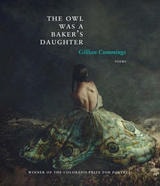
The Owl Was a Baker’s Daughter
Gillian Cummings
University Press of Colorado, 2018
If it is true, as Joseph Campbell said, that “the psychotic drowns in the same waters in which the mystic swims with delight,” then Cummings strains the boundaries of this notion: “Is it the same? The desire to end a life / and the need to know how: a flower’s simple bliss?” Her women and girls, part “little heavenling” and part “small hellborn,” understand the emptiness of utmost despair and long for that other emptiness, which can be thought of as union with God, the death of the troublesome ego. Cummings’s poetic ancestors may be Dickinson and Plath and her source here Shakespeare, but more contemporary voices also echo in her poems, those of Lucie Brock-Broido, Larissa Szporluk, and Cynthia Cruz. Here, in The Owl Was a Baker’s Daughter, is what might happen if, after sealing off the doors and turning on the gas, indeed, after dying, a poet had come to embrace the holiness in how “all dissolves: one color, / one moon, all earth, red as love, red as living.”
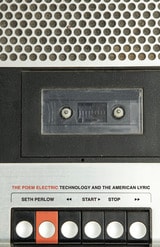
The Poem Electric
Technology and the American LyricSeth Perlow
University of Minnesota Press, 2018
An enlightening examination of the relationship between poetry and the information technologies increasingly used to read and write it
Many poets and their readers believe poetry helps us escape straightforward, logical ways of thinking. But what happens when poems confront the extraordinarily rational information technologies that are everywhere in the academy, not to mention everyday life?
Examining a broad array of electronics—including the radio, telephone, tape recorder, Cold War–era computers, and modern-day web browsers—Seth Perlow considers how these technologies transform poems that we don’t normally consider “digital.” From fetishistic attachments to digital images of Emily Dickinson’s manuscripts to Jackson Mac Low’s appropriation of a huge book of random numbers originally used to design thermonuclear weapons, these investigations take Perlow through a revealingly eclectic array of work, offering both exciting new voices and reevaluations of poets we thought we knew.
With close readings of Gertrude Stein, Frank O’Hara, Amiri Baraka, and many others, The Poem Electric constructs a distinctive lineage of experimental writers, from the 1860s to today. Ultimately, Perlow mounts an important investigation into how electronic media allows us to distinguish poetic thought from rationalism. Posing a necessary challenge to the privilege of information in the digital humanities, The Poem Electric develops new ways of reading poetry, alongside and against the electronic equipment that is now ubiquitous in our world.
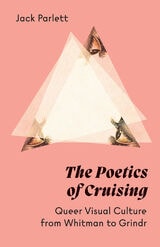
The Poetics of Cruising
Queer Visual Culture from Whitman to GrindrJack Parlett
University of Minnesota Press, 2022
The Poetics of Cruising explores the relationship between cruising, photography, and the visual in the work of leading poets, from Walt Whitman in the nineteenth century to Eileen Myles in the twenty-first. What is it that happens, asks Jack Parlett, and what is it that is sought, in this often transient moment of perception we call cruising, this perceptual arena where acts of looking between strangers are intensified and eroticized? Parlett believes that this moment is not only optical in nature but visual: a mode of looking that warrants comparison with the ways in which we behold still and moving images.
Whether it’s Whitman’s fixation with daguerreotypes, Langston Hughes’s hybrid photographic works, or Frank O’Hara’s love of Hollywood movie stars, argues Parlett, the history of poets cruising abounds with this intermingling between the verbal and the visual, the passing and the fixed. To look at someone in the act of cruising, this history suggests, is to capture, consider, and aestheticize, amid the flux and instantaneity of urban time. But it is also to reveal the ambivalence at the heart of this erotic search, where power may be unevenly distributed across glances, and gendered and racialized bodies are marked. Thus, in identifying for the first time this confluence of cruising, poetry, and visual culture, Parlett concludes that the visual erotic economy associated with gay cruising today, exemplified by the photographic grid of an app like Grindr, is not a uniquely contemporary phenomenon.
Innovative, astute, and highly readable, and drawing on compelling archival material, The Poetics of Cruising is a must for scholars of queer and LGBTQ literature and culture, modern and contemporary poetry, visual studies, and the history of sexuality.
The Poetics of Indeterminacy
Rimbaud to CageMarjorie Perloff
Northwestern University Press, 1999
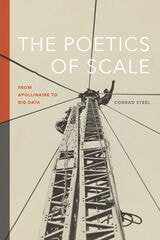
The Poetics of Scale
From Apollinaire to Big DataConrad Steel
University of Iowa Press, 2024
The Poetics of Scale takes us back to the years before the First World War in Paris, where the poet Guillaume Apollinaire claimed to have invented a new mode of poetry large enough to take on the challenges of the coming twentieth century. This history follows Apollinaire’s ideas across the Atlantic and examines how and why his work became such a vital source of inspiration for American poets through the era of intensive American economic expansion and up to the present day. Threading together Apollinaire’s work in the 1910s with three of his American successors—Louis Zukofsky in the 1930s, Allen Ginsberg in the 1950s, and Alice Notley from the 1970s onward—it shows how poetry as a cultural technique became the crucial test case for the scale of our collective imagination.
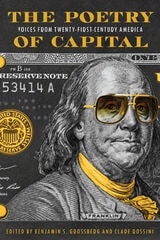
The Poetry of Capital
Voices from Twenty-First-Century AmericaEdited by Benjamin S. Grossberg and Clare Rossini
University of Wisconsin Press, 2021
Editors Benjamin S. Grossberg and Clare Rossini selected poems to reflect broad themes of labor, history and economic forces, social equity, and the environment. In addition, they asked each poet to provide a brief prose comment to introduce their work. Some give broad statements on the nature of wealth in America today; others are intimate, offering insight into how life experiences inform their writing; still others reflect on the art of poetry itself and its unique power to speak to economic pressures of the moment.
Contributors include Mary Jo Bang, Xochiquetzal Candelaria, Alan Chazaro, Mark Doty, Denise Duhamel, Tony Hoagland, Yusef Komunyakaa, Dorianne Laux, Kimiko Hahn, Sharon Olds, George Perreault, Robert Pinsky, Minnie Bruce Pratt, Afaa Michael Weaver, David Wojahn, and others.
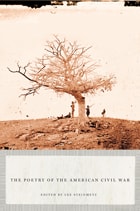
The Poetry of the American Civil War
Lee Steinmetz
Michigan State University Press, 2013
Deeply affecting and diverse in perspective, The Poetry of the American Civil War is the first comprehensive volume to focus entirely on poetry written and published during the Civil War. Of the nearly one thousand books of poetry published in the 1860s, some two hundred addressed the war in some way, and these collectively present a textured portrait of life during the conflict. The poets represented here hail from the North and the South, and at times mirror each other uncannily. Among them are housewives, doctors, preachers, bankers, journalists, and teachers. Their verse reflects the day-to-day reality of war, death, and destruction, and it contemplates questions of faith, slavery, society, patriotism, and politics. This is an essential volume for poetry lovers, historians, and Civil War enthusiasts alike.
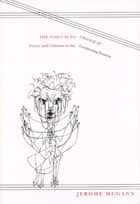
The Point Is To Change It
Poetry and Criticism in the Continuing PresentJerome McGann
University of Alabama Press, 2007
A preeminent critic maps the frontier of contemporary poetry.
In this book, Jerome McGann argues that contemporary language-oriented writing implies a marked change in the way we think about our poetic tradition on one hand and in the future of criticism on the other. He focuses on Walter Benjamin and Gertrude Stein as important intellectual resources because both see the history of poetry as a crisis of the present rather than as a legacy of the past. The crisis appears as a poetic deficit in contemporary culture, where values of politics and morality are judged prima facie more important than aesthetic values. McGann argues for the fundamental relevance of the aesthetic dimension and the contemporary relevance of cultural works of the past.
McGann moves through several broad categories in his examination of contemporary poetry, including the ways in which poetry must be abstract, change, and give pleasure. The author draws on sources ranging from the poetry of Bruce Andrews and Robert Duncan to Looney Tunes cartoons. The experimental move in contemporary poetry, McGann contends, is an emergency signal for readers and critics as much as it is for writers and poets, a signal that calls us to rethink the aesthetics of criticism. The interpretation of literary works has been dominated by enlightenment models—the expository essay and monograph—for almost two hundred years. With the emergence of new media, especially digital culture, the limitations of those models have grown increasingly apparent.
The Point Is To Change It explores alternative critical methods and provides a powerful call to reinvent our modes of investigation in order to escape the limitations of our inherited academic models. The goal of this process is to widen existing cracks or create new ones because, as McGann points out via the lyrics of Leonard Cohen, "That's how the light gets in."