Results by title
112 books match the query 'Americans' and 20 start with t
The American Presence in Ulster
A Diplomatic History, 1796–1996Francis M. Carroll
Catholic University of America Press, 2005
The Big Buddha Bicycle Race
A NovelTerence A. Harkin
Ohio University Press, 2017
Silver Medalist in Literary Fiction, 2020 Military Writers Society of America Awards
Brendan Leary, assigned to an Air Force photo squadron an hour from L.A., thinks he has it made. But when the U.S. invades Cambodia and he joins his buddies who march in protest, he is shipped off to an obscure air base in upcountry Thailand. There, he finds himself flying at night over the Ho Chi Minh Trail in a secret war that turns the mountains of Laos into a napalm-scorched moonscape. As the emotional vise tightens, his moral fiber crumbles and he sinks ever deeper into a netherworld of drugs, sex, and booze.
When a visit by Nixon looms, Brendan dreams up an all-squadron bicycle race to build morale, win hearts and minds in rural Thailand, and make him and his underpaid buddies a pile of money. The Big Buddha Bicycle Race is a last gasp of hope that turns into a unifying adventure—until the stakes turn out to be far higher than anyone imagined.
The Big Buddha Bicycle Race is a new take on the Vietnam War. A caper on the surface, it is also a tribute to the complex culture and history of Southeast Asia and a sober remembrance of those groups who have been erased from American history—the brash active-duty soldiers who risked prison by taking part in the GI antiwar movement, the gutsy air commandos who risked death night after night flying over the Ho Chi Minh Trail, and the people of Laos, whose lives and land were devastated in ways that have yet to be fully acknowledged in Western accounts of the war.

The Centenary Edition of the Works of Nathaniel Hawthorne
VOL. V, OUR OLD HOMENathaniel Hawthorne
The Ohio State University Press, 1970
The Centenary Edition of the Works of Nathaniel Hawthorne
Vol. XIV, The French and Italian NotebooksNathaniel Hawthorne
The Ohio State University Press, 1980
The Centenary Edition of the Works of Nathaniel Hawthorne
Vol. XXI, the English Notebooks, 1853–1856Nathaniel Hawthorne
The Ohio State University Press, 1997
The Centenary Edition of the Works of Nathaniel Hawthorne
Vol. XXII, The English Notebooks, 1856–1860Nathaniel Hawthorne
The Ohio State University Press, 1997
The Education of a Radical
An American Revolutionary in Sandinista NicaraguaBy Michael Johns
University of Texas Press, 2012
“I went to Nicaragua with nothing but a tourist visa, $1,500 in cash, the name of someone at the Agrarian Reform Ministry, and the idea of being a revolutionary intellectual. . . . The idea took hold in a simple character flaw: wanting to believe that I knew better than everyone else.” —From the preface
When Michael Johns joined a Sandinista militia in 1983, a fellow revolutionary dubbed him a rábano, a radish: red on the outside but white on the inside. Now, more than twenty-five years later, Johns appreciates the wisdom of that label as he revisits the questions of identity he tried to resolve by working with the Sandinistas at that point in his life. In The Education of a Radical, Johns recounts his immersion in Marxism and the Nicaraguan sojourn it led to, with a painful maturation process along the way.
His conversion began in college, where he joined a student group called the Latin American Solidarity Association and traveled to Chiapas, Mexico, for research on his senior thesis. Overwhelmed by the poverty he witnessed (and fascinated by a new friend named Maricela who was trying to turn peasants into revolutionaries and who carried a heavily highlighted copy of Late Capitalism), he experienced an ideological transformation. When a Marxist professor later encouraged him to travel to Nicaragua, the real internal battle began for him, a battle that was intensified by the U.S. invasion of Grenada and its effect on the Sandinistas, who believed they were the next target for an imminent American invasion. Before he knew it, Johns was digging trenches and learning how to use an AK-47. His intellectual ideals came face-to-face with revolutionary facts, and the results would perplex him for years to come.
Bringing to life a vivid portrait of the sometimes painful process of reconciling reality with romanticized principles, The Education of a Radical encapsulates a trove of truths about humanity, economics, and politics in one man’s memorable journey.
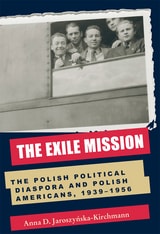
The Exile Mission
The Polish Political Diaspora and Polish Americans, 1939–1956Anna D. Jaroszynska-Kirchmann
Ohio University Press, 2009
At midcentury, two distinct Polish immigrant groups—those Polish Americans who were descendants of economic immigrants from the turn of the twentieth century and the Polish political refugees who chose exile after World War II and the communist takeover in Poland—faced an uneasy challenge to reconcile their concepts of responsibility toward the homeland.
The new arrivals did not consider themselves simply as immigrants, but rather as members of the special category of political refugees. They defined their identity within the framework of the exile mission, an unwritten set of beliefs, goals, and responsibilities, placing patriotic work for Poland at the center of Polish immigrant duties.
In The Exile Mission, an intriguing look at the interplay between the established Polish community and the refugee community, Anna Jaroszyńska–Kirchmann presents a tale of Polish Americans and Polish refugees who, like postwar Polish exile communities all over the world, worked out their own ways to implement the mission’s main goals. Between the outbreak of World War II and 1956, as Professor Jaroszyńska–Kirchmann demonstrates, the exile mission in its most intense form remained at the core of relationships between these two groups.
The Exile Mission is a compelling analysis of the vigorous debate about ethnic identity and immigrant responsibility toward the homeland. It is the first full–length examination of the construction and impact of the exile mission on the interactions between political refugees and established ethnic communities.
The Master Of Monterey
A NovelLawrence Coates
University of Nevada Press, 2003
The Men in My Country
Marilyn Abildskov
University of Iowa Press, 2004
The Men in My Country is the story of an American woman living and loving in Japan. Satisfied at first to observe her exotic surroundings, the woman falls in love with the place, with the light, with the curve of a river, with the smell of bonfires during obon, with blue and white porcelain dishes, with pencil boxes, and with small origami birds. Later, struggling for a deeper connection—“I wanted the country under my skin”—Abildskov meets the three men who will be part of her transformation and the one man with whom she will fall deeply in love.
A travel memoir offering an artful depiction of a very real place, The Men in My Country also covers the terrain of a complex emotional journey, tracing a geography of the heart, showing how we move to be moved, how in losing ourselves in a foreign place we can become dangerously—and gloriously—undone.
The Other Americans in Paris
Businessmen, Countesses, Wayward Youth, 1880-1941Nancy L. Green
University of Chicago Press, 2014
Nancy L. Green thus introduces us for the first time to a long-forgotten part of the American overseas population—predecessors to today’s expats—while exploring the politics of citizenship and the business relationships, love lives, and wealth (and poverty for some) of Americans who staked their claim to the City of Light. The Other Americans in Paris shows that elite migration is a part of migration tout court and that debates over “Americanization” have deep roots in the twentieth century.
The Other Side of the Fence
American Migrants in MexicoBy Sheila Croucher
University of Texas Press, 2009
A growing number of Americans, many of them retirees, are migrating to Mexico's beach resorts, border towns, and picturesque heartland. While considerable attention has been paid to Mexicans who immigrate to the U.S., the reverse scenario receives little scrutiny. Shifting the traditional lens of North American migration, The Other Side of the Fence takes a fascinating look at a demographic trend that presents significant implications for the United States and Mexico.
The first in-depth account of this trend, Sheila Croucher's study describes the cultural, economic, and political lives of these migrants of privilege. Focusing primarily on two towns, San Miguel de Allende in the mountains and Ajijic along the shores of Lake Chapala, Croucher depicts the surprising similarities between immigrant populations on both sides of the border. Few Americans living in Mexico are fluent in the language of their new land, and most continue to practice the culture and celebrate the national holidays of their homeland, maintaining close political, economic, and social ties to the United States while making political demands on Mexico, where they reside.
Accessible, timely, and brimming with eye-opening, often ironic, findings, The Other Side of the Fence brings an important perspective to borderlands debates.
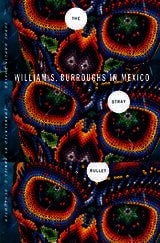
The Stray Bullet
William S. Burroughs in MexicoJorge García-Robles
University of Minnesota Press, 2013
William S. Burroughs arrived in Mexico City in 1949, having slipped out of New Orleans while awaiting trial on drug and weapons charges that would almost certainly have resulted in a lengthy prison sentence. Still uncertain about being a writer, he had left behind a series of failed business ventures—including a scheme to grow marijuana in Texas and sell it in New York—and an already long history of drug use and arrests. He would remain in Mexico for three years, a period that culminated in the defining incident of his life: Burroughs shot his common-law wife, Joan Vollmer, while playing William Tell with a loaded pistol. (He would be tried and convicted of murder in absentia after fleeing Mexico.)
First published in 1995 in Mexico, where it received the Malcolm Lowry literary essay award, The Stray Bullet is an imaginative and riveting account of Burroughs’s formative experiences in Mexico, his fascination with Mexico City’s demimonde, his acquaintances and friendships there, and his contradictory attitudes toward the country and its culture. Mexico, Jorge García-Robles makes clear, was the place in which Burroughs embarked on his “fatal vocation as a writer.”
Through meticulous research and interviews with those who knew Burroughs and his circle in Mexico City, García-Robles brilliantly portrays a time in Burroughs’s life that has been overshadowed by the tragedy of Joan Vollmer’s death. He re-creates the bohemian Roma neighborhood where Burroughs resided with Joan and their children, the streets of postwar Mexico City that Burroughs explored, and such infamous figures as Lola la Chata, queen of the city’s drug trade. This compelling book also offers a contribution by Burroughs himself—an evocative sketch of his shady Mexican attorney, Bernabé Jurado.
The Submerged State
How Invisible Government Policies Undermine American DemocracySuzanne Mettler
University of Chicago Press, 2011
“Keep your government hands off my Medicare!” Such comments spotlight a central question animating Suzanne Mettler’s provocative and timely book: why are many Americans unaware of government social benefits and so hostile to them in principle, even though they receive them? The Obama administration has been roundly criticized for its inability to convey how much it has accomplished for ordinary citizens. Mettler argues that this difficulty is not merely a failure of communication; rather it is endemic to the formidable presence of the “submerged state.”
In recent decades, federal policymakers have increasingly shunned the outright disbursing of benefits to individuals and families and favored instead less visible and more indirect incentives and subsidies, from tax breaks to payments for services to private companies. These submerged policies, Mettler shows, obscure the role of government and exaggerate that of the market. As a result, citizens are unaware not only of the benefits they receive, but of the massive advantages given to powerful interests, such as insurance companies and the financial industry. Neither do they realize that the policies of the submerged state shower their largest benefits on the most affluent Americans, exacerbating inequality. Mettler analyzes three Obama reforms—student aid, tax relief, and health care—to reveal the submerged state and its consequences, demonstrating how structurally difficult it is to enact policy reforms and even to obtain public recognition for achieving them. She concludes with recommendations for reform to help make hidden policies more visible and governance more comprehensible to all Americans.
The sad truth is that many American citizens do not know how major social programs work—or even whether they benefit from them. Suzanne Mettler’s important new book will bring government policies back to the surface and encourage citizens to reclaim their voice in the political process.
The Time between Places
Stories That Weave In and Out of Egypt and AmericaPauline Kaldas
University of Arkansas Press, 2010
The Unmentionables
A PlayBruce Norris
Northwestern University Press, 2009
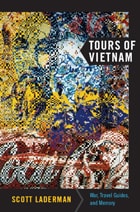
Tours of Vietnam
War, Travel Guides, and MemoryScott Laderman
Duke University Press, 2009
Tracing a history of ideological assertions embedded in travel discourse, Laderman analyzes the use of tourism in the Republic of Vietnam as a form of Cold War cultural diplomacy by a fledgling state that, according to one pamphlet published by the Vietnamese tourism authorities, was joining the “family of free nations.” He chronicles the evolution of the Defense Department pocket guides to Vietnam, the first of which, published in 1963, promoted military service in Southeast Asia by touting the exciting opportunities offered by Vietnam to sightsee, swim, hunt, and water-ski. Laderman points out that, despite historians’ ongoing and well-documented uncertainty about the facts of the 1968 “Hue Massacre” during the National Liberation Front’s occupation of the former imperial capital, the incident often appears in English-language guidebooks as a settled narrative of revolutionary Vietnamese atrocity. And turning to the War Remnants Museum in Ho Chi Minh City, he notes that, while most contemporary accounts concede that the United States perpetrated gruesome acts of violence in Vietnam, many tourists and travel writers still dismiss the museum’s display of that record as little more than “propaganda.”
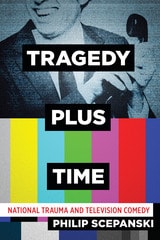
Tragedy Plus Time
National Trauma and Television ComedyBy Philip Scepanski
University of Texas Press, 2021
Following the most solemn moments in recent American history, comedians have tested the limits of how soon is “too soon” to joke about tragedy. Comics confront the horrifying events and shocking moments that capture national attention and probe the acceptable, or “sayable,” boundaries of expression that shape our cultural memory. In Tragedy Plus Time, Philip Scepanski examines the role of humor, particularly televised comedy, in constructing and policing group identity and memory in the wake of large-scale events.
Tragedy Plus Time is the first comprehensive work to investigate tragedy-driven comedy in the aftermaths of such traumas as the JFK assassination and 9/11, as well as during the administration of Donald Trump. Focusing on the mass publicization of television comedy, Scepanski considers issues of censorship and memory construction in the ways comedians negotiate emotions, politics, war, race, and Islamophobia. Amid the media frenzy and conflicting expressions of grief following a public tragedy, comedians provoke or risk controversy to grapple publicly with national traumas that all Americans are trying to understand for themselves.
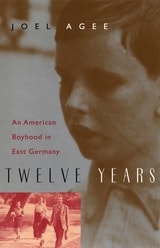
Twelve Years
An American Boyhood in East GermanyJoel Agee
University of Chicago Press, 2000
"A wonderfully evocative memoir. . . . Agee evoked for me the atmosphere of postwar Berlin more vividly than the actual experience of it—and I was there." —Christopher Lehmann-Haupt, New York Times
"One of those rare personal memoirs that brings to life a whole country and an epoch." —Christopher Isherwood
"Twelve Years consists of a series of finely honed anecdotes written in a precise, supple prose rich with sensual detail." —David Ghitelman, Newsday
"By turns poetic and picturesque, Agee energetically catalogues his expatriate passage to manhood with a pinpoint eye and a healthy American distaste for pretension. . . . Huckleberry Finn would have . . . welcomed [him] as a soulmate on the raft." —J. D. Reed, Time
"A triumph. . . . Unfettered by petty analysis or quick explanations, a story that is timeless and ageless and vital." —Robert Michael Green, Baltimore Sun
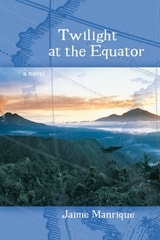
Twilight at the Equator
A NovelJaime Manrique
University of Wisconsin Press, 2003
Colombian-born Santiago Martinez starts his adult life as a young gay writer living in Spain. Years later, as a university professor in New York City, Santiago is called back to his native Colombia upon the suicide of his sister. There he learns some shocking secrets about his childhood and adolescence and comes to the realization that cherished memories of the past are only illusion.