Results by title
653 books match the query 'Animals' and 140 start with t
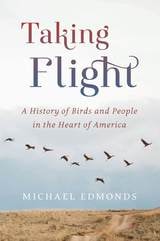
Taking Flight
A History of Birds and People in the Heart of AmericaMichael Edmonds
Wisconsin Historical Society Press, 2018
Today, more than fifty million Americans traipse through wetlands at dawn, endure clouds of mosquitoes, and brave freezing autumn winds just to catch a glimpse of a bird. The human desire to connect with winged creatures defies age and generation. In the Midwest, humans and birds have lived together for more than twelve thousand years. Taking Flight explores how and why people have worshipped, feared, studied, hunted, eaten, and protected the birds that surrounded them.
Author and birder Michael Edmonds has combed archaeological reports, missionaries’ journals, travelers’ letters, early scientific treatises, the memoirs of American Indian elders, and the folklore of hunters, farmers, and formerly enslaved people throughout the Midwest to reveal how our ancestors thought about the very same birds we see today. Whether you’re a casual bird-watcher, a hard-core life-lister, or simply someone who loves the outdoors, you’ll look at birds differently after reading this book.
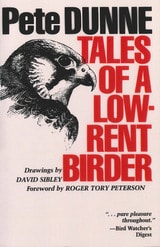
Tales of a Low-Rent Birder
By Pete Dunne
University of Texas Press, 1994
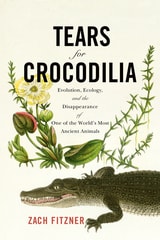
Tears for Crocodilia
Evolution, Ecology, and the Disappearance of One of the World's Most Ancient AnimalsZach Fitzner
Westholme Publishing, 2025
Seventy million years ago in what would become North America, a monstrous thirty-five-foot-long Cretaceous crocodile lurked on a marshy riverbank. Springing suddenly, its huge jaws trapped and crushed a juvenile hadrosaur. Today, the remains of that ancient crocodile are being painstakingly reconstructed in Colorado, where naturalist Zach Fitzner continues his life-long fascination with this amazing animal family.
In Tears for Crocodilia: Evolution, Ecology, and the Disappearance of One of the World’s Most Ancient Animals, Fitzner tracks the evolution of crocodilians from prehistoric predators to modern endangered wildlife, using his own experiences with these reptiles as a lens to understanding wildlife conservation and our relationship with the natural world. Traveling the world to interact with crocodiles, from observing alligators in a wildlife refuge in Texas and paddling a canoe in the Everglades searching for crocodiles to trekking the jungles in Nepal to find endangered gharials, the author expresses a wonder in exploring these diverse ecosystems, making a connection between crocodilians and the lands they live in. As the story follows crocodilians, it also illuminates their often complicated relationship with humans, from crocodile cults in ancient Egypt to American alligators living on golf courses. Fitzner also closely examines the dark side of this relationship, including habitat destruction and poaching as well as the mechanistic view of traditional conservation that turns these magnificent animals into agricultural products. Tears for Crocodilia delves deeply into issues of wildlife conservation, ethics, and how we can coexist with other creatures. It is also a tribute to a magnificent group of animals, survivors from the age of dinosaurs.
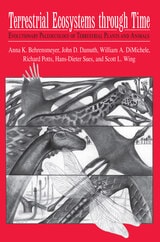
Terrestrial Ecosystems Through Time
Evolutionary Paleoecology of Terrestrial Plants and AnimalsAnna K. Behrensmeyer, John D. Damuth, William A. DiMichele, Richard Potts, Hans-
University of Chicago Press, 1992
ecological history of life on land—from the earliest traces
of terrestrial organisms over 400 million years ago to the
beginning of human agriculture. By providing myriad insights
into the unique ecological information contained in the
fossil record, it establishes a new and ambitious basis for
the study of evolutionary paleoecology of land ecosystems.
A joint undertaking of the Evolution of Terrestrial
Ecosystems Consortium at the National Museum of Natural
History, Smithsonian Institution, and twenty-six additional
researchers, this book begins with four chapters that lay out
the theoretical background and methodology of the science of
evolutionary paleoecology. Included are a comprehensive
review of the taphonomy and paleoenvironmental settings of
fossil deposits as well as guidelines for developing
ecological characterizations of extinct organisms and the
communities in which they lived. The remaining three
chapters treat the history of terrestrial ecosystems through
geological time, emphasizing how ecological interactions have
changed, the rate and tempo of ecosystem change, the role of
exogenous "forcing factors" in generating ecological change,
and the effect of ecological factors on the evolution of
biological diversity.
The six principal authors of this volume are all associated
with the Evolution of Terrestrial Ecosystems program at the
National Museum of Natural History, Smithsonian Institution.
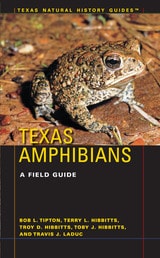
Texas Amphibians
A Field GuideBy Bob L. Tipton, Terry L. Hibbitts, Troy D. Hibbitts, Toby J. Hibbitts, and Travis J. LaDuc
University of Texas Press, 2012
With a wide variety of habitats ranging from southeastern swamps to western deserts, Texas is home to numerous species of frogs, toads, and salamanders. Each area of Texas has a particular set of species that has evolved there over thousands of years. Indeed, most amphibians are not very mobile, and many live their entire lives within a few square meters. This makes them particularly vulnerable to environmental degradation and habitat destruction.
Texas Amphibians is the only field guide focused exclusively on the state’s frogs, toads, and salamanders. It presents brief, general accounts of the two orders and fifteen families. Then it identifies each of the seventy-two species in detail, including size, description, voice (if applicable), similar species, distribution (with maps), natural history, reproduction, subspecies (if applicable), and comments and conservation information. Color photographs illustrate the species.
The book also includes a general introduction to amphibian natural history, conservation, observation and collection, maintenance in captivity, museum and preserved specimens, and scientific and common names, as well as scientific keys to Texas salamanders and frogs and a generic key to amphibian larvae. This wealth of information, compiled by a team of experts who collectively have over a century of experience in field herpetology, will increase our appreciation for amphibians and the vital role they play as an early indicator of threats to the quality of the environment that we all share.
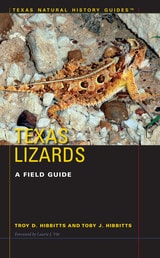
Texas Lizards
A Field GuideBy Troy and Toby Hibbitts
University of Texas Press, 2015
“Texas offers the opportunity to observe lizard diversity like no other part of the country,” writes Laurie J. Vitt in the foreword to Texas Lizards. From the moist eastern Piney Woods to the western deserts, lizards can be found in every part of Texas. The state has forty-five native and six naturalized species of lizards, almost half of the 115 species that live in the continental United States. Yet Texas lizards have not received full coverage in regional field guides, and no other guide dedicated solely to the state’s lizards has ever been published.
Texas Lizards is a complete identification guide to all fifty-one native and established exotic lizard species. It offers detailed species accounts, range maps, and excellent color photographs (including regional, gender, and age variations for many species) to aid field identification. The authors, two of the state’s most knowledgeable herpetologists, open the book with a broad overview of lizard natural history, conservation biology, observation, and captive maintenance before providing a key to Texas lizards and accounts of the various lizard families and species. Appendices list species of questionable occurrence in Texas and nonestablished exotic species. Informational resources on Texas lizards, a map of Texas counties, a glossary, a bibliography, and indexes of common and scientific names round out the volume.
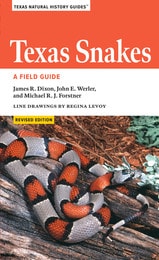
Texas Snakes
A Field GuideBy James R. Dixon, John E. Werler, and Michael R. J. Forstner; Line drawings by Regina Levoy
University of Texas Press, 2020
Texas Snakes
A Field GuideBy James R. Dixon and John E. Werler
University of Texas Press, 2005
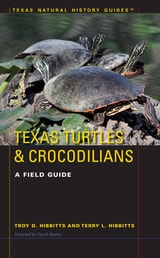
Texas Turtles & Crocodilians
A Field GuideBy Troy D. Hibbitts and Terry L. Hibbitts
University of Texas Press, 2016
Texas has a large and diverse turtle population, with forms that are found nowhere else (Cagle’s Map Turtle and the Texas Map Turtle) and wide-ranging species that barely touch the state, including the Painted Turtles and the Rough-footed Mud Turtle. From the Sabine River to El Paso, and from the Rio Grande to the Panhandle, thirty-one native and established exotic turtle species are definitely known in Texas, along with one crocodilian, the American Alligator.
Texas Turtles & Crocodilians is the first complete identification guide to all the state’s turtles and to its single alligator. It offers detailed species accounts, range maps, and excellent color photographs to aid in field identification. The authors, two of the state’s most knowledgeable herpetologists, open the book with a broad overview of turtle natural history, conservation biology, observation, and captive maintenance before providing a key to Texas turtles and accounts of the various turtle families and species. Appendices provide brief accounts of species that occurred prehistorically in Texas and non-established exotic species, as well as a table of Texas’ major watersheds and the turtle diversity in each one. Informational resources on Texas turtles and alligators, a map of Texas counties, a glossary, a bibliography, and indexes of common and scientific names complete the volume.
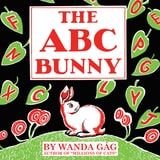
The ABC Bunny
Wanda Gág
University of Minnesota Press, 0
A Newbery Honor Book (1934)
An unfortunate accident with an Apple drives Bunny from Bunnyland to Elsewhere. Every letter in the alphabet is represented in Bunny’s journey, through what he eats (Greens), to whom he meets (Insects, Jay, Kitten, Lizard), and then a little sleep (Nap), to Tripping back to town, right side Up and Up-side-down.
The creation of The ABC Bunny was a Gág family affair, with sister Flavia composing the “ABC Song,” included in this faithful edition; brother Howard penning the lettering; and Wanda writing and illustrating the story.
The Accidental Reef and Other Ecological Odysseys in the Great Lakes
Lynne Heasley
Michigan State University Press, 2022
The Albatross and the Fish
Linked Lives in the Open SeasBy Robin W. Doughty and Virginia Carmichael
University of Texas Press, 2011
Breeding on remote ocean islands and spending much of its life foraging for food across vast stretches of seemingly empty seas, the albatross remains a legend for most people. And yet, humans are threatening the albatross family to such an extent that it is currently the most threatened bird group in the world. In this extensively researched, highly readable book, Robin W. Doughty and Virginia Carmichael tell the story of a potentially catastrophic extinction that has been interrupted by an unlikely alliance of governments, conservation groups, and fishermen.
Doughty and Carmichael authoritatively establish that the albatross's fate is linked to the fate of two of the highest-value table fish, Bluefin Tuna and Patagonian Toothfish, which are threatened by unregulated commercial harvesting. The authors tell us that commercial fishing techniques are annually killing tens of thousands of albatrosses. And the authors explain how the breeding biology of albatrosses makes them unable to replenish their numbers at the rate they are being depleted. Doughty and Carmichael set the albatross's fate in the larger context of threats facing the ocean commons, ranging from industrial overfishing to our habit of dumping chemicals, solid waste, and plastic trash into the open seas. They also highlight the efforts of dedicated individuals, environmental groups, fishery management bodies, and governments who are working for seabird and fish conservation and demonstrate that these efforts can lead to sustainable solutions for the iconic seabirds and the entire ocean ecosystem.
The Alewives' Tale
The Life History and Ecology of River Herring in the NortheastBarbara Brennessel
University of Massachusetts Press, 2014
The Alewives' Tale describes the plight of alewives and blueback herring, two fish species that have similar life histories and are difficult to distinguish by sight. Collectively referred to as river herring, they have been economically important since colonial times as food, fertilizer, and bait. In recent years they have attracted much attention from environmentalists, especially as attempts are being made, on and beyond Cape Cod, to restore the rivers, streams, ponds, lakes, and estuaries that are crucial for their reproduction and survival.
Brennessel provides an overview of the biology of the fish—from fertilized eggs to large schools of adults that migrate in the Atlantic Ocean—while describing the habitats at different stages of their life history. She explores the causes of the dramatic decline of river herring since the mid-twentieth century and the various efforts to restore these iconic fish to the historic populations that treated many onlookers to spectacular inland migrations each spring.
The Amazing Armadillo
Geography of a Folk CritterBy Larry L. Smith and Robin W. Doughty
University of Texas Press, 1984
Perhaps no creature has so fired the imagination of a populace as the armadillo—that most ungainly, awkward, and timid little animal. Its detractors call it a varmint and wish it good speed from the Lone Star State and its other natural territories. But its supporters claim that it is the animal kingdom's representative of all that's truly Texan: tough, pioneering, adaptable, and generous in sharing its habitation with others. What is it that sets this quizzical little creature apart from the rest of the animal kingdom?
Larry L. Smith and Robin W. Doughty ably answer this question in The Amazing Armadillo: Geography of a Folk Critter. This informative book traces the spread of the nine-banded armadillo from its first notice in South Texas late in the 1840s to its current range east to Florida and north to Missouri. The authors look at the armadillo's natural history and habitat as well as the role of humans in promoting its spread, projecting that the animal is increasing in both range and number, continuing its ecological success in areas where habitat and climate are favorable.
The book also contributes to a long-standing research theme in geography—the relationship between humans and wildlife. It explores the armadillo's value to the medical community in current research in Hansen's Disease (leprosy) as well as commercial uses, and abuses, of the armadillo in recent times. Of particular note is the author's engaging look at the armadillo as a symbol of popular culture, the efforts now underway to make it a "totem animal" symbolizing the easy-going lifestyles of some Sunbelt cities, and the spread of the craze for armadilliana to other urban centers.
The Amboseli Elephants
A Long-Term Perspective on a Long-Lived MammalEdited by Cynthia J. Moss, Harvey Croze, and Phyllis C. Lee
University of Chicago Press, 2011
Elephants have fascinated humans for millennia. Aristotle wrote of them with awe; Hannibal used them in warfare; and John Donne called the elephant “Nature’s greatest masterpiece. . . . The only harmless great thing.” Their ivory has been sought after and treasured in most cultures, and they have delighted zoo and circus audiences worldwide for centuries. But it wasn’t until the second half of the twentieth century that people started to take an interest in elephants in the wild, and some of the most important studies of these intelligent giants have been conducted at Amboseli National Park in Kenya.
The Amboseli Elephants is the long-awaited summation of what’s been learned from the Amboseli Elephant Research Project (AERP)—the longest continuously running elephant research project in the world. Cynthia J. Moss and Harvey Croze, the founders of the AERP, and Phyllis C. Lee, who has been closely involved with the project since 1982, compile more than three decades of uninterrupted study of over 2,500 individual elephants, from newborn calves to adult bulls to old matriarchs in their 60s. Chapters explore such topics as elephant ecosystems, genetics, communication, social behavior, and reproduction, as well as exciting new developments from the study of elephant minds and cognition. The book closes with a view to the future, making important arguments for the ethical treatment of elephants and suggestions to aid in their conservation.
The most comprehensive account of elephants in their natural environment to date, The Amboseli Elephants will be an invaluable resource for scientists, conservationists, and anyone interested in the lives and loves of these extraordinary creatures.
The Amphibians and Reptiles of Arkansas
Stanley E. Trauth
University of Arkansas Press, 2004
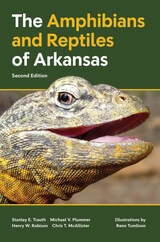
The Amphibians and Reptiles of Arkansas
Stanley E. Trauth
University of Arkansas Press, 2026
The rich diversity of Arkansas’s amphibian and reptilian species comes alive in this thoroughly updated second edition of The Amphibians and Reptiles of Arkansas. An indispensable resource for both professionals and enthusiasts, and praised for its accessible language and scientific rigor, this field guide not only reflects the latest in taxonomic research but also celebrates the surge in herpetological studies in Arkansas over the past two decades, showcasing a thriving academic interest while addressing gaps in the first edition.
Building on the foundation of the acclaimed first edition, this updated work introduces enhanced color maps, updated range data, and an array of new illustrations, capturing a more vivid and comprehensive picture of Arkansas’s herpetofauna. Meticulously illustrated identification keys, species accounts, and pictorial guides make this a valuable tool for identifying species in the field, in classrooms, or in one’s own backyard.
The Amphibians and Reptiles of Costa Rica
A Herpetofauna between Two Continents, between Two SeasJay M. Savage
University of Chicago Press, 2006
Costa Rica has played, and continues to play, a pivotal role in the study of tropical biology as well as the development of ecotourism and ecoprospecting, in part because more than half of the amphibians and reptiles in Costa Rica are also found elsewhere in Central America. The Amphibians and Reptiles of Costa Rica will be an essential book for a wide audience of nature lovers, naturalists, ecotourists, field biologists, conservationists, government planners, and those interested in Central America more generally.
"Written for the enthusiast as well as for the field researcher, this work is an excellent reference source for each of the 396 species of amphibians and reptiles that can be found in Costa Rica. Includes complete full-color photographs of all known species in the region, as well as maps showing their distribution patterns. . . . A must-have book for any library with interests in this subject area."—J. Elliott, Southeastern Naturalist
The Animated Bestiary
Animals, Cartoons, and CultureWells, Paul
Rutgers University Press, 2008
The Animated Bestiary critically evaluates the depiction of animals in cartoons and animation more generally. Paul Wells argues that artists use animals to engage with issues that would be more difficult to address directly because of political, religious, or social taboos. Consequently, and principally through anthropomorphism, animation uses animals to play out a performance of gender, sex and sexuality, racial and national traits, and shifting identity, often challenging how we think about ourselves.
Wells draws on a wide range of examples, from the original King Kongto Nick Park's Chicken Run to Disney cartoonsùsuch as Tarzan, The Jungle Book, and Brother Bearùto reflect on people by looking at the ways in which they respond to animals in cartoons and films.
The Ark and Beyond
The Evolution of Zoo and Aquarium ConservationEdited by Ben A. Minteer, Jane Maienschein, and James P. Collins
University of Chicago Press, 2018
While early menageries were anything but the centers of conservation that many zoos are today, a concern with wildlife preservation has been an integral component of the modern, professionally run zoo since the nineteenth century. From captive breeding initiatives to rewilding programs, zoos and aquariums have long been at the cutting edge of research and conservation science, sites of impressive new genetic and reproductive techniques. Today, their efforts reach even further beyond recreation, with educational programs, community-based conservation initiatives, and international, collaborative programs designed to combat species extinction and protect habitats at a range of scales. Addressing related topics as diverse as zoo animal welfare, species reintroductions, amphibian extinctions, and whether zoos can truly be “wild,” this book explores the whole range of research and conservation practices that spring from zoos and aquariums while emphasizing the historical, scientific, and ethical traditions that shape these efforts. Also featuring an inspiring foreword by the late George Rabb, president emeritus of the Chicago Zoological Society / Brookfield Zoo, The Ark and Beyond illuminates these institutions’ growing significance to the preservation of global biodiversity in this century.
The Ark in Park
THE STORY OF LINCOLN PARK ZOOMark Rosenthal, Carol Tauber, and Edward Uhlir
University of Illinois Press, 2003
Lincoln Park Zoo was established in 1868 when New York's Central Park Commissioners sent the Lincoln Park Commissioners the gift of two pairs of swans. The swans were such a popular attraction that the park commissioners began acquiring other animals and building quarters for them, adding a bear cage, a bison enclosure, a sea lion pool, an eagle exhibit, and an animal house, all before 1900.
Although the zoo was initially conceived as a primarily recreational attraction, its mission has evolved over time, with conservation, science, and education now forming central elements. Starting in 1884, when the zoo saw what was reportedly the first-ever birth of a North American bison in captivity, Lincoln Park Zoo has been part of the effort to study and protect endangered species from all over the world.
This comprehensive history of Lincoln Park Zoo also tells the wider story of the growth of the American zoo movement and the changes that have occurred in the past century, as zoos evolved from a leisure pursuit into a multimillion-dollar industry and an invaluable participant in global conservation efforts.
The Art of Migration
Birds, Insects, and the Changing Seasons in ChicagolandPaintings by Peggy Macnamara
University of Chicago Press, 2013
As the only artist in residence at the Field Museum, Peggy Macnamara has a unique vantage point for studying these patterns and capturing their distinctive traits. Her magnificent watercolor illustrations capture flocks, movement, and species-specific details. The illustrations are accompanied by text from museum staff and include details such as natural histories, notable features for identification, behavior, and how species have adapted to environmental changes. The book follows a gentle seasonal sequence and includes chapters on studying migration, artist’s notes on illustrating wildlife, and tips on the best ways to watch for birds and insects in the Chicago area.
A perfect balance of science and art, The Art of Migration will prompt us to marvel anew at the remarkable spectacle going on around us.
The Art of the Bird
The History of Ornithological Art through Forty ArtistsRoger J. Lederer
University of Chicago Press, 2019

The Better to Eat You With
Fear in the Animal WorldJoel Berger
University of Chicago Press, 2008
Berger’s fieldwork that frigid day raised important questions that would require years of travel and research to answer: Can naive animals avoid extinction when they encounter reintroduced carnivores? To what extent is fear culturally transmitted? And how can a better understanding of current predator-prey behavior help demystify past extinctions and inform future conservation?
The Better to Eat You With is the chronicle of Berger’s search for answers. From Yellowstone’s elk and wolves to rhinos living with African lions and moose coexisting with tigers and bears in Asia, Berger tracks cultures of fear in animals across continents and climates, engaging readers with a stimulating combination of natural history, personal experience, and conservation. Whether battling bureaucracy in the statehouse or fighting subzero wind chills in the field, Berger puts himself in the middle of the action. The Better to Eat You With invites readers to join him there. The thrilling tales he tells reveal a great deal not only about survival in the animal kingdom but also the process of doing science in foreboding conditions and hostile environments.
The Big Island
A Story of Isle RoyaleJulian May
University of Minnesota Press, 2021
First published in 1968, this engrossing and beautiful picture book about wildlife on Isle Royale is available again
Isle Royale, “the big island” of this book, is a wilderness national park in Lake Superior and home to a unique and fascinating ecosystem of animals, most notably the iconic wolf and majestic moose. Here is author Julian May’s story about the island’s beginning, the kinds of animals that came to populate it, and their effects on the pristine landscape. Among them were the moose, who swam to the island from the distant shore to fend off starvation. The moose found conditions on Isle Royale so favorable that they reproduced quickly—but then faced another food shortage. The wolves arrived by floating to the island on an ice floe in winter and soon became important to the island’s ecology as successful predators of the moose.
Complementing this fascinating text, John Schoenherr’s magnificent illustrations convey the strength of these animals and the beauty of the island that is their home.
First published in 1968, and reprinted here with a new note by renowned wolf expert L. David Mech, The Big Island is an enchanting introduction to the wilderness and wildlife of Isle Royale.
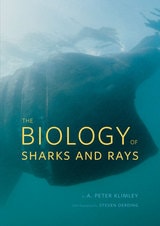
The Biology of Sharks and Rays
A. Peter Klimley
University of Chicago Press, 2013
The book will be a useful textbook for advanced ichthyology students as well as an encyclopedic source for those seeking a greater understanding of these fascinating creatures.

The Bird Who Cleans the World and Other Mayan Fables
Victor Montejo
Northwestern University Press, 1995
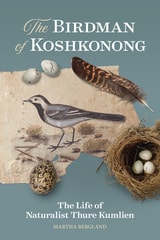
The Birdman of Koshkonong
The Life of Naturalist Thure KumlienMartha Bergland
Wisconsin Historical Society Press, 2021
For all of his achievements, Kumlien never gained the widespread notoriety of Wisconsin naturalists John Muir, Increase Lapham, or Aldo Leopold. Kumlien did his work behind the scenes, content to spend his days in the marshes and swamps rather than in the public eye. He once wrote that he was not “cut out for pretensions and show in the world.” Yet, his detailed observations of Wisconsin’s natural world—including the impact of early agriculture on the environment—were hugely important to the fields of ornithology and botany. As this carefully researched and lovingly rendered biography proves, Thure Kumlien deserves to be remembered as one of Wisconsin’s most influential naturalists.
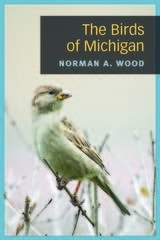
The Birds of Michigan
Norman A. Wood
University of Michigan Press, 1951
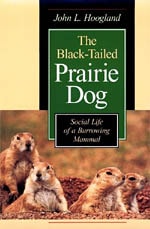
The Black-Tailed Prairie Dog
Social Life of a Burrowing MammalJohn L. Hoogland
University of Chicago Press, 1995
Hoogland documents interactions within and among families of prairie dogs to examine the advantages and disadvantages of coloniality. By addressing such topics as male and female reproductive success, inbreeding, kin recognition, and infanticide, Hoogland offers a broad view of conflict and cooperation. Among his surprising findings is that prairie dog females sometimes suckle, and at other times kill, the offspring of close kin.
Enhanced by more than 100 photographs, this book illuminates the social organization of a burrowing mammal and raises fundamental questions about current theory. As the most detailed long-term study of any social rodent, The Black-Tailed Prairie Dog will interest not only mammalogists and other vertebrate biologists, but also students of behavioral and evolutionary ecology.
The Book of Barely Imagined Beings
A 21st Century BestiaryCaspar Henderson
University of Chicago Press, 2013
With The Book of Barely Imagined Beings, Caspar Henderson offers readers a fascinating, beautifully produced modern-day menagerie. But whereas medieval bestiaries were often based on folklore and myth, the creatures that abound in Henderson’s book—from the axolotl to the zebrafish—are, with one exception, very much with us, albeit sometimes in depleted numbers. The Book of Barely Imagined Beings transports readers to a world of real creatures that seem as if they should be made up—that are somehow more astonishing than anything we might have imagined. The yeti crab, for example, uses its furry claws to farm the bacteria on which it feeds. The waterbear, meanwhile, is among nature’s “extreme survivors,” able to withstand a week unprotected in outer space. These and other strange and surprising species invite readers to reflect on what we value—or fail to value—and what we might change.
A powerful combination of wit, cutting-edge natural history, and philosophical meditation, The Book of Barely Imagined Beings is an infectious and inspiring celebration of the sheer ingenuity and variety of life in a time of crisis and change.
The Book of Bees
A Life-Size Guide to Bees WorldwideEdited by Robert Minckley
University of Chicago Press, 2026
Including more than four hundred species from all seven recognized biological families, a beautiful visual celebration of bee species the world over.
The honeycombs, hives, dancing, and royalty of bee colonies have long captured the public’s imagination, but there’s far more to these insects. There are over 20,000 bee species, but only a handful have colonies approaching the organization of the familiar western honeybee. The typical bee, if there is one, is solitary. It nests in the ground or a stem and has seven to fifteen offspring that develop and emerge the following year, long after their mother has died. These solitary species vary tremendously in the flowers they visit, how they collect pollen and nectar, the architecture of their nests, and how males strategize to find mates. Furthermore, another 17% of all bee species are well-armored parasites, often with striking colors and an array of tactics for attacking other bees.
Bees’ keystone contribution, as pollinators, to the human food supply and to the proper function of ecosystems far exceeds their numbers. From the emerald-green dilemma orchid bee to the spined leafcutter cuckoo, The Book of Bees celebrates bee species worldwide, highlighting a broad range of their diversity to illustrate how different they are in behavior, life history, and interactions with flowers and humans. Each entry includes a distribution map, a table of essential information, a section on related species, and a description of the species’ importance in terms of taxonomy, rarity, behavior, and scientific significance. Striking photos show the bees at their actual size and are also enlarged to showcase intricate details.
This wide-ranging exploration of social, solitary, and parasitic bees offers fascinating insights into their remarkable lives, fostering greater appreciation of their ecological importance and the need for their conservation.

The Book of Beetles, Second Edition
A Life-Size Guide to Six Hundred of Nature’s GemsEdited by Patrice Bouchard and Arthur V. Evans
University of Chicago Press, 2026
An up-to-date, exquisitely illustrated guide to six hundred of the world’s beguiling beetles.
When renowned British geneticist J. B. S. Haldane was asked what could be inferred about God from a study of his works, Haldane replied, “An inordinate fondness for beetles.” With more than 440,000 known species, and scientific estimates that millions more have yet to be identified, their abundance is indisputable, as is their variety. They range from the delightful summer firefly to the one-hundred-gram Goliath beetle. Beetles offer a dazzling array of shapes, sizes, and colors that entice scientists and collectors across the globe.
In a new updated edition, The Book of Beetles celebrates the beauty and diversity of this marvelous group of insects. The book includes six hundred significant beetle species, and each entry features a distribution map, basic biology, feeding habits, and information on cultural and economic significance. The beetles appear both at their actual size and enlarged to show details, such as the sextet of spots that distinguish the six-spotted tiger beetle or the jagged ridges of the mandibles on the giant jawed sawyer beetle. With updates to the common names, distribution, classification, or photographs for nearly five hundred entries, this edition offers the latest science and accessibly written, descriptive text that will appeal to researchers and armchair coleopterists alike.
The humble beetle continues to grow in popularity, taking center stage in biodiversity studies, sustainable agriculture programs, and even the dining rooms of adventurous and eco-conscious chefs. The Book of Beetles is the authoritative reference on these remarkably adaptable and beautiful creatures.
The Book of Beetles
A Life-Size Guide to Six Hundred of Nature's GemsPatrice Bouchard
University of Chicago Press, 2014
The Book of Beetles celebrates the beauty and diversity of this marvelous insect. Six hundred significant beetle species are covered, with each entry featuring a distribution map, basic biology, conservation status, and information on cultural and economic significance. Full-color photos show the beetles both at their actual size and enlarged to show details, such as the sextet of spots that distinguish the six-spotted tiger beetle or the jagged ridges of the giant-jawed sawyer beetle. Based in the most up-to-date science and accessibly written, the descriptive text will appeal to researchers and armchair coleopterists alike.
The humble beetle continues to grow in popularity, taking center stage in biodiversity studies, sustainable agriculture programs, and even the dining rooms of adventurous and eco-conscious chefs. The Book of Beetles is certain to become the authoritative reference on these remarkably adaptable and beautiful creatures.
The Book of Caterpillars
A Life-Size Guide to Six Hundred Species from around the WorldEdited by David G. James
University of Chicago Press, 2017
The Book of Caterpillars unveils the mysteries of six hundred species from around the world, introducing readers to the complexity and beauty of these underappreciated insects. With the advent of high-quality digital macrophotography, the world of caterpillars is finally opening up. The book presents a wealth of stunning imagery that showcases the astonishing diversity of caterpillar design, structure, coloration, and patterning. Each entry also features a two-tone engraving of the adult specimen, emphasizing the wing patterns and shades, as well as a population distribution map and table of essential information that includes their habitat, typical host plants, and conservation status. Throughout the book are fascinating facts that will enthrall expert entomologists and curious collectors alike.
A visually rich and scientifically accurate guide to six hundred of the world’s most peculiar caterpillars, this volume presents readers with a rare, detailed look at these intriguing forms of insect life.
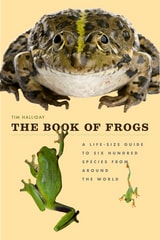
The Book of Frogs
A Life-Size Guide to Six Hundred Species from around the WorldTim Halliday
University of Chicago Press, 2015
The Book of Frogs commemorates the diversity and magnificence of all of these creatures, and many more. Six hundred of nature’s most fascinating frog species are displayed, with each entry including a distribution map, sketches of the frogs, species identification, natural history, and conservation status. Life-size color photos show the frogs at their actual size—including the colossal seven-pound Goliath Frog. Accessibly written by expert Tim Halliday and containing the most up-to-date information, The Book of Frogs will captivate both veteran researchers and amateur herpetologists.
As frogs increasingly make headlines for their troubling worldwide decline, the importance of these fascinating creatures to their ecosystems remains underappreciated. The Book of Frogs brings readers face to face with six hundred astonishingly unique and irreplaceable species that display a diverse array of adaptations to habitats that are under threat of destruction throughout the world.
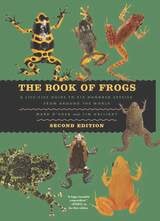
The Book of Frogs
A Life-Size Guide to Six Hundred Species from around the World, Second EditionMark O'Shea and Tim Halliday
University of Chicago Press, 2025
With almost nine thousand known species, frogs display a stunning array of forms and behaviors. A single gram of the toxin produced by the skin of the Golden Poison Frog can kill one hundred thousand people. Male Darwin’s Frogs carry their tadpoles in their vocal sacs for sixty days before coughing them out into the world. And the Wood Frogs of North America freeze every winter, reanimating in the spring.
The Book of Frogs documents the diversity and magnificence of all these anurans and many more. Readers meet six hundred of nature’s most fascinating frogs, with each entry including a distribution map, illustrations, species identification, natural history, and conservation status. Color photos show the frogs at their actual size—from Papua New Guinea’s diminutive Paedophryne amauensis, smaller than a coin, to Cameroon’s colossal Goliath Frog, heavier than some dogs. Written by experts Mark O’Shea and Tim Halliday and containing updated information on one hundred species and nearly twenty new entries, this revised edition will enthrall both veteran researchers and amateur herpetologists.
As frogs increasingly make headlines for their troubling worldwide decline, The Book of Frogs brings readers face to face with six hundred astonishingly unique and irreplaceable species that display a diverse array of adaptations to habitats that are ever changing.
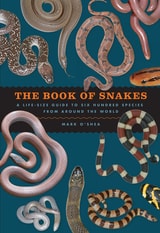
The Book of Snakes
A Life-Size Guide to Six Hundred Species from around the WorldMark O'Shea
University of Chicago Press, 2018
The Book of Snakes presents 600 species of snakes from around the world, covering nearly one in six of all snake species. It will bring greater understanding of a group of reptiles that have existed for more than 160 million years, and that now inhabit every continent except Antarctica, as well as two of the great oceans.
This volume pairs spectacular photos with easy-to-digest text. It is the first book on these creatures that combines a broad, worldwide sample with full-color, life-size accounts. Entries include close-ups of the snake’s head and a section of the snake at actual size. The detailed images allow readers to examine the intricate scale patterns and rainbow of colors as well as special features like a cobra’s hood or a rattlesnake’s rattle. The text is written for laypeople and includes a glossary of frequently used terms. Herpetologists and herpetoculturists alike will delight in this collection, and even those with a more cautious stance on snakes will find themselves drawn in by the wild diversity of the suborder Serpentes.
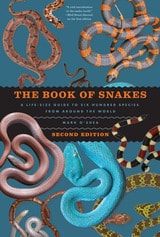
The Book of Snakes
A Life-Size Guide to Six Hundred Species from around the WorldMark O'Shea
University of Chicago Press, 2023
For millennia, humans have regarded snakes with an exceptional combination of fascination and revulsion. Some people recoil in fear at the very suggestion of these creatures, while others happily keep them as pets. Snakes can convey both beauty and menace in a single tongue flick, and so these creatures have held a special place in our cultures. Yet, for as many meanings as we attribute to snakes—from fertility and birth to sin and death—the real-life species represent an even wider array of wonders.
Now in a new edition, reflecting the most recent species classifications, The Book of Snakes presents 600 species of snakes from around the world, covering roughly one in seven of all snake species. It will bring greater understanding of a group of reptiles that have existed for more than 160 million years and that now inhabit every continent except Antarctica, as well as two of the great oceans.
This volume pairs spectacular photos with easy-to-digest text. It is the first book on these creatures that combines a broad, worldwide sample with full-color, life-size accounts. Entries include close-ups of the snake’s head and a section of the snake at actual size. The detailed images allow readers to examine the intricate scale patterns and rainbow of colors as well as special features like a cobra’s hood or a rattlesnake’s rattle. The text is written for laypeople and includes a glossary of frequently used terms. Herpetologists and herpetoculturists alike will delight in this collection, and even those with a more cautious stance on snakes will find themselves drawn in by the wild diversity of the suborder Serpentes.
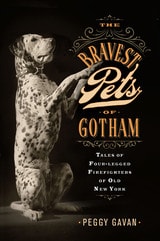
The Bravest Pets of Gotham
Tales of Four-Legged Firefighters of Old New YorkPeggy Gavan
Rutgers University Press, 2024
The Bravest Pets of Gotham takes readers on a fun historical tour of Old New York, sharing touching and comical stories about the bond between FDNY firefighters and their four-legged or feathered friends. The book contains more than one hundred astonishing, emotional, and sometimes hilariously absurd tales of the FDNY animal mascots whose extraordinary intelligence, acts of bravery, and funny antics deserve to be remembered. Some anecdotes depict fire companies that broke the one-pet rule and welcomed a veritable menagerie of animals into their firehouses, including goats, turtles, and even monkeys. Whether you are an animal lover, a history buff, or a fan of firefighting, The Bravest Pets of Gotham is full of stories that will thrill and amuse you.
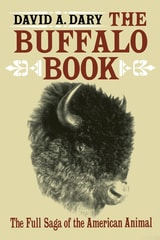
The Buffalo Book
The Full Saga Of The American AnimalDavid A. Dary
Ohio University Press, 1989
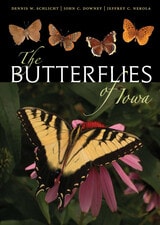
The Butterflies of Iowa
Dennis W. Schlicht
University of Iowa Press, 2007
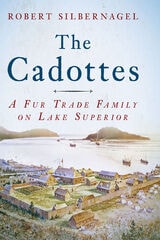
The Cadottes
A Fur Trade Family on Lake SuperiorRobert Silbernagel
Wisconsin Historical Society Press, 2023
The Cadottes
A Fur Trade Family on Lake SuperiorRobert Silbernagel
Wisconsin Historical Society Press, 2026
The Cat Men of Gotham
Tales of Feline Friendships in Old New YorkPeggy Gavan
Rutgers University Press, 2019
The nineteenth century was a rough time to be a stray cat in New York City. The city’s human residents dealt with feline overpopulation by gassing unwanted cats or tossing them in rivers. But a few lucky strays were found by a diverse array of men—including firemen, cops, athletes, and politicians—who rescued them from the streets and welcomed them into their homes and hearts.
This book tells the stories of these heroic cat men of Gotham and their beloved feline companions. Not only does it introduce us to some remarkable men, but we get to meet many extraordinary cats as well, from Chinese stowaways prowling the Chelsea Piers to the sole feline survivor of the USS Maine explosion. Among the forty-two profiles, we find many feline Cinderella stories, as humble alley cats achieved renown as sports team mascots, artists’ muses, and even presidential pets.
Sure to appeal to cat fanciers and history fans alike, The Cat Men of Gotham will give you a new appreciation for Old New York and the people and animals who made it their home. As it takes you on a journey through the streets of Manhattan and Brooklyn, it will amuse and astound you with tales of powerful men and their pussycats.
The Cockroach Papers
A Compendium of History and LoreRichard Schweid
University of Chicago Press, 2015
Traveling from New York City to Louisiana, Mexico, Nicaragua, and Morocco, Schweid blends stories of his own squirm-inducing roach encounters with meticulous research to spin a tale both humorous and harrowing. As he investigates roaches’ more nefarious interactions with our species—particularly with those of us living at the margins of society—Schweid also explores their astonishing diversity, how they mate, what they’ll eat, and what we’ve written about them (from Kafka and Nelson Algren to archy and mehitabel). Knowledge soon turns into respect, and Schweid looks beyond his own fears to arrive at an uncomfortable truth: We humans are no more peaceful, tidy, or responsible about taking care of the Earth or each other than these tiny creatures that swarm in the dark corners of our minds, homes, and cereal boxes.
The Courtiers' Anatomists
Animals and Humans in Louis XIV's ParisAnita Guerrini
University of Chicago Press, 2015
Through the stories of Duverney and Perrault, as well as those of Marin Cureau de la Chambre, Jean Pecquet, and Louis Gayant, The Courtiers' Anatomists explores the relationships between empiricism and theory, human and animal, as well as the origins of the natural history museum and the relationship between science and other cultural activities, including art, music, and literature.
The Cow with Ear Tag #1389
Kathryn Gillespie
University of Chicago Press, 2018
The Dawn of the Deed
The Prehistoric Origins of SexJohn A. Long
University of Chicago Press, 2012
The Deer and the Tiger
George B. Schaller
University of Chicago Press, 1984