Results by title
58 books match the query 'Antislavery movements' and 10 start with t
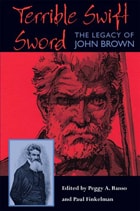
Terrible Swift Sword
The Legacy of John BrownPeggy A. Russo
Ohio University Press, 2005
More than two centuries after his birth and almost a century and a half after his death, the legendary life and legacy of John Brown go marching on. Variously deemed martyr, madman, monster, terrorist, and saint, he remains one of the most controversial figures in America’s history. Brown’s actions in Kansas and in Harpers Ferry, West Virginia, were major catalysts for the American Civil War, and continue today to evoke praise or condemnation.
Through the prisms of history, literature, psychology, criminal justice, oral history, African American studies, political science, film studies, and anthropology, Terrible Swift Sword offers insights not only into John Brown’s controversial character and motives but also into the nature of a troubled society before, during, and after the Civil War. The contributors discuss reasons why Brown’s contemporaries supported him, analyze Brown’s behavior and his depiction in literature, and examine the iconography and mythology surrounding him.
The interdisciplinary focus brought by editors Peggy A. Russo and Paul Finkelman makes this collection unique. Terrible Swift Sword: The Legacy of John Brown will appeal to a broad audience of readers interested in this turbulent moment in American history.
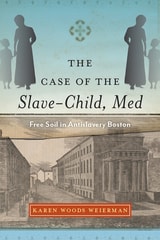
The Case of the Slave-Child, Med
Free Soil in Antislavery BostonKaren Woods Weierman
University of Massachusetts Press, 2019
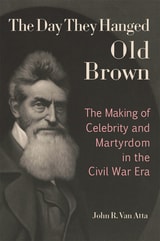
The Day They Hanged Old Brown
The Making of Celebrity and Martyrdom in the Civil War EraJohn R. Van Atta
University of Missouri Press, 2025
Brown’s lifespan covered most of the period between the Revolution and the Civil War, a time of the still-early beginnings of the United States. Only then had his kind of “celebrity” started to matter. From different economic and moral perspectives, politically aware Americans clashed over different visions for the future of the country. At that time, any disruptive figure might be taken as a barometer of the progress or the decline of the republic. A function of the widely varying newspapers and magazines of that day, celebrity offered Americans an angle of vision, happily or not, as to who they were or were becoming or believed themselves to be—as if by a mirror reflection.
In The Day They Hanged Old Brown, John Van Atta examines the creation of celebrity in John Brown’s time and how it differed from modern day perceptions. Yet, as applicable as the concept of celebrity is in this case, the story of Brown’s notoriety represents far more. To his admirers, Brown was not merely a celebrity; he was a hero and, after his sacrificial death, a martyr. Not all celebrities rise to such levels. This book traces the meaning of heroism and martyrdom—as well as the opposite side of that coin, villainy—and suggests that John Brown’s story and legacy helped to redefine these concepts for many Americans during the era of the Civil War, before modern historians began to deliberate him.
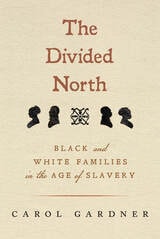
The Divided North
Black and White Families in the Age of SlaveryCarol Gardner
University of Massachusetts Press, 2025
Winner, 2026 New England Historical Association James P. Hanlan Book Prize
Finalist, 2026 New England Society Book Award in Nonfiction
Reuben Ruby and Nathaniel Gordon II were born eleven months apart in 1798 and 1799 and spent much of their boyhoods roaming the noisy, bustling waterfront of Portland, Maine. They lived just blocks from one another, attended school together, and went to the same church with their families. But they were worlds apart, separated by family, culture, and race. Reuben Ruby was Black and Nathaniel Gordon was White.
The Rubys became prominent antislavery activists, equal rights advocates, and operatives on the Underground Railroad. Their neighbors, the Gordons, became well-to-do ship masters, owners, and merchants: among them, the most notorious American slave ship captain of the century, Nathaniel Gordon III. As activists, sea captains, businessmen, prospectors, and politicians, members of these two families traveled to New York, California, Texas, Louisiana, Africa, Haiti, and Brazil, where their experiences were shaped by their racial identities. At home in the “Free North,” they faced social and political divisions nearly as sharp as those they encountered elsewhere.
To understand the issues that divided nineteenth-century America—and, in many ways, still divide the nation—few have looked to the far North. In this compelling narrative history and intimate dual-family biography, Carol Gardner traces the Rubys and Gordons as they navigate the turbulent 1800s. As families and individuals, they demonstrate that the North was a critical proving ground for American notions of freedom and equality, as telling as any town, plantation, or battlefield in the South. Their experiences help reveal what it meant to live in a free state during the age of slavery, with all the promise, disappointment, irony, and hope that the notion entailed.

The Dutch Atlantic
Slavery, Abolition and EmancipationKwame Nimako and Glenn Willemsen
Pluto Press, 2011
The Dutch Atlantic interrogates the Dutch involvement in Atlantic slavery and assesses the historical consequences of this for contemporary European society.
Kwame Nimako and Glenn Willemsen show how the slave trade and slavery intertwined economic, social and cultural elements, including nation-state formation in the Netherlands and across Europe. They explore the mobilisation of European populations in the implementation of policies that facilitated Atlantic slavery and examine how European countries created and expanded laws that perpetuated colonisation.
Addressing key themes such as the incorporation of the formerly enslaved into post-slavery states and contemporary collective efforts to forget and/or remember slavery and its legacy in the Netherlands, this is an essential text for students of European history and postcolonial studies.
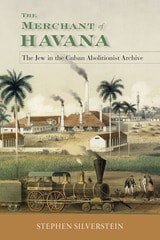
The Merchant of Havana
The Jew in the Cuban Abolitionist ArchiveStephen Silverstein
Vanderbilt University Press, 2016
As Cuba industrialized in the nineteenth century, an epochal realignment of the social order occurred. In this period of change, two seemingly disparate, yet nevertheless intertwined, ideological forces appeared: anti-Semitism and abolitionism. As the antislavery movement became organized in Cuba, the argument grew that Jews participated in the African slave trade and in New World slavery, and that this participation gave Jews extraordinary influence in the new Cuban economy and culture. What was remarkable about this anti-Semitism was the decidedly small Jewish population on the island in this era. This form of anti-Semitism, Silverstein reveals, sprang almost exclusively from mythological beliefs.
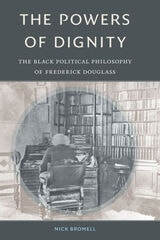
The Powers of Dignity
The Black Political Philosophy of Frederick DouglassNick Bromell
Duke University Press, 2021
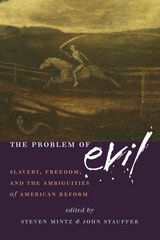
The Problem of Evil
Slavery, Freedom and the Ambiguities of American ReformSteven Mintz
University of Massachusetts Press, 2007
Divided into four parts, with introductions to each section by editors Steven Mintz and John Stauffer, the essays provide succinct guides to the evolution of American slavery, the origins of antislavery thought, the challenges of emancipation, and the post-emancipation legacy of slavery. They also offer fresh perspectives on key individuals, from Benjamin Franklin and Frederick Douglass to Harriet Jacobs and John Brown, and shed new light on the differences between female and male critiques of slavery, the defense of slavery by the South's intellectual elite, and Catholic attitudes toward slavery and abolition.
Above all, The Problem of Evil helps us understand the circumstances that allow social evils to happen, how intelligent and ostensibly moral people can participate in the most horrendous crimes, and how, at certain historical moments, some individuals are able to rise above their circumstances, address evil in fundamental ways, and expand our moral consciousness.
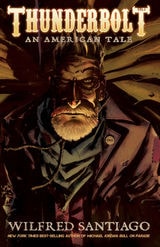
Thunderbolt
An American Tale, Vol. 1Wilfred Santiago
The Ohio State University Press, 2019
As a young boy in nineteenth-century America, Captain John Brown swore to dedicate his life to the struggle against slavery. Years later, he and his sons have joined the fight in Kansas, the epicenter of the national debate over slavery. As the territory nears statehood, abolitionists and proslavery border ruffians clash in increasingly violent conflict across the territory. But John Brown has more in mind than border skirmishes. He aims to eliminate slavery from US soil once and for all—even if that means raiding a government armory in order to arm a national slave revolt. From the Pottawatomie Massacre to the Battle of Black Jack and the Battle of Osawatomie, this first installment in the story of the legendary John Brown traces the rise of the insurrection in stunning detail.
Gritty, gripping, and masterfully illustrated, Wilfred Santiago’s telling of John Brown’s tale pulls no punches as it unflinchingly recounts the epic struggle across pre–Civil War America. And while John Brown’s methods may be questionable, his story is unforgettable. After all, dying is part of the plan.
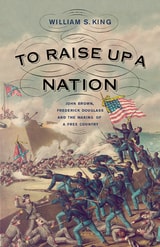
To Raise Up a Nation
John Brown, Frederick Douglass, and the Making of a Free CountryWilliam S. King
Westholme Publishing, 2013
Drawing on decades of research, and demonstrating remarkable command of a great range of primary sources, William S. King has written an important history of African Americans’ own contributions and points of crossracial cooperation to end slavery in America. Beginning with the civil war along the border of Kansas and Missouri, the author traces the life of John Brown and the personal support for his ideas from elite New England businessmen, intellectuals such as Emerson and Thoreau, and African Americans, including his confidant, Frederick Douglass, and Harriet Tubman. Throughout, King links events that contributed to the growing antipathy in the North toward slavery and the South’s concerns for its future, including Nat Turner’s insurrection, the Amistad affair, the Fugitive Slave law, the Kansas-Nebraska Act, and the Dred Scott decision. The author also effectively describes the debate within the African American community as to whether the U.S. Constitution was colorblind or if emigration was the right course for the future of blacks in America.
Following Brown’s execution after the failed raid on Harper’s Ferry in 1859, King shows how Brown’s vision that only a clash of arms would eradicate slavery was set into motion after the election of Abraham Lincoln. Once the Civil War erupted on the heels of Brown’s raid, the author relates how black leaders, white legislators, and military officers vigorously discussed the use of black manpower for the Union effort as well as plans for the liberation of the “veritable Africa” within the southern United States. Following the Emancipation Proclamation of January 1863, recruitment of black soldiers increased and by war’s end they made up nearly ten percent of the Union army, and contributed to many important victories.
To Raise Up a Nation: John Brown, Frederick Douglass, and the Making of a Free Country is a sweeping history that explains how the destruction of American slavery was not directed primarily from the counsels of local and national government and military men, but rather through the grassroots efforts of extraordinary men and women. As King notes, the Lincoln administration ultimately armed black Americans, as John Brown had attempted to do, and their role was a vital part in the defeat of slavery.