Results by title
82 books match the query 'Appalachian Region' and 15 start with t
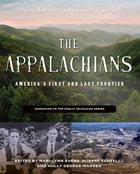
The Appalachians
America's First and Last FrontierMari-Lynn Evans
West Virginia University Press, 2013
A beautifully produced companion volume to the public television documentary The Appalachians fills the void in information about the region, offering a rich portrait of its history and its legacy in music, literature, and film. The text includes essays by some of Appalachia’s most respected scholars and journalists; excerpts from never-before-published diaries and journals; firsthand recollections from native Appalachians including Loretta Lynn, Ricky Skaggs, and Ralph Stanley; indigenous song lyrics and poetry; and oral histories from common folk whose roots run strong and deep. The book also includes more than one hundred illustrations, both archival and newly created. Here is a wondrous book celebrating a unique and valuable heritage.
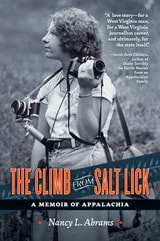
The Climb from Salt Lick
A Memoir of AppalachiaNancy L. Abrams
West Virginia University Press, 2018
The Climb from Salt Lick is the remarkable memoir of an outsider coming into adulthood. It is the story of a unique place and its people from the perspective of a woman who documents its burdens and its beauty, using words and pictures to tell the rich stories of those around her.
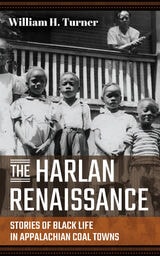
The Harlan Renaissance
Stories of Black Life in Appalachian Coal TownsWilliam H. Turner
West Virginia University Press, 2021
The Harlan Renaissance is an intimate remembrance of kinship and community in eastern Kentucky’s coal towns written by one of the luminaries of Appalachian studies, William Turner. Turner reconstructs Black life in the company towns in and around Harlan County during coal’s final postwar boom years, which built toward an enduring bust as the children of Black miners, like the author, left the region in search of better opportunities.
The Harlan Renaissance invites readers into what might be an unfamiliar Appalachia: one studded by large and vibrant Black communities, where families took the pulse of the nation through magazines like Jet and Ebony and through the news that traveled within Black churches, schools, and restaurants. Difficult choices for the future were made as parents considered the unpredictable nature of Appalachia’s economic realities alongside the unpredictable nature of a national movement toward civil rights.
Unfolding through layers of sociological insight and oral history, The Harlan Renaissance centers the sympathetic perspectives and critical eye of a master narrator of Black life.
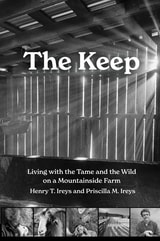
The Keep
Living with the Tame and the Wild on a Mountainside FarmHenry T. Ireys
West Virginia University Press, 2025
Written separately by wife and husband with distinctly separate voices, the book’s essays illustrate different perspectives of life on a farm dedicated to the compassionate treatment of livestock and a deep appreciation of nature’s complexities. Priscilla embraces the intensity of loving animals; Henry explores the mysteries of living in a beautiful place. And, in telling their tales, the authors provide a glimpse into their own marriage—as complicated, improbable, and enduring as life itself. The Keep—the term for “the strongest or central tower of a castle, acting as a final refuge”—is a love letter to an unexpected place and adopted lifestyle.
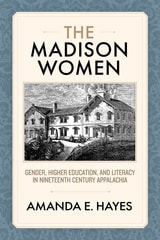
The Madison Women
Gender, Higher Education, and Literacy in Nineteenth-Century AppalachiaAmanda E Hayes
West Virginia University Press, 2024
Incorporating captivating mini-biographies of women who attended Madison College and who went on to change their communities in ways large and small, this book reveals how the lives of its students impart lessons about history, regional culture, and how we can shape the Appalachia's future.
The New Book of Plots
Constructing Engaging Narratives for Oral and Written StorytellingLoren Niemi
Parkhurst Brothers, Inc., 2012
In the space of the thirty-some years I have called myself a storyteller, the balance of what I tell has shifted from children’s stories and traditional folk and fairy tales told in schools, churches, and community centers to stories drawn directly from my own experiences. But I also understand that by adapting and re-imagining traditional folk and fairy tale material, you can provide a point of entry for contemporary listeners to experience, as psychologist Bruno Bettelheim has suggested in his book The Uses of Enchantment, the continuing power of the old stories to speak to the imagination and heart.
Wanting to make a connection between the older stories and our existential circumstance, I sought to re-interpret folk and fairy tales by placing them in a more contemporary context. The confusing Black Forest of the Brothers Grimm became the crowded shopping mall. Rapunzel’s mother sought a more familiar drug than the painkilling herbs of the witch’s garden. I also created stories that were in the style of the older folk and fairy tales. One featured a lowly cucumber plant that, after consuming radioactive water and junk-food compost, became the glowing, green Godzilla of pickles. Another featured a boy named Jack, who found fame and fortune racing inner-city cockroaches.
In creating and performing original stories and reimagined folk tales, as well as teaching stories to students of all ages, it has become clear to me that how we tell the story, as much as why, is at the very heart of the art. By “how,” I do not mean how we use voice and gesture, etc., but how we organize stories to get across their meanings to an audience.
There are two central facts at the heart of the oral story. The first is that it begins when the teller begins and ends when the teller ends it, though I could argue that it actually ends when the audience dismisses it. This is fundamentally different from the written story, where a reader can go back and read the same words again. With the spoken word, we are in the moment. Even if we could ask the teller to go back and say something again, the very act of asking would alter the way in which the information is conveyed to us. This leads directly to the second basic fact: the act of telling is an expression of the relationship of the teller to the audience. We always tell to someone, even if it is to ourselves. It is incumbent upon us to recognize that the choice we make about how we tell a story to a given audience is as much about our understanding of who that audience is as it is about what we are saying to the audience.
It is this crucial understanding of how the narrative is shaped and the choices we make as tellers to share a particular version of a story with a particular audience that I wish to explore with you. Whether we are working with a live audience in performance or with an imagined one while typing away on our laptops, the creation of compelling fiction and non-fiction begins with how to frame the story.
This book is for storytellers and would-be storytellers, whether you call yourself a writer, minister, politician, journalist, lawyer, teacher, therapist, or street-corner b.s.’er. Whatever the name, the benefit you derive from the application of this material to your creative process will come from understanding how narrative is shaped and making conscious decisions about shaping that narrative content. This book was developed in workshops and classes I’ve conducted with storytellers and writers since 1986. In the course of those years, this teaching practice has refined my thinking and improved my ability to help participants discover new approaches to creating powerful, authentic, and entertaining stories.
Much of what I say will be framed around the creation of stories as oral performance, but the concepts and exercises I suggest apply to written material as well. Whether the stories are oral or written, this book is about three things: the choice of an appropriate narrative form to provide the story’s structure, the choice of an appropriate point of view and timeframe to support the story’s emotional arc, and how those choices help or hinder the transmission of the meaning of the story to an audience.
The News Untold
Community Journalism and the Failure to Confront Poverty in AppalachiaMichael Clay Carey
West Virginia University Press, 2017
Weatherford Award winner, nonfiction
The News Untold offers an important new perspective on media narratives about poverty in Appalachia. It focuses on how small-town reporters and editors in some of the region’s poorest communities decide what aspects of poverty are news, how their audiences interpret those decisions, and how those two related processes help shape broader understandings of economic need and local social responsibility. Focusing on patterns of both media creation and consumption, The News Untold shows how a lack of constructive news coverage of economic need can make it harder for the poor to voice their concerns.
Critical and inclusive news coverage of poverty at the local level, Michael Clay Carey writes, can help communities start to look past old stereotypes and attitudes and encourage solutions that incorporate broader sets of community voices. Such an effort will require journalists and community leaders to reexamine some of the professional traditions and social views that often shape what news looks like in small towns.

The Opioid Epidemic and US Culture
Expression, Art, and Politics in an Age of AddictionTravis D. Stimeling
West Virginia University Press, 2020
Written for an audience of people working on the front lines of the opioid crisis, the book is essential reading for social workers, addiction counselors, halfway house managers, and people with opioid use disorder. It will also appeal to the community of scholars interested in understanding how aesthetics shape our engagement with critical social issues, particularly in the fields of literary and film criticism, museum studies, and ethnomusicology.
The Politics of Appalachian Rhetoric
Amanda E Hayes
West Virginia University Press, 2018
In exploring the ways that Appalachian people speak and write, Amanda E. Hayes raises the importance of knowing and respecting communication styles within a marginalized culture. Diving deep into the region’s historical roots—especially those of the Scotch-Irish and their influence on her own Appalachian Ohio—Hayes reveals a rhetoric with its own unique logic, utility, and poetry.
Hayes also considers the headwinds against Appalachian rhetoric, notably ideologies about poverty and the biases of the school system. She connects these to challenges that Appalachian students face in the classroom and pinpoints pedagogical and structural approaches for change.
Throughout, Hayes blends conventional scholarship with autobiography, storytelling, and language, illustrating Appalachian rhetoric’s validity as a means of creating and sharing knowledge.
The Sound of Dove
Singing in Appalachian Primitive Baptist ChurchesBeverly Bush Patterson
University of Illinois Press, 1995

The Tangled Roots of Feminism, Environmentalism, and Appalachian Literature
Elizabeth S. D. Engelhardt
Ohio University Press, 2003
Contemporaries were shocked when author Mary Noailles Murfree revealed she was a woman, but modern readers may be more surprised by her cogent discussion of community responses to unwanted development. Effie Waller Smith, an African American woman writing of her love for the Appalachian mountains, wove discussions of women's rights, racial tension, and cultural difference into her Appalachian poetry. Grace MacGowan Cooke participated in avant-garde writers' colonies with the era's literary lights and applied their progressive ideals to her fiction about the Appalachia of her youth. Emma Bell Miles, witness to poverty, industrialization, and violence against women, wrote poignant and insightful critiques of her Appalachian home.
In The Tangled Roots of Feminism, Environmentalism, and Appalachian Literature Elizabeth Engelhardt finds in all four women's writings the origins of what we recognize today as ecological feminism—a wide-reaching philosophy that values the connections between humans and nonhumans and works for social and environmental justice.
People and the land in Appalachia were also the subject of women authors with radically different approaches to mountains and their residents. Authors with progressive ideas about women's rights did not always respect the Appalachian places they were writing about or apply their ideas to all of the women in those places—but they did create hundreds of short stories, novels, letters, diaries, photographs, sketches, and poems about the mountains.
While The Tangled Roots of Feminism, Environmentalism, and Appalachian Literature ascribes much that is noble to the beginnings of the ecological feminism movement as it developed in Appalachia, it is also unyielding in its assessment of the literatures of the voyeur, tourist, and social crusader who supported status quo systems of oppression in Appalachia.
This Book is Free and Yours to Keep
Notes from the Appalachian Prison Book ProjectConnie Banta
West Virginia University Press, 2024
This Book Is Free and Yours to Keep presents a captivating collection of letters and artwork by people in prison that highlights the crucial work done by the Appalachian Prison Book Project (APBP), a nonprofit that provides books to incarcerated people in West Virginia, Virginia, Tennessee, Kentucky, Ohio, and Maryland. Through the words of people directly impacted by the criminal punishment system, the collection provides uncommon insight into reading practices and everyday life in prisons and jails while being an inspiration for prison book projects, prison reform, and abolition.
Simultaneously communicating the vital importance of access to books and education, and conveying the power of community, the letters sent to APBP by incarcerated people spark conversations about race, poverty, and incarceration and shed light on the movement for accountability for state violence. This Book Is Free and Yours to Keep elucidates the violence and neglect perpetuated by carceral systems and offers a way forward based on solidarity and collaboration.
Thunder on the Mountain
Death at Massey and the Dirty Secrets behind Big CoalPeter A. Galuszka
West Virginia University Press, 2014
With a foreword by Denise Giardina
On April 5, 2010, an explosion ripped through Massey Energy’s Upper Big Branch Mine, killing twenty-nine coal miners. This tragedy was the deadliest mine disaster in the United States in forty years—a disaster that never should have happened. These deaths were rooted in the cynical corporate culture of Massey and its notorious former CEO Don Blankenship, and were part of an endless cycle of poverty, exploitation, and environmental abuse that has dominated the Appalachian coalfields since coal was first discovered there. And the cycle continues unabated as coal companies bury the most insidious dangers deep underground, all in search of higher profits, and hide the true costs from regulators, unions, and investors alike. But the disaster at Upper Big Branch goes beyond the coalfields of West Virginia. It casts a global shadow, calling into bitter question why coal miners in the United States are sacrificed to erect cities on the other side of the world, why the coal wars have been allowed to rage, polarizing the country, and how the world’s voracious appetite for energy is satisfied at such horrendous cost.
With Thunder on the Mountain, Peter A. Galuszka pieces together the true story of greed and negligence behind the tragedy at the Upper Big Branch Mine, and in doing so he has created a devastating portrait of an entire industry that exposes the coal-black motivations that led to the death of twenty-nine miners and fuel the ongoing war for the world’s energy future.
This paperback edition contains a foreword by Denise Giardinia that provides an update on Massey Energy and Donald Blankenship, Chairman and CEO of Massey Energy Company during the UBB disaster, and recounts her own experiences with Massey Energy and the United Mine Workers Association in the 1980s. This edition also includes a notes section and a bibliography.
Transforming Places
Lessons from AppalachiaEdited by Stephen L. Fisher and Barbara Ellen Smith
University of Illinois Press, 2012
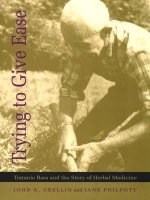
Trying to Give Ease
Tommie Bass and the Story of Herbal MedicineJohn K. Crellin and Jane Philpott
Duke University Press, 1997