Results by title
71 books match the query 'Armed Forces' and 15 start with t
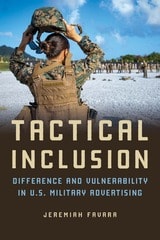
Tactical Inclusion
Difference and Vulnerability in U.S. Military AdvertisingJeremiah Favara
University of Illinois Press, 2024
Compelling and eye-opening, Tactical Inclusion combines original analysis with personal experience to chart advertising’s role in building the all-volunteer military.
The Abongo Abroad
Military-Sponsored Travel in Ghana, the United States, and the World, 1959-1992John V. Clune
Vanderbilt University Press, 2017
Merging newly discovered documents from Ghana's armed forces and declassified sources on American military assistance to Africa, this work argues that military-sponsored travel made individual Ghanaians' outlooks on the world more international, just as military assistance planners hoped they would, but the Ghanaian state struggled to turn that new identity into political or economic progress.
The American Warfare State
The Domestic Politics of Military SpendingRebecca U. Thorpe
University of Chicago Press, 2014

The Community of Nuchi Du Takara ("Life Is the Ultimate Treasure") in Postwar Okinawa
Local Subjectivity within and against EmpireMasamichi (Marro) Inoue
University of Michigan Press, 2025
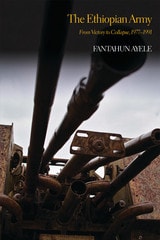
The Ethiopian Army
From Victory to Collapse, 1977-1991Fantahun Ayele
Northwestern University Press, 2014
The Ethiopian popular revolution of 1974 ended a monarchy that claimed descent from King Solomon and the Queen of Sheba, and brought to power a military government that created one of the largest and best-equipped armies in Africa. In his panoramic study of the Ethiopian army, Fantahun Ayele draws upon his unprecedented access to Ethiopian Ministry of Defense archives to study the institution that was able to repel the Somali invasion of 1977 and suppress internal uprisings, but collapsed in 1991 under the combined onslaught of armed insurgencies in Eritrea and Tigray. Besides military operations, The Ethiopian Army discusses tactical areas such as training, equipment, intelligence, and logistics, as well as grand strategic choices such as ending the 1953 Ethio-American Mutual Defense Agreement and signing a treaty of military assistance with the Soviet Union. The result sheds considerable light on the military developments that have shaped Ethiopia and the Horn in the twentieth century.

The Horrible Peace
British Veterans and the End of the Napoleonic WarsEvan Wilson
University of Massachusetts Press, 2023
Few battles in world history provide a cleaner dividing line than Waterloo: before, there was Napoleon; after, there was the Pax Britannica. While Waterloo marked France’s defeat and Britain’s ascendance as an imperial power, the war was far from over for many soldiers and sailors, who were forced to contend with the lasting effects of battlefield trauma, the realities of an impossibly tight labor market, and growing social unrest. The Horrible Peace details a story of distress and discontent, of victory complicated by volcanism, and of the challenges facing Britain at the beginning of its victorious century.
Examining the process of demobilization and its consequences for British society, Evan Wilson draws on archival research and veterans’ memoirs to tell the story of this period through the experiences of veterans who struggled to reintegrate and soldiers and sailors who remained in service as Britain attempted to defend and expand the empire. Veterans were indeed central to Britain’s experience of peace, as they took to the streets to protest the government’s indifference to widespread unemployment and misery. The fighting did not stop at Waterloo.
The Language of Birds
Norbert Scheuer
Haus Publishing, 2018
As visceral horrors and everyday banalities of the war threaten to engulf Paul, he, like his great-great-grandfather, finds his very own refuge in Afghanistan’s natural world. In a diary filled with exquisite drawings of birds and ruminations on the life he left behind, Paul describes his experiences living with two comrades who are fighting their own demons and his befriending of an Afghan man, Nassim, as well as his dreams of escaping the restrictive base camp and visiting the shores of a lake visible from the lookout tower. But when he finally reaches the lake one night, he finds himself in the midst of a chain of events that, with his increasingly fragile state of mind, has dramatic—and ultimately heartbreaking—consequences.
A meditative novel that shows a new side to the conflict in Afghanistan, The Language of Birds takes a moving look at the all-too-human costs of war and questions what it truly means to fight for freedom.
The New Winter Soldiers
GI and Veteran Dissent During the Vietnam EraMoser, Richard
Rutgers University Press, 1996
Richard Moser uses interviews and personal stories of Vietnam veterans to offer a fundamentally new interpretation of the Vietnam War and the antiwar movement. Although the Vietnam War was the most important conflict of recent American history, its decisive battle was not fought in the jungles of Vietnam, or even in the streets of the United States, but rather in the hearts and minds of American soldiers. To a degree unprecedented in American history, soldiers and veterans acted to oppose the very war they waged. Tens of thousands of soldiers and veterans engaged in desperate conflicts with their superiors and opposed the war through peaceful protest, creating a mass movement of dissident organizations and underground newspapers.
Moser shows how the antiwar soldiers lived out the long tradition of the citizen soldier first created in the American Revolution and Civil War. Unlike those great upheavals of the past, the Vietnam War offered no way to fulfill the citizen-soldier's struggle for freedom and justice. Rather than abandoning such ideals, however, tens of thousands abandoned the war effort and instead fulfilled their heroic expectations in the movements for peace and justice. According to Moser, this transformation of warriors into peacemakers is the most important recent development of our military culture.
The struggle for peace took these new winter soldiers into America rather than away from it. Collectively these men and women discovered the continuing potential of American culture to advance the values of freedom, equality, and justice on which the nation was founded.
The Peculiar Revolution
Rethinking the Peruvian Experiment Under Military RuleEdited by Carlos Aguirre and Paulo Drinot
University of Texas Press, 2017
On October 3, 1968, a military junta led by General Juan Velasco Alvarado took over the government of Peru. In striking contrast to the right-wing, pro–United States/anti-Communist military dictatorships of that era, however, Velasco’s “Revolutionary Government of the Armed Forces” set in motion a left-leaning nationalist project aimed at radically transforming Peruvian society by eliminating social injustice, breaking the cycle of foreign domination, redistributing land and wealth, and placing the destiny of Peruvians into their own hands. Although short-lived, the Velasco regime did indeed have a transformative effect on Peru, the meaning and legacy of which are still subjects of intense debate.
The Peculiar Revolution revisits this fascinating and idiosyncratic period of Latin American history. The book is organized into three sections that examine the era’s cultural politics, including not just developments directed by the Velasco regime but also those that it engendered but did not necessarily control; its specific policies and key institutions; and the local and regional dimensions of the social reforms it promoted. In a series of innovative chapters written by both prominent and rising historians, this volume illuminates the cultural dimensions of the revolutionary project and its legacies, the impact of structural reforms at the local level (including previously understudied areas of the country such as Piura, Chimbote, and the Amazonia), and the effects of state policies on ordinary citizens and labor and peasant organizations.
The Pinochet Generation
The Chilean Military in the Twentieth CenturyJohn R. Bawden
University of Alabama Press, 2016
Understanding the military generation that transformed modern Chile.
Chilean soldiers in the twentieth century appear in most historical accounts, if they appear at all, as decontextualized figures or simply as a single man: Augusto Pinochet. In his incisive study The Pinochet Generation: The Chilean Military in the Twentieth Century, John R. Bawden provides compelling new insights into the era and posits that Pinochet and his men were responsible for two major transformations in Chile’s constitution as well as the political and economic effects that followed.
Determined to refocus what he sees as a “decontextualized paucity” of historical information on Chile’s armed forces, Bawden offers a new perspective to explain why the military overthrew the government in 1973 as well as why and how Chile slowly transitioned back to a democracy at the end of the 1980s. Standing apart from other views, Bawden insists that the Chilean military’s indigenous traditions and customs did more than foreign influences to mold their beliefs and behavior leading up to the 1973 coup of Salvador Allende.
Drawing from defense publications, testimonial literature, and archival materials in both the United States and Chile, The Pinochet Generation characterizes the lens through which Chilean officers saw the world, their own actions, and their place in national history. This thorough analysis of the Chilean services’ history, education, values, and worldview shows how this military culture shaped Chilean thinking and behavior, shedding light on the distinctive qualities of Chile’s armed forces, the military’s decision to depose Allende, and the Pinochet dictatorship’s resilience, repressiveness, and durability.
Bawden’s account of Chile’s vast and complex military history of the twentieth century will appeal to political scientists, historians, faculty and graduate students interested in Latin America and its armed forces, students of US–Latin American diplomacy, and those interested in issues of human rights.
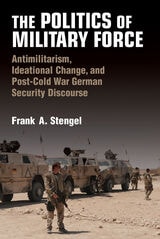
The Politics of Military Force
Antimilitarism, Ideational Change, and Post-Cold War German Security DiscourseFrank A. Stengel
University of Michigan Press, 2020
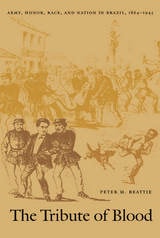
The Tribute of Blood
Army, Honor, Race, and Nation in Brazil, 1864–1945Peter M. Beattie
Duke University Press, 2001
Beattie looks through sociological, anthropological, and historical lenses to analyze archival sources such as court-martial cases, parliamentary debates, published reports, and the memoirs and correspondence of soldiers and officers. Combining these materials with a colorful array of less traditional sources—such as song lyrics, slang, grammatical evidence, and tattoo analysis—he reveals how the need to reform military recruitment with a conscription lottery became increasingly apparent in the wake of the Paraguayan War of 1865–1870 and again during World War I. Because this crucial reform required more than changing the army’s institutional roles and the conditions of service, The Tribute of Blood is ultimately the story of how entrenched conceptions of manhood, honor, race, citizenship, and nation were transformed throughout Brazil.
Those interested in social, military, and South American history, state building and national identity, and the sociology of the poor will be enriched by this pathbreaking study.
The U.S. Army Stability Operations Field Manual
U.S. Army Field Manual No. 3-07The United States Army
University of Michigan Press, 2009
Field Manual 3-07, Stability Operations, represents a milestone in Army doctrine.
With a focus on transforming conflict, managing violence when it does occur and maintaining stable peace, The U.S. Army Stability Operations Field Manual (otherwise known as FM 3-07) signals a stark departure from traditional military doctrine. The Army officially acknowledges the complex continuum from conflict to peace, outlines the military's responsibility to provide stability and security, and recognizes the necessity of collaboration, coordination, and cooperation among military, state, commercial, and non-government organizations in nation-building efforts.
The manual reflects a truly unique collaboration between the Army and a wide array of experts from hundreds of groups across the United States Government, the intergovernmental and non-governmental communities, America's allies around the world, and the private sector. All branches of the armed forces, U.S. agencies ranging from the State Department to Homeland Security to Health and Human Services, international agencies from the United Nations to the Red Cross to the World Bank, countries from the United Kingdom to India to South Africa, private think tanks from RAND to the United States Institute of Peace to the Center for New American Security, all took part in the shaping of this document.
The U.S. Army Stability Operations FieldManual, marks just the second time in modern history that the U.S. Army has worked with a private publisher to produce a military doctrinal document.
Lieutenant General William B. Caldwell, IV is Commander of the Combined Arms Center at Fort Leavenworth, Kansas.
Michèle Flournoy, Under Secretary of Defense for Policy
Shawn Brimley, Fellow, Center for a New American Security
Janine Davidson, Deputy Assistant Secretary of Defense for Plans
"It is a roadmap from conflict to peace, a practical guidebook for adaptive, creative leadership at a critical time in our history. It institutionalizes the hard-won lessons of the past while charting a path for tomorrow. This manual postures our military forces for the challenges of an uncertain future, an era of persistent conflict where the unflagging bravery of our Soldiers will continue to carry the banner of freedom, hope, and opportunity to the people of the world."
—From the foreword by Lieutenant General William B. Caldwell, IV, Commander of the Combined Arms Center at Fort Leavenworth, Kansas
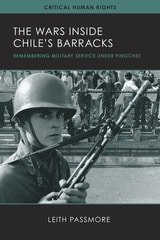
The Wars inside Chile's Barracks
Remembering Military Service under PinochetLeith Passmore
University of Wisconsin Press, 2020
Relying on unpublished material, testimony, interviews, and field notes, Passmore locates these individuals' narratives of victimhood at the intersection of long-term histories of patriotism, masculinity, and cyclical poverty. These accounts reveal in detail how Pinochet's war against his own citizens—as well as the "almost-wars" with neighboring Peru, Bolivia, and Argentina—were also waged inside Chile's army barracks.
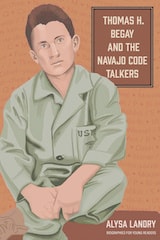
Thomas H. Begay and the Navajo Code Talkers
Alysa Landry
Ohio University Press, 2023