Results by title
50 books match the query 'Athens (Greece)' and 11 start with t
The Athenian Adonia in Context
The Adonis Festival as Cultural PracticeLaurialan Reitzammer
University of Wisconsin Press, 2018
Reitzammer uncovers correlations of the Adonia to Athenian wedding rituals and civic funeral oration and provides illuminating evidence that the festival was a significant cultural template for such diverse works as Aristophanes’ drama Lysistrata and Plato’s dialogue Phaedrus. Her fresh approach is a timely contribution to studies of the ways gender and sexuality intersect with religion and ritual in ancient Greece.
The Athenian Empire Restored
Epigraphic and Historical StudiesHarold B. Mattingly
University of Michigan Press, 1996
This volume collects Harold B. Mattingly's most important essays on the question, and offers them in updated form together with a new introduction and notes, and a concordance of inscriptions. A preface by Mortimer Chambers helps place the volume amid the decades- long controversy about events in and around Athens, and describes the scientific technique that has proven Mattingly's argument.
In the process of establishing a sounder methodology for investigating this crucial period of Greek--and Western--history, Mattingly in these groundbreaking essays turns a beacon of light on many aspects of Greek and Athenian society and history.
The Athenian Experiment
Building an Imagined Political Community in Ancient Attica, 508-490 B.C.Greg Anderson
University of Michigan Press, 2003
The Phratries of Attica
S. D. Lambert
University of Michigan Press, 1998
The Real Life of the Parthenon
Patricia Vigderman
The Ohio State University Press, 2018
Ownership battles over the marbles removed from the Parthenon by Lord Elgin have been rumbling into invective, pleading, and counterclaims for two centuries. The emotional temperature around them is high, and steering across the vast past to safe anchor in a brilliant heritage is tricky. The stories around antiquities become distorted by the pull of ownership, and it is these stories that urge Patricia Vigderman into her own exploration of their inspiring legacy in her compelling extended essay, The Real Life of the Parthenon.
Vigderman’s own journey began at the Parthenon, but curiosity edged her further onto the sea between antiquity and the present. She set out to seek the broken temples and amphorae, the mysterious smiles of archaic sculpture, and the finely hammered gold of a funeral wreath among the jumbled streets of modern Athens, the fertile fields of Sicily, the mozzarella buffalo of Paestum. Guided along the way toward the enduring landscapes and fractured history by archeologists, classicists, historians, and artists—and by the desire they inspire—she was caught by ongoing, contemporary local life among the ruins. Gathering present meaning and resonance for the once and future remains of vanished glory, The Real Life of the Parthenon illuminates an important but shadowy element of our common cultural life: the living dynamic between loss and delight.
The Sacrifice of Socrates
Athens, Plato, GirardWm. Blake Tyrrell
Michigan State University Press, 2012
When Athenians suffered the shame of having lost a war from their own greed and foolishness, around 404 BCE the public’s blame was directed at Socrates, a man whose unique appearance and behavior, as well as his disapproval of the democracy, made him a ready target. Socrates was subsequently put on trial and sentenced to death. However, as René Girard has pointed out, no individual can be held responsible for a communal crisis. Plato’s Apology depicts Socrates as both the bane and the cure of Greek society, while his Crito shows a sacrificial Socrates, what some might consider a pharmakos figure, the human drug through whom Plato can dispense his philosophical remedies. With tremendous insight and satisfying complexity, this book analyzes classical texts through the lens of Girard’s mimetic mechanism.
The Soul of Tragedy
Essays on Athenian DramaEdited by Victoria Pedrick and Steven M. Oberhelman
University of Chicago Press, 2005
Exemplary of the nature and scope of this book, the essays range from Simon Goldhill's comparative study of music, gender, and culture to Martha Nussbaum's inspection of "the comic soul." Through the critical lenses of psychoanalysis, gender, social history, and philology, this compilation looks at Greek tragedy's peculiar power to illuminate the workings of the human soul. Structures of tragic meaning, the relationship between character desire and spectator experience, and investigations of tragedy's extraordinary preoccupation with gender reveal the form's emotional core and explain its rapid ascent through the hierarchy of cultural practices in classical Greece. The Soul of Tragedy is a celebration and a model of collaboration that will be essential reading for scholars in classics, literature, and drama.
The Two Noble Kinsmen
William Shakespeare
Arizona Center for Medieval and Renaissance Studies, 2021
Playwright, poet, and novelist Tim Slover presents William Shakespeare’s and John Fletcher’s collaboration, The Two Noble Kinsmen, in a modern translation that retains all the wit, romance, and poetry of the original. For his last play, the Bard pulled out all the stops, creating a tragicomedy of heart’s yearning and deadly rivalry, and peopling it with heroes and heroines out of legend, including two of the greatest—and least known—female roles in the entire canon. Fletcher provided the music and dance. Slover brings it all vividly to life with fresh clarity and fiery passion in this new, contemporary version.
This translation was written as part of the Oregon Shakespeare Festival’s Play On! project, which commissioned new translations of thirty-nine Shakespeare plays. These translations present the work of "The Bard" in language accessible to modern audiences while never losing the beauty of Shakespeare’s verse. These volumes make these works available for the first time in print—a new First Folio for a new era.
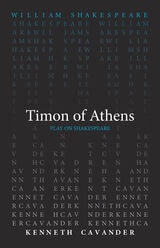
Timon of Athens
William Shakespeare
Arizona Center for Medieval and Renaissance Studies, 2021
Never performed in Shakespeare’s lifetime, Timon of Athens presents an intriguing puzzle for contemporary audiences. The disjointed plot and many gaps in the story have led scholars to believe it was a collaboration between Shakespeare and Thomas Middleton, a younger writer known for his satires, and productions for decades have faced choices about the most effective way to present the play. In this translation, Cavander acts as a third playwright in this collaborative process. Wrangling the voices of Shakespeare and Middleton on the page, Cavander unveils poetic lines and phrases that have sat stubbornly in the cobwebs, cutting these voices through the time barrier and into the world as we know it.
This translation was written as part of the Oregon Shakespeare Festival’s Play On! project, which commissioned new translations of thirty-nine Shakespeare plays. These translations present the work of "The Bard" in language accessible to modern audiences while never losing the beauty of Shakespeare’s verse. These volumes make these works available for the first time in print—a new First Folio for a new era.
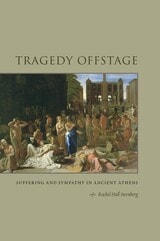
Tragedy Offstage
Suffering and Sympathy in Ancient AthensBy Rachel Hall Sternberg
University of Texas Press, 2006
Humane ideals were central to the image Athenians had of themselves and their city during the classical period. Tragic plays, which formed a part of civic education, often promoted pity and compassion. But it is less clear to what extent Athenians embraced such ideals in daily life. How were they expected to respond, emotionally and pragmatically, to the suffering of other people? Under what circumstances? At what risk to themselves?
In this book, Rachel Hall Sternberg draws on evidence from Greek oratory and historiography of the fifth and fourth centuries BCE to study the moral universe of the ancient Athenians: how citizens may have treated one another in times of adversity, when and how they were expected to help. She develops case studies in five spheres of everyday life: home nursing, the ransom of captives, intervention in street crimes, the long-distance transport of sick and wounded soldiers, and slave torture. Her close reading of selected narratives suggests that Athenians embraced high standards for helping behavior—at least toward relatives, friends, and some fellow citizens. Meanwhile, a subtle discourse of moral obligation strengthened the bonds that held Athenian society together, encouraging individuals to bring their personal behavior into line with the ideals of the city-state.
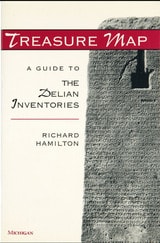
Treasure Map
A Guide to the Delian InventoriesRichard Hamilton
University of Michigan Press, 2015