Results by title
101 books match the query 'Behavior' and 23 start with t
The Affect Effect
Dynamics of Emotion in Political Thinking and BehaviorEdited by W. Russell Neuman, George E. Marcus, Michael MacKuen, and Ann N. Crigler
University of Chicago Press, 2007
In sixteen seamlessly integrated essays, thirty top scholars approach this topic from a broad array of angles that address four major themes. The first section outlines the philosophical and neuroscientific foundations of emotion in politics, while the second focuses on how emotions function within and among individuals. The final two sections branch out to explore how politics work at the societal level and suggest the next steps in modeling, research, and political activity itself. Opening up new paths of inquiry in an exciting new field, this volume will appeal not only to scholars of American politics and political behavior, but also to anyone interested in political psychology and sociology.
The Amboseli Elephants
A Long-Term Perspective on a Long-Lived MammalEdited by Cynthia J. Moss, Harvey Croze, and Phyllis C. Lee
University of Chicago Press, 2011
Elephants have fascinated humans for millennia. Aristotle wrote of them with awe; Hannibal used them in warfare; and John Donne called the elephant “Nature’s greatest masterpiece. . . . The only harmless great thing.” Their ivory has been sought after and treasured in most cultures, and they have delighted zoo and circus audiences worldwide for centuries. But it wasn’t until the second half of the twentieth century that people started to take an interest in elephants in the wild, and some of the most important studies of these intelligent giants have been conducted at Amboseli National Park in Kenya.
The Amboseli Elephants is the long-awaited summation of what’s been learned from the Amboseli Elephant Research Project (AERP)—the longest continuously running elephant research project in the world. Cynthia J. Moss and Harvey Croze, the founders of the AERP, and Phyllis C. Lee, who has been closely involved with the project since 1982, compile more than three decades of uninterrupted study of over 2,500 individual elephants, from newborn calves to adult bulls to old matriarchs in their 60s. Chapters explore such topics as elephant ecosystems, genetics, communication, social behavior, and reproduction, as well as exciting new developments from the study of elephant minds and cognition. The book closes with a view to the future, making important arguments for the ethical treatment of elephants and suggestions to aid in their conservation.
The most comprehensive account of elephants in their natural environment to date, The Amboseli Elephants will be an invaluable resource for scientists, conservationists, and anyone interested in the lives and loves of these extraordinary creatures.
The Anthropology of Self and Behavior
Erchak, Gerald M
Rutgers University Press, 1992
Each chapter reviews the literature, not as a scholar would, but rather to provide an overview of central issues in the field. Each chapter also provides case material, some of which is drawn from Erchak's own work on West African socialization, Micronesian social change, family violence, initiation rites, and alcoholism. His examples are drawn from the U.S. as well as non-Western cultures. This book will be of particular interest to teachers looking for new texts for undergraduate courses in anthropology, psychology, and sociology.
The Behavior of Texas Birds
By Kent Rylander
University of Texas Press, 2002
Whether it's the sudden, plunging dives of Brown Pelicans, the singing and aerial displays of Northern Mockingbirds, or the communal nesting of Purple Martins, innate and learned behaviors are some of the most fascinating things to observe in Texas birds. Even casual birdwatchers eventually ask, "why do they do that?" while serious birders and ornithologists seek to understand all the behaviors involved in feeding, flying, mating, and rearing young. But until now, it has been hard to find this information in one handy source.
In this comprehensive, yet easy-to-use book, Kent Rylander distills data from many sources to provide an authoritative guide to the behavior of Texas birds. He begins by explaining the principles of animal behavior and illustrating how they can be applied to interpreting bird behaviors in the field. The majority of the book is devoted to accounts of more than 400 species of birds that are most likely to be encountered by Texas birdwatchers. Each account describes such behaviors as feeding, courtship, parenting, and other behaviors that are significant for that species. References to interesting and important articles from scientific journals are incorporated in the species accounts where appropriate, and line drawings illustrate some of the behaviors described.
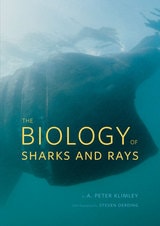
The Biology of Sharks and Rays
A. Peter Klimley
University of Chicago Press, 2013
The book will be a useful textbook for advanced ichthyology students as well as an encyclopedic source for those seeking a greater understanding of these fascinating creatures.

The Black-Tailed Prairie Dog
Social Life of a Burrowing MammalJohn L. Hoogland
University of Chicago Press, 1995
Hoogland documents interactions within and among families of prairie dogs to examine the advantages and disadvantages of coloniality. By addressing such topics as male and female reproductive success, inbreeding, kin recognition, and infanticide, Hoogland offers a broad view of conflict and cooperation. Among his surprising findings is that prairie dog females sometimes suckle, and at other times kill, the offspring of close kin.
Enhanced by more than 100 photographs, this book illuminates the social organization of a burrowing mammal and raises fundamental questions about current theory. As the most detailed long-term study of any social rodent, The Black-Tailed Prairie Dog will interest not only mammalogists and other vertebrate biologists, but also students of behavioral and evolutionary ecology.
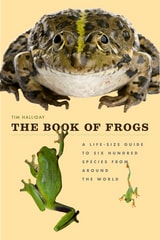
The Book of Frogs
A Life-Size Guide to Six Hundred Species from around the WorldTim Halliday
University of Chicago Press, 2015
The Book of Frogs commemorates the diversity and magnificence of all of these creatures, and many more. Six hundred of nature’s most fascinating frog species are displayed, with each entry including a distribution map, sketches of the frogs, species identification, natural history, and conservation status. Life-size color photos show the frogs at their actual size—including the colossal seven-pound Goliath Frog. Accessibly written by expert Tim Halliday and containing the most up-to-date information, The Book of Frogs will captivate both veteran researchers and amateur herpetologists.
As frogs increasingly make headlines for their troubling worldwide decline, the importance of these fascinating creatures to their ecosystems remains underappreciated. The Book of Frogs brings readers face to face with six hundred astonishingly unique and irreplaceable species that display a diverse array of adaptations to habitats that are under threat of destruction throughout the world.
The Dancing Bees
Karl von Frisch and the Discovery of the Honeybee LanguageTania Munz
University of Chicago Press, 2016
The Dancing Bees draws on previously unexplored archival sources in order to reveal von Frisch’s full story, including how the Nazi government in 1940 determined that he was one-quarter Jewish, revoked his teaching privileges, and sought to prevent him from working altogether until circumstances intervened. In the 1940s, bee populations throughout Europe were facing the devastating effects of a plague (just as they are today), and because the bees were essential to the pollination of crops, von Frisch’s research was deemed critical to maintaining the food supply of a nation at war. The bees, as von Frisch put it years later, saved his life. Munz not only explores von Frisch’s complicated career in the Third Reich, she looks closely at the legacy of his work and the later debates about the significance of the bee language and the science of animal communication.
This first in-depth biography of von Frisch paints a complex and nuanced portrait of a scientist at work under Nazi rule. The Dancing Bees will be welcomed by anyone seeking to better understand not only this chapter of the history of science but also the peculiar waggles of our garden visitors.
The Deer and the Tiger
George B. Schaller
University of Chicago Press, 1984
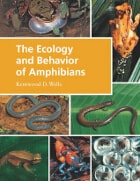
The Ecology and Behavior of Amphibians
Kentwood D. Wells
University of Chicago Press, 2007
Consisting of more than six thousand species, amphibians are more diverse than mammals and are found on every continent save Antarctica. Despite the abundance and diversity of these animals, many aspects of the biology of amphibians remain unstudied or misunderstood. The Ecology and Behavior of Amphibians aims to fill this gap in the literature on this remarkable taxon. It is a celebration of the diversity of amphibian life and the ecological and behavioral adaptations that have made it a successful component of terrestrial and aquatic ecosystems.
Synthesizing seventy years of research on amphibian biology, Kentwood D. Wells addresses all major areas of inquiry, including phylogeny, classification, and morphology; aspects of physiological ecology such as water and temperature relations, respiration, metabolism, and energetics; movements and orientation; communication and social behavior; reproduction and parental care; ecology and behavior of amphibian larvae and ecological aspects of metamorphosis; ecological impact of predation on amphibian populations and antipredator defenses; and aspects of amphibian community ecology. With an eye towards modern concerns, The Ecology and Behavior of Amphibians concludes with a chapter devoted to amphibian conservation.
An unprecedented scholarly contribution to amphibian biology, this book is eagerly anticipated among specialists.
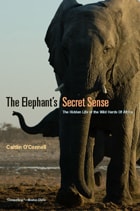
The Elephant's Secret Sense
The Hidden Life of the Wild Herds of AfricaCaitlin O'Connell
University of Chicago Press, 2008
This compelling odyssey of scientific discovery is also a frank account of fieldwork in a poverty-stricken, war-ravaged country. In her attempts to study an elephant community, O’Connell encounters corrupt government bureaucrats, deadly lions and rhinos, poachers, farmers fighting for arable land, and profoundly ineffective approaches to wildlife conservation. The Elephant’s Secret Sense is ultimately a story of intellectual courage in the face of seemingly insurmountable obstacles.
“I was transported by the author’s superbly sensuous descriptions of her years spent studying the animals. . . . Conjures a high-class nature documentary film in prose.”—Steven Poole, Guardian
“A ride as rough and astonishing as the roads of the African floodplain.”—Joan Keener, Entertainment Weekly
“A successful combination of science and soulfulness, explaining her groundbreaking theory of how elephants use seismic communication. . . . O’Connell’s account is studded with sympathetic insights and well-turned phrases.”—Publishers Weekly
“This fascinating book reads like a fast-paced detective story of a scientific discovery and adventure set in contemporary Africa. . . . By the end, O’Connell takes her rightful place among the leading biographers of the African elephant.”—Iain Douglas-Hamilton, author of Among the Elephants
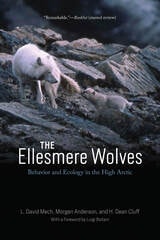
The Ellesmere Wolves
Behavior and Ecology in the High ArcticL. David Mech, Morgan Anderson, and H. Dean Cluff
University of Chicago Press, 2025
For parts of twenty-four summers, wolf biologist L. David Mech lived with a group of wolves on Ellesmere Island, some six hundred miles from the North Pole. Elsewhere, most wolves flee from even the scent of humans, but these animals, evolving relatively free from human persecution, are unafraid. Having already spent twenty-eight years studying other populations of wolves more remotely by aircraft, snow-tracking, live-trapping, and radio-tracking, Mech was primed to join their activities up close and record their interactions with each other. This book tells the remarkable story of what Mech—and the researchers who followed him—have learned while living among the wolves.
The Ellesmere wolves were so unconcerned with Mech’s presence that they allowed him to camp near their den and to sit on his all-terrain vehicle as he observed them, watching packs as large as seven adults and six pups go about their normal activities. In these extraordinarily close quarters, a pup untying his bootlace or an adult sniffing his gloved hand was just part of daily life. Mech accompanied the wolves on their travels and watched as they hunted muskoxen and arctic hares. By achieving the same kind of intimacy with his wild hosts’ every action that we might experience living with domesticated dogs, Mech gained new insights into common but rarely studied behaviors like pup feeding, food caching, howling, and scent-marking. After Mech’s time at Ellesmere ended, his coauthors and fellow wolf researchers Morgan Anderson and H. Dean Cluff spent parts of four summers studying the wolves via radio collars, further illuminating the creatures’ movements and ecology. This book synthesizes their findings, offering both a compelling scientific overview of the animals’ behavior—from hunting to living in packs to rearing pups—and a tale of adventure and survival in the Arctic.
The Essential Guide to Aging in the Twenty-First Century
Mind, Body, and BehaviorDonald H. Kausler, Barry C. Kausler & Jill A. Krupsaw
University of Missouri Press, 2007
For more than a decade, The Graying of America has helped thousands of middle-aged and senior citizens find their way through the thickets and thorns of growing old. Now greatly revised and expanded to include information gleaned from studies of the past five years, this third edition has been retitled to stress its ongoing purpose: conveying a wealth of commonsense information for general readers in nontechnical language.
The book is a storehouse of concise, useful information on the effects of aging on health, the mind, and behavior. Its 588 entries (including 172 new and 150 substantially revised) cover a broad spectrum of topics—from adjusting to retirement to grandparenting, sleep disorders to Alzheimer’s disease. All are directed to the average reader; all stress successful aging and how to accomplish it.
New entries cover such topics as the incidence and causes of frailty, the cognitive benefits of diversified activity, and findings of the Women’s Health Initiative. There is new information on matters like the effects of untreated hearing impairment on spouses and the impact of insufficient exposure to sunlight on sleep, plus new insight into what to look for in searching for a quality nursing home for a loved one.
Also included are results of recent studies on interventions that help to reduce age-related declines in mental and physical health, among them revelations that reports on age-related declines in memory have been skewed by testing errors. And with memory a concern for seniors fearful of declining mental agility, the book tells how to bypass memory problems—such as how to remember where you parked your car—and how physical exercise and challenging mental games can help reduce the risk of dementia. Other “how to avoid” entries offer ways to protect against eye fatigue in computer use, hip fractures when falling, and back injuries while lifting heavy objects.
No other book is so specifically geared to the challenges of how to reduce or even eliminate many of the problems associated with growing old. Aging in the Twenty-First Century can help seniors come to grips with their own aging process—and help younger adults understand what is happening to older family members.
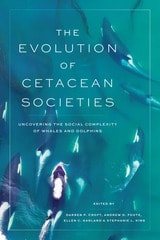
The Evolution of Cetacean Societies
Uncovering the Social Complexity of Whales and DolphinsEdited by Darren P. Croft, Andrew D. Foote, Ellen C. Garland, and Stephanie L. King
University of Chicago Press, 2026
Cetaceans—whales, dolphins, and porpoises—represent an evolutionary peak with respect to their advanced cognitive capacities; flexible communication systems; and structured, multilevel societies. Indeed, the social lives of whales and dolphins have long fascinated scientists and the public alike. The Evolution of Cetacean Societies provides a comprehensive overview of the significant advancements made in studying cetacean behavior and ecology over the last twenty-five years, focusing on our growing understanding of these animals’ complex social lives.
Bringing together scientists from multiple disciplines, the volume summarizes key innovations and progress related to studying cetacean societies’ cultural and genetic basis, their complex social structures, their use of cooperation and patterns of social conflict, and their significant interactions with humans. Each chapter provides an in-depth account of the social lives of whales and dolphins, incorporating the latest cutting-edge research from genomics, communication, network analysis, and animal culture to explain how these animals form societies, maintain relationships, and share information. The final chapters focus on the existential threats facing these diverse and charismatic species, how human-cetacean interactions have shaped our perceptions, and what scientists can learn from their diverse social lives by championing researcher diversity in marine mammal science. The result is an essential and forward-looking book that both contextualizes the lessons of the past two decades and questions the challenges these enigmatic species might face in the future.
Published in 2000 by Chicago, Cetacean Societies: Field Studies of Dolphins and Whales, edited by Janet Mann, Richard C. Connor, Peter Tyack, and Hal Whitehead, inspired a generation of marine biologists. In this new volume, Darren P. Croft, Andrew D. Foote, Ellen C. Garland, and Stephanie L. King—all respected cetacean researchers—offer a worthy successor.
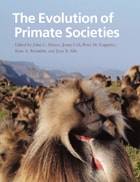
The Evolution of Primate Societies
Edited by John C. Mitani, Josep Call, Peter M. Kappeler, Ryne A. Palombit, and Joan B. Silk
University of Chicago Press, 2012
In 1987, the University of Chicago Press published Primate Societies, the standard reference in the field of primate behavior for an entire generation of students and scientists. But in the twenty-five years since its publication, new theories and research techniques for studying the Primate order have been developed, debated, and tested, forcing scientists to revise their understanding of our closest living relatives.
Intended as a sequel to Primate Societies, The Evolution of Primate Societies compiles thirty-one chapters that review the current state of knowledge regarding the behavior of nonhuman primates. Chapters are written by the leading authorities in the field and organized around four major adaptive problems primates face as they strive to grow, maintain themselves, and reproduce in the wild. The inclusion of chapters on the behavior of humans at the end of each major section represents one particularly novel aspect of the book, and it will remind readers what we can learn about ourselves through research on nonhuman primates. The final section highlights some of the innovative and cutting-edge research designed to reveal the similarities and differences between nonhuman and human primate cognition. The Evolution of Primate Societies will be every bit the landmark publication its predecessor has been.
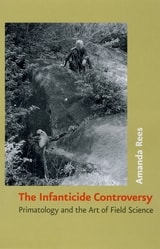
The Infanticide Controversy
Primatology and the Art of Field ScienceAmanda Rees
University of Chicago Press, 2009
Infanticide in the natural world might be a relatively rare event, but as Amanda Rees shows, it has enormously significant consequences. Identified in the 1960s as a phenomenon worthy of investigation, infanticide had, by the 1970s, become the focus of serious controversy. The suggestion, by Sarah Hrdy, that it might be the outcome of an evolved strategy intended to maximize an individual’s reproductive success sparked furious disputes between scientists, disagreements that have continued down to the present day.
Meticulously tracing the history of the infanticide debates, and drawing on extensive interviews with field scientists, Rees investigates key theoretical and methodological themes that have characterized field studies of apes and monkeys in the twentieth century. As a detailed study of the scientific method and its application to field research, The Infanticide Controversy sheds new light on our understanding of scientific practice, focusing in particular on the challenges of working in “natural” environments, the relationship between objectivity and interpretation in an observational science, and the impact of the public profile of primatology on the development of primatological research. Most importantly, it also considers the wider significance that the study of field science has in a period when the ecological results of uncontrolled human interventions in natural systems are becoming ever more evident.
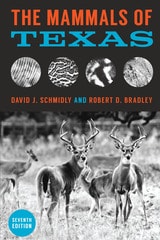
The Mammals of Texas
By David J. Schmidly and Robert D. Bradley
University of Texas Press, 2016
From reviews of previous editions:
“This is the standard reference about Texas mammals.” —Wildlife Activist
“A must for anyone seriously interested in the wildlife of Texas.” —Texas Outdoor Writers Association News
“[This book] easily fills the role of both a field guide and a desk reference, and is written in a style that appeals to the professional biologist and amateur naturalist alike. . . . [It] should prove useful to anyone with an interest in the mammal fauna of Texas or the southern Great Plains.” —Prairie Naturalist
The Mammals of Texas has been the standard reference since the first edition was coauthored by William B. Davis and Walter P. Taylor in 1947. Revised several times over the succeeding decades, it remains the most authoritative source of information on the mammalian wildlife of Texas, with physical descriptions and life histories for 202 species, abundant photographs and drawings, and distribution maps.
In this new edition, David J. Schmidly is joined by one of the most active researchers on Texas mammals, Robert D. Bradley, to provide a thorough update of the taxonomy, distribution, and natural history of all species of wild mammals that inhabit Texas today. Using the most recent advances in molecular biology and in wildlife ecology and management, the authors include the most current information about the scientific nomenclature, taxonomy, and identification of species, while also covering significant advances in natural history and conservation.
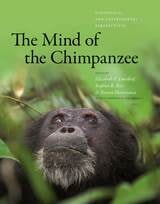
The Mind of the Chimpanzee
Ecological and Experimental PerspectivesEdited by Elizabeth V. Lonsdorf, Stephen R. Ross, and Tetsuro Matsuzawa
University of Chicago Press, 2010
Understanding the chimpanzee mind is akin to opening a window onto human consciousness. Many of our complex cognitive processes have origins that can be seen in the way that chimpanzees think, learn, and behave. The Mind of the Chimpanzee brings together scores of prominent scientists from around the world to share the most recent research into what goes on inside the mind of our closest living relative.
Intertwining a range of topics—including imitation, tool use, face recognition, culture, cooperation, and reconciliation—with critical commentaries on conservation and welfare, the collection aims to understand how chimpanzees learn, think, and feel, so that researchers can not only gain insight into the origins of human cognition, but also crystallize collective efforts to protect wild chimpanzee populations and ensure appropriate care in captive settings. With a breadth of material on cognition and culture from the lab and the field, The Mind of the Chimpanzee is a first-rate synthesis of contemporary studies of these fascinating mammals that will appeal to all those interested in animal minds and what we can learn from them.
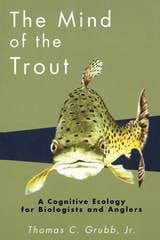
The Mind of the Trout
A Cognitive Ecology for Biologists and AnglersThomas C. Grubb, Jr.
University of Wisconsin Press, 2003
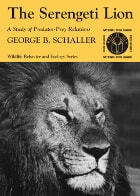
The Serengeti Lion
A Study of Predator-Prey RelationsGeorge B. Schaller
University of Chicago Press, 1976
Based on three years of study in the Serengeti National Park, George B. Schaller’s The Serengeti Lion describes the vast impact of the lion and other predators on the vast herds of wildebeest, zebra, and gazelle for which the area is famous. The most comprehensive book available on the lion, this classic work includes the author’s findings on all aspects of lion behavior, including its social system, population dynamics, hunting behavior, and predation patterns.
“If you have only enough time to read one book about field biology, this is the one I recommend.”—Edward O. Wilson, Science
“This book conveys not only the fascination of its particular study of lion behavior but the drama and wonder and beauty of the intimate interdependence of all living things.”—Saturday Review
“This is an important book, not just for its valuable information on lions, but for its broad, open, and intelligent approach to problems that cut across the fields of behavior, populations, ecology, wildlife management, evolution, anthropology, and comparative biology.”—Richard G. Van Gelder, Bioscience
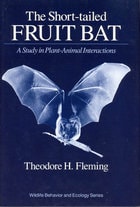
The Short-Tailed Fruit Bat
A Study in Plant-Animal InteractionsTheodore H. Fleming
University of Chicago Press, 1988
In The Short-tailed Fruit Bat, Theodore Fleming examines Carollia's role in the ecology of tropical forests. Based on more than ten years' research, this study provides the most detailed ecological and evolutionary account to date of the life history of a Neotropical mammal and includes striking photographs of the bats in flight.
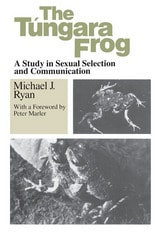
The Tungara Frog
A Study in Sexual Selection and CommunicationMichael J. Ryan
University of Chicago Press, 1985
In TheTúngara Frog, the most detailed and informative single study available of frogs and their reproductive behavior, Michael J. Ryan demonstrates the interplay of sexual and natural selection. Using techniques from ethology, behavioral ecology, sensory physiology, physiological ecology, and theoretical population genetics in his research, Ryan shows that large males with low-frequency calls mate most successfully. He examines in detail a number of explanations for the females' preferences, and he considers possible evolutionary forces leading to the males' success.
Though certain vocalizations allow males to obtain mates and thus should be favored by sexual selection, this study highlights two important costs of such sexual displays: the frogs expand considerable energy in their mating calls, and they advertise their whereabouts to predators. Ryan considers in detail how predators, especially the frige-lipped bat (Trachops cirrhosus), affect the evolution of the túngara frog's calls.
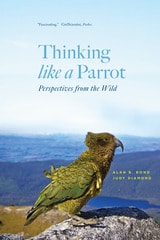
Thinking like a Parrot
Perspectives from the WildAlan B. Bond and Judy Diamond
University of Chicago Press, 2019
People form enduring emotional bonds with other animal species, such as dogs, cats, and horses. For the most part, these are domesticated animals, with one notable exception: many people form close and supportive relationships with parrots, even though these amusing and curious birds remain thoroughly wild creatures. What enables this unique group of animals to form social bonds with people, and what does this mean for their survival?
In Thinking like a Parrot, Alan B. Bond and Judy Diamond look beyond much of the standard work on captive parrots to the mischievous, inquisitive, and astonishingly vocal parrots of the wild. Focusing on the psychology and ecology of wild parrots, Bond and Diamond document their distinctive social behavior, sophisticated cognition, and extraordinary vocal abilities. Also included are short vignettes—field notes on the natural history and behavior of both rare and widely distributed species, from the neotropical crimson-fronted parakeet to New Zealand’s flightless, ground-dwelling kākāpō. This composite approach makes clear that the behavior of captive parrots is grounded in the birds’ wild ecology and evolution, revealing that parrots’ ability to bond with people is an evolutionary accident, a by-product of the intense sociality and flexible behavior that characterize their lives.
Despite their adaptability and intelligence, however, nearly all large parrot species are rare, threatened, or endangered. To successfully manage and restore these wild populations, Bond and Diamond argue, we must develop a fuller understanding of their biology and the complex set of ecological and behavioral traits that has led to their vulnerability. Spanning the global distribution of parrot species, Thinking like a Parrot is rich with surprising insights into parrot intelligence, flexibility, and—even in the face of threats—resilience.