81 books match the query 'Belonging' and 13 start with t

cover of Tacit Subjects: Belonging and Same-Sex Desire among Dominican Immigrant Men

Tacit Subjects

Belonging and Same-Sex Desire among Dominican Immigrant Men

Carlos Ulises Decena

Duke University Press, 2011
Tacit Subjects is a pioneering analysis of how gay immigrant men of color negotiate race, sexuality, and power in their daily lives. Drawing on ethnographic research with Dominicans in New York City, Carlos Ulises Decena explains that while the men who shared their life stories with him may self-identify as gay, they are not the liberated figures of traditional gay migration narratives. Decena contends that in migrating to Washington Heights, a Dominican enclave in New York, these men moved from one site to another within an increasingly transnational Dominican society. Many of them migrated and survived through the resources of their families and broader communities. Explicit acknowledgment or discussion of their homosexuality might rupture these crucial social and familial bonds. Yet some of Decena’s informants were sure that their sexuality was tacitly understood by their family members or others close to them. Analyzing their recollections about migration, settlement, masculinity, sex, and return trips to the Dominican Republic, Decena describes how the men at the center of Tacit Subjects contest, reproduce, and reformulate Dominican identity in New York. Their stories reveal how differences in class, race, and education shape their relations with fellow Dominicans. They also offer a view of “gay New York” that foregrounds the struggles for respect, belonging, and survival within a particular immigrant community.
[more]
cover of The Futures of Reparations in Latin America: Imagination, Translation, and Belonging

The Futures of Reparations in Latin America

Imagination, Translation, and Belonging

Piergiorgio Di Giminiani

Rutgers University Press, 2026
Over the last thirty years, Latin America has undergone an unprecedented wave of reparations targeting victims of political violence during military regimes, Indigenous and Afro-Latin groups affected by historical processes of dispossession, and citizens suffering from environmental harm. Reparations prompt us to face uncomfortable pasts and in so doing, create conditions for imagination of multiple futures. In representing the experiences and hopes of those affected by political violence in El Salvador and Argentina, environmental harm in Guatemala and Peru, and colonial dispossession in Chile and Bolivia, reparations are built upon conflictive forms of future imagination, translation of harm and new forms of belonging to and beyond the nation state, which reifies as much as challenges state authority over the promises of actual repair. In today’s Latin American political debate, hopes for justice and democracy remain anchored to the question of the kinds of future that can be imagined through and after reparation.
 
[more]
cover of The Hero's Place: Medieval Literary Traditions of Space and Belonging

The Hero's Place

Medieval Literary Traditions of Space and Belonging

Molly Robinson Kelly

Catholic University of America Press, 2009
The Hero's Place presents an innovative study of how the spaces described in a literary work contribute dynamically and profoundly to that work's meaning.
[more]
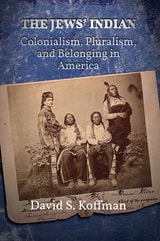
cover of The Jews’ Indian: Colonialism, Pluralism, and Belonging in America

The Jews’ Indian

Colonialism, Pluralism, and Belonging in America

Koffman, David S

Rutgers University Press, 2019

Winner of the 2020 Jordan Schnitzer Book Award in Social Science, Anthropology, and Folklore​
Honorable Mention, 2021 Saul Viener Book Prize​

The Jews’ Indian investigates the history of American Jewish relationships with Native Americans, both in the realm of cultural imagination and in face-to-face encounters. These two groups’ exchanges were numerous and diverse, proving at times harmonious when Jews’ and Natives people’s economic and social interests aligned, but discordant and fraught at other times. American Jews could be as exploitative of Native cultural, social, and political issues as other American settlers, and historian David Koffman argues that these interactions both unsettle and historicize the often triumphant consensus history of American Jewish life. Focusing on the ways Jewish class mobility and civic belonging were wrapped up in the dynamics of power and myth making that so severely impacted Native Americans, this books is provocative and timely, the first history to critically analyze Jewish participation in, and Jews’ grappling with the legacies of Native American history and the colonial project upon which America rests.
[more]
cover of The Names of the Python: Belonging in East Africa, 900 to 1930

The Names of the Python

Belonging in East Africa, 900 to 1930

David L. Schoenbrun

University of Wisconsin Press, 2023

Systems of belonging, including ethnicity, are not static, automatic, or free of contest. Historical contexts shape the ways which we are included in or excluded from specific classifications. Building on an amazing array of sources, David L. Schoenbrun examines groupwork—the imaginative labor that people do to constitute themselves as communities—in an iconic and influential region in East Africa. His study traces the roots of nationhood in the Ganda state over the course of a millennia, demonstrating that the earliest clans were based not on political identity or language but on shared investments, knowledges, and practices.
 
Grounded in Schoenbrun’s skillful mastery of historical linguistics and vernacular texts, The Names of the Python supplements and redirects current debates about ethnicity in ex-colonial Africa and beyond. This timely volume carefully distinguishes past from present and shows the many possibilities that still exist for the creative cultural imagination.
[more]
cover of The Perils of Belonging: Autochthony, Citizenship, and Exclusion in Africa and Europe

The Perils of Belonging

Autochthony, Citizenship, and Exclusion in Africa and Europe

Peter Geschiere

University of Chicago Press, 2009

Despite being told that we now live in a cosmopolitan world, more and more people have begun to assert their identities in ways that are deeply rooted in the local. These claims of autochthony—meaning “born from the soil”—seek to establish an irrefutable, primordial right to belong and are often employed in politically charged attempts to exclude outsiders. In The Perils of Belonging, Peter Geschiere traces the concept of autochthony back to the classical period and incisively explores the idea in two very different contexts: Cameroon and the Netherlands.

            In both countries, the momentous economic and political changes following the end of the cold war fostered anxiety over migration. For Cameroonians, the question of who belongs where rises to the fore in political struggles between different tribes, while the Dutch invoke autochthony in fierce debates over the integration of immigrants. This fascinating comparative perspective allows Geschiere to examine the emotional appeal of autochthony—as well as its dubious historical basis—and to shed light on a range of important issues, such as multiculturalism, national citizenship, and migration.
[more]
cover of The Politics of Belonging: Race, Public Opinion, and Immigration

The Politics of Belonging

Race, Public Opinion, and Immigration

Natalie Masuoka and Jane Junn

University of Chicago Press, 2013
The United States is once again experiencing a major influx of immigrants. Questions about who should be admitted and what benefits should be afforded to new members of the polity are among the most divisive and controversial contemporary political issues.

Using an impressive array of evidence from national surveys, The Politics of Belonging illuminates patterns of public opinion on immigration and explains why Americans hold the attitudes they do. Rather than simply characterizing Americans as either nativist or nonnativist, this book argues that controversies over immigration policy are best understood as questions over political membership and belonging to the nation. The relationship between citizenship, race, and immigration drive the politics of belonging in the United States and represents a dynamism central to understanding patterns of contemporary public opinion on immigration policy. Beginning with a historical analysis, this book documents why this is the case by tracing the development of immigration and naturalization law, institutional practices, and the formation of the American racial hierarchy. Then, through a comparative analysis of public opinion among white, black, Latino, and Asian Americans, it identifies and tests the critical moderating role of racial categorization and group identity on variation in public opinion on immigration.

[more]
cover of The Rise of Necro/Narco Citizenship: Belonging and Dying in the Southwest North American Region

The Rise of Necro/Narco Citizenship

Belonging and Dying in the Southwest North American Region

Carlos G. Vélez-Ibáñez

University of Arizona Press, 2025

Carlos G. Vélez-Ibáñez’s latest work, The Rise of Necro/Narco Citizenship investigates the intricate and often harrowing dynamics that define the borderlands between the United States, Mexico, and beyond. This groundbreaking book provides a comprehensive cultural, economic, social, and political-ecological analysis, illustrating how various forms of violence and militarization have reshaped the daily lives and identities of the region’s inhabitants. Through meticulous ethnographic fieldwork, extensive archival research, and rigorous statistical data, Vélez-Ibáñez exposes the deeply entrenched networks of exploitation and conflict that have emerged in response to global capitalism’s pressures.

Vélez-Ibáñez builds on theorization about necrocitizenship to introduce the concept of necro/narco citizenship, which argues that pervasive violence and socioeconomic disruptions create a unique form of existence on both sides of the border. The author examines the dislocation of thousands, the persistent threat of violence, and the ways in which these forces compel individuals to navigate a reality steeped in addiction, self-destruction, and civil deterioration. This book reveals the transnational networks and the morally compromised political economies that sustain them, offering readers an unflinching look at the cost of survival in this tumultuous region.

This essential volume is not only a critical addition to the field of anthropology but also an invaluable resource for those interested in the sociopolitical landscape of the U.S.-Mexico border. Vélez-Ibáñez’s insights will resonate with scholars, students, and policymakers alike. The Rise of Necro/Narco Citizenship challenges us to rethink the narratives of violence, militarization, and resistance that define our understanding of the Southwest North American Region.
[more]
cover of The Roma as Agents of the “G*psy Question”: Belonging, Mobility, and Resettlement Policy in Socialist Czechoslovakia in the 1960s

The Roma as Agents of the “G*psy Question”

Belonging, Mobility, and Resettlement Policy in Socialist Czechoslovakia in the 1960s

Jan Ort

Karolinum Press, 2024

Reexamines mid-60’s state policies toward Czechoslovak Roma from the overlooked perspective of the Roma people themselves.

The story of Romani people in communist Czechoslovakia has long been framed by a discriminatory policy of assimilation, and thus by fatal interventions into Romani family ties and their broader socio-cultural systems. Paradoxically, such a narrative failed to integrate the perspective of the Roma themselves, who often associated the same period with an unprecedented experience of social inclusion and material security. In this book, Jan Ort examines the state policy that in the mid-1960s aimed at the definitive elimination of "G*psy backwardness" through the placement of thousands of Roma families in non-Roma society, thus becoming a symbol of the social engineering interventions of the Communist regime in the lives of Czechoslovak Roma. In contrast to the predominant focus on the perspective of state authorities, Ort seeks to map the practice of this policy in specific places with an emphasis on the experiences and agency of the Roma themselves, especially those who had their homes in eastern Slovakia. In the empirical richness of a micro-historical approach, Roma as Agents of the “G*psy Question” uncovers the diverse stories of ordinary Roma who were able to incorporate various aspects of state policy into their own lives without necessarily giving up their distinctive cultural identity.

[more]
cover of The Wedding Complex: Forms of Belonging in Modern American Culture

The Wedding Complex

Forms of Belonging in Modern American Culture

Elizabeth Freeman

Duke University Press, 2002

In The Wedding Complex Elizabeth Freeman explores the significance of the wedding ceremony by asking what the wedding becomes when you separate it from the idea of marriage. Freeman finds that weddings—as performances, fantasies, and rituals of transformation—are sites for imagining and enacting forms of social intimacy other than monogamous heterosexuality. Looking at the history of Anglo-American weddings and their depictions in American literature and popular culture from the antebellum era to the present, she reveals the cluster of queer desires at the heart of the "wedding complex"—longings not for marriage necessarily but for public forms of attachment, ceremony, pageantry, and celebration.

Freeman draws on queer theory and social history to focus on a range of texts where weddings do not necessarily lead to legal marriage but instead reflect yearnings for intimate arrangements other than long-term, state-sanctioned, domestic couplehood. Beginning with a look at the debates over gay marriage, she proceeds to consider literary works by Nathaniel Hawthorne, William Faulkner, Carson McCullers, Vladimir Nabokov, and Edgar Allan Poe, along with such Hollywood films as Father of the Bride, The Graduate, and The Godfather. She also discusses less well-known texts such as Su Friedrich’s experimental film First Comes Love and the off-Broadway, interactive dinner play Tony ‘n’ Tina’s Wedding.

Offering bold new ways to imagine attachment and belonging, and the public performance and recognition of social intimacy, The Wedding Complex is a major contribution to American studies, queer theory, and cultural studies.

[more]
cover of To Swim with Crocodiles: Land, Violence, and Belonging in South Africa, 1800-1996

To Swim with Crocodiles

Land, Violence, and Belonging in South Africa, 1800-1996

Jill E Kelly

Michigan State University Press, 2018
To Swim with Crocodiles: Land, Violence, and Belonging in South Africa, 1800–1996 offers a fresh perspective on the history of rural politics in South Africa, from the rise of the Zulu kingdom to the civil war at the dawn of democracy in KwaZulu-Natal. The book shows how Africans in the Table Mountain region drew on the cultural inheritance of ukukhonza—a practice of affiliation that binds together chiefs and subjects—to seek social and physical security in times of war and upheaval. Grounded in a rich combination of archival sources and oral interviews, this book examines relations within and between chiefdoms to bring wider concerns of African studies into focus, including land, violence, chieftaincy, ethnic and nationalist politics, and development. Colonial indirect rule, segregation, and apartheid attempted to fix formerly fluid polities into territorial “tribes” and ethnic identities, but the Zulu practice of ukukhonza maintained its flexibility and endured. By exploring what Zulu men and women knew about and how they remembered ukukhonza, Kelly reveals how Africans envisioned and defined relationships with the land, their chiefs, and their neighbors as white minority rule transformed the countryside and local institutions of governance. 
 
[more]
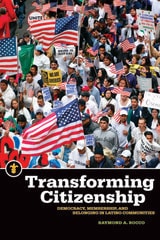
cover of Transforming Citizenship: Democracy, Membership, and Belonging in Latino Communities

Transforming Citizenship

Democracy, Membership, and Belonging in Latino Communities

Raymond A. Rocco

Michigan State University Press, 2014
In Transforming Citizenship Raymond Rocco studies the “exclusionary inclusion” of Latinos based on racialization and how the processes behind this have shaped their marginalized citizenship status, offering a framework for explaining this dynamic. Contesting this status has been at the core of Latino politics for more than 150 years. Pursuing the goal of full, equal, and just inclusion in societal membership has long been a major part of the struggle to realize democratic normative principles. This illuminating research demonstrates the inherent limitations of the citizenship regime in the United States for incorporating Latinos as full societal members and offers an alternative conception, “associative citizenship,” that provides a way to account for and challenge the pattern of exclusionary belonging that has defined the positions of the Latinos in U.S. society. Through a critical engagement with key theorists such as Rawls, Habermas, Kymlicka, Walzer, Taylor, and Young, Rocco advances an original analysis of the politics of Latino societal membership and citizenship, arguing that the specific processes of racialization that have played a determinative role in creating and maintaining the pattern of social and political exclusions of Latinos have not been addressed by the dominant theories of diversity and citizenship developed in the prevalent literature in political theory.
[more]
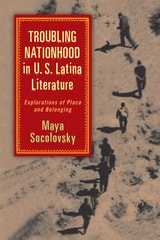
cover of Troubling Nationhood in U.S. Latina Literature: Explorations of Place and Belonging

Troubling Nationhood in U.S. Latina Literature

Explorations of Place and Belonging

Socolovsky, Maya

Rutgers University Press, 2013

This book examines the ways in which recent U.S. Latina literature challenges popular definitions of nationhood and national identity. It explores a group of feminist texts that are representative of the U.S. Latina literary boom of the 1980s, 1990s, and 2000s, when an emerging group of writers gained prominence in mainstream and academic circles. Through close readings of select contemporary Mexican American, Puerto Rican, and Cuban American works, Maya Socolovsky argues that these narratives are “remapping” the United States so that it is fully integrated within a larger, hemispheric Americas.

Looking at such concerns as nation, place, trauma, and storytelling, writers Denise Chavez, Sandra Cisneros, Esmeralda Santiago, Ana Castillo, Himilce Novas, and Judith Ortiz Cofer challenge popular views of Latino cultural “unbelonging” and make strong cases for the legitimate presence of Latinas/os within the United States. In this way, they also counter much of today’s anti-immigration rhetoric.

Imagining the U.S. as part of a broader "Americas," these writings trouble imperialist notions of nationhood, in which political borders and a long history of intervention and colonization beyond those borders have come to shape and determine the dominant culture's writing and the defining of all Latinos as "other" to the nation.
[more]