Results by title
51 books match the query 'Best' and 17 start with t
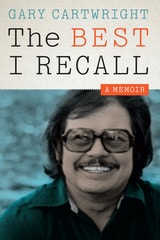
The Best I Recall
A MemoirBy Gary Cartwright
University of Texas Press, 2015
Gary Cartwright is one of Texas’s legendary writers. In a career spanning nearly six decades, he has been a newspaper reporter, Senior Editor of Texas Monthly, and author of several acclaimed books, including Blood Will Tell, Confessions of a Washed-up Sportswriter, and Dirty Dealing. Cartwright was a finalist for a National Magazine Award for reporting excellence, and he has won several awards from the Texas Institute of Letters, including its most prestigious—the Lon Tinkle Award for lifetime achievement. His personal life has been as colorful and occasionally outrageous as any story he reported, and in this vivid, often hilarious, and sometimes deeply moving memoir, Cartwright tells the story of his writing career, tangled like a runaway vine with great friendships, love affairs, four marriages, four or five great dogs . . . looking always to explain, at least to himself, how the pattern probably makes a kind of perverted sense.
Cartwright’s career began at the Fort Worth Star-Telegram and Fort Worth Press, among kindred spirits and fellow pranksters Edwin “Bud” Shrake and Dan Jenkins. He describes how the three rookie writers followed their mentor Blackie Sherrod to the Dallas Times Herald and the Dallas Morning News, becoming the “best staff of sportswriters anywhere, ever” and creating a new kind of sportswriting that “swept the country and became standard.” Cartwright recalls his twenty-five years at Texas Monthly, where he covered everything from true crime to notable Texans to Texas’s cultural oddities. Along the way, he tells lively stories about “rebelling against sobriety” in many forms, with friends and co-conspirators that included Willie Nelson, Ann Richards, Dennis Hopper, Willie Morris, Don Meredith, Jack Ruby, and countless others. A remarkable portrait of the writing life and Austin’s counterculture, The Best I Recall may skirt the line between fact and fiction, but it always tells the truth.
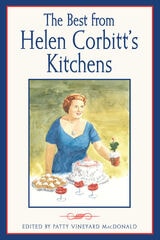
The Best from Helen Corbitt's Kitchens
Patty Vineyard MacDonald
University of North Texas Press, 2000

The Best in Children's Books
The University of Chicago Guide to Children's Literature, 1966-72Edited by Zena Sutherland
University of Chicago Press, 1973
This guide contains 1,400 reviews of the best children's literature published between 1966 and 1972.
The Best in Children's Books
The University of Chicago Guide to Children's Literature, 1973-78Zena Sutherland
University of Chicago Press, 1980
The Best in Children's Books
The University of Chicago Guide to Children's Literature, 1979-84Zena Sutherland
University of Chicago Press, 1986
This volume carries on the tradition established by Zena Sutherland's two earlier collections covering the periods from 1966 to 1972 and 1973 to 1978. Her 1973 edition of The Best in Children's Books was cited by the American School Board Journal as one of the outstanding books of the year in education.
The Best of All Possible Worlds
Mathematics and DestinyIvar Ekeland
University of Chicago Press, 2006
Optimists believe this is the best of all possible worlds. And pessimists fear that might really be the case. But what is the best of all possible worlds? How do we define it? Is it the world that operates the most efficiently? Or the one in which most people are comfortable and content? Questions such as these have preoccupied philosophers and theologians for ages, but there was a time, during the seventeenth and eighteenth centuries, when scientists and mathematicians felt they could provide the answer.
This book is their story. Ivar Ekeland here takes the reader on a journey through scientific attempts to envision the best of all possible worlds. He begins with the French physicist Maupertuis, whose least action principle asserted that everything in nature occurs in the way that requires the least possible action. This idea, Ekeland shows, was a pivotal breakthrough in mathematics, because it was the first expression of the concept of optimization, or the creation of systems that are the most efficient or functional. Although the least action principle was later elaborated on and overshadowed by the theories of Leonhard Euler and Gottfried Leibniz, the concept of optimization that emerged from it is an important one that touches virtually every scientific discipline today.
Tracing the profound impact of optimization and the unexpected ways in which it has influenced the study of mathematics, biology, economics, and even politics, Ekeland reveals throughout how the idea of optimization has driven some of our greatest intellectual breakthroughs. The result is a dazzling display of erudition—one that will be essential reading for popular-science buffs and historians of science alike.
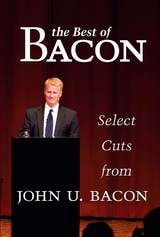
The Best of Bacon
Select CutsJohn U. Bacon
University of Michigan Press, 2018
From the Preface:
“I wrote these stories between 1992 and 2018. They cover a dozen different sports for a dozen different media outlets, from the Ann Arbor News to National Public Radio, and they stretch from a couple pages to a dozen. But they have one thing in common: they all meant a lot to me when I wrote them, and they still do today.”
The Best of Bacon presents both new and familiar stories by best-selling author John U. Bacon, all centered on sports in his home state of Michigan. Best known for his acclaimed books on college football, Bacon’s writing has been praised for going beyond traditional Xs and Os sports reporting. True to that reputation, this collection showcases personal, behind-the-scenes stories of players, coaches, and even fans. Many of these stories are connected to specific moments in time—a great season, the passing of a legendary broadcaster, or a star player’s daily grind before a big game—and will immediately transport readers to some of the highs (and lows) of their own sports memories. More often, Bacon’s writing explores timeless themes—why we love sports, how we pass that passion down to the next generation, and how it will be threatened or preserved in the future.
Michigan is one of the nation’s best sports states, home to countless amateur squads, two Big Ten schools, and professional teams in all four major sports whose histories reach back to the start of their leagues—something only New York, Massachusetts, and Illinois can also claim. This book covers the spectrum, from insider profiles of big names like Magic Johnson, Bo Schembechler, and Joe Louis, to cautionary tales of the debilitating greed threatening our favorite pastimes, to uplifting stories of the unsung heroes whose passion drives them to coach Little League baseball teams or run summer camps for peanuts. These stories speak to the value of sports, but also to our values. Whether a Spartan or a Wolverine, a long-suffering Lions’ backer or a diehard Wing-Nut, a lifetime sports fan or just someone who loves a good story, there is something here for everyone.
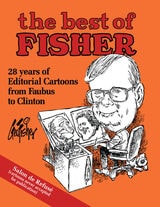
The Best of Fisher
28 years of Editorial Cartoons from Faubus to ClintonGeorge Fisher
University of Arkansas Press, 1993
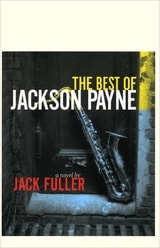
The Best of Jackson Payne
A NovelJack Fuller
University of Chicago Press, 2001
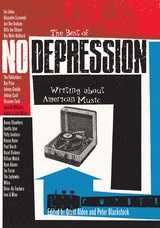
The Best of No Depression
Writing about American MusicEdited by Grant Alden and Peter Blackstock
University of Texas Press, 2005
Since the magazine's founding in 1995, No Depression has reported on and helped define the music that goes by names such as alt.country, Americana, and roots music. Though dismissed by the commercial country music establishment as "music that doesn't sell," alternative country has attracted thousands of listeners who long for the authenticity and rich complexity that come from its potent blend of country and rock 'n' roll and any number of related musical genres and subgenres.
To celebrate No Depression's tenth anniversary and spotlight some of the most important artists and trends in alt.country music, editors Grant Alden and Peter Blackstock have compiled this anthology of twenty-five of the magazine's best and most representative feature articles. Their subjects range from venerated country artists such as Johnny Cash and Ray Price to contemporary songwriters such as Lucinda Williams and Buddy and Julie Miller to the post-punk country-influenced bands Wilco and the Drive-By Truckers. All of the articles included here illustrate No Depression's commitment to music writing that puts the artist front-and-center and covers his or her career in sufficient depth to be definitive. Alden and Blackstock have also written a preface to this volume in which they discuss the alt.country phenomenon and the history and editorial philosophy that have made No Depression the bible for everyone seeking genuine American roots music.
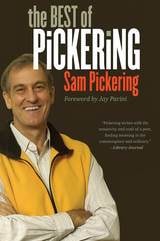
The Best of Pickering
Sam Pickering
University of Michigan Press, 2004
"Pickering has all of Thurber's humor, and he writes as well as E. B. White. He writes with passion, wit, and a strange personal note of self-mockery; he is humanely educated, wise, and capable of a wide range of stylistic effects."
----Jay Parini
". . . he writes in the tradition of Montaigne hammering together a ramshackle affair of surprising nooks, crannies and additions-all under the same roof."
---The Oxford American
"Pickering has the natural essayist's intimate yet distanced take on the world that combines a devotion to particulars . . . with a near-indifference to the status- and achievement-mongering that marks modern life."
---Publishers Weekly
"Pickering writes with the sensitivity and craft of a poet, finding meaning in the commonplace and ordinary."
---Library Journal
"Pickering's genre is unique, but I'm not sure anyone else can write this stuff. I can live with that, as long as Pickering himself continues to wend through the forests, classrooms, airports, billiards championships, hometown parades, and his inner world of Tennessee gags and characters."
---Hartford Courant
His writing is as unique and recognizable as the music of Mozart, the painting of Picasso, or the poetry of Dickinson. Yet most Americans likely know Sam Pickering, the University of Connecticut English professor, from the movie Dead Poets Society. In the film, Robin Williams plays an idiosyncratic instructor---based on Pickering---who employs some over-the-top teaching methods to keep his subjects fresh and his students learning.
Fewer probably know that Pickering is the author of more than 16 books and nearly 200 articles, or that he's inspired thousands of university students to think in new ways. And, while Williams may have captured Pickering's madcap classroom antics, he didn't uncover the other side of the author-Sam Pickering as one of our great American men of letters.
The Best of Pickering amply demonstrates Pickering's amazing powers of perception, and gives us insight into the mind of a writer nearly obsessed with turning his back on the conventional trappings of American success-a writer who seems to prefer lying squirrel's-eye-level next to a bed of daffodils in the spring or trespassing on someone else's property to pursue a jaunt through joe-pye weed and goldenrod. Indeed, Pickering's philosophy, at least on paper, may very well be "Now is the only time."
If you haven't met Sam Pickering before, prepare to be surprised and delighted by these wry and sometimes self-deprecating essays that are witty and elegant and concrete yet wander widely, and include Pickering's well-trod fictional Southern town of Carthage, Tennessee, full of strange goings-on. This definitive collection of the best of Pickering is a must for Pickering fans and a fine introduction for the uninitiated to one of our greatest men of letters.

The Best of Rilke
72 Form-True Verse Translations with Facing Originals, Commentary, and Compact BiographyRainer Maria Rilke
Dartmouth College Press, 1991
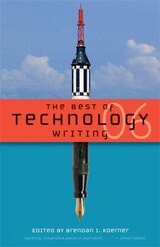
The Best of Technology Writing 2006
Brendan I. Koerner, Editor
University of Michigan Press, 2006
—James Fallows, National Correspondent for Atlantic Monthly
“The human experience is being shaped by our symbiotic relationship to technology. What makes this collection wonderful is that it’s not about the technology, per se, but it’s about this changing human experience. I will look forward to it every year.”
—Po Bronson, author of What Should I Do With My Life?
The Best of Technology Writing 2006 brings together some of the most important, timely, and just plain readable writing in the fast-paced, high-stakes field of technology. The first annual collection to target this vibrant and versatile area, The Best of Technology Writing 2006 features innovative work from an unusually diverse array of writers: best-selling authors, noted academics, and indie journalists and bloggers. The culmination of an open, on-line nominating process, this collection covers topics ranging from jetpacks, to the ethics of genetically cloned pets, to the meaning of life in the information age. By turns epic and intimate, serious and playful, The Best of Technology Writing 2006 captures the vitality, importance, and complexity of technology today. Koerner
Featuring contributions from:
digitalculturebooks is an imprint of the University of Michigan Press and the Scholarly Publishing Office of the University of Michigan Library dedicated to publishing innovative and accessible work exploring new media and their impact on society, culture, and scholarly communication. Visit the website at www.digitalculture.org.
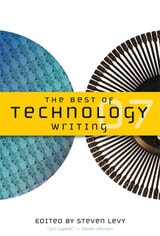
The Best of Technology Writing 2007
Steven Levy, Editor
University of Michigan Press, 2007
The year’s best writing on tech: a collection as imaginative and compelling as its dynamic subject
“This book is not just an illuminating and instructive guide to our high-tech frontier. It’s also a great testimony to the power of that most ancient of technologies, the written word.”
—Steven Johnson, author of Everything Bad is Good for You
Together the essays in The Best of Technology Writing 2007 capture the versatility and verve of technology writing today. Solicited through an open online nominating process, these pieces explore a wide range of intriguing topics—from “crowdsourcing” to the online habits of urban moms to the digital future of movie production. The Best of Technology Writing 2007 will appeal to anyone who enjoys stellar writing.
Steven Levy is a Senior Editor at Newsweek, where he writes the biweekly column “The Technologist.” One of the most acclaimed and versatile technology writers in the country, Levy has written six books, including The Perfect Thing (about Apple’s iPod) and Hackers, which PC Magazine’s readers voted the best sci-tech book written in the last twenty years. He has written for many publications, including the New Yorker, the New York Times Magazine, Rolling Stone, and Wired.
Featuring contributions from
Kevin Berger
Paul Boutin
Kiera Butler
Joshua Davis
Julian Dibbell
Matt Gaffney
Lori Gottlieb
John Gruber
Jeff Howe
Kevin Kelly
Jaron Lanier
Preston Lerner
Farhad Manjoo
Justin McElroy
Ben McGrath
Katharine Mieszkowski
Emily Nussbaum
Jeffrey M. O’Brien
Larry O’Brien
The Onion
Adam L. Penenberg
John Seabrook
Philip Smith
Aaron Swartz
Clive Thompson
Jeffrey R. Young
digitalculturebooks is an imprint of the University of Michigan Press and the Scholarly Publishing Office of the University of Michigan Library dedicated to publishing innovative and accessible work exploring new media and their impact on society, culture, and scholarly communication. Visit the website at www.digitalculture.org.
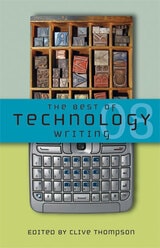
The Best of Technology Writing 2008
Clive Thompson, Editor
University of Michigan Press, 2008
"No one covers technology with more insight or panache than Clive Thompson. I can't imagine anyone better qualified to curate this fascinating series."
---Chris Anderson, editor in chief of Wired magazine and author of The Long Tail
"Editor Clive Thompson suggests we are in a ‘golden age of technology journalism.' Reading this collection, one suspects he is right---it sparkles with beautifully written narratives not only about what technology can do for us but what it does to us as people, to our ways of thinking about ourselves, our relationships, and how we envisage our world."
---Sherry Turkle, Director, MIT Initiative on Technology and Self, Massachusetts Institute of Technology
The Best of Technology Writing 2008 proves that technology writing is a bona fide literary genre with some of the most stylish, compelling, and just plain readable work in journalism today.
The third volume in this annual series, The Best of Technology Writing 2008 covers a fascinating mix of topics---from a molecular gastronomist's recipe for the perfect gin and tonic; to "the Mechanism," an ancient Greek artifact that might be the world's first laptop computer; to social media, privacy, and what is possibly the biggest generation gap since rock 'n' roll.
Featuring contributions from
- Ted Allen
- Michael Behar
- Caleb Crain
- Julian Dibbell
- Cory Doctorow
- David Glenn
- Thomas Goetz
- Charles Graeber
- Alex Hutchinson
- Walter Kirn
- Robin Mejia
- Emily Nussbaum
- Ben Paynter
- Jeffrey Rosen
- John Seabrook
- Cass R. Sunstein
digitalculturebooks is an imprint of the University of Michigan Press and the Scholarly Publishing Office of the University of Michigan Library dedicated to publishing innovative and accessible work exploring new media and their impact on society, culture, and scholarly communication. Visit the website at www.digitalculture.org.
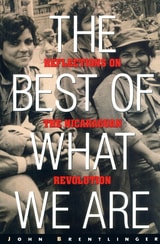
The Best of What We Are
Reflections on the Nicaraguan RevolutionJohn Brentlinger
University of Massachusetts Press, 1995
The Sandinista revolution in Nicaragua inspired many North Americans, including the author of this moving and informative book. John Brentlinger made six trips to Nicaragua, both before and after the defeat of the Sandinista Party. Combining the insights of a philosopher with the experiences of a participant-observer, he interprets the Sandinista period as a people’s struggle for self-realization in work, culture, politics, and community.
The book alternates between journal and essay chapters, weaving descriptions of personal experiences together with interviews and analysis. Whether telling the story of the last day of a young teacher’s life, describing new forms of poetry and art, examining representations of Nicaragua in the U.S. media, or discussing the government’s success and failures, Brentlinger vividly captures the spirit and enduring significance of the Sandinista revolution.
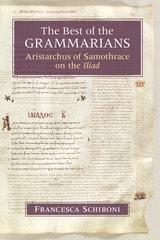
The Best of the Grammarians
Aristarchus of Samothrace on the IliadFrancesca Schironi
University of Michigan Press, 2018
Francesca Schironi presents a more robust picture of Aristarchus as a scholar than anyone has offered previously. Based on her analysis of over 4,300 fragments from his commentary on the Iliad, she reconstructs Aristarchus’ methodology and its relationship to earlier scholarship, especially Aristotelian poetics. Schironi departs from the standard commentary on individual fragments, and instead organizes them by topic to produce a rigorous scholarly examination of how Aristarchus worked.
Combining the accuracy and detail of traditional philology with a big-picture study of recurrent patterns and methodological trends across Aristarchus’ work, this volume offers a new approach to scholarship in Alexandrian and classical philology. It will be the go-to reference book on this topic for many years to come, and will usher in a new way of addressing the highly technical work of ancient scholars without losing philological accuracy. This book will be valuable to classicists and philologists interested in Homer and Homeric criticism in antiquity, Hellenistic scholarship, and ancient literary criticism.