Results by title
5550 books match the query 'Biography & Autobiography' and 1006 start with t
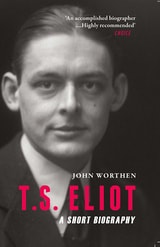
T. S. Eliot
A Short BiographyJohn Worthen
Haus Publishing, 2009

T.S. Eliot - American Writers 8
University of Minnesota Pamphlets on American WritersLeonard Unger
University of Minnesota Press, 1961
T.S. Eliot - American Writers 8 was first published in 1961. Minnesota Archive Editions uses digital technology to make long-unavailable books once again accessible, and are published unaltered from the original University of Minnesota Press editions.
THE KIRWAN YEARS
Chris Perry
The Ohio State University Press, 2006
Enter President William “Brit” Kirwan, who understood this need perfectly and whose major legacy became widely known as the Academic Plan. This document became and remains the centerpiece of Ohio State’s agenda, with budget and other priorities emanating from its six strategies and 14 initiatives.
Continuing the Ohio State tradition of chronicling the university’s history through the work of its past presidents, The Kirwan Years recounts the Academic Plan’s creation, acceptance, and initial implementation, along with many major university accomplishments from mid-1998 through mid-2002. It also details the university’s ongoing, uphill struggle to maximize state financial support and its success in private and other fundraising. It provides a compelling look at the complexity permeating today’s research universities. And yes, it describes the firing of football coach John Cooper and the hiring of Jim Tressel.
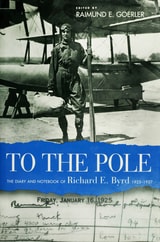
TO THE POLE
The Diary and Notebook of Richard E. Byrd, 1925–1927Edited by Raimund E. Goerler
The Ohio State University Press, 1998
On May 9, 1926, Richard E. Byrd announced to the world that he and copilot Floyd Bennett were the first to fly an airplane over the North Pole. Documents published here for the first time provide new insights into this most controversial accomplishment of Byrd's career.
Some journalists at the time questioned whether Byrd's airplane, the Josephine Ford, could have reached the North Pole and returned in less than sixteen hours. More questions arose after Byrd's death in 1957. A Swedish meteorologist concluded that the Josephine Ford would have needed a beneficial wind to accomplish the feat, and his study of weather data indicated that there had been no such wind. In 1973 another author reported that Byrd's pilot had later confessed to Bernt Balchen, a Norwegian pilot who had assisted Byrd, that they had only circled on the horizon out of sight of reporters and landed when enough time had passed to claim the North Pole.
To the Pole presents transcriptions of Byrd's handwritten diary and notebook, which were discovered by Ohio State University archivist Raimund Goerler in 1996 when he was cataloging Byrd's papers for the university. In his diary Byrd recorded his preparations for the North Pole flight, and he used it as a message pad to communicate with his pilot when the deafening noise from the plane's engines rendered verbal communication impossible.
Byrd also wrote his navigational calculations on the leaves of his diary, and photographs of these crucial pages are presented in the book as well, along with a copy of Byrd's official report on the expedition to the National Geographic Society.
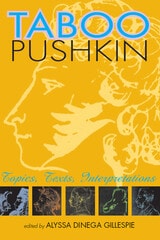
Taboo Pushkin
Topics, Texts, InterpretationsEdited by Alyssa Dinega Gillespie
University of Wisconsin Press, 2012
Since his death in 1837, Alexander Pushkin—often called the “father of Russian literature”—has become a timeless embodiment of Russian national identity, adopted for diverse ideological purposes and reinvented anew as a cultural icon in each historical era (tsarist, Soviet, and post-Soviet). His elevation to mythic status, however, has led to the celebration of some of his writings and the shunning of others. Throughout the history of Pushkin studies, certain topics, texts, and interpretations have remained officially off-limits in Russia—taboos as prevalent in today’s Russia as ever before.
The essays in this bold and authoritative volume use new approaches, overlooked archival materials, and fresh interpretations to investigate aspects of Pushkin’s biography and artistic legacy that have previously been suppressed or neglected. Taken together, the contributors strive to create a more fully realized Pushkin and demonstrate how potent a challenge the unofficial, taboo, alternative Pushkin has proven to be across the centuries for the Russian literary and political establishments.
Tahoe Heritage
The Bliss Family Of Glenbrook, NevadaSessions S Wheeler
University of Nevada Press, 1997
Tahoe Heritage is a lively chronicle of four generations of the pioneering Bliss family, beginning with Duane L. Bliss, a visionary who built an impressive lumbering business and later the renowned Glenbrook Inn. The inn was completed in 1907 and quickly became a destination for the elite of San Francisco. The hotel register contains the names of national figures who loved and frequented Glenbrook: Ulysses Grant, Joaquin Miller, Thomas Edison, Henry Ford, Clark Gable, and Rita Hayworth, to name a few. The Bliss family closed the inn in 1976. Anyone who has visited the Tahoe area, now a very different place from the idyllic days of Bliss family management, will enjoy this account of its growth and the remarkable family which brought it about.
Tail of the Storm
Flying Missions in the First Gulf WarAlan Cockrell
University of Alabama Press, 1995
A Gulf War memoir that captures the poetry and peril of flight.
Within days of Saddam Hussein’s invasion of Kuwait, the far reaching arm of American airpower sprang into action. The skyscapes of the North Atlantic, Europe, and the Mediterranean became laced with the contrails of great jets flowing day and night toward the Persian Gulf. From the skies, manpower and material poured onto the bleak sands under the ominous clouds of the gathering storm, and in only a few weeks the size of the effort eclipsed that of the Berlin Airlift.
The thousands of crewmembers flying the jets, as well as those servicing and managing them, became the backbone of history’s largest air logistical operation. Many of these men and women were Air Force reservists, and the author participated as a pilot of a C-141B Starlifter with the Mississippi Air National Guard.
Cockrell writes lyrically about flying and about the emotional and intellectual satisfaction enjoyed by those who fly. His focus is on the people recalled to active duty, who flew thousands of hours, coping with fatigue, cracked wings, missile attacks, and, in some cases, deteriorating businesses and families at home. Tail of the Storm gives expression to their love of flight, as well as their dedication to the endangered values of duty, honor, country. This story is good reading—not only for those who share the author’s enthusiasm for flying but also for those who read for pleasure and have a curiosity about a pilot’s world.
Taken from the Paradise Isle
The Hoshida Family StoryHeidi Kim
University Press of Colorado, 2015
Crafted from George Hoshida’s diary and memoir, as well as letters faithfully exchanged with his wife Tamae, Taken from the Paradise Isle is an intimate account of the anger, resignation, philosophy, optimism, and love with which the Hoshida family endured their separation and incarceration during World War II.
George and Tamae Hoshida and their children were a Japanese American family who lived in Hawai‘i. In 1942, George was arrested as a “potentially dangerous alien” and interned in a series of camps over the next two years. Meanwhile, forced to leave her handicapped eldest daughter behind in a nursing home in Hawai‘i, Tamae and three daughters, including a newborn, were incarcerated at the Jerome Relocation Center in Arkansas. George and Tamae regularly exchanged letters during this time, and George maintained a diary including personal thoughts, watercolors, and sketches. In Taken from the Paradise Isle these sources are bolstered by extensive archival documents and editor Heidi Kim’s historical contextualization, providing a new and important perspective on the tragedy of the incarceration as it affected Japanese American families in Hawai‘i.
This personal narrative of the Japanese American experience adds to the growing testimony of memoirs and oral histories that illuminate the emotional, psychological, physical, and economic toll suffered by Nikkei as the result of the violation of their civil rights during World War II.
Taking History to Heart
The Power of the Past in Building Social MovementsJames Green
University of Massachusetts Press, 2000
Deftly blending autobiography and history, James Green here reflects on thirty years as an activist, educator, and historian. He recounts how he became deeply immersed in political protest and in recovering and preserving the history of progressive social movements, and how the two are linked. His book, written in an engaging and accessible style, tells powerful stories of people in struggle, framed by the personal account of his own development. As a historian, Green gives voice to generations of Americans who banded together to fight for social justice. His subjects range from the martyrs of the Haymarket tragedy to the Bread and Roses strikers of 1912, from depression-era struggles for democracy to the civil rights crusaders, from recent Rainbow Coalition campaigns to the latest union organizing drives. As an activist, Green describes how his participation in the civil rights and labor movements of our own time has transformed his life, first as a student and radical scholar in the 1960s, then as a public historian and teacher of working-class students. He also describes his efforts to break free from academic confinement and “tell movement stories in public,” in an attempt to offer hope and counsel to those still fighting for equality and fairness. He concludes with a revealing look at how awareness of past social activism has contributed to the revival of the labor movement during the last ten years, an effort in which Green has been vigorously engaged.
Taking Leave
Deborah Kapchan
Duke University Press, 2025

Taking Part
A Twentieth-Century LifeRobert Josephy
University of Iowa Press, 1993
Taking Root
Narratives of Jewish Women in Latin AmericaMarjorie Agosín
Ohio University Press, 2002
In Taking Root, Latin American women of Jewish descent, from Mexico to Uruguay, recall their coming of age with Sabbath candles and Hebrew prayers, Ladino songs and merengue music, Queen Esther and the Virgin of Guadalupe. Rich and poor, Sephardi and Ashkenazi, Jewish immigrant families searched for a new home and identity in predominantly Catholic societies. The essays included here examine the religious, economic, social, and political choices these families have made and continue to make as they forge Jewish identities in the New World.
Marjorie Agosín has gathered narratives and testimonies that reveal the immense diversity of Latin American Jewish experience. These essays, based on first- and second-generation immigrant experience, describe differing points of view and levels of involvement in Jewish tradition. In Taking Root, Agosín presents us with a contemporary and vivid account of the Jewish experience in Latin America.
Taking Root documents the sadness of exile and loss but also a fierce determination to maintain Jewish traditions. This is Jewish history but it is also part of the untold history of Brazil, Argentina, El Salvador, Ecuador, Chile, Peru, and all of Latin America.
Tales From Jackpine Bob
Bob Cary
University of Minnesota Press, 2003
Bob Cary’s entertaining stories of life in the outdoors will touch your heart and make you laugh. Despite Bob’s many years as an expert woodsman, when he relates an adventure or a misadventure, the joke is always on him. Whether you read Tales from Jackpine Bob by firelight or lamplight, you’ll enjoy Bob’s warm humor and buoyant spirit.
Tales From the Field
The Adventures of an ArchaeologistDr. Richard W. Redding, edited by Alexis Redding
Michigan Publishing Services, 2026
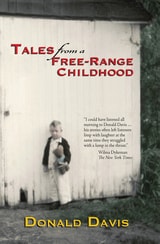
Tales from a Free-Range Childhood
Donald Davis
Parkhurst Brothers, Inc., 2022
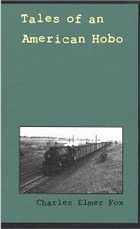
Tales of an American Hobo
Charles Elmer Fox
University of Iowa Press, 1989
"Reefer Charlie" Fox rode the rails from 1928 to 1939; from 1939 to 1965 he hitched rides in automobiles and traveled by foot. From Indiana to British Columbia, from Arkansas to Texas, from Utah to Mexico, he was part of the grand hobo tradition that has all but passed away from American life.
He camped in hobo jungles, slept under bridges and in sand houses at railroad yards, ate rattlesnake meat, fresh California grapes, and fish speared by the Indians of the Northwest. He quickly learned both the beauty and the dangers of his chosen way of life. One lesson learned early on was that there are distinct differences among hoboes, tramps, and bums. As the all-time king of hoboes, Jeff Davis, used to say, "Hoboes will work, tramps won't, and bums can't."
Tales of an American Hobo is a lasting legacy to conventional society, teaching about a bygone era of American history and a rare breed of humanity who chose to live by the rails and on the road.
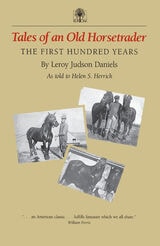
Tales of an Old Horsetrader
The First Hundred YearsLeroy Judson Daniels
University of Iowa Press, 1987
Leroy Daniels was born in 1882 near Adair, Iowa. When he was ten, his father gave him a pony and a checkbook and sent him out to buy cattle. By the time he was sixteen, he was alone on a ranch in Montana with a herd of seventy wild horses to break. At twenty-one, he was trading horses in the Chicago stockyards, where he told Henry Ford that a horse was better than a car any day. At one hundred, he retired to tell his memoirs.
The years in between are well worth reading about. Lee Daniels followed a plow all day long, worked coal to make ends meet, raised and traded and sold all manner of four-legged stock. But horses were always part of his life. Daniels traded them in Chicago for decades, sold them to Italy, England, France, and Belgium during World War I, inspected them for the army once the U.S. joined the Allies, bought them for eighty dollars in the morning and sold them for thousands by noon. He handled show horses, work horses, and trick horses, traveled the country over to fill his show barn with the best of them, befriended, understood, and loved them.
These pages tell the tale of a unique and vigorous American whose every word reveals his love of this land and its animals. If you weren't lucky enough to live like Lee Daniels, reading about his life is the next best thing.
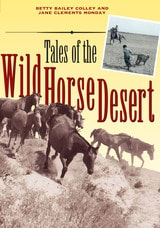
Tales of the Wild Horse Desert
By Betty Bailey Colley and Jane Clements Monday
University of Texas Press, 2001
Highly skilled, hard-working, and loyal to each other and to the ranches that employ them, the Mexican and Mexican American vaqueros who work on the famous King and Kenedy Ranches of South Texas' Wild Horse Desert are some of America's best cowboys. Many of them come from families who have lived and worked on the ranches for over a hundred years. They preserve the memories of ranch life handed down by their grandparents and great-grandparents, even as they use modern technologies to keep the ranches running smoothly in the twenty-first century.
This book tells the stories of the vaqueros of the Wild Horse Desert for fourth- through eighth-grade students. It begins with a brief history of the vaqueros and the King and Kenedy Ranches. Then, using in the words of today's vaqueros and their families, it describes many aspects of past and present life on the ranches. Young readers will learn what it's like to grow up on the ranches and how vaqueros learn their work. They'll also discover how much goes into being a vaquero, from using all the different ropes and equipment, to working a round-up, to showing prize-winning cattle and horses. Teachers and parents will appreciate all the supplemental material in the appendix, including a glossary, lists of related books and websites, hands-on learning activities, and even range and camp house recipes.
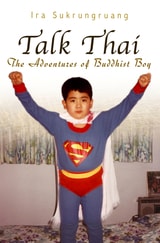
Talk Thai
The Adventures of Buddhist BoyIra Sukrungruang
University of Missouri Press, 2011
When Ira Sukrungruang was born to Thai parents newly arrived in the U.S., they picked his Jewish moniker out of a book of “American” names. In this lively, entertaining, and often hilarious memoir, he relates the early life of a first-generation Thai-American and his constant, often bumbling attempts to reconcile cultural and familial expectations with the trials of growing up in 1980s America.
Young Ira may have lived in Oak Lawn, Illinois, but inside the family’s bi-level home was “Thailand with American conveniences.” They ate Thai food, spoke the Thai language, and observed Thai customs. His bedtime stories were tales of Buddha and monkey-faced demons. On the first day of school his mother reminded him that he had a Siamese warrior’s eyes—despite his thick glasses—as Aunty Sue packed his Muppets lunch box with fried rice. But when his schoolmates played tag he was always It, and as he grew, he faced the constant challenge of reconciling American life with a cardinal family rule: “Remember, you are Thai.”
Inside the Thai Buddhist temple of Chicago, another “simulated Thailand,” are more rules, rules different from those of the Southside streets, and we see mainstream Western religion—“god people”—through the Sukrungruang family’s eyes. Within the family circle, we meet a mother who started packing for her return to Thailand the moment she arrived; her best friend, Aunty Sue, Ira’s second mother, who lives with and cooks for the family; and a wayward father whose dreams never quite pan out.
Talk Thai is a richly told account that takes us into an immigrant’s world. Here is a story imbued with Thai spices and the sensibilities of an American upbringing, a story in which Ira practices English by reciting lines from TV sitcoms and struggles with the feeling of not belonging in either of his two worlds. For readers who delight in the writings of Amy Tan, Gish Jen, and other Asian-Americans, Talk Thai provides generous portions of a still-mysterious culture while telling the story of an American boyhood with humor, playfulness, and uncompromising honesty.
Talk of Darkness
By Fatna El Bouih
University of Texas Press, 2008
Fatna El Bouih was first arrested in Casablanca as an 18-year-old student leader with connections to the Marxist movement. Over the next decade she was rearrested, forcibly disappeared, tortured, and transferred between multiple prisons. While imprisoned, she helped organize a hunger strike, completed her undergraduate degree in sociology, and began work on a Master's degree.
Beginning with the harrowing account of her kidnapping during the heightened political tension of the 1970s, Talk of Darkness tells the true story of one woman's struggle to secure political prisoners' rights and defend herself against an unjust imprisonment.
Poetically rendered from Arabic into English by Mustapha Kamal and Susan Slyomovics, Fatna El Bouih's memoir exposes the techniques of state-instigated "disappearance" in Morocco and condemns the lack of laws to protect prisoners' basic human rights.

Talking History
Seminar Culture at the Institute of Historical Research, 1921–2021Edited by David Manning
University of London Press, 2024
Talking History provides a defence of the seminar as a central element in historians' teaching, research and sense of community. Covering a range of the IHR’s long-running seminar series, which are differentiated by historical period, region and/or theme, the book presents the seminars as a local, national and international hub for scholarship that emerges from and is sustained by the ongoing learning practices of historians as scholars and people. Talking History bears witness to a seminar culture of evolving, multifarious synergies between teaching, researching and learning, historiography and participation — intertextual, interpersonal, intergenerational and intercultural. Viewed as such, the seminars constitute a living tradition, stimulating and incorporating dynamic change over time to contribute not just to the development of historiography but intellectual life more generally, often in conversation with major political events and cultural phenomena.
This original and significant book therefore reflects upon, and gives further expression to, the ongoing evolution of historical research and its role in wider society today.
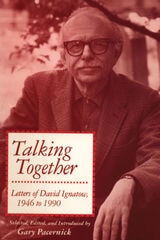
Talking Together
Letters of David Ignatow, 1946-1990David Ignatow; Selected, Edited and Introduced by Gary Pacernick
University of Alabama Press, 1992
The letters of David Ignatow reveal the poet in “company” with a community of writers as he shares with them the details and nuances of his everyday existence: the key acts of friendship and enmity, of good news and bad, of struggle, work, success, and failure that comprise a life devoted to making art. The letters also serve as a vehicle for Ignatow to express his views on a whole range of issues from writing, teaching, and editing poetry, to his visions of the self, death and the cosmos. But the key is “company”—the support system that helps sustain the poet and that enables him to help others.
One of the many things we may learn from the letters of David Ignatow is the power of the individual to affect another’s life, to help sustain and even change it.
Talking to Strangers
Anxieties of Citizenship since Brown v. Board of EducationDanielle Allen
University of Chicago Press, 2004
Returning to the landmark Brown v. Board of Education decision of 1954 and to the famous photograph of Elizabeth Eckford, one of the Little Rock Nine, being cursed by fellow "citizen" Hazel Bryan, Allen argues that we have yet to complete the transition to political friendship that this moment offered. By combining brief readings of philosophers and political theorists with personal reflections on race politics in Chicago, Allen proposes strikingly practical techniques of citizenship. These tools of political friendship, Allen contends, can help us become more trustworthy to others and overcome the fossilized distrust among us.
Sacrifice is the key concept that bridges citizenship and trust, according to Allen. She uncovers the ordinary, daily sacrifices citizens make to keep democracy working—and offers methods for recognizing and reciprocating those sacrifices. Trenchant, incisive, and ultimately hopeful, Talking to Strangers is nothing less than a manifesto for a revitalized democratic citizenry.
Tangled Bylines
A Father and Son Cover the Twentieth CenturyClyde H. Farnsworth
University of Missouri Press, 2017
Tangled Trees
Phylogeny, Cospeciation, and CoevolutionEdited by Roderic D. M. Page
University of Chicago Press, 2002
Contributors:
Sarah Al-Tamimi, Michael A. Charleston, Dale H. Clayton, James W. Demastes, Russell D. Gray, Mark S. Hafner, John P. Huelsenbeck, J.-P. Hugot, Kevin P. Johnson, Peter Kabat, Bret Larget, Joanne Martin, Yannis Michalakis, Roderic D. M. Page, Ricardo L. Palma, Adrian M. Paterson, Susan L. Perkins, Andy Purvis, Bruce Rannala, David L. Reed, Fredrik Ronquist, Theresa A. Spradling, Jason Taylor, Michael Tristem

Tania León's Stride
A Polyrhythmic LifeAlejandro L. Madrid
University of Illinois Press, 2021
Nuanced and multifaceted, Tania León's Stride looks at the life, legacy, and milieu that created and sustained one of the most important figures in American classical music.
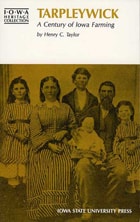
Tarpleywick
A Century of Iowa FarmingHenry C. Taylor
University of Iowa Press, 0
(Tarpleywick description) “When Tarpley Early Taylor came of age on August 2, 1858, his father gave him a horse, a saddle, and a bridle and wished him well…His first independent move was to go on horseback to Louisiana, Missouri, to visit his maternal grandparents, the Zumwalts. He stayed with them for some time, probably through the winter…We do not know what he did from the spring of 1859 to the spring of 1860 except that he had been earning money and saving it. We do know that he had returned to Van Buren County by Juy 24, 1860, because on that date he paid $800 for sixty acres of land a mile south of his father’s house…This was the beginning of Tarpleywick.” Born in Iowa in 1873, he was 96 years old when he died in May 1969. Taylor received his undergraduate training from Drake University and Iowa State University, his M.S. degree from Iowa State, and his Ph.D. degree from the University of Wisconsin. He was the first professor of agricultural economics in a land grant institution, the author of the first American textbook dealing with the principles of agricultural economics, the organizer and first Chief of the Bureau of Agricultural Economics in the USDA, and the first Managing Director of the Farm Foundation.
Tasting Freedom
Octavius Catto and the Battle for Equality in Civil War AmericaDaniel R. Biddle
Temple University Press, 2017
Octavius Valentine Catto was an orator who shared stages with Frederick Douglass, a second baseman on Philadelphia’s best black baseball team, a teacher at the city’s finest black school and an activist who fought in the state capital and on the streets for equal rights. With his racially-charged murder, the nation lost a civil rights pioneer—one who risked his life a century before Selma and Birmingham.
In Tasting Freedom Murray Dubin and Pulitzer Prize winner Dan Biddle painstakingly chronicle the life of this charismatic black leader—a “free” black whose freedom was in name only. Born in the American south, where slavery permeated everyday life, he moved north where he joined the fight to be truly free—free to vote, go to school, ride on streetcars, play baseball and even participate in July 4th celebrations.
Catto electrified a biracial audience in 1864 when he proclaimed, “There must come a change,” calling on free men and women to act and educate the newly freed slaves. With a group of other African Americans who called themselves a “band of brothers,” they challenged one injustice after another. Tasting Freedom presents the little-known stories of Catto and the men and women who struggled to change America.
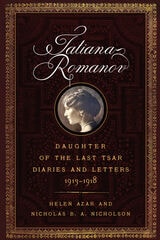
Tatiana Romanov, Daughter of the Last Tsar
Diaries and Letters, 1913–1918Helen Azar
Westholme Publishing, 2016
Grand Duchess Tatiana Nikolaevna of Russia was the second of the four daughters of Tsar Nicholas II and his wife, the Empress Alexandra Feodorovna. Long recognized by historians as the undisputed “beauty” of the family, Tatiana was acknowledged for her poise, her elegance, and her innate dignity within her own family. Helen Azar, translator of the diaries of Olga Romanov, and Nicholas B. A. Nicholson, Russian Imperial historian, have joined together to present a truly comprehensive picture of this extraordinarily gifted, complex, and intelligent woman in her own words. Tatiana Romanov, Daughter of the Last Tsar: Diaries and Letters, 1913–1918, presents translations of material never before published in Russian or in English, as well as materials never published in their entirety in the West.
The brisk, modern prose of Tatiana’s diary entries reveals the character of a young woman who was far more than the sheltered imperial beauty as she previously has been portrayed. While many historians and writers describe her as a cold, haughty, and distant aristocrat, this book shows instead a remarkably down-to-earth and humorous young woman, full of life and compassion. A detail-oriented and observant participant in some of the most important historical events of the early twentieth century, she left firsthand descriptions of the tercentenary celebrations of the House of Romanov, the early years of Russia’s involvement in World War I, and the road to her family’s final days in Siberian exile. Her writings reveal extraordinary details previously unknown or unacknowledged. Lavishly annotated for the benefit of the nonspecialist reader, this book is not only a reevaluation of Tatiana’s role as more than just one of four sisters, but also a valuable reference on Russia, the First World War, the Russian Revolution, and the people closest to the Grand Duchess and her family.
Tattered Kimonos in Japan
Remaking Lives from Memories of World War IIRobert Rand
University of Alabama Press, 2024
Examines Japan’s war generation—Japanese men and women who survived World War Two and rebuilt their lives from memories of that conflict.
Since John Hersey’s Hiroshima—the classic account, published in 1946, of the aftermath of the atomic bombing of that city—very few books have examined the meaning and impact of World War II through the eyes of Japanese men and women who survived that conflict. Tattered Kimonos in Japan does just that: It is an intimate journey into contemporary Japan from the perspective of the generation of Japanese soldiers and civilians who survived World War II, by a writer whose American father and Japanese father-in-law fought on opposite sides of the conflict.
The author, a former NPR senior editor, is Jewish, and he approaches the subject with the sensibilities of having grown up in a community of Holocaust survivors. Mindful of the power of victimhood, memory, and shared suffering, he travels across Japan, including Hiroshima and Nagasaki, meeting a compelling group of men and women whose lives, even now, are defined by the trauma of war, and by lingering questions of responsibility and repentance for Japan’s wartime aggression.
The image of a tattered kimono from Hiroshima is the thread that drives the narrative arc of this emotional story about a writer’s encounter with history, inside the Japan of his father’s generation, on the other side of his father’s war. This is a book about history with elements of family memoir. It offers a fresh and truly unique perspective for readers interested in World War II, Japan, or Judaica; readers seeking cross-cultural journeys; and readers intrigued by Japanese culture, particularly the kimono.
Tazmamart
18 Years in Morocco's Secret PrisonAziz BineBine
Haus Publishing, 2021
On July 10, 1971, during birthday celebrations for King Hassan II of Morocco, attendant officers and cadets opened fire on visiting dignitaries. A young officer, Aziz BineBine, arrived late and witnessed the ensuing massacre without firing a single shot, yet he would spend the next two decades in a political prison hidden in the Atlas Mountains—Tazmamart. Conditions in this now-infamous prison were nightmarish. The dark, underground cells, too small for standing up in, exposed prisoners to extreme weather, overflowing sewage, and disease-ridden rats. Forgetting life outside his cell—his past, his family, his friends—and clinging to God, BineBine resolved to survive. Tazmamart: 18 Years in Morocco’s Secret Prison is a memorial to BineBine and his fellow inmates’ sacrifice. This searing tale of endurance offers an unfiltered depiction of the agonizing life of a political prisoner.
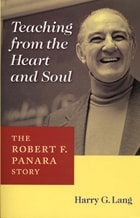
Teaching from the Heart and Soul
The Robert F. Panara StoryHarry G. Lang
Gallaudet University Press, 2007
The Sixth Volume in the Deaf Lives Series
Robert F. Panara lost his hearing from spinal meningitis in 1931 at the age of ten. However, he could read and write, and with his friends’ help, Bob (as he was known), made it through high school. His new solitude created a new passion – reading, reading, and reading. The stage was set for the emergence of one of the great deaf educators in modern time, a life fully captured in Harry G. Lang’s Teaching from the Heart and Soul: The Robert F. Panara Story.
Bob Panara’s many achievements began after his discovery of Gallaudet College in the 1940s. There, he wrote “The Significance of the Reading Problem,” which first expressed his belief that teaching “comes from the heart and soul.” The article secured him his first job at the New York School for the Deaf in White Plains. Bob returned to teach at Gallaudet College from 1948 until 1965, when he left to help found the National Technical Institute for the Deaf (NTID) and the National Theatre of the Deaf (NTD) — all in the same year. He continued to expand arts and literature at NTID until his retirement in 1987.
Bob Panara’s genius resides in the people he inspired with his vivacious teaching style. He believed ardently in involving students, that they should “be the book.” Former students tell story after story about his fabulous interpretations of drama and poetry, a legacy confirmed by his own story in Teaching from the Heart and Soul.
Teaching in the Terrordome
Two Years in West Baltimore with Teach for AmericaHeather Kirn Lanier
University of Missouri Press, 2012
Ted Lambert
The Man Behind the PaintingsTed Lambert
University of Alaska Press, 2012
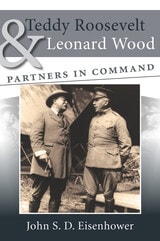
Teddy Roosevelt and Leonard Wood
Partners in CommandJohn S. D. Eisenhower
University of Missouri Press, 2013
Theodore Roosevelt was a man of wide interests, strong opinions, and intense ambition for both himself and his country. When he met Leonard Wood in 1897, he recognized a kindred spirit. Moreover, the two men shared a zeal for making the United States an imperial power that would challenge Great Britain as world leader. For the remainder of their lives, their careers would intertwine in ways that shaped the American nation.
When the Spanish American War came, both men seized the opportunity to promote the goals of American empire. Roosevelt resigned as assistant secretary of the navy in William McKinley’s administration to serve as a lieutenant colonel of the Rough Riders, a newly organized volunteer cavalry. Wood, then a captain in the medical corps and physician to McKinley, was promoted to colonel and given charge of the unit.
Roosevelt later took over command of the Rough Riders. In the Battle of San Juan Hill, he led it in a charge up Kettle Hill that would end in victory for the American troops and make their daring commander a household name, a war hero, and, eventually, president of the United States.
At the Treaty of Paris in 1898, Spain ceded Cuba, Puerto Rico, Guam, and the Philippines to the United States. The next year, Wood became military governor of Cuba. He remained in the post until 1902. By that time Roosevelt was president. One of the major accomplishments of his administration was reorganization of the War Department, which the war with Spain had proved disastrously outdated. In 1909, when William Howard Taft needed a strong army chief of staff to enforce the new rules, he appointed Leonard Wood.
Both Wood and Roosevelt were strong proponents of preparedness, and when war broke out in Europe in August 1914, Wood, retired as chief of staff and backed by Roosevelt, established the “Plattsburg camps,” a system of basic training camps. When America entered the Great War, the two men’s foresight was justified, but their earlier push for mobilization had angered Woodrow Wilson, and both were denied the command positions they sought in Europe.
Roosevelt died in 1919 while preparing for another presidential campaign. Wood made a run in his place but was never taken seriously as a candidate. He retired from the army and spent the last seven years of his life as civilian governor of the Philippines.
It was a quiet end for two men who had been giants of their time. While their modernization of the army is widely admired, they were not without their critics. Roosevelt and Wood saw themselves as bold leaders but were regarded by some as ruthless strivers. And while their shared ambitions for the United States were tempered by a strong sense of duty, they could, in their certainty and determination, trample those who stood in their path. Teddy Roosevelt and Leonard Wood: Partners in Command is a revealing and long overdue look at the dynamic partnership of this fascinating pair and will be welcomed by scholars and military history enthusiasts alike.
Television, a memoir
Karen Brennan
Four Way Books, 2022
Television, a memoir is a hybrid collection of autobiographical pieces, tragi-comic in spirit, that depict a woman’s life evolving through time and culture in fragmentary glimpses. Indeterminate in genre, Television is a fluid text that sometimes reads as poetry, sometimes as prose, while exploring classism, ableism, and feminism in a world defined by the advent of new media and, for the author, a privilege that often felt suffocating. Working structurally and thematically, television creates conceptual mileposts in the memoir, with certain programs and cultural references corresponding to specific eras in the author’s past, but it also gestures at an existential modality — the experience of a televisual life, the performative arrangements of nuclear families and neighborhoods, the periodic events and dramas of an adolescence watched from outside oneself.
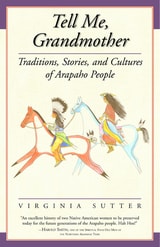
Tell Me, Grandmother
Traditions, Stories, and Cultures of Arapaho PeopleVirginia Sutter
University Press of Colorado, 2004
- Watonga Republican
"Virginia Sutter uses an interesting technique to write the history of her people, the Northern Arapaho Indian Nation. She constructs her work as a series of conversations between herself and her paternal great-grandmother. . . . [T]hrough this device, the history of the Arapaho people is traced from the early nineteenth-century years, when the buffalo ran aplenty and the prairies were boundless, through present-day living conditions in American Indian tribal reservations."
- Moira Richards, www.WomenWriters.net
"Emblematic of the struggle of so many Native Americans of the twentieth century, who seek to reconcile modernity with tradition, and who struggle to recast, reframe, and restore what is Native, even as the majority culture has done its best to uproot, separate, and tell Natives that they can be either modern or Native, but certainly not both."
- Brian Hosmer, Studies in American Indian Literatures (SAIL)
Tell Me, Grandmother is at once the biography of Goes-in-Lodge, a traditional Arapaho woman of the nineteenth century, and the autobiography of her descendant, Virginia Sutter, a modern Arapaho woman with a Ph.D. in public administration. Sutter adeptly weaves her own story with that of Goes-in-Lodge - who, in addition to being Sutter's great-grandmother, was first wife of Sharpnose, the last chief of the Northern Arapaho nation.
Writing in a question-and-answer format between twentieth-century granddaughter and matriarchal ancestor, Sutter discusses four generations of home life, including details about child rearing, education, courtship, marriage, birthing, and burial. Sutter's portrait of Goes-in-Lodge is based on tribal history and interviews with tribal members. Goes-in-Lodge speaks of social and ceremonial gatherings, the Sun Dance, the sweat lodges, and the changes that took place on the Great Plains throughout her lifetime. Sutter details her own life as a child born in a teepee to a white mother and Indian father and the discrimination and injustice she faced struggling to make her way in an increasingly Euro-American world.
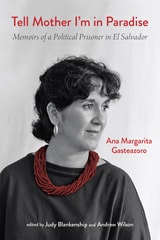
Tell Mother I'm in Paradise
Memoirs of a Political Prisoner in El SalvadorAna Margarita Gasteazoro, edited by Judy Blankenship and Andrew Wilson
University of Alabama Press, 2022
The life and times of Ana Margarita Gasteazoro: political activist, clandestine operative, and prisoner of conscience.
Ana Margarita Gasteazoro (1950–1993) was a Salvadoran opposition activist and renowned Amnesty International prisoner of conscience. Tell Mother I’m in Paradise:Memoirs of a Political Prisoner in El Salvador recounts her extraordinary life story. From a privileged Catholic upbringing, with time spent studying and working abroad, Ana Margarita first became a member of the legal political opposition in the late 1970s and later a clandestine operative at work against the brutal military junta.
Gasteazoro recounts her early rebellion against the strictures of conservative upper-class Salvadoran society. She spoke perfect English and discovered a talent for organizing in administrative jobs abroad and at home. As the civil war progressed, she quickly became a valued figure in the National Revolutionary Movement (MNR), a social democratic party, often representing it at international meetings. Against the backdrop of massive social oppression and the “disappearances” of thousands of opposition members, Gasteazoro began a double life as an operative in a faction of the Farabundo Martí National Liberation Front (FMLN). Multitalented and energetic, she organized safe houses for fellow activists, transported weapons and equipment, wrote scripts for an underground radio station, and produced an award-winning documentary film. But the toll on her family life and personal relationships was heavy.
Ana Margarita was disappeared in May 1981 by the infamous National Guard and endured a nightmare 11 days of interrogations, beatings, and abuse. Through international pressure and the connections of her family, her arrest was finally made public, and she was transferred to the women’s prison at Ilopango. There, she and other activists continued the political struggle through the Committee of Political Prisoners of El Salvador (COPPES). During her two years in prison, tested by hunger strikes, violence, and factional divisions, she became one of Amnesty International’s best-known prisoners of conscience. Tell Mother I’m in Paradise is a gripping story of a self-aware activist and a vital young woman’s struggle to find her own way within a deeply conservative society.
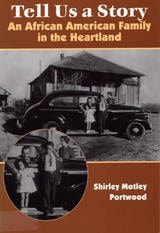
Tell Us a Story
An African American Family in the HeartlandShirley Motley Portwood
Southern Illinois University Press, 2000
Illinois State Historical Society's Certificate of Excellence (2002)
Supplemented by recollections from the present era, Tell Us a Story is a colorful mosaic of African American autobiography and family history set in Springfield, Illinois, and in rural southern Illinois, Missouri, and Arkansas from the 1920s through the 1950s.
Shirley Motley Portwood shares rural, African American family and community history through a collection of vignettes about the Motley family. Initially transcribed accounts of the Motleys’ rich oral history, these stories have been passed among family members for nearly fifty years. In addition to her personal memories, Portwood presents interviews with her father, three brothers, and two sisters plus notes and recollections from their annual family reunions. The result is a composite view of the Motley family.
A historian, Portwood enhances the Motley family story by investigating primary data such as census, marriage, school, and land records, newspaper accounts, city directories, and other sources. The backbone of this saga, however, is oral history gathered from five generations, extending back to Portwood's grandparents, born more than one hundred years ago. Information regarding two earlier generations—her great- grandfather and great-great-grandparents, who were slaves—is based on historical research into state archives, county and local records, plantation records, and manuscript censuses.
A rich source for this material—the Motley family reunions—are week-long retreats where four generations gather at the John Motley house in Burlington, Connecticut, the Portwood home in Godfrey, Illinois, or other locations. Here the Motleys, all natural storytellers, pass on the family traditions. The stories, ranging from humorous to poignant, reveal much about the culture and history of African Americans, especially those from nonurban areas. Like many rural African Americans, the Motleys have a rich and often joyful family history with traditions reaching back to the slave past. They have known the harsh poverty that made even the necessities difficult to obtain and the racial prejudice that divided whites and blacks during the era of Jim Crow segregation and inequality; yet they have kept a tremendous faith in self-improvement through hard work and education.

Tell the Driver
A Biography of Elinor F.E. Black, MDJulie Vandervoort
University of Manitoba Press, 1992
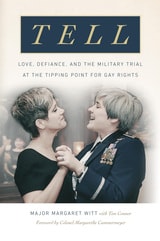
Tell
Love, Defiance, and the Military Trial at the Tipping Point for Gay RightsMajor Margaret Witt
University Press of New England, 2017
Telling Moments
Autobiographical Lesbian Short StoriesEdited by Lynda Hall
University of Wisconsin Press, 2003
The stories are by well-known contemporary writers—Gloria Anzaldúa, Mary Cappello, Emma Donoghue, Jewelle Gomez, Karla Jay, Anna Livia, Valerie Miner, Lesléa Newman, Minnie Bruce Pratt, Ruthann Robson, Sarah Schulman, and Jess Wells—and exciting newer voices, such as Donna Allegra and Marion Douglas. There are also stories from performance artists Carmelita Tropicana, Peggy Shaw, and Maya Chowdhry. Anna Livia’s protagonist appreciates her mother’s artful garden creation. Ruthann Robson tells of a survivor of the health care system. In Marion Douglas’s story a teenager dances with an alluring classmate. Donna Allegra’s strong construction worker copes with the death of her mother. And Karla Jay sets her character forth to swim with sharks. Most of the stories are accompanied by an author photo, biographical sketch, and—a most significant feature—a commentary from the author on her writing process and the autobiographical nature of her story, illustrating the truth behind the fiction.
Telling Stories That Matter
Memoirs and EssaysMarvin R. O'Connell
St. Augustine's Press, 2020
In Miscamble’s thorough introduction of O’Connell, he writes that the latter “utilized his striking talents as a historian as an integral part of his fundamental vocation as a priest. [O’Connell] once described the historian as a veritable ‘midwife to our faith,’ who must capture, as best as evidence will allow, the truth of the past.” This position lends itself to the structure of this work. The first part is the sadly incomplete memoirs of Fr. O’Connell, wherein the reader meets the historian and moves with eagerness and confidence into the essays that follow. Highlights of these collected essays include thoughts on Cardinal Newman, Belloc, the Spanish Inquisition, and the historical perspective of evangelization in the United States and modernism at large. What one reads are stories that might have been lost but are here preserved in what can with all moral certainty be called truthfulness. As his friend Ralph McInerny once qualified him, O’Connell combined compassion and judgment such that his histories were always indeed primarily stories and, as the reader well knows, stories have layers and threads and are not told simply for their conclusions.
O’Connell succeeds in showing one how human history is written. Above all, he reveals that history is made by humans, but must also be remembered and deciphered by humans who cannot forego leaving their own marks and prints on everything they encounter (in memory or otherwise). The objectivity we seek can be found in one historical account alone, asserts the priest-storyteller, yet a sharp eye to the past is always consonant with a compassionate desire to understand. Bill Schmitt, Fr. Bill Miscamble and David Solomon do posterity a service by giving us this man and his masterful engagement of history. These friends of O’Connell deem the historian’s passion for truth-in-context to be foundational for shaping stories that matter, including his own.
"This artful combination of memoir and selected essays reawakens our memory of Father O'Connell in all his immense personal charm, intellectual energy, rich erudition, keen wit, and steadfast dedication to his interlocking callings as priest and historian." —J. Philip Gleason, Emeritus Professor, History Department, University of Notre Dame
"The work of a master historian, these memoirs and essays are reliable in recounting what happened, insightful in judging how and why, and eloquent in presenting it all with a flair and wit rarely equaled in historical writing. Moreover, they come forth from a Catholic faith so deep and secure that it need not be imposed on the reader. Rather, they do what good historical writing does, placing the reader into a past that can be seen and felt, recognized and understood. Whether it be his colorful accounts of the tumultuous life and times of Thomas More, or the valiant struggles of Newman and the Oxford Movement, or his own seminary training and teaching in St. Paul, or his fortunes as a graduate student at Notre Dame under the tutelage of the eminent Monsignor Phillip Hughes—whatever the topic, reading O’Connell’s history gives one the gift of being able to say, I remember that happening and I wasn’t even there!"—Michael J. Baxter, Director of Catholic Studies, Regis University in Denver
"O'Connell was a master story teller. He was not, however, just a story teller. He was painstakingly rigorous in what and how he taught. His stories always perfectly illustrated a point, but they were never a substitution for the truth--rather an illustration of it." —Bradley Birzer, Russell Amos Kirk Chair in American Studies, Hillsdale College
Telling Women's Lives
The New BiographyWagner-Martin, Linda
Rutgers University Press, 1996
Placing herself in the avid reader’s chair, Linda Wagner-Martin writes about women’s biography from George Eliot and Virginia Woolf to Eleanor Roosevelt and Margaret Mead, and even to Cher and Elizabeth Taylor. Along the way, she looks at dozens of other life stories, probing at the differences between biographies of men and women, prevailing stereotypes about women’s lives and roles, questions about what is public and private, and the hazy margins between autobiography, biography, and other genres. In quick paced and wide-ranging discussions, she looks at issues of authorial stance (who controls the narrative? who chooses which story to tell?), voice (is this story told in the traditional objective tone? and if it is, what effect does that telling have on our reading?), and the politics of publishing (why aren’t more books about women’s lives published? and when they are, what happens to their advertising budgets?). She discusses the problems of writing biography of achieving women who were also wives (how does the biographer balance the two?), of daughters who attempt to write about their mothers, and of husbands trying to portray their wives.
Telling Women’s Lives is the first overview of the writing and the history of biographies about women. It is a significant contribution to the reassessment of the work of the hundreds of women writers who have made a difference in our conception of what women’s stories--and women’s lives--have been, and are becoming. The book is a must read for anyone who loves reading biographies, particularly biographies of women.
Ten Thousand Nights
Highlights from 50 Years of Theatre-GoingMarvin Carlson
University of Michigan Press, 2017
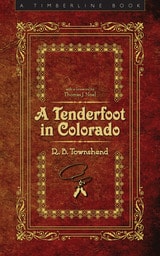
Tenderfoot in Colorado
Richard Baxter Townshend
University Press of Colorado, 1968
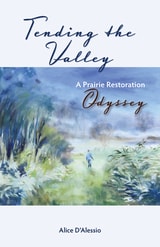
Tending the Valley
A Prairie Restoration OdysseyAlice D'Alessio
Wisconsin Historical Society Press, 2020
In Tending the Valley, Alice chronicles their efforts to return the land to its natural prairie state and to manage their oak and pine woods. Along the way they joined the land restoration movement, became involved in a number of stewardship groups, and discovered the depths of dedication and toil required to bring their dream to fruition. With hard-earned experience and the evocative language of a poet, D’Alessio shares her personal triumphs and setbacks as a prairie steward, along with a profound love for the land and respect for the natural history of the Driftless.
Tennessee Williams - American Writers 53
University of Minnesota Pamphlets on American WritersGerald Weales
University of Minnesota Press, 1965
Tennessee Williams - American Writers 53 was first published in 1965. Minnesota Archive Editions uses digital technology to make long-unavailable books once again accessible, and are published unaltered from the original University of Minnesota Press editions.
Tents, Tigers and the Ringling Brothers
Jerry Apps
Wisconsin Historical Society Press, 2007
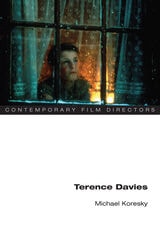
Terence Davies
Michael Koresky
University of Illinois Press, 2014
Film critic Michael Koresky explores the unique emotional tenor of Davies's work by focusing on four paradoxes within the director's oeuvre: films that are autobiographical yet fictional; melancholy yet elating; conservative in tone and theme yet radically constructed; and obsessed with the passing of time yet frozen in time and space. Through these contradictions, the films' intricate designs reveal a cumulative, deeply personal meditation on the self. Koresky also analyzes how Davies's ongoing negotiation of--and struggle with--questions of identity related to his past and his homosexuality imbue the details and jarring juxtapositions in his films with a queer sensibility, which is too often overlooked due to the complexity of Davies's work and his unfashionable ambivalence toward his own sexual orientation.