Results by title
384 books match the query 'Black Studies (Global)' and 68 start with t
Tendings
Feminist Esoterisms and the Abolition of ManNathan Snaza
Duke University Press, 2024
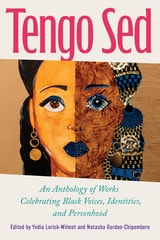
Tengo Sed
An Anthology of Works Celebrating Black Voices, Identities, and PersonhoodEdited by Yndia Lorick-Wilmot and Natasha Gordon-Chipembere
University of Illinois Press, 2026
A blend of text and visuals in genre fiction, nonfiction, poetry, memoir, art, and music, Tengo Sed engages in the expansive and nuanced meanings of Blackness across the diaspora, traversing linguistic, geographic, material, and formal boundaries. The collection interrogates how African-descended individuals theorize and articulate their racial, gender, ethnic, and national identities in relation to dominant discourse. Underscored by a transnational feminist cultural studies approach, the collection builds upon the legacy of The Sisterhood—an activist-literary collective founded by Alice Walker and June Jordan—by providing a contemporary platform for Black creatives to amplify their voices.
Singular and inspirational, Tengo Sed centers storytelling, self-making, and artistic practice, and contributes to ongoing dialogues on Black identity, liberation, and creative sovereignty.
Contributors: Vilna Bashi, Khytie Brown, Masauko Chipembere, Maria DeLongoria, Rosalina Diaz, Summer Edward, Natasha Gordon-Chipembere, Tonya Hegamin, Tiffani J. Johnson, Daphne Lamothe, Gabrielle Lawrence, Yndia S. Lorick-Wilmot, April Mojica-Clement, Courtney Desiree Morris, Anton Nimblett, Kasandra Pantoja, Michael D. Poole, Nelly Rosario, Alicia Anabel Santos, Michele L. Simms-Burton, Andrea Stith, Tawana Thompson, Tracey L. Walters, and N’deye Walton, and Janvieve Williams Comrie
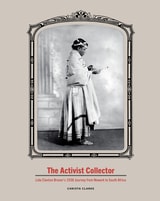
The Activist Collector
Lida Clanton Broner’s 1938 Journey from Newark to South AfricaChrista Clarke
Rutgers University Press, 2023
Published by the Newark Museum. Distributed worldwide by Rutgers University Press.
“After twenty-eight years of desire and determination, I have visited Africa, the land of my forefathers.” So wrote Lida Clanton Broner (1895–1982), an African American housekeeper and hairstylist from Newark, New Jersey, upon her return from an extraordinary nine-month journey to South Africa in 1938. This epic trip was motivated not only by Broner’s sense of ancestral heritage, but also a grassroots resolve to connect the socio-political concerns of African Americans with those of black South Africans under the segregationist policies of the time. During her travels, this woman of modest means circulated among South Africa’s Black intellectual elite, including many leaders of South Africa’s freedom struggle. Her lectures at Black schools on “race consciousness and race pride” had a decidedly political bent, even as she was presented as an “American beauty specialist.”
How did Broner—a working class mother—come to be a globally connected activist? What were her experiences as an African American woman in segregated South Africa and how did she further her work after her return? Broner’s remarkable story is the subject of this book, which draws upon a deep visual and documentary record now held in the collection of the Newark Museum of Art. This extraordinary archive includes more than one hundred and fifty objects, ranging from beadwork and pottery to mission school crafts, acquired by Broner in South Africa, along with her diary, correspondence, scrapbooks, and hundreds of photographs with handwritten notations.
The African Presence in Santo Domingo
Carlos Andujar
Michigan State University Press, 2012
Throughout its long and often tumultuous history, “La Hispanola” has taken on various cultural identities to meet the expectations—and especially the demands—of those who governed it. The island shared by the Dominican Republic and Haiti saw its first great shift with the arrival of Spanish colonists, who eliminated the indigenous population and established a pattern of indifference or hostility to diversity there. This enlightening book explores the Dominican Republic through the lens of its African descendants, beginning with the rise of the black slave trade in fifteenth- and sixteenth-century West Africa, and continuing on to slavery as it existed on the island. An engaging history that vividly details black life in the Dominican Republic, the book investigates the slave rebellions and evaluates the numerous contributions of black slaves to Dominican culture.
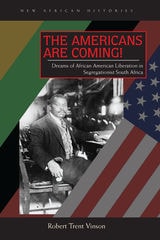
The Americans Are Coming!
Dreams of African American Liberation in Segregationist South AfricaRobert Trent Vinson
Ohio University Press, 2011
For more than half a century before World War II, black South Africans and “American Negroes”—a group that included African Americans and black West Indians—established close institutional and personal relationships that laid the necessary groundwork for the successful South African and American antiapartheid movements. Though African Americans suffered under Jim Crow racial discrimination, oppressed Africans saw African Americans as free people who had risen from slavery to success and were role models and potential liberators.
Many African Americans, regarded initially by the South African government as “honorary whites” exempt from segregation, also saw their activities in South Africa as a divinely ordained mission to establish “Africa for Africans,” liberated from European empires. The Jamaican-born Marcus Garvey’s Universal Negro Improvement Association, the largest black-led movement with two million members and supporters in forty-three countries at its height in the early 1920s, was the most anticipated source of liberation. Though these liberation prophecies went unfulfilled, black South Africans continued to view African Americans as inspirational models and as critical partners in the global antiapartheid struggle.
The Americans Are Coming! is a rare case study that places African history and American history in a global context and centers Africa in African Diaspora studies.
The Anarchy of Black Religion
A Mystic SongJ. Kameron Carter
Duke University Press, 2023
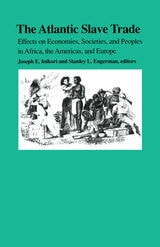
The Atlantic Slave Trade
Effects on Economies, Societies and Peoples in Africa, the Americas, and EuropeJoseph E. Inikori and Stanley L. Engerman
Duke University Press, 1992
Among the questions these essays address are: the social cost to Africa of this forced migration; the role of slavery in the economic development of Europe and the United States; the short-term and long-term effects of the slave trade on black mortality, health, and life in the New World; and the racial and cultural consequences of the abolition of slavery. Some of these essays originally appeared in recent issues of Social Science History; the editors have added new material, along with an introduction placing each essay in the context of current debates.
Based on extensive archival research and detailed historical examination, this collection constitutes an important contribution to the study of an issue of enduring significance. It is sure to become a standard reference on the Atlantic slave trade for years to come.
Contributors. Ralph A. Austen, Ronald Bailey, William Darity, Jr., Seymour Drescher, Stanley L. Engerman, David Barry Gaspar, Clarence Grim, Brian Higgins, Jan S. Hogendorn, Joseph E. Inikori, Kenneth Kiple, Martin A. Klein, Paul E. Lovejoy, Patrick Manning, Joseph C. Miller, Johannes Postma, Woodruff Smith, Thomas Wilson
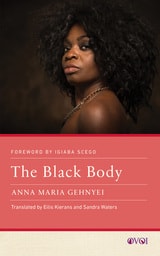
The Black Body
Anna Maria Gehnyei (Karima 2G)
Rutgers University Press, 2025
Best Translation of a Literary Work Published in 2025 from the American Association of Italian Studies
In her memoir, Anna Maria Gehnyei, better known as singer, rapper, and producer Karima 2G, reveals the challenges she faced as the child of Liberian immigrants, born and raised in Rome but perpetually viewed by her fellow Italians as a foreigner.
The daughter of the first Kpelle man to ever leave his native village and emigrate to Europe, Anna is proud of her heritage but only knows Liberia as a mystical, faraway land that appears in her parents’ stories. Though Italy is the only homeland she knows, she is merely classed as a resident, not a permanent citizen. At school and in the streets of Rome, she is treated to a mixture of patronizing condescension and xenophobic hostility. But Anna refuses to be bullied into mute submission, finding her voice as a performer and activist who demands recognition for Italy’s growing immigrant population.
The Black Ceiling
How Race Still Matters in the Elite WorkplaceKevin Woodson
University of Chicago Press, 2023
America’s elite law firms, investment banks, and management consulting firms are known for grueling hours, low odds of promotion, and personnel practices that push out any employees who don’t advance. While most people who begin their careers in these institutions leave within several years, work there is especially difficult for Black professionals, who exit more quickly and receive far fewer promotions than their White counterparts, hitting a “Black ceiling.”
Sociologist and law professor Kevin Woodson knows firsthand what life at a top law firm feels like as a Black man. Examining the experiences of more than one hundred Black professionals at prestigious firms, Woodson discovers that their biggest obstacle in the workplace isn’t explicit bias but racial discomfort, or the unease Black employees feel in workplaces that are steeped in Whiteness. He identifies two types of racial discomfort: social alienation, the isolation stemming from the cultural exclusion Black professionals experience in White spaces, and stigma anxiety, the trepidation they feel over the risk of discriminatory treatment. While racial discomfort is caused by America’s segregated social structures, it can exist even in the absence of racial discrimination, which highlights the inadequacy of the unconscious bias training now prevalent in corporate workplaces. Firms must do more than prevent discrimination, Woodson explains, outlining the steps that firms and Black professionals can take to ease racial discomfort.
Offering a new perspective on a pressing social issue, The Black Ceiling is a vital resource for leaders at preeminent firms, Black professionals and students, managers within mostly White organizations, and anyone committed to cultivating diverse workplaces.
The Black Ceiling
How Race Still Matters in the Elite WorkplaceKevin Woodson
University of Chicago Press, 2023
America’s elite law firms, investment banks, and management consulting firms are known for grueling hours, low odds of promotion, and personnel practices that push out any employees who don’t advance. While most people who begin their careers in these institutions leave within several years, work there is especially difficult for Black professionals, who exit more quickly and receive far fewer promotions than their White counterparts, hitting a “Black ceiling.”
Sociologist and law professor Kevin Woodson knows firsthand what life at a top law firm feels like as a Black man. Examining the experiences of more than one hundred Black professionals at prestigious firms, Woodson discovers that their biggest obstacle in the workplace isn’t explicit bias but racial discomfort, or the unease Black employees feel in workplaces that are steeped in Whiteness. He identifies two types of racial discomfort: social alienation, the isolation stemming from the cultural exclusion Black professionals experience in White spaces, and stigma anxiety, the trepidation they feel over the risk of discriminatory treatment. While racial discomfort is caused by America’s segregated social structures, it can exist even in the absence of racial discrimination, which highlights the inadequacy of the unconscious bias training now prevalent in corporate workplaces. Firms must do more than prevent discrimination, Woodson explains, outlining the steps that firms and Black professionals can take to ease racial discomfort.
Offering a new perspective on a pressing social issue, The Black Ceiling is a vital resource for leaders at preeminent firms, Black professionals and students, managers within mostly White organizations, and anyone committed to cultivating diverse workplaces.
The Black Geographic
Praxis, Resistance, FuturityCamilla Hawthorne and Jovan Scott Lewis, editors
Duke University Press, 2023
Contributors. Anna Livia Brand, C.N.E. Corbin, Lindsey Dillon, Chiyuma Elliott, Ampson Hagan, Camilla Hawthorne, Matthew Jordan-Miller Kenyatta, Jovan Scott Lewis, Judith Madera, Jordanna Matlon, Solange Muñoz, Diana Negrín, Danielle Purifoy, Sharita Towne

The Black Model Minority Student
African Immigrants and the Contradictions of Race in AmericaMercy Agyepong
University of Chicago Press, 2027
Explores the contradictory perceptions of African immigrant students in New York City and reveals how anti-Blackness persists even within predominantly Black and Brown schools.
African immigrant students are often celebrated in the United States as academically successful and culturally disciplined. But what happens when praise itself becomes part of a racial hierarchy? In The Black Model Minority Student, sociologist of education Mercy Agyepong traces the complex experiences of West African immigrant students attending public high schools in New York City.
Using ethnographic and interview data from predominantly Black and Brown schools in the Bronx, Agyepong shows that African immigrant students are often viewed through two competing yet coexisting narratives: as intellectually capable and hardworking, yet also as uncivilized or socially inferior. These perceptions are not incidental, but central to how anti-Blackness operates and how racial hierarchies are sustained in the United States. While the model minority stereotype shaped their experiences in Black and Brown high schools, West African immigrant students found that this seemingly favorable stereotype mattered less once they graduated and entered the white spaces of higher education and other social settings. At every step, African students—regardless of their national origins—were disadvantaged by racial stereotypes.
Theoretically grounded yet deeply human, The Black Model Minority Student offers an important new perspective on race, immigration, and education in contemporary America.

The Black Outside
Joy Priest
Duke University Press, 2027

The Blue Clerk
Ars Poetica in 59 VersosDionne Brand
Duke University Press, 2018
The British Blues Network
Adoption, Emulation, and CreativityAndrew Kellett
University of Michigan Press, 2017

The Color Black
Enslavement and Erasure in IranBeeta Baghoolizadeh
Duke University Press, 2024
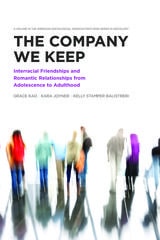
The Company We Keep
Interracial Friendships and Romantic Relationships from Adolescence to AdulthoodGrace Kao
Russell Sage Foundation, 2019
While research on interracial social ties has often focused on whites and blacks, Hispanics are the largest minority group and Asian Americans are the fastest growing racial group in the United States. The Company We Keep examines friendships and romantic relationships among blacks, whites, Hispanics, and Asian Americans to better understand the full spectrum of contemporary race relations. Using data from the National Longitudinal Study of Adolescent to Adult Health, the authors explore the social ties of more than 15,000 individuals from their first survey responses as middle and high school students in the mid-1990s through young adulthood nearly fifteen years later. They find that while approval for interracial marriages has increased and is nearly universal among young people, interracial friendships and romantic relationships remain relatively rare, especially for whites and blacks. Black women are particularly disadvantaged in forming interracial romantic relationships, while Asian men are disadvantaged in the formation of any romantic relationships, both as adolescents and as young adults. They also find that people in same-sex romantic relationships are more likely to have partners from a different racial group than are people in different-sex relationships. The authors pay close attention to how the formation of interracial friendships and romantic relationships depends on opportunities for interracial contact. They find that the number of students choosing different-race friends and romantic partners is greater in schools that are more racially diverse, indicating that school segregation has a profound impact on young people’s social ties.
Kao, Joyner, and Balistreri analyze the ways school diversity and adolescent interracial contact intersect to lay the groundwork for interracial relationships in young adulthood. The Company We Keep provides compelling insights and hope for the future of living and loving across racial divides.
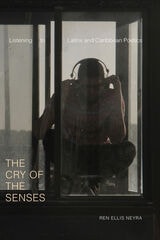
The Cry of the Senses
Listening to Latinx and Caribbean PoeticsRen Ellis Neyra
Duke University Press, 2020

The Denial of Antiblackness
Multiracial Redemption and Black SufferingJoão H. Costa Vargas
University of Minnesota Press, 2018
An incisive new look at the black diaspora, examining the true roots of antiblackness and its destructive effects on all of society
Thanks to movements like Black Lives Matter, Western society’s chronic discrimination against black individuals has become front-page news. Yet, there is little awareness of the systemic factors that make such a distinct form of dehumanization possible. In both the United States and Brazil—two leading nations of the black diaspora—a very necessary acknowledgment of black suffering is nonetheless undercut by denial of the pervasive antiblackness that still exists throughout these societies.
In The Denial of Antiblackness, João H. Costa Vargas examines how antiblackness affects society as a whole through analyses of recent protests against police killings of black individuals in both the United States and Brazil, as well as the everyday dynamics of incarceration, residential segregation, and poverty. With multisite ethnography ranging from a juvenile prison in Austin, Texas, to grassroots organizing in Los Angeles and Black social movements in Brazil, Vargas finds the common factors that have perpetuated antiblackness, regardless of context. Ultimately, he asks why the denial of antiblackness persists, whom this narrative serves, and what political realities it makes possible.
The Digital Black Atlantic
Roopika Risam
University of Minnesota Press, 2021
Exploring the intersections of digital humanities and African diaspora studies
How can scholars use digital tools to better understand the African diaspora across time, space, and disciplines? And how can African diaspora studies inform the practices of digital humanities? These questions are at the heart of this timely collection of essays about the relationship between digital humanities and Black Atlantic studies, offering critical insights into race, migration, media, and scholarly knowledge production.
The Digital Black Atlantic spans the African diaspora’s range—from Africa to North America, Europe, and the Caribbean—while its essayists span academic fields—from history and literary studies to musicology, game studies, and library and information studies. This transnational and interdisciplinary breadth is complemented by essays that focus on specific sites and digital humanities projects throughout the Black Atlantic. Covering key debates, The Digital Black Atlantic asks theoretical and practical questions about the ways that researchers and teachers of the African diaspora negotiate digital methods to explore a broad range of cultural forms including social media, open access libraries, digital music production, and video games. The volume further highlights contributions of African diaspora studies to digital humanities, such as politics and representation, power and authorship, the ephemerality of memory, and the vestiges of colonialist ideologies.
Grounded in contemporary theory and praxis, The Digital Black Atlantic puts the digital humanities into conversation with African diaspora studies in crucial ways that advance both.
Contributors: Alexandrina Agloro, Arizona State U; Abdul Alkalimat; Suzan Alteri, U of Florida; Paul Barrett, U of Guelph; Sayan Bhattacharyya, Singapore U of Technology and Design; Agata Błoch, Institute of History of Polish Academy of Sciences; Michał Bojanowski, Kozminski U; Sonya Donaldson, New Jersey City U; Anne Donlon; Laurent Dubois, Duke U; Amy E. Earhart, Texas A&M U; Schuyler Esprit, U of the West Indies; Demival Vasques Filho, U of Auckland, New Zealand; David Kirkland Garner; Alex Gil, Columbia U; Kaiama L. Glover, Barnard College, Columbia U; D. Fox Harrell, MIT; Hélène Huet, U of Florida; Mary Caton Lingold, Virginia Commonwealth U; Angel David Nieves, San Diego State U; Danielle Olson, MIT; Tunde Opeibi (Ope-Davies), U of Lagos, Nigeria; Jamila Moore Pewu, California State U, Fullerton; Anne Rice, Lehman College, CUNY; Sercan Şengün, Northeastern U; Janneken Smucker, West Chester U; Laurie N.Taylor, U of Florida; Toniesha L. Taylor, Texas Southern U.
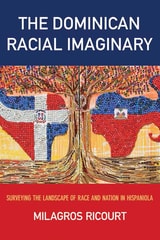
The Dominican Racial Imaginary
Surveying the Landscape of Race and Nation in HispaniolaRicourt, Milagros
Rutgers University Press, 2016
This book begins with a simple question: why do so many Dominicans deny the African components of their DNA, culture, and history?
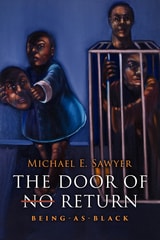
The Door of No Return
Being-As-BlackMichael E. Sawyer
Temple University Press, 2026
Using critical theory and philosophy, Sawyer decouples Black identity and Black philosophy from White and Western frames by building on Toni Morrison’s ideas of Black Thought and encouraging an understanding of Black Self-Consciousness and Black Self-Identity on Black terms. The Door of No Return uses music, literature, visual art, and a variety of physical disciplines to imagine a world that differs from one that confounds the positive formation of Black Self-Consciousness under the coercive regime of white supremacy and Anti-Black racism.
The Du Boisian Challenge
Rethinking Sociological MethodologyJosé Itzigsohn, Ricarda Hammer, and Michael Rodríguez-Muñiz, editors
Duke University Press, 2027
The Du Boisian Challenge
Rethinking Sociological MethodologyJosé Itzigsohn, Ricarda Hammer, and Michael Rodríguez-Muñiz, editors
Duke University Press, 2027
The Du Boisian Challenge
Rethinking Sociological MethodologyJosé Itzigsohn, Ricarda Hammer, and Michael Rodríguez-Muñiz, editors
Duke University Press, 2027
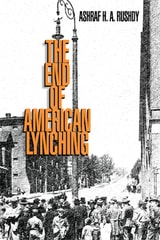
The End of American Lynching
Ashraf H. A. Rushdy
Rutgers University Press, 2012
The End of American Lynching questions how we think about the dynamics of lynching, what lynchings mean to the society in which they occur, how lynching is defined, and the circumstances that lead to lynching. Ashraf H. A. Rushdy looks at three lynchings over the course of the twentieth century—one in Coatesville, Pennsylvania, in 1911, one in Marion, Indiana, in 1930, and one in Jasper, Texas, in 1998—to see how Americans developed two distinct ways of thinking and talking about this act before and after the 1930s.
One way takes seriously the legal and moral concept of complicity as a way to understand the dynamics of a lynching; this way of thinking can give us new perceptions into the meaning of mobs and the lynching photographs in which we find them. Another way, which developed in the 1940s and continues to influence us today, uses a strategy of denial to claim that lynchings have ended. Rushdy examines how the denial of lynching emerged and developed, providing insight into how and why we talk about lynching the way we do at the dawn of the twenty-first century. In doing so, he forces us to confront our responsibilities as American citizens and as human beings.
The Essential Senghor
African Philosophy and Black AestheticsLéopold Sédar Senghor. Edited and Translated by Doyle D. Calhoun, Alioune B. Fall, and Cheikh Thiam.
Duke University Press, 2026
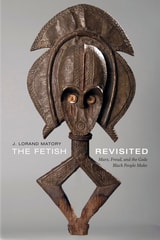
The Fetish Revisited
Marx, Freud, and the Gods Black People MakeJ. Lorand Matory
Duke University Press, 2018
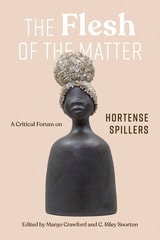
The Flesh of the Matter
A Critical Forum on Hortense SpillersEdited by Margo Natalie Crawford and C. Riley Snorton
Vanderbilt University Press, 2024
Hortense Spillers is one of the most important literary critics and Black feminist scholars of the last fifty years. Her 1987 scholarly article “Mama’s Baby, Papa’s Maybe: An American Grammar Book” is one of the most-cited essays in African American literary studies.
Edited by Margo Natalie Crawford and C. Riley Snorton, The Flesh of the Matter: A Critical Forum on Hortense Spillers is the first collection to take up directly how Spillers’s writing on literature, culture, and theory have been signal posts to the varied and universal threads of Black thought, as well as countless other areas of the academy. Interspersed with archival fragments from Spillers’s papers kept at the Pembroke Center for Feminist Thought at Brown University, the fourteen essays in this collection demonstrate a fidelity to the ways of reading Spillers has taught us, the nomenclature of enslavement keyed into the American lexicon, and the ways that history permeates our cultural boundaries today.
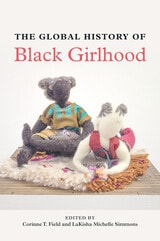
The Global History of Black Girlhood
Edited by Corinne T. Field and LaKisha Michelle Simmons
University of Illinois Press, 2022
Thought-provoking and original, The Global History of Black Girlhood opens up new possibilities for understanding Black girls in the past while offering useful tools for present-day Black girls eager to explore the histories of those who came before them.
Contributors: Janaé E. Bonsu, Ruth Nicole Brown, Tara Bynum, Casidy Campbell, Katherine Capshaw, Bev Palesa Ditsie, Sarah Duff, Cynthia Greenlee, Claudrena Harold, Anasa Hicks, Lindsey Jones, Phindile Kunene, Denise Oliver-Velez, Jennifer Palmer, Vanessa Plumly, Shani Roper, SA Smythe, Nastassja Swift, Dara Walker, Najya Williams, and Nazera Wright
The Global South
Histories, Politics, MapsPamela Gupta, Christopher Lee, Marissa Moorman, and Sandhya Shukla, special issue editors
Duke University Press, 2018
Contributors: Afro-Asian Networks Research Collective, Phineas Bbaala, Emily Callaci, Aharon de Grassi, Pamila Gupta, Mingwei Huang, Sean Jacobs, Maurice Jr. M. LaBelle, Christopher J. Lee, Roseann Liu, Marissa J. Moorman, Michelle Moyd, Ronald C. Po, Savannah Shange, Sandhya Shukla, Pahole Sookkasikon, Quito Swan, Sarah Van Beurden, Sarah E. Vaughn, Jelmer Vos, Keith B. Wagner
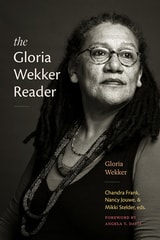
The Gloria Wekker Reader
Gloria Wekker. Chandra Frank, Nancy Jouwe, and Mikki Stelder, editors. Foreword by Angela Y. Davis.
Duke University Press, 2026
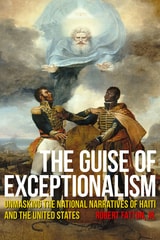
The Guise of Exceptionalism
Unmasking the National Narratives of Haiti and the United StatesRobert Fatton
Rutgers University Press, 2021
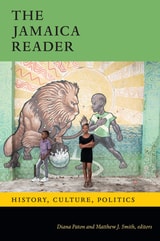
The Jamaica Reader
History, Culture, PoliticsDiana Paton and Matthew J. Smith, editors
Duke University Press, 2021
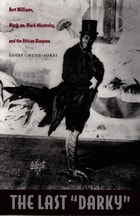
The Last "Darky"
Bert Williams, Black-on-Black Minstrelsy, and the African DiasporaLouis Chude-Sokei
Duke University Press, 2006
Chude-Sokei makes the crucial argument that Williams’s minstrelsy negotiated the place of black immigrants in the cultural hotbed of New York City and was replicated throughout the African diaspora, from the Caribbean to Africa itself. Williams was born in the Bahamas. When performing the “darky,” he was actually masquerading as an African American. This black-on-black minstrelsy thus challenged emergent racial constructions equating “black” with African American and marginalizing the many diasporic blacks in New York. It also dramatized the practice of passing for African American common among non-American blacks in an African American–dominated Harlem. Exploring the thought of figures such as Booker T. Washington, W. E. B. Du Bois, Marcus Garvey, and Claude McKay, Chude-Sokei situates black-on-black minstrelsy at the center of burgeoning modernist discourses of assimilation, separatism, race militancy, carnival, and internationalism. While these discourses were engaged with the question of representing the “Negro” in the context of white racism, through black-on-black minstrelsy they were also deployed against the growing international influence of African American culture and politics in the twentieth century.
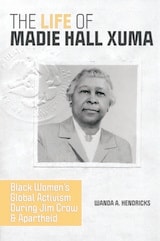
The Life of Madie Hall Xuma
Black Women's Global Activism during Jim Crow and ApartheidWanda A. Hendricks
University of Illinois Press, 2022

The Lonely Letters
Ashon T. Crawley
Duke University Press, 2020
The Long Emancipation
Moving toward Black FreedomRinaldo Walcott
Duke University Press, 2021
The Man Who Stole Himself
The Slave Odyssey of Hans JonathanGisli Palsson
University of Chicago Press, 2016
The island nation of Iceland is known for many things—majestic landscapes, volcanic eruptions, distinctive seafood—but racial diversity is not one of them. So the little-known story of Hans Jonathan, a free Black man who lived and raised a family in early nineteenth-century Iceland, is improbable and compelling, the stuff of novels.
In The Man Who Stole Himself, Gisli Palsson lays out the story of Hans Jonathan (also known as Hans Jónatan) in stunning detail. Born into slavery in St. Croix in 1784, Hans was taken as a slave to Denmark, where he eventually enlisted in the navy and fought on behalf of the country in the 1801 Battle of Copenhagen. After the war, he declared himself a free man, believing that he was due freedom not only because of his patriotic service, but because while slavery remained legal in the colonies, it was outlawed in Denmark itself. He thus became the subject of one of the most notorious slavery cases in European history, which he lost. Then Hans ran away—never to be heard from in Denmark again, his fate unknown for more than two hundred years. It’s now known that Hans fled to Iceland, where he became a merchant and peasant farmer, married, and raised two children. Today, he has become something of an Icelandic icon, claimed as a proud and daring ancestor both there and among his descendants in America.
The Man Who Stole Himself brilliantly intertwines Hans Jonathan’s adventurous travels with a portrait of the Danish slave trade, legal arguments over slavery, and the state of nineteenth-century race relations in the Northern Atlantic world. Throughout the book, Palsson traces themes of imperial dreams, colonialism, human rights, and globalization, which all come together in the life of a single, remarkable man. Hans literally led a life like no other. His is the story of a man who had the temerity—the courage—to steal himself.
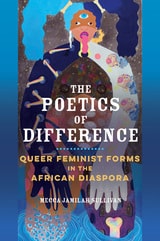
The Poetics of Difference
Queer Feminist Forms in the African DiasporaMecca Jamilah Sullivan
University of Illinois Press, 2021
From Audre Lorde, Ntozake Shange, and Bessie Head, to Zanele Muholi, Suzan-Lori Parks, and Missy Elliott, Black women writers and artists across the African Diaspora have developed nuanced and complex creative forms. Mecca Jamilah Sullivan ventures into the unexplored spaces of black women’s queer creative theorizing to learn its languages and read the textures of its forms. Moving beyond fixed notions, Sullivan points to a space of queer imagination where black women invent new languages, spaces, and genres to speak the many names of difference. Black women’s literary cultures have long theorized the complexities surrounding nation and class, the indeterminacy of gender and race, and the multiple meanings of sexuality. Yet their ideas and work remain obscure in the face of indifference from Western scholarship.
Innovative and timely, The Poetics of Difference illuminates understudied queer contours of black women’s writing.
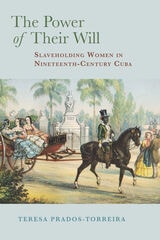
The Power of Their Will
Slaveholding Women in Nineteenth-Century CubaTeresa Prados-Torreira
University of Alabama Press, 2021
CHOICE OUTSTANDING ACADEMIC TITLE, 2022
“This fascinating book explores the unique circumstances of white slaveholding women in 19th-century Cuba and the enslaved peoples they controlled . . .This is a must read for scholars of the Caribbean and the African diaspora. Essential.” —CHOICE
In the early nineteenth century, while abolitionism was rising and the slave trade was declining in the Atlantic world, Spain used this opportunity to massively expand plantation slavery in Cuba. Between 1501 and 1866, more than 778,000 Africans were torn from their homelands and brought to work for the Cuban slaveholding class.
An understudied aspect of Cuban slaveholding society is the role of the white Cuban slave mistress (amas). The Power of Their Will: Slaveholding Women in Nineteenth-Century Cuba illuminates the interaction of female slaveholders and the enslaved during this time. Teresa Prados-Torreira shows, despite the lack of political power in a highly patriarchal society, Cuban women as property owners were instrumental in supporting the long duration of slavery, whether by enforcing the disciplining of the enslaved in the domestic sphere or helping to create the illusion of slavery as a humane institution. Thousands of Creole slaveholding women relied on slaves to lead a comfortable life. Even the subsistence of many poor women depended on the income derived from the hiring out of their enslaved.
In this accessible cultural history, culled from government documents, fiction, newspaper articles, traveler’s accounts, women’s wills, and archival research, Prados-Torreira coalesces a valuable narrative out of the often paradoxical and conflicting stories of the human bonds between the female owner and the enslaved. Narrative chapters, enlivened by vignettes, describe the daily life of slave mistresses in the main cities of Havana and Santiago and other towns, workings of sugar mills and coffee plantations, how slaveholding women coping with slave rebellions and wartime during the Ten Years’ War, and how personal relationships could occasionally affect the balance of power.
The Psychic Hold of Slavery
Legacies in American Expressive CultureSoyica Diggs Colbert, Robert J. Patterson, and Aida Levy-Hussen
Rutgers University Press, 2016
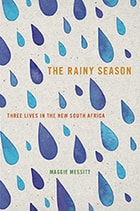
The Rainy Season
Three Lives in the New South AfricaMaggie Messitt
University of Iowa Press, 2015
The Rainy Season tells the stories of three generations in the Rainbow Nation one decade after its first democratic elections. This multi-threaded narrative follows Regina, a tapestry weaver in her sixties, standing at the crossroads where her Catholic faith and the AIDS pandemic crash; Thoko, a middle-aged sangoma (traditional healer) taking steps to turn her shebeen into a fully licensed tavern; and Dankie, a young man taking his matriculation exams, coming of age as one of Mandela’s Children, the first academic class educated entirely under democratic governance.
Home to Shangaan, Sotho, and Mozambican Tsonga families, Rooiboklaagte sits in a village where an outdoor butchery occupies an old petrol station and a funeral parlor sits in the attached garage. It’s a place where an AIDS education center sits across the street from a West African doctor selling cures for the pandemic. It’s where BMWs park outside of crumbling cement homes, and the availability of water changes with the day of the week. As the land shifts from dusty winter blond to lush summer green and back again, the duration of northeastern South Africa’s rainy season, Regina, Thoko, and Dankie all face the challenges and possibilities of the new South Africa.
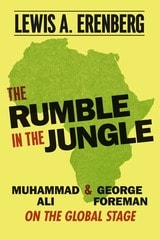
The Rumble in the Jungle
Muhammad Ali and George Foreman on the Global StageLewis A. Erenberg
University of Chicago Press, 2019
TheRumble in the Jungle orbits around Ali and Foreman, placing them at the convergence of the American Civil Rights movement and the Great Society, the rise of Islamic and African liberation efforts, and the ongoing quest to cast off the shackles of colonialism. With his far-reaching take on sports, music, marketing, and mass communications, Erenberg shows how one boxing match became nothing less than a turning point in 1970s culture.
The Scattered Family
Parenting, African Migrants, and Global InequalityCati Coe
University of Chicago Press, 2013
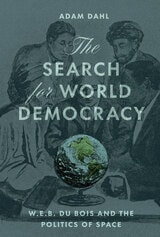
The Search for World Democracy
W. E. B. Du Bois and the Politics of SpaceAdam Dahl
University of Chicago Press, 2026
An incisive conceptual history of global democracy in the transnational political thought of W.E.B. Du Bois.
The Search for World Democracy traces the language of “world democracy” in W. E. B. Du Bois’s oeuvre, stretching from his early sociological writings to his later work on world peace and anticolonialism with and against the United Nations. Drawing on original archival research, several lesser-known writings, and most centrally Du Bois’s unpublished 1937 manuscript A World Search for Democracy, Adam Dahl places his unique approach to democratic theory within the transatlantic debates about the transformation of European imperial order in the twentieth century. Dahl shows how Du Bois’s vision of the spatial scale of democracy situated struggles for popular control, decolonization, industrial democracy, and racial enfranchisement in their shifting, multidimensional geographic contexts. Less a specific model of global governance than a radical politics of space and scale, Du Bois’s idea of world democracy challenges the boundaries between domestic and international politics by linking local sites of democratic struggle within and against the global color line. The Search for World Democracy shows how, for Du Bois, the radical transformation of the United States into a multiracial democracy would require an equally dramatic transformation of the imperial lineages of world politics.
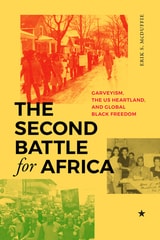
The Second Battle for Africa
Garveyism, the US Heartland, and Global Black FreedomErik S. McDuffie
Duke University Press, 2024
The Slave Trade Debate
Contemporary Writings For and AgainstEdited by the Bodleian Library
Bodleian Library Publishing, 2007
More than fifty years before the question of slavery launched the United States into the bloody turmoil of the American Civil War, Britain wrestled passionately with the same issues. A flood of pamphlets published by both abolitionists and slavery proponents fueled the debate, and they are now collected here in this fascinating volume in commemoration of the Abolition of the Slave Trade Act, 1807.
Written during the 1780s and 1790s, the pamphlets confront the issues surrounding slavery, such as the Rights of Man, the economic health of the British colonies, poverty in England, and, most prominently, the economic and moral condition of the African slaves. The authors on both sides of the debate—including such prominent figures as the eventual King William IV, Sir John Gladstone (father of the future Prime Minister William Gladstone), and the leading abolitionist William Wilberforce—draw upon biblical scriptures to justify their positions, providing illuminating insights into the theological debates of the time as well. Also included in the volume are an excerpt of abolitionist James Ramsay’s journal and an informative introduction that places the writings in their historical and social contexts. The Slave Trade Debate is an essential resource for scholars of transatlantic slavery and British history.
The Slaves Who Defeated Napoléon
Toussaint Louverture and the Haitian War of Independence, 1801–1804Philippe R. Girard
University of Alabama Press, 2011
A deeply researched and definitive account of the climactic battle at the end of the Haitian Revolution
Among the many rebellions against European colonial empires, the Haitian Revolution against France is among the most dramatic and complex. Having begun in 1791 as France was in the throes of its own young revolution, the conflict reached its dramatic climax when Napoleon dispatched a heavily armed expeditionary force led by his brother-in-law Charles Leclerc to re-establish slavery and the sugar economy that had so enriched France. Philippe Girard’s Slaves Who Defeated Napoleon is a deeply researched and engrossing account of this invasion and its spectacular defeat.
For this ambitious account, Philippe Girard has studied not only primary records in Haiti itself but also rare documents from nineteen public and private archives and research libraries in French, U.S., British, and Spanish collections. His more inclusive approach provides a fuller, more accurate and detailed narrative. He reveals not only key military movements, but also less-known aspects like the activities of U.S. merchants, in-fighting within Napoleon’s government, and communication between both sides and other European powers. Girard fills the work with unforgettable stories of those who led or were caught up in the war, people like poorly armed Black soldiers who ambushed Bonaparte’s columns, French child drummers, Jewish bankers in Kingston, weapon smugglers from Quaker Philadelphia, Polish artillerists, and mixed-raced people struggling to preserve their freedom against both Black and white opponents.
Transcending pat ideological and racial categories, the book brings into focus an Atlantic society at the crossroads of African and European influences, where Haitian rebels fought France while embracing its ideals.
The Specter and the Speculative
Afterlives and Archives in the African DiasporaMae G. Henderson
Rutgers University Press, 2024