Results by title

35 books match the query 'Czechoslovakia'
cover of A Stricken Field: A Novel

A Stricken Field

A Novel

Martha Gellhorn

University of Chicago Press, 2011

Martha Gellhorn was one of the first—and most widely read—female war correspondents of the twentieth century. She is best known for her fearless reporting in Europe before and during WWII and for her brief marriage to Ernest Hemingway, but she was also an acclaimed novelist.
In 1938, before the Munich pact, Gellhorn visited Prague and witnessed its transformation from a proud democracy preparing to battle Hitler to a country occupied by the German army. Born out of this experience, A Stricken Field follows a journalist who returns to Prague after its annexation and finds her efforts to obtain help for the refugees and to convey the shocking state of the country both frustrating and futile. A convincing account of a people under the brutal oppression of the Gestapo, A Stricken Field is Gellhorn’s most powerful work of fiction.
 
“[A] brave, final novel. Its writing is quick with movement and with sympathy; its people alive with death, if one can put it that way. It leaves one with aching heart and questing mind.”—New York Herald Tribune
 
“The translation of [Gellhorn’s] personal testimony into the form of a novel has . . . force and point.”—Times Literary Supplement
[more]
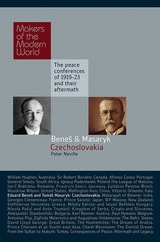
cover of Benes & Masaryk: Czechoslovakia

Benes & Masaryk

Czechoslovakia

Peter Neville

Haus Publishing, 2010

Of even greater importance for Hungary's future were the activities of the champions of an independent state of Czechs and Slovaks. Tomáš Masaryk, a Czech professor of philosophy and a future leader of his people, was hard at work within a month of the outbreak of war lobbying in Paris and London for an independent Bohemia, still a major component of the Austrian Empire within the Austro-Hungarian Monarchy, which would incorporate the predominantly Slovak regions of northern Hungary. Masaryk, who was assisted in his efforts by Eduard Beneš, a bitter enemy of the Habsburgs. Thus the new state was effectively shaped before the Paris Peace Conference. But the Conference laid down the seeds of Czechoslovakia's later destruction. Only nine million Czechoslovaks lived in the state out of a population of fourteen million. A large discontented Hungarian minority lived in Slovakia, and the Polish majority area of Teschen poisoned Czech-Polish relations. Yet the greatest challenge came from the rise of the Nazis in Germany in 1930s: Masaryk always claimed that he did not want three and half million ethnic Germans, but he and Beneš accepted them nonetheless. Masaryk died in 1937, and Britain and France would not support the Czechs over the Sudetenland, the infamous deal struck in Munich by Neville Chamberlain and Adolf Hitler.
[more]
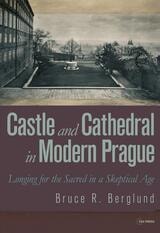
cover of Castle and Cathedral: Longing for the Sacred in a Skeptical Age

Castle and Cathedral

Longing for the Sacred in a Skeptical Age

Bruce R. Berglund

Central European University Press, 2017
This book takes a new approach to interwar Prague by addressing religion as an integral part of the city's cultural history. Berglund views Prague's cultural history in the broader context of religious change and secularization in 20th-century Europe. Based on detailed knowledge of sources, the monograph explores the interdisciplinary linkages between politics, architecture and theology in the building of symbolism and a "new mythology" of the first Czechoslovak republic (1918-1938). Berglunds text provides an important service for understanding both Czech history as well as current Czech political debate. The author's method can be characterized as culture history, able to connect several disciplines, emphasizing common topic (religion, politics, symbolics). Modern Czech elites, superficially characterized as "ateistic", appears in a new light to be deeply religious, a transition from more traditional, (mostly) Catholic religiosity, to a concept of a new, modern, ethical religion. The study incorporates biographical research, focusing on three principal characters: Tomás Garrigue Masaryk, Czechoslovakia's first president; his daughter Alice Garrigue Masaryková, founding director of the Czechoslovak Red Cross; and Joze Plecnik, the Slovenian architect who directed the renovations of Prague Castle.
[more]
cover of Closely Watched Trains

Closely Watched Trains

Bohumil Hrabal

Northwestern University Press, 1995
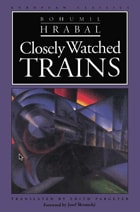
Hrabal's postwar classic about a young man's coming of age in German-occupied Czechoslovakia is among his most popular works. Milos Hrma is a timid railroad apprentice who insulates himself with fantasy against a reality filled with cruelty and grief. After receiving acclaim as a novel, Closely Watched Trains was made into a successful film that won the Academy Award for Best Foreign Film of 1967.
[more]
cover of Czech Law in Historical Contexts

Czech Law in Historical Contexts

Jan Kuklík

Karolinum Press, 2015

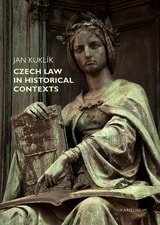
The legal system of the present-day Czech Republic cannot be understood without sufficient knowledge of its historical roots and evolution. Kuklík traces the development of Czech law from its origins as a form of Slavic law to its current position, reflecting the influence of both Roman law and the legal systems of neighboring countries. The twentieth century is of particular importance due to the establishment of an independent Czechoslovakia in 1918 and its split in 1993 into the Czech Republic and the Slovak Republic. It was a century encompassing periods of democratic as well as totalitarian regimes, and major political, ideological, economic, and social changes, making Czech Law in Historical Context an ideal case study for researchers interested in the transition of democratic legal systems into totalitarian regimes, and vice versa.
[more]
cover of Czech Refugees in Cold War Canada

Czech Refugees in Cold War Canada

Jan Raska

University of Manitoba Press, 2018
[more]
cover of Czecho/Slovakia: Ethnic Conflict, Constitutional Fissure, Negotiated Breakup

Czecho/Slovakia

Ethnic Conflict, Constitutional Fissure, Negotiated Breakup

Eric Stein

University of Michigan Press, 2000
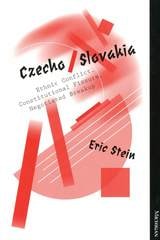
As the clock struck midnight on December 31, 1992, Czechoslovakia, the only genuine democracy in post-World War I Central-Eastern Europe, broke up into two independent successor states. This book explores the failed search for a postcommunist constitution and it records in a lively style a singular instance of the peaceful settlement of an ethnic dispute.
For more than three years after the implosion of the Communist regime in 1989, the Czechs and Slovaks negotiated the terms of a new relationship to succeed the centralized federation created under communism. After failing to agree to the terms of a new union, the parties agreed on an orderly breakup.
In the background of the narrative loom general issues such as: What are the sources of ethnic conflict and what is the impact of nationalism? Why do ethnic groups choose secession and what makes for peaceful rather than violent separation? What factors influence the course of postcommunist constitutional negotiations, which are inevitably conducted in the context of institutional and societal transformation? The author explores these issues and the reasons for the breakup.
Eric Stein, a well-known scholar of comparative law and a native of Czechoslovakia, was invited by the Czechoslovak government to assist in the drafting of a new constitution. This book is based on his experiences during years of work on these negotiations as well as extensive interviews with political figures, journalists, and academics and extensive research in the primary documents. It will appeal to historians, lawyers, and social scientists interested in the process of transformation in Eastern Europe and the study of ethnic conflict, as well as the general reader interested in modern European history.
Eric Stein is Hessel E. Yntema Professor Emeritus, University of Michigan Law School. He previously served with the United States Department of State in the Legal Advisor's Office. He is the author of many books and articles on comparative law and the law of the European Community.
[more]
cover of Czechoslovak Diplomacy and the Gulag: Deportation of Czechoslovak Citizens to the USSR and the Negotiation for their Repatriation, 1945-1953

Czechoslovak Diplomacy and the Gulag

Deportation of Czechoslovak Citizens to the USSR and the Negotiation for their Repatriation, 1945-1953

Milada Polisenská

Central European University Press, 2016
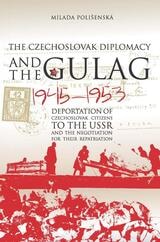
After the entry of the Red Army into Czechoslovak territory in 1945, Red Army authorities began to arrest and deport Czechoslovak citizens to labor camps in the Soviet Union. The regions most affected were Eastern and South Slovakia and Prague. The Czechoslovak authorities repeatedly requested a halt to the deportations and that the deported Czechoslovaks be returned immediately. It took a long time before these protests generated any response. Czechoslovak Diplomacy and the Gulag focuses on the diplomatic and political aspects of the deportations. The author explains the steps taken by the Czechoslovak Government in the repatriation agenda from 1945 to 1953 and reconstructs the negotiations with the Soviets. The research tries to answer the question of why and how the Russians deported the civilian population from Czechoslovakia which was their allied country already during the war. Key words: 1. World War, 1939–1945—Deportations from Czechoslovakia. 2. Forced labor—Soviet Union—History. 3. Labor camps—Soviet Union—History. 4. Czechs—Soviet Union—History. 5. Slovaks—Soviet Union—History. 6. Czechoslovakia—Foreign relations—Soviet Union. 7. Soviet Union—Foreign relations—Czechoslovakia. 8. Czechoslovakia—Foreign relations—1945–1992. 9. Repatriation—Czechoslovakia—History.
[more]
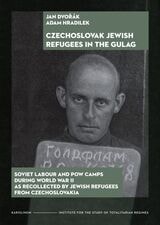
cover of Czechoslovak Jewish Refugees in the Gulag: Soviet Labour and POW Camps during World War II as Recollected by Jewish Refugees from Czechoslovakia

Czechoslovak Jewish Refugees in the Gulag

Soviet Labour and POW Camps during World War II as Recollected by Jewish Refugees from Czechoslovakia

Jan Dvorák and Adam Hradilek

Karolinum Press, 2025

Containing meticulous research of a long under-represented part of the Holocaust, this book provides a rich pictorial documentation of the Gulag environment as told by Jewish refugees.

While millions of Soviet slaves awaited liberation from the Nazi troops, millions of German concentration camp victims put their last bit of hope in the Red Army.

An in-depth look into the Soviet persecution of Jewish refugees, this book offers twenty-one different interviews with Czechoslovak Jewish refugees who found themselves in Soviet labor and prison camps between 1939 and 1941. They represent around two thousand Czechoslovak Jews who escaped persecution from German and Hungarian occupational forces and Slovak fascists by fleeing to the East. The Soviets sentenced most of them to long stints of forced labor in the Gulags for illegal immigration, espionage, and other arbitrary accusations. A specific group was formed by the Jews from the Hungarian labor service who either defected to or were captured by the Soviets.

Dvořák and Hradilek chronicle four waves of escape—those from the Protectorate of Bohemia and Moravia, the Nisko concentration camp, Carpathian Ruthenia, and the aforementioned labor service. Thorough and clear, every interview coincides with supplementary documents and photographs found in the NKVD archives, sourced from Ukraine.
[more]
cover of Czechoslovakia at the World’s Fairs: Behind the Façade

Czechoslovakia at the World’s Fairs

Behind the Façade

Marta Filipová

Central European University Press, 2024

Established in 1918, as a new state the First Czechoslovak Republic was keen to project a distinct image. Participation in World Fairs offered the perfect opportunity-. In this comprehensive account of Czechoslovak participation in international exhibitions of the interwar period Marta Filipová looks beyond the sleek façade of the modernist pavilions to examine the intersections of architecture, art and design with commercial interests, state agendas, individual action and the public, offering a complex insight into the production and reception of national displays.

The rich collection of images – mainly photographs – provides a close look at the Czechoslovak pavilions. The design, content and context of the displays convey an idealized narrative that was created for the fairs and the myths on which the Czechoslovak nation and state were built. Heavy machinery, modern art, tourist destinations, and food and drink were presented as Czechoslovak, while many aspects of social life – particularly women or ethnic minorities – were strikingly underrepresented or absent. The book argues that the objects and ideas that the pavilion organizers put on display legitimized and validated the existence of the new state through the inclusion and exclusion of exhibits, people, and ideas.

While Marta Filipová primarily focuses on Czechoslovakia, she also offers insights into how other emerging nations projected and sustained their image during this historical period and how interwar world’s fairs accommodated them.
[more]
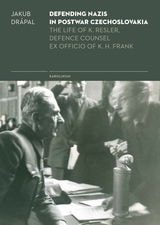
cover of Defending Nazis in Postwar Czechoslovakia: Life of K. Resler, Defense Councel Ex Officio of K. H. Frank

Defending Nazis in Postwar Czechoslovakia

Life of K. Resler, Defense Councel Ex Officio of K. H. Frank

Jakub Drápal

Karolinum Press, 2018

In this book, Czech lawyer and scholar Jakub Drápal tells the story of the life of Kamill Resler, an attorney who defended the most prominent Nazi tried in postwar Czechoslovakia: Karl Hermann Frank, who would go on to be executed for his role in organizing the massacres of the Czech villages Lidice and Ležáky in 1942. Celebrating Resler’s lifelong commitment to justice—to honoring even the most nefarious criminals’ right to a defense—Drápal highlights events that influenced Resler’s outlook and legal career, important cases that preceded Frank’s trial, Resler’s subsequent defenses of other Nazi criminals, and the final years of Resler’s life under the communist regime.
[more]
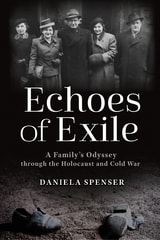
cover of Echoes of Exile: A Family’s Odyssey through the Holocaust and Cold War

Echoes of Exile

A Family’s Odyssey through the Holocaust and Cold War

Daniela Spenser

University of Alabama Press, 2025

A sweeping exploration of survival, resilience, and the fate of one family amid Europe’s most turbulent century.

Echoes of Exile reveals the seismic disruptions of twentieth-century European history through the intimate lens of one family’s struggle to survive. Setting out to record the life of her mother, Ruth, Daniela Spenser unearthed personal facts and stories that additionally illuminate the shared traumas and experiences of millions of Czech, Polish, and German Jews who died in the Holocaust, as well as the stories of those who survived and lived under Communism and the Cold War. Her resulting work is a fascinating hybrid that combines family letters and interviews with deeply researched political history spanning from the collapse of the Austro-Hungarian Empire to the fall of the Berlin Wall.

Spenser’s fascinating work reveals the difficult choices her mother and family faced, the tests to their loves and loyalties, and the lingering scars of exile. More than a family history, it weaves personal and historical narratives with mundane and momentous threads to create a fresh, distinctive fabric. Spenser recovers fragments of the past that contribute to a map of the present and possibilities for the future. An engrossing account of survival, resilience, and the enduring human spirit amid the maelstrom of Europe’s savage twentieth century, Echoes of Exile will interest readers who value firsthand accounts of significant events and who seek to understand the complexities of survival, identity, and political change through intimate, lived experiences.
[more]
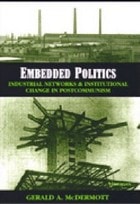
cover of Embedded Politics: Industrial Networks and Institutional Change in Postcommunism

Embedded Politics

Industrial Networks and Institutional Change in Postcommunism

Gerald A. McDermott

University of Michigan Press, 2003

Embedded Politics offers a unique framework for analyzing the impact of past industrial networks on the way postcommunist societies build new institutions to govern the restructuring of their economies. Drawing on a detailed analysis of communist Czechoslovakia and contemporary Czech industries and banks, Gerald A. McDermott argues that restructuring is best advanced through the creation of deliberative or participatory forms of governance that encourages public and private actors to share information and take risks. Further, he contends that institutional and organizational changes are intertwined and that experimental processes are shaped by how governments delegate power to local public and private actors and monitor them.
Using comparative case analysis of several manufacturing sectors, Embedded Politics accounts for change and continuity in the formation of new economic governance institutions in the Czech Republic. It analytically links the macropolitics of state policy with the micropolitics of industrial restructuring. Thus the book advances an alternative approach for the comparative study of institutional change and industrial adjustment.
As a historical and contemporary analysis of Czech firms and public institutions, this book will command the attention of students of postcommunist reforms, privatization, and political-economic transitions in general. But also given its interdisciplinary approach and detailed empirical analysis of policy-making and firm behavior, Embedded Politics is a must read for scholars of politics, economics, sociology, political economy, business organization, and public policy.
Gerald A. McDermott is Assistant Professor of Management in The Wharton School of Management at The University of Pennsylvania. His research applies recent advances in comparative political economy and industrial organization, including theories of social networks, historical institutionalism, and incomplete markets to analyze issues of economic governance, firm creation, and industrial restructuring in advanced and newly industrialized countries. As evidenced by Embedded Politics, his current focus is on problems of institutional and organizational learning in the formation of meso-level governance institutions in emerging market and postsocialist economies.
McDermott also works as Senior Research Fellow at the IAE Escuela de Direccion y Negocios at Universidad Austral in Buenos Aires, and he has served as Project Coordinator at the Inter-American Development Bank. He has consulted for the Finance, Private Sector, and Infrastructure Division at the World Bank and advised the Deputy Foreign Minister of the Czech Republic. In addition he has published many papers and book chapters on entrepreneurship, privatization, institutions, and networks in Central Europe and Latin America.
[more]
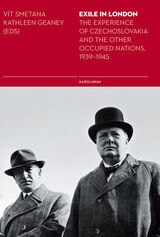
cover of Exile in London: The Experience of Czechoslovakia and the Other Occupied Nations, 1939–1945

Exile in London

The Experience of Czechoslovakia and the Other Occupied Nations, 1939–1945

Edited by Vít Smetana and Kathleen Brenda Geaney

Karolinum Press, 2018
During World War II, London experienced not just the Blitz and the arrival of continental refugees, but also an influx of displaced foreign governments. Drawing together renowned historians from nine countries—the United Kingdom, Germany, the Netherlands, Belgium, Poland, the former Yugoslavia, the Czech Republic, and Slovakia—this book explores life in exile as experienced by the governments of Czechoslovakia and other occupied nations who found refuge in the British capital. Through new archival research and fresh historical interpretations, chapters delve into common characteristics and differences in the origin and structure of the individual governments-in-exile in an attempt to explain how they dealt with pressing social and economic problems at home while abroad; how they were able to influence crucial Allied diplomatic negotiations; the relative importance of armies, strategic commodities, and equipment that particular governments-in-exile were able to offer to the allied war effort; important wartime propaganda; and early preparations for addressing postwar minority issues.
[more]
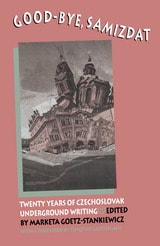
cover of Good-Bye Samizdat: Twenty Years of Czechoslovak Underground Writing

Good-Bye Samizdat

Twenty Years of Czechoslovak Underground Writing

Marketa Goetz-Stankiewicz

Northwestern University Press, 1992
Good-bye, Samizdat offers the first collection of the best of Czechoslovakia's samizdat, underground texts from the era 1948 through 1990. Divided into three sections, the volume includes fiction, cultural and political works, and philosophical essays. The writings reflect the thought of some of Czechoslovakia's best-known minds--Klima, Vaculik, and Havel--as well as others yet unknown in the West. Taken together, they capture the artistic and intellectual mood of a country situated at a focal point between East and West at a fascinating point in history.
[more]
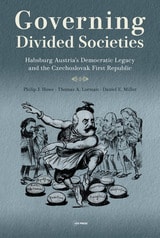
cover of Governing Divided Societies: Habsburg Austria’s Democratic Legacy and the Czechoslovak First Republic

Governing Divided Societies

Habsburg Austria’s Democratic Legacy and the Czechoslovak First Republic

Philip Howe

Central European University Press, 2026

The authors of this volume challenge conventional notions about Habsburg and Czechoslovak politics, arguing that they were more democratic than they often appear. They use the consociational model of democracy as a means of combining political science and history. The theory, associated with Arend Lijphart, asserts that consociationalism guarantees minorities a say in government and helps preserve democracy in societies that experience deep ideological, cultural, or ethnic divisions. Consociationalism enables the main segments to be isolated organizationally from each other, thus avoiding conflict but affording the leaders opportunities to make compromises for the good of the whole.
Consociationalism has proven its worth as a model for describing contemporary democracies and diagnosing their ills. By exploring the institutions and practices of the Habsburg Monarchy before 1918 and the Czechoslovak First Republic, Howe, Lorman, and Miller prove the value of the consociational theory in analyzing the past. They hold that a multitude of parties, frequent cabinet changes, and reliance on cabinets of experts do not necessarily signal flawed democracies. In fact, they are features of consociationalism. This volume challenges historians and social scientists to view the Austrian half of the Habsburg Monarchy before 1918 as evolving toward consociational democracy and the Czechoslovak First Republic as a fully consociational state.
[more]
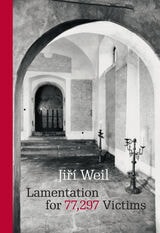
cover of Lamentation for 77,297 Victims

Lamentation for 77,297 Victims

Jirí Weil

Karolinum Press, 2020

“Smoke from nearby factories shrouds a countryside as flat as a table, a countryside stretching off to infinity. Covering it are the ashes of millions of dead. Scattered throughout are fine pieces of bone that ovens were not able to burn. When the wind comes, ashes rise to the heavens, bone fragments remain on the ground. And rain falls on the ashes, and rain turns them to good fertile soil, as befits the ashes of martyrs. And who can find the ashes of those from my native land, of whom there were 77,297? I gather some ashes with my hand, for only a hand can touch them, and I pour them into a linen sack, just as those who once left for a foreign country would gather their native soil so as never to forget, so as always to return to it.”
​
So begins Jiří Weil’s unforgettable prose poem, Lamentation for 77, 297 Victims, his literary monument to the Czech Jews killed during the Holocaust. A Czech-Jewish writer who worked at Prague’s Jewish Museum both during and after the Nazi Occupation—he survived the Holocaust by faking his own death and hiding out until the war had ended—Weil wrote Lamentation while he served as the museum’s senior librarian in the 1950s. This remarkable literary experiment presents a number of innovative approaches to writing about a horror many would deem indescribable, combining a narrative account of the Shoah with newspaper-style reportage on a handful of the lives ended by the Holocaust and quotes from the Hebrew Bible to create a specific and powerful portrait of loss and remembrance. Translated by David Lightfoot, Lamentation for 77,297 Victims is a startling and singular introduction to a writer whose works have been acclaimed by Philip Roth, Michiko Kakutani, and Siri Hustvedt.
 
[more]
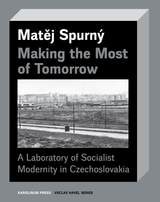
cover of Making the Most of Tomorrow: A Laboratory of Socialist Modernity in Czechoslovakia

Making the Most of Tomorrow

A Laboratory of Socialist Modernity in Czechoslovakia

Matej Spurný

Karolinum Press, 2019

Most, one of the most impressive historical cities of Northern Bohemia, was destroyed in the sixties and seventies for coal mining. When plans to redevelop the city began, hope and expectations ran high; in the end, however, Most became a symbol for the heartless incompetence of Czechoslovak communism.

In this book, Matěj Spurný explores the historical city of Most from the nineteenth century into the years following World War II, investigating the decision to destroy it as well as the negotiations concerning the spirit of the proposed new city. Situating postwar Most in the context of cultural and social shifts in Czechoslovakia and Europe as a whole, Spurný traces the path a medieval city took to become a showcase of brutalist architecture and the regime’s technicist inhumanity.

But the book, like the city of Most itself, does not end in tragedy. Fusing architectural and political history with urban and environmental studies, Spurný’s tale shows the progress that can be made when Czechs confront the crimes of the past—including the expulsion of local Germans and the treatment of the Romani minority—and engage with rational, contemporary European concepts of urban renewal.
[more]
cover of Minorities and Law in Czechoslovakia

Minorities and Law in Czechoslovakia

Jan Kuklík and René Petráš

Karolinum Press, 2017
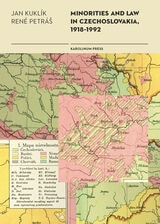
Across the whole of modern Czech history—from 1918, through World War II, and into the postwar years—ethnic and minority issues have been of the utmost prominence. Moreover, Czechoslovakia has in the past been held up as a model for solving problems related to ethnic and minority tensions through legal regulations—regulations that played a key role in delineating minority status. Primarily intended for an international, non-Czech audience, this book takes a long-term perspective on issues related to ethnic and language minorities in Czechoslovakia. Bridging legal and historical disciplines, Jan Kuklík and René Petráš show that as ethnic minority issues once again come to the forefront of policy debates in Europe and beyond, a detailed knowledge of earlier Czech difficulties and solutions may help us to understand and remedy contemporary problems.
[more]
cover of Out of the Red: Building Capitalism and Democracy in Postcommunist Europe

Out of the Red

Building Capitalism and Democracy in Postcommunist Europe

Mitchell A. Orenstein

University of Michigan Press, 2001

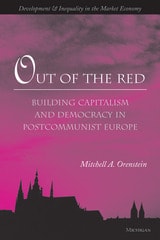
After the fall of the Berlin Wall, the countries of East-Central Europe embarked on a journey to transform themselves into democratic capitalist societies. Their governments searched for strategies that would allow them to pursue radical market reforms within the context of nascent democratic politics. Poland adopted a neoliberal strategy that attempted to push through as much reform as possible before an antireform backlash could occur. In the Czech Republic, a social liberal strategy for transformation attempted to combine neoliberal macro-economic policies with social democratic measures designed to avert such a backlash.
A detailed analysis of Poland and the Czech Republic suggests that alternation between strategies has been the secret to the success of East-Central European countries.
This comparative case analysis identifies the significance of reform mistakes during transition and the corrective benefits of policy alternation, its claims illustrated with an in-depth study of privatization policy in the two countries.
Mitchell A. Orenstein delves into the historic struggle to build capitalism and democracy during a decade of post- communist transition in East-Central Europe and develops a model that explains why democratic policy alternation may accelerate policy learning under conditions of uncertainty and constraint.
Out of the Red is accessible to a general audience and as such is suitable for both graduate and undergraduate courses on political economy. It will be of particular interest to economists, political scientists, sociologists, students of postcommunism, and anyone interested in the relations between capitalism and democracy in the contemporary world.
Mitchell A. Orenstein is Assistant Professor of Political Science, Syracuse University.
[more]
cover of Professions And The State: Expertise and Autonomy in the Soviet Union and Eastern Europe

Professions And The State

Expertise and Autonomy in the Soviet Union and Eastern Europe

edited by Anthony Jones

Temple University Press, 1991

Unlike autonomous professionals in Western industrialized democracies, professionals in a socialist, bureaucratic setting operate as employees of the state. The change in environment has important Implications not only for the practice of professions but also for the concept of professionalism itself. This collection of nine essays is the first to survey the major professions In the USSR, Czechoslovakia, and Poland. The contributors investigate the implications of professional experience in a socialist economy as well as relating changes in professional organization and power to reform movements in general and perestroika in particular.


In the series Labor and Social Change, edited by Paula Rayman and Carmen Sirianni.
 

[more]
cover of Queer Encounters with Communist Power: Non-Heterosexual Lives and the State in Czechoslovakia, 1948-1989

Queer Encounters with Communist Power

Non-Heterosexual Lives and the State in Czechoslovakia, 1948-1989

Vera Sokolová

Karolinum Press, 2019

In the repressive context of East European Communist regimes, how did young girls and boys come to realize their sexuality? What did they do with that self-awareness—and later on, as adults, what strategies did they employ in their dealings with the regime? Queer Encounters with Communist Power answers these questions as it interweaves a groundbreaking queer oral history project with meticulous, original research into the discourse on homosexuality and transsexuality in Czechoslovakia from 1948 to 1989.

Contrary to expectations, the book reveals that despite the Czechoslovak Communist regime’s brutality in many areas of life, the state did not carry out a hateful or seditious campaign against homosexual and non-heterosexual people. Rather, the official state sexology offices functioned from the late 1970s onward as essentially the first gay clubs in socialist Czechoslovakia. Interweaving the memories of non-heterosexual Czech women born between 1929 and 1952, Věra Sokolová’s study both enriches and challenges existing scholarship on lesbian and gay history during this era, promising to radically change the way we view gender, sexuality, and everyday life during East European socialism.
[more]
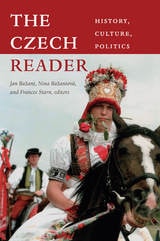
cover of The Czech Reader: History, Culture, Politics

The Czech Reader

History, Culture, Politics

Jan Bazant, Nina Bazantová, and Frances Starn, eds.

Duke University Press, 2010
The Czech Reader brings together more than 150 primary texts and illustrations to convey the dramatic history of the Czechs, from the emergence of the Czech state in the tenth century, through the creation of Czechoslovakia in 1918 and the Czech Republic in 1993, into the twenty-first century. The Czechs have preserved their language, traditions, and customs, despite their incorporation into the Holy Roman Empire, the Habsburg Empire, the Austro-Hungarian Empire, the Third Reich, and the Eastern Bloc. Organized chronologically, the selections in The Czech Reader include the letter to the Czech people written by the religious reformer and national hero Jan Hus in 1415, and Charter 77, the fundamental document of an influential anticommunist initiative launched in 1977 in reaction to the arrest of the Plastic People of the Universe, an underground rock band. There is a speech given in 1941 by Reinhard Heydrich, a senior Nazi official and Deputy Reich Protector of Bohemia and Moravia, as well as one written by Václav Havel in 1984 for an occasion abroad, but read by the Czech-born British dramatist Tom Stoppard, since Havel, the dissident playwright and future national leader, was not allowed to leave Czechoslovakia. Among the songs, poems, folklore, fiction, plays, paintings, and photographs of monuments and architectural landmarks are “Let Us Rejoice,” the most famous chorus from Bedřich Smetana’s comic opera The Bartered Bride; a letter the composer Antonín Dvořák sent from New York, where he directed the National Conservatory of Music in the 1890s; a story by Franz Kafka; and an excerpt from Milan Kundera’s The Joke. Intended for travelers, students, and scholars alike, The Czech Reader is a rich introduction to the turbulent history and resilient culture of the Czech people.
[more]
cover of The Death of Mr. Baltisberger

The Death of Mr. Baltisberger

Bohumil Hrabal

Northwestern University Press, 2010
Originally published as The Death of Mr. Baltisberger, the fourteen stories in Romance showcase the breadth of Bohumil Hrabal’s considerable gifts: his humor of the grotesque, his often surprising warmth, and his hard-edged, fast-paced style. In the story "Romance," a plumber’s apprentice and a gypsy girl reach toward a tentative connection across the chasm that separates their worlds. Another unlikely love story, "World Cafeteria," features a romance between a young man whose girlfriend has just committed suicide and a bride whose husband lands in jail on their wedding night. The tone turns to the absurd in "The Death of Mr. Baltisberger," where a crippled ex-motorcyclist and three people he meets at the track exchange wildly improbably reminiscences, while a fatal Grand Prix motorcycle race rages around them. Hrabal’s psychological insight into quotidian interactions saturates stories such as "A Dull Afternoon," where a mysterious, self-absorbed stranger disrupts the psychic calm of a neighborhood tavern and becomes the silent catalyst for an unwanted truth. Throughout the collection, noted translator Michael Henry Heim captures the quirky speech patterns and idiosyncratic takes on life that have made Hrabal’s characters an indispensable part of world literature.
[more]
cover of The End of Czechoslovakia

The End of Czechoslovakia

Jirí Musil

Central European University Press, 1995

Scholars and practitioners from both sides of the divide, Czech and Slovak, as well as international experts, take an in-depth look at the causes of Czechoslovakia's break-up, and explain why a seemingly successful country should disintegrate so quickly after the collapse of the communist regime. Besides exploring the political processes leading to the split, the authors analyse the underlying social, economic and cultural differences between the two nations and examine the historical roots of the problems. Particular attention is paid to changing Czech and Slovak attitudes towards the common state and towards each other, from the heyday of the First Republic to the disillusionment of the post-1989 period.
[more]
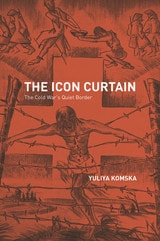
cover of The Icon Curtain: The Cold War's Quiet Border

The Icon Curtain

The Cold War's Quiet Border

Yuliya Komska

University of Chicago Press, 2015

The Iron Curtain did not exist—at least not as we usually imagine it. Rather than a stark, unbroken line dividing East and West in Cold War Europe, the Iron Curtain was instead made up of distinct landscapes, many in the grip of divergent historical and cultural forces for decades, if not centuries. This book traces a genealogy of one such landscape—the woods between Czechoslovakia and West Germany—to debunk our misconceptions about the iconic partition.

Yuliya Komska transports readers to the western edge of the Bohemian Forest, one of Europe’s oldest borderlands, where in the 1950s civilians set out to shape the so-called prayer wall. A chain of new and repurposed pilgrimage sites, lookout towers, and monuments, the prayer wall placed two long-standing German obsessions, forest and border, at the heart of the century’s most protracted conflict. Komska illustrates how civilians used the prayer wall to engage with and contribute to the new political and religious landscape. In the process, she relates West Germany’s quiet sylvan periphery to the tragic pitch prevalent along the Iron Curtain’s better-known segments.

Steeped in archival research and rooted in nuanced interpretations of wide-ranging cultural artifacts, from vandalized religious images and tourist snapshots to poems and travelogues, The Icon Curtain pushes disciplinary boundaries and opens new perspectives on the study of borders and the Cold War alike.
[more]
cover of The Long Night of the Watchman: Essays by Vaclav Benda, 1977-1989

The Long Night of the Watchman

Essays by Vaclav Benda, 1977-1989

F. Flagg Taylor

St. Augustine's Press, 2017
[more]
cover of The Mystifications of a Nation: "The Potato Bug" and Other Essays on Czech Culture

The Mystifications of a Nation

"The Potato Bug" and Other Essays on Czech Culture

Vladimír Macura

University of Wisconsin Press, 2010

A keen observer of culture, Czech writer Vladimír Macura (1945–99) devoted a lifetime to illuminating the myths that defined his nation. The Mystifications of a Nation, the first book-length translation of Macura’s work in English, offers essays deftly analyzing a variety of cultural phenomena that originate, Macura argues, in the “big bang” of the nineteenth-century Czech National Revival, with its celebration of a uniquely Czech identity.
    In reflections on two centuries of Czech history, he ponders the symbolism in daily life. Bridges, for example—once a force of civilization connecting diverse peoples—became a sign of destruction in World War I. Turning to the Soviet and post-Soviet eras, Macura probes a range of richly symbolic practices, from the naming of the Prague metro system, to the mass gymnastic displays of the Communist period, to post–Velvet Revolution preoccupations with the national anthem. In “The Potato Bug,” he muses on one of the stranger moments in the Cold War—the claim that the United States was deliberately dropping insects from airplanes to wreak havoc on the crops of Czechoslovakia.
    While attending to the distinctively Czech elements of such phenomena, Macura reveals the larger patterns of Soviet-brand socialism. “We were its cocreators,” he declares, “and its analysis touches us as a scalpel turned on its own body.” Writing with erudition, irony, and wit, Macura turns the scalpel on the authoritarian state around him, demythologizing its mythology.
 

[more]
cover of The Origins Of Postcommunist Elites: From Prague Spring To The Breakup Of Czechoslovakia

The Origins Of Postcommunist Elites

From Prague Spring To The Breakup Of Czechoslovakia

Gil Eyal

University of Minnesota Press, 2003

How is it that Czechoslovakia’s separation into two countries in 1993 was accomplished so peacefully—especially when compared with the experiences of its neighbors Russia and Yugoslavia? This book provides a sociological answer to this question—and an empirical explanation for the breakup of Czechoslovakia—by tracing the political processes begun in the Prague Spring of 1968.

Gil Eyal’s main argument is that Czechoslovakia’s breakup was caused by a struggle between two fractions of what sociologists call the “new class,” which consisted primarily of intellectuals and technocrats. Focusing on the process of polarization that created these two distinct political elites, Eyal shows how, in response to the events of the ill-fated Prague Spring, Czech and Slovak members of the “new class” embarked on divergent paths and developed radically different, even opposed, identities, worldviews, and interests. Unlike most accounts of postcommunist nationalist conflict, this book suggests that what bound together each of these fractions—and what differentiated each from the other—were not national identities and nationalist sentiments per se, but their distinctive visions of the social role of intellectuals.
[more]
cover of The Prague Spring, 1968

The Prague Spring, 1968

The National Security Archive Navratíl

Central European University Press, 1998

This is the first ever documented account of a Cold War crisis as seen from both sides of the Iron Curtain. Based on unprecedented access to the previously closed archives of each member-state of the Warsaw Pact, this book offers a unique look at a deeply divisive intra-bloc crisis.
Presented in a highly readable form, the book offers top-level documents from Kremlin Politburo meetings, multi-lateral sessions of the Warsaw Pact leading up to the decision to invade, and even transcriptions of KGB-recorded phone conversations between Leonid Brezhnev and Alexander Dubcek. Once highly classified American documents from the National Security Council, CIA, and other relevant agencies acquired through the U.S. Freedom of Information Act have also been included.
In order to provide a historical and political context, the editors have included an introductory essay for each section of the volume. A chronology, glossary, and bibliography offer further background information for the reader. As members of the commission appointed by Václav Havel to investigate the events of 1967-1970, the editors have a unique Czech-Slovak perspective to offer to foreign audiences.
[more]
cover of The Rise and Decline of Communist Czechoslovakia´s Railway Sector

The Rise and Decline of Communist Czechoslovakia´s Railway Sector

Tomáš Nigrin

Central European University Press, 2022

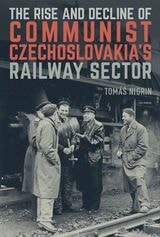
Once the pride of interwar Czechoslovakia, and key during the forced industrialization of the Stalinist period, during the 1970s and 1980s the Czechoslovak railway sector showed the symptoms of the political tiredness and economic exhaustion of the Soviet Bloc. This book examines the failure of central economic planning through the lens of this national transport system.

Based on the presentation of its history and on the detailed scrutiny of the actors, institutions, internal mechanisms, and conditions of the railway sector, the analysis reveals the identities of the real stakeholders in the state administration. This case shows how the country was governed by Communist Party institutions and government ministries, and how developments in the transportation sector—like in every sector—reflected their priorities. Numerous tables with selected statistics underscore the economic analysis and black and white photos offer a glimpse on the technical base of the railway sector.

The book is filled with enlightening comparisons of the Czechoslovak transportation industry with its counterparts in the whole Eastern Bloc. Integration into the Council for Mutual Economic Assistance (Comecon) of the Bloc could have been an asset, yet the records have more to say about conflicts than cooperation.
[more]
cover of Uranium Matters: Central European Uranium in International Politics, 19001960

Uranium Matters

Central European Uranium in International Politics, 19001960

Rainer Karlsch

Central European University Press, 2008
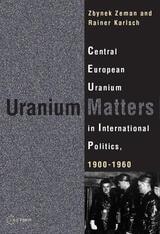
Examines the impact of the Czechoslovak and East German uranium industries on local politics and on societies, particularly in the decade or so after the end of the Second World War. The Erzgebirge – the Ore Mountains – on the border of Czechoslovakia and East Germany of the time, was the oldest uranium mine in the world, whose important resources were badly needed for Stalin's atomic bomb.
[more]
cover of Vendulka: Flight to Freedom

Vendulka

Flight to Freedom

Ondrej Kundra

Karolinum Press, 2021

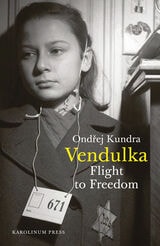
So many lives were cut short by the Holocaust, many with no trace to leave behind for future generations to remember. Vendulka tells the story of a single scrap of remembrance—a candid photograph taken in the midst of this unspeakable tragedy—and that artifact’s amazing aftermath.

Famed Czech photographer Jan Lukas snapped an offhand portrait of twelve-year-old Vendulka Vogl in March 1943. A friend of the Vogls, Lukas was saying goodbye to the family, who were soon to leave Prague for a concentration camp. The photograph almost didn’t see the light of day—Lukas knew that if the Nazis found it on him, he could wind up in the camps as well—but the image was eventually developed and came to symbolize the Holocaust and humanize its victims. Seventy years after this famous picture was taken, investigative journalist Ondřej Kundra discovered that, despite all odds, Vendulka Vogl had survived the camps of Terezín, Auschwitz, and Christianstadt, and was in fact still alive and living in the United States. Kundra persuaded her to tell the remarkable story surrounding the photograph: her survival, her later decision to flee the Communist regime for America, and how she later reconnected with Jan Lukas, maintaining a lifelong friendship.
​
Vogl’s thrillingly moving story, Kundra’s sharp and engaging writing, and Lukas’s striking photography all combine to make Vendulka an inspiring investigation into the horrors of totalitarianism and the redemptive beauty of friendship.
[more]
cover of Which Socialism, Whose Detente?: West European Communism and the Czechoslovak Crisis of 1968

Which Socialism, Whose Detente?

West European Communism and the Czechoslovak Crisis of 1968

Maud Bracke

Central European University Press, 2007
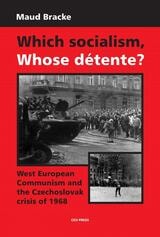
This study analyzes the impact of the Czechoslovak crisis of 1968–1969 on the two major communist parties in the West: the Italian and French ones. Discusses the central strategic and ideological tensions which these parties needed to deal with: domestic belonging versus allegiance to the world communist movement, doctrinal orthodoxy in a context of rapid societal changes, and the question of revolution and reform. These key problems were situated in different contexts: the crisis in the "world communist movement" after 1956 and the Sino-Soviet rift, socio-economic modernization and political radicalization in Western Europe, and the shift from Cold War to early détente on the European continent. The research for this work is based on the study of a large collection of recently released primary sources, particularly, the internal records of various communist parties in Europe.
[more]
cover of Writing Underground: Reflections on Samizdat Literature in Totalitarian Czechoslovakia

Writing Underground

Reflections on Samizdat Literature in Totalitarian Czechoslovakia

Martin Machovec

Karolinum Press, 2019

In this collection of writings produced between 2000 and 2018, the pioneering literary historian of the Czech underground, Martin Machovec, examines the multifarious nature of the underground phenomenon. After devoting considerable attention to the circle surrounding the band The Plastic People of the Universe and their manager, the poet Ivan M. Jirous, Machovec turns outward to examine the broader concept of the underground, comparing the Czech incarnation not only with the movements of its Central and Eastern European neighbors, but also with those in the world at large. In one essay, he reflects on the so-called Půlnoc Editions, which published illegal texts in the darkest days of the late forties and early fifties. In other essays, Machovec examines the relationship between illegal texts published at home (samizdat) and those smuggled out to be published abroad (tamizdat), as well as the range of literature that can be classified as samizdat, drawing attention to movements frequently overlooked by literary critics. In his final, previously unpublished essay, Machovec examines Jirous’s “Report on the Third Czech Musical Revival” not as a merely historical document, but as literature itself.
[more]