Results by title
62 books match the query 'British' and 19 start with t
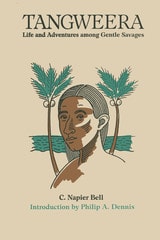
Tangweera
Life and Adventures among Gentle SavagesBy C. Napier Bell
University of Texas Press, 1989
In the 1980s, conflicts between the Miskito people of Nicaragua's eastern coast and the Sandinistas drew international attention. Indeed, the Miskitos' struggle to defend their cultural autonomy and land rights points out a curious historical anomaly. This native group has long had closer ties to British and American culture than to Hispanic Nicaraguan culture. C. Napier Bell, son of a British trader, grew up on the Miskito Coast in the nineteenth century and spoke the Miskito language fluently.
Tangweera, first published in 1899, is Bell's autobiographical account of his boyhood experiences. Rich in ethnographic detail, the book records an idyllic life of hunting, fishing, and trading. Bell describes the social customs and beliefs of the various Indian peoples he knew, as well as the relations among the coastal Miskito, the black creole population, and the tribes of the interior—the latter a subject of continuing importance. Although Bell shared common nineteenth-century ideas about the inferiority of “savage” races, his affection for the Miskito people and his love of their land fill Tangweera. Anthropologists, historians, naturalists, and travelers in the region will find this fascinating reading.
The introduction by Philip A. Dennis, Professor of Anthropology at Texas Tech University, provides a modern observer's view of Miskito culture and discusses important changes and continuities since Bell's time.
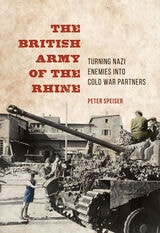
The British Army of the Rhine
Turning Nazi Enemies into Cold War PartnersPeter Speiser
University of Illinois Press, 2016
Peter Speiser charts the BAOR's fraught transformation from occupier to ally by looking at the charged nexus where British troops and their families interacted with Germany's civilian population. Examining the relationship on many levels, Speiser ranges from how British mass media representations of Germany influenced BAOR troops to initiatives taken by the Army to improve relations. He also weighs German perceptions, surveying clashes between soldiers and civilians and comparing the popularity of the British services with that of the other occupying powers. As Speiser shows, the BAOR's presence did not improve the relationship between British servicemen and the German populace, but it did prevent further deterioration during a crucial and dangerous period of the early Cold War.
An incisive look at an under-researched episode, The British Army of the Rhine sheds new light on Anglo-German diplomatic, political, and social relations after 1945, and evaluates their impact on the wider context of European integration in the postwar era.
The Chinese Love Pavilion
A NovelPaul Scott
University of Chicago Press, 2013
The Chinese Love Pavilion follows a young British clerk, Tom Brent, who must track down a former friend—now suspected of murder—in Malaya. Tom faces great danger, both from the mysterious Malayan jungles and the political tensions between British officers, but the novel is perhaps most memorable for the strange, beautiful romance between Tom and a protean Eurasian beauty whom he meets in the eponymous Chinese Love Pavilion.
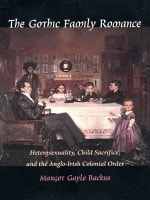
The Gothic Family Romance
Heterosexuality, Child Sacrifice, and the Anglo-Irish Colonial OrderMargot Gayle Backus
Duke University Press, 1999
Backus uses contemporary theory, including that of Michel Foucault and Eve Kosofsky Sedgwick, to analyze texts by authors ranging from Richardson, Swift, Burke, Edgeworth, Stoker, and Wilde to contemporary Irish novelists and playwrights.
By charting the changing relations between the family and the British state, she shows how these authors dramatized a legacy of violence within the family cell and discusses how disturbing themes of child sacrifice and colonial repression are portrayed through irony, satire, “paranoid” fantasy, and gothic romance. In a reconceptualization of the Freudian family romance, Backus argues that the figures of the Anglo-Irish gothic embody the particular residue of childhood experiences within a settler colonial society in which biological reproduction represented an economic and political imperative.
Backus’s bold positioning of the nuclear family at the center of post-Enlightenment class and colonial power relations in England and Ireland will challenge and provoke scholars in the fields of Irish literature and British and postcolonial studies. The book will also interest students and scholars of women’s studies, and it has important implications for understanding contemporary conflicts in Ireland.
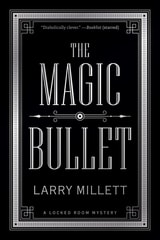
The Magic Bullet
A Locked Room MysteryLarry Millett
University of Minnesota Press, 2020
Enter Shadwell Rafferty: Irishman, St. Paul saloonkeeper, sometime detective, and old friend of the celebrated sleuth Sherlock Holmes. Summoned by Louis B. Hill—son of railroad magnate James J. Hill—to investigate, Rafferty descends into a world dominated by greedy tycoons and awash in political intrigue and wartime fearmongering. Suspects lurk in every corner of the city—including Dodge’s beautiful young widow, his slippery assistant, and a shadowy anarchist—and Rafferty pursues them from the streets of Ramsey Hill and the rooms of the Ryan Hotel to the labyrinthine caves under the Schmidt brewery. Matching wits with his foes at the police department and his unsavory rival, the St. Paul detective Mordecai Jones, Rafferty knows that in order to bring a killer to justice he must first unravel the riddle of a single bullet fired in a locked room, three hundred feet above the streets of St. Paul.
Set during a bitter streetcar strike and amid the clandestine activities of a ruthless commission charged with enforcing wartime patriotism, Larry Millett has created a classic and perfectly executed locked-room mystery in the great tradition of John Dickson Carr. From locked rooms and civil unrest to murder and wartime paranoia, The Magic Bullet presents Rafferty’s most challenging case, and its gripping conclusion—with a timely assist from Sherlock Holmes—finds both Rafferty and Millett at the top of their games.
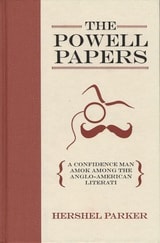
The Powell Papers
A Confidence Man Amok Among the Anglo-American LiteratiHershel Parker
Northwestern University Press, 2011
In 1849—months before the term “confidence man” was coined to identify a New York crook—Thomas Powell (1809–1887), a spherical, monocled, English poetaster, dramatist, journalist, embezzler, and forger, landed in Manhattan. Powell in London had capped a career of grand theft and literary peccadilloes by feigning a suicide attempt and having himself committed to a madhouse, after which he fled England. He had been an intimate of William Wordsworth, Elizabeth Barrett, Robert Browning, Charles Dickens, and a crowd of lesser literary folk.
Thoughtfully bearing what he presented as a volume of Tennyson with a few trifling revisions in the hand of the poet, Powell was embraced by the slavishly Anglophile New York literary establishment, including a young Herman Melville. In two pot-boilers—The Living Authors of England (1849) and The Living Authors of America (1850)—Powell denounced the most revered American author, Washington Irving, for plagiarism; provoked Charles Dickens to vengeful trans-Atlantic outrage and then panic; and capped his insolence by identifying Irving and Melville as the two worst “enemies of the American mind.” For almost four more decades he sniped at Dickens, put words in Melville’s mouth, and survived even the most conscientious efforts to expose him. Long fascinated by this incorrigible rogue, Hershel Parker in The Powell Papers uses a few familiar documents and a mass of freshly discovered material (including a devastating portrait of Powell in a serialized novel) to unfold a captivating tale of skullduggery through the words of great artists and then-admired journalists alike.
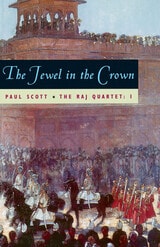
The Raj Quartet, Volume 1
The Jewel in the CrownPaul Scott
University of Chicago Press, 1976
No set of novels so richly recreates the last days of India under British rule—"two nations locked in an imperial embrace"—as Paul Scott's historical tour de force, The Raj Quartet. The Jewel in the Crown opens in 1942 as the British fear both Japanese invasion and Indian demands for independence. On the night after the Indian Congress Party votes to support Ghandi, riots break out and an ambitious police sergeant arrests a young Indian for the alleged rape of the woman they both love.
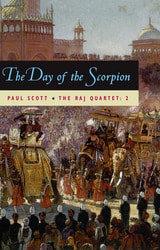
The Raj Quartet, Volume 2
The Day of the ScorpionPaul Scott
University of Chicago Press, 1998
In The Day of the Scorpion, Scott draws us deeper in to his epic of India at the close of World War II. With force and subtlety, he recreates both private ambition and perversity, and the politics of an entire subcontinent at a turning point in history.
As the scorpion, encircled by a ring of fire, will sting itself to death, so does the British raj hasten its own destruction when threatened by the flames of Indian independence. Brutal repression and imprisonment of India's leaders cannot still the cry for home rule. And in the midst of chaos, the English Laytons withdraw from a world they no longer know to seek solace in denial, drink, and madness.
The Raj Quartet, Volume 3
The Towers of SilencePaul Scott
University of Chicago Press, 1998
India, 1943: In a regimental hill station, the ladies of Pankot struggle to preserve the genteel façade of British society amid the debris of a vanishing empire and World War II. A retired missionary, Barbara Batchelor, bears witness to the connections between many human dramas; the love between Daphne Manner and Hari Kumar; the desperate grief an old teacher feels for an India she cannot rescue; and the cruelty of Captain Ronald Merrick, Susan Layton's future husband.
The Raj Quartet, Volume 4
A Division of SpoilsPaul Scott
University of Chicago Press, 1998
After exploiting India's divisions for years, the British depart in such haste that no one is prepared for the Hindu-Muslim riots of 1947. The twilight of the raj turns bloody. Against the backdrop of the violent partition of India and Pakistan, A Division of the Spoils illuminates one last bittersweet romance, revealing the divided loyalties of the British as they flee, retreat from, or cling to India.
The Rhetoric of English India
Sara Suleri Goodyear
University of Chicago Press, 1992
"A dense, witty, and richly allusive book . . . an extremely valuable contribution to postcolonial cultural studies as well as to the whole area of literary criticism."—Jean Sudrann, Choice
The Roots of Fundamentalism
British and American Millenarianism, 1800-1930Ernest R. Sandeen
University of Chicago Press, 1970
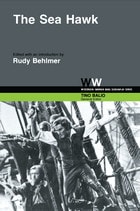
The Sea Hawk
Edited by Rudy Behlmer; Tino T. Balio, Series Editor
University of Wisconsin Press, 1982
This 1940 swashbuckler is one of the best examples of the old Hollywood studio system at work. Scholars and film buffs will learn much about collaborative filmmaking on an exceptionally large scale as Rudy Behlmer traces step-by-step the evolution of The Sea Hawk. The very anti-thesis of an auteur film, The Sea Hawk illustrates the ways in which creative input from just about everyone on the Warner Brothers lot—producers, writers, art directors, director, cameraman, special effects team, editor and composer-conductor—resulted in a film in the familiar Warners house style.
This book includes the complete screenplay.
The Southern Frontier 1670-1732
Verner Crane, with a new introduction by Steven C. Hahn
University of Alabama Press, 2004
A classic resource on the struggle for dominance in southern North America during the colonial period
This volume recounts the clashes and intrigues that played out over the landscape of the Old Southwest and across six decades as the Spanish, French, British, and ultimately Americans vied for control. Rivalry began soon after initial discovery, mapping, and exploration as the world powers, particularly England and France, competed for control of the lucrative fur trade in the Mississippi valley. The French attempted to establish trade networks stretching from the Atlantic Ocean inland to the Mississippi River and northward from ports on the Gulf of Mexico to the Ohio River. But they found the British already entrenched there.
Verner Crane guides us through this multinational struggle and navigates the border wars and diplomatic intrigues that played crucial roles in the settlement of the South by Euro-Americans. In his new introduction, Steven Hahn places the work in the context of its time, sketches its publication history, and provides biographical information on Crane.
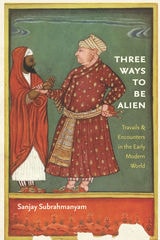
Three Ways to Be Alien
Travails and Encounters in the Early Modern WorldSanjay Subrahmanyam
Brandeis University Press, 2011
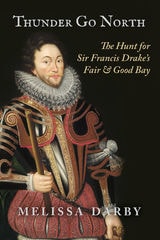
Thunder Go North
The Hunt for Sir Francis Drake's Fair and Good BayMelissa Darby
University of Utah Press, 2019
Thunder Go North unravels the mysteries surrounding Drake’s famous voyage and summer sojourn in this bay. Comparing Drake’s observations of the Natives’ houses, dress, foods, language, and lifeways with ethnographic material collected by early anthropologists, Melissa Darby makes a compelling case that Drake and his crew landed not in California but on the Oregon coast. She also uncovers the details of how an early twentieth-century hoax succeeded in maintaining the California landing theory and silencing contrary evidence. Presented here in an engaging narrative, Darby’s research beckons for history to be rewritten.
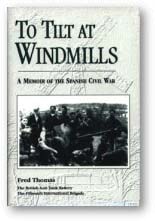
To Tilt at Windmills
A Memoir of the Spanish Civil WarFred A. Thomas
Michigan State University Press, 1996
To Tilt at Windmills is the memoir of Briton Fred Thomas who served with the International Brigades in the Spanish Civil War (July 1936-March 1939).
Inspired by a memorable return to Iberian battlefields forty years later, and based on diaries kept during the many months Thomas spent as a gunner with the British Anti-Tank Battery, the narrative moves eloquently along a journey into the war zone, through the several campaigns in which he fought and where he was twice wounded, and finally to the withdrawal of the Brigades from the conflict. What distinguishes Thomas' account is the remarkable detail provided by the diaries and the measured tone of his reminiscence, There is, as well, the poignant inquiry of the veteran into the shape and meaning of experience as a young soldier. The historian Paul Preston has cited the "warmth, directness and deep humanity" of To Tilt at Windmills, "an important contribution to the collective memory of the war.
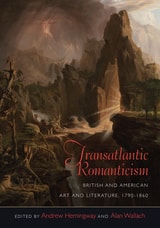
Transatlantic Romanticism
British and American Art and Literature, 1790-1860Andrew Hemingway
University of Massachusetts Press, 2014
In the book's introduction, Andrew Hemingway—building on the theoretical work of Michael Lowy and Robert Sayre—proposes that we need to remobilize the concept of Weltanschauung, or comprehensive worldview, in order to develop the kind of synthetic history of arts and ideas the phenomenon of Romanticism demands. The essays that follow focus on the London and New York art worlds and such key figures as Benjamin West, Thomas Bewick, John Vanderlyn, Washington Allston, John Martin, J. M. W. Turner, Thomas Cole, James Fenimore Cooper, George Catlin, Edgar Allan Poe, Harriet Beecher Stowe, and Herman Melville. Taken together, these essays plot the rise of a romantic anti-capitalist Weltanschauung as well as the dialectic between Romanticism's national and international manifestations.
In addition to the volume editors, contributors include Matthew Beaumont, David Bindman, Leo Costello, Nicholas Grindle, Wayne Franklin, Janet Koenig, William Pressly, Robert Sayre, William Truettner, Dell Upton, and William Vaughan.

Two Years Below the Horn
Operation Tabarin, Field Science, and Antarctic SovereigntyAndrew Taylor
University of Manitoba Press, 2017