Results by title
3071 books match the query 'Business & Economics' and 687 start with t
T?he Commons
Economic Alternatives in the Digital AgeVangelis Papadimitropoulos
University of Westminster Press, 2020
This book explores the potential creation of a broader collaborative economy through commons-based peer production (P2P) and the emergent role of information and communication technologies (ICTs). The book seeks to critically engage in the political discussion of commons-based peer production, which can be classified into three basic arguments: the liberal, the reformist and the anti-capitalist. This book categorises the liberal argument as being in favour of the coexistence of the commons with the market and the state. Reformists, on the other hand, advocate for the gradual adjustment of the state and of capitalism to the commons, while anti-capitalists situate the commons against capitalism and the state. By discussing these three viewpoints, the book contributes to contemporary debates concerning the future of commons-based peer production.
Further, the author argues that for the commons to become a fully operational mode of peer production, it needs to reach critical mass arguing that the liberal argument underestimates the reformist insight that technology has the potential to decentralise production, thereby forcing capitalism to transition to post-capitalism. Surveying the three main strands of commons-based peer production, this book makes the case for a post-capitalist commons-orientated transition that moves beyond neoliberalism.

Tactical Inclusion
Difference and Vulnerability in U.S. Military AdvertisingJeremiah Favara
University of Illinois Press, 2024
Compelling and eye-opening, Tactical Inclusion combines original analysis with personal experience to chart advertising’s role in building the all-volunteer military.
Take Back the Economy
An Ethical Guide for Transforming Our CommunitiesJ. K. Gibson-Graham
University of Minnesota Press, 2013
In the wake of economic crisis on a global scale, more and more people are reconsidering their role in the economy and wondering what they can do to make it work better for humanity and the planet. In this innovative book, J. K. Gibson-Graham, Jenny Cameron, and Stephen Healy contribute complex understandings of economics in practical terms: what can we do right now, in our own communities, to make a difference?
Full of exercises, thinking tools, and inspiring examples from around the world, Take Back the Economy shows how people can implement small-scale changes in their own lives to create ethical economies. There is no manifesto here, no one prescribed model; rather, readers are encouraged and taught how to take back the economy in ways appropriate for their own communities and context, using what they already have at hand.
Take Back the Economy dismantles the idea that the economy is separate from us and best comprehended by experts. Instead, the authors demonstrate that the economy is the outcome of the decisions and efforts we make every day. The economy is thus reframed as a space of ethical action—something we can shape and alter according to what is best for the well-being of people and the planet. The book explores what people are already doing to build ethical economies, presenting these deeds as mutual concerns: What is necessary for survival, and what do we do with the surplus produced beyond what will fulfill basic needs? What do we consume, and how do we preserve and replenish the commons—those resources that can be shared to maintain all? And finally, how can we invest in a future worth living in?
Suitable for activists and students alike, Take Back the Economy will be of interest to anyone seeking a more just, sustainable, and equitable world.

Take Me to My Paradise
Tourism and Nationalism in the British Virgin IslandsCohen, Colleen B
Rutgers University Press, 2010
Interweaving more than twenty years of field notes, Cohen provides a firsthand analysis of how tourism transformed the BVI from a small neglected British colony to a modern nation that competes in a global economic market. With its close reading of everything from advertisements to political manifestos and constitutional reforms, Take Me to My Paradise deepens our understanding of how nationalism develops hand-in-hand with tourism, and documents the uneven impact of economic prosperity upon different populations. We hear multiple voices, including immigrants working in a tourism economy, nationalists struggling to maintain some control, and the anthropologist trying to make sense of it all. The result is a richly detailed and accessible ethnography on the impact of tourism on a country that came into being as a tourist destination.

Taking Trade to the Streets
The Lost History of Public Efforts to Shape GlobalizationSusan Ariel Aaronson
University of Michigan Press, 2002

Taking the Heat
Women Chefs and Gender Inequality in the Professional KitchenHarris, Deborah A
Rutgers University Press, 2015
Click here to access the Taking the Heat teaching guide (https://d3tto5i5w9ogdd.cloudfront.net/wp-content/uploads/2021/09/02142601/Taking-the-Heat-Questions-for-Instructors.docx).

Taking the Risk Out of Democracy
Corporate Propaganda versus Freedom and LibertyAlex Carey
University of Illinois Press, 1995

Talking Leadership
Conversations with Powerful WomenHartman, Mary
Rutgers University Press, 1999
Talking Leadership presents a though-provoking look at differences and commonalities in the lives and leadership approaches of some of today's outstanding women in areas ranging from philanthropy to politics, and from business to academia. Regardless of their backgrounds and areas of expertise, these women are committed to social change--change that includes improving women's lives and options.
Well beyond personal details and entertaining anecdotes, these conversations capture a variety of fascinating experiences and insights reflecting what it is like to be a woman and a major leader in America at the close of the twentieth century. Many of these women hold positions in which womanhood sets them apart--not infrequently in uncomfortable ways. Talking Leadership gives testimony not only to how far women have come, but also how far they still have to go to claim their places as leaders.

Talking Leadership
Conversations with Powerful WomenHartman, Mary
Rutgers University Press, 1999
Whether we love it, hate it, or use it just to pass the time, most adults in the United States are watching more television than ever, up to four hours a day by some estimates. Our devotion to commercial television gives it unprecedented power in our lives.
Advertisers and television executives want us to spend as much time as we can in front of our sets, for it is access to our brains that they buy and sell. Yet the most important effect of television may be one that no one intends-accelerated destruction of the natural environment.
Consuming Environments explores how, with its portrayal of a world of simulated abundance, television has nurtured a culture of consumerism and overconsumption. The average person in the US consumers more than twice the grain and ten times the oil of a citizen of Brazil or Indonesia. And people in less industrialized countries suffer while their resources while their resources are commandeered to support comfortable lifestyles in richer nations.
Using detailed examples illustrated with images from actual commercials, news broadcasts, and television shows, and authors demonstrate how ads and programs are put together in complex way s to manipulate viewers, and they offer specific ways to counteract the effects of TV and overconsumption's assault on the environment.
Tangled Goods
The Practical Life of Pro Bono AdvertisingIddo Tavory, Sonia Prelat and Shelly Ronen
University of Chicago Press, 2022
The advertising industry may seem like one of the most craven manifestations of capitalism, turning consumption into a virtue. In Tangled Goods, authors Iddo Tavory, Sonia Prelat, and Shelly Ronen consider an important dimension of the advertising industry that appears to depart from the industry’s consumerist foundations: pro bono ad campaigns. Why is an industry known for biting cynicism and cutthroat competition also an industry in which people dedicate time and effort to “doing good”?
Interviewing over seventy advertising professionals and managers, the authors trace the complicated meanings of the good in these pro bono projects. Doing something altruistic, they show, often helps employees feel more at ease working for big pharma or corporate banks. Often these projects afford them greater creative leeway than they normally have, as well as the potential for greater recognition. While the authors uncover different motivations behind pro bono work, they are more interested in considering how various notions of the good shift, with different motivations and benefits rising to the surface at different moments. This book sheds new light on how goodness and prestige interact with personal and altruistic motivations to produce value for individuals and institutions and produces a novel theory of the relationship among goods: one of the most fraught questions in sociological theory.
Tangled Web They Weave
Truth, Falsity, & AdvertisersIvan L. Preston
University of Wisconsin Press, 1996

Targeting Investments in Children
Fighting Poverty When Resources Are LimitedEdited by Phillip B. Levine and David J. Zimmerman
University of Chicago Press, 2010
A substantial number of American children experience poverty: about 17 percent of those under the age of eighteen meet the government’s definition, and the proportion is even greater within minority groups. Childhood poverty can have lifelong effects, resulting in poor educational, labor market, and physical and mental health outcomes for adults. These problems have long been recognized, and there are numerous programs designed to alleviate or even eliminate poverty; as these programs compete for scarce resources, it is important to develop a clear view of their impact as tools for poverty alleviation.
Targeting Investments in Children tackles the problem of evaluating these programs by examining them using a common metric: their impact on earnings in adulthood. The volume’s contributors explore a variety of issues, such as the effect of interventions targeted at children of different ages, and study a range of programs, including child care, after-school care, and drug prevention. The results will be invaluable to educational leaders and researchers as well as policy makers.

Tarnished Promises
Indian Peace Medals in North AmericaSamuel J. Redman
University Press of Colorado, 2026
Using a collection of medals held at the Denver Museum of Nature & Science, Tarnished Promises presents an updated overview of the history and story of peace medals through an examination of their legacy in the modern world. Accompanying the history and analysis are images of thirteen exemplar peace medals from the DMNS collections and their accompanying object biographies.
Peace medals paradoxically worked as tools of colonialism and also Native American agency, sovereignty, power, resistance, and change in response to growing challenges. Their widespread adoption by Native people in North America both prefigured and coincided with the many ways in which Native Americans and First Nations peoples worked to adapt to the unwelcome and undesirable changes wrought by expanding western colonialism. The unique individual histories behind the medals and the larger peace medal story suggest how material objects can hold several, sometimes contradictory, meanings and be influenced by varied strands of culture and historical memory. Tarnished Promises tells this complex story in two parts, with the first detailing the history of Indian peace medals from 1670 to the present day and the second part exploring their meaning at different points in time and to different peoples.
The first book-length treatment of peace medals using an anticolonialist perspective, Tarnished Promises is significant to scholars and the general public interested in numismatics, American history, Indigenous studies, and museum collections.
Tax Haven Ireland
Brian O’ Boyle
Pluto Press, 2021
Tax Haven Ireland uncovers the central players in this process and exposes the coverups employed by the Irish state, with the help of accountants, lawyers, and financial services companies. From the lucrative internet porn industry to corruption in the property market, this issue distorts the economy across the state and in the wider international system, and its history runs deep, going back the country’s origins as a British colonial outpost.
Today, in the wake of Brexit and in the shadow of yet another economic crash, what can be done to prevent such dangerous behaviour and reorganize our economies to invest in the people? Can Ireland – and all of us – build an alternative economy based on fairness and democratic values?
Tax Policy and the Economy, Volume 22
Edited by James M. Poterba
University of Chicago Press Journals, 2008
Tax Policy and the Economy, Volume 23
Edited by James M. Poterba
University of Chicago Press Journals, 2009
Tax Policy and the Economy publishes current academic research findings on taxation and government spending that have both immediate bearing on policy debates and longer-term interest. The articles in Volume 23 address a range of topics, including Social Security, understanding corporate tax losses, the influence of globalization on the design of a tax system, and the question of whether federal provision of goods and services crowds out their provision by lower levels of government or the private sector.
Tax Policy and the Economy, Volume 24
Edited by Jefferey R. Brown
University of Chicago Press Journals, 2010
Tax Policy and the Economy publishes current academic research findings on taxation and government spending that have both immediate bearing on policy debates and longer-term interest. The papers in this volume range from topics as broad as the relative efficacy of tax cuts versus spending increases as a form of economic stimulus to a targeted analysis of the Low Income Housing Tax Credit. Also included are two papers at that examine different aspects of policies designed to provide fiscal stimulus, as well as an examination of the effects of recent reforms in the Earned Income Tax Credit.
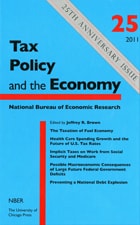
Tax Policy and the Economy, Volume 25
Edited by Jeffrey R. Brown
University of Chicago Press Journals, 2011
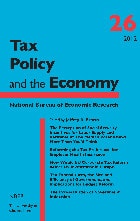
Tax Policy and the Economy, Volume 26
Edited by Jeffrey R. Brown
University of Chicago Press Journals, 2012
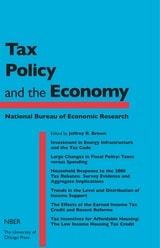
Tax Policy and the Economy, Volume 27
Edited by Jeffrey R. Brown
University of Chicago Press Journals, 2013
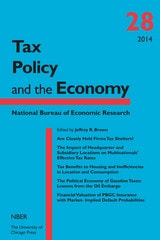
Tax Policy and the Economy, Volume 28
Edited by Jeffrey R. Brown
University of Chicago Press Journals, 2014
Tax Policy and the Economy, Volume 29
Edited by Jeffrey R. Brown
University of Chicago Press Journals, 2016
Tax Policy and the Economy, Volume 30
Edited by Jeffrey R. Brown
University of Chicago Press Journals, 2016
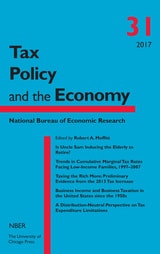
Tax Policy and the Economy, Volume 31
Edited by Robert A. Moffitt
University of Chicago Press Journals, 2017
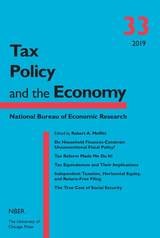
Tax Policy and the Economy, Volume 33
Edited by Robert A. Moffitt
University of Chicago Press Journals, 2019
Tax Policy and the Economy, Volume 34
Edited by Robert A. Moffitt
University of Chicago Press Journals, 2020
Tax Policy and the Economy, Volume 35
Edited by Robert A. Moffitt
University of Chicago Press Journals, 2021
Tax Policy and the Economy, Volume 36
Edited by Robert A. Moffitt
University of Chicago Press Journals, 2022
Natasha Sarin, Lawrence Summers, Owen Zidar, and Eric Zwick study how investors respond to taxes on capital gains, whether their incentives to invest are affected by those taxes, and whether that responsiveness has changed over time. Ethan Rouen, Suresh Nallareddy, and Juan Carlos Suárez Serrato revisit the question of whether cuts to corporate taxes increase income inequality, bringing new data and new statistical techniques to generate fresh findings. Alan Auerbach and William Gale investigate whether the advantages and disadvantages of different types of taxation are affected when interest rates stay low for long periods, as has been the case in the U.S. for many years. Nora Gordon and Sarah Reber study the distributional impact of emergency subsidies to schools made by the federal government during the recent COVID pandemic and whether those subsidies were sufficient to cover the increased school costs induced by the pandemic. Jacob Goldin, Elaine Maag, and Katherine Michelmore investigate the fiscal cost of an expansion of the U.S. child tax credit, which has been discussed extensively in policy circles recently. They take into account not only the direct expenditure on the allowance but how cost is affected by the existence of work incentives and by possible beneficial effects on childrens’ adult earnings.
Tax Policy and the Economy, Volume 37
Edited by Robert A. Moffitt
University of Chicago Press Journals, 2023
Tax Policy and the Economy publishes current academic research on taxation and government spending with both immediate bearing on policy debates and longer-term interest.
This volume of Tax Policy and the Economy presents new research on important issues concerning US taxation and transfers. First, Edward L. Glaeser, Caitlin S. Gorback, and James M. Poterba examine the distribution of burdens associated with taxes on transportation. Replacing the gasoline tax with a vehicle-miles-traveled (VMT) tax would increase the burden on higher-income households, who drive more fuel-efficient cars and are more likely to own electric vehicles. User charges for airports, subways, and commuter rail are progressive, while the burden of bus fees is larger for lower-income households than for their higher-income counterparts. Next, Katarzyna Bilicka, Michael Devereux, and Irem Güçeri investigate tax shifting by multinational companies (MNCs) and the implications of a potential Global Minimum Tax (GMT). They find that MNCs shift intellectual property to tax havens, and that a large share of patenting activity takes place in tax havens where little or no R&D occurs. Tax havens are particularly important for MNCs with large subsidiary networks; such firms would likely be subject to a GMT. Mark Duggan, Audrey Guo, and Andrew C. Johnston study the role of experience rating in the Unemployment Insurance (UI) system and find that the current structure stabilizes the labor market because it penalizes firms with high rates of UI-eligible layoffs. In the fourth paper, David Altig, Laurence J. Kotlikoff, and Victor Yifan Ye calculate how retiring at different ages will affect Social Security benefit amounts, taking into account taxation and other benefits. They find that virtually all individuals aged 45 to 62 should wait until age 65 or later to maximize their Social Security benefits. Indeed, 90 percent would benefit from waiting until age 70, but only 10 percent do so. Finally, Jonathan Meer and Joshua Witter examine the potential impact of the Earned Income Tax Credit on the labor force decisions of childless adults who are eligible for a small credit after they reach age 25. Comparing labor force attachment changes just before and after this age suggests that the EITC has little impact on the labor force participation of this group.
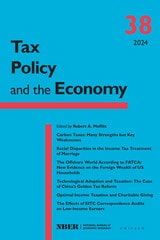
Tax Policy and the Economy, Volume 38
Edited by Robert A. Moffitt
University of Chicago Press Journals, 2024
Tax Policy and the Economy publishes current academic research on taxation and government spending with both immediate bearing on policy debates and longer-term interest.
This volume presents new research on taxation and public expenditure programs, with particular focus on how they affect economic behavior. John Guyton, Kara Leibel, Dayanand Manoli, Ankur Patel, Mark Payne, and Brenda Schafer study the disallowance of Earned Income Tax Credit (EITC) benefits as a result of IRS audits, and find that in post-audit years, audited taxpayers are less likely than similar non-audited taxpayers to claim EITC benefits. Janet Holtzblatt, Swati Joshi, Nora Cahill, and William Gale provide new empirical evidence on racial differences in the income tax penalty, or bonus, associated with a couple being married. Haichao Fan, Yu Liu, Nancy Qian, and Jaya Wen evaluate how computerizing value-added tax transactions in China affected the tax revenue collected from large manufacturing firms. Niels Johannesen, Daniel Reck, Max Risch, Joel Slemrod, John Guyton, and Patrick Langetieg study data on the ownership of foreign bank accounts and other financial accounts as reported on income tax returns. They find that many of these accounts are in tax havens, and they discuss the impact of the Foreign Account Tax Compliance Act on tax compliance and government revenue. Louis Kaplow integrates charitable giving into an optimal income tax framework, and shows that the externalities associated with such giving are key to determining its optimal tax treatment. Finally, Roger Gordon compares caps or quantity targets on emissions with carbon taxes and points out that which one dominates can be situation-specific and depend on a number of features of the economy.
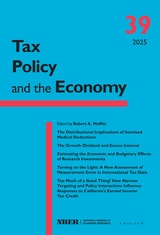
Tax Policy and the Economy, Volume 39
Edited by Robert A. Moffitt
University of Chicago Press Journals, 2025
Tax Policy and the Economy publishes current academic research on taxation and government spending with both immediate bearing on policy debates and longer-term interest. This volume highlights new insights on taxation, transfer programs, and related issues. First, analyzing the itemized medical deduction in the US federal income tax, Gopi Shah Goda, Ithai Lurie, Priyanka Parikh, and Chelsea Swete find that this provision disproportionately benefits higher-income taxpayers, particularly after the passage of the 2017 Tax Cuts and Jobs Act. They also consider alternative structures, such as a tax credit, that could make the distribution of the tax benefits for those with high medical outlays more equal. Next, Danny Yagan analyzes factors influencing the US federal budget deficit and the debt-to-GDP ratio. He describes the "growth dividend," the impact of GDP growth on the debt ratio, and warns about the potential costs of high debt-to-GDP ratios, especially when interest rates rise. In the third paper, Theresa Gullo, Benjamin Page, David Weiner, and Heidi Williams synthesize the economic evidence on the economic and budgetary effects of R&D investment and examine how this evidence could be incorporated into the standard projections generated by various federal agencies. Fourth, Rosanne Altshuler, Lysle Boller, and Juan Carlos Suárez Serrato investigate profit shifting by US multinational corporations and evaluate the importance of aggregation errors in reported foreign earnings and on estimates of profit shifting elasticities based on these data. Finally, David Neumark and Zeyu Li find no employment effect of California’s Earned Income Tax Credit on less-skilled single mothers, in contrast with the effects of federal and other states' programs. They suggest that structural differences and interactions with minimum wage laws explain this result.
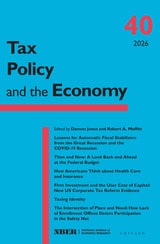
Tax Policy and the Economy, Volume 40
Edited by Damon Jones and Robert A. Moffitt
University of Chicago Press Journals, 2026
Timely and authoritative research on the latest issues in tax policy.
Tax Policy and the Economy publishes current academic research on taxation and government spending with both immediate bearing on policy debates and longer-term interest.
This volume presents new research on taxation, transfer programs, and related issues. Karen Dynan and Douglas Elmendorf examine the potential impact of automatic fiscal stabilizers on fiscal policy and economic activity. They find that a stabilizer providing direct payments could have produced faster unemployment decline after the Great Recession without raising inflation and much lower inflation after COVID-19 at the cost of a slower unemployment reduction. Alan J. Auerbach and William Gale review federal budget history and project the US debt-to-GDP ratio over the next 30 years, arguing that high projected debt could constrain future policy actions. They also explore possible fiscal consolidation policies. Beatrice Ferrario and Stefanie Stantcheva survey Americans’ views of health care and insurance, finding broad agreement regarding costs, access, and efficiency but partisan gaps in policy preferences stemming from fundamentally different views of government scope rather than contrasting efficiency or fairness beliefs. Jonathan S. Hartley, Kevin A. Hassett, and Joshua D. Rauh analyze the corporate investment response to the Tax Cut and Jobs Act of 2017, finding a larger response than a number of earlier studies of investment sensitivity would have suggested. Joel Slemrod reviews historical taxation based on racial, religious, and gender identity and examines how tax policies that are not conditioned on any of these attributes can nevertheless differentially impact families as a result of systemic differences in their economic circumstances. Finally, Marianne Bitler, Jason Cook, Chloe N. East, Sonya R. Porter, and Laura Tiehen analyze geographic proximity effects on Supplemental Nutrition Assistance Program (SNAP) participation, finding that when a SNAP office opens, participation increases by about 20%. When an office closes, they find that participation drops by about 8% in the next two years.
Tax Policy and the Economy
Volume 32Edited by Robert A. Moffitt
University of Chicago Press Journals, 2018
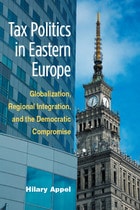
Tax Politics in Eastern Europe
Globalization, Regional Integration, and the Democratic CompromiseHilary Appel
University of Michigan Press, 2011
“This is the first book to systematically examine the variation in policies of Eastern European countries. There is a theoretical contribution to understandings of variation in tax policies, but just as impressive is the in-depth empirical analysis and in particular the data from interviews with key players in the process.”
—Yoshiko Herrera, University of Wisconsin-Madison
Post-Communist tax reform, like institutional reform in other areas of the post-Communist transition, holds tremendous material consequences for different groups in society. Consequently, one would expect the allocation of resources and the distribution of the financial burden of that allocation to be highly sensitive to domestic politics. Indeed the political stakes should be especially high since post-Communist tax reform requires not merely a simple adjustment at the margin, but the fundamental reallocation of the responsibility for government revenue. In Eastern Europe, however, important areas of tax policy do not reflect traditional domestic variables (e.g., interest groups and partisanship) so much as the international imperatives associated with regional and global economic integration.
In Tax Politics in Eastern Europe, Hilary Appel analyzes the domestic and international factors that drive tax policy. She begins with a review of the greatest challenges in the initial creation of the capitalist tax systems in former Communist states and then turns to the evolution of specific forms of taxation in order to gauge the relative impact of domestic politics on tax policy. Appel concludes that, although some tax areas, such as personal income taxes, remain politicized, most other taxes, such as corporate income taxes and all forms of consumption taxes, have been less subject to domestic political pressures because of powerful constraints resulting from regional and global economic integration.

Tax Reform in Developing Countries
Malcolm Gillis, ed.
Duke University Press, 1989
Other conclusions include the apparently mutually reinforcing nature of tax simplification and tax rate reduction, and the role of indirect tax reforms (such as the value-added tax) in successful reform undertakings.
Taxation in the Global Economy
Edited by Assaf Razin and Joel Slemrod
University of Chicago Press, 1990
Assaf Razin and Joel Slemrod gathered experts from two traditionally distinct specialties, taxation and international economics, to lay the groundwork for understanding these issues, which will require the attention of scholars and policymakers for years to come.
Contributors describe the basic provisions of the U.S. tax code with respect to international transactions, highlighting the changes contained in the U.S. Tax Reform Act of 1986; explore the ways that tax systems influence the decisions of multinationals; examine the effect of taxation on trade patterns and capital flows; and discuss the implications of the opening world economy for the design of optimal international tax policy. The papers will prove valuable not only to scholars and students, but to government economists and international tax lawyers as well.
Taxes and Capital Formation
Edited by Martin Feldstein
University of Chicago Press, 1987
By addressing some of the most critical policy issues of the day with a minimum of economic jargon, Taxes and Capital Formation makes the results of Bureau research available to a wide audience of policy officials and staff as well as to members of the business community. The volume should also prove useful for courses in public policy, business, and law. In keeping with Bureau tradition, the papers do not contain policy recommendations; instead, they promote a better understanding of how the economy works and the effects of specific policies on particular aspects of the economy.
Taxing Multinational Corporations
Edited by Martin Feldstein, James R. Hines Jr., and R. Glenn Hubbard
University of Chicago Press, 1995
In ten succinct chapters, the book documents the channels through which tax policy in the United States and abroad affects plant and equipment investments, spending on research and development, the cost of debt and equity finance, and dividend repatriations by United States subsidiaries. It also discusses the impact of U.S. firms' outbound foreign investment on domestic and foreign economies. Especially useful to nonspecialists is an appendix that summarizes current United States rules for taxing international income.

Taxing Women
Edward J. McCaffery
University of Chicago Press, 1997
"Taxing Women is a must-have primer for any woman who wants to understand how our current tax system affects her family's economic condition. In plain English, McCaffery explains how the tax code stacks the deck against women and why it's in women's economic interest to lead the next great tax rebellion."—Patricia Schroeder
"McCaffery is an expert on the interplay between taxes and social policy. . . . Devastating in his analysis. . . . Intriguing."—Harris Collingwood, Working Women
"A wake-up call regarding the inequalities of an archaic system that actually penalizes women for working."—Publishers Weekly
Teaching, Tasks, and Trust
Functions of the Public ExecutiveJohn Brehm
Russell Sage Foundation, 2008

Technocapitalism
A Critical Perspective on Technological Innovation and CorporatismLuis Suarez-Villa
Temple University Press, 2012
In his provocative book Technocapitalism, Luis Suarez-Villa addresses this phenomenon from the perspective of radical political economy and social criticism. Grounded in the premise that relations of power influence how human creativity and technology are exploited by the new corporatism, the author argues that new forms of democratic participation and resistance are needed, if the social pathologies created by this new version of capitalism are to be checked.
Considering the new sectors affected by technocapitalism, such as biotechnology, nanotechnology, bioinformatics, and genomics, Suarez-Villa deciphers the common threads of power and organization that drive their corporatization. These new sectors, and the corporate apparatus set up to extract profit and power through them, are imposing standards, creating business models, molding social governance, and influencing social relations at all levels. The new reality they create is likely to affect most every aspect of human existence, including work, health, life, and nature itself.

Technological Change in Health Care
A Global Analysis of Heart AttackMark B. McClellan and Daniel P. Kessler, Editors
University of Michigan Press, 2002
The comparisons presented here confirm that the use of medical technology in treatment for heart attack is strongly related to incentives, and that technological change is an important cause of medical expenditure growth in all developed countries. Each participating research team reviewed the economic and regulatory incentives provided by their country's health system, and major changes in those incentives over the 1980s and 1990s, according to a commonly used framework. Such incentives include: the magnitude of out-of-pocket costs to patients, the generosity of reimbursement to physicians and hospitals, regulation of the use of new technologies or the supply of physicians, regulation of competition, and the structure of hospital ownership. Each team also reviewed how care for heart attacks has changed in their country over the past decade.
The book will be of enormous importance to health economists, medical researchers and epidemiologists, and policymakers.
Mark McClellan is Associate Professor of Economics and of Medicine and, by courtesy, of Health Research and Policy, Stanford University. He is a National Fellow, the Hoover Institution. Daniel P. Kessler is Associate Professor of Economics, Law, and Policy in the Graduate School of Business, Stanford University, and a Research Fellow, the Hoover Institution.
Technological Sovereignty
Resisting Racial and Informational CapitalismSara Schoonmaker
University of Illinois Press, 2027
Sara Schoonmaker illuminates the system’s inner workings by examining technology-related struggles in global trade, COVID-19 vaccines, the Internet, and use of personal data. The World Trade Organization and other neoliberal institutions protect corporate power while limiting access to important tools. Schoonmaker’s analysis explores a hopeful alternative that allows communities and nations to assert more control over the technologies they need. As she shows, state-centered policies have the potential to improve access to technology by challenging corporate power. At the same time, nonproprietary approaches like free software and community broadband encourage the knowledge-sharing needed to create fair systems that resist ongoing exploitation.
Ambitious and timely, Technological Sovereignty draws on a wide-ranging group of voices to offer a roadmap for a more just digital future.

Technological Turf Wars
A Case Study of the Computer Antivirus IndustryJessica Johnston
Temple University Press, 2008
In Technological Turf Wars, Jessica Johnston analyzes the tensions and political dilemmas that coexist in the interrelationship among science, technology and society. Illustrating how computer security is as concerned with social relationships as it is with technology, Johnston provides an illuminating ethnography that considers corporate culture and the workplace environment of the antivirus industry.
Using a qualitative, interdisciplinary approach, which combines organizational and security studies with critical and social analysis of science and technology, Johnston questions the motivations, contradictions and negotiations of antivirus professionals. She examines the tensions between the service ethics and profit motives—does the industry release viruses to generate demand for antivirus software?—and considers the dynamics within companies by looking at facets such as gender bias and power politics. Technological Turf Wars is an informed, enlightened and entertaining view of how the production of computer security technology is fraught with social issues.
Technology and the Resilience of Metropolitan Regions
Edited by Michael E. Pagano
University of Illinois Press, 2015
In this new collection, Michael A. Pagano curates engagement with such questions by public intellectuals, stakeholders, academics, policy analysts, and citizens. Each essay explores issues related to the impact and opportunities technology provides in government and citizenship, health care, workforce development, service delivery to citizens, and metropolitan growth. As the authors show, rapidly emerging technologies and access to such technologies shape the ways people and institutions interact in the public sphere and private marketplace. The direction of metropolitan growth and development, in turn, depends on access to appropriate technology scaled and informed by the individual, household, and community needs of the region.
Contributors include Randy Blankenhorn, Bénédicte Callan, Jane Fountain, Sandee Kastrul, Karen Mossberger, Dan O'Neil, Michelle Russell, Alfred Tatum, Stephanie Truchan, Darrel West, and Howard Wial.

Technology in American Health Care
Policy Directions for Effective Evaluation and ManagementAlan B. Cohen and Ruth S. Hanft, with William E. Encinosa, Stephanie M. Spernak, Shirley A. Stewart, and Catherine C. White
University of Michigan Press, 2004
---The World Future Society, Best Books and Reports
"This excellent book provides a broad overview of the development, impact, and evaluation of health technology in the United States. . . .The authors take a well-organized and thorough approach to address these topics, combining reviews of each with case examples of particular technologies. . . .Given the broad scope of the book, it could serve as a text for students, an introduction to the field for healthcare professionals, or a tool for academics and policymakers wishing to fill knowledge gaps outside their disciplines. . . .The book makes a compelling case for the logic and potential benefits of medical technology evaluation as a tool for improving health care."
---Journal of the American Medical Association
"By being comprehensive in their review, the authors chart a clear path to understanding the future of health care technology in America. They clarify the technical methods for evaluation and provide insight into the sociopolitical aspects of development and diffusion. Case studies are informative. Excellent reading for students and health professionals either as a textbook or as an off-the-shelf guide to methods for deciding among alternative technologies."
---Norman W. Weissman, University of Alabama
"Technology today dominates every aspect of health care. This useful book offers a diverse range of perspectives for students, professors, and medical practitioners who wish to understand how to evaluate medical technology."
---Joel Howell, University of Michigan Medical School
Technology in American Health Care is a comprehensive, multidisciplinary guide to understanding how medical advances-new drugs, biological devices, and surgical procedures-are developed, brought to market, evaluated, and adopted into health care.
Cost-effective delivery of evidence-based health care is the sine qua non of American medicine in the twenty-first century. Health care decision makers, providers, payers, policymakers, and consumers all need vital information about the risks, benefits, and costs of new technologies in order to make informed decisions about which ones to adopt and how to use them. Alan B. Cohen and Ruth S. Hanft explore the evolving field of medical technology evaluation (MTE), as well as the current controversies surrounding the evaluation and diffusion of medical technologies, including the methods employed in their assessment and the policies that govern their adoption and use.
The book opens with an introduction that provides basic definitions and the history of technological change in American medicine, and a second chapter that explores critical questions regarding medical technology in health care. Part I discusses biomedical innovation, the development and diffusion of medical technology, and the adoption and use of technology by hospitals, physicians, and other health care organizations and professions under changing health care market conditions. Part II examines the methods of MTE-including randomized controlled trials, meta-analyses, economic evaluation methods (such as cost-benefit, cost-effectiveness, and cost-utility analyses), and clinical decision analysis. Part III focuses on key public policy issues and concerns that affect the organization, financing, and delivery of health care and that relate importantly to medical technology, including safety, efficacy, quality, cost, access, equity, social, ethical, legal, and evaluation concerns. All three parts of the book provide a historical perspective on the relevant issues, methods, and policy concerns and contain examples of technologies whose development, adoption, evaluation, and use have contributed to our understanding of the field.
This book will be invaluable in making MTE more accessible to individuals who are directly involved in the evaluation process and those who are touched by it in their professional lives-policymakers, clinicians, managers, and researchers.
Technology, Productivity, and Economic Growth
Edited by Susanto Basu, Lucy Eldridge, John Haltiwanger, and Erich Strassner
University of Chicago Press, 2025
A wide-reaching exploration of how technological advancements influence and shape productivity and economic growth.
Current technological developments in several industries, such as the rise of artificial intelligence and innovations associated with the green energy transition, are likely to have significant and wide-ranging effects. This volume explores the implications of rapid changes in advanced technology and considers how to conceptualize and model these advances and improve measures of productivity and economic growth. The study of these issues is facilitated both by new methods for using and integrating disparate data sources and by the availability of new data sources. The chapters in this volume leverage these developments to offer fresh insights into long-standing issues in productivity analysis and technological change.
Telecommunications and Empire
Jill Hills
University of Illinois Press, 2007
Jill Hills picks up from her pathbreaking study The Struggle for Control of Global Communication: The Formative Century to continue her examination of the political, technological, and economic forces at work in the global telecommunications market from World War II to the World Trade Organization agreement of 1997. In the late twentieth century, focus shifted from the creation and development of global communication markets to their intense regulation. The historical framework behind this control--where the market was regulated, by what institution, controlled by what power, and to whose benefit--masterfully complements Hills's analysis of power relations within the global communications arena.
Hills documents attempts by governments to direct, replace, and bypass international telecommunications institutions. As she shows, the results have offered indirect control over foreign domestic markets, government management of private corporations, and government protection of its own domestic communication market. Hills reveals that the motivation behind these powerful, regulatory efforts on person-to-person communication lies in the unmatched importance of communication in the world economy.
As ownership of communications infrastructure becomes more valuable, governments have scrambled to shape international guidelines. Hills provides insight into struggles between U.S. policymakers and the rest of the world, illustrating the conflict between a growing telecommunications empire and sovereign states that are free to implement policy changes. Freshly detailing the interplay between U.S. federal regulation and economic power, Hills fosters a deep understanding of contemporary systems of power in global communications.
Tempests into Rainbows
Managing TurbulenceRobben W. Fleming
University of Michigan Press, 1996

Templeton Plan
21 Steps to Personal Success and Real HappinessSir John Templeton
Templeton Press, 2013