Results by title
788 books match the query 'Caribbean & Latin American' and 157 start with t
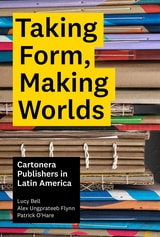
Taking Form, Making Worlds
Cartonera Publishers in Latin AmericaLucy Bell, Alex Ungprateeb Flynn, Patrick O’Hare
University of Texas Press, 2022
2023 LASA Visual Culture Studies Section Book Prize, Latin American Studies Association (LASA)
The first comprehensive study of cartonera, a vibrant publishing phenomenon born in Latin America.
A publishing phenomenon and artistic project, cartonera was born in the wake of Argentina’s 2001 economic crisis. Infused with a rebellious spirit, it has exploded in popularity, with hundreds of publishers across Latin America and Europe making colorful, low-cost books out of cardboard salvaged from the street. Taking Form, Making Worlds is the first comprehensive study of cartonera. Drawing on interdisciplinary research conducted across Mexico, Brazil, and Argentina, the authors show how this hands-on practice has fostered a politically engaged network of writers, artists, and readers. More than a social movement, cartonera uses texts, workshops, encounters, and exhibitions to foster community and engagement through open-ended forms that are at once artistic and social. For various groups including waste-pickers, Indigenous communities, rural children, and imprisoned women, cartonera provides a platform for unique stories and sparks collaborations that bring the walls of the “lettered city” tumbling down. In contexts of stigma and exclusion, cartonera collectives give form to a decolonial aesthetics of resistance, making possible a space of creative experimentation through which plural worlds can be brought to life.
Temptation of the Word
The Novels of Mario Vargas LlosaEfrain Kristal
Vanderbilt University Press, 1998
Temptation of the Word offers an ambitious and careful reading of the creative process--the origin of themes and the development of literary techniques--that Mario Vargas Llosa has brought to each of his novels, published through 1996. To understand the novelist's intellectual environment, Efrain Kristal analyzes the entire corpus of Vargas Llosa's writings, his literary influences in several languages, his intellectual biography, and his political activism, all in the light of the evolving political turbulence of his times and his own changing concept of literature.
Tentative Transgressions
Homosexuality, AIDS, and the Theater in BrazilSeverino J. Albuquerque
University of Wisconsin Press, 2004
Starting at the beginning of the twentieth century, Albuquerque examines the way the Modernist movement both fueled and inhibited the use of gay imagery in Brazilian drama. This elegant and fluid study ultimately becomes an examination of a whole Latin society, and the ways in which Latin theatre has absorbed and reflected the culture's own changing sensibilities, that will intrigue anyone interested in Latin American culture, literature, or theater.
Winner, 2008 Elizabeth A. Steinberg Prize

Textual Confrontations
Comparative Readings in Latin American LiteratureAlfred J. Mac Adam
University of Chicago Press, 1987
Mac Adam describes the changes that have taken place in Latin American literature since the time of Modernismo (roughly 1880-1920), when Spanish American writers tried to update their literary language by imitating foreign, mostly French, literature. Since then, as he demonstrates, Latin American writing has achieved a pioneering status by means of a different kind of imitation—parody—whereby it gives back to the former centers of Western culture their own writing, now distorted and reshaped into something new.
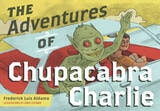
The Adventures of Chupacabra Charlie
Written by Frederick Luis AldamaIllustrated by Chris Escobar
The Ohio State University Press, 2020
With magical realism, allegory, and gentle humor, Aldama and Escobar have created a story that will resonate with young and old readers alike as it incorporates folklore into its subtle take on the current humanitarian crisis at the border.
The Aesthetic Border
Colombian Literature in the Face of GlobalizationBrantley Nicholson
Bucknell University Press, 2022
The Anthropological Imagination in Latin American Literature
Amy Fass Emery
University of Missouri Press, 1996
In this examination of the cross between anthropology and literature in contemporary Latin America, Amy Fass Emery studies how Latin American writers' experiences and studies in the field of anthropology have shaped their representations of cultural Others in fiction. She approaches her subject first in broad terms and then in close textual readings of important writers such as Alejo Carpentier, José María Arguedas, and Miguel Barnet.
Emery develops the concept of an "anthropological imagination"--that is, the conjunction of anthropology and literature in twentieth-century Latin American literary texts. While exploring the uses of anthropology in contemporary narrative and fiction, Emery also gives consideration to documentary and testimonial writings.
The major focus of this engaging work is the study of the novel. Analyzing fictions by authors from Cuba, Argentina, Brazil, and Peru, Emery covers a wide geographical region, as well as a diverse group of topics. Subjects such as surrealist primitivism, the testimonio, the transcultural novel, and the relation of the anthropological imagination to the vexed question of postmodernism in the Latin American context are all given insightful deliberation.
As the first extended study of interrelations between anthropology and literature in Latin America, Emery's work will prove invaluable to a wide spectrum of Latin Americanists and to those with comparative interests in anthropology, twentieth-century literature, and postmodernism.
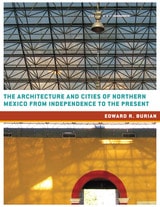
The Architecture and Cities of Northern Mexico from Independence to the Present
By Edward R. Burian
University of Texas Press, 2015
The states of Northern Mexico—Tamaulipas, Nuevo León, Coahuila, Chihuahua, Durango, Sonora, Sinaloa, and Baja California Norte and Sur—have architecture, urbanism, and landscape design that offer numerous lessons in how to build well, but this constructed environment is largely undervalued or unknown. To make this architecture better known to a wide professional, academic, and public audience, this book presents the first comprehensive overview in either English or Spanish of the architecture, urban landscapes, and cities of Northern Mexico from the country’s emergence as a modern nation in 1821 to the present day.
Profusely illustrated with color and black-and-white photographs, maps, and analytical drawings of urban cores of major cities, The Architecture and Cities of Northern Mexico systematically examines significant works of architecture in large cities and small towns in each state, from the earliest buildings in the urban core to the newest at the periphery. Edward R. Burian describes the most memorable works of architecture in each city in greater detail in terms of their spatial organization, materials, and sensory experience. He also includes a concise geographical and historical summary of the region that provides a useful background for the discussions of the works of architecture. Burian concludes the book with a brief commentary on lessons learned and possible futures for the architectural culture of the region, as well as the first comprehensive biographical listing of the architects practicing in Northern Mexico during the past two centuries.
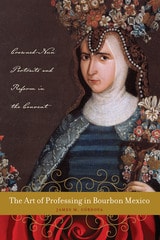
The Art of Professing in Bourbon Mexico
Crowned-Nun Portraits and Reform in the ConventBy James M. Córdova
University of Texas Press, 2014
In the eighteenth century, New Spaniards (colonial Mexicans) so lauded their nuns that they developed a local tradition of visually opulent portraits, called monjas coronadas or “crowned nuns,” that picture their subjects in regal trappings at the moment of their religious profession and in death. This study identifies these portraits as markers of a vibrant and changing society that fused together indigenous and Euro-Christian traditions and ritual practices to construct a new and complex religious identity that was unique to New Spain.
To discover why crowned-nun portraits, and especially the profession portrait, were in such demand in New Spain, this book offers a pioneering interpretation of these works as significant visual contributions to a local counter-colonial discourse. James M. Córdova demonstrates that the portraits were a response to the Spanish crown’s project to modify and modernize colonial society—a series of reforms instituted by the Bourbon monarchs that threatened many nuns’ religious identities in New Spain. His analysis of the portraits’ rhetorical devices, which visually combined Euro-Christian and Mesoamerican notions of the sacred, shows how they promoted local religious and cultural values as well as client-patron relations, all of which were under scrutiny by the colonial Church. Combining visual evidence from images of the “crowned nun” with a discussion of the nuns’ actual roles in society, Córdova reveals that nuns found their greatest agency as Christ’s brides, a title through which they could, and did, challenge the Church’s authority when they found it intolerable.
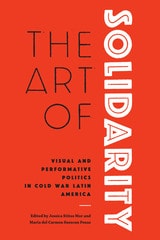
The Art of Solidarity
Visual and Performative Politics in Cold War Latin AmericaEdited by Jessica Stites Mor and Maria del Carmen Suescun Pozas
University of Texas Press, 2018
The Cold War claimed many lives and inflicted tremendous psychological pain throughout the Americas. The extreme polarization that resulted from pitting capitalism against communism held most of the creative and productive energy of the twentieth century captive. Many artists responded to Cold War struggles by engaging in activist art practice, using creative expression to mobilize social change. The Art of Solidarity examines how these creative practices in the arts and culture contributed to transnational solidarity campaigns that connected people across the Americas from the early twentieth century through the Cold War and its immediate aftermath.
This collection of original essays is divided into four chronological sections: cultural and artistic production in the pre–Cold War era that set the stage for transnational solidarity organizing; early artistic responses to the rise of Cold War polarization and state repression; the centrality of cultural and artistic production in social movements of solidarity; and solidarity activism beyond movements. Essay topics range widely across regions and social groups, from the work of lesbian activists in Mexico City in the late 1970s and 1980s, to the exchanges and transmissions of folk-music practices from Cuba to the United States, to the uses of Chilean arpilleras to oppose and protest the military dictatorship. While previous studies have focused on politically engaged artists or examined how artist communities have created solidarity movements, this book is one of the first to merge both perspectives.
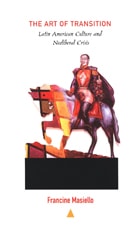
The Art of Transition
Latin American Culture and Neoliberal CrisisFrancine Masiello
Duke University Press, 2001
Masiello views representation as both a political and artistic device, concerned with the tensions between truth and lies, experience and language, and intellectuals and the marginal subjects they study and claim to defend. These often contentious negotiations, she argues, are most provocatively displayed through the spectacle of difference, which constantly crosses the literary stage, the market, and the North/South divide. While forcefully defending the ability of literature and art to advance ethical positions and to foster a critical view of neoliberalism, Masiello especially shows how issues of gender and sexuality function as integrating threads throughout this cultural project. Through discussions of visual art as well as literary work by prominent novelists and poets, Masiello sketches a broad landscape of vivid intellectual debate in the Southern Cone of Latin America.
The Art of Transition will interest Latin Americanists,literary and political theorists, art critics and historians, and those involved with the study of postmodernism and globalization.
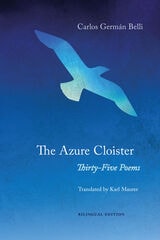
The Azure Cloister
Thirty-Five PoemsCarlos Germán Belli
Swan Isle Press, 2021
This selection of poems by internationally renowned Peruvian poet Carlos Germán Belli tempers a dark, ironic vision of worldly injustice with the “red midnight sun” of hope. Belli’s contemplative verses express faith in language, in bodily joy, and in artistic form. These thirty-five poems explore public and domestic spaces of confinement and freedom, from paralysis to the ease of a bird in its “azure cloister.”
Translations by Karl Maurer retain Belli’s original meter, follow his complex syntax, and meet the challenges of his poetic language, which ranges from colloquial Peruvian slang to the ironic use of seventeenth-century Spanish. This bilingual edition also includes notes and reflections on Belli and on the art of translation. Beyond introducing American readers to a major presence in world poetry, The Azure Cloister offers a fresh approach to the translation of contemporary verse in Spanish.
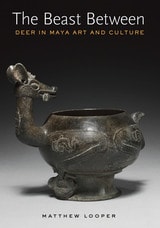
The Beast Between
Deer in Maya Art and CultureBy Matthew Looper
University of Texas Press, 2019
The first book to focus on the multifaceted images of deer and hunting in ancient Maya art, from the award-winning author of To Be Like Gods: Dance in Ancient Maya Civilization.
Winner, CHOICE Outstanding Academic Title, 2019
The white-tailed deer had a prominent status in Maya civilization: it was the most important wild-animal food source at many inland Maya sites and also functioned as a major ceremonial symbol. Offering an in-depth semantic analysis of this imagery, The Beast Between considers iconography, hieroglyphic texts, mythological discourses, and ritual narratives to translate the significance and meaning of the vibrant metaphors expressed in a variety of artifacts depicting deer and hunting.
Charting the importance of deer as a key component of the Maya diet, especially for elites, and analyzing the coupling of deer and maize in the Maya worldview, The Beast Between reveals a close and long-term interdependence between the Maya and these animals. Not only are deer depicted naturalistically in hunting and ritual scenes, but also they are assigned human attributes. This rich imagery reflects the many ways in which deer hunting was linked to status, sexuality, and war as part of a deeper process to ensure the regeneration of both agriculture and ancestry. Drawing on methodologies of art history, archaeology, and ethnology, this illuminating work is poised to become a key resource for multiple fields.
The Black Butterfly
Brazilian Slavery and the Literary ImaginationMarcus Wood
West Virginia University Press, 2019
The Black Butterfly focuses on the slavery writings of three of Brazil’s literary giants—Machado de Assis, Castro Alves, and Euclides da Cunha. These authors wrote in the late nineteenth and early twentieth centuries, as Brazil moved into and then through the 1888 abolition of slavery. Assis was Brazil’s most experimental novelist; Alves was a Romantic poet with passionate liberationist politics, popularly known as “the poet of the slaves”; and da Cunha is known for the masterpiece Os Sertões (The Backlands), a work of genius that remains strangely neglected in the scholarship of transatlantic slavery.
Wood finds that all three writers responded to the memory of slavery in ways that departed from their counterparts in Europe and North America, where emancipation has typically been depicted as a moment of closure. He ends by setting up a wider literary context for his core authors by introducing a comparative study of their great literary abolitionist predecessors Luís Gonzaga Pinto da Gama and Joaquim Nabuco. The Black Butterfly is a revolutionary text that insists Brazilian culture has always refused a clean break between slavery and its aftermath. Brazilian slavery thus emerges as a living legacy subject to continual renegotiation and reinvention.
The Body as Capital
Masculinities in Contemporary Latin American FictionVinodh Venkatesh
University of Arizona Press, 2015
Addressing this, Vinodh Venkatesh uses contemporary Latin American literature to examine how masculinity is constructed and conceived. The Body as Capital centers socioeconomic and political concerns, anxieties, and paradigms on the male anatomy and on the matrices of masculinities presented in fiction. Developing concepts such as the “market of masculinities” and the “transnational theater of masculinities,” the author explains how contemporary fiction centers the male body and masculine expressions as key components in the relationship between culture, space, and global tensile forces.
Venkatesh includes novels by canonical and newer writers from Mexico, Central America, the Caribbean, Peru, and Chile. He focuses on texts produced after 1990, coinciding with what has popularly been termed the neoliberal experiment. In addition to probing well-known novels such as La fiesta del Chivo and La mujer habitada and their accompanying body of criticism, The Body as Capital defines and examines several masculine tropes that will be of interest to scholars of contemporary Latin American literature and gender studies. Ultimately, Venkatesh argues for a more holistic approximation of discursive gender that will feed into other angles of criticism, forging a new path in the critical debates over gender and sexuality in Latin American writing.
The Book of Ruin
Rigoberto González
Four Way Books, 2019
The Bow and the Lyre
The Poem, The Poetic Revelation, Poetry and HistoryBy Octavio Paz
University of Texas Press, 1973
In The Bow and the Lyre Octavio Paz, one of the most important poets writing in Spanish, presents his sustained reflections on the poetic phenomenon and on the place of poetry in history and in our personal lives. It is written in the same prose style that distinguishes The Labyrinth of Solitude. The Bow and the Lyre will serve as an important complement to Paz's poetry.
Paz's discussions of the different aspects of the poetic phenomenon are not limited to Spanish and Spanish American literature. He is almost as apt to choose an example from Homer, Vergil, Blake, Whitman, Rimbaud as he is from Lope de Vega, Jiménez, Darío, Neruda. In writing these essays, he draws on his vast storehouse of knowledge, revealing a world outlook of ample proportions. In reading these essays, we share the observations of a searching, original, highly cultivated mind.
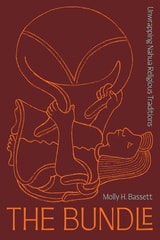
The Bundle
Unwrapping Nahua Religious TraditionsMolly H. Bassett
University of Texas Press, 2026
An examination of the importance of Nahua sacred bundles, emphasizing their impact on power dynamics, language, and culture in the Nahua religious tradition.
The Bundle is a deep scholarly meditation on tlaquimilolli, key religious objects of Mexico’s Indigenous Nahua, formerly “Aztec,” people. These sacred bundles, depicted across Nahua iconography, contained objects associated with the gods and their deeds and were believed to be their embodiments. Drawing on Indigenous sources, Molly Bassett tells the story of the tlaquimilolli’s origins and significance, critically examines previous interpretations, and argues that the form of the tlaquimilolli—not just their contents—is a key to understanding Nahua cosmology.
Bassett turns to Indigenous scholarship to interrogate and “unwrap” accepted narratives, taking the sacred bundle itself as a model for theorizing the world. She attends to tlaquimilolli in the context of glyphs and poetry, ritual and ordinary activity, and ceremonial structures. In revealing ways, the material properties of tlaquimilolli were reflected in the architecture of major temples and key cities, like Tenochtitlan. Bundling was also closely entwined with relationships between caretakers and their dependents. These prosaic attachments cast both sacred objects and Nahua sociability in a new light, challenging existing interpretations of Nahua religious traditions.
The CIA in Guatemala
The Foreign Policy of InterventionBy Richard H. Immerman
University of Texas Press, 1982
Using documents obtained through the Freedom of Information Act, recently opened archival collections, and interviews with the actual participants, Immerman provides us with a definitive, powerfully written, and tension-packed account of the United States' clandestine operations in Guatemala and their consequences in Latin America today.
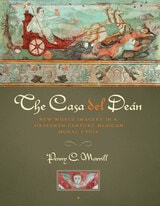
The Casa del Deán
New World Imagery in a Sixteenth-Century Mexican Mural CycleBy Penny C. Morrill
University of Texas Press, 2014
The Casa del Deán in Puebla, Mexico, is one of few surviving sixteenth-century residences in the Americas. Built in 1580 by Tomás de la Plaza, the Dean of the Cathedral, the house was decorated with at least three magnificent murals, two of which survive. Their rediscovery in the 1950s and restoration in 2010 revealed works of art that rival European masterpieces of the early Renaissance, while incorporating indigenous elements that identify them with Amerindian visual traditions.
Extensively illustrated with new color photographs of the murals, The Casa del Deán presents a thorough iconographic analysis of the paintings and an enlightening discussion of the relationship between Tomás de la Plaza and the indigenous artists whom he commissioned. Penny Morrill skillfully traces how native painters, trained by the Franciscans, used images from Classical mythology found in Flemish and Italian prints and illustrated books from France—as well as animal images and glyphic traditions with pre-Columbian origins—to create murals that are reflective of Don Tomás’s erudition and his role in evangelizing among the Amerindians. She demonstrates how the importance given to rhetoric by both the Spaniards and the Nahuas became a bridge of communication between these two distinct and highly evolved cultures. This pioneering study of the Casa del Deán mural cycle adds an important new chapter to the study of colonial Latin American art, as it increases our understanding of the process by which imagery in the New World took on Christian meaning.
The Chilean Senate
Internal Distribution of InfluenceBy Weston H. Agor
University of Texas Press, 1971
Weston Agor’s carefully documented analysis of the organization and workings of the Chilean Senate is the first of its kind and fills a long-standing need in the comparative study of the internal structure of legislative bodies.
Making eclectic use of role, power, and exchange theories, Agor bases his discussion on personal interviews with senators and staff as well as on extensive observation of the Senate in action during 1967–1968. He also analyzes in detail relevant documents, committee reports, and floor debates. Focused primarily on the formal decision-making structure within the Senate and on internal norms, both formal and informal, that hold that structure together, Agor’s study fruitfully compares the Chilean Senate with its peers, including the United States Senate, to which it bears surprising resemblance in form and function.
Agor examines the role of compromise and informal rules of the game in achieving a majority vote in the Senate, the power of committees and committee presidents, and political party control over Senate members. The influence of the executive, particularly in the passage of executive legislation, and its effect on the Senate’s internal system of checks and balances—both stated and understood—are examined in terms of their effect on the political strength of the Senate.
The Chilean Senate, unlike its counterparts in most other “developing countries,” has exercised genuine and effective influence in the national political system. In an epilogue to this study, Agor views events since 1968, including the election of Allende, that affected the future role of the Senate in Chilean politics.
The Church in Brazil
The Politics of ReligionBy Thomas C. Bruneau
University of Texas Press, 1982
In 1980, Brazil was the largest Roman Catholic country in the world, with 90 percent of its more than 120 million people numbered among the faithful. The Church hierarchy became aware, however, that the religion practiced by the majority of its members was not that promoted by the institution, a point dramatized by the rapid growth of other religious movements in Brazil—particularly Protestant sects and spirit-possession cults. In response, the Church created and assumed new roles. The Church in Brazil is a case study of the changes within the Church and their impact on Brazilian society.
In an original and illuminating discussion, Thomas Bruneau combines institutional analysis and survey data to explore the relationship between structural changes in the Church and evolving patterns of practice and belief. His discussion displays the richness and variety of devotion in Brazil—characteristics recognized by many observers—and examines the Church's potential for influencing the people's religious life.
Moving from the historical and national to the regional, Bruneau analyzes and compares changes among eight dioceses. He concludes that the Church is actively promoting a progressive social role for itself and, by backing its statements with actions, is perceived as being socially effective by both supporters and opponents.
The first study in which the national and diocesan levels of the Church are analyzed together, it is also the first to inspect systematically the Basic Christian Communities, thought by some to be the most significant grass-roots movement in the Catholic world of that time.
The Codex Mexicanus
A Guide to Life in Late Sixteenth-Century New SpainBy Lori Boornazian Diel
University of Texas Press, 2018
Winner, Roland H. Bainton Book Prize, The Sixteenth Century Society and Conference, 2019
Some sixty years after the Spanish conquest of Mexico, a group of Nahua intellectuals in Mexico City set about compiling an extensive book of miscellanea, which was recorded in pictorial form with alphabetic texts in Nahuatl clarifying some imagery or adding new information altogether. This manuscript, known as the Codex Mexicanus, includes records pertaining to the Aztec and Christian calendars, European medical astrology, a genealogy of the Tenochca royal house, and an annals history of pre-conquest Tenochtitlan and early colonial Mexico City, among other topics. Though filled with intriguing information, the Mexicanus has long defied a comprehensive scholarly analysis, surely due to its disparate contents.
In this pathfinding volume, Lori Boornazian Diel presents the first thorough study of the entire Codex Mexicanus that considers its varied contents in a holistic manner. She provides an authoritative reading of the Mexicanus’s contents and explains what its creation and use reveal about native reactions to and negotiations of colonial rule in Mexico City. Diel makes sense of the codex by revealing how its miscellaneous contents find counterparts in Spanish books called Reportorios de los tiempos. Based on the medieval almanac tradition, Reportorios contain vast assortments of information related to the issue of time, as does the Mexicanus. Diel masterfully demonstrates that, just as Reportorios were used as guides to living in early modern Spain, likewise the Codex Mexicanus provided its Nahua audience a guide to living in colonial New Spain.
The Collected Poems Of Édouard Glissant
Édouard Glissant
University of Minnesota Press, 2019
The complete poems of the two-time finalist for the Nobel Prize in Literature, available in English for the first time
This volume collects and translates—most for the first time—the nine volumes of poetry published by Édouard Glissant, a poet, novelist, and critic increasingly recognized as one of the great writers of the twentieth century. The poems bring to life what Glissant calls “an archipelago-like reality,” partaking of the exchanges between Europe and its former colonies, between humans and their geographies, between the poet and the natural world.
Reciting and re-creating histories of the African diaspora, Columbus’s “discovery” of the New World, the slave trade, and the West Indies, Glissant underscores the role of poetic language in changing both past and present irrevocably. As translator Jeff Humphries writes in his introduction, Glissant’s poetry embraces the aesthetic creed of the French symbolists Mallarmé and Rimbaud (“The poet must make himself into a seer”) and aims at nothing less than a hallucinatory experience of imagination in which the differences among poem, reader, and subject dissolve into one immediate present.
Born in Martinique in 1928, influenced by the controversial Martinican poet/politician Aimé Césaire, and educated at the Sorbonne in Paris, Édouard Glissant has emerged as one of the most influential postcolonial theorists, novelists, playwrights, and poets not only in the Caribbean but also in contemporary French letters. He has twice been a finalist for the Nobel Prize in Literature as well as the recipient of both the Prix Renaudot and the Prix Charles Veillon in France. His works include Poetics of Relation, Caribbean Discourse, Faulkner Mississippi, and the novel The Ripening. He currently serves as Distinguished Professor of French at City University of New York, Graduate Center.
The Colombian Novel, 1844-1987
By Raymond Leslie Williams
University of Texas Press, 1991
Novels such as One Hundred Years of Solitude have awakened English-language readers to the existence of Colombian literature in recent years, but Colombia has a well-established literary tradition that far predates the Latin American "boom." In this pathfinding study, Raymond Leslie Williams provides an overview of seventeen major authors and more than one hundred works spanning the years 1844 to 1987.
After an introductory discussion of Colombian regionalism and novelistic development, Williams considers the novels produced in Colombia's four semi-autonomous regions. The Interior Highland Region is represented by novels ranging from Eugenio Díaz' Manuela to Eduardo Caballero Calderón's El buen salvaje. The Costa Region is represented by Juan José Nieto's Ingermina to Alvaro Cepeda Samudio's La casa grande and Gabriel García Márquez' Cien años de soledad; the Greater Antioquian Region by Tomás Carrasquilla's Frutos de mi tierra to Manuel Mejía Vallejo's El día señalado; and the Greater Cauca Region by Jorge Isaacs' Maria to Gustavo Alvarez Gardeazábal's El bazar de los idiotas. A discussion of the modern and postmodern novel concludes the study, with special consideration given to the works of García Márquez and Moreno-Durán.Written in a style accessible to a wide audience, The Colombian Novel will be a foundational work for all students of Colombian culture and Latin American literature.
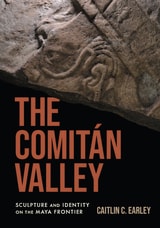
The Comitán Valley
Sculpture and Identity on the Maya FrontierCaitlin C. Earley
University of Texas Press, 2023
A thousand years ago, the Comitán Valley, in the Mexican state of Chiapas, was the western edge of the Maya world. Far from the famous power centers of the Classic period, the valley has been neglected even by specialists. Here, Caitlin C. Earley offers the first comprehensive study of sculpture excavated from the area, showcasing the sophistication and cultural vigor of a region that has largely been ignored.
Supported by the rulers of the valley’s cities, local artists created inventive works that served to construct civic identities. In their depictions of warrior kings, ballgames, rituals, and ancestors, the artists of Comitán made choices that reflected political and religious goals and distinguished the artistic production of the Comitán Valley from that of other Maya locales. After the Maya abandoned their powerful lowland centers, those in Comitán were maintained, a distinction from which Earley draws new insights concerning the Maya collapse. Richly illustrated with never-before-published photographs of sculptures unearthed from key archaeological sites, The Comitán Valley is an illuminating work of art historical recovery and interpretation.
The Counterpunch (and Other Horizontal Poems)/El contragolpe (y otros poemas horizontales)
Juan Carlos Flores
University of Alabama Press, 2016
Mapping contemporary Cuba through the architecture of poetry and place.
Alamar, the home of award-winning Cuban poet Juan Carlos Flores, is the setting for his collection, The Counterpunch and Other Horizontal Poems) / El contragolpe (y otros poemas horizontales). Constructed as a self-help community in eastern Havana, Alamar is the largest housing complex in the world. Flores’s highly structured texts, organized into “art galleries,” present prose paintings of a big place in very small form.
Flores builds a poetic landscape with repeating structures that mirror Alamar’s five-floor walkups. Exploring life and dream on the flat surfaces of the poems, he gives fleeting glimpses of perception and survival at the urban margins. As the poet ages, so ages Alamar itself. Yet both find renewal through poetry.
The eighty poems in this bilingual edition offer the first English translation of a complete Flores collection. It will also be of interest to Spanish-language readers seeking access to Cuban literature abroad. Award-winning scholar and translator Kristin Dykstra has compiled an introduction in which she presents Flores, his literary contexts, and references in his poems. Because Flores made specific requests regarding translation, fascinating notes also clarify and expound on choices Dykstra makes in the English version.
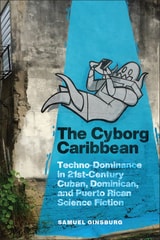
The Cyborg Caribbean
Techno-Dominance in Twenty-First-Century Cuban, Dominican, and Puerto Rican Science FictionSamuel Ginsburg
Rutgers University Press, 2023
The Cyborg Caribbean examines a wide range of twenty-first-century Cuban, Dominican, and Puerto Rican science fiction texts, arguing that authors from Pedro Cabiya, Alexandra Pagan-Velez, and Vagabond Beaumont to Yasmin Silvia Portales, Erick Mota, and Yoss, Haris Durrani, and Rita Indiana Hernandez, among others, negotiate rhetorical legacies of historical techno-colonialism and techno-authoritarianism. The authors span the Hispanic Caribbean and their respective diasporas, reflecting how science fiction as a genre has the ability to manipulate political borders. As both a literary and historical study, the book traces four different technologies—electroconvulsive therapy, nuclear weapons, space exploration, and digital avatars—that have transformed understandings of corporality and humanity in the Caribbean. By recognizing the ways that increased technology may amplify the marginalization of bodies based on race, gender, sexuality, and other factors, the science fiction texts studied in this book challenge oppressive narratives that link technological and sociopolitical progress.
The Deadlock of Democracy in Brazil
Barry Ames
University of Michigan Press, 2002
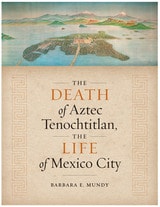
The Death of Aztec Tenochtitlan, the Life of Mexico City
By Barbara E. Mundy
University of Texas Press, 2015
Winner, Book Prize in Latin American Studies, Colonial Section of Latin American Studies Association (LASA), 2016
ALAA Book Award, Association for Latin American Art/Arvey Foundation, 2016
The capital of the Aztec empire, Tenochtitlan, was, in its era, one of the largest cities in the world. Built on an island in the middle of a shallow lake, its population numbered perhaps 150,000, with another 350,000 people in the urban network clustered around the lake shores. In 1521, at the height of Tenochtitlan’s power, which extended over much of Central Mexico, Hernando Cortés and his followers conquered the city. Cortés boasted to King Charles V of Spain that Tenochtitlan was “destroyed and razed to the ground.” But was it?
Drawing on period representations of the city in sculptures, texts, and maps, The Death of Aztec Tenochtitlan, the Life of Mexico City builds a convincing case that this global capital remained, through the sixteenth century, very much an Amerindian city. Barbara E. Mundy foregrounds the role the city’s indigenous peoples, the Nahua, played in shaping Mexico City through the construction of permanent architecture and engagement in ceremonial actions. She demonstrates that the Aztec ruling elites, who retained power even after the conquest, were instrumental in building and then rebuilding the city. Mundy shows how the Nahua entered into mutually advantageous alliances with the Franciscans to maintain the city's sacred nodes. She also focuses on the practical and symbolic role of the city’s extraordinary waterworks—the product of a massive ecological manipulation begun in the fifteenth century—to reveal how the Nahua struggled to maintain control of water resources in early Mexico City.
The Decapitated Chicken and Other Stories
By Horacio Quiroga
University of Texas Press, 1976
Tales of horror, madness, and death, tales of fantasy and morality: these are the works of South American master storyteller Horacio Quiroga. Author of some 200 pieces of fiction that have been compared to the works of Poe, Kipling, and Jack London, Quiroga experienced a life that surpassed in morbidity and horror many of the inventions of his fevered mind. As a young man, he suffered his father's accidental death and the suicide of his beloved stepfather. As a teenager, he shot and accidentally killed one of his closest friends. Seemingly cursed in love, he lost his first wife to suicide by poison. In the end, Quiroga himself downed cyanide to end his own life when he learned he was suffering from an incurable cancer.
In life Quiroga was obsessed with death, a legacy of the violence he had experienced. His stories are infused with death, too, but they span a wide range of short fiction genres: jungle tale, Gothic horror story, morality tale, psychological study. Many of his stories are set in the steaming jungle of the Misiones district of northern Argentina, where he spent much of his life, but his tales possess a universality that elevates them far above the work of a regional writer.
The first representative collection of his work in English, The Decapitated Chicken and Other Stories provides a valuable overview of the scope of Quiroga's fiction and the versatility and skill that have made him a classic Latin American writer.
The Dictator Novel
Writers and Politics in the Global SouthMagalí Armillas-Tiseyra
Northwestern University Press, 2019
The Dictator Novel positions novels about dictators as a vital genre in the literatures of the Global South. Primarily identified with Latin America, the dictator novel also has underacknowledged importance in the postcolonial literatures of francophone and anglophone Africa. Although scholars have noted similarities, this book is the first extensive comparative analysis of these traditions; it includes discussions of authors including Gabriel García Márquez, Ngũgĩ wa Thiong’o, Alejo Carpentier, Augusto Roa Bastos, Domingo Faustino Sarmiento, José Mármol, Esteban Echeverría, Ousmane Sembène , Chinua Achebe, Aminata Sow Fall, Henri Lopès, Sony Labou Tansi, and Ahmadou Kourouma. This juxtaposition illuminates the internal dynamics of the dictator novel as a literary genre. In so doing, Armillas-Tiseyra puts forward a comparative model relevant to scholars working across the Global South.
The Dissenting Voice
The New Essay of Spanish America, 1960-1985By Martin S. Stabb
University of Texas Press, 1995
Political, social, and aesthetic change marked Latin American society in the years between 1960 and 1985. In this book, Martin Stabb explores how these changes made their way into the essayistic writings of twenty-six Spanish American intellectuals.
Stabb posits that dissent—against ideology, against simplistic notions of technological progress, against urban values, and even against the direct linear expository style of the essay itself—characterizes the work of these contemporary essayists. He draws his examples from major canonical figures, including Paz, Vargas Llosa, Fuentes, and Cortázar, and from lesser-known writers who merit a wider readership, such as Monterroso, Zaid, Edwards, and Ibargüengoitia. This exploration overturns many conventional assumptions about Latin American intellectuals and also highlights some of the other achievements of authors famous primarily for novels or short stories.
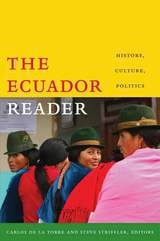
The Ecuador Reader
History, Culture, PoliticsCarlos de la Torre and Steve Striffler, eds.
Duke University Press, 2008
The voices and creations of Ecuadorian politicians, writers, artists, scholars, activists, and journalists fill the Reader, from José María Velasco Ibarra, the nation’s ultimate populist and five-time president, to Pancho Jaime, a political satirist; from Julio Jaramillo, a popular twentieth-century singer, to anonymous indigenous women artists who produced ceramics in the 1500s; and from the poems of Afro-Ecuadorians, to the fiction of the vanguardist Pablo Palacio, to a recipe for traditional Quiteño-style shrimp. The Reader includes an interview with Nina Pacari, the first indigenous woman elected to Ecuador’s national assembly, and a reflection on how to balance tourism with the protection of the Galápagos Islands’ magnificent ecosystem. Complementing selections by Ecuadorians, many never published in English, are samples of some of the best writing on Ecuador by outsiders, including an account of how an indigenous group with non-Inca origins came to see themselves as definitively Incan, an exploration of the fascination with the Andes from the 1700s to the present, chronicles of the less-than-exemplary behavior of U.S. corporations in Ecuador, an examination of Ecuadorians’ overseas migration, and a look at the controversy surrounding the selection of the first black Miss Ecuador.
The Exiles and Other Stories
By Horacio Quiroga
University of Texas Press, 1987
Tales of risk and danger, suffering, disease, horror, and death. Tales, also, of courage and dignity, hard work, and human endurance in the face of hostile nature and the frequent brutality of men. And tales flavored with piquant touches of humor and bemused irony.
These are the stories of the Uruguayan writer Horacio Quiroga, here presented in an important compilation of thirteen of his most compelling tales, sensitively selected and translated by J. David Danielson. Author of some two hundred pieces of fiction, often compared to the works of Kipling, Jack London, and Edgar Allan Poe, Quiroga set many of his stories in the territory of Misiones in northeastern Argentina, the subtropical jungle region where he spent much of his life.
Included here are stories from Los desterrados (1926) often said to be his best book, as well as others from Cuentos de amor de locura y de muerte (1917), Anaconda (1921), and El Desierto (1924). The publication of this selection marks the first appearance in English of all but two of the thirteen stories.
Quiroga here presents a wide range of characters: parents and children, servant girls and prostitutes, landowners and lumber barons, foremen and laborers, natives and immigrants, in stories pervaded by a vision of life that is elemental, incisive, and essentially tragic. The Exiles and Other Stories shows the versatility and skill that have made him a classic Spanish American writer. It complements and illumines The Decapitated Chicken and Other Stories, selected and translated by Margaret Sayers Peden, also published by the University of Texas Press.
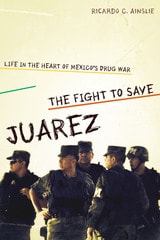
The Fight to Save Juárez
Life in the Heart of Mexico's Drug WarBy Ricardo C. Ainslie
University of Texas Press, 2013
The city of Juárez is ground zero for the drug war that is raging across Mexico and has claimed close to 60,000 lives since 2007. Almost a quarter of the federal forces that former President Felipe Calderón deployed in the war were sent to Juárez, and nearly 20 percent of the country’s drug-related executions have taken place in the city, a city that can be as unforgiving as the hardest places on earth. It is here that the Mexican government came to turn the tide. Whatever happens in Juárez will have lasting repercussions for both Mexico and the United States.
Ricardo Ainslie went to Juárez to try to understand what was taking place behind the headlines of cartel executions and other acts of horrific brutality. In The Fight to Save Juárez, he takes us into the heart of Mexico’s bloodiest city through the lives of four people who experienced the drug war from very different perspectives—Mayor José Reyes Ferriz, a mid-level cartel player’s mistress, a human rights activist, and a photojournalist. Ainslie also interviewed top Mexican government strategists, including members of Calderón’s security cabinet, as well as individuals within U.S. law enforcement. The dual perspective of life on the ground in the drug war and the “big picture” views of officials who are responsible for the war’s strategy, creates a powerful, intimate portrait of an embattled city, its people, and the efforts to rescue Juárez from the abyss.
The Flight of the Condor
Stories of Violence and War from ColombiaTranslated and compiled by Jennifer Gabrielle Edwards; Foreword by Hugo Chaparro
University of Wisconsin Press, 2007
This anthology reflects some of Colombia’s finest literary talent, and most of these stories appear here for the first time in English translation. They reveal the contradictions and complexities of the human condition, yet they also offer hope for the future. In their bold revelations of the depths of despair, these writers provide gripping portrayals of humanity’s tenacious resistance to those very depths.
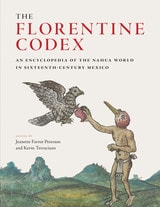
The Florentine Codex
An Encyclopedia of the Nahua World in Sixteenth-Century MexicoEdited by Jeanette Favrot Peterson and Kevin Terraciano
University of Texas Press, 2019
Honorable Mention, 2021 LASA Mexico Humanities Book Prize, Latin American Studies Association, Mexico Section
In the sixteenth century, the Franciscan friar Bernardino de Sahagún and a team of indigenous grammarians, scribes, and painters completed decades of work on an extraordinary encyclopedic project titled General History of the Things of New Spain, known as the Florentine Codex (1575–1577). Now housed in the Biblioteca Medicea Laurenziana in Florence and bound in three lavishly illustrated volumes, the codex is a remarkable product of cultural exchange in the early Americas.
In this edited volume, experts from multiple disciplines analyze the manuscript’s bilingual texts and more than 2,000 painted images and offer fascinating, new insights on its twelve books. The contributors examine the “three texts” of the codex—the original Nahuatl, its translation into Spanish, and its painted images. Together, these constitute complementary, as well as conflicting, voices of an extended dialogue that occurred in and around Mexico City. The volume chapters address a range of subjects, from Nahua sacred beliefs, moral discourse, and natural history to the Florentine artists’ models and the manuscript’s reception in Europe. The Florentine Codex ultimately yields new perspectives on the Nahua world several decades after the fall of the Aztec empire.
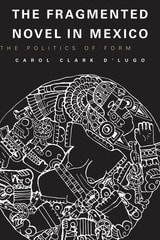
The Fragmented Novel in Mexico
The Politics of FormBy Carol Clark D'Lugo
University of Texas Press, 1997
From Mariano Azuela's 1915 novel Los de abajo to Rosamaría Roffiel's Amora of 1989, fragmented narrative has been one of the defining features of innovative Mexican fiction in the twentieth century. In this innovative study, Carol Clark D'Lugo examines fragmentation as a literary strategy that reflects the social and political fissures within modern Mexican society and introduces readers to a more participatory reading of texts.
D'Lugo traces defining moments in the development of Mexican fiction and the role fragmentation plays in each. Some of the topics she covers are nationalist literature of the 1930s and 1940s, self-referential novels of the 1950s that focus on the process of reading and writing, the works of Carlos Fuentes, novels of La Onda that came out of rebellious 1960s Mexican youth culture, gay and lesbian fiction, and recent women's writings.
With its sophisticated theoretical methodology that encompasses literature and society, this book serves as an admirable survey of the twentieth-century Mexican novel. It will be important reading for students of Latin American culture and history as well as literature.
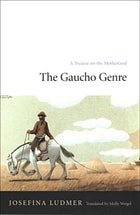
The Gaucho Genre
A Treatise on the MotherlandJosefina Ludmer
Duke University Press, 2002
By examining the formation of a genre whose origins predated the consolidation of Argentina as a nation-state but that gained significance only after the country's independence, Ludmer elucidates the relationship of literature to the state, as well as the complex positionings of gender within the struggle for independence. She develops a sociological investigation of “outsider” culture through close textual analyses of works by Hidalgo, Ascasubi, Del Campo, Hernandez, Sarmiento, and Borges. This inquiry culminates in the assertion that language, marked as it is by the collisions of high and low culture, constitutes the central issue of Latin American modernization and modernism. Extensive annotation renders this edition of Ludmer's seminal study easily accessible for a North American audience.
The Gaucho Genre’s far-reaching implications will make it valuable reading for a varied audience. While teachers and students of Latin American literature and criticism will find it an important resource, it will also interest those concerned with the processes of nation-building or in the complex intersections of dominant and marginal voices.
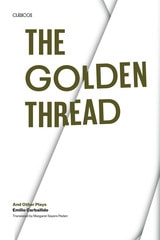
The Golden Thread and other Plays
By Emilio Carballido
University of Texas Press, 1970
Emilio Carballido was one of the most innovative and accomplished of Mexico's playwrights and one of the outstanding creators in the new Latin American theater. By his mid-forties he had already produced an impressive body of works in two very different veins. On the one hand, he mastered the techniques of the "well-made play." On the other, he developed a richly rewarding vein of fantasy, sometimes poetic, sometimes comic, sometimes macabre—and sometimes all three.
The plays in this volume are in the latter vein, ranging from surrealist farce in "The Intermediate Zone" to the grotesqueries of "The Time and the Place," from tragicomedy in "Theseus" to the dreamlike permutations of "The Golden Thread." But even at his most fantastic, Carballido never loses his remarkable gift for characterization: his peevish Minotaur, his raffish Nahual (were-jaguar) are wholly believable monsters.
The Goodman Theatre's Festival Latino
Six PlaysHenry D Godinez and Ramón H Rivera-Servera
Northwestern University Press, 2013
The Great Zoo
A Bilingual EditionNicolás Guillén
University of Chicago Press, 2024
Born in Cuba to parents of African and European ancestry, Nicolás Guillén worked in printing presses and studied law before moving into Havana’s literary scene. A virtuosic maker and breaker of forms, Guillén rose to fame by transforming a popular form of Cuban music into poetry that called attention to the experience of Afro-Cuban people, and he continued to interweave his artistic and political commitments as he traveled the world.
Originally published in Spanish in 1967, The Great Zoo is a humorous and biting collection of poems that presents a fantastical bestiary of ideas, social concerns, landscapes, phenomena, and more. The “animals” on view in this menagerie include the Mississippi and Amazon Rivers, clouds from different countries, a singing guitar, a temperamental atomic bomb, blue-pelted police, a hurricane, the KKK, and the North Star, among many others. Translated by Aaron Coleman with a keen understanding of the contexts of colonial racialization, oppression, and exoticism, this bilingual edition stands as a testament to Guillén’s carnivalesque vision.
The Guise of Exceptionalism
Unmasking the National Narratives of Haiti and the United StatesRobert Fatton
Rutgers University Press, 2021
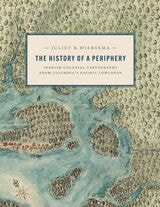
The History of a Periphery
Spanish Colonial Cartography from Colombia's Pacific LowlandsJuliet B. Wiersema
University of Texas Press, 2024
2025 ALAA Book Award, Association for Latin American Art/Arvey Foundation, College Art Association
An exploration of Colombian maps in New Granada.
During the late Spanish colonial period, the Pacific Lowlands, also called the Greater Chocó, was famed for its rich placer deposits. Gold mined here was central to New Granada’s economy yet this Pacific frontier in today’s Colombia was considered the “periphery of the periphery.” Infamous for its fierce, unconquered Indigenous inhabitants and its brutal tropical climate, it was rarely visited by Spanish administrators, engineers, or topographers and seldom appeared in detail on printed maps of the period.
In this lavishly illustrated and meticulously researched volume, Juliet Wiersema uncovers little-known manuscript cartography and makes visible an unexamined corner of the Spanish empire. In concert with thousands of archival documents from Colombia, Spain, and the United States, she reveals how a "periphery" was imagined and projected, largely for political or economic reasons. Along the way, she unearths untold narratives about ephemeral settlements, African adaptation and autonomy, Indigenous strategies of resistance, and tenuous colonialisms on the margins of a beleaguered viceroyalty.
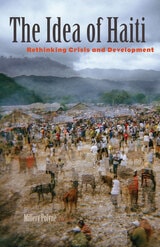
The Idea of Haiti
Rethinking Crisis and DevelopmentMillery Polyné
University of Minnesota Press, 2013
After Haiti was struck by a devastating earthquake on January 12, 2010, aid workers and offers of support poured in from around the world. Tellingly, though, news reports on the catastrophe and relief efforts frequently included a pejorative description of the country that outsiders were determined to rebuild: the troubled island nation, a nation plagued by political violence. There was much talk of inventing a “new” Haiti, which would presumably mimic Western modes of development and thus mitigate political instability and crisis.
As contributors to this wide-ranging book reveal, Haiti has long been marginalized as an embodiment of alterity, as the other, and the idea of a new Haiti is actually nothing new. An investigation of the notion of newness through the lenses of history and literature, urban planning, religion, and governance, The Idea of Haiti illuminates the politics and the narratives of Haiti’s past and present. The essays, which grow from original research and in-depth interviews, examine how race, class, and national development inform the policies that envision re-creating the country.
Together the contributors address important questions: How will the present narratives of deviance affect international relief and rebuilding efforts? What do Haitians themselves think about Haiti, old and new? What are the potential complications and weakness of aid strategies during these trying times? And what do we mean by crisis in Haiti?
Contributors: Yveline Alexis, Rutgers U; Wein Weibert Arthus, State U of Haiti; Greg Beckett, Bowdoin College; Alex Dupuy, Wesleyan U; Harley F. Etienne, U of Michigan; Robert Fatton Jr., U of Virginia; Sibylle Fischer, New York U; Elizabeth McAlister, Wesleyan U; Nick Nesbitt, Princeton U; Karen Richman, U of Notre Dame; Mark Schuller, York College (CUNY); Patrick Sylvain, Brown U; Évelyne Trouillot, State U of Haiti; Tatiana Wah, Columbia U.
The Impasse of the Latin American Left
Franck Gaudichaud, Massimo Modonesi, and Jeffery R. Webber
Duke University Press, 2022
The Impure Imagination
Toward A Critical Hybridity In Latin American WritingJoshua Lund
University of Minnesota Press, 2006
In this pathbreaking work, Joshua Lund offers a thoughtful critique of hybridity by reading contemporary theories of cultural mixing against their historical precursors. The Impure Imagination is the first book to systematically analyze today’s dominant theories in relation to earlier, narrative manifestations of hybridity in Latin American writing, with a particular focus on Mexico and Brazil.
Generally understood as the impurification of standard or canonized forms, hybridity has historically been embraced as a basic marker of Latin American regional identity and as a strategy of resistance to cultural imperialism. Lund contends that Latin American theories and narratives of hybridity have been, and continue to be, underwritten by a structure of colonial power. Here he provides an informed critique and cogent investigation of this connection, its cultural effects, and its political implications. Using the emergence of hybridity as an analytical frame for thinking about culture in the Americas, Lund examines the contributions of influential thinkers, including Néstor García Canclini, Homi Bhabha, Jacques Derrida, Giorgio Agamben, Jorge Luis Borges, Antonio Candido, and many others.
Distinguished by its philosophical grounding and underpinned with case studies, The Impure Imagination employs postcolonial theory and theories of race as it explores Latin American history and culture. The result is an original and interrogative study of hybridity that exposes surprising—and unsettling—similarities with nationalistic discourses.
Joshua Lund is assistant professor of Spanish at the University of Pittsburgh. His essays have appeared in A Contracorriente, Race & Class, Cultural Critique, and the Journal of Latin American Cultural Studies.
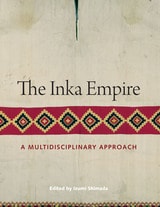
The Inka Empire
A Multidisciplinary ApproachEdited by Izumi Shimada
University of Texas Press, 2015
Massive yet elegantly executed masonry architecture and andenes (agricultural terraces) set against majestic and seemingly boundless Andean landscapes, roads built in defiance of rugged terrains, and fine textiles with orderly geometric designs—all were created within the largest political system in the ancient New World, a system headed, paradoxically, by a single, small minority group without wheeled vehicles, markets, or a writing system, the Inka. For some 130 years (ca. A.D. 1400 to 1533), the Inka ruled over at least eighty-six ethnic groups in an empire that encompassed about 2 million square kilometers, from the northernmost region of the Ecuador–Colombia border to northwest Argentina.
The Inka Empire brings together leading international scholars from many complementary disciplines, including human genetics, linguistics, textile and architectural studies, ethnohistory, and archaeology, to present a state-of-the-art, holistic, and in-depth vision of the Inkas. The contributors provide the latest data and understandings of the political, demographic, and linguistic evolution of the Inkas, from the formative era prior to their political ascendancy to their post-conquest transformation. The scholars also offer an updated vision of the unity, diversity, and essence of the material, organizational, and symbolic-ideological features of the Inka Empire. As a whole, The Inka Empire demonstrates the necessity and value of a multidisciplinary approach that incorporates the insights of fields beyond archaeology and ethnohistory. And with essays by scholars from seven countries, it reflects the cosmopolitanism that has characterized Inka studies ever since its beginnings in the nineteenth century.

The Inner Life of Mestizo Nationalism
Estelle Tarica
University of Minnesota Press, 2008
The only recent English-language work on Spanish-American indigenismo from a literary perspective, Estelle Tarica’s work shows how modern Mexican and Andean discourses about the relationship between Indians and non-Indians create a unique literary aesthetic that is instrumental in defining the experience of mestizo nationalism.
Engaging with narratives by Jesús Lara, José María Arguedas, and Rosario Castellanos, among other thinkers, Tarica explores the rhetorical and ideological aspects of interethnic affinity and connection. In her examination, she demonstrates that these connections posed a challenge to existing racial hierarchies in Spanish America by celebrating a new kind of national self at the same time that they contributed to new forms of subjection and discrimination.
Going beyond debates about the relative merits of indigenismo and mestizaje, Tarica puts forward a new perspective on indigenista literature and modern mestizo identities by revealing how these ideologies are symptomatic of the dilemmas of national subject formation. The Inner Life of Mestizo Nationalism offers insight into the contemporary resurgence and importance of indigenista discourses in Latin America.
Estelle Tarica is associate professor of Latin American literature and culture at the University of California, Berkeley.