Results by title
662 books match the query 'China' and 145 start with t

Taiwan
The Land Colonialisms MadeArik Dirlik, Ping-Hui Liao, and Ya-Chung Chang, special issue editors
Duke University Press, 2018
Contributors: Shu-jung Chen, Leo T. S. Ching, Ya-Chung Chuang, Arif Dirlik, P. Kerim Friedman, Ping-hui Liao, Nikky Lin, Jing Tsu, Yin Wang, Fang-chih Irene Yang
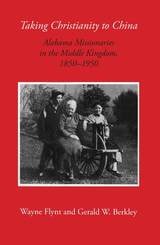
Taking Christianity to China
Alabama Missionaries in the Middle Kingdom, 1850–1950Wayne Flynt and Gerald W. Berkley
University of Alabama Press, 2017
A study of faith, cultural exchange, and the Alabama missionaries who helped shape the story of Christianity in modern China.
Beginning early in the 19th century, the American missionary movement made slow headway in China. Alabamians became part of that small beachhead. After 1900 both the money and personnel rapidly expanded, peaking in the early 1920s. By the 1930s many American denominations became confused and divided over the appropriateness of the missionary endeavor. Secular American intellectuals began to criticize missionaries as meddling do-gooders trying to impose American Evangelicalism on a proud, ancient culture.
By examining the lives of 47 Alabama missionaries who served in China between 1850 and 1950, Flynt and Berkley reach a different conclusion. Although Alabama missionaries initially fit the negative description of Americans trying to superimpose their own values and beliefs on "heathen," they quickly learned to respect Chinese civilization. The result was a new synthesis, neither entirely southern nor entirely Chinese. Although previous works focus on the failure of Christianity to change China, this book focuses on the degree to which their service in China changed Alabama missionaries. And the change was profound.
In their consideration of 47 missionaries from a single state--their call to missions, preparation for service in China, living, working, contacts back home, cultural clashes, political views, internal conflicts, and gender relations--the authors suggest that the efforts by Baptist, Methodist, and Presbyterian missionaries from Alabama were not the failure judged by many historians. In fact, the seeds sown in the hundred years before the Communist revolution in 1950 seem to be reaping a rich harvest in the declining years of the 20th century, when the number of Chinese Christians is estimated by some to be as high as one hundred million.
Teaching Expertise in Three Countries
Japan, China, and the United StatesAkiko Hayashi
University of Chicago Press, 2022
In Teaching Expertise in Three Countries, Akiko Hayashi shows how teachers from Japan, China, and the United States think about what it means to be an expert teacher. Based on interviews with teachers conducted over the span of fifteen years and videos taken in their classrooms, Hayashi gives us a valuable portrait of expert teachers in the making. While Hayashi’s research uncovered cultural variations in the different national contexts, her analysis of how teachers adapted their pedagogy throughout their careers also revealed many cross-national similarities. Younger teachers often describe themselves as being in a rush, following scripts, and “talking too much,” while experienced teachers describe themselves as being quieter, knowing children better, and being more present.
Including a foreword by scholar of early childhood education Joseph Tobin, Teaching Expertise in Three Countries provides a foundation for understanding the sequence and pathways of development over the first decade of teaching in three national contexts, demonstrating the value of the field of comparative education in the process.
Teaching and Transformation in Popular Confucian Literature of the Late Qing
Katherine L. Alexander
University of Michigan Press, 2025
Yu’s works complicate the picture of socio-moral reform, particularly the Confucian mission of jiaohua (teaching and transformation). Though he viewed the disasters of the late Qing as the natural consequence of jiaohua’s failure to compete against socially disruptive media, such as vernacular fiction and theatrical productions, he also wanted reformers to engage closely with these genres. Yu became a vocal advocate of teaching with moral vernacular literature that he believed met commoners at their level. He emphasized the hope that by writing, printing, and performing such texts, every member of his audience could be transformed into teachers themselves, restoring society from the bottom up.
Telemodernities
Television and Transforming Lives in AsiaTania Lewis, Fran Martin, and Wanning Sun
Duke University Press, 2016
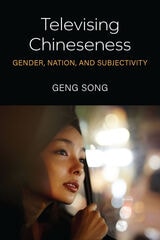
Televising Chineseness
Gender, Nation, and SubjectivityGeng Song
University of Michigan Press, 2022
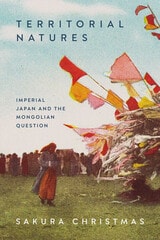
Territorial Natures
Imperial Japan and the Mongolian QuestionSakura Christmas
University of Chicago Press, 2026
A critical account of the Japanese occupation in Inner Mongolia.
Early in the twentieth century, the steppe borderlands between China and Mongolia erupted in violence. As imperial Japan expanded into the area, this crisis between nomadic and settler communities posed fundamental problems in governance. In response, Japanese and Mongol leaders together proposed a radical solution: demarcating an autonomous region in Manchukuo for minority peoples, a new kind of political space that would later define the territorial structure of Communist China.
In Territorial Natures, Sakura Christmas explores how the fraught partition of this autonomous region warped the ethnic and environmental boundaries of Manchukuo. She challenges its origin story as a socialist invention by the Chinese state, instead seeing it as also a fascist extension of the Japanese occupation. By reading Chinese and Mongolian sources against Japanese archives, Christmas reveals how this contested history seeded the volatile landscape of autonomous regions in the People’s Republic of China today.
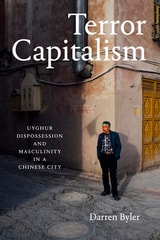
Terror Capitalism
Uyghur Dispossession and Masculinity in a Chinese CityDarren Byler
Duke University Press, 2021
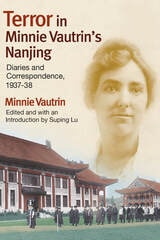
Terror in Minnie Vautrin's Nanjing
Diaries and Correspondence, 1937-38Minnie Vautrin. Edited and with an Introduction by Suping Lu
University of Illinois Press, 2007
In December of 1937, the Japanese Imperial Army marched into China's capital city of Nanjing and launched six weeks of carnage that would become known as the Rape of Nanjing. In addition to the deaths of Chinese POWs and civilians, tens of thousands of women were raped, tortured, and killed by Japanese soldiers. In this traumatic environment, both native and foreign-born inhabitants of Nanjing struggled to carry on with their lives.
This volume collects the diaries and correspondence of Minnie Vautrin, a farmgirl from Illinois who had dedicated herself to the education of Chinese women at Ginling College in Nanjing. Faced with the impending Japanese attack, she turned the school into a sanctuary for ten thousand women and girls. Vautrin's firsthand accounts of daily life in Nanjing and the intensifying threat of Japanese invasion reveal the courage of the occupants under siege--Chinese nationals as well as Western missionaries, teachers, surgeons and business people--and the personal costs of violence in wartime.
Thanks to Vautrin's painstaking effort in keeping a day-to-day account, present-day readers are able to examine this episode of history at close range through her eyes. With detailed maps, photographs, and carefully researched in-depth annotations, Terror in Minnie Vautrin's Nanjing: Diaries and Correspondence, 1937-38 presents a comprehensive and detailed daily account of the events and of life during the horror-stricken days within the city walls and in particular on the Ginling campus. Through chronologically arranged diaries, letters, reports, documents, and telegrams, Vautrin bears witness to those terrible events and to the magnitude of trauma that the Nanjing Massacre exacted on the populace.

The ALA Guide to Researching Modern China
Yunshan Ye
American Library Association, 2014
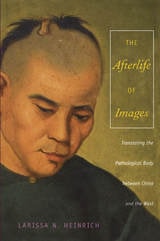
The Afterlife of Images
Translating the Pathological Body between China and the WestAri Larissa Heinrich
Duke University Press, 2008
Combining literary studies, the history of science, and visual culture studies, Heinrich analyzes the rhetoric and iconography through which medical missionaries transmitted to the West an image of China as “sick” or “diseased.” He also examines the absorption of that image back into China through missionary activity, through the earliest translations of Western medical texts into Chinese, and even through the literature of Chinese nationalism. Heinrich argues that over time “scientific” Western representations of the Chinese body and culture accumulated a host of secondary meanings, taking on an afterlife with lasting consequences for conceptions of Chinese identity in China and beyond its borders.
The Anatomy of Post-Communist Regimes
A Conceptual FrameworkBálint Magyar
Central European University Press, 2021
Offering a single, coherent framework of the political, economic, and social phenomena that characterize post-communist regimes, this is the most comprehensive work on the subject to date. Focusing on Central Europe, the post-Soviet countries and China, the study provides a systematic mapping of possible post-communist trajectories.
At exploring the structural foundations of post-communist regime development, the work discusses the types of state, with an emphasis on informality and patronalism; the variety of actors in the political, economic, and communal spheres; the ways autocrats neutralize media, elections, etc. The analysis embraces the color revolutions of civil resistance (as in Georgia and in Ukraine) and the defensive mechanisms of democracy and autocracy; the evolution of corruption and the workings of “relational economy”; an analysis of China as “market-exploiting dictatorship”; the sociology of “clientage society”; and the instrumental use of ideology, with an emphasis on populism. Beyond a cataloguing of phenomena—actors, institutions, and dynamics of post-communist democracies, autocracies, and dictatorships—Magyar and Madlovics also conceptualize everything as building blocks to a larger, coherent structure: a new language for post-communist regimes.
While being the most definitive book on the topic, the book is nevertheless written in an accessible style suitable for both beginners who wish to understand the logic of post-communism and scholars who are interested in original contributions to comparative regime theory. The book is equipped with QR codes that link to www.postcommunistregimes.com, which contains interactive, 3D supplementary material for teaching.
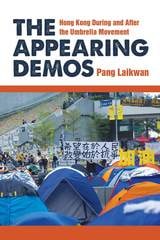
The Appearing Demos
Hong Kong During and After the Umbrella MovementPang Laikwan
University of Michigan Press, 2020
The 79-day-long Hong Kong Umbrella Movement occupied major streets in the busiest parts of the city, creating tremendous inconvenience to this city famous for capitalist order and efficiency. It was also a peaceful collective effort of appearance, and it was as much a political event as a cultural one. The urge for expressing an independent cultural identity underlined both the Occupy movement and the remarkably rich cultural expressions it generated. While understanding the specificity of Hong Kong’s situations, The Appearing Demos also comments on some global predicaments we are facing in the midst of neoliberalism and populism. It directs our attention from state-based sovereignty to city-based democracy, and emphasizes the importance of participation and cohabitation. The book also examines how the ideas of Hannah Arendt are useful to those happenings much beyond the political circumstances that gave rise to her theorization. The book pays particular attention to the actual intersubjective experiences during the protest. These experiences are local, fragile, and sometimes inarticulable, therefore resisting rationality and debates, but they define the fullness of any individual, and they also make politics possible. Using the Umbrella Movement as an example, this book examines the “freed” political agents who constantly take others into consideration in order to guarantee the political realm as a place without coercion and discrimination. In doing so, Pang Laikwan demonstrates how politics means neither to rule nor to be ruled, and these movements should be defined by hope, not by goals.
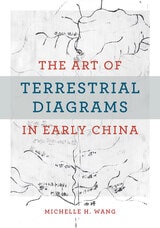
The Art of Terrestrial Diagrams in Early China
Michelle H. Wang
University of Chicago Press, 2023
This is the first English-language monograph on the early history of maps in China, centering on those found in three tombs that date from the fourth to the second century BCE and constitute the entire known corpus of early Chinese maps (ditu). More than a millennium separates them from the next available map in the early twelfth century CE. Unlike extant studies that draw heavily from the history of cartography, this book offers an alternative perspective by mobilizing methods from art history, archaeology, material culture, religion, and philosophy. It examines the diversity of forms and functions in early Chinese ditu to argue that these pictures did not simply represent natural topography and built environments, but rather made and remade worlds for the living and the dead. Wang explores the multifaceted and multifunctional diagrammatic tradition of rendering space in early China.
The Avant-Garde and the Popular in Modern China
Tian Han and the Intersection of Performance and PoliticsLiang Luo
University of Michigan Press, 2014

The Battle for China's Past
Mao and the Cultural RevolutionMobo Gao
Pluto Press, 2008
Mao and his policies have long been demonised in the West, with the Cultural Revolution considered a fundamental violation of human rights.
As China embraces capitalism, the Mao era is being surgically denigrated by the Chinese political and intellectual elite. This book tackles the extremely negative depiction of China under Mao in recent publications and argues most people in China, including the rural poor and the urban working class, actually benefited from Mao's policy of a comprehensive welfare system for the urban and basic health and education provision for the rural, which is being reversed in the current rush towards capitalism.
By a critical analysis of the mainstream account of the Mao era and the Cultural Revolution and by revealing what is offered in the unofficial e-media debates this book sets the record straight, making a convincing argument for the positive effects of Mao's policies on the well-being of the Chinese people.
The Battle of Hengyang
Japan's Fateful Siege of World War IIShifen Fox
Westholme Publishing, 2026
The first English language history of China's Most Important Battle in World War II
In April 1944, Imperial Japan launched Operation Ichigo to secure a transport route linking Japanese forces in northern China and Southeast Asia, while eliminating American airfields in the region. The Japanese army quickly overran Chinese resistance and pushed fast toward the city of Hengyang, a key railway junction in south-central China. The Battle of Hengyang began on June 23, 1944. With just 17,000 troops and besieged in an area of less than ten square miles, the Chinese 10th Army held off a Japanese force totaling more than 110,000 men, supported by aircraft, tanks, chemical weapons, and artillery, for forty-seven days. The fighting was among the most savage of the entire Second World War. Hengyang finally fell on August 8, but the Chinese defenders and undaunted American pilots had stopped Ichigo’s momentum. The Japanese military’s failure to quickly conquer such a small city led to the fall of Japanese Prime Minister Tojo’s cabinet in July 1944, ultimately weakening Japan’s resolve to prosecute the war. News accounts compared the battle to the German defeat at Stalingrad in its ferocity and to the Battle of Suiyang, the most famous siege in ancient Chinese history.
In the aftermath of World War II, the battle was erased from Chinese history books since Communist propaganda insisted that only they, not the Nationalists, had successfully resisted the Japanese. But the survivors, both soldiers and civilians, kept the battle alive in their memories, and during the early part of the twenty-first century, the truth of Hengyang was finally presented to the Chinese people. The Battle of Hengyang: Japan’s Fateful Siege of World War II by Shifen Fox is the first English language history of one of the most important battles of the Second World War. The author returned to China where she interviewed survivors and children of survivors, read private letters, and had access to normally closed archives; in addition, she read memoirs written by Japanese survivors and referenced Japanese historical records. Learning late in life that her father perished in the battle, she also explains how the role of her father and this heroic defense was censored by China, but more than eighty years later has now been restored to its place in Chinese and world history.
The Birth of the State
Ancient Egypt, Mesopotamia, India and ChinaPetr Charvát
Karolinum Press, 2013
The Book of Cunning and Treachery
Writing, Slavery, and Sovereignty in a Qing Indigenous DomainErik Mueggler
University of Chicago Press, 2027
An ethnographic history of one of the dozens of indigenous domains that occupied China’s border regions during the Qing dynasty and before.
Erik Mueggler’s The Book of Cunning and Treachery is an ethnographic history of a chiefly household that ruled one of the many indigenous domains scattered through upland southwest China during the late Ming and Qing dynasties. The imperial colonization of this region proceeded by way of defeating indigenous polities and absorbing them into a system of indirect governance. In this system, indigenous chieftains inherited power over multiethnic domains, subject to ratification by the imperial court. Mueggler tracks the history of two crucial yet unexamined archives pertaining to this household—a trove of Chinese-language legal, military, and administrative documents, and hundreds of ritual manuals, histories, and morality books written in the indigenous Né script—to show how the chiefly house reproduced itself through these languages, each with its own forms of ritual, recitation, and inscription.
As Mueggler demonstrates, through different forms of access to writing in Chinese and Né, male and female chieftains, domestic slaves, enslaved bondsmen, bonded tenants, chiefly concubines, and more existed in a complex ecology of relations. House and domain were governed through a dynamic process in which residents continuously worked out the status hierarchies that animated their relations with one another as well as the relations between the chiefly house and the local administrative system. This groundbreaking book provides a compelling account of the intertwined problems of writing, slavery, and sovereignty, as well as a vivid portrait of the unique form that indigenous jurisdiction took in this era.
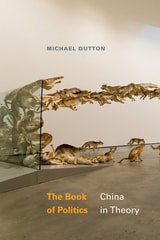
The Book of Politics
China in TheoryMichael Dutton
Duke University Press, 2024
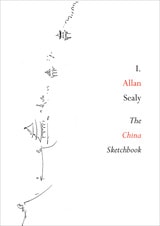
The China Sketchbook
I. Allan Sealy
Seagull Books, 2016
Sealy is known for both his fiction and his travelogue From Yukon to Yukatan: A Western Journey. This facsimile edition of The China Sketchbook, however, adds a special dimension to a travel narrative—the sketches and scribbles give readers a more immediate and unrestrained insight into the mind of a very fine writer and chart an unusual and quirky travel diary.

The China-US Partnership to Prevent Spina Bifida
The Evolution of a Landmark Epidemiological StudyDeborah Kowal
Vanderbilt University Press, 2015
Sixteen thousand staff were involved in running the project, which encountered massive bureaucratic obstacles as well as cultural differences, politicking for study designs and funding, the crisis of Tiananmen Square, and testy debates over research ethics. Nevertheless, the researchers persevered in a collaboration that lasted more than three decades and led to landmark findings on the role of folic acid in preventing spina bifida. Fortifying cereal grain products with folic acid became routine in the United States and a growing number of nations around the world: that intervention was named one of the ten great public health achievements of the last decade.

The Chinese Bell Murders
Robert van Gulik
University of Chicago Press, 1977
"So scrupulously in the classic Chinese manner yet so nicely equipped with everything to satisfy the modern reader."—New York Times
Robert Van Gulik (1910-67) was a Dutch diplomat and an authority on Chinese history and culture. He drew his plots from the whole body of Chinese literature, especially from the popular detective novels that first appeared in the seventeenth century.
The Chinese Lake Murders
Robert van Gulik
University of Chicago Press, 1979
"[Robert van Gulik] deftly interweaves three criminal cases involving exotic yet universally recognizable characters, then has his Judge Dee provide a surprising yet most plausible solution."—New York Times Book Review
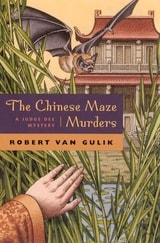
The Chinese Maze Murders
A Judge Dee MysteryRobert van Gulik
University of Chicago Press, 1997
Join the T'ang Dynasty detective Judge Dee on his very first full-length mystery! Poisoned plums, a cryptic scroll picture, passionate love letters, and a hidden murderer with a penchant for torturing and killing women lead Judge Dee to the heart of the Governor’s garden maze and the answers to three interwoven mysteries. This book kicked off Robert van Gulik's long-running series and introduced countless readers to a cozy, clever series and the incredible detective at its center. Read this one and you'll quickly find yourself seeking out the whole series.
The Chinese Nail Murders
Robert van Gulik
University of Chicago Press, 1977
"So scrupulously in the classic Chinese manner yet so nicely equipped with everything to satisfy the modern reader."—New York Times
Robert Van Gulik (1910-67) was a Dutch diplomat and an authority on Chinese history and culture. He drew his plots from the whole body of Chinese literature, especially from the popular detective novels that first appeared in the seventeenth century.

The Chinese Postmodern
Trauma and Irony in Chinese Avant-Garde FictionXiaobin Yang
University of Michigan Press, 2002
The book seeks to redefine Chinese modernity and postmodernity through the analyses of both orthodox and avant-garde works. In doing so, the author draws on a number of theories, psychoanalysis and deconstruction in particular, revealing the hidden connection between the deconstructive mode of writing and the experience of history after trauma and showing how avant-garde literature brings about a varied literary paradigm that defies the dominant, subject-centered one in twentieth-century China.
The distinctiveness of The Chinese Postmodern is also found in its portrayal of the changes of literary paradigms in modern Chinese literature. By way of characterizing avant-garde fiction, it provides an overview of twentieth-century Chinese literature and offers a theorization of the intellectual history of modern China. Other issues concerning literary theory are explored, including the relationships between postmodernity and totalitarian discourse, between historical trauma and literary writing, and between psychic trauma and rhetorical irony. This book will appeal to readers in the fields of Chinese literature and culture, modern Chinese history, literary theory, and comparative literature.
Xiaobin Yang is Croft Assistant Professor, University of Mississippi.
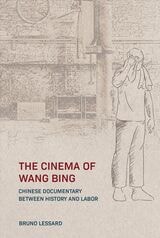
The Cinema of Wang Bing
Chinese Documentary between History and LaborBruno Lessard
Hong Kong University Press, 2023
In The Cinema of Wang Bing, Bruno Lessard examines documentarian Wang Bing’s most important films. He focuses on the two obsessions at the heart of Wang’s oeuvre—the legacy of Maoist China in the present and the transformation of labor since China’s entry into the market economy—and how the crucial figures of survivor and worker are represented on screen. Bruno Lessard argues that Wang is a minjian (grassroots) intellectual whose films document the impact of Mao’s Great Leap Forward on Chinese collective memory and register the repercussions of China’s turn to neoliberalism on workers in the post-Reform era. Bringing together Chinese documentary studies and China studies, Lessard shows how Wang’s practice reflects the minjian ethos when documenting the survivors of the Great Famine and those who have not benefitted from China’s neoliberal policies—from laid-off workers to migrant workers. The films discussed include some of Wang’s most celebrated works such as West of the Tracks and Dead Souls, as well as neglected documentaries such as Coal Money and Bitter Money.
The Classical Gardens of Shanghai
Shelly Bryant
Hong Kong University Press, 2016
The Compensations of Plunder
How China Lost Its TreasuresJustin M. Jacobs
University of Chicago Press, 2020
The Conquerors
André Malraux
University of Chicago Press, 1991
In a new Foreword, Herbert R. Lottman discusses the political background of the book, and the extent to which Malraux invented the history he wrote about.
"[The Conquerors] is a valuable introduction to Malraux himself, who would, like his fictional counterpart, become an analgam of talents as novelist, essayist, Leftist and Gaullist, Resistance hero and art critic. He was among the most 'universal' of French men of letters."—Choice
"The novel can be enjoyed as a remarkable work of modernism. With images derived from the silent cinema and prose from the telegraph, it moves at a tremendous pace. Canton all comes to violent life, seen as though from a speeding car."—Kirkus
"No other writer of the 20th century had the same capacity to translate his personal adventure into a meeting with history and a dialogue of civilization."—Carlos Fuentes, New York Times Book Review
The Coolie Speaks
Chinese Indentured Laborers and African Slaves in CubaLisa Yun
Temple University Press, 2009
Introducing radical counter-visions of race and slavery, and probing the legal and philosophical questions raised by indenture, The Coolie Speaks offers the first critical reading of a massive testimony case from Cuba in 1874. From this case, Yun traces the emergence of a "coolie narrative" that forms a counterpart to the "slave narrative." The written and oral testimonies of nearly 3,000 Chinese laborers in Cuba, who toiled alongside African slaves, offer a rare glimpse into the nature of bondage and the tortuous transition to freedom. Trapped in one of the last standing systems of slavery in the Americas, the Chinese described their hopes and struggles, and their unrelenting quest for freedom.
Yun argues that the testimonies from this case suggest radical critiques of the "contract" institution, the basis for free modern society. The example of Cuba, she suggests, constitutes the early experiment and forerunner of new contract slavery, in which the contract itself, taken to its extreme, was wielded as a most potent form of enslavement and complicity. Yun further considers the communal biography of a next-generation Afro-Chinese Cuban author and raises timely theoretical questions regarding race, diaspora, transnationalism, and globalization.
The Courtesan's Memory, Voice, and Late Ming Drama
Peng Xu
University of Michigan Press, 2025
This study profoundly remaps the textbook narratives of gender bias, challenges modern prejudices prevalent in the literary history of Chinese drama, and reveals how theatrical conditions and writing styles shifted to accommodate courtesan performances. Utilizing a wide range of sources such as scripts, city guides, biographies, diaries, letters, wood-block illustrations, and paintings, this study distinguishes itself from earlier studies of Chinese courtesans by not thematizing courtesans for their allegorical values, but rather pinpointing their agency in shaping the features of Chinese theater and recognizing courtesans as a source of creativity and development in the medium. Xu’s focus on courtesan performance culture allows for fresh readings of canonical Chinese plays, opening up new ways of understanding the history of Chinese drama written by women, thus deviating from standard historiography based solely on the writings of men.
The Crafting of the 10,000 Things
Knowledge and Technology in Seventeenth-Century ChinaDagmar Schäfer
University of Chicago Press, 2011
The last decades of the Ming dynasty, though plagued by chaos and destruction, saw a significant increase of publications that examined advances in knowledge and technology. Among the numerous guides and reference books that appeared during this period was a series of texts by Song Yingxing (1587–1666?), a minor local official living in southern China. His Tiangong kaiwu, the longest and most prominent of these works, documents the extraction and processing of raw materials and the manufacture of goods essential to everyday life, from yeast and wine to paper and ink to boats, carts, and firearms.
In The Crafting of the 10,000 Things, Dagmar Schäfer probes this fascinating text and the legacy of its author to shed new light on the development of scientific thinking in China, the purpose of technical writing, and its role in and effects on Chinese history. Meticulously unfolding the layers of Song’s personal and cultural life, Schäfer chronicles the factors that motivated Song to transform practical knowledge into written culture. She then examines how Song gained, assessed, and ultimately presented knowledge, and in doing so articulates this era’s approaches to rationality, truth, and belief in the study of nature and culture alike. Finally, Schäfer places Song’s efforts in conjunction with the work of other Chinese philosophers and writers, before, during, and after his time, and argues that these writings demonstrate collectively a uniquely Chinese way of authorizing technology as a legitimate field of scholarly concern and philosophical knowledge.
Offering an overview of a thousand years of scholarship, The Crafting of the 10,000 Things explains the role of technology and crafts in a culture that had an outstandingly successful tradition in this field and was a crucial influence on the technical development of Europe on the eve of the Industrial Revolution.
The Cultural Revolution and Post-Mao Reforms
A Historical PerspectiveTang Tsou
University of Chicago Press, 1986
The Currency of Truth
Newsmaking and the Late-Socialist Imaginaries of China's Digital EraEmily H. C. Chua
University of Michigan Press, 2023
In The Currency of Truth, Emily H. C. Chua argues that news in China works less as a medium of mass communication than as a kind of currency as industry players make and use news articles to create agreements, build connections, and protect and advance their positions against one another. Looking at the ethical and professional principles that well-intentioned and civically minded journalists strive to uphold, and the challenges and doubts that they grapple with in the process, Chua brings her findings into conversation around “post-truth” news and the “crisis” of professional journalism in the West. The book encourages readers to rethink contemporary news, arguing that rather than setting out from the assumption that news works either to inform or deceive its publics, we should explore the “post-public” social and political imaginaries emerging among today’s newsmakers and remaking the terms of their practice.
The Death and Life of Chinese Civil Society
Mujun Zhou
University of Michigan Press, 2026
Mujun Zhou employs the concept of interstitial space, or the space where the exercise of power has not been fully institutionalized, to examine the history of the civil society project over the past three decades and its changing relationship with other social movements. Zhou suggests that by advocating for civil society the liberals gained allies and thematized many social problems rising during China’s economic reform; however, liberals’ activism also produced new forms of power inequalities.
The Devil's Handwriting
Precoloniality and the German Colonial State in Qingdao, Samoa, and Southwest AfricaGeorge Steinmetz
University of Chicago Press, 2007
The Dianshizhai Pictorial
Shanghai Urban Life, 1884–1898Ye Xiaoqing
University of Michigan Press, 2003
The East Is Black
Cold War China in the Black Radical ImaginationRobeson Taj Frazier
Duke University Press, 2015
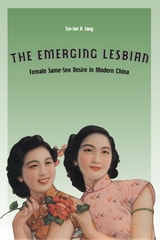
The Emerging Lesbian
Female Same-Sex Desire in Modern ChinaTze-Lan D. Sang
University of Chicago Press, 2003
In this first ever book-length study of Chinese lesbians, Tze-lan D. Sang convincingly ties the debate over female same-sex love in China to the emergence of Chinese modernity. As women's participation in social, economic, and political affairs grew, Sang argues, so too did the societal significance of their romantic and sexual relations. Focusing especially on literature by or about women-preferring women, Sang traces the history of female same-sex relations in China from the late imperial period (1600-1911) through the Republican era (1912-1949). She ends by examining the reemergence of public debate on lesbians in China after Mao and in Taiwan after martial law, including the important roles played by globalization and identity politics.
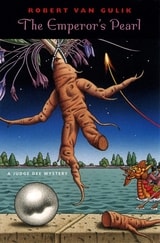
The Emperor's Pearl
A Judge Dee MysteryRobert van Gulik
University of Chicago Press, 1963
The latest puzzling mystery facing Jude Dee begins on the night of the Poo-yang dragonboat races in 699 A.D.: a drummer in the leading boat collapses, and the body of a beautiful young woman turns up in a deserted country mansion. There, Judge Dee—tribunal magistrate, inquisitor, and public avenger—steps in to investigate the murders and return order to the Tang Dynasty.
In The Emperor’s Pearl, the judge discovers that these two deaths are connected by an ancient tragedy involving a near-legendary treasure stolen from the Imperial Harem one hundred years earlier. The terrifying figure of the White Lady, a river goddess enshrined on a bloodstained altar, looms in the background of the investigation. Clues are few and elusive, but under the expert hand of Robert van Gulik, this mythic jigsaw puzzle assembles itself into a taut mystery.
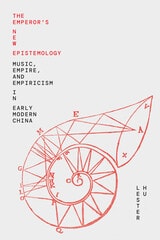
The Emperor’s New Epistemology
Music, Empire, and Empiricism in Early Modern ChinaLester Hu
University of Chicago Press, 2027
An innovative account of listening and empire-building in 17th- and 18th-century China.
The Emperor’s New Epistemology explores how listening shaped knowledge and empire-building in seventeenth- and eighteenth-century China. As the Manchu dynasty expanded deep into Inner Asian territories deemed foreign by the majority-Han population, the Qing Empire’s musical culture encompassed the sounds of Mongols, Uyghurs, and Tibetans, as well as Western music brought by Jesuit and other Christian missionaries. Lester Hu reveals that this diversity transformed not only Qing court culture but the very grounds on which knowledge and power could be established.
In one revealing episode from 1692, the Kangxi Emperor (1654–1722) misinterpreted a key term of Classical Chinese music after studying European music with the Jesuits. Hu situates this anecdote within the political, social, and epistemic shifts that transformed late-imperial China. As Hu shows, listening was an instrument of Qing imperial authority: Knowledge about music, language, and even the universe could only be verified through the emperor’s ears. Furthermore, listening facilitated new theories of empirical knowledge, which both lent themselves to Qing-imperial ideology and generated new epistemic tensions. By exploring their echoes in similar shifts in early modern Europe, Hu’s book brings a global perspective to the study of music in the early modern world and reconsiders the transcendental ground on which such comparative and intercultural knowledge is possible.
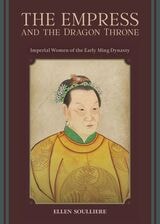
The Empress and the Dragon Throne
Imperial Women of the Early Ming DynastyEllen Soulliere
Hong Kong University Press, 2025
The rulers of the Ming dynasty enacted paradigms of hierarchical order. Like imperial families, households, and courts in earlier Chinese dynasties, they articulated patriarchal, patrilineal, and patrilocal organizational principles as exemplars for families and institutions throughout the empire. Women made indispensable contributions to the development of these paradigms and principles and to the social, cultural, and political fabric of the family and the state. And yet, in the existing literature in Chinese and English women are often burdened with stereotypes, positioned as peripheral, or rendered almost invisible.
Reading available texts “against the grain,” and drawing on a trove of evidence from material culture, Soulliere shows how women defined a place for themselves in the multigenerational Ming imperial family, imperial household, and court. The Empress and the Dragon Throne spans the first Ming century from just before the founding of the dynasty in 1368 to the end of the Tianshun reign in 1465. This richly illustrated volume is a must-read for scholars, students, and anyone interested in learning about women’s lives during the Ming dynasty.
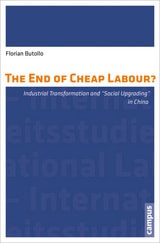
The End of Cheap Labour?
Industrial Transformation and "Social Upgrading" in ChinaFlorian Butollo
Campus Verlag, 2014
In The End of Cheap Labour?, Florian Butollo investigates the recent transformation of the garment and LED lighting industries in the Pearl River Delta, China’s largest industrial hub. He reveals that industrial upgrading rarely supports improvements in working conditions and the basic employment pattern; and this failure of “social upgrading” threatens to undermine the desired rebalancing of the Chinese economy. Butollo demonstrates that the implementation of collective labor rights remains an important obstacle in the future of the Chinese growth model.
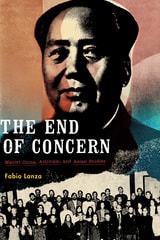
The End of Concern
Maoist China, Activism, and Asian StudiesFabio Lanza
Duke University Press, 2017
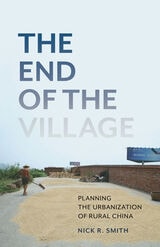
The End of the Village
Planning the Urbanization of Rural ChinaNick R. Smith
University of Minnesota Press, 2021
How China’s expansive new era of urbanization threatens to undermine the foundations of rural life
Since the beginning of the twenty-first century, China has vastly expanded its urbanization processes in an effort to reduce the inequalities between urban and rural areas. Centered on the mountainous region of Chongqing, which serves as an experimental site for the country’s new urban development policies, The End of the Village analyzes the radical expansion of urbanization and its consequences for China’s villagers. It reveals a fundamental rewriting of the nation’s social contract, as villages that once organized rural life and guaranteed rural livelihoods are replaced by an increasingly urbanized landscape dominated by state institutions.
Throughout this comprehensive study of China’s “urban–rural coordination” policy, Nick R. Smith traces the diminishing autonomy of the country’s rural populations and their subordination to larger urban networks and shared administrative structures. Outside Chongqing’s urban centers, competing forces are at work in reshaping the social, political, and spatial organization of its villages. While municipal planners and policy makers seek to extend state power structures beyond the boundaries of the city, village leaders and inhabitants try to maintain control over their communities’ uncertain futures through strategies such as collectivization, shareholding, real estate development, and migration.
As China seeks to rectify the development crises of previous decades through rapid urban growth, such drastic transformations threaten to displace existing ways of life for more than 600 million residents. Offering an unprecedented look at the country’s contentious shift in urban planning and policy, The End of the Village exposes the precarious future of rural life in China and suggests a critical reappraisal of how we think about urbanization.
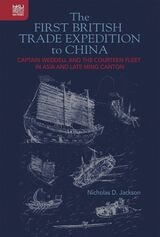
The First British Trade Expedition to China
Captain Weddell and the Courteen Fleet in Asia and Late Ming CantonNicholas D. Jackson
Hong Kong University Press, 2022
In The First British Trade Expedition to China, Nicholas D. Jackson explores the pioneering British trade expedition to China launched in the late Ming period by Charles I and the Courteen Association. Utilizing the vivid perspective of its commander Captain John Weddell, this study concentrates on the fleet’s adventures in south China between Portuguese Macao and the provincial capital, Guangzhou. Tracing the obscure origins of Sino-British diplomatic and commercial relations back to the late Ming era, Jackson examines the first episodes of Sino-British interaction, exchange, and collision in the seventeenth century. His analysis constitutes a groundbreaking study of early modern British initiatives and enterprises in the coastal areas of south China.
The Fragmented Politics of Urban Preservation
Beijing, Chicago, and ParisYue Zhang
University of Minnesota Press, 2013
While urban preservation is almost as old as cities themselves, it has become increasingly controversial in modern cities. In this book, Yue Zhang presents a cross-national comparative analysis of the politics of urban preservation. Based on comprehensive archival research and more than two hundred in-depth interviews in Beijing, Chicago, and Paris, Zhang finds that urban preservation provides a tool for diverse political and social actors to frame their propositions and advance their favored courses of action.
In cities from West to East, divergent political and economic interests have caused urban preservation to become contested. Exploring three of the world’s great cities, Zhang deftly navigates readers through each case study, illustrating the complexities of the politics of urban preservation in each city. In Beijing, urban preservation was integral to promoting economic growth and enhancing the city’s image during the lead-up to the 2008 Olympics; in Chicago, it is used to increase property values and revitalize neighborhoods; and in Paris, it offers a channel for national and municipal governments to compete for control over urban space.
Although urban preservation serves various purposes in these cities, Zhang explains how different types of political fragmentation have affected the implementation of preservation initiatives in predictable ways, thus generating distinct patterns of urban preservation. A comparative urban politics study of unusual breadth, The Fragmented Politics of Urban Preservation gives us insight into the complex policy process of urban preservation through which political institutions are intertwined with interests and inclinations, fundamentally shaping the direction of urban development, the physical forms of cities, and the lives of citizens.
The Fruits of Opportunism
Noncompliance and the Evolution of China's Supplemental Education IndustryLe Lin
University of Chicago Press, 2022
An in-depth examination of the regulatory, entrepreneurial, and organizational factors contributing to the expansion and transformation of China’s supplemental education industry.
Like many parents in the United States, parents in China, increasingly concerned with their children’s academic performance, are turning to for-profit tutoring businesses to help their children get ahead in school. China’s supplemental education industry is now the world’s largest and most vibrant for-profit education market, and we can see its influence on the US higher education system: more than 70% of Chinese students studying in American universities have taken test preparation classes for overseas standardized tests. The Fruits of Opportunism offers a much-needed thorough investigation into this industry. This book examines how opportunistic organizations thrived in an ambiguous policy environment and how they catalyzed organizational and institutional changes in this industry.
A former insider in China’s Education Industry, sociologist Le Lin shows how and why this industry evolved to become a for-profit one dominated by private, formal, nationally operating, and globally financed corporations, despite restrictions the Chinese state placed on the industry. Looking closely at the opportunistic organizations that were founded by marginal entrepreneurs and quickly came to dominate the market, Lin finds that as their non-compliant practices spread across the industry, these opportunistic organizations pushed privatization and marketization from below. The case of China’s Education Industry laid out in The Fruits of Opportunism illustrates that while opportunism leaves destruction in its wake, it can also drive the formation and evolution of a market.