Results by title
134 books match the query 'Chinese' and 25 start with t
Talk to Me in Cantonese
Betty Hung
Hong Kong University Press, 2019
The 70's Biweekly
Social Activism and Alternative Cultural Production in 1970s Hong KongEdited by Lu Pan
Hong Kong University Press, 2023
Taking The 70’s Biweekly—an independent youth publication in 1970s Hong Kong—as the main thread, this edited collection investigates an unexplored trajectory of Hong Kong’s cultural and artistic production in the 1970s. The 70’s Biweekly stands out from many other independent magazines with its unique blending of radical political theories, social activism, avant-garde art, and local literature. By taking the magazine as a node of social and cultural activism from and around which actions, debates, community, and artistic practices are formed, this book fills gaps in the study of how young Hong Kong cultural producers carved out an alternative space to speak out against established authorities.
Split into three parts, The 70’s Biweekly provides readers with a panoramic view of the political and cultural activism in Hong Kong during the 1970s, featuring writings on art and film, and interviews with former founders and contributors that reflect on how their participation led them to engage ideologically with their activism and community.
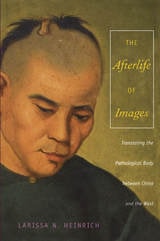
The Afterlife of Images
Translating the Pathological Body between China and the WestAri Larissa Heinrich
Duke University Press, 2008
Combining literary studies, the history of science, and visual culture studies, Heinrich analyzes the rhetoric and iconography through which medical missionaries transmitted to the West an image of China as “sick” or “diseased.” He also examines the absorption of that image back into China through missionary activity, through the earliest translations of Western medical texts into Chinese, and even through the literature of Chinese nationalism. Heinrich argues that over time “scientific” Western representations of the Chinese body and culture accumulated a host of secondary meanings, taking on an afterlife with lasting consequences for conceptions of Chinese identity in China and beyond its borders.
The Artisans
Madeleine Thien
Diaphanes, 2025
Canadian writer Madeleine Thien reflects on a fragment of a mural depicting Three Uighur Princes from one of the Bezeklik Caves along the Northern Silk Road, in what is now the Xinjiang Uighur Autonomous Region of China. This most renowned donor portrait of Uighur-Buddhist art was brought to the Berlin museums following the Second German Turfan Expedition (1904–5). Thien responds to its vibrant colors and expressive lines with a literary text, transporting us into the daily lives of the painters who adorned the caves with strikingly lifelike murals in the tenth century.
The Call
Rawi Hage
Diaphanes, 2025
Following one of the Turfan archaeological expeditions in the early 1900s, a fragment of a Manichaean text written in Uighur and Old Turkic found its way to the Asian Art Museum in Berlin. Originating from the Northern Silk Road region (now the Xinjiang Uighur Region in China), these “loose leaves” became a source of inspiration for Rawi Hage.
Hage writes, “I was born near Byblos in Lebanon. The ancient city of Byblos is believed to be the place where the first alphabet was invented.” Encountering this rare and precious manuscript, with its layered and multicolored words, Hage reflects on the movement, uprooting, displacement, and migration of both objects and people.
The Chinese Garden as Lyric Enclave
A Generic Study of <em>The Story of the Stone</em>Chi Xiao
University of Michigan Press, 2012
The Chinese Question
Ethnicity, Nation, and Region in and Beyond the PhilippinesCaroline S. Hau
National University of Singapore Press, 2014
With the revaluing of Chineseness has come a repositioning of “Chinese” racial and cultural identity. Philippine mestizos (people of mixed ancestry) form an important sub-group of the Filipino elite, but their Chineseness was occluded as they disappeared into the emergent Filipino nation. In the twentieth century, mestizos defined themselves and based claims to privilege on “white” ancestry, but mestizos are now actively reclaiming their “Chinese” heritage. At the same time, so-called “pure Chinese” are parlaying their connections into cultural, social, symbolic, or economic capital, and leaders of mainland Chinese state companies have entered into politico-business alliances with the Filipino national elite. As the meanings of “Chinese” and “Filipino” evolve, intractable contradictions are appearing in the concepts of citizenship and national belonging.
Through an examination of cinematic and literary works, The Chinese Question shows how race, class, ideology, nationality, territory, sovereignty, and mobility are shaping the discourses of national integration, regional identification, and global cosmopolitanism.
The Chinese in Maritime Southeast Asia
Trade and Merchant Communities in 17th-century InsulindiaMarie-Sybille de Vienne
National University of Singapore Press, 2025
Connections between Asian and European markets increased dramatically in the seventeenth century, indicating a turning point in the global history of trade. The Dutch East-India Company (or VOC) was central to this process; however, counter to the VOC’s aims, the winners of the game in maritime Southeast Asia were often Chinese merchants. As this book shows, at the time, these merchants were the only economic agents capable of trading both in major Southeast Asian commercial hubs and developing exchanges with China and Japan. The Chinese operated with a flexibility of means and a fluidity of management that allowed them to react rapidly and quickly gain returns on investment. In Batavia, as in other Southeast Asian emporiums, the increasingly numerous and diverse Chinese elites assumed direct responsibility for the management of their community; this made them the most important non-European free community in the city during the second half of the seventeenth century.
The Chinese in Maritime Southeast Asia tells this remarkable story through an examination of the VOC’s abundant sources, which record relations between the Chinese minority and the Dutch rulers who relied upon them.
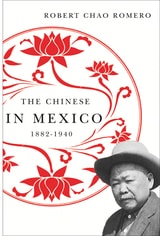
The Chinese in Mexico, 1882-1940
By Robert Chao Romero
University of Arizona Press, 2010
Robert Romero argues that Chinese immigrants turned to Mexico as a new land of economic opportunity after the passage of the U.S. Chinese Exclusion Act of 1882. As a consequence of this legislation, Romero claims, Chinese immigrants journeyed to Mexico in order to gain illicit entry into the United States and in search of employment opportunities within Mexico’s developing economy. Romero details the development, after 1882, of the “Chinese transnational commercial orbit,” a network encompassing China, Latin America, Canada, and the Caribbean, shaped and traveled by entrepreneurial Chinese pursuing commercial opportunities in human smuggling, labor contracting, wholesale merchandising, and small-scale trade.
Romero’s study is based on a wide array of Mexican and U.S. archival sources. It draws from such quantitative and qualitative sources as oral histories, census records, consular reports, INS interviews, and legal documents. Two sources, used for the first time in this kind of study, provide a comprehensive sociological and historical window into the lives of Chinese immigrants in Mexico during these years: the Chinese Exclusion Act case files of the U.S. Immigration and Naturalization Service and the 1930 Mexican municipal census manuscripts. From these documents, Romero crafts a vividly personal and compelling story of individual lives caught in an extensive network of early transnationalism.
The Chinese of Early Tucson
Historic Archaeology from the Tucson Urban Renewal ProjectFlorence C. Lister and Robert H. Lister
University of Arizona Press, 1989
The Eater's Guide to Chinese Characters
James D. McCawley
University of Chicago Press, 1984
With this guide in hand, English speakers hold the key to a world of tantalizing—and otherwise unavailable—Chinese dishes.
The Global White Snake
Liang Luo
University of Michigan Press, 2021
The Global White Snake uncovers how the White Snake legend often acts as an unsettling narrative of radical tolerance for hybrid sexualities, loving across traditional boundaries, subverting authority, and valuing the strange and the uncanny. A timely mediation and reflection on our contemporary moment of continued struggle for minority rights and social justice, The Global White Snake revives the radical anti-authoritarian spirit slithering under the tales of monsters and demons, love and lust, and reminds us of the power of the fantastic and the fabulous in inspiring and empowering personal and social transformations.
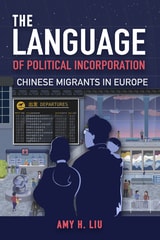
The Language of Political Incorporation
Chinese Migrants in EuropeAmy Liu
Temple University Press, 2021
In this groundbreaking study, The Language of Political Incorporation, Amy Liu focuses on Chinese migrants in Central-Eastern Europe and their varying levels of political incorporation in the local community. She examines the linguistic diversity of migrant networks, finding institutional trust and civic engagement depend not on national identity, but on the network’s linguistic diversity—namely, whether the operating language is a migrant’s mother tongue or a lingua franca.
The Language of Political Incorporation uses original survey data to assess when the Chinese engage positively with the authorities and when they become civic minded. The results are surprising. In Hungary, the Chinese community has experienced high levels of political incorporation in part because they have not been targeted by anti-immigrant rhetoric and policies. In contrast, migrants in Romania sought the assistance of the Chinese embassy to fight an effort to collect back taxes.
Liu also compares the Chinese experiences in Central-Eastern Europe with those of Muslims in the region, as well as how the Chinese are treated in Western Europe. Additionally, she considers how the local communities perceive the Chinese. The Language of Political Incorporation concludes by offering best practices for how governments can help migrants become more trusting of—and have greater involvement with—locals in their host countries. Ultimately, Liu demonstrates the importance of linguistic networks for the incorporation of immigrants.
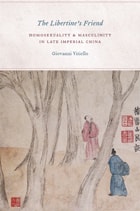
The Libertine's Friend
Homosexuality and Masculinity in Late Imperial ChinaGiovanni Vitiello
University of Chicago Press, 2011
Delving into three hundred years of Chinese literature, from the mid-sixteenth century to the mid-nineteenth, The Libertine’s Friend uncovers the complex and fascinating history of male homosexual and homosocial relations in the late imperial era. Drawing particularly on overlooked works of pornographic fiction, Giovanni Vitiello offers a frank exploration of the importance of same-sex love and eroticism to the evolution of masculinity in China.
Vitiello’s story unfolds chronologically, beginning with the earliest sources on homoeroticism in pre-imperial China and concluding with a look at developments in the twentieth century. Along the way, he identifies a number of recurring characters—for example, the libertine scholar, the chivalric hero, and the lustful monk—and sheds light on a set of key issues, including the social and legal boundaries that regulated sex between men, the rise of male prostitution, and the aesthetics of male beauty. Drawing on this trove of material, Vitiello presents a historical outline of changing notions of male homosexuality in China, revealing the integral part that same-sex desire has played in its culture.
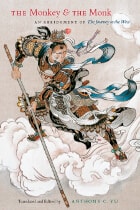
The Monkey and the Monk
An Abridgment of The Journey to the WestTranslated by Anthony C. Yu
University of Chicago Press, 2006
A compact abridgment of the legendary Chinese classic that inspired the hit game Black Myth: Wukong!
Anthony C. Yu’s celebrated translation of The Journey to the West reinvigorated one of Chinese literature’s most beloved classics for English-speaking audiences when it first appeared thirty years ago. Yu’s abridgment of his four-volume translation, The Monkey and the Monk, finally distills the epic novel’s most exciting and meaningful episodes without taking anything away from their true spirit.
These fantastic episodes recount the adventures of Xuanzang, a seventh-century monk who became one of China’s most illustrious religious heroes after traveling for sixteen years in search of Buddhist scriptures. Powerfully combining religious allegory with humor, fantasy, and satire, accounts of Xuanzang’s journey were passed down for a millennium before culminating in the sixteenth century with The Journey to the West. Now, readers of The Monkey and the Monk can experience the full force of his lengthy quest as he travels to India with four animal disciples, most significant among them a guardian-monkey known as “the Great Sage, Equal to Heaven.” Moreover, in its newly streamlined form, this acclaimed translation of a seminal work of world literature is sure to attract an entirely new following of students and fans.
“A new translation of a major literary text which totally supersedes the best existing version. . . . It establishes beyond contention the position of The Journey to the West in world literature, while at the same time throwing open wide the doors to interpretive study on the part of the English audience.”—Modern Language Notes, on the unabridged translation
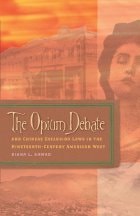
The Opium Debate and Chinese Exclusion Laws in the Nineteenth-Century American West
Diana L. Ahmad
University of Nevada Press, 2011
America’s current "war on drugs" is not the nation’s first. In the mid-nineteenth century, opium-smoking was decried as a major social and public health problem, especially in the West. Although China faced its own epidemic of opium addiction, only a very small minority of Chinese immigrants in America were actually involved in the opium business. It was in Anglo communities that the use of opium soon spread and this growing use was deemed a threat to the nation’s entrepreneurial spirit and to its growing mportance as a world economic and military power. The Opium Debate examines how the spread of opium-smoking fueled racism and created demands for the removal of the Chinese from American life. This meticulously researched study of the nineteenth-century drug-abuse crisis reveals the ways moral crusaders linked their antiopium rhetoric to already active demands for Chinese exclusion. Until this time, anti-Chinese propaganda had been dominated by protests against the economic and political impact of Chinese workers and the alleged role of Chinese women as prostitutes. The use of the drug by Anglos added another reason for demonizing Chinese immigrants. Ahmad describes the disparities between Anglo-American perceptions of Chinese immigrants and the somber realities of these people’s lives, especially the role that opium-smoking came to play in the Anglo-American community, mostly among middle- and upper-class women. The book offers a brilliant analysis of the evolution of the Chinese Exclusion Act of 1882, plus important insights into the social history of the nineteenth-century West, the culture of American Victorianism, and the rhetoric of racism in American politics.
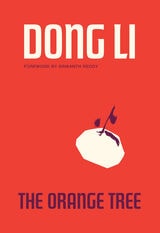
The Orange Tree
Dong Li
University of Chicago Press, 2023
Dong Li’s The Orange Tree is a collection of narrative poems that braids forgotten legends, personal sorrows, and political upheavals into a cinematic account of Chinese history as experienced by one family. Amid chaos and catastrophe, the child narrator examines a yellowed family photo to find resemblances and learns a new language, inventing compound words to conjure and connect family stories. These invented words and the calligraphy of untranslated Chinese characters appear in lists separating the book’s narrative sections.
Li’s lyrical and experimental collection transcends the individual, placing generations of family members and anonymous others together in a single moment that surpasses chronological time. Weaving through stories of people with little means, between wars and celebrations, over bridges and walls, and between trees and gardens, Li’s poems offer intimate perspectives on times that resonate with our own. The result is an unflinching meditation on family history, collective trauma, and imaginative recovery.
The Orange Tree is the recipient of the inaugural Phoenix Emerging Poet Book Prize for 2023.
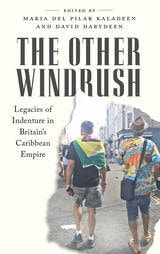
The Other Windrush
Legacies of Indenture in Britain's Caribbean EmpireMaria del Pilar Kaladeen
Pluto Press, 2021

The Other Windrush
Legacies of Indenture in Britain's Caribbean EmpireMaria del Pilar Kaladeen
Pluto Press, 2021
Between the arrival of the HMT Empire Windrush in 1948 and the passing of the 1971 Immigration Act, half a million people came to the UK from the Caribbean. In the aftermath of the 2018 Windrush Scandal, the story of the Windrush Generation is more widely known than ever. But is it the whole story?
Through a series of biographical essays, poems and articles, The Other Windrush shines a light on the hidden history of a 'minority within a minority': Caribbean migrants of Indian and Chinese descent - often the descendants of indentured labourers - who were the 'invisible passengers' of the Windrush generation.
Both highlighting the diversity of their lives and cultural backgrounds, and delving into the largely forgotten history of the system of indenture in the British Caribbean, The Other Windrush makes a unique addition to the literature on migration and the British Empire.

The Otherness of the Everyday
Twelve Conversations from the Chinese Art World during the Covid-19 PandemicEdited by JIANG Jiehong
Intellect Books, 2021
In late 2019, as a deadly pandemic began to take hold, China’s Wuhan province was the first to feel the effects. As the virus spread, the streets and squares of the world emptied, and the structures of our social world were redefined.
In response to the pandemic, Jiang Jiehong convened in-conversation talks with twelve figures—such as Chen Danqing, Pi Li, Xiang Biao, and Zhang Peili, among others—from different disciplines in the Chinese-speaking world, including anthropology, architecture, art, curation, fashion, film, literature, media, museum, music, and photography. Presented here, the conversations foster new understandings of the ongoing crisis. The discussions explore the threat of the invisible; notions of distance and spatialization, separation and isolation, communication and mobility, discipline and surveillance, and community and collectiveness; and China’s changing relationship with the rest of the world. These illuminating reflections on the global crisis allow us to re-examine past norms and begin to form visions of a post-Covid world.
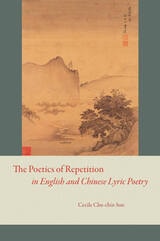
The Poetics of Repetition in English and Chinese Lyric Poetry
Cecile Chu-chin Sun
University of Chicago Press, 2010
For more than half a century, Chinese-Western comparative literature has been recognized as a formal academic discipline, but critics and scholars in the field have done little to develop a viable, common basis for comparison between these disparate literatures. In this pioneering book, Cecile Chu-chin Sun establishes repetition as the ideal perspective from which to compare the poetry and poetics from these two traditions.
Sun contends that repetition is at the heart of all that defines the lyric as a unique art form and, by closely examining its use in Chinese and Western poetry, she demonstrates howone can identify important points of convergence and divergence. Through a representative sampling of poems from both traditions, she illustrates how the irreducible generic nature of the lyric transcends linguistic and cultural barriers but also reveals the fundamental distinctions between the traditions. Most crucially, she dissects the two radically different conceptualizations of reality—mimesis and xing—that serve as underlying principles for the poetic practices of each tradition.
Skillfully integrating theory and practice, The Poetics of Repetition in English and Chinese Lyric Poetryprovides a much-needed model for future study of Chinese and English poetry as well as lucid, succinct interpretations of individual poems.
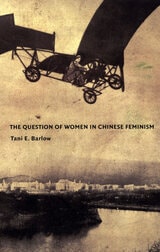
The Question of Women in Chinese Feminism
Tani E. Barlow
Duke University Press, 2004
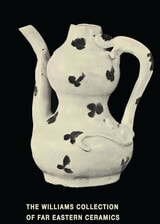
The Williams Collection of Far Eastern Ceramics
Chinese, Siamese, and Annamese Ceramic Ware Selected from the Collection of Justice and Mrs. G. Mennen Williams in the University of Michigan Museum of AnthropologyKamer Aga-Oglu
University of Michigan Press, 1972
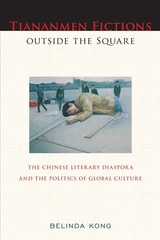
Tiananmen Fictions outside the Square
The Chinese Literary Diaspora and the Politics of Global CultureBelinda Kong
Temple University Press, 2012
An exciting analysis of the myriad literary effects of Tiananmen, Belinda Kong's Tiananmen Fictions Outside the Square is the first full-length study of fictions related to the 1989 movement and massacre. More than any other episode in recent world history, Tiananmen has brought a distinctly politicized Chinese literary diaspora into stark relief.
Kong redefines Tiananmen's meaning from an event that ended in local political failure to one that succeeded in producing a vital dimension of contemporary transnational writing today. She spotlights key writers-Gao Xingjian, Ha Jin, Annie Wang, and Ma Jian-who have written and published about the massacre from abroad. Their outsider/distanced perspectives inform their work, and reveal how diaspora writers continually reimagine Tiananmen's relevance to the post-1989 world at large.
Compelling us to think about how Chinese culture, identity, and politics are being defined in the diaspora, Tiananmen Fictions Outside the Square candidly addresses issues of political exile, historical trauma, global capital, and state biopower.
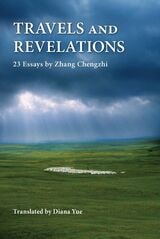
Travels and Revelations
23 Essays by Zhang ChengzhiChengzhi Zhang
Hong Kong University Press, 2026
This is an English translation of twenty-three essays written by the Chinese author Zhang Chengzhi, spanning over twenty years. The collection of prose covers Zhang’s memories when living in Inner Mongolia, his perception of the Western part of China, his views on several figures, and events in modern Chinese history and contemporary China.