Results by title
1566 books match the query 'Christianity' and 410 start with t

THE AMERICAN QUEST FOR THE PRIMITIVE CHURCH
Richard T. Hughes
University of Illinois Press, 1988
Taking Christianity to China
Alabama Missionaries in the Middle Kingdom, 1850–1950Wayne Flynt and Gerald W. Berkley
University of Alabama Press, 2017
A study of faith, cultural exchange, and the Alabama missionaries who helped shape the story of Christianity in modern China.
Beginning early in the 19th century, the American missionary movement made slow headway in China. Alabamians became part of that small beachhead. After 1900 both the money and personnel rapidly expanded, peaking in the early 1920s. By the 1930s many American denominations became confused and divided over the appropriateness of the missionary endeavor. Secular American intellectuals began to criticize missionaries as meddling do-gooders trying to impose American Evangelicalism on a proud, ancient culture.
By examining the lives of 47 Alabama missionaries who served in China between 1850 and 1950, Flynt and Berkley reach a different conclusion. Although Alabama missionaries initially fit the negative description of Americans trying to superimpose their own values and beliefs on "heathen," they quickly learned to respect Chinese civilization. The result was a new synthesis, neither entirely southern nor entirely Chinese. Although previous works focus on the failure of Christianity to change China, this book focuses on the degree to which their service in China changed Alabama missionaries. And the change was profound.
In their consideration of 47 missionaries from a single state--their call to missions, preparation for service in China, living, working, contacts back home, cultural clashes, political views, internal conflicts, and gender relations--the authors suggest that the efforts by Baptist, Methodist, and Presbyterian missionaries from Alabama were not the failure judged by many historians. In fact, the seeds sown in the hundred years before the Communist revolution in 1950 seem to be reaping a rich harvest in the declining years of the 20th century, when the number of Chinese Christians is estimated by some to be as high as one hundred million.
Taking Heaven by Storm
Methodism and the Rise of Popular Christianity in AmericaJohn H. Wigger
University of Illinois Press, 1998
Taking Heaven by Storm shows how Methodism fed into popular religious enthusiasm as well as the social and economic ambitions of the "middling people on the make"--skilled artisans, shopkeepers, small planters, petty merchants--who constituted its core. Wigger describes how the movement expanded its reach and fostered communal intimacy and "intemperate zeal" by means of an efficient system of itinerant and local preachers, class meetings, love feasts, quarterly meetings, and camp meetings. He also examines the important role of African Americans and women in early American Methodism and explains how the movement's willingness to accept impressions, dreams, and visions as evidence of the work and call of God circumvented conventional assumptions about education, social standing, gender, and race.
A pivotal text on the role of religion in American life, Taking Heaven by Storm shows how the enthusiastic, egalitarian, entrepreneurial, lay-oriented spirit of early American Methodism continues to shape popular religion today.
Teacher of the Logos
Essays on Origen's Rediscovered Last WorkJoseph W. Trigg
Catholic University of America Press, 2025
Teaching Other Voices
Women and Religion in Early Modern EuropeEdited by Margaret L. King and Albert Rabil Jr.
University of Chicago Press, 2007
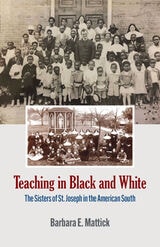
Teaching in Black and White
The Sisters of St. Joseph in the American SouthBarbara E. Mattick
Catholic University of America Press, 2022
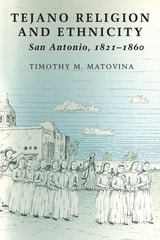
Tejano Religion and Ethnicity
San Antonio, 1821-1860By Timothy M. Matovina
University of Texas Press, 1995
While the flags of Spain, Mexico, the Republic of Texas, and the United States successively flew over San Antonio, its Tejano community (Texans of Spanish or Mexican descent) formed a distinct ethnic identity that persisted despite rapid social and cultural changes. In this pioneering study, Timothy Matovina explores the central role of Tejano Catholicism in forging this unique identity and in binding the community together.
The first book-length treatment of the historical role of religion in a Mexican-origin community in the United States, this study covers three distinct periods in the emergence of Tejano religious and ethnic identity: the Mexican period (1821-1836), the Texas Republic (1836-1845), and the first decade and a half after annexation into the United States (1845-1860). Matovina's research demonstrates how theories of unilateral assimilation are inadequate for understanding the Tejano community, especially in comparison with the experiences of European immigrants to the United States.
As residents of the southwestern United States continue to sort out the legacy of U.S. territorial expansion in the nineteenth century, studies like this one offer crucial understanding of the survival and resilience of Latino cultures in the United States. Tejano Religion and Ethnicity will be of interest to a broad popular and scholarly audience.
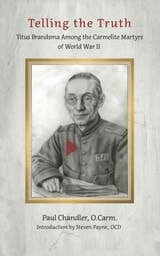
Telling the Truth
Titus Brandsma Among the Carmelite Martyrs of World War IIPaul Chandler
Catholic University of America Press, 2026
Templeton Plan
21 Steps to Personal Success and Real HappinessSir John Templeton
Templeton Press, 2013
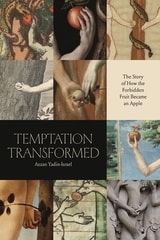
Temptation Transformed
The Story of How the Forbidden Fruit Became an AppleAzzan Yadin-Israel
University of Chicago Press, 2022
How did the apple, unmentioned by the Bible, become the dominant symbol of temptation, sin, and the Fall? Temptation Transformed pursues this mystery across art and religious history, uncovering where, when, and why the forbidden fruit became an apple.
Azzan Yadin-Israel reveals that Eden’s fruit, once thought to be a fig or a grape, first appears as an apple in twelfth-century French art. He then traces this image back to its source in medieval storytelling. Though scholars often blame theologians for the apple, accounts of the Fall written in commonly spoken languages—French, German, and English—influenced a broader audience than cloistered Latin commentators. Azzan Yadin-Israel shows that, over time, the words for “fruit” in these languages narrowed until an apple in the Garden became self-evident. A wide-ranging study of early Christian thought, Renaissance art, and medieval languages, Temptation Transformed offers an eye-opening revisionist history of a central religious icon.
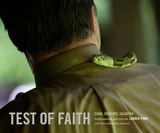
Test of Faith
Signs, Serpents, SalvationLauren Pond
Duke University Press, 2017
Who are the serpent handlers? What motivates them to continue their potentially lethal practices through the generations? Documentary photographer Lauren Pond traveled to West Virginia in search of answers to these questions. There she met Pastor Randy “Mack” Wolford, one of the best-known Signs Following preachers in the region, and spent the following year documenting Mack and his family. The course of her work changed dramatically in May 2012, when Mack, then forty-four years old, suffered a fatal rattlesnake bite during a worship service she attended. Pond photographed the events that followed and has continued her relationship with Mack’s family.
Test of Faith provides a deeply nuanced, personal look at serpent handling that not only invites greater understanding of a religious practice that has long faced derision and criticism; it also serves as a meditation on the photographic process, its ethics, and its capacity to generate empathy.
Published by Duke University Press and the Center for Documentary Studies at Duke University
Textual History and the Reception of Scripture in Early Christianity
Johannes de Vries
SBL Press, 2013
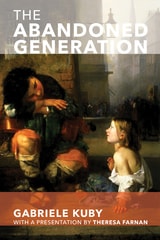
The Abandoned Generation
Gabriele Kuby
St. Augustine's Press, 2021
Reading Kuby’s analysis of cultural, sociological and biological data, the danger is clear and present. Yet Kuby asserts that, generally, our plight goes unnoticed and is veiled from our eyes. We need to see children for who and what they really are to us, to the family, and society at large. In the words of Fulton Sheen, “Children play a redeemer role in the family. The represent the victory of love over the insatiable ego. They symbolize the defeat of selfishness and the triumph of giving love.” Tragically, children are increasingly less a part of Western culture. This leaves the family, in the best case scenario, an artifact, and in the worst case, a casualty.
The topics addressed by Kuby cover towering influences in postmodern family life: Gender politics, the abortion mentality, daycare (“Socialism 2.0”), premature stress, rights of children, digital distractions, pornography, and divorce. A native German, Kuby’s work is, heartbreakingly, as relevant to American society as her own. This European perspective drives home the urgent need to recognize our situation as global and embedded, and one that requires more than political mobilization of mainstream efforts and responses. What really is good and normal, and how to we realize it? Listen to the heartstrings that yearn for true knowledge of oneself, Kuby implores, of God, and how in the surprise of God’s mercy we are guided through life. Kuby backs up this invitation to personal conversion and betterment with hard data.
The Adeodatus Handbook on Catholic Education and Culture
Volume 1: From Jesus the Teacher to St. John Henry NewmanAlex E. Lessard
Catholic University of America Press, 2025
The Age of the Gods
Christopher Dawson
Catholic University of America Press, 2012
The Aggada of the Bavli and Its Cultural World
Geoffrey Herman
SBL Press, 2018
Essays that explore the rich engagement of the Talmud with its cultural world
The Babylonian Talmud (Bavli), the great compilation of Jewish law edited in the late Sasanian era (sixth–seventh century CE), also incorporates a great deal of aggada, that is, nonlegal material, including interpretations of the Bible, stories, folk sayings, and prayers. The Talmud’s aggadic traditions often echo conversations with the surrounding cultures of the Persians, Eastern Christians, Manichaeans, Mandaeans, and the ancient Babylonians, and others. The essays in this volume analyze Bavli aggada to reveal this rich engagement of the Talmud with its cultural world.
Features:
- A detailed analysis of the different conceptions of martyrdom in the Talmud as opposed to the Eastern Christian martyr accounts
- Illustration of the complex ways rabbinic Judaism absorbed Christian and Zoroastrian theological ideas
- Demonstration of the presence of Persian-Zoroastrian royal and mythological motifs in talmudic sources
The Ambuiguity of Being
Lonergan and the Problems of the SupernaturalJonathan R. Heaps
Catholic University of America Press, 2024
The Anarchy of Black Religion
A Mystic SongJ. Kameron Carter
Duke University Press, 2023
The Ancient Martyrdom Accounts of Peter and Paul
David L. Eastman
SBL Press, 2015
New English translations based upon the most up-to-date critical editions
This book for the first time collects the various ancient accounts of the martydoms of Peter and Paul, which number more than a dozen, along with more than forty references to the martyrdoms from early Christian literature. At last a more complete picture of the traditions about the deaths of Peter and Paul is able to emerge.
Features:
- Greek, Latin, and Syriac accounts from antiquity translated into English
- Introductions and notes for each text
- Original texts are produced on facing pages for specialists
The Ancient Order of Things
Essays on the Mormon TempleChristian Larsen
Signature Books, 2019
Christian Larsen has assembled a collection of essays that illuminate the role of the temple and its rocky relationship with controversial subjects such as race and marriage. Some temples were built, abandoned, and given new life; others were either constructed for temporary use or never built at all. The nature of LDS temple ordinances is such that what LDS members deem sacred, others dismiss as secret.
The Angel and Beehive
THE MORMON STRUGGLE WITH ASSIMILATIONArmand L. Mauss
University of Illinois Press, 1994
This retrenchment among Mormons is the main theme of Mauss's book, which analyzes the last forty years of Mormon history from a sociological perspective. At the official ecclesiastical level, Mauss finds, the retrenchment can be seen in the greatly increased centralization of bureaucratic control and in renewed emphases on obedience to modern prophets, on genealogy and vicarious temple work, and on traditional family life; retrenchment is also apparent in extensive formal religious indoctrination by full-time professionals and in increased sophistication and intensity of proselytizing.
The Anthropology of Christianity
Fenella Cannell, ed.
Duke University Press, 2006
The contributors examine the contours of Christianity among diverse groups: Catholics in India, the Philippines, and Bolivia, and Seventh-Day Adventists in Madagascar; the Swedish branch of Word of Life, a charismatic church based in the United States; and Protestants in Amazonia, Melanesia, and Indonesia. Highlighting the wide variation in what it means to be Christian, the contributors reveal vastly different understandings and valuations of conversion, orthodoxy, Scripture, the inspired word, ritual, gifts, and the concept of heaven. In the process they bring to light how local Christian practices and beliefs are affected by encounters with colonialism and modernity, by the opposition between Catholicism and Protestantism, and by the proximity of other religions and belief systems. Together the contributors show that it not sufficient for anthropologists to assume that they know in advance what the Christian experience is; each local variation must be encountered on its own terms.
Contributors. Cecilia Busby, Fenella Cannell, Simon Coleman, Peter Gow, Olivia Harris, Webb Keane, Eva Keller, David Mosse, Danilyn Rutherford, Christina Toren, Harvey Whitehouse
The Antigay Agenda
Orthodox Vision and the Christian RightDidi Herman
University of Chicago Press, 1997
"A penetrating analysis of the Christian Right's antigay agenda and of how that agenda is derived from the Christian Right's peculiar vision of American history and the Christian faith."—Rev. Peter J. Gomes, Boston Book Review
"Public intellectualism at its best. . . . A comprehensive summary of the conservative Protestant worldview."—Michael Joseph Gross, Boston Phoenix Literary Section
"Presents considerable information not previously part of the nation's political discourse. . . . [Herman] dissects the Christian Right's antigay stance dispassionately giving, as it were, the devil his due. For anyone on either side of this passionate and important conflict, that is an impressive accomplishment."—Hastings Wyman, Jr., Washington Post Book World

The Apocalypse in Germany
Klaus Vondung & Translated by Stephen D. Ricks
University of Missouri Press, 2001
Originally published in German in 1988, The Apocalypse in Germany is now available for the first time in English. A fitting subject for the dawn of the new millennium, the apocalypse has intrigued humanity for the last two thousand years, serving as both a fascinating vision of redemption and a profound threat.
A cross-disciplinary study, The Apocalypse in Germany analyzes fundamental aspects of the apocalypse as a religious, political, and aesthetic phenomenon. Author Klaus Vondung draws from religious, philosophical, and political texts, as well as works of art and literature. Using classic Jewish and Christian apocalyptic texts as symbolic and historical paradigms, Vondung determines the structural characteristics and the typical images of the apocalyptic worldview. He clarifies the relationship between apocalyptic visions and utopian speculations and explores the question of whether modern apocalypses can be viewed as secularizations of the Judeo-Christian models.
Examining sources from the eighteenth century to the present, Vondung considers the origins of German nationalism, World War I, National Socialism, and the apocalyptic tendencies in Marxism as well as German literature—from the fin de siècle to postmodernism. His analysis of the existential dimension of the apocalypse explores the circumstances under which particular individuals become apocalyptic visionaries and explains why the apocalyptic tradition is so prevalent in Germany.
The Apocalypse in Germany offers an interdisciplinary perspective that will appeal to a broad audience. This book will also be of value to readers with an interest in German studies, as it clarifies the riddles of Germany's turbulent history and examines the profile of German culture, particularly in the past century.
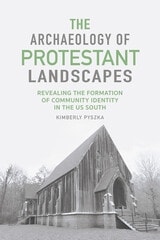
The Archaeology of Protestant Landscapes
Revealing the Formation of Community Identity in the US SouthKimberly Pyszka
University of Alabama Press, 2023
How religious institutions used landscapes and architecture to express their religious and social ideologies
The Archaeology of Protestant Landscapes focuses on three religious institutions in the US South in the eighteenth and nineteenth centuries: St. Paul’s Parish Church in coastal South Carolina, St. Luke’s Episcopal Church in central Alabama, and Cane Hill College in Northwest Arkansas. Drawing from archaeological surveys and excavations, artifact analysis, archival research, geophysical testing, and architectural information on religious structures, Kimberly Pyszka offers case studies of these institutions, which were located in developing communities that varied socially, politically, and economically.
Pyszka uses these case studies to demonstrate that select religious institutions used and modified natural landscape features to create cultural landscapes to express their ideology, identity, goals, and social, religious, and political power. She notes that where those structures were constructed, how they sat on the landscape, their architectural style, and their overall visual appearance were well-considered decisions made by religious leaders to benefit their organizations, communities, and, sometimes, themselves.
Pyszka also uses these case studies to highlight the social roles that religious organizations played in the development of communities. She points to landscape decisions—specifically to how the architectural design of religious structures was used, intentionally or not, to unite people, often those of differing religious backgrounds—as contributing to the creation of a common identity among people living in new and still-growing settlements, aiding in community development. This book contributes to the growing body of work within historical archaeology on churches, churchyards, and cemeteries and to the increasing awareness among archaeologists of how these sites contribute to questions of identity, consumerism, trade, and colonialism.
The Art of Preaching
A Theological and Practical PrimerDaniel Cardo
Catholic University of America Press, 2021
The Atheist's Bible
The Most Dangerous Book That Never ExistedGeorges Minois
University of Chicago Press, 2012
A comprehensive biography of the Treatise of the Three Impostors, a controversial nonexistent medieval book.
The Augustinian Person
Peter Burnell
Catholic University of America Press, 2005
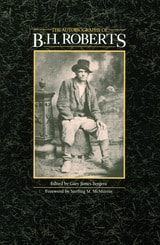
The Autobiography of B. H. Roberts
Gary J. Bergera
Signature Books, 1990
The story-book adventures of Roberts’s life made him a household name during his lifetime. His impassioned speeches incited riots, his reasoned writings defined and codified religious beliefs, and his candid disclosures of Utah history brought him both respect and censure. He is best remembered today as a largely self-educated intellectual. Several of his landmark published works are still in print more than fifty years after his death. His life story, told here in his own words and published for the first time, may well stand as his greatest, most enduring achievement.
For many today, B. H. Roberts is the quintessential Mormon intellectual of the twentieth century. But his theological writings came late in life and his historical views were more subjective than definitive. His autobiography, on the other hand, is a forthright account of the events and acquaintances that contributed to his unique faith and intellectual independence. Troubled by the memory of being abandoned as a child, and of the abusive care of quarrelling and intemperate foster-parents, he survived a stormy youth of poverty and neglect. He describes his nearly ten years as a missionary to the southern United States, his subsequent tenure as an outspoken member of the First Quorum of Seventy, his public opposition to women’s suffrage, and his controversial bid for the U.S. House of Representatives as a Mormon polygamist.
The Autobiography of the Rev. William Stevenson
Ted A. Campbell
Bridwell Press, 2024
The Babylonian Genesis
The Story of the CreationAlexander Heidel
University of Chicago Press, 1963
The Babylonian Genesis offers, in one compact, accessible volume, a complete translation of all the published cuneiform tablets of the various Babylonian creation stories, of both the Semitic Babylonian and the Sumerian material. Each creation account is preceded by a brief introduction from renowned scholar and translator Alexander Heidel dealing with the age and provenance of the tablets, the aim and purpose of the story, and everything else that a reader of any level of knowledge needs to understand these stories in their context. Also included is a translation and discussion of two Babylonian creation versions written in Greek. The final chapter presents a detailed examination of the Babylonian creation accounts in their relation to our Old Testament literature.
The Bible and the Latter-day Saint Tradition
Edited by Taylor G. Petrey, Cory Crawford, and Eric A. Eliason
University of Utah Press, 2022
Like other Christian denominations, the Church of Jesus Christ of Latter-day Saints (Mormons) has been engaged in the battle for the Bible since challenges to biblical authority began to exert significant influence in America toward the end of the nineteenth century. Other believing communities have responded with various reevaluations of the biblical text. Latter-day Saints have experimented with similar approaches, often taking liberal positions on biblical authority and conservative positions on history and authorship. However, Latter-day Saints accept additional scripture and embrace a theology notably distinct from traditional Christianity. Hence, they relate to the Bible differently from other Christians, creating gaps with mainstream biblical studies. This volume bridges that gap.
From comparing the Book of Mormon to the Bible or the Dead Sea Scrolls, to Mormon feminists’ views on the Gospels, this volume takes a comprehensive and inclusive approach to understanding Bible scholarship’s role in Mormon history, exploring these differences for both scholars and students. A diverse group of contributors presents an accessible resource to mediate between Latter-day Saint traditions and the broader context of biblical history, literature, and scholarship. Each essay provides a synopsis of relevant major scholarly views and delivers new insights into varied crosscurrents of biblical studies.
The Bible in the Sixteenth Century
David C. Steinmetz
Duke University Press, 1990
Contributors. Irena Backus, Guy Bedouelle, Kalman P. Bland, Kenneth G. Hagen, Scott H. Hagen, Scott H. Hendrix, R. Gerald Hobbs, Jean-Claude Margolin, H. C. Erik Midelfort, Richard A. Muller, John B. Payne, David C. Steinmetz
The Birth of Purgatory
Jacques Le Goff
University of Chicago Press, 1984
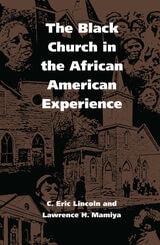
The Black Church in the African American Experience
C. Eric Lincoln and Lawrence H. Mamiya
Duke University Press, 1990
Drawing on interviews with more than 1,800 black clergy in both urban and rural settings, combined with a comprehensive historical overview of seven mainline black denominations, C. Eric Lincoln and Lawrence H. Mamiya present an analysis of the Black Church as it relates to the history of African Americans and to contemporary black culture. In examining both the internal structure of the Church and the reactions of the Church to external, societal changes, the authors provide important insights into the Church’s relationship to politics, economics, women, youth, and music.
Among other topics, Lincoln and Mamiya discuss the attitude of the clergy toward women pastors, the reaction of the Church to the civil rights movement, the attempts of the Church to involve young people, the impact of the black consciousness movement and Black Liberation Theology and clergy, and trends that will define the Black Church well into the next century.
This study is complete with a comprehensive bibliography of literature on the black experience in religion. Funding for the ten-year survey was made possible by the Lilly Endowment and the Ford Foundation.
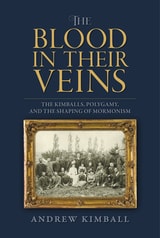
The Blood in Their Veins
The Kimballs, Polygamy, and the Shaping of MormonismKimball, Andrew
Signature Books, 2025
This meticulously documented, deeply engaging book represents a unique approach to Utah and Latter-day Saint history, drawing on previously untapped private letters and diaries of members of the large and widely known polygamist family of the prominent Latter-day Saint leader, Heber C. Kimball.
The story includes compelling accounts of Helen Kimball Whitney, who married Joseph Smith polygamously at fourteen and became, according to Emmeline B. Wells, “one of the best known and most estimable women of the Church,” and of her son Orson F. Whitney, who forswore his embrace of reincarnation only six years before his call as an apostle of the Church of Jesus Christ of Latter-day Saints. Another daughter, Alice Kimball Smith, married a man who was tracked to a brothel and arrested for armed robbery and assault in 1883, after which Alice turned to family friend and apostle Joseph F. Smith and became his fifth wife. Heber’s son, J. Golden Kimball, one of the most beloved and colorful personalities in Mormon and Utah history, is brought to life in another sketch. The Kimballs had to navigate the ticklish business of explaining or obfuscating polygamy to disapproving family in the East, including the extended claim by Heber’s wife Christeen to her New Jersey family that she had married a Mr. Chase monogamously. Two of Heber’s sons, both stake presidents, contemplated plural marriage in the first decade of the twentieth century, well after the church publicly disavowed the practice.
Additional light is shone on the now-defunct Latter-day Saint practices of adult adoptions and speaking in tongues, Mormon-settler relations with the Utes and Pahvants, the 1856 handcart rescue, the John Hyrum Koyle “Dream Mine,” the Jackson County, Missouri, Temple Lot suit of 1892, and federal pursuit of polygamists.
The Body in Mystery
The Political Theology of the Corpus Mysticum in the Literature of Reformation EnglandJennifer R. Rust
Northwestern University Press, 2013
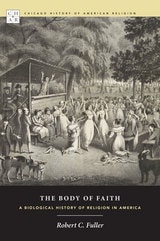
The Body of Faith
A Biological History of Religion in AmericaRobert C. Fuller
University of Chicago Press, 2013
The postmodern view that human experience is constructed by language and culture has informed historical narratives for decades. Yet newly emerging information about the biological body now makes it possible to supplement traditional scholarly models with insights about the bodily sources of human thought and experience.
The Body of Faith is the first account of American religious history to highlight the biological body. Robert C. Fuller brings a crucial new perspective to the study of American religion, showing that knowledge about the biological body deeply enriches how we explain dramatic episodes in American religious life. Fuller shows that the body’s genetically evolved systems—pain responses, sexual passion, and emotions like shame and fear—have persistently shaped the ways that Americans forge relationships with nature, to society, and to God.
The first new work to appear in the Chicago History of American Religion series in decades, The Body of Faith offers a truly interdisciplinary framework for explaining the richness, diversity, and endless creativity of American religious life.
The Book of Before and After
The Liturgy of the Hours of the Church of the EastAndrew Younan
Catholic University of America Press, 2025
The Book of Divine Works
Nathaniel M. St. Hildegard of Bingen
Catholic University of America Press, 2018

The Book of Hours of the Armenian Church Zamagirk
English Translation, Contexts and PerspectivesMichael Daniel Findikyan
Catholic University of America Press, 2027
The Book of Once-Mormon Women
Katie Stringham, Sue Johnson
Signature Books, 2026
The Book of Once-Mormon Women compiles the compelling voices of thirty women reflecting on their complex transitions away from Mormonism. Each piece is raw, heart-wrenching, and sublime. A compilation of expressive forms and perspectives, this book explores many issues faced by women in Mormonism: gender, race, agency, sexual orientation, faith, authority, and belonging. The authors add complexity—and answers—to the question: Why do people leave the Church of Jesus Christ of Latter-day Saints? The book also examines the myriad paths taken by the writers on their journey out of the faith—and the hope, peace, and restoration they’ve found beyond it.
Contributors: Tia Levings, Julie de Azevedo, Lindsay Hansen Park, Chelsea Homer, Gina Colvin-Ruwhiu, Celeste Davis, Sue Johnson, Alanna Argudo, Sara Bybee Fisk, Katie Stringham, Saane Siale, Samantha Shelley, Wendy Montgomery, Dee-Dee Darby-Duffin, Stephanie Brinkerhoff, Sarah Newcomb, Lili Ribeira, Mariama Nadworna, Jana Spangler, Megan McOmber, Meredith Peterson, Margaret M. Toscano, Sal Osborne, Lena Osborne, Amanda Scott, Ashmae Hoiland, Amy McPhie Allebest, Laurie Lee Hall, Sandra Violet, Claudine Foudray, Natasha Helfer, and Brittney Hartley
The Book of Queer Mormon Joy
Pray, Kerry Spencer
Signature Books, 2024
The story of queer Mormons is one that some might not expect to be joyful. The Church of Jesus Christ of Latter-day Saints has traditionally asserted that queerness is counter to God’s plan and that gender as determined at birth is eternal. Any marriage other than a monogamous pairing of male and female is “counterfeit.” So called “wickedness,” we are told, “never was happiness.”
But queer Mormons tell different stories—stories filled with joy. This collection includes essays by queer Mormons across the LGBTQ spectrum who, when they looked inside themselves, found divinity rather than sin. Stories by people who are made exactly as they are meant to be, and live accordingly.
Queer Mormons who feel forced out of the institutional church don’t typically find despair on the outside or abandonment by the divine. Instead, their lives are rich and beautiful—made all the more so by the struggle. The Book of Mormon tells us, “Men are that they might have joy.” The Book of Queer Mormon Joy affirms that trans, nonbinary, intersex, asexual, bisexual, polyamorous, and gay people have joy. Joy is for everyone.
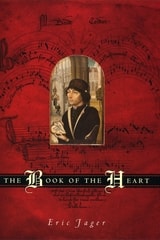
The Book of the Heart
Eric Jager
University of Chicago Press, 2000
Eric Jager traces the history and psychology of the self-as-text concept from antiquity to the modern day. He focuses especially on the Middle Ages, when the metaphor of a "book of the heart" modeled on the manuscript codex attained its most vivid expressions in literature and art. For instance, medieval saints' legends tell of martyrs whose hearts recorded divine inscriptions; lyrics and romances feature lovers whose hearts are inscribed with their passion; paintings depict hearts as books; and medieval scribes even produced manuscript codices shaped like hearts.
"The Book of the Heart provides a fresh perspective on the influence of the book as artifact on our language and culture. Reading this book broadens our appreciation of the relationship between things and ideas."—Henry Petroski, author of The Book on the Bookshelf
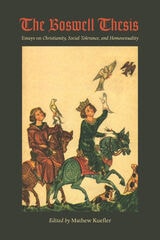
The Boswell Thesis
Essays on Christianity, Social Tolerance, and HomosexualityEdited by Mathew Kuefler
University of Chicago Press, 2005
The essays in this magnificent volume examine a variety of aspects of Boswell's interpretation of events in the development of sexuality from Classical Antiquity through the Middle Ages, including a Roman emperor's love letters to another man; suspicions of sodomy among medieval monks, knights, and crusaders; and the gender-bending visions of Christian saints and mystics. Also included are discussions of Boswell's career, including his influence among gay and lesbian Christians and his role in academic debates between essentialists and social constructionists.
Elegant and thought-provoking, this collection provides a fitting twenty-fifth anniversary tribute to the incalculable influence of Christianity, Social Tolerance, and Homosexuality and its author.
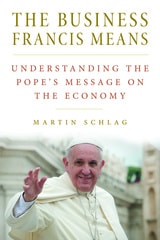
The Business Francis Means
Understanding the Pope's Message on the EconomyMartin Schlag
Catholic University of America Press, 2017
The Business Francis Means aims to break through these walls, showing that Pope Francis has something to say to all Christians. His message, taken as a whole, keeps us from dividing the “seamless garment” of Christ: he reminds the conservatives of the problems of inequality and poverty, and the liberals that social justice is not enough – the Church is the bride of Christ, not a social institution or an NGO.
Monsignor Martin Schlag summarizes and explains the message of Pope Francis on business and the economy in this compact volume. The Business Francis Means will be of great interest to the Catholic layperson, especially one involved in political or economic life.
The Case Against Christianity
Michael Martin
Temple University Press, 1993
In this systematic philosophical critique of the major tenets of Christianity, Michael Martin examines the semantic and epistemological bases of religious claims and beliefs. Beginning with a comparison and evaluation of the Apostles’ Creed, the Niceno-Chalcedonian Creed, and the Athanasian Creed, Martin discusses the principal theological, historical, and eschatological assumptions of Christianity. These include the historicity of Jesus, the Incarnation, the Second Coming, the Virgin Birth, the Resurrection, Salvation through faith in Jesus, and Jesus as a model of ethical behavior.
Until now, an adequately convincing criticism of Christianity did not exist. Martin’s use of historical evidence, textual analysis, and interpretations by philosophers and theologians provides the strongest case made to date against the rational justification of Christian doctrines.
The Catholic Church and the Genesis of the Arab-Israeli Conflict
Vatican Diplomacy and Interfaith Relations During the Interwar Period, 1918-1939Bernhard Kronegger
Catholic University of America Press, 2026
The Catholic Social Imagination
Activism and the Just Society in Mexico and the United StatesJoseph M. Palacios
University of Chicago Press, 2007
The reach of the Catholic Church is arguably greater than that of any other religion, extending across diverse political, ethnic, class, and cultural boundaries. But what is it about Catholicism that resonates so profoundly with followers who live under disparate conditions? What is it, for instance, that binds parishioners in America with those in Mexico? For Joseph M. Palacios, what unites Catholics is a sense of being Catholic—a social imagination that motivates them to promote justice and build a better world.
In The Catholic Social Imagination, Palacios gives readers a feeling for what it means to be Catholic and put one’s faith into action. Tracing the practices of a group of parishioners in Oakland, California, and another in Guadalajara, Mexico, Palacios reveals parallels—and contrasts—in the ways these ordinary Catholics receive and act on a church doctrine that emphasizes social justice. Whether they are building a supermarket for the low-income elderly or waging protests to promote school reform, these parishioners provide important insights into the construction of the Catholic social imagination. Throughout, Palacios also offers important new cultural and sociological interpretations of Catholic doctrine on issues such as poverty, civil and human rights, political participation, and the natural law.
The Catholic Tradition
Thomas Langan
University of Missouri Press, 1998
In his Tradition and Authenticity in the Search for Ecumenic Wisdom, Thomas Langan argued that the close interaction of traditions in today's society calls for methodical critical appropriation of the beliefs fostered by the principal traditions. He also promised to demonstrate by example how such appropriation could be accomplished. In The Catholic Tradition, Langan successfully fulfills that vow by showing how a tradition—the Catholic—has shaped his own outlook.
In this comprehensive study, Langan examines the history of the Catholic Church and the origins of its teachings since the Church's conception. Although committed to the Catholic religion, Langan does not obscure the Church's failings as he lays out the fundamentals of the Catholic faith.
He provides insight into the great Christological councils, discusses the differences in the spiritualities of East and West, and portrays the crucial roles that the pope and bishops played during the Middle Ages. He incorporates the thought of Augustine, Aquinas, and medieval Catholicism as he traces the rise and decline of Christian Europe, the great issues raised by the reform: priesthood, the Eucharist, spirituality, and Church structure.
Satan has no greater triumph, Langan asserts, than when Catholics, who are recipients of the Good News of God's universal love, allow selections from their tradition to be turned into sectarianism and ideology. This balanced history of the Church as human reality faces such perversions squarely. But despite betrayals by its own across the centuries, the Catholic tradition, with its origin at Sinai, remains the oldest and largest extant religious institution.
In a last section Langan offers a unique overview of the church's present situation, its strengths and weaknesses, the new movement and the challenge of the "new evangelization."