Results by title
255 books match the query 'Church of Jesus Christ of Latter-day Saints (Mormon)' and 51 start with t
The Ancient Order of Things
Essays on the Mormon TempleChristian Larsen
Signature Books, 2019
Christian Larsen has assembled a collection of essays that illuminate the role of the temple and its rocky relationship with controversial subjects such as race and marriage. Some temples were built, abandoned, and given new life; others were either constructed for temporary use or never built at all. The nature of LDS temple ordinances is such that what LDS members deem sacred, others dismiss as secret.
The Angel and Beehive
THE MORMON STRUGGLE WITH ASSIMILATIONArmand L. Mauss
University of Illinois Press, 1994
This retrenchment among Mormons is the main theme of Mauss's book, which analyzes the last forty years of Mormon history from a sociological perspective. At the official ecclesiastical level, Mauss finds, the retrenchment can be seen in the greatly increased centralization of bureaucratic control and in renewed emphases on obedience to modern prophets, on genealogy and vicarious temple work, and on traditional family life; retrenchment is also apparent in extensive formal religious indoctrination by full-time professionals and in increased sophistication and intensity of proselytizing.
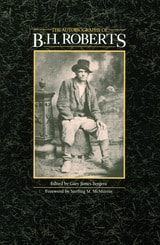
The Autobiography of B. H. Roberts
Gary J. Bergera
Signature Books, 1990
The story-book adventures of Roberts’s life made him a household name during his lifetime. His impassioned speeches incited riots, his reasoned writings defined and codified religious beliefs, and his candid disclosures of Utah history brought him both respect and censure. He is best remembered today as a largely self-educated intellectual. Several of his landmark published works are still in print more than fifty years after his death. His life story, told here in his own words and published for the first time, may well stand as his greatest, most enduring achievement.
For many today, B. H. Roberts is the quintessential Mormon intellectual of the twentieth century. But his theological writings came late in life and his historical views were more subjective than definitive. His autobiography, on the other hand, is a forthright account of the events and acquaintances that contributed to his unique faith and intellectual independence. Troubled by the memory of being abandoned as a child, and of the abusive care of quarrelling and intemperate foster-parents, he survived a stormy youth of poverty and neglect. He describes his nearly ten years as a missionary to the southern United States, his subsequent tenure as an outspoken member of the First Quorum of Seventy, his public opposition to women’s suffrage, and his controversial bid for the U.S. House of Representatives as a Mormon polygamist.
The Bible and the Latter-day Saint Tradition
Edited by Taylor G. Petrey, Cory Crawford, and Eric A. Eliason
University of Utah Press, 2022
Like other Christian denominations, the Church of Jesus Christ of Latter-day Saints (Mormons) has been engaged in the battle for the Bible since challenges to biblical authority began to exert significant influence in America toward the end of the nineteenth century. Other believing communities have responded with various reevaluations of the biblical text. Latter-day Saints have experimented with similar approaches, often taking liberal positions on biblical authority and conservative positions on history and authorship. However, Latter-day Saints accept additional scripture and embrace a theology notably distinct from traditional Christianity. Hence, they relate to the Bible differently from other Christians, creating gaps with mainstream biblical studies. This volume bridges that gap.
From comparing the Book of Mormon to the Bible or the Dead Sea Scrolls, to Mormon feminists’ views on the Gospels, this volume takes a comprehensive and inclusive approach to understanding Bible scholarship’s role in Mormon history, exploring these differences for both scholars and students. A diverse group of contributors presents an accessible resource to mediate between Latter-day Saint traditions and the broader context of biblical history, literature, and scholarship. Each essay provides a synopsis of relevant major scholarly views and delivers new insights into varied crosscurrents of biblical studies.
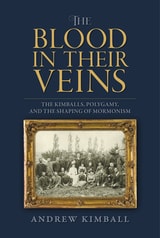
The Blood in Their Veins
The Kimballs, Polygamy, and the Shaping of MormonismKimball, Andrew
Signature Books, 2025
This meticulously documented, deeply engaging book represents a unique approach to Utah and Latter-day Saint history, drawing on previously untapped private letters and diaries of members of the large and widely known polygamist family of the prominent Latter-day Saint leader, Heber C. Kimball.
The story includes compelling accounts of Helen Kimball Whitney, who married Joseph Smith polygamously at fourteen and became, according to Emmeline B. Wells, “one of the best known and most estimable women of the Church,” and of her son Orson F. Whitney, who forswore his embrace of reincarnation only six years before his call as an apostle of the Church of Jesus Christ of Latter-day Saints. Another daughter, Alice Kimball Smith, married a man who was tracked to a brothel and arrested for armed robbery and assault in 1883, after which Alice turned to family friend and apostle Joseph F. Smith and became his fifth wife. Heber’s son, J. Golden Kimball, one of the most beloved and colorful personalities in Mormon and Utah history, is brought to life in another sketch. The Kimballs had to navigate the ticklish business of explaining or obfuscating polygamy to disapproving family in the East, including the extended claim by Heber’s wife Christeen to her New Jersey family that she had married a Mr. Chase monogamously. Two of Heber’s sons, both stake presidents, contemplated plural marriage in the first decade of the twentieth century, well after the church publicly disavowed the practice.
Additional light is shone on the now-defunct Latter-day Saint practices of adult adoptions and speaking in tongues, Mormon-settler relations with the Utes and Pahvants, the 1856 handcart rescue, the John Hyrum Koyle “Dream Mine,” the Jackson County, Missouri, Temple Lot suit of 1892, and federal pursuit of polygamists.
The Book of Once-Mormon Women
Katie Stringham, Sue Johnson
Signature Books, 2026
The Book of Once-Mormon Women compiles the compelling voices of thirty women reflecting on their complex transitions away from Mormonism. Each piece is raw, heart-wrenching, and sublime. A compilation of expressive forms and perspectives, this book explores many issues faced by women in Mormonism: gender, race, agency, sexual orientation, faith, authority, and belonging. The authors add complexity—and answers—to the question: Why do people leave the Church of Jesus Christ of Latter-day Saints? The book also examines the myriad paths taken by the writers on their journey out of the faith—and the hope, peace, and restoration they’ve found beyond it.
Contributors: Tia Levings, Julie de Azevedo, Lindsay Hansen Park, Chelsea Homer, Gina Colvin-Ruwhiu, Celeste Davis, Sue Johnson, Alanna Argudo, Sara Bybee Fisk, Katie Stringham, Saane Siale, Samantha Shelley, Wendy Montgomery, Dee-Dee Darby-Duffin, Stephanie Brinkerhoff, Sarah Newcomb, Lili Ribeira, Mariama Nadworna, Jana Spangler, Megan McOmber, Meredith Peterson, Margaret M. Toscano, Sal Osborne, Lena Osborne, Amanda Scott, Ashmae Hoiland, Amy McPhie Allebest, Laurie Lee Hall, Sandra Violet, Claudine Foudray, Natasha Helfer, and Brittney Hartley
The Book of Queer Mormon Joy
Pray, Kerry Spencer
Signature Books, 2024
The story of queer Mormons is one that some might not expect to be joyful. The Church of Jesus Christ of Latter-day Saints has traditionally asserted that queerness is counter to God’s plan and that gender as determined at birth is eternal. Any marriage other than a monogamous pairing of male and female is “counterfeit.” So called “wickedness,” we are told, “never was happiness.”
But queer Mormons tell different stories—stories filled with joy. This collection includes essays by queer Mormons across the LGBTQ spectrum who, when they looked inside themselves, found divinity rather than sin. Stories by people who are made exactly as they are meant to be, and live accordingly.
Queer Mormons who feel forced out of the institutional church don’t typically find despair on the outside or abandonment by the divine. Instead, their lives are rich and beautiful—made all the more so by the struggle. The Book of Mormon tells us, “Men are that they might have joy.” The Book of Queer Mormon Joy affirms that trans, nonbinary, intersex, asexual, bisexual, polyamorous, and gay people have joy. Joy is for everyone.
The Council of Fifty
A Documentary HistoryJedediah S. Rogers
Signature Books, 2014
One member downplayed the significance of this secret legislative body in 1849 as “nothing but a debating School.” On the contrary, a typical meeting included decisions regarding irrigation, fencing, and adobe housing, after which the group sang a song written by Parley P. Pratt: “Come ye sons of doubt and wonder; Indian, Moslem, Greek or Jew; … Be to all a friend and brother; Peace on Earth, good will to men.” Two weeks later, the council called for “blood to flow” to enforce its laws.
As the nineteenth century waned and the LDS Church moved toward the American mainstream, ending its emphasis on the imminent End of Days, there was no longer a need for a Church-managed municipal group destined to become the millennial world government. The council became irrelevant but survives today as a historical artifact available in fragmented documentary pieces which are presented here for the first time.
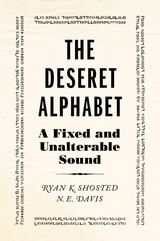
The Deseret Alphabet
A Fixed and Unalterable SoundRyan K. Shosted and N. E. Davis
University of Illinois Press, 2026
Shosted and Davis draw on a wide range of sources, including previously unpublished archival material, to trace the alphabet’s roots in Joseph Smith’s esoteric translations and its role in shaping Latter-day Saint identity. Their account brings together theology, linguistics, and culture. As they show, the Deseret Alphabet remains relevant as a living artifact of a religion wrestling with its visionary origins and the divine potential of words.
In-depth and up to date, The Deseret Alphabet traces the script’s creation, use, and legacy across Latter-day Saint history.
The Diaries of Carol Lynn Pearson—Mormon Author, Feminist, and Activist
Volume 1: 1956–1990Pearson, Carol Lynn
Signature Books, 2025
“I feel somehow that of all the writing I am doing, my diary is the most important.” So wrote the beloved and bestselling author, poet, and playwright Carol Lynn Pearson in her 1979 diary. Several years before, she recorded, “I feel the imperative of history. . . . Add that to my being a household word to many and I cannot escape the feeling that in many years there might be a number of people interested in these pages.” That time has now come.
Unbeknownst to almost everyone but herself, Pearson kept a near-daily diary since she was a teenager, recording her remarkable story in the context of twentieth- and twenty-first-century Mormon America. In this first of a four-volume series, Pearson chronicles her love for her church but also her troubling experiences and concerns with its patriarchy, historic doctrine of polygamy, omission of a feminine divine, and homophobia. Readers will rejoice with her as her first book of poetry, Beginnings, sells an astonishing 150,000+ copies and puts her on the map in the 1960s, empathize with her as she watches her church help kill the Equal Rights Amendment in the 1970s, and mourn with her as her mixed-orientation marriage ends and she cares for her former husband in her home as he dies of AIDS in the 1980s. The sensitive-girl-turned-strong-woman who emerges in these diaries insists that we move from patriarchy into partnership, change our destructive policies towards Queer people, and invite God the Mother back into our heavenly family.
The Diaries of Carol Lynn Pearson—Mormon Author, Feminist, and Activist
Volume 2: 1990–2002Pearson, Carol Lynn
Signature Books, 2026
Of these years of her life, poet, writer, and feminist Carol Lynn Pearson says, “The plot thickens, as all good plots do. My life and your life—if we are brave enough—move into areas that we had not anticipated. We feel sometimes that we want to run back to safer ground, but life has decided otherwise and so we take those next steps. Volume two of my diaries gives us a closeup of the years 1990 to 2002, bringing us an abundance of both joy and distress.”
Throughout the 1990s, Pearson records and laments her church’s efforts to punish scholars and activists while celebrating the success of her books and one-woman play, Mother Wove the Morning. Along the way, she comforts the suffering, endures terrible personal loss, and witnesses the fall of the Twin Towers on 9/11. “Bless everyone who fights for what is right,” she writes. Few have fought harder than Carol Lynn Pearson.
The Diaries of Carol Lynn Pearson—Mormon Author, Feminist, and Activist
Volume 3: 2003–2014Pearson, Carol Lynn
Signature Books, 2026
Proposition 8, the 2008 California ballot initiative that overturned the state’s legalization of same-sex marriage, looms large in volume 3 of Carol Lynn Pearson’s diaries. The intense lobbying in favor of the measure by the Church of Jesus Christ of Latter-day Saints caused widespread protests against the church and rifts within congregations, families, and friendships that felt like they might never heal. Pearson documented it all.
When she learned through friends close to church leaders that members of the First Presidency and Quorum of Twelve Apostles were shocked by the backlash, she wondered, “How do 15 prophets, seers, and revelators not see this coming when the rest of us did?”
A lifelong feminist, Pearson’s diaries also reveal her concerns for gender equality. She chronicles her observations of Ordain Women, a movement by a group of Latter-day Saint feminists who lobbied to change the church’s all-male priesthood. At the end of this volume, Pearson takes on yet another issue: the ongoing Mormon doctrine that polygamy is practiced in the eternities. Pearson heard from thousands of women who feared that they would be forced to share their husbands in the afterlife. The pain of these women propelled her forward into her next book project, challenging the doctrine of “eternal polygamy.”
Even as she faced her own struggles, Pearson buoyed up those around her. She took phone calls, answered letters, and comforted visitors who were hurting because of the church’s policies. She was, for many, a symbol of hope.
The Diaries of Carol Lynn Pearson—Mormon Author, Feminist, and Activist
Volume 4: 2014–2024Pearson, Carol Lynn
Signature Books, 2026
This fourth and final volume of The Diaries of Carol Lynn Pearson is full of contradictions as it covers turbulent world events and intimate details in her life. Pearson remains a beacon of light and hope for many, even as she struggles with her own sorrows.
She embarks on a new project that consumes her: the Latter-day Saint doctrine that polygamy will exist in the afterlife. Pearson also continues to document contemporaneous events in the modern history of the Church of Jesus Christ of Latter-day Saints, including the church’s November 2015 policy that discriminated against LGBTQ+ members and their children. She has both a grassroots perspective as a member of a California congregation and special insight into the decisions of LDS leadership, thanks to friends who keep her informed of what’s happening at the highest levels of the church.
Through it all, Pearson mourns when she says goodbye to longtime friends who die. In July 2026, after she completed her diary project, death finally came for Carol Lynn Pearson after 86 years. Her unique voice cannot be replicated.
The Earth Will Appear as the Garden of Eden
Essays on Mormon Environmental HistoryJedediah S. Rogers and Matthew C. Godfrey
University of Utah Press, 2018
Since Joseph Smith’s revelations, Mormons have interacted with nature in significant ways—whether perceiving it as a place to find God, uncorrupted spaces in which to build communities to usher in the Second Coming, wildness needing domestication and control, or a world brimming with natural resources to ensure economic well-being. The essays in this volume—written by leading scholars in both environmental history and Mormon history—explore how nature has influenced Mormon beliefs and how these beliefs inform Mormons’ encounters with nature. Introducing overarching environmental ideas, contributors examine specific aspects of nature and Mormon theology to glean new insights into the Mormon experience.
The Essential Joseph Smith
Marvin S. Hill
Signature Books, 1995
Previous, popular editions of Smith’s speeches and writings have edited out the extemporaneous complexities, as well as any deviations from present-day doctrines. Recent academic publications, for their part, have too often camouflaged the text in scholarly apparata. By contrast, this volume brings together a sampling of the prophet’s thinking from New York to Illinois in a complete, unabridged form, utilizing the earliest known sources, without excessive footnoting or commentary. No attempt is made to harmonize disparate, conflicting ideas. Readers can trace the developing, revelatory unfolding of ideas for themselves. They can also enjoy the text without reference to any interpretative agenda. In other words, The Essential Joseph Smith is readable and reliable. Bracketed material and punctuation are added where needed, but the text otherwise speaks for itself. These are Joseph Smith’s own words, his most essential messages.
The J. Golden Kimball Stories
Eric A. Eliason
University of Illinois Press, 2007
In The J. Golden Kimball Stories, beloved and iconoclastic Mormon humorist J. Golden Kimball (1853-1938) speaks on death, marriage, love, hell, God, and everything in between. Compiled by Eric A. Eliason from previously unpublished archival resources, this collection of stories, anecdotes, and jokes captures the irreverent comedy and independent thinking that made Kimball so beloved both in and out of his Mormon community.
Arranged thematically and framed by short contextual introductions, each chapter presents a colorful portrait of Kimball on topics including tricks, cussing, ministering, chastising, and repentance. A comprehensive introductory essay places Kimball in the context of Mormon history and folklore scholarship.
The LDS Gospel Topics Series
A Scholarly EngagementMatthew L. Harris and Newell G. Bringhurst
Signature Books, 2020
The Last Called Mormon Colonization
Polygamy, Kinship, and Wealth in Wyoming's Bighorn BasinJohn Gary Maxwell
University of Utah Press, 2021
The LDS Church officially abandoned polygamy in 1890, but evidence that the practice was still tolerated (if not officially sanctioned) by the church circulated widely, resulting in intense investigations by the U.S. Senate. In 1896 Abraham Owen Woodruff, a rising star in LDS leadership and an ardent believer in polygamy, was appointed to head the LDS Colonization Company. Maxwell explores whether under Woodruff’s leadership the Bighorn Basin colony was intended as a means to insure the secret survival of polygamy and if his untimely death in 1904, together with the excommunication of two equally dedicated proponents of polygamy—Apostles John Whitaker Taylor and Matthias Foss Cowley—led to its collapse.
Maxwell also details how Mormon settlers in Wyoming struggled with finance, irrigation, and farming and how they brought the same violence to indigenous peoples over land and other rights as did non-Mormons.
The 1900 Bighorn Basin colonization provides an early twentieth-century example of a Mormon syndicate operating at the intersection of religious conformity, polygamy, nepotism, kinship, corporate business ventures, wealth, and high priesthood status. Maxwell offers evidence that although in many ways the Bighorn Basin colonization failed, Owen Woodruff’s prophecy remains unbroken: “No year will ever pass, from now until the coming of the Savior, when children will not be born in plural marriage.”
The Last Pioneer
John Taylor, A Mormon ProphetTaylor, Samuel W.
Signature Books, 2026
Mormon prophet John Taylor’s life is usually recounted as a series of anecdotes: singing hymns in Carthage Jail before a mob assassinated Joseph and Hyrum Smith, Taylor’s life spared when, according to myth, his pocketwatch stopped a bullet; his practice of polygamy, including taking a wife fifty years his junior while on the run as a fugitive from federal marshals; and his 1886 revelation that said God would not revoke the law of plural marriage, “for it is everlasting,” a revelation whose authenticity was questioned by the Church of Jesus Christ of Latter-day Saints for over a century but became the foundational text for breakaway sects continuing the practice of polygamy. Yet there was more to Taylor than his role in the martyrdom, his plural wives, his clashes with the federal government, and the legacy of fundamentalist Mormonism.
Taylor spent his first two decades in his home country of England before immigrating to Canada. His first wife, Leonora, was initially more interested when missionaries knocked on their door. But once he committed to the church, John Taylor was unflappable in his faith and zealous in his dedication. The Taylors moved from Toronto to Ohio, then to Missouri, and finally to Illinois as they followed their faith and their prophet Joseph Smith. John became an apostle in 1838 and a publisher thereafter, printing church newspapers. He followed Brigham Young to the Salt Lake Valley, where he became a prominent church and political leader for decades before finally ascending to the head of the faith in 1880.
In this timeless biography, Samuel W. Taylor weaves the threads of his grandfather’s life into a rich tapestry. Drawing on letters, speeches, diaries, and reminiscences, a well-rounded and riveting portrait of the third Mormon prophet comes into focus. A professional writer by trade, Samuel Taylor was uniquely suited to tell this story—and what a story it is.

The Last Pioneer
John Taylor, a Mormon ProphetSamuel W. Taylor
Signature Books, 1999
As half the church fell away in Ohio, the Taylors escaped to Missouri with the faithful, just in time for the 1838 Mormon War. John’s role became that of an advocate with Congress—to convince them that it was the non-Mormons who had sacked the county seat and burned their own homes, for instance. As a literary experience, this was good preparation for later editorships of church newspapers in Illinois, New York, and Liverpool.
From his personal letters and speeches, and from the diaries and reminiscences of associates, vivid images of Taylor’s life appear: his children crossing the Missouri River on the backs of oxen “bulls”; one of his ten plural wives packing a piano instead of a cookstove for the trip and then later regretting it; and Native Americans teaching him how to burn a cricket-infested field, gather the roasted insects, and grind the carcasses into flour.
Taylor’s eventual tenure as church president was spent “on the dodge” from federal marshals, and prior to that he often lived out of a suitcase, rotating from one of his sixteen families to the next. Among his greatest achievements was the settlement of as much territory as was colonized by his more famous predecessor, Brigham Young. Taylor was also a visionary man. His personal spirituality led the church through one of its most turbulent times; his revelations later inspired the Mormon fundamentalist schism, as well. This controversy, mingled with the drama of internecine power struggles and interpersonal conflict, makes The Last Pioneer suspenseful and largely unforgettable.

The Millenarian World of Early Mormonism
Grant Underwood
University of Illinois Press, 1994
"A model of first-rate scholarship and balanced interpretation; it has much to say not only to those interested in Mormon history but also to anyone seeking to understand the role of millenarian ideas in the American experience." -- Michael Barkun, Journal of American History
"No serious student of early Mormon history should fail to read this book." -- L. B. Tipson, Choice
"A signal contribution to Mormon studies. Anyone who wishes to explore the core of the Mormon identity in the nineteenth century will have to come to terms with this book." -- Richard T. Hughes, author of Reviving the Ancient Faith: The Story of Churches of Christ in America
The Mormon Church and Blacks
A Documentary HistoryEdited by Matthew L. Harris and Newell G. Bringhurst
University of Illinois Press, 2015
The Mormon Hierarchy
Extensions of PowerD. Michael Quinn
Signature Books, 1997
But by interviewing former church aides, examining hundreds of diaries, and drawing from his own past experience as an insider within the Latter-day Saint historical department, D. Michael Quinn presents a fuller view. His extensive research documents how the governing apostles, seventies, and presiding bishops are likely to be at loggerheads, as much as united. These strong-willed, independent men–like directors of a large corporation or supreme court justices–lobby among their colleagues, forge alliances, out-maneuver opponents, and broker compromises.
There is more: clandestine political activities, investigative and punitive actions by church security forces, personal “loans” from church coffers (later written off as bad debts), and other privileged power-vested activities. Quinn considers the changing role and attitude of the leadership toward visionary experiences, the momentous events which have shaped quorum protocol and doctrine, and day-to-day bureaucratic intrigue from the time of Brigham Young to the dawn of the twenty-first century.
The hierarchy seems at root well-intentioned and even at times aggressive in fulfilling its stated responsibility, which is to expedite the Second Coming. Where they have become convinced that God has spoken, they have set aside personal differences, offered unqualified support, and spoken with a unified voice. This potential for change, when coupled with the tempering effect of competing viewpoints, is something Quinn finds encouraging about Mormonism. But one should not assume that these men are infallible or work in anything approaching uninterrupted unanimity.
The Mormon Hierarchy
Origins of PowerD. Michael Quinn
Signature Books, 1994
Not until seven years later did Mormons first learn that authority had been restored by angels or of the need for a hierarchy mirroring the Pauline model. That same year (1835) a Quorum of Twelve Apostles was organized, but their jurisdiction was limited to areas outside established stakes (dioceses). Stakes were led by a president, who oversaw spiritual development, and by a bishop, who supervised temporal needs.
At Smith’s martyrdom in 1844, the church had five leading quorums of authority. The most obvious successor to Smith, Illinois stake president William Marks, opposed the secret rites of polygamy, anointing, endowments, and the clandestine political activity that had characterized the church in Illinois. The secret Council of Fifty had recently ordained Smith as King on Earth and sent ambassadors abroad to form alliances against the United States.
The majority of church members knew nothing of these developments, but they followed Brigham Young, head of the Quorum of the Twelve, who spoke forcefully and moved decisively to eliminate contenders for the presidency. He continued to build on Smith’s political and doctrinal innovations and social stratification. Young’s twentieth-century legacy is a well-defined structure without the charismatic spontaneity or egalitarian chaos of the early church.
Historian D. Michael Quinn examines the contradictions and confusion of the first two tumultuous decades of LDS history. He demonstrates how events and doctrines were silently, retroactively inserted into the published form of scriptures and records to smooth out the stormy, haphazard development. The bureaucratization of Mormonism was inevitable, but the manner in which it occurred was unpredictable and will be, for readers, fascinating.

The Mormon History Association’s Tanner Lectures
The First Twenty YearsEdited by Dean L. May and Reid L. Neilsonwith Richard Lyman Bushman, Jan Shipps, and Thomas G. Alexander
University of Illinois Press, 2000
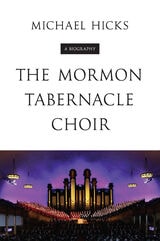
The Mormon Tabernacle Choir
A BiographyMichael Hicks
University of Illinois Press, 2015
Drawing on decades of work observing and researching the Mormon Tabernacle Choir, Michael Hicks examines the personalities, decisions, and controversies that shaped "America's choir." Here is the miraculous story behind the Tabernacle's world-famous acoustics, the anti-Mormonism that greeted early tours, the clashes with Church leaders over repertoire and presentation, the radio-driven boom in popularity, the competing visions of rival conductors, and the Choir's aspiration to be accepted within classical music even as Mormons sought acceptance within American culture at large. Everything from Billboard hits to TV appearances to White House performances paved the way for Mormonism's crossover triumph. Yet, as Hicks shows, such success raised fundamental concerns regarding the Choir's mission, functions, and image.
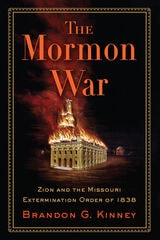
The Mormon War
Zion and the Missouri Extermination Order of 1838Brandon G. Kinney
Westholme Publishing, 2011
How the Violent Expulsion of the Mormons from Missouri Changed the History of America and the West
In 1831, Joseph Smith, Jr., the founder of the Church of Christ—later to be renamed the Church of Jesus Christ of Latter Day Saints—revealed that Zion, or “New Jerusalem,” was to be established in Jackson County, Missouri. Smith sent some of his followers to begin the settlement, but they were soon expelled by locals who were suspicious of their religion and their abolitionist sympathies. Smith led an expedition to regain the settlement, but was unsuccessful. Seven years later, in January 1838, Smith fled to Missouri from Ohio to avoid a warrant for his arrest, and joined the Mormon community in the town of Far West, which became the new Zion. The same prejudices recurred and the Mormons found themselves subject to attacks from non-Mormons, including attempts to prevent them from voting. Despite his abhorrence of violence, Smith decided that it was necessary for Mormons to defend themselves, which resulted in a short and sharp conflict known as the Mormon War. A covert Mormon paramilitary unit, the Danites, was formed to pillage non- Mormon towns, while angry rhetoric rose from both sides. After the Missouri state militia was attacked at the Battle of Crooked River, Missouri governor Liburn William Boggs issued Executive Order 44, which called for Mormons to be “exterminated or driven from the State.” Non-Mormons responded by attacking a Mormon settlement at Haun’s Mill, killing men and boys and firing on the women. Following this massacre, the state militia surrounded Far West and arrested Smith and other Mormon leaders. Smith was tried for treason and narrowly avoided execution, but was allowed to go and join the rest of his followers who were forced from Missouri to Illinois, where they founded their next major town, Nauvoo. There, Smith would be murdered and the church would split into several factions, with Brigham Young leading the movement’s largest group to Utah.
In The Mormon War: Zion and the Missouri Extermination Order of 1838, Brandon G. Kinney unravels the complex series of events that led to a religious and ideological war of both blood and words. The Mormon War not only challenged the protection afforded by the First Amendment, it foreshadowed the partisan violence over slavery and states’ rights that would erupt across Missouri and Kansas. The war also fractured Smith’s Church and led ultimately to the unexpected settlement of a vast area of the West as a Mormon homeland. By tracing the life of Joseph Smith, Jr. and his quest for Zion, the author reveals that the religion he founded was destined for conflict—both internal and external—as long as he remained its leader.
The Mysteries of Godliness
A History of Mormon Temple WorshipDavid J. Buerger
Signature Books, 2002
For instance, David Buerger traces the evolution of the initiatory rites, including the New Testament-like foot washings, which originated in the Ohio period of Mormon history; the more elaborate Old Testament-like washings and anointings, which began in Illinois and were performed in large bathtubs, with oil poured over the initiate’s head; and the vestigial contemporary sprinkling and dabbing, which were begun in Utah. He shows why the dramatic portions of the ceremony blend anachronistic events—an innovation foreign to the original drama.
Buerger addresses the abandonment of the adoption sealing, which once linked unrelated families, and the near-disappearance of the second anointing, which is the crowning ordinance of the temple. He notes other recent changes as well. Biblical models, Masonic prototypes, folk beliefs, and frontier resourcefulness all went into the creation of this highest form of Mormon Temple worship. Diary entries and other primary sources document its evolution.
The New Mormon History
Revisionist Essays on the PastD. Michael Quinn
Signature Books, 1992
In this collection, D. Michael Quinn has selected fifteen essays which demonstrate the methods of this new history. Contributors include Thomas G. Alexander, James B. Allen, Leonard J. Arrington, Maureen Ursenbach Beecher, Eugene E. Campbell, Kenneth L. Cannon II, Mario S. DePillis, Robert B. Flanders, Klaus J. Hansen, William G. Hartley, Stanley S. Ivins, Dean L. May, Linda King Newell, B. H. Roberts, Jan Shipps, and Ronald W. Walker. Participants offer new ideas and give readers the opportunity to determine for themselves the relative success of these approaches by presenting examples. The collection demonstrates areas of interpretation that may be considered revisionist as well.
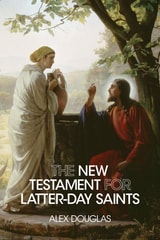
The New Testament for Latter-day Saints
Douglas, Alex
Signature Books, 2026
In The New Testament for Latter-day Saints, Alex Douglas introduces Latter-day Saint readers to the basics of modern New Testament scholarship. Douglas answers the question, “What did the authors of the Bible believe about Jesus?” elucidating the striking diversity in how Jesus is portrayed in the New Testament. It ranges from authors who saw Jesus as teacher and prophet, to those who worshipped him as God incarnate. Douglas shows how the Bible we have today is a product of these competing voices, each shaped by conflicts within early Christianity. The book also examines how key Christian ideas—such as sin, salvation, priesthood authority, and the role of women—developed as part of this conflict. Drawing on modern biblical scholarship, it places these portrayals alongside Latter-day Saint beliefs, helping readers see points of alignment and tension.
Ultimately, the book invites readers to wrestle with what it means to see revelation as a process rather than a one-time event. Readers will walk away seeing the New Testament in an entirely different light, as a record of that process.
The New Testament for Latter-day Saints
Douglas, Alex
Signature Books, 2026
In The New Testament for Latter-day Saints, Alex Douglas introduces Latter-day Saint readers to the basics of modern New Testament scholarship. Douglas answers the question, “What did the authors of the Bible believe about Jesus?” elucidating the striking diversity in how Jesus is portrayed in the New Testament. It ranges from authors who saw Jesus as teacher and prophet, to those who worshipped him as God incarnate. Douglas shows how the Bible we have today is a product of these competing voices, each shaped by conflicts within early Christianity. The book also examines how key Christian ideas—such as sin, salvation, priesthood authority, and the role of women—developed as part of this conflict. Drawing on modern biblical scholarship, it places these portrayals alongside Latter-day Saint beliefs, helping readers see points of alignment and tension.
Ultimately, the book invites readers to wrestle with what it means to see revelation as a process rather than a one-time event. Readers will walk away seeing the New Testament in an entirely different light, as a record of that process.
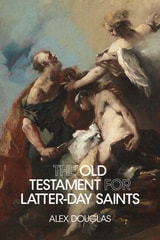
The Old Testament for Latter-day Saints
Douglas, Alex
Signature Books, 2023
This book also explores the intriguing ways in which Latter-day Saints have interpreted and engaged with this ancient text and the author navigates their diverse interpretations of it. He examines how individuals have alternately embraced the Old Testament as myth or history, law or legend, wise counsel or sacred scripture. He shows where many traditional interpretations have come from, and offers many ways to encourage a more nuanced understanding of the text.
Drawing from a wealth of scholarly research and his own unique perspective, Douglas presents a compelling and multidimensional analysis of the Old Testament. However readers approach the text, this book sheds light on the complex nature of the Old Testament and its enduring relevance to the Latter-day Saint tradition.
The Old Testament for Latter-day Saints
Douglas, Alex
Signature Books, 2024
This book also explores the intriguing ways in which Latter-day Saints have interpreted and engaged with this ancient text and the author navigates their diverse interpretations of it. He examines how individuals have alternately embraced the Old Testament as myth or history, law or legend, wise counsel or sacred scripture. He shows where many traditional interpretations have come from, and offers many ways to encourage a more nuanced understanding of the text.
Drawing from a wealth of scholarly research and his own unique perspective, Douglas presents a compelling and multidimensional analysis of the Old Testament. However readers approach the text, this book sheds light on the complex nature of the Old Testament and its enduring relevance to the Latter-day Saint tradition.
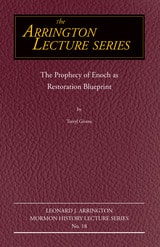
The Prophecy of Enoch as Restoration Blueprint
Terryl Givens
Utah State University Press, 2013
Volume 18, The Leonard J. Arrington Lecture Series
The Special Collections and Archives of Utah State University's Merrill-Cazier Library houses the personal and historical collection of Leonard J. Arrington, renowned scholar of the American West.
The Leonard J. Arrington Mormon History Lecture annually hosts the presentation of current research by a leading scholar. Among the lecturers have been such notable historians as Thomas G. Alexander, Richard L. Bushman, Sarah Barringer Gordon, Howard Lamar, Jan Shipps, Donald Worster, and Pulitzer Prize-winner Laurel Thatcher Ulrich.
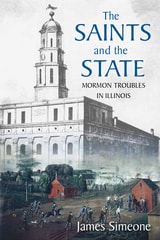
The Saints and the State
The Mormon Troubles in IllinoisJames Simeone
Ohio University Press, 2021
A compelling history of the 1846 Mormon expulsion from Illinois that exemplifies the limits of American democracy and religious tolerance.
When members of the Church of Jesus Christ of Latter-day Saints (known as Mormons) settled in Illinois in 1839, they had been persecuted for their beliefs from Ohio to Missouri. Illinoisans viewed themselves as religiously tolerant egalitarians and initially welcomed the Mormons to their state. However, non-Mormon locals who valued competitive individualism perceived the saints‘ western Illinois settlement, Nauvoo, as a theocracy with too much political power. Amid escalating tensions in 1844, anti-Mormon vigilantes assassinated church founder Joseph Smith and his brother Hyrum. Two years later, the state expelled the saints. Illinois rejected the Mormons not for their religion, but rather for their effort to create a self-governing state in Nauvoo.
Mormons put the essential aspirations of American liberal democracy to the test in Illinois. The saints’ inward group focus and their decision to live together in Nauvoo highlight the challenges strong group consciousness and attachment pose to democratic governance. The Saints and the State narrates this tragic story as an epic failure of governance and shows how the conflicting demands of fairness to the Mormons and accountability to Illinois’s majority became incompatible.
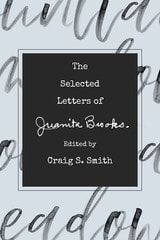
The Selected Letters of Juanita Brooks
Edited by Craig S. Smith
University of Utah Press, 2019
The letters in this volume, written from 1941 to 1978, trace Brooks’s development from fledgling historian to recognized authority. Serving almost as an autobiography of her interactions with her contemporaries, this selection provides a new perspective on Brooks’s personality and growth as a scholar. Richly detailed, chatty, and covering a wide array of subjects, the letters afford an important glimpse into Brooks’s struggles, concerns, and interests.
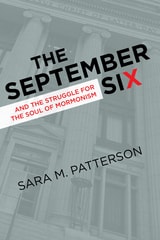
The September Six and the Struggle for the Soul of Mormonism
Patterson, Sara M.
Signature Books, 2023
The September Six and the Struggle for the Soul of Mormonism
Patterson, Sara M.
Signature Books, 2024
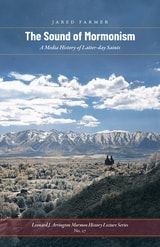
The Sound of Mormonism
A Media History of Latter-day SaintsJared Farmer
Utah State University Press, 2024
The Arrington Lecture series, established in honor of one of the twentieth-century American West’s most distinguished historians, Leonard Arrington, has become a leading forum for prominent scholars to address topics related to Latter-day Saint history. Utah State University hosts the Leonard J. Arrington Mormon History Lecture Series through the Merrill-Cazier Library’s Special Collections and Archives.
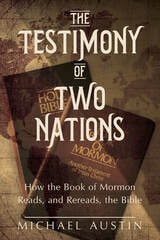
The Testimony of Two Nations
How the Book of Mormon Reads, and Rereads, the BibleMichael Austin
University of Illinois Press, 2024
Like the Hebrew Bible and the Christian Bible, the Book of Mormon uses narratives to develop ideas and present instruction. Michael Austin reveals how the Book of Mormon connects itself to narratives in the Christian Bible with many of the same tools that the New Testament used to connect itself to the Hebrew Bible to create the Christian Bible. As Austin shows, the canonical context for interpreting the Book of Mormon includes the Christian Bible, the Book of Mormon itself, and other writings and revelations that hold scriptural status in most Restoration denominations. Austin pays particular attention to how the Book of Mormon connects itself to the Christian Bible both to form a new canon and to use the canonical relationship to reframe and reinterpret biblical narratives. This canonical context provides an important and fruitful method for interpreting the Book of Mormon.
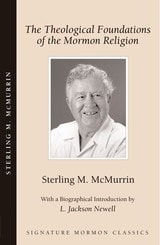
The Theological Foundations of the Mormon Religion
McMurrin
Signature Books, 2000
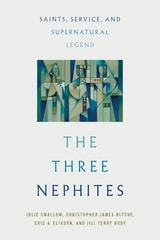
The Three Nephites
Saints, Service, and Supernatural LegendJulie Swallow, Christopher James Blythe, Eric A. Eliason, and Jill Terry Rudy
University of Illinois Press, 2025
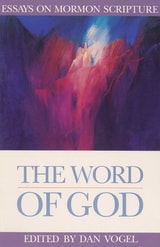
The Word of God
Essays on Mormon ScriptureDan Vogel
Signature Books, 1990
Editor’s Introduction
by Dan Vogel
[p.vii]Belief in continuing revelation and an open canon of scripture distinguishes Mormonism from mainstream Christianity. That the church founded by Joseph Smith would proceed on grounds of continuing revelation was established at the outset. The day the church was organized, 6 April 1830, Joseph Smith dictated a revelation commanding the church to “give heed unto all his words and commandments which he shall give unto you as he receiveth them,… for his words ye shall receive, as if from mine own mouth, in all patience and faith” (LDS D&C 21:4-5; RLDS D&C 19:2). Another revelation declared that the Lord had “given him the keys of the mysteries, and the revelations which are sealed” (LDS D&C 28:7; RLDS D&C 27:12). The principle of continuing revelation insured a gradual unfolding and canonization of various doctrines.
In addition to the Bible, the official canon of the Utah-based Church of Jesus Christ of Latter-day Saints includes the Book of Mormon (first published in Palymra, New York, in 1830), the Doctrine and Covenants (issued in 1833 as A Book of Commandments [incomplete] and in 1835 in Kirtland, Ohio), and the Pearl of Great Price (first published in England in 1851 and republished with changes in Salt Lake City in 1880). This latter volume of scripture contains selections from Joseph Smith’s writings including the Book of Moses (extracted from Smith’s “inspired version” or “translation” of the Bible) and the Book of Abraham (taken from Smith’s interpretation of an ancient Egyptian papyrus). The Reorganized Church of Jesus Christ of Latter Day Saints, headquartered in Independence, [p.viii] Missouri, the second largest institution tracing its origins to Joseph Smith, publishes its own editions of the Book of Mormon and Doctrine and Covenants, as well as Smith’s revision of the Bible, but has not canonized the Book of Abraham.
All but one of the following fifteen essays chosen for inclusion in The Word of God: Essays on Mormon Scripture were written by Mormons from either the LDS or RLDS tradition. (The exception is Susan Curtis.) However, rather than being guided by institutional imperatives, each author has attempted to understand Mormon scripture on its own terms. Additionally, each essay wrestles with the problem of the human and the divine in scripture.
Because one’s belief about revelation affects how one approaches scripture, debate about scriptural interpretation often centers on the nature of revelation. The written “word of God” does not come to us direct but rather through human intermediaries. In the words of J. R. Dummelow, writing in A Commentary on The Holy Bible (New York) in 1908, “It is as sunlight through a painted window—the light must come to us coloured by the medium… It is foolish to ignore the existence of the human medium through which the light has come” (p. cxxxv). Book of Mormon prophets, for instance, repeatedly express anxiety over human limitations to convey in language their spiritual teachings. Nephi prays that “the words which I have written in weakness will be made strong” (LDS 2 Ne. 33:4; RLDS 2 Ne. 15:5), and Moroni writes, “if there are faults they are the mistakes of men; wherefore, condemn not the things of God” (Title Page); A position which does not account for the human in revelation will undoubtedly produce disillusionment or distortion.
To consider the human aspects of prophets, revelation, or scripture does not detract from religion, as some traditionalists fear. On the contrary, what cultural and environmental studies challenge are simplistic assumptions about the nature of revelation. Again, Dummelow notes, “Because of our false theory of Verbal Inspiration we are puzzled when the divine is mingled with the human. We must learn that the divine is mingled with the human” (ibid.). We must seek a definition of revelation which accounts for the spectrum of characteristics we encounter in scripture.
Even when we acknowledge the human in revelation and scripture, what exactly is its role and influence? These are not easy [p.ix] questions to answer. But the more precise our identification of human influence on scripture, the more refined our definition of revelation will become. It is hoped that this collection of essays will contribute to that process of understanding.
An awareness of revelation and scripture is an ongoing process and there are differing positions. Readers should therefore understand that neither the authors nor the editor necessarily agree with the views and conclusions reached in all of the essays that follow.
Appreciation is extended to the following authors and publications for permission to reproduce, sometimes in a different format and/or under a different title, many of the essays appearing here: to Dialogue: A Journal of Mormon Thought for essays by Kevin L. Barney, Lester E. Bush, A. Bruce Lindgren, William D. Russell, and George D. Smith; to Sunstone for essays by Anthony A. Hutchinson, Melodie Moench Charles, and Mark D. Thomas; to the John Whitmer Historical Association Journal for essays by Susan Curtis and James E. Lancaster; to Courage for the essay by Richard P. Howard; and to University Bulletin (RLDS) for the essay by Geoffrey F. Spencer. Three of the essays—”Joseph Smith’s Scriptural Cosmology,” by Dan Vogel and Brent Lee Metcalfe; and “Reducing Dissonance: The Book of Abraham as a Case Study” and “Making the Scriptures ‘Indeed One in Our Hands,'” both by Edward H. Ashment—are published here for the first time.
Throughout the essays standardized parenthetical scriptural references are provided for the most recent editions published by both the LDS and RLDS churches. Thus LDS D&C 76:1 refers to the most recent edition of the Doctrine and Covenants published by the LDS church, section 76, verse 1. RLDS 1 Ne. 2:4 refers to the Book of First Nephi, chapter 2, verse 4, in the most recent edition of the Book of Mormon published by the RLDS church. JST means the Joseph Smith translation of the King James Bible published by the RLDS church; Moses to the Book of Moses and Abr. to the Book of Abraham as found in current editions of the Pearl of Great Price (PGP) published by the LDS church.[p.1]
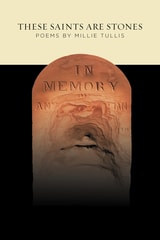
These Saints are Stones
Tullis, Millie
Signature Books, 2026
In Millie Tullis’s new poetry collection, These Saints are Stones, a faithless daughter is haunted by her third-great-grandmother, Martha, a woman who married her stepfather at sixteen and became a sister-wife to her own mother. Tullis cannot stop uncovering details about Martha, who left no written history behind, and her silence permeates this collection, which is rife with gaps and fragments, scraps of memory that blend with dreams. Sparse and spare, these poems echo the red desert landscape where the speaker’s ancestors lived and died, where she hunts for graves among the rocks and confronts a past she can never fully know. After all, like a sampling of lace, the cloth of women’s history is more hole than thread.

This Insatiable August
Clark, Maureen
Signature Books, 2024
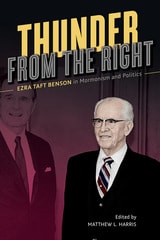
Thunder from the Right
Ezra Taft Benson in Mormonism and PoliticsEdited by Matthew L. Harris
University of Illinois Press, 2019
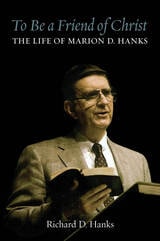
To Be a Friend of Christ
The Life of Marion D. HanksHanks, Richard D.
Signature Books, 2024
Marion Duff Hanks (1921–2011) was one of the most beloved and influential leaders of the Church of Jesus Christ of Latter-day Saints in the twentieth century, serving as a General Authority (senior leader) for forty years. He was also a leader of national import. As a recognized expert on youth, five US presidents appointed him to their President’s Council on Physical Fitness and Sports. Hanks also served as an executive leader of Rotary International and the Boy Scouts of America.
Author Richard Hanks draws on previously unavailable primary sources—journals, correspondence, notebooks, and recordings—to share this first and only authorized biography of his father. Hanks traces his father’s influence as he advocated for numerous changes in the institutional church, including humanitarian efforts, refugee relief services, missionary community service, a focus on mercy for the sinner, and a churchwide emphasis on “coming unto Christ.” A Renaissance man, Duff Hanks felt comfortable mingling with presidents and world leaders and speaking from pulpits and podiums to huge audiences and on television. But he found his greatest joy in assisting the individual, encouraging each in their personal search for happiness. Once, when asked about his goals, he replied, “My strongest desire is to qualify to be a friend of Christ.”
To Be a Friend of Christ
The Life of Marion D. HanksHanks, Richard D.
Signature Books, 2025
Marion Duff Hanks (1921–2011) was one of the most beloved and influential leaders of the Church of Jesus Christ of Latter-day Saints in the twentieth century, serving as a General Authority (senior leader) for forty years. He was also a leader of national import. As a recognized expert on youth, five US presidents appointed him to their President’s Council on Physical Fitness and Sports. Hanks also served as an executive leader of Rotary International and the Boy Scouts of America.
Author Richard Hanks draws on previously unavailable primary sources—journals, correspondence, notebooks, and recordings—to share this first and only authorized biography of his father. Hanks traces his father’s influence as he advocated for numerous changes in the institutional church, including humanitarian efforts, refugee relief services, missionary community service, a focus on mercy for the sinner, and a churchwide emphasis on “coming unto Christ.” A Renaissance man, Duff Hanks felt comfortable mingling with presidents and world leaders and speaking from pulpits and podiums to huge audiences and on television. But he found his greatest joy in assisting the individual, encouraging each in their personal search for happiness. Once, when asked about his goals, he replied, “My strongest desire is to qualify to be a friend of Christ.”
Tracy Y. Cannon
Tabernacle Organist and Pioneering Musician, 1879-1961Fisher, Shelby
Signature Books, 2026
Tracy Y. Cannon guided the musical voice of Mormonism from its provincial roots at the turn of the twentieth century into a state of maturity by the end of his career in 1960. Cannon served as Salt Lake Tabernacle organist from 1905 until 1930, accompanying some of the first radio broadcasts of Music and the Spoken Word. Under his leadership, the McCune School of Music and Art became a cultural hub, offering accredited music degrees as well as community enrichment activities, influencing Utah’s next generation of music educators, composers, leaders, and policymakers. But perhaps his most lasting legacy was his work with the General Music Committee of the Church of Jesus Christ of Latter-day Saints, through which he oversaw the creation of two hymnals, many anthem books, organ anthologies, method books, and an expansive organist and chorister education program.
Cannon’s musical tastes—dignified, refined, reverent, and heavily influenced by Northern European tradition—became the norm for Latter-day Saint congregations for generations. Through his multifaceted career, this brief biography explores the evolution of Latter-day Saint hymnody, “art music,” cultural taste, and music education during the first half of the twentieth century.
Transformation of the Mormon Culture Region
Ethan R. Yorgason
University of Illinois Press, 2010