Results by title
212 books match the query 'Colonial Period (1600-1775)' and 52 start with t
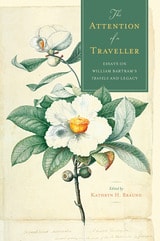
The Attention of a Traveller
Essays on William Bartram's "Travels" and LegacyEdited by Kathryn H. Braund
University of Alabama Press, 2022
An interdisciplinary reevaluation of William Bartram’s Travels, illuminating the natural, cultural, and intellectual landscapes of the eighteenth‑century Southeast through diverse scholarly lenses.
William Bartram, author of Travels through North and South Carolina, Georgia, East and West Florida, the Cherokee Country, the Extensive Territories of the Muscogulees, or Creek Confederacy, and the Country of the Chactaws, was colonial America’s first native born naturalist and artist, and the first author in the modern genre of writers who portrayed nature through personal experience as well as scientific observation. His book, first published in 1791, was based on his journeys through southern Indian nations and Britain’s southern colonies in the years just prior to the American Revolution and provides descriptions of the natural and cultural environments of what would soon become the American South. Scholars and general readers alike have long appreciated Bartram’s lush, vivid prose, his clarity of observation and evident wonder at the landscapes he traversed, and his engagement with the native nations whose lands he traveled through.
The Attention of a Traveller: Essays on William Bartram’s “Travels” and Legacy offers an interdisciplinary assessment of Bartram’s influence and evolving legacy, opening new avenues of research concerning the flora, fauna, and people connected to Bartram and his writings. Featuring 13 essays divided into five sections, contributors to the volume weave together scholarly perspectives from geology, art history, literary criticism, geography, and philosophy, alongside the more traditional Bartram-affiliated disciplines of biology and history. The collection concludes with a comprehensive treatment of the book as a material historical artifact.

The Backcountry and the City
Colonization and Conflict in Early AmericaEd White
University of Minnesota Press, 2005
Ed White explores the backcountry-city divide as well as the dynamics of indigenous peoples, bringing together two distinct bodies of scholarship: one stressing the political culture of the Revolutionary era, the other taking an ethnohistorical view of white–Native American contact. White concentrates his study in Pennsylvania, a state in which the majority of the population was rural, and in Philadelphia, a city that was a center of publishing and politics and the national capital for a decade. Against this backdrop, White reads classic political texts such as Crèvecoeur’s Letters from an American Farmer, Franklin’s Autobiography, and Paine’s “Agrarian Justice,” alongside missionary and captivity narratives, farmers’ petitions, and Native American treaties. Using historical and ethnographic sources to enrich familiar texts, White demonstrates the importance of rural areas in the study of U.S. nation formation and finds unexpected continuities between the early colonial period and the federal ascendancy of the 1790s.
Ed White is associate professor of English at the University of Florida.
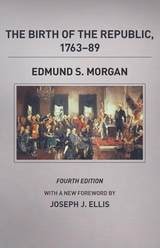
The Birth of the Republic, 1763-89, Fourth Edition
Edmund S. Morgan
University of Chicago Press, 2012
A Pulitzer Prize winner's classic, compact, authoritative account of the origins of America
In The Birth of the Republic, 1763–89, Edmund S. Morgan shows how the challenge of British taxation started Americans on a search for constitutional principles to protect their freedom, and eventually led to the Revolution. By demonstrating that the founding fathers’ political philosophy was not grounded in theory, but rather grew out of their own immediate needs, Morgan paints a vivid portrait of how the founders’ own experiences shaped their passionate convictions, and these in turn were incorporated into the Constitution and other governmental documents. The Birth of the Republic is the classic account of the beginnings of the American government, and in this fourth edition the original text is supplemented with a new foreword by Joseph J. Ellis and a historiographic essay by Rosemarie Zagarri.This book is the perfect introduction for students or general readers wanting to learn more about the events that led to the American republic.
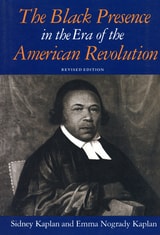
The Black Presence in the Era of the American Revolution
Sidney Kaplan and Emma Nogrady Kaplan
University of Massachusetts Press, 1989
The book is a revised and expanded edition of the authors' classic catalog that accompanied a pioneering exhibition mounted in 1973 by the National Portrait Gallery.
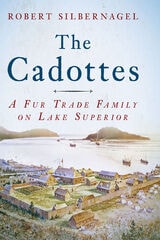
The Cadottes
A Fur Trade Family on Lake SuperiorRobert Silbernagel
Wisconsin Historical Society Press, 2023
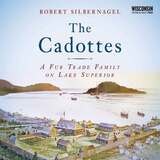
The Cadottes
A Fur Trade Family on Lake SuperiorRobert Silbernagel
Wisconsin Historical Society Press, 2026
The Complete Writings and Selected Correspondence of John Dickinson
Volume 2Jane E. Calvert
University of Delaware Press, 2021
Dickinson’s hard work on behalf of his clients brought him success in other areas of his public life. In October 1759, he was elected to his first public position as a representative for Kent County, Del., the following year he was elevated to the position of speaker, and in 1762, he became a representative for Philadelphia County, Pa. As a legislator in two colonies, learning his craft as a global war unfolded, he contributed to bills on military and defense, Indian relations, infrastructure improvements and city management, and served on various committees. The death of George II occasioned debates over laws and judges, in which Dickinson participated. This era concludes with Dickinson playing a central role in managing the unfolding Paxton Riots, in which frontiersmen massacred peaceful Indians and threatened the Quaker leadership of Pennsylvania.
In private, Dickinson lost the two most prominent male figures in his life in 1760, his father, Samuel, and soon thereafter, his mentor, colleague, and friend, John Moland. In honor of Moland, Dickinson published a poem and became a proxy head to Moland’s large family. Though his extant correspondence during this period is small, he exchanged letters with Mary Cadwalader Dickinson, Israel Pemberton, William Allason, George Read, Thomas McKean, and others. Perhaps most significant, he wrote a lengthy, unpublished essay on the flag-of-truce trade and also maintained commonplace books as he considered his place within the British Empire, opening up the next phase in Dickinson’s life as a leader of the resistance against Britain.
Published by the University of Delaware Press. Distributed worldwide by Rutgers University Press.
The Complete Writings and Selected Correspondence of John Dickinson
Volume 3Jane E. Calvert
University of Delaware Press, 2024
The Complete Writings and Selected Correspondence of John Dickinson
Volume 4, 1767-1769John Dickinson
University of Delaware Press, 0

The Constitutional Convention and Formation of Union
Edited by Winton U. Solberg
University of Illinois Press, 1990
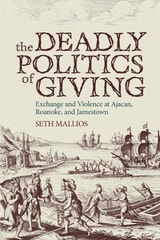
The Deadly Politics of Giving
Exchange and Violence at Ajacan, Roanoke, and JamestownSeth Mallios
University of Alabama Press, 2006
The Economy of British West Florida, 1763-1783
Robin F. A. Fabel
University of Alabama Press, 1988
The untold economic story of Britain’s Gulf Coast frontier.
This is the first book-length investigation of the economy of British West Florida and the extent to which it was economically viable given that it had been an economic failure for Spain. In it, author Robin Fabel explores both the territory's economy and history but also analyzes previously neglected but key aspects of British West Florida, including the maritime life of the province, the institution of slavery, and the potentially great immigration scheme sponsored by the Company of Military Adventures.
The British divided Florida into two colonies: East Florida and West Florida. West Florida comprised the area between the Apalachicola, Chattahoochee, and Mississippi rivers, and from the Gulf of Mexico north to thirty-two degrees twenty-eight minutes north latitude, roughly the latitude of modern-day Jackson, MS and Montgomery, AL. In the geographic center of the colony were Mobile, Alabama and Pensacola, Floriday. British West Florida included parts of the states of Alabama, Florida, Louisiana, and Mississippi and existed from 1763 until 1783 at the end of the American Revolutionary War.
Fabel contrasts the founding of Georgia, where slaves were initially excluded, with West Florida, where the slave trade became important economically. The British believed that only enslaved Blacks could labor successfully in the hot climate. Fabel gives an account of how owners employed enslaved people, how rare it was for slaves to be emancipated, and the passage of slave laws for West Florida. Fabel also explores British West Florida’s trade with Native Americans and the Caribbean islands, as well as the colony's relationships with neighboring Spanish and French communities.
Fabel's work offers an engaging and accessible account of the history of an expansive region of colonial North America during a fluid period of colonial history before American independence.

The Example of Edward Taylor
Karl Keller
University of Massachusetts Press, 1975
The Federalist
DESIGN FOR A CONSTITUTIONAL REPUBLICGeorge W. Carey
University of Illinois Press, 1989
Federalist papers, Carey provides a glimpse of our Republic's original
design. He shows us what kind of federal union The Federalist's
authors had in mind, and indicates how we have strayed from their intent."
-- Paul Gottfried, National Review
"The best book yet published on The Federalist." --
Paul Peterson, The Review of Politics
"Serious scholars of American politics will find it stimulating
and useful in deepening their own understanding of the American regime."
-- Charles E. Umbanhowar, Perspectives on Political Science
"Likely to become a classic in its own right. The Federalist
is excellent: well organized, carefully considered, incisive, lucid, concise,
and masterful." -- Ellis Sandoz, author of A Government of Laws:
Political Theory, Religion, and the American Founding
The First Chouteaus
RIVER BARONS OF EARLY ST. LOUISWilliam E. Foley and C. David Rice
University of Illinois Press, 1983
For more than half a century, Auguste and Pierre Chouteau dominated trade and enterprise in the Mississippi Valley. In their various roles as merchants, Indian traders, bankers, land speculators, governmental advisors, public officials, and community leaders, the Chouteau brothers exerted a tremendous influence on westward expansion. This is the first full account of their lives and illustrious careers.
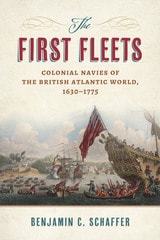
The First Fleets
Colonial Navies of the British Atlantic World, 1630–1775Benjamin C. Schaffer
University of Alabama Press, 2025
A revealing study on the little-known and misunderstood provincial navies established by North American British colonists.
In The First Fleets, Benjamin C. Schaffer reveals how, contrary to widespread beliefs, the American colonies had a long tradition of independent naval defense decades before the Revolution. He demonstrates that Anglo-American governments established and maintained significant provincial naval forces and that the history of provincial navies illuminates broader aspects of colonial history and the colonies’ ultimate break with the British Crown.
Based on meticulous research, Schaffer recounts the sea-borne threats that American colonies faced from the French, Spanish, pirates, and others. He reviews colonial governance and the relationships between colonial governments and Great Britain. Highlighting Britain’s scant naval power in North America, Schaffer demonstrates how the vulnerable coastal colonies undertook their own self-defense.
Schaffer’s readable study offers many fascinating episodes from colonial history. Establishing a navy was controversial in pacifist-minded, Quaker-dominated Pennsylvania. South Carolina deployed its scout-boat navy to pursue enslaved Africans who fled colonial capture. The first paper money issued in North America was an initiative to pay for a naval expedition against French Quebec in 1690. These and other episodes show the intimate connection between these little-known provincial navies and the major sociopolitical developments of their day.
The First Fleets will be of great interest to historians and readers of early American history, particularly colonial maritime and naval activities. Readers interested in the political and military dynamics of pre-Revolutionary America, as well as enthusiasts of naval history and maritime trade, will find The First Fleets both a valuable resource and an engrossing narrative.
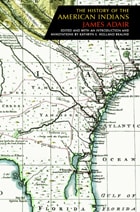
The History of the American Indians
A Critical EditionJames Adair; edited, introduced, and annotated by Kathryn E. Holland Braund
University of Alabama Press, 2009
A fully annotated edition of a classic work detailing the cultures of five southeastern American Indian tribes during the Contact Period
James Adair was an Englishman who lived and traded among the southeastern Indians for more than 30 years, from 1735 to 1768. During that time he covered the territory from the Appalachian Mountains to the Mississippi River. He encountered and lived among Indians, advised governors, spent time with settlers, and worked tirelessly for the expansion of British interests against the French and the Spanish. Adair’s acceptance by the Creeks, Choctaws, Cherokees, and Chickasaws provided him the opportunity to record, compare, and analyze their cultures and traditions.Adair’s written work, first published in England in 1775, is considered one of the finest histories of the Native Americans. His observations provide one of the earliest and what many modern scholars regard as the best account of southeastern Indian cultures. This edition adheres to current standards of literary editing, following the original closely, and provides fully annotated and indexed critical apparatus.
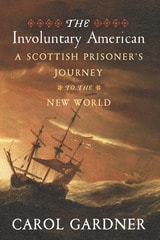
The Involuntary American
A Scottish Prisoner's Journey to the New WorldCarol R. Gardner
Westholme Publishing, 2024
In the winter of 1650–51, one hundred fifty ragged and hungry Scottish prisoners of war arrived at Massachusetts Bay Colony, where they were sold as indentured laborers for 20 to 30 pounds each. Among them was Thomas Doughty, a common foot soldier who had survived the Battle of Dunbar, a forced marched of 100 miles without food or water, imprisonment in Durham Cathedral, and a difficult Atlantic crossing. An ordinary individual who experienced extraordinary events, Doughty was among some 420 Scottish soldiers who were captured during the War of the Three Kingdoms, transported to America, and sold between 1650 and 1651. Their experiences offer a fresh perspective on seventeenth-century life.
The Involuntary American: A Scottish Prisoner’s Journey to the New World by Carol Gardner describes Doughty’s life as a soldier, prisoner of war, exile, servant, lumberman, miller, and ultimately free landowner. It follows him and his peers through critical events: the apex of the Little Ice Age, the War of the Three Kingdoms, the colonization of New England, the burgeoning transatlantic trade in servants and slaves, King Philip’s and King William’s wars, and the Salem witch crisis. Firstperson accounts of individuals who lived through those events—Scottish, English, Puritan, Native American, wealthy, poor, working class, educated or not— provide rich period detail and a variety of perspectives.
The Involuntary American demonstrates how even individuals of humble circumstances were swept into the maelstrom of the First Global Age. It expands our understanding of immigration to the colonies, colonial servitude, the linkages and tensions between Europe, Massachusetts Bay, and America’s northeastern frontier, and of New England society in the early colonial period.

The Journals of Jeffery Amherst, 1757-1763, Volume 1
The Daily and Personal JournalsRobert J. Andrews
Michigan State University Press, 2014

The Journals of Jeffery Amherst, 1757-1763, Volume 2
A Dictionary of People, Places, and ShipsRobert J. Andrews
Michigan State University Press, 2014
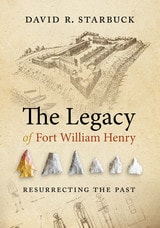
The Legacy of Fort William Henry
Resurrecting the PastDavid R. Starbuck
University Press of New England, 2014
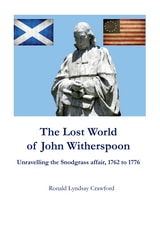
The Lost World of John Witherspoon
Unravelling the Snodgrass affair, 1762 to 1776Ronald Lyndsey Crawford
Aberdeen University Press, 2015
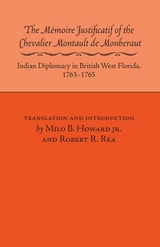
The Memoire Justificatif of Chevalier Monberaut
Indian Diplomacy in British West Florida, 1763-1765Montault Monberaut
University of Alabama Press, 1965
A rare primary-source account of Indigenous diplomacy and imperial transition in British West Florida, 1763–1765.
Historians of the Gulf Coast have long delighted in the romance of Spanish discovery and French settlement. The period of British occupation was relatively brief, fruitless, and prosaic, if we are to believe the older authorities. Today the availability of materials which were closed to an earlier generation enables us to re-create the story of British West Florida in terms more precise, with details more personal, and with no less dramatic coloration than has long been given-with less accuracy-to the earlier epochs.
In The Memoire Justificatif of Chevalier Monberaut, the translators have undertaken the resurrection of one of those gallant Frenchmen of the ancient regime who remained behind to serve the new Anglo-Saxon masters of West Florida. The Chevalier Montault de Monberaut is not unknown to historians of the colonial scene, but he has never enjoyed a full portrayal of his contribution nor a balanced evaluation of his role. By concentrating our attention upon the man as well as his milieu, we have been able to present in greater detail than before the circumstances and procedure of Indian diplomacy on the Gulf Coast at the beginning of the British period. By placing Monberaut against the backdrop of British colonial government and its problems, we have replaced some of the romantic fallacies with historic realities. The resulting clarity adds to the picture's significance and appeal.
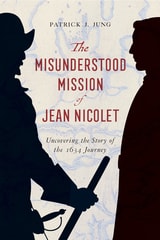
The Misunderstood Mission of Jean Nicolet
Uncovering the Story of the 1634 JourneyPatrick J. Jung
Wisconsin Historical Society Press, 2018
In more recent decades, historians have pieced together a story that is not only more likely but more complicated and interesting. Patrick Jung synthesizes the research about Nicolet and his superior Samuel de Champlain, whose diplomatic goals in the region are crucial to understanding this much misunderstood journey across the Great Lakes. Additionally, historical details about Franco-Indian relations and the search for the Northwest Passage provide a framework for understanding Nicolet’s famed mission.
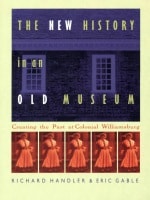
The New History in an Old Museum
Creating the Past at Colonial WilliamsburgRichard Handler and Eric Gable
Duke University Press, 1997
During much of its existence, the "living museum" at Williamsburg has been considered a patriotic shrine, celebrating the upscale lifestyles of Virginia’s colonial-era elite. But in recent decades a new generation of social historians has injected a more populist and critical slant to the site’s narrative of nationhood. For example, in interactions with museum visitors, employees now relate stories about the experiences of African Americans and women, stories that several years ago did not enter into descriptions of life in Colonial Williamsburg. Handler and Gable focus on the way this public history is managed, as historians and administrators define historiographical policy and middle-level managers train and direct front-line staff to deliver this "product" to the public. They explore how visitors consume or modify what they hear and see, and reveal how interpreters and craftspeople resist or acquiesce in being managed. By deploying the voices of these various actors in a richly textured narrative, The New History in an Old Museum highlights the elements of cultural consensus that emerge from this cacophony of conflict and negotiation.
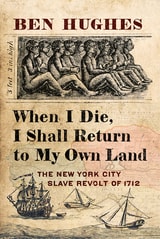
The New York City Slave Revolt of 1712
The First Enslaved Insurrection in British North AmericaBen Huges
Westholme Publishing, 2024
At 2 a.m. on April 7, 1712, a fire broke out in New York City’s North Ward. Unbeknown to the residents who roused themselves to combat the flames, the blaze had been started with murderous intent. A group of at least twenty-four enslaved West African men and women, mostly Akan from modern-day Ghana, had long plotted this moment. Armed with guns, daggers, swords, axes, and clubs, they fell upon their enslavers. In the next few frantic moments, eight Europeans were killed and seven were wounded. The perpetrators were rounded up, jailed, and put on public trial. Twenty enslaved men and one woman were executed or transported for carrying out the plot. As the first event of its kind to take place in the North American colonies, this revolt was the progenitor of those that followed—it inspired, the Stono Rebellion of 1739, the New York Conspiracy of 1741, and Nat Turner’s 1831 insurrection.
When I Die, I Shall Return to My Own Land: The 1712 New York City Slave Revolt is the first comprehensive investigation into this major event in the history of slavery in North America. Consulting court records, correspondence, and the minutes of the various colonial councils, as well as a wide range of sources related to eighteenth-century slavery, historian Ben Hughes vividly recreates early colonial New York, the lives of its enslaved inhabitants, the factionalism among the city’s Dutch and English elites, and their precarious hold on Manhattan Island in the face of French and Native American threats. Hughes traces the origins of the New York rebels, details how they came to be enslaved, and recreates the shadowy dealings that took place between African polities, European and American slavers, and New York merchants. The forerunners of a movement which continues to this day, the deeds of these original African American rebels have now been all but forgotten. Here, Hughes attempts to redress this imbalance by recovering their story.

The Ocean Is a Wilderness
Atlantic Piracy and the Limits of State Authority, 1688-1856Guy Chet
University of Massachusetts Press, 2014
Chet shows how the traditional focus on the growth of the modern state overlooked the extent to which old attitudes and cultural practices continued to hold sway. Even as the British government extended its naval, legal, and bureaucratic reach, in many parts of the Atlantic world illegal trade was not only tolerated but encouraged. In part this was because Britain's constabulary command of the region remained more tenuous than some have suggested, and in part because maritime insurance and wartime tax policies ensured that piracy and smuggling remained profitable. When Atlantic piracy eventually waned in the early nineteenth century, it had more to do with a reduction in its profitability at port than with forceful confrontation at sea.
Challenging traditional accounts that chronicle forces of civilization taming a wild Atlantic frontier, this book is a valuable addition to a body of borderlands scholarship reevaluating the relationship between the emerging modern state and its imperial frontiers.

The Other Jonathan Edwards
Selected Writings on Society, Love, and JusticeGerald McDermott
University of Massachusetts Press, 2015
Widely regarded as perhaps America's greatest theologian, Jonathan Edwards still suffers the stereotype of hellfire preacher obsessed with God's wrath. In this anthology, Gerald McDermott and Ronald Story seek to correct that common view by showing that Edwards was also a compassionate, socially conscious minister of the first order.
Through a selection of sermons and primary writings, McDermott and Story reveal an Edwards who preached love toward all humanity regardless of belief or appearance; who demanded private and public charity to the poor; who criticized hard-hearted business dealings as impious and socially destructive; and who condemned envy and status-seeking as anti-Christian and anti-community. This “other” Jonathan Edwards preached about grace and the love of God but also about responsive constitutional government, the iniquities of hypocrisy and corruption, and the nature of wise leadership. He acknowledged the need for national defense but left room for popular revolt from tyranny. He anticipated a millennial age of peace and prosperity and believed that people should live in the world as they would live through grace in heaven.
Jonathan Edwards was, in sum, a worldly as well as spiritual reformer who resisted the materialistic, acquisitive, and individualistic currents of American culture. For these reasons, McDermott and Story think he may have lessons to teach us today.
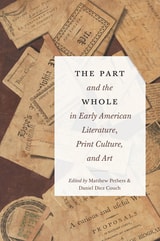
The Part and the Whole in Early American Literature, Print Culture, and Art
Matthew Pethers
Bucknell University Press, 2024
The essays in this pathbreaking collection consider the significance of varied early American fragmentary genres and practices—from diaries and poetry, to almanacs and commonplace books, to sermons and lists, to Indigenous ruins and other material shards and fragments—often overlooked by critics in a scholarly privileging of the “whole.” Contributors from literary studies, book history, and visual culture discuss a host of canonical and non-canonical figures, from Edward Taylor and Washington Irving to Mary Rowlandson and Sarah Kemble Knight, offering insight into the many intellectual, ideological, and material variations of “form” that populated the early American cultural landscape. As these essays reveal, the casting of the fragmentary as aesthetically eccentric or incomplete was a way of reckoning with concerns about the related fragmentation of nation, society, and self. For a contemporary audience, they offer new ways to think about the inevitable gaps and absences in our cultural and historical archive.

The Pennsylvania Associators, 1747–1777
Joseph Seymour
Westholme Publishing, 2024
The First Complete History of the Military Force of Colonial Pennsylvania, a Volunteer Body Created as a Practical Response to the Ideal of Pacifism
Known at various times as the Military Association of Pennsylvania, the Pennsylvania Association, or simply Associators, this long-neglected organization represented a new constituency in Pennsylvania politics and by extension, a new American response to arbitrary rule. Organized on December 7, 1747, at Philadelphia, the Military Association, an all-volunteer military establishment pledged to the defense of Pennsylvania, served as the de facto armed force for Pennsylvania, a colony whose leadership, a loose coalition of Quaker and German pacifists, land barons, and merchants, foreswore military preparedness on religious and ideological grounds. For the Associators, including their most noted supporter, Benjamin Franklin, a defenseless colony was no longer practical. During the War of Austrian Succession and again in the Seven Years’ War, Associators organized defense efforts in defiance of the Pennsylvania colonial leadership. Associators also helped defend American Indian refugees against the infamous Paxton Boys in 1764. By 1775, Associators found themselves as the colony’s only legitimate military leadership and, by capitalizing on electoral gains in the lead up to the American Revolution, Associators assumed offices vacated by former officials. During the critical battles of 1776, the Associators in their distinctive round hats and brown coats proved a decisive asset to the Continental Army.
In The Pennsylvania Associators, 1747–1777, historian Joseph Seymour has painstakingly researched primary source materials in order to write the first comprehensive history of this influential organization. Seymour demonstrates that while the Pennsylvania Associators contributed to success in the campaigns in which they fought, particularly the battles of Trenton and Princeton, a more fascinating and important investigation are the concerns that motivated these men. Associators considered military service in defense of their religious and civil liberties as a natural right. For three decades, Associators demonstrated that belief in and out of uniform. In a colony founded on religious exceptionalism, Associators saw themselves as faithful soldiers and active agents against leadership by entitlement, a principle guiding our government today.
The Pequot War
Alfred A. Cave
University of Massachusetts Press, 1996
The Politics of Piracy
Crime and Civil Disobedience in Colonial AmericaDouglas R. Burgess
University Press of New England, 2014
The Power to Die
Slavery and Suicide in British North AmericaTerri L. Snyder
University of Chicago Press, 2015
In The Power to Die, Terri L. Snyder excavates the history of slave suicide, returning it to its central place in early American history. How did people—traders, plantation owners, and, most importantly, enslaved men and women themselves—view and understand these deaths, and how did they affect understandings of the institution of slavery then and now? Snyder draws on ships’ logs, surgeons' journals, judicial and legislative records, newspaper accounts, abolitionist propaganda and slave narratives, and many other sources to build a grim picture of slavery’s toll and detail the ways in which suicide exposed the contradictions of slavery, serving as a powerful indictment that resonated throughout the Anglo-Atlantic world and continues to speak to historians today.
The Province of Affliction
Illness and the Making of Early New EnglandBen Mutschler
University of Chicago Press, 2020
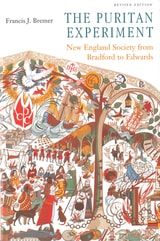
The Puritan Experiment
New England Society from Bradford to EdwardsFrancis J. Bremer
University Press of New England, 1995
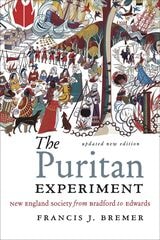
The Puritan Experiment
New England Society from Bradford to EdwardsFrancis J. Bremer
Brandeis University Press, 2026
A revised and updated edition of a classic text on the early puritans.
The Puritan Experiment is an accessible, authoritative account of early New England, one with an enduring appeal for students and general readers. This revised and updated edition explains puritanism while incorporating fresh insights from current scholarship.
Tracing the puritans’ journey from the Old World to America, Francis J. Bremer examines the causes and contexts of the puritan movement and analyzes the cultural, political, and economic revolutions wrought by the movement in both Old and New England. A pioneering text in its field, The Puritan Experiment is sweeping in scope. Bremer’s examination begins with the English Act of Supremacy of 1534 which placed King Henry VIII at the head of the Church of England, and it ends with the death of the puritan theologian Jonathan Edwards in 1758. From meeting house architecture to the Salem witch trials, from relations with Native Americans to the founding of the nation’s first colleges, Bremer details with style and grace how “a living system of faith” profoundly influenced the course of history in the New World.
This illustrated edition includes new information about lay empowerment, the role of women, Native society, and the enslavement of Native Americans and Africans.

The Puritan Tradition in America, 1620–1730
Edited by Alden T. Vaughan
University Press of New England, 1997
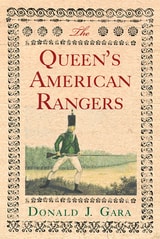
The Queen's American Rangers
Donald J. Gara
Westholme Publishing, 2015
Prior to the British attack on Long Island in August 1776, French and Indian War hero Robert Rogers organized a regiment to join the fight—but not on the side of his native New Hampshire. Named in honor of Queen Charlotte, the wife of King George III, Rogers’s regiment recruited the bulk of its soldiers from the large number of Loyalist refugees on Staten Island who had fled from New York. Rogers’s command of the unit was short-lived, however, after a humiliating defeat in late October by a surprise attack on his headquarters. Under new leadership, the unit played a decisive role and suffered heavy casualties at the battle of Brandywine that brought them their first favorable attention from the British high command. With this performance, and under the able leadership of John Graves Simcoe, the Queen’s American Rangers—sometimes known as “Simcoe’s Rangers”—were frequently assigned to serve alongside British regular troops in many battles, including Monmouth, Springfield, Charleston, and Yorktown. Receiving frequent high praise from Lieutenant General Sir Henry Clinton, the Commander in Chief of the British Army in America, the unit was placed on the American Establishment of the British Army in May 1779, a status conferred on provincial units that had performed valuable services during the war, and was renamed the 1st American Regiment. Before the end of the war, the rangers were fully incorporated into the British regular army, one of only four Loyalist units to be so honored.
The Queen’s American Rangers by historian Donald J. Gara is the first book-length account of this storied unit. Based on extensive primary source research, the book traces the complete movements, command changes, and battle performances of the rangers, from their first muster to their formal incorporation into the British Army and ultimate emigration to Canada on land grants conferred by a grateful British crown.
The Rise of the Representative
Lawmakers and Constituents in Colonial AmericaPeverill Squire
University of Michigan Press, 2017
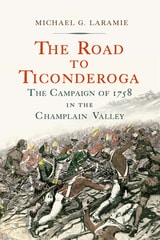
The Road to Ticonderoga
The Campaign of 1758 in the Champlain ValleyMichael G. Laramie
Westholme Publishing, 2027
Based on journals, letters, and accounts of the participants on both sides, The Road to Ticonderoga: The Campaign of 1758 in the Champlain Valley by Michael G. Laramie recounts this unexpected tale of victory and defeat on the North American frontier. Here we learn how the unexpected death of a dynamic leader, George Howe, elder brother of Richard and William, nearly crushed “the soul of General Abercrombie’s army,” leading to misinterpreted orders and hesitation on the part of the British. At the same time, the French commander perilously underestimated the ability of his own forces while overestimating his enemy’s before his fateful and unexpected decision to make his stand at Ticonderoga. With lessons and repercussions for future warfare in North America, The Road to Ticonderoga shows how a series of small mistakes can cascade into a catastrophe under weak leadership—or be exploited by a strong one.
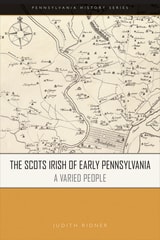
The Scots Irish of Early Pennsylvania
A Varied PeopleJudith A. Ridner
Temple University Press, 2018
The Scots Irish were one of early Pennsylvania’s largest non-English immigrant groups. They were stereotyped as frontier ruffians and Indian haters. In The Scots Irish of Early Pennsylvania, historian Judith Ridner insists that this immigrant group was socio-economically diverse. Servants and free people, individuals and families, and political exiles and refugees from Ulster, they not only pioneered new frontier settlements, but also populated the state’s cities—Philadelphia and Pittsburgh—and its towns, such as Lancaster, Easton, and Carlisle.
Ridner provides a much-overdue synthesis and reassessment of this immigrant group, tracing a century of Scotch-Irish migration from 1720 to 1820. These men and women brought their version of Ulster to the colonies in their fierce commitments to family, community, entrepreneurship, Presbyterianism, republican politics, and higher education. The settlements they founded across the state, including many farms, businesses, meetinghouses, and colleges, ensured that Pennsylvania would be their cradle in America, and these settlements stand as powerful testaments to their legacy to the state’s history and development.
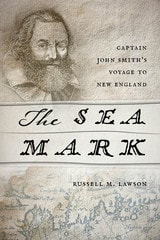
The Sea Mark
Captain John Smith’s Voyage to New EnglandRussell M. Lawson
University Press of New England, 2015
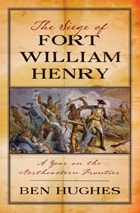
The Siege of Fort William Henry
A Year on the Northeastern FrontierBen Hughes
Westholme Publishing, 2012
Immortalized in The Last of the Mohicans, the True Story of a Pivotal Battle in the British and French War for the North American Continent
The opening years of the French and Indian War were disastrous for the British. In 1755 General Braddock’s troops were routed at the Battle of Monongahela and by the middle of 1756 Fort Oswego on Lake Ontario had fallen. Hindered by quarrelsome provincial councils, incompetent generals, and the redcoats’ inability to adapt to wilderness warfare, Britain was losing the war. In 1757 the 35th Regiment of Foot stepped into the breach. A poorly trained assortment of conscripts, old soldiers, and convicted criminals led by Lieutenant Colonel George Monro, the regiment was destined to take center stage in the most controversial event of the war. Fort William Henry on the southern shore of New York’s Lake George was a key fortification supporting British interests along the frontier with French America. Monro and his regiment occupied the fort in the spring of 1757 while Britain planned its attack on the key French fortress at Louisbourg, Nova Scotia. Learning that most of Britain’s military resources were allocated to Louisbourg, the French launched a campaign along the weakened frontier. French Commander Louis-Joseph de Montcalm and his American Indian allies laid siege to Fort William Henry; Monro could not hold out and was forced to surrender. As part of the terms, the British regiment, colonial militia, and their camp followers would be allowed safe passage to nearby Fort Edward. The French watched in horror, however, as their Indian allies attacked the British column after it left the fort, an episode that sparked outrage and changed the tactics of the war.
Seen through the eyes of participants such as Louis Antoine de Bougainville, a scholarly young aide-de-camp, Jabez Fitch, an amiable Connecticut sergeant, and Kisensik, a proud Nipissing chief whose father once met Louis XIV in the marbled halls of Versailles, The Siege of Fort William Henry: A Year on the Northeastern Frontier uses contemporary newspaper reports, official documents, private letters, and published memoirs to bring the narrative to life. From Indian councils on the banks of the Saint Lawrence River and bustling military camps in northern New York to the narrative’s bloody denouement on the shores of Lake George, the reader is immersed in the colorful, yet brutal world of eighteenth-century northeastern America.
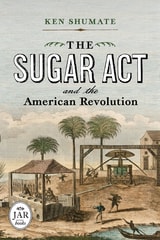
The Sugar Act and the American Revolution
Ken Shumate
Westholme Publishing, 2022
The Sugar Act and the American Revolution by Ken Shumate is the only book-length treatment of this first great challenge of the revolutionary era. For each of the three incarnations of the act, the author provides a clause-by-clause description, including the British reasoning behind the duties and trade restrictions, and a summary of the resulting American grievance. Following the explanation of each act are chapters describing the protests of American merchants and popular leaders, and the British response to those protests. As a consequence of further parliamentary acts of taxation, the story ends with the demand in 1774 by the First Continental Congress for Parliament to repeal the Sugar Act as being “essentially necessary in order to restore harmony between Great Britain and the American colonies.”
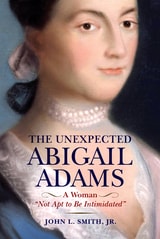
The Unexpected Abigail Adams
A Woman "Not Apt to be Intimidated"John L. Smith, Jr.
Westholme Publishing, 2026
An Extraordinary Portrait of America’s Beloved Female Founder and First Lady
Abigail Adams, wife of John Adams, was an eyewitness to America’s founding, and helped guide the new nation through her observations and advice to her famously prickly husband, who cherished her. She met many important and significant figures of the period: George Washington and his wife Martha, Thomas Jefferson, Sally Hemings, Benjamin Franklin, Henry Knox, Samuel Adams, John Hancock, John Jay, Marquis de Lafayette, John Paul Jones, Alexander Hamilton, James Monroe, artist Patience Wright, and even King George III and Queen Charlotte of England, as well as King Louis XVI and Queen Marie Antoinette of France. In The Unexpected Abigail Adams: A Woman “Not Apt to Be Intimidated”, writer and researcher John L. Smith, Jr., draws on more than two thousand letters of Abigail’s spanning from the 1760s to her death in 1818, interweaving Abigail’s colorful correspondence—some of which has not appeared in print before—with a contextual narrative. In this priceless documentation of one of the most important periods of world history she comments on the varied personalities she encountered and, while her husband was away from home serving in the Continental Congresses and as a diplomatic envoy in Europe, she wrote him frequently about their home in Massachusetts, their family, national and local politics, and, during the early years of the war, crucial information concerning revolutionary activities around Boston. She was an advocate for education for women, a shrewd businesswoman, and had an unrivaled political acumen. Her strength in the face of disease, loss of children, and other hardships, and her poignant, beautiful, and often philosophical commentary, advice, and predictions allow Abigail to demonstrate her fully modern sensibilities. This major biography of Abigail, the first in over ten years, is a riveting, revealing portrait of a remarkable woman that readers will find very relatable—and one that transforms how she is perceived.
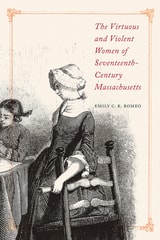
The Virtuous and Violent Women of Seventeenth-Century Massachusetts
Emily C.K. Romeo
University of Massachusetts Press, 2020
Dismantling the image of the peaceful and serene colonial goodwife and countering the assumption that New England was inherently less violent than other regions of colonial America, Emily C. K. Romeo offers a revealing look at acts of violence by Anglo-American women in colonial Massachusetts, from the everyday to the extraordinary. Using Essex County as a case study, Romeo deftly utilizes seventeenth- and eighteenth-century sources to demonstrate that Puritan women, both “virtuous” and otherwise, learned to negotiate the shifting boundaries between acceptable and unacceptable violence in their daily lives and communities.
The Virtuous and Violent Women of Seventeenth-Century Massachusetts shows that more dramatic violence by women—including infanticide, the scalping of captors during the Indian Wars, and even witchcraft accusations—was not necessarily intended to challenge the structures of authority but often sprung from women's desire to protect property, safety, and standing for themselves and their families. The situations in which women chose to flout powerful social conventions and resort to overt violence expose the underlying, often unspoken, priorities and gendered expectations that shaped this society.
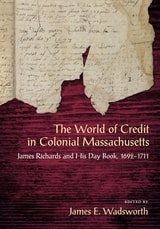
The World of Credit in Colonial Massachusetts
James Richards and His Daybook, 1692-1711James E. Wadsworth
University of Massachusetts Press, 2017
For years, James Richards, a prosperous and typical colonial farmer, tracked nearly five thousand transactions, involving more than six hundred individuals and stretching from Charlestown to Barnstable. Richards and his neighbors were bound together in a heterogeneous economy, reliant on networks of credit, barter, and sometimes cash. Richards practiced mixed husbandry farming, shipped goods by cart and by sloop, and produced and sold malt, salt, wool, and timber. The day book also reveals significant social details of Richards and his household, including his diverse trading partners, his extensive family connections, an Indian slave girl, and a well-dressed female servant. Available in both print and electronic editions, fully transcribed, annotated, and introduced by the editor, this record of economic life reinforces and challenges our understanding of colonial America.
The Worlds of William Penn
Murphy, Andrew R
Rutgers University Press, 2019
This Destructive War
The British Campaign in the Carolinas, 1780-1782John S. Pancake
University of Alabama Press, 1985
An exciting and accurate portrayal of the military action in the southern colonies that led to a new American nation
Following up the success of his 1777: The Year of the Hangman about the northern theaters of the American Revolutionary War, historian John Pancake now cover the war in the South, from General Clinton's attack on Charleston in the spring of 1780 to Cornwallis's surrender at Yorktown in October 1781.
Pancake expertly takes the reader back and forth between British and American headquarters to provide a brisk and sharp view from both sides of the conflict. His artful analysis also adds insights to the familiar narrative of the British losing because of their mistakes, American victory thanks to tenacity (particularly in the person of southern Continental forces commander Nathanael Greene), and British failure to overcome logistical problems of geography. Readers enjoy Pancake's wide-ranging knowledge of military history as applied to the Revolution as where, for example, he cites that tests conducted by the US Navy in World War II demonstrated that gun crews that were 100 percent efficient in training lost 35 percent of their efficiency in their first performance in combat.
Pancake has a writer's eye for telling details, and he creates characters sketches of the main players in the conflict that readers will always remember. This Destructive War includes a number of figures as well as detailed maps of the region where battle took place. General readers as well as scholars and students of the American Revolution will welcome anew this classic, definitive study of the campaign in the Carolinas.
This Happy Land
The Jews of Colonial and Antebellum CharlestonJames William Hagy
University of Alabama Press, 1993