Results by title
440 books match the query 'Colonialism & Post-Colonialism' and 101 start with t
Taboo Memories, Diasporic Voices
Ella Shohat
Duke University Press, 2006
Shohat’s critical method boldly transcends disciplinary and geographical boundaries. She explores such issues as the relations between ethnic studies and area studies, the paradoxical repercussions for audio-visual media of the “graven images” taboo, the allegorization of race through the refiguring of Cleopatra, the allure of imperial popular culture, and the gender politics of medical technologies. She also examines the resistant poetics of exile and displacement; the staging of historical memory through the commemorations of the two 1492s, the anomalies of the “national” in Zionist discourse, the implications of the hyphen in the concept “Arab-Jew,” and the translation of the debates on orientalism and postcolonialism across geographies. Taboo Memories, Diasporic Voices not only illuminates many of the concerns that have animated the study of cultural politics over the past two decades; it also points toward new scholarly possibilities.
Taifa
Making Nation and Race in Urban TanzaniaJames R. Brennan
Ohio University Press, 2012
Taifa is a story of African intellectual agency, but it is also an account of how nation and race emerged out of the legal, social, and economic histories in one major city, Dar es Salaam. Nation and race—both translatable as taifa in Swahili—were not simply universal ideas brought to Africa by European colonizers, as previous studies assume. They were instead categories crafted by local African thinkers to make sense of deep inequalities, particularly those between local Africans and Indian immigrants. Taifa shows how nation and race became the key political categories to guide colonial and postcolonial life in this African city.
Using deeply researched archival and oral evidence, Taifa transforms our understanding of urban history and shows how concerns about access to credit and housing became intertwined with changing conceptions of nation and nationhood. Taifa gives equal attention to both Indians and Africans; in doing so, it demonstrates the significance of political and economic connections between coastal East Africa and India during the era of British colonialism, and illustrates how the project of racial nationalism largely severed these connections by the 1970s.
Tales of Violence
Dutch Management of Information in the Indonesian War of Independence, 1945-1949Remco Raben
Amsterdam University Press, 2027
How were the violence of war and the numerous excesses between 1945-1949 discussed, concealed, passed on, manipulated, and used politically? What did Dutch, colonial, and Indonesian politicians and administrators know about the nature of the actions of their own and enemy troops?
Why did investigations into specific scandals grind to a halt or were their outcomes hidden from the public? What did those in charge do with their knowledge and how did communications influence public support for warfare? The authors argue that the way the war in Indonesia has long been viewed has its origins partly in the language and manipulation of information during the conflict.
Talking Back to the West
How Turkey Uses Counter-Hegemony to Reshape the Global Communication OrderBilge Yesil
University of Illinois Press, 2024
Insightfully exploring the crossroads of communications and authoritarianism, Talking Back to the West illuminates how the Erdogan government and its media allies use history, religion, and identity to pursue complementary agendas and tighten the AKP’s grip on power.
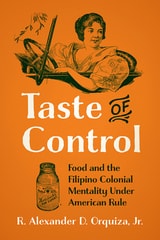
Taste of Control
Food and the Filipino Colonial Mentality under American RuleR. Alexander D. Orquiza, Jr.
Rutgers University Press, 2020
Winner of the 2021 Gourmand Awards, Asian Section & Culinary History Section
Filipino cuisine is a delicious fusion of foreign influences, adopted and transformed into its own unique flavor. But to the Americans who came to colonize the islands in the 1890s, it was considered inferior and lacking in nutrition. Changing the food of the Philippines was part of a war on culture led by Americans as they attempted to shape the islands into a reflection of their home country.
Taste of Control tells what happened when American colonizers began to influence what Filipinos ate, how they cooked, and how they perceived their national cuisine. Food historian René Alexander D. Orquiza, Jr. turns to a variety of rare archival sources to track these changing attitudes, including the letters written by American soldiers, the cosmopolitan menus prepared by Manila restaurants, and the textbooks used in local home economics classes. He also uncovers pockets of resistance to the colonial project, as Filipino cookbooks provided a defense of the nation’s traditional cuisine and culture.
Through the topic of food, Taste of Control explores how, despite lasting less than fifty years, the American colonial occupation of the Philippines left psychological scars that have not yet completely healed, leading many Filipinos to believe that their traditional cooking practices, crops, and tastes were inferior. We are what we eat, and this book reveals how food culture served as a battleground over Filipino identity.
Teller Tales
HistoriesJo Carson
Ohio University Press, 2007
“All my work fits in my mouth,” Jo Carson says. “I write performance material no matter what else the pieces get called, and whether they are for my voice or other characters’ voices … they are first to be spoken aloud.” Following an oral tradition that has strong roots in her native Tennessee, the author of Teller Tales invites the reader to participate in events in a way that no conventional history book can.
Both stories in this book are set in East Tennessee in the mid-eighteenth century and share certain characters. The first narrative, “What Sweet Lips Can Do,” recounts the story of the Overmountain Men and the battle of King’s Mountain, a tide-turning battle in the American Revolution. “Men of Their Time” is an exploration of white-Cherokee relationships from early contact through the time of the Revolution.
Although not well known to the outside world, the stories recounted in Teller Tales are cornerstones in the heritage of the Appalachian region and of American history. In ways that will appeal to young and old alike, Jo Carson’s irreverent telling will broaden the audience and the understanding for the stories of native Americans, settlers, explorers, and revolutionaries of early America.
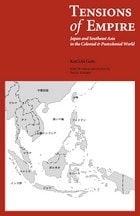
Tensions Of Empire
Japan and Southeast Asia in the Colonial and Postcolonial WorldKen’ichi Goto
Ohio University Press, 2003
Beginning with the closing decade of European colonial rule in Southeast Asia and covering the wartime Japanese empire and its postwar disintegration, Tensions of Empire focuses on the Japanese in Southeast Asia, Indonesians in Japan, and the legacy of the war in Southeast Asia. It also examines Japanese perceptions of Southeast Asia and the lingering ambivalence toward Japanese involvement in Asia and toward the war in particular.
Drawing on extensive multilingual archival research and interviews, Ken‘ichi Goto has produced a factually rich and balanced view of this region’s historical events of the last century.
Tensions of Empire features detailed discussions of Portuguese Timor in the 1930s and 1940s, the decolonization of Malaya, and twentieth-century Indonesia. This extended inquiry yields a unique view of the complicated network within and beyond the colonial and imperial relationships between a one-time nonwestern colonial power and an entire region.
Of great interest to students of Japan-Southeast Asia relations and to specialists in the modern history of both Southeast Asia and Japan, Professor Goto’s Tensions of Empire is a fascinating account of Japan’s recent past from the inside.
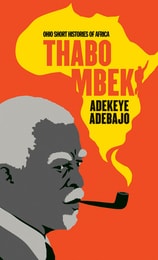
Thabo Mbeki
Adekeye Adebajo
Ohio University Press, 2017
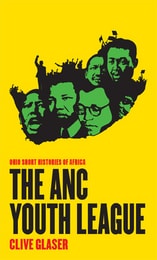
The ANC Youth League
Clive Glaser
Ohio University Press, 2012
This brilliant little book tells the story of the African National Congress (ANC) Youth League from its origins in the 1940s to the present and the controversies over Julius Malema and his influence in contemporary youth politics. Glaser analyzes the ideology and tactics of its founders, some of whom (notably Nelson Mandela and Oliver Tambo) later became iconic figures in South African history as well as inspirational figures such as A. P. Mda (father of author Zakes Mda) and Anton Lembede. It shows how the early Youth League gave birth not only to the modern ANC but also to its rival, the Pan Africanist Congress. Dormant for many years, the Youth League reemerged in the transition era under the leadership of Peter Mokaba—infused with the tradition of the militant youth politics of the 1980s. Throughout its history the Youth League has tried to “dynamize” and criticize the ANC from within, while remaining devoted to the mother body and struggling to find a balance between loyalty and rebellion.
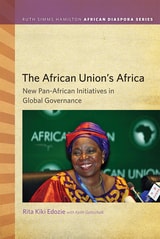
The African Union's Africa
New Pan-African Initiatives in Global GovernanceRita Kiki Edozie
Michigan State University Press, 2014
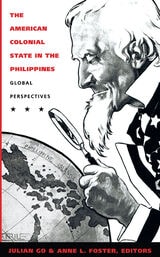
The American Colonial State in the Philippines
Global PerspectivesJulian Go and Anne L. Foster, eds.
Duke University Press, 2003
Written by social scientists and historians, these essays investigate various aspects of American colonial government through comparison with and contextualization within colonial regimes elsewhere in the world—from British Malaysia and Dutch Indonesia to Japanese Taiwan and America's other major overseas colony, Puerto Rico. Contributors explore the program of political education in the Philippines; constructions of nationalism, race, and religion; the regulation of opium; connections to politics on the U.S. mainland; and anticolonial resistance. Tracking the complex connections, circuits, and contests across, within, and between empires that shaped America's colonial regime, The American Colonial State in the Philippines sheds new light on the complexities of American imperialism and turn-of-the-century colonialism.
Contributors. Patricio N. Abinales, Donna J. Amoroso, Paul Barclay, Vince Boudreau, Anne L. Foster, Julian Go, Paul A. Kramer
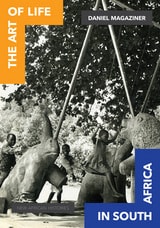
The Art of Life in South Africa
Daniel Magaziner
Ohio University Press, 2016
From 1952 to 1981, South Africa’s apartheid government ran an art school for the training of African art teachers at Indaleni, in what is today KwaZulu-Natal. The Art of Life in South Africa is the story of the students, teachers, art, and politics that circulated through a small school, housed in a remote former mission station. It is the story of a community that made its way through the travails of white supremacist South Africa and demonstrates how the art students and teachers made together became the art of their lives.
Daniel Magaziner radically reframes apartheid-era South African history. Against the dominant narrative of apartheid oppression and black resistance, as well as recent scholarship that explores violence, criminality, and the hopeless entanglements of the apartheid state, this book focuses instead on a small group’s efforts to fashion more fulfilling lives for its members and their community through the ironic medium of the apartheid-era school.
There is no book like this in South African historiography. Lushly illustrated and poetically written, it gives us fully formed lives that offer remarkable insights into the now clichéd experience of black life under segregation and apartheid.
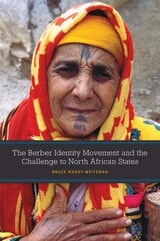
The Berber Identity Movement and the Challenge to North African States
By Bruce Maddy-Weitzman
University of Texas Press, 2011
Like many indigenous groups that have endured centuries of subordination, the Berber/Amazigh peoples of North Africa are demanding linguistic and cultural recognition and the redressing of injustices. Indeed, the movement seeks nothing less than a refashioning of the identity of North African states, a rewriting of their history, and a fundamental change in the basis of collective life. In so doing, it poses a challenge to the existing political and sociocultural orders in Morocco and Algeria, while serving as an important counterpoint to the oppositionist Islamist current.
This is the first book-length study to analyze the rise of the modern ethnocultural Berber/Amazigh movement in North Africa and the Berber diaspora. Bruce Maddy-Weitzman begins by tracing North African history from the perspective of its indigenous Berber inhabitants and their interactions with more powerful societies, from Hellenic and Roman times, through a millennium of Islam, to the era of Western colonialism. He then concentrates on the marginalization and eventual reemergence of the Berber question in independent Algeria and Morocco, against a background of the growing crisis of regime legitimacy in each country. His investigation illuminates many issues, including the fashioning of official national narratives and policies aimed at subordinating Berbers in an Arab nationalist and Islamic-centered universe; the emergence of a counter-movement promoting an expansive Berber "imagining" that emphasizes the rights of minority groups and indigenous peoples; and the international aspects of modern Berberism.
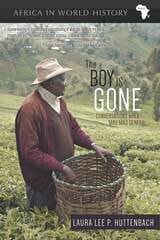
The Boy Is Gone
Conversations with a Mau Mau GeneralLaura Lee P. Huttenbach
Ohio University Press, 2015
A story with the power to change how people view the last years of colonialism in East Africa, The Boy Is Gone portrays the struggle for Kenyan independence in the words of a freedom fighter whose life spanned the twentieth century’s most dramatic transformations. Born into an impoverished farm family in the Meru Highlands, Japhlet Thambu grew up wearing goatskins and lived to stand before his community dressed for business in a pressed suit, crisp tie, and freshly polished shoes. For most of the last four decades, however, he dressed for work in the primary school classroom and on his lush tea farm.
The General, as he came to be called from his leadership of the Mau Mau uprising sixty years ago, narrates his life story in conversation with Laura Lee Huttenbach, a young American who met him while backpacking in Kenya in 2006. A gifted storyteller with a keen appreciation for language and a sense of responsibility as a repository of his people’s history, the General talks of his childhood in the voice of a young boy, his fight against the British in the voice of a soldier, and his long life in the voice of shrewd elder. While his life experiences are his alone, his story adds immeasurably to the long history of decolonization as it played out across Africa, Asia, and the Americas.
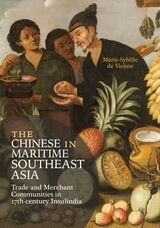
The Chinese in Maritime Southeast Asia
Trade and Merchant Communities in 17th-century InsulindiaMarie-Sybille de Vienne
National University of Singapore Press, 2025
Connections between Asian and European markets increased dramatically in the seventeenth century, indicating a turning point in the global history of trade. The Dutch East-India Company (or VOC) was central to this process; however, counter to the VOC’s aims, the winners of the game in maritime Southeast Asia were often Chinese merchants. As this book shows, at the time, these merchants were the only economic agents capable of trading both in major Southeast Asian commercial hubs and developing exchanges with China and Japan. The Chinese operated with a flexibility of means and a fluidity of management that allowed them to react rapidly and quickly gain returns on investment. In Batavia, as in other Southeast Asian emporiums, the increasingly numerous and diverse Chinese elites assumed direct responsibility for the management of their community; this made them the most important non-European free community in the city during the second half of the seventeenth century.
The Chinese in Maritime Southeast Asia tells this remarkable story through an examination of the VOC’s abundant sources, which record relations between the Chinese minority and the Dutch rulers who relied upon them.
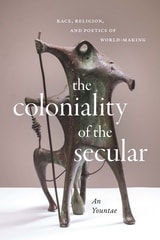
The Coloniality of the Secular
Race, Religion, and Poetics of World-MakingAn Yountae
Duke University Press, 2024
The Colonizing Self
Or, Home and Homelessness in Israel/PalestineHagar Kotef
Duke University Press, 2020
The Common Cause
Postcolonial Ethics and the Practice of Democracy, 1900-1955Leela Gandhi
University of Chicago Press, 2014
Reframing the way we think about some of the most consequential political events of the era, Gandhi presents moral imperfectionism as the lost tradition of global democratic thought and offers it to us as a key to democracy’s future. In doing so, she defends democracy as a shared art of living on the other side of perfection and mounts a postcolonial appeal for an ethics of becoming common.
The Continent of Everything and Practically Nothing
Sami Tchak
Seagull Books, 2026
A Togolese novel that delivers a rich, intimate portrait of a scholar whose life is inextricably bound to Africa.
For the French ethnologist Maurice Boyer, Africa isn't just a place; it’s a mirage, an enigma, a mirror reflecting his desires and doubts. The fieldwork he undertook in Tèdi, Togo, where he lived for years among the Tem people and tried to understand their customs and rituals, has left him with questions that have lingered: Who was a friend and who was a foe? Which stories were true and which were illusions? As decades pass and the roles of Aurélie, his wife, and Safi, his former student, begin to shift, Boyer finds himself wrestling not only with his own choices but with the legacy of knowledge itself.
Through the lens of this profound postcolonial quest, Sami Tchak explores Africa’s rich, complex reality through this intimate story of a scholar reconsidering his own understanding of culture, ethnology, and history. The Continent of Everything and Practically Nothing asks whether assembling more data can truly capture the complexity of a continent, and explores how academic ambition, history, and emotion shape how we understand the world, and how we live in it.

The Corporation That Changed the World
How the East India Company Shaped the Modern MultinationalNick Robins
Pluto Press, 2012
"Elegantly written and sharply argued, Nick Robins' gripping account of the rise and fall of the English East India Company brings to life a crucial episode in the history of globalization."—Sankar Muthu, University of Chicago
The English East India Company was the mother of the modern multinational. Its trading empire encircled the globe, importing Asian luxuries such as spices, textiles, and teas. But it also conquered much of India with its private army and broke open China's markets with opium. The Company's practices shocked its contemporaries and still reverberate today, offering lessons about unfettered capitalism, corporate responsibility, and the legacy of colonialism.
The Corporation That Changed the World is the first book to reveal the Company's enduring legacy as a corporation. This expanded edition explores how the four forces of scale, technology, finance, and regulation drove its spectacular rise and fall. For decades, the Company was simply too big to fail, and stock market bubbles, famines, drug-running, and even duels between rival executives are to be found in this new account.
Table of Contents:
Introduction
Chronology
1 The Hidden Wound
2 The Imperious Company
3 Out of the Shadows
4 The Bengal Revolution
5 The Great East Indian Crash
6 Regulating the Company
7 Justice Will Be Done
8 The Toxic Exchange
10 The Unfettered Business
Epilogue
For Robins, the Company's story provides vital lessons on both the role of corporations in world history and the steps required to make global business accountable today.
The Cuban Revolution in the 21st Century
George Lambie
Pluto Press, 2010
While most books and articles on Cuba seek to analyse the island’s socialist experiment from the perspective of internal dynamics or international relations, this book attempts to understand the revolutionary process as part of a counter-current against neoliberal globalisation.
Rather than presenting Cuba as a socialist survivor, whose performance must be measured against the standards set by the ‘international community’, George Lambie judges Cuban socialism on the goals which the revolution sets for itself. He shows that despite Cuba’s isolation in the ‘New World Order’, and the enormous pressures it has faced to ‘conform’, its faith in an alternative socialist project has continued and grown.
Now that neoliberalism is in crisis, Cuba’s promotion of socialist values is finding a renewed relevance. In this fascinating study Lambie argues that Cuba is again becoming a symbol, and practical example, of socialism in action. This book is essential reading for students of politics and Latin American studies.

The De Soto Chronicles Vol 1
The Expedition of Hernando de Soto to North America in 1539-1543Edited by Lawrence A. Clayton, Vernon James Knight Jr., and Edward C. Moore
University of Alabama Press, 2022
1993 CHOICE OUTSTANDING ACADEMIC BOOK, SPONSORED BY CHOICE MAGAZINE
Unearthing the documents that shaped our earliest understanding of a continent.
The De Soto expedition was the first major encounter of Europeans with indigenous North Americans in the eastern half of the United States. De Soto and his army of over 600 men, including 200 cavalry, spent four years traveling through what is now Florida, Georgia, Alabama, North and South Carolina, Tennessee, Mississippi, Louisiana, Arkansas, and Texas. The De Soto Chronicles Volume 1 and Volume 2 present for the first time all four primary accounts of the De Soto expedition together in English translation.
The four primary accounts are generally referred to as Elvas, Rangel, Biedma (in Volume 1), and Garcilaso, or the Inca (in Volume 2). In this landmark 1993 publication, Clayton’s team presents the four accounts with literary and historical introductions. They further add brief essays about De Soto and the expedition, translations of De Soto documents from the Spanish Archivo General de Indias, two short biographies of De Soto, and bibliographical studies.
For anthropologists, archaeologists, and historians, The De Soto Chronicles are valued for the unique ethnological information they contain. They form the only detailed eyewitness records of the most advanced native civilization in North America—the Mississippian culture—a culture largely lost in the wake of European contact.
The De Soto Chronicles Vol 1
The Expedition of Hernando de Soto to North America in 1539-1543Lawrence A. Clayton
University of Alabama Press, 1993
1993 CHOICE OUTSTANDING ACADEMIC BOOK, SPONSORED BY CHOICE MAGAZINE
Unearthing the documents that shaped our earliest understanding of a continent.
The De Soto expedition was the first major encounter of Europeans with indigenous North Americans in the eastern half of the United States. De Soto and his army of over 600 men, including 200 cavalry, spent four years traveling through what is now Florida, Georgia, Alabama, North and South Carolina, Tennessee, Mississippi, Louisiana, Arkansas, and Texas. The De Soto Chronicles Volume 1 and Volume 2 present for the first time all four primary accounts of the De Soto expedition together in English translation.
The four primary accounts are generally referred to as Elvas, Rangel, Biedma (in Volume 1), and Garcilaso, or the Inca (in Volume 2). In this landmark 1993 publication, Clayton’s team presents the four accounts with literary and historical introductions. They further add brief essays about De Soto and the expedition, translations of De Soto documents from the Spanish Archivo General de Indias, two short biographies of De Soto, and bibliographical studies.
For anthropologists, archaeologists, and historians, The De Soto Chronicles are valued for the unique ethnological information they contain. They form the only detailed eyewitness records of the most advanced native civilization in North America—the Mississippian culture—a culture largely lost in the wake of European contact.
The De Soto Chronicles Vol 2
The Expedition of Hernando de Soto to North America in 1539-1543Edited by Lawrence A. Clayton, Vernon James Knight Jr., and Edward C. Moore
University of Alabama Press, 2022
A critical expansion of the documentary record of the de Soto expedition.
The De Soto expedition was the first major encounter of Europeans with indigenous North Americans in the eastern half of the United States. De Soto and his army of over 600 men, including 200 cavalry, spent four years traveling through what is now Florida, Georgia, Alabama, North and South Carolina, Tennessee, Mississippi, Louisiana, Arkansas, and Texas. The De Soto Chronicles Volume 1 and Volume 2 present for the first time all four primary accounts of the De Soto expedition together in English translation.
The four primary accounts are generally referred to as Elvas, Rangel, Biedma (in Volume 1), and Garcilaso, or the Inca (in Volume 2). In this landmark 1993 publication, Clayton’s team presents the four accounts with literary and historical introductions. They further add brief essays about De Soto and the expedition, translations of De Soto documents from the Spanish Archivo General de Indias, two short biographies of De Soto, and bibliographical studies.
For anthropologists, archaeologists, and historians, The De Soto Chronicles are valued for the unique ethnological information they contain. They form the only detailed eyewitness records of the most advanced native civilization in North America—the Mississippian culture—a culture largely lost in the wake of European contact.
The De Soto Chronicles Vol 2
The Expedition of Hernando de Soto to North America in 1539-1543Edited by Lawrence A. Clayton, Vernon James Knight Jr., and Edward C. Moore
University of Alabama Press, 1993
A critical expansion of the documentary record of the de Soto expedition.
The De Soto expedition was the first major encounter of Europeans with indigenous North Americans in the eastern half of the United States. De Soto and his army of over 600 men, including 200 cavalry, spent four years traveling through what is now Florida, Georgia, Alabama, North and South Carolina, Tennessee, Mississippi, Louisiana, Arkansas, and Texas. The De Soto Chronicles Volume 1 and Volume 2 present for the first time all four primary accounts of the De Soto expedition together in English translation.
The four primary accounts are generally referred to as Elvas, Rangel, Biedma (in Volume 1), and Garcilaso, or the Inca (in Volume 2). In this landmark 1993 publication, Clayton’s team presents the four accounts with literary and historical introductions. They further add brief essays about De Soto and the expedition, translations of De Soto documents from the Spanish Archivo General de Indias, two short biographies of De Soto, and bibliographical studies.
For anthropologists, archaeologists, and historians, The De Soto Chronicles are valued for the unique ethnological information they contain. They form the only detailed eyewitness records of the most advanced native civilization in North America—the Mississippian culture—a culture largely lost in the wake of European contact.
The De Soto Chronicles, 2 Volume Set
The Expedition of Hernando de Soto to North America in 1539-1543Edited by Lawrence A. Clayton, Vernon James Knight Jr., and Edward C. Moore
University of Alabama Press, 1995
1993 CHOICE OUTSTANDING ACADEMIC BOOK, SPONSORED BY CHOICE MAGAZINE
Unearthing the documents that shaped our earliest understanding of a continent.
The De Soto expedition was the first major encounter of Europeans with indigenous North Americans in the eastern half of the United States. De Soto and his army of over 600 men, including 200 cavalry, spent four years traveling through what is now Florida, Georgia, Alabama, North and South Carolina, Tennessee, Mississippi, Louisiana, Arkansas, and Texas. The De Soto Chronicles Volume 1 and Volume 2 present for the first time all four primary accounts of the De Soto expedition together in English translation.
The four primary accounts are generally referred to as Elvas, Rangel, Biedma (in Volume 1), and Garcilaso, or the Inca (in Volume 2). In this landmark 1993 publication, Clayton’s team presents the four accounts with literary and historical introductions. They further add brief essays about De Soto and the expedition, translations of De Soto documents from the Spanish Archivo General de Indias, two short biographies of De Soto, and bibliographical studies.
For anthropologists, archaeologists, and historians, The De Soto Chronicles are valued for the unique ethnological information they contain. They form the only detailed eyewitness records of the most advanced native civilization in North America—the Mississippian culture—a culture largely lost in the wake of European contact.
The Decolonized Eye
Filipino American Art and PerformanceSarita Echavez See
University of Minnesota Press, 2009
From the late 1980s to the present, artists of Filipino descent in the United States have produced a challenging and creative movement. In The Decolonized Eye, Sarita Echavez See shows how these artists have engaged with the complex aftermath of U.S. colonialism in the Philippines.
Focusing on artists working in New York and California, See examines the overlapping artistic and aesthetic practices and concerns of filmmaker Angel Shaw, painter Manuel Ocampo, installation artist Paul Pfeiffer, comedian Rex Navarrete, performance artist Nicky Paraiso, and sculptor Reanne Estrada to explain the reasons for their strangely shadowy presence in American culture and scholarship. Offering an interpretation of their creations that accounts for their queer, decolonizing strategies of camp, mimesis, and humor, See reveals the conditions of possibility that constitute this contemporary archive.
By analyzing art, performance, and visual culture, The Decolonized Eye illuminates the unexpected consequences of America's amnesia over its imperial history.
The Discovery and Conquest of Peru
Pedro de Cieza de León
Duke University Press, 1998
Alexandra Parma Cook and Noble David Cook present this recently discovered third book of a four-part chronicle that provides the most thorough and definitive record of the birth of modern Andean America. It describes with unparalleled detail the exploration of the Pacific coast of South America led by Francisco Pizarro and Diego de Almagro, the imprisonment and death of the Inca Atahualpa, the Indian resistance, and the ultimate Spanish domination.
Students and scholars of Latin American history and conquest narratives will welcome the publication of this volume.
The Doctor Who Would Be King
Guillaume Lachenal
Duke University Press, 2022
The Dominican Racial Imaginary
Surveying the Landscape of Race and Nation in HispaniolaRicourt, Milagros
Rutgers University Press, 2016
This book begins with a simple question: why do so many Dominicans deny the African components of their DNA, culture, and history?

The Du Boisian Challenge
Rethinking Sociological MethodologyJosé Itzigsohn, Ricarda Hammer, and Michael Rodríguez-Muñiz, editors
Duke University Press, 2027
The Du Boisian Challenge
Rethinking Sociological MethodologyJosé Itzigsohn, Ricarda Hammer, and Michael Rodríguez-Muñiz, editors
Duke University Press, 2027
The Du Boisian Challenge
Rethinking Sociological MethodologyJosé Itzigsohn, Ricarda Hammer, and Michael Rodríguez-Muñiz, editors
Duke University Press, 2027
The Dying Sahara
US Imperialism and Terror in AfricaJeremy Keenan
Pluto Press, 2013
In The Dark Sahara (Pluto, 2009), Jeremy Keenan exposed the collusion between the US and Algeria in fabricating terrorism to justify a new ‘Saharan front’ in Washington’s War on Terror. Now, in The Dying Sahara, he reveals how the designation of the region as a ‘Terror Zone’ has destroyed the lives and livelihoods of thousands of innocent people.
Beginning in 2004, with what local people called the US ‘invasion’ of the Sahel, The Dying Sahara shows how repressive, authoritarian regimes - cashing in on US terrorism ‘rents’ - provoked Tuareg rebellions in both Niger and Mali. Further, he argues that US activity has unleashed a new, narco-trafficking branch of Al-Qaeda.
Keenan's chillingly detailed research shows that the US and its new combatant African command (AFRICOM) have created instability in a region the size of western Europe.
The Earthly Community
Achille Mbembe. Translated by Steven Corcoran.
Duke University Press, 2027
The Earthly Community
Achille Mbembe. Translated by Steven Corcoran.
Duke University Press, 2027
The Empire at Home
Internal Colonies and the End of BritainJames Trafford
Pluto Press, 2021
The Essential Senghor
African Philosophy and Black AestheticsLéopold Sédar Senghor. Edited and Translated by Doyle D. Calhoun, Alioune B. Fall, and Cheikh Thiam.
Duke University Press, 2026
The Exhaustion of Difference
The Politics of Latin American Cultural StudiesAlberto Moreiras
Duke University Press, 2001
What, asks Moreiras, is the function of critical reason in the present moment? What is regionalistic knowledge in the face of globalization? Can regionalistic knowledge be an effective tool for a critique of contemporary reason? What is the specificity of Latin Americanist reflection and how is it situated to deal with these questions? Through examinations of critical regionalism, restitutional excess, the historical genealogy of Latin American subalternism, testimonio literature, and the cultural politics of magical realism, Moreiras argues that while cultural studies is increasingly institutionalized and in danger of reproducing the dominant ideologies of late capitalism, it is also ripe for giving way to projects of theoretical reformulation. Ultimately, he claims, critical reason must abandon its allegiance to aesthetic-historicist projects and the destructive binaries upon which all cultural theories of modernity have been constructed.
The Exhaustion of Difference makes a significant contribution to the rethinking of Latin American cultural studies.
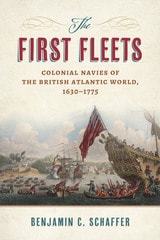
The First Fleets
Colonial Navies of the British Atlantic World, 1630–1775Benjamin C. Schaffer
University of Alabama Press, 2025
A revealing study on the little-known and misunderstood provincial navies established by North American British colonists.
In The First Fleets, Benjamin C. Schaffer reveals how, contrary to widespread beliefs, the American colonies had a long tradition of independent naval defense decades before the Revolution. He demonstrates that Anglo-American governments established and maintained significant provincial naval forces and that the history of provincial navies illuminates broader aspects of colonial history and the colonies’ ultimate break with the British Crown.
Based on meticulous research, Schaffer recounts the sea-borne threats that American colonies faced from the French, Spanish, pirates, and others. He reviews colonial governance and the relationships between colonial governments and Great Britain. Highlighting Britain’s scant naval power in North America, Schaffer demonstrates how the vulnerable coastal colonies undertook their own self-defense.
Schaffer’s readable study offers many fascinating episodes from colonial history. Establishing a navy was controversial in pacifist-minded, Quaker-dominated Pennsylvania. South Carolina deployed its scout-boat navy to pursue enslaved Africans who fled colonial capture. The first paper money issued in North America was an initiative to pay for a naval expedition against French Quebec in 1690. These and other episodes show the intimate connection between these little-known provincial navies and the major sociopolitical developments of their day.
The First Fleets will be of great interest to historians and readers of early American history, particularly colonial maritime and naval activities. Readers interested in the political and military dynamics of pre-Revolutionary America, as well as enthusiasts of naval history and maritime trade, will find The First Fleets both a valuable resource and an engrossing narrative.
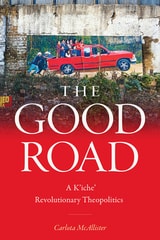
The Good Road
A K’iche’ Revolutionary TheopoliticsCarlota McAllister
Duke University Press, 2026
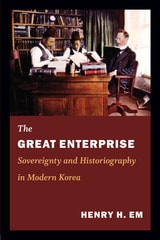
The Great Enterprise
Sovereignty and Historiography in Modern KoreaHenry H. Em
Duke University Press, 2013
Surveying historical works written over the course of the twentieth century, Em elucidates the influence of Christian missionaries, as well as the role that Japan's colonial policy played in determining the narrative framework for defining Korea's national past. Em goes on to analyze postcolonial works in which South Korean historians promoted national narratives appropriate for South Korea's place in the U.S.-led Cold War system. Throughout, Em highlights equal sovereignty's creative and productive potential to generate oppositional subjectivities and vital political alternatives.
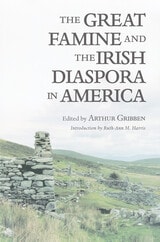
The Great Famine and the Irish Diaspora in America
Arthur Gribben
University of Massachusetts Press, 1999
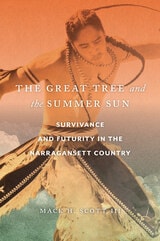
The Great Tree and the Summer Sun
Survivance and Futurity in the Narragansett CountryMack H. Scott III
University of Massachusetts Press, 2027
Documenting the long struggle of the Narragansett Nation to protect their land, sovereignty, and future
On a hot mid-July morning in 2003, members of the Narragansett Nation formed an impromptu human shield. They assembled to protect what they understood to be sacred and sovereign land. On the other side of the road stood dozens of local police officers and more than twenty state troopers, acting on direct orders from Rhode Island Governor Donald L. Carcieri to forcibly close a smoke shop the state claimed was operating illegally. It was a flashpoint in a long, drawn-out, and continuing struggle—one that historian Mack H. Scott III, himself a member of the Narragansett Nation, has spent his career documenting.
In The Great Tree and the Summer Sun, Scott tells the story of his people: the largest and most influential Indigenous community in the Dawnland, the coastal New England region his ancestors have called home for centuries. The Narragansett, whom the sachem Miantonomo described as “a great tree,” have endured nearly 400 years of mostly adversarial relations with their non-Indigenous neighbors—despite the mythology of Rhode Island’s benevolent founding and its supposed social egalitarianism.
Scott explores the long durée of local cross-cultural interactions that hardened hearts, minds, and viewpoints, not just in Rhode Island, but throughout Turtle Island (North America), as Natives and newcomers struggled to reconstitute and redefine themselves within a contested landscape. Commencing in the seventeenth century and concluding in the twenty-first, this episodic historical survey foregrounds the varied experiences of members of the Great Tree as they negotiated the realities of the Summer Sun—settler colonialism—to ensure that their futures remained irrepressible.
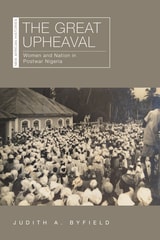
The Great Upheaval
Women and Nation in Postwar NigeriaJudith A. Byfield
Ohio University Press, 2021
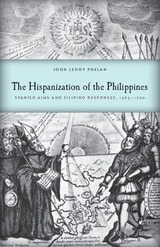
The Hispanization of the Philippines
Spanish Aims and Filipino Responses, 1565–1700John Leddy Phelan
University of Wisconsin Press, 1959
After conquest of the Philippine archipelago in the late sixteenth century, Spanish colonizers launched a sweeping social program designed to bring about dramatic religious, political, and economic changes. But the limitations of Spanish colonial resources, together with the reactions of Filipinos themselves, combined to shape the outcome of that effort in unique and unexpected ways, argues John Leddy Phelan. With no wealth in the islands to attract conquistadores, conquest was accomplished largely by missionaries scattered among isolated native villages. Native chieftains served as intermediaries, thus enabling the Filipinos to react selectively to Spanish innovations. The result was a form of hispanization in which the resilient and adaptable Filipinos played a creative part.
The Idea of the ANC
Anthony Butler
Ohio University Press, 2013
The African National Congress (ANC) is Africa’s most famous liberation movement. It has recently celebrated its centenary, a milestone that has prompted partisans to detail a century of unparalleled achievement in the struggle against colonialism and racial discrimination. Critics paint a less flattering portrait of the historical ANC as a communist puppet, a moribund dinosaur, or an elitist political parasite. For such skeptics, the ANC—now in government for two decades—has betrayed South Africans rather than liberating them.
South Africans endure deep inequality and unemployment, violent community protests, murders of foreign residents, major policy blunders, an AIDS crisis, and deepening corruption. Inside the ANC there are episodes of open rebellion against the leadership, conflicts over the character of a postliberation movement, and debilitating battles for succession to the movement’s presidency. The ANC is nevertheless likely to remain the party of government for the foreseeable future.
This remarkable book explores how ANC intellectuals and leaders interpret the historical project of their movement. It investigates three interlocking ideas: a conception of power, a responsibility for promoting unity, and a commitment to human liberation. Anthony Butler explores how these notions have shaped South African politics in the past and how they will inform ANC leaders’ responses to the challenges of the future.
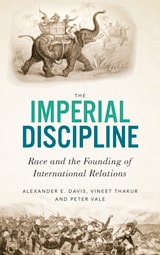
The Imperial Discipline
Race and the Founding of International RelationsAlexander E Davis
Pluto Press, 2021
This book questions the accepted origins of the field of International Relations (IR). Commonly understood to have emerged from the horrors of WW1 with the goal of bringing about world peace, the authors argue that on the contrary, IR came from a somewhat less noble tradition – that of the Round Table.
The Round Table were a network of imperialists emerging in the late 1800s across five key British imperial societies: Australia, Canada, New Zealand, South Africa and India. Their aim was to improve imperial governance, placing the empire into a position to control world affairs. Although they ultimately failed to rearrange world order according to their vision, they did help to build what we now call the discipline of IR.
The Round Table's 'scientific method' for the study of world affairs was rapidly subsumed into each geopolitical context. Through telling this story, the authors recover it, and interrogate its meanings for the discipline of IR today. They show the importance of the Global South to IR's foundations, and argue that IR scholarship in this period was intertwined with imperial racial thought in ways that it should not and cannot forget.

The Indies Diaspora in the Netherlands
Essays on Race, Whiteness, and Identity in Dutch LiteratureAlfred Birney; Translated by Annemarie Toebosch and Marjolein van Pagee
Michigan Publishing Services, 2021
The Indigenous Anti-Colonial
A Palestinian Resistance Tradition and a World Beyond Settler ColonialismLinda Tabar
Duke University Press, 2026