Results by title
108 books match the query 'Comparative Religion' and 20 start with t
Tertullian's Aduersus Iudaeos
A Rhetorical Analysis (NAPS Patristic Monograph Series, Volume 19)Geoffrey D. Dunn
Catholic University of America Press, 2008
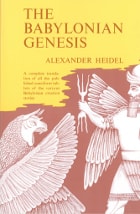
The Babylonian Genesis
The Story of the CreationAlexander Heidel
University of Chicago Press, 1963
The Babylonian Genesis offers, in one compact, accessible volume, a complete translation of all the published cuneiform tablets of the various Babylonian creation stories, of both the Semitic Babylonian and the Sumerian material. Each creation account is preceded by a brief introduction from renowned scholar and translator Alexander Heidel dealing with the age and provenance of the tablets, the aim and purpose of the story, and everything else that a reader of any level of knowledge needs to understand these stories in their context. Also included is a translation and discussion of two Babylonian creation versions written in Greek. The final chapter presents a detailed examination of the Babylonian creation accounts in their relation to our Old Testament literature.
The Bedtrick
Tales of Sex and MasqueradeWendy Doniger
University of Chicago Press, 2000
The Bedtrick brings together hundreds of stories from all over the world, from the earliest recorded Hindu and Hebrew texts to the latest item in the Weekly World News, to show the hilariously convoluted sexual scrapes that people manage to get themselves into and out of. Here you will find wives who accidentally commit adultery with their own husbands. You will read Lincoln's truly terrible poem about a bedtrick. You will learn that in Hong Kong the film The Crying Game was retitled Oh No! My Girlfriend Has a Penis. And that President Clinton was not the first man to be identified by an idiosyncratic organ.
At the bottom of these wonderful stories, ancient myths, and historical anecdotes lie the dynamics of sex and gender, power and identity. Why can't people tell the difference in the dark? Can love always tell the difference between one lover and another? And what kind of truth does sex tell? Funny, sexy, and engaging, The Bedtrick is a masterful work of energetic storytelling and dazzling scholarship. Give it to your spouse and your lover.
The Children of God
"The Family": Studies in Contemporary ReligionsJ. Gordon Melton
Signature Books, 1997
The Comity and Grace of Method
Essays in Honor of Edmund F. PerryThomas Ryba
Northwestern University Press, 2004
The essays in the first section—"Theory and Method in the History and Study of Religion"—clarify the role of scientific, phenomenological, and comparative approaches within the history of the study of religion; collectively, they represent a multifaceted statement about recurring and subtle problems in the field. In the second section—"Theories and Methods in Application"—the authors move from overarching theoretical concerns to the application of these methods in specific religious traditions, Western and Eastern. The third section demonstrates the effectiveness of these theories and methods as guidelines for promoting global inter-religious comity.
More than a fitting tribute to a revered and highly influential scholar, this book gives even those who knew nothing of Perry and his work much to learn from and ponder about the study of religion.
The Eternal Present of Sport
Rethinking Sport and ReligionDaniel A. Grano
Temple University Press, 2017
Grano asserts that it is precisely through sport’s highest religious ideals that controversies are taking shape and constituting points of political and social rupture. He examines issues of transcendence, “legacy”—e.g., “greatest ever,” or “all-time”—and “witnessing” through instant replay, which undermine institutional authority. Grano also reflects on elite athletes representing especially powerful embodiments of religious and social conflict, including around issues related to gender, sexuality, ability doping, traumatic brain injury, and institutional greed.
Elite sport is in a period of profound crisis. It is through the ideals Grano analyzes that we can imagine a radically alternative future for elite sport.
The Forbidden Image
An Intellectual History of IconoclasmAlain Besançon
University of Chicago Press, 2001
Philosophers and theologians have long engaged in intense debate and introspection over the representation of the deity, its possibilities and its proscriptions. The Forbidden Image traces the dual strains of “iconophilia” and iconoclasm, the privileging and prohibition of religious images, over a span of two and a half millennia in the West.
Alain Besançon’s work begins with a comprehensive examination of the status of the image in Greek, Judaic, Islamic, and Christian thought. The author then addresses arguments regarding the moral authority of the image in European Christianity from the medieval through the early modern periods. Besançon completes The Forbidden Image with an examination of how iconophilia and iconoclasm have been debated in the modern period.
“Even the reader who has heard something of the Byzantine quarrels about images and their theological background will be surprised by a learned and convincing interpretation of the works of Mondrian, Kandinsky, and Malevich in terms of religiously inspired iconoclasm. . . . This is an immensely rich and powerful masterpiece.”—Leszek Kolakowski, Times Literary Supplement
The Forge and the Crucible
The Origins and Structure of AlchemyMircea Eliade
University of Chicago Press, 1979
The new edition of The Forge and the Crucible contains an updated appendix, in which Eliade lists works on Chinese alchemy published in the past few years. He also discusses the importance of alchemy in Newton's scientific evolution.

The Hungry God
Hindu Tales of Filicide and DevotionDavid Shulman
University of Chicago Press, 1993
The Intellectual Adventure of Ancient Man
An Essay of Speculative Thought in the Ancient Near EastHenri Frankfort, H. A. Frankfort, John A. Wilson, Thorkild Jacobsen, and William A. Irwin
University of Chicago Press, 1946
The authors describe and analyze the spiritual life of three ancient civilizations: the Egyptians, whose thinking was profoundly influenced by the daily rebirth of the sun and the annual rebirth of the Nile; the Mesopotamians, who believed the stars, moon, and stones were all citizens of a cosmic state; and the Hebrews, who transcended prevailing mythopoeic thought with their cosmogony of the will of God. In the concluding chapter the Frankforts show that the Greeks, with their intellectual courage, were the first culture to discover a realm of speculative thought in which myth was overcome.
The New Babel
Toward a Poetics of the Mid-East CrisesLeonard Schwartz
University of Arkansas Press, 2016
The New Babel: Toward a Poetics of the Mid-East Crises evokes and investigates—from a Jewish American perspective and in the forms of poetry, essays, and interviews—the Israeli-Palestinian conflict, America’s involvement as both perpetrator and victim of events in the Middle East and Afghanistan, and the multiple ways that poetics can respond to political imperatives.
The poems range from the immediately lyrical to the experimental forms of the “Apple Anyone Sonnets” series, which relies heavily on the Arabic but has Shakespeare as its scaffolding.
In the essays, Schwartz calls on the power of poetry—and of some of the great poets in the Arabic, Jewish, and American traditions—to help rethink the battle lines of the contemporary Mid-East, with the Jewish philosopher Martin Buber looming large.
The interviews provide Schwartz’s discussions with Israeli poet and activist Aharon Shabtai, political philosopher Michael Hardt, and the late, great American poet Amiri Baraka.
In these creative, analytical, and conversational moments, Leonard Schwartz rethinks the battle lines of the contemporary Middle East and calls on the power of language as the essence of our humanity, endlessly fluid, but also the source of an intentional confusion there is a necessity to counter.
The Only True God
Early Christian Monotheism in Its Jewish ContextJames F. McGrath
University of Illinois Press, 2012
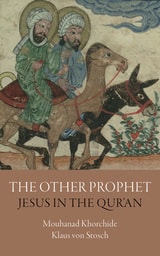
The Other Prophet
Jesus in the Qur’anMouhanad Khorchide and Klaus von Stosch
Gingko, 2025
The Qur’an identifies Jesus as a sign of God, and he holds a place as one of the most important prophets in Islam. Looking at Jesus in Islam also reveals both deep differences from and rich connections to the view of Jesus in Christianity. In The Other Prophet, Mouhanad Khorchide and Klaus von Stosch explore and explain the position of the Qur’anic Jesus, with one scholar working from the Muslim and the other from the Christian theological perspective. Their combined research presents a history of Jesus’ presence in the Qur’an and provides astute observations to deepen the understanding of both Christians and Muslims. Here we find that a common view of Jesus from the Muslim and Christian sides is not only possible but also expands our understanding of Jesus and his message.
The Promise of Salvation
A Theory of ReligionMartin Riesebrodt
University of Chicago Press, 2010
Why has religion persisted across the course of human history? Secularists have predicted the end of faith for a long time, but religions continue to attract followers. Meanwhile, scholars of religion have expanded their field to such an extent that we lack a basic framework for making sense of the chaos of religious phenomena. To remedy this state of affairs, Martin Riesebrodt here undertakes a task that is at once simple and monumental: to define, understand, and explain religion as a universal concept.
Instead of propounding abstract theories, Riesebrodt concentrates on the concrete realities of worship, examining religious holidays, conversion stories, prophetic visions, and life-cycle events. In analyzing these practices, his scope is appropriately broad, taking into consideration traditions in Judaism, Christianity, Islam, Buddhism, Daoism, and Shinto. Ultimately, Riesebrodt argues, all religions promise to avert misfortune, help their followers manage crises, and bring both temporary blessings and eternal salvation. And, as The Promise of Salvation makes clear through abundant empirical evidence, religion will not disappear as long as these promises continue to help people cope with life.
The Rites of Passage, Second Edition
Arnold van Gennep
University of Chicago Press, 2019
With a new introduction by Pulitzer Prize–winner David I. Kertzer
Arnold van Gennep’s masterwork, The Rites of Passage, has been a staple of anthropological education for more than a century. First published in French in 1909, and translated into English by the University of Chicago Press in 1960, this landmark book explores how the life of an individual in any society can be understood as a succession of transitions: birth, puberty, marriage, parenthood, old age, and, finally, death. Van Gennep’s great insight was discerning a common structure in each of these seemingly different transitions, involving rituals of separation, liminality, and incorporation. With compelling precision, he set out the terms that would both define twentieth-century ritual theory and become a part of our everyday lexicon.
This new edition of his work demonstrates how we can still make use of its enduring critical tools to understand our own social, religious, and political worlds, and even our personal and professional lives. In his new introduction, Pulitzer Prize–winning historian and anthropologist David I. Kertzer sheds new light on van Gennep, on the battles he fought, and on the huge impact the book has had since publication of the first English edition.
The Social Life of Spirits
Edited by Ruy Blanes and Diana Espírito Santo
University of Chicago Press, 2013
The contributors tour the spiritual globe—the globe of nonthings—in essays on topics ranging from the Holy Ghost in southern Africa to spirits of the “people of the streets” in Rio de Janeiro to dragons and magic in Britain. Avoiding a reliance on religion and belief systems to explain the significance of spirits, they reimagine spirits in a rich network of social trajectories, ultimately arguing for a new ontological ground upon which to examine the intangible world and its interactions with the tangible one.
The Superhumanities
Historical Precedents, Moral Objections, New RealitiesJeffrey J. Kripal
University of Chicago Press, 2022
What would happen if we reimagined the humanities as the superhumanities? If we acknowledged and celebrated the undercurrent of the fantastic within our humanistic disciplines, entirely new cultural worlds and meanings would become possible. That is Jeffrey J. Kripal’s vision for the future—to revive the suppressed dimension of the superhumanities, which consists of rare but real altered states of knowledge that have driven the creative processes of many of our most revered authors, artists, and activists. In Kripal’s telling, the history of the humanities is filled with precognitive dreams, evolving superhumans, and doubled selves. The basic idea of the superhuman, for Kripal, is at the core of who and what the human species has tried to become over millennia and around the planet.
After diagnosing the basic malaise of the humanities—that the truth must be depressing—Kripal shows how it can all be done differently. He argues that we have to decolonize reality itself if we are going to take human diversity seriously. Toward this pluralist end, he engages psychoanalytic, Black critical, feminist, postcolonial, queer, and ecocritical theory. He works through objections to the superhumanities while also recognizing the new realities represented by the contemporary sciences. In doing so, he tries to move beyond naysaying practices of critique toward a future that can embrace those critiques within a more holistic view—a view that recognizes the human being as both a social-political animal as well as an evolved cosmic species that understands and experiences itself as something super.
The Unification Church
Studies in Contemporary ReligionMassimo Introvigne
Signature Books, 2000
Where they depart from traditional Christianity is in their acceptance of the Divine Principle as a companion to the Bible and in their assertion that founder Rev. Sun Myung Moon is Lord of the Second Advent, that with his wife (together the “True Parents”), Original Sin is conquered through special blessings.
Since 1954 Unificationism has evolved toward a more normative approach to worship and lifestyle, if not belief—a point that Italian scholar Massimo Introvigne emphasizes in his balanced overview of the church’s history, doctrine, spirituality, missionary activities, and controversies. He notes that in doctrine Unificationism has moved away from mainstream churches toward increased emphasis on contact with the spirit world, numerology, and construction of a modern “Garden of Eden” in Brazil.
Theorizing Scriptures
New Critical Orientations to a Cultural PhenomenonWimbush, Vincent
Rutgers University Press, 2008
Historically, religious scriptures are defined as holy texts that are considered to be beyond the abilities of the layperson to interpret. Their content is most frequently analyzed by clerics who do not question the underlying political or social implications of the text, but use the writing to convey messages to their congregations about how to live a holy existence. In Western society, moreover, what counts as scripture is generally confined to the Judeo-Christian Bible, leaving the voices of minorities, as well as the holy texts of faiths from Africa and Asia, for example, unheard.
In this innovative collection of essays that aims to turn the traditional bible-study definition of scriptures on its head, Vincent L. Wimbush leads an in-depth look at the social, cultural, and racial meanings invested in these texts. Contributors hail from a wide array of academic fields and geographic locations and include such noted academics as Susan Harding, Elisabeth Shüssler Fiorenza, and William L. Andrews.
Purposefully transgressing disciplinary boundaries, this ambitious book opens the door to different interpretations and critical orientations, and in doing so, allows an ultimately humanist definition of scriptures to emerge.
To Take Place
Toward Theory in RitualJonathan Z. Smith
University of Chicago Press, 1987
Smith stresses the importance of place—in particular, constructed ritual environments—to a proper understanding of the ways in which "empty" actions become rituals. He structures his argument around the territories of the Tjilpa aborigines in Australia and two sites in Jerusalem—the temple envisioned by Ezekiel and the Church of the Holy Sepulchre. The first of these locales—the focus of one of the more important contemporary theories of religious ritual—allows Smith to raise questions concerning the enterprise of comparison. His close examination of Eliade's influential interpretation of the Tjilpa tradition leads to a powerful critique of the approach to religion, myth, and ritual that begins with cosmology and the category of "The Sacred."
In substance and in method, To Take Place represents a significant advance toward a theory of ritual. It is of great value not only to historians of religion and students of ritual, but to all, whether social scientists or humanists, who are concerned with the nature of place.
"This book is extraordinarily stimulating in prompting one to think about the ways in which space, or place, is perceived, marked, and utilized religiously. . . . A provocative example of the application of humanistic geography to our understanding of what takes place in religion."—Dale Goldsmith, Interpretation