Results by title
459 books match the query 'Criminology' and 67 start with t
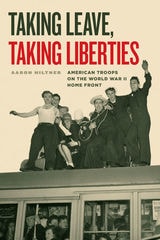
Taking Leave, Taking Liberties
American Troops on the World War II Home FrontAaron Hiltner
University of Chicago Press, 2020
With unsettling clarity, Aaron Hiltner reveals what American troops really did on the home front. While GIs are imagined to have spent much of the war in Europe or the Pacific, before the run-up to D-Day in the spring of 1944 as many as 75% of soldiers were stationed in US port cities, including more than three million who moved through New York City. In these cities, largely uncontrolled soldiers sought and found alcohol and sex, and the civilians living there—women in particular—were not safe from the violence fomented by these de facto occupying armies. Troops brought their pocketbooks and demand for “dangerous fun” to both red-light districts and city centers, creating a new geography of vice that challenged local police, politicians, and civilians. Military authorities, focused above all else on the war effort, invoked written and unwritten legal codes to grant troops near immunity to civil policing and prosecution.
The dangerous reality of life on the home front was well known at the time—even if it has subsequently been buried beneath nostalgia for the “greatest generation.” Drawing on previously unseen military archival records, Hiltner recovers a mostly forgotten chapter of World War II history, demonstrating that the war’s ill effects were felt all over—including by those supposedly safe back home.

Taking Stock of Homicide
Trends, Emerging Themes, and Research ChallengesEdited by Karen F. Parker, Richard Stansfield, and Ashley M. Mancik
Temple University Press, 2024
Featuring leading scholars, this volume is organized around key themes and areas that reflect major contemporary trends and patterns in criminological literature. Chapters consider fundamentals such as data collection, sources, and histories; structural dynamics, including methodologies and fieldwork plus factors involving race and public health; the circumstances, types, and variations in homicide, from intimate partner violence to gangs, drugs, and firearms; as well as the prevention of and responses to homicide.
An essential state-of-the-discipline examination, Taking Stock of Homicide expands our knowledge while offering a toolkit for how to conduct future research on this serious, violent crime.
Contributors: Mark Berg, Laura Boisten, Anthony Braga, Fiona Brookman, Shytierra Gaston, Veronica Valencia Gonzalez, Elizabeth Griffiths, Chris Guerra, John Hipp, John Jarvis, Helen Jones, Sharon Jones-Eversley, Jungmyung Kim, Kenneth Land, Marieke Liem, Michael Light, Xiaoshuang Iris Luo, Amy Magnus, Patricia McCall, Erin Orrick, Alex Piquero, William Pridemore, David Pyrooz, Arnaldo Rabolini, Kasey Ragan, Wendy Regoeczi, Johnny Rice II, Jacqueline Rhoden-Trader, Ethan Rogers, Meghan Rodgers, Randolph Roth, Jose Antonio Sanchez, Daniel Semenza, James Tuttle, Jolien van Breen, Kirk Williams, and the editors
Teaching Fear
How We Learn to Fear Crime and Why It MattersNicole E. Rader
Temple University Press, 2023
Where do lessons of “stranger danger” and safety come from—and do they apply differently for women? A gender-fear paradox shows that although women are less likely to be victims of most crimes (sexual assault aside), their fear of crime is greater. Moreover, girls and women—especially White women—are taught to fear the wrong things and given impossible tools to prevent victimization. In Teaching Fear, Nicole Rader zooms in on the social learning process, tracing the ways that families, schools, and the media have become obsessed with crime myths, especially regarding girls and women.
Based on in-depth research and family studies, Rader reveals the dubious and dangerous origins of many of the most prominent safety guidelines that teach young girls to be more afraid of crime. These guidelines carry over to adulthood, influencing women’s behaviors and the way they order their worlds, with dangerous consequences. As women teach their learned behavior and conditioned fear to others, gendered crime myths are recirculated from generation to generation, making them a staple in our society.
Teaching Fear includes suggestions for taking precautionary measures and crime prevention strategies. Rader also provides guidance for instilling safety values and demonstrating how we can “teach fear better” to break this cycle and truly create greater security.

The Afro-Bolivian Spanish Determiner Phrase
A Microparametric AccountSandro Sessarego
The Ohio State University Press, 2014
This dialect presents phenomena that offer a real challenge to current linguistic theory. The Afro-Bolivian Spanish Determiner Phrase elaborates on the importance of enhancing a stronger dialogue between formal generative theory and sociolinguistic methodology, in line with recent work in the field of minimalist syntax. Sessarego’s study combines sociolinguistic techniques of data collection with generative models of data analysis to obtain more fine-grained, empirically testable generalizations.
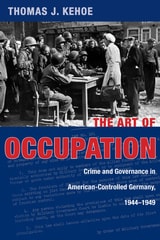
The Art of Occupation
Crime and Governance in American-Controlled Germany, 1944–1949Thomas J. Kehoe
Ohio University Press, 2019
The literature describing social conditions during the post–World War II Allied occupation of Germany has been divided between seemingly irreconcilable assertions of prolonged criminal chaos and narratives of strict martial rule that precluded crime. In The Art of Occupation, Thomas J. Kehoe takes a different view on this history, addressing this divergence through an extensive, interdisciplinary analysis of the interaction between military government and social order.
Focusing on the American Zone and using previously unexamined American and German military reports, court records, and case files, Kehoe assesses crime rates and the psychology surrounding criminality. He thereby offers the first comprehensive exploration of criminality, policing, and both German and American fears around the realities of conquest and potential resistance, social and societal integrity, national futures, and a looming threat from communism in an emergent Cold War. The Art of Occupation is the fullest study of crime and governance during the five years from the first Allied incursions into Germany from the West in September 1944 through the end of the military occupation in 1949. It is an important contribution to American and German social, military, and police histories, as well as historical criminology.
The Atlanta Youth Murders and the Politics of Race
Bernard Headley
Southern Illinois University Press, 1998
At least twenty-nine black children and young adults were murdered by an Atlanta serial killer between the summer of 1979 and the spring of 1981. Drawing national media attention, the “Atlanta tragedy,” as it became known, was immediately labeled a hate crime. However, when a young black man was arrested and convicted for the killings, public attention quickly shifted. Noted criminologist Bernard Headley was in Atlanta as the tragedy unfolded and provides here a thoughtful exploration of the social and political implications of the case both locally and nationally. Focusing on a singular historical event, Headley exposes broader tensions of race and class in contemporary America.
The Birth of the Penitentiary in Latin America
Essays on Criminology, Prison Reform, and Social Control, 1830-1940Edited by Ricardo D. Salvatore and Carlos Aguirre
University of Texas Press, 1996
Opening a new area in Latin American studies, The Birth of the Penitentiary in Latin America showcases the most recent historical outlooks on prison reform and criminology in the Latin American context. The essays in this collection shed new light on the discourse and practice of prison reform, the interpretive shifts induced by the spread of criminological science, and the links between them and competing discourses about class, race, nation, and gender. The book shows how the seemingly clear redemptive purpose of the penitentiary project was eventually contradicted by conflicting views about imprisonment, the pervasiveness of traditional forms of repression and control, and resistance from the lower classes.
The essays are unified by their attempt to view the penitentiary (as well as the variety of representations conveyed by the different reform movements favoring its adoption) as an interpretive moment, revealing of the ideology, class fractures, and contradictory nature of modernity in Latin America. As such, the book should be of interest not only to scholars concerned with criminal justice history, but also to a wide range of readers interested in modernization, social identities, and the discursive articulation of social conflict. The collection also offers an up-to-date sampling of new historical approaches to the study of criminal justice history, illuminates crucial aspects of the Latin American modernization process, and contrasts the Latin American cases with the better known European and North American experiences with prison reform.
The Changing Borders of Juvenile Justice
Transfer of Adolescents to the Criminal CourtEdited by Jeffrey Fagan and Franklin E. Zimring
University of Chicago Press, 2000
Research in this area has not kept pace with these legislative developments. There has never been a detailed, sociolegal analytic book devoted to this topic. In this important collection, researchers discuss policy, substantive procedural and empirical dimensions of waivers, and where the boundaries of the courts lie. Part 1 provides an overview of the origins and development of law and contemporary policy on the jurisdiction of adolescents. Part 2 examines the effects of jurisdictional shifts. Part 3 offers valuable insight into the developmental and psychological aspects of current and future reforms.
Contributors: Donna Bishop, Richard Bonnie, M. A. Bortner, Elizabeth Cauffman, Linda Frost Clausel, Robert O. Dawson, Jeffrey Fagan, Barry Feld, Charles Frazier, Thomas Grisso, Darnell Hawkins, James C. Howell, Akiva Liberman, Richard Redding, Simon Singer, Laurence Steinberg, David Tanenhaus, Marjorie Zatz, and Franklin E. Zimring

The Child Savers
The Invention of DelinquencyPlatt, Anthony M
Rutgers University Press, 2009
Focusing on social reformers of the late nineteenth and early twentieth centuries, Platt's principal argument is that the "child savers" movement was not an effort to liberate and dignify youth but, instead, a punitive and intrusive attempt to control the lives of working-class urban adolescents. This expanded edition provides a renewed and distinguished contribution by placing it in historical context through insightful commentaries from cross-disciplinary academics, along with an essay by Miroslava Chávez-García examining how Platt's influential study has impacted many of the central arguments social scientists and historians face today.
The Compassionate Court?
Support, Surveillance, and Survival in Prostitution Diversion ProgramsCorey S. Shdaimah, Chrysanthi S. Leon, and Shelly A. Wiechelt
Temple University Press, 2023
The authors of The Compassionate Court? provide case studies of such programs and draw upon interviews and observations conducted over a decade to reveal how participants and professionals perceive court-affiliated PDPs, clients, and staff. Considering the motivations, vision, and goals of these programs as well as their limitations—the inequity and disempowerment of their participants—the authors also present their own changing perspectives on prostitution courts, diversion programs, and criminalization of sex work.

The Creation of Dangerous Violent Criminals
Lonnie H. Athens
University of Illinois Press, 1992
The Culture of Control
Crime and Social Order in Contemporary SocietyDavid Garland
University of Chicago Press, 2001
Garland explains how the new policies of crime and punishment, welfare and security—and the changing class, race, and gender relations that underpin them—are linked to the fundamental problems of governing contemporary societies, as states, corporations, and private citizens grapple with a volatile economy and a culture that combines expanded personal freedom with relaxed social controls. It is the risky, unfixed character of modern life that underlies our accelerating concern with control and crime control in particular. It is not just crime that has changed; society has changed as well, and this transformation has reshaped criminological thought, public policy, and the cultural meaning of crime and criminals. David Garland's The Culture of Control offers a brilliant guide to this process and its still-reverberating consequences.
The Delinquent Girl
edited by Margaret A. Zahn
Temple University Press, 2009
Over the past decade and a half, girls’ involvement in the juvenile justice system has increased. Yet the topic remains under-studied among criminologists. The Delinquent Girl is a “state-of-the-field” evaluation that identifies and analyzes girls who become delinquent, the kinds of crimes they commit and the reasons they commit them. The distinguished academics and practitioners who contributed to this volume provide an overview of the research on girls’ delinquency, discuss policy implications and point to areas where further research is critically needed.
The Dialectics of Legal Repression
Black Rebels Before the American Criminal CourtsIsaac D. Balbus
Russell Sage Foundation, 2015
The Discourse of Police Interviews
Edited by Marianne Mason and Frances Rock
University of Chicago Press, 2020
The first book to focus exclusively on the discourses of police interviewing, The Discourse of Police Interviews examines leading debates, approaches, and topics in contemporary police interview research. Among other topics, the book explores the sociolegal, psychological, and discursive framework of popular police interview techniques employed in the United States and the United Kingdom, such as PEACE and Reid, and the discursive practices of institutional representatives like police officers and interpreters that can influence the construction and quality of linguistic evidence. Together, the contributions situate the police interview as part of a complex, and multistage, criminal justice process. The book will be of interest to both scholars and practitioners in a variety of fields, such as linguistic anthropology, interpreting studies, criminology, law, and sociology.
The Ex-Prisoner's Dilemma
How Women Negotiate Competing Narratives of Reentry and DesistanceLeverentz, Andrea M
Rutgers University Press, 2014
When a woman leaves prison, she enters a world of competing messages and conflicting advice. Staff from prison, friends, family members, workers at halfway houses and treatment programs all have something to say about who she is, who she should be, and what she should do. The Ex-Prisoner’s Dilemma offers an in-depth, firsthand look at how the former prisoner manages messages about returning to the community.
Over the course of a year, Andrea Leverentz conducted repeated interviews with forty-nine women as they adjusted to life outside of prison and worked to construct new ideas of themselves as former prisoners and as mothers, daughters, sisters, romantic partners, friends, students, and workers. Listening to these women, along with their family members, friends, and co-workers, Leverentz pieces together the narratives they have created to explain their past records and guide their future behavior. She traces where these narratives came from and how they were shaped by factors such as gender, race, maternal status, age, and experiences in prison, halfway houses, and twelve-step programs—factors that in turn shaped the women’s expectations for themselves, and others’ expectations of them. The women’s stories form a powerful picture of the complex, complicated human experience behind dry statistics and policy statements regarding prisoner reentry into society for women, how the experience is different for men and the influence society plays.
With its unique view of how society’s mixed messages play out in ex-prisoners’ lived realities, The Ex-Prisoner’s Dilemma shows the complexity of these women’s experiences within the broad context of the war on drugs and mass incarceration in America. It offers invaluable lessons for helping such women successfully rejoin society.
The Forgotten Men
Serving a Life without Parole SentenceLeigey, Margaret E
Rutgers University Press, 2015
The Gang
A Study of 1,313 Gangs in ChicagoFrederic Milton Thrasher
University of Chicago Press, 1963
While gangs and gang culture have been around for countless centuries, The Gang is one of the first academic studies of the phenomenon. Originally published in 1927, Frederic Milton Thrasher’s magnum opus offers a profound and careful analysis of hundreds of gangs in Chicago in the early part of the twentieth century. With rich prose and an eye for detail, Thrasher looked specifically at the way in which urban geography shaped gangs, and posited the thesis that neighborhoods in flux were more likely to produce gangs. Moreover, he traced gang culture back to feudal and medieval power systems and linked tribal ethos in other societies to codes of honor and glory found in American gangs. Thrasher approaches his subject with empathy and insightfulness, and creates a multifaceted and textured portrait that still has much to offer to readers today. With handsome images that evoke the era, this unabridged edition of The Gang not only explores an important moment in the history of Chicago, but also is itself a landmark in the history of sociology and subcultural theory.
The Ghosts of Hopewell
Setting the Record Straight in the Lindberg CaseJim Fisher
Southern Illinois University Press, 2006
In this illustrated examination of the Lindbergh kidnapping case, Jim Fisher seeks to set the record straight regarding Bruno Hauptmann's guilt in "the crime of the century."
In February 1935, following a sensational, six-week trial, a jury in Flemington, New Jersey, found German carpenter Hauptmann guilty of kidnapping and murdering the twenty-month-old son of Charles and Anne Lindbergh. Although circumstantial, the evidence against Hauptmann—the handwriting on the ransom notes, the homemade kidnapping ladder, Colonel Lindbergh's money found in his garage, his matching the description of the man who accepted the ransom payoff in the Bronx cemetery, his inability to prove an alibi, and his incredible explanation of his possession of the ransom money—was overwhelming, leaving few to doubt his guilt. After a series of appeals and stays, Hauptmann died fourteen months later in the electric chair. A confession would have spared him the death sentence, but Hauptmann chose to die maintaining his innocence.
It was not until the mid-1970s that revisionists began to challenge the conventional wisdom in the case: that Hauptmann was the lone killer. Revisionist books and articles appeared, as did plays, TV shows, and a movie, all portraying Hauptmann as the victim of a massive police and prosecution frame-up.
At this point, the focus shifted from the evidence to the conduct of the police. By the 1980s, most people familiar with the case were convinced of Hauptmann's complete innocence. Many denied the murder, believing that the Lindbergh baby remained alive. Several men claimed to be the firstborn son of Charles and Anne Lindbergh, one of whom sued to claim his share of the Lindbergh estate after Charles Lindbergh's death in 1974.
Another group held that the kidnapping was an elaborate hoax to cover up the murder of the baby by his parents. Anna Hauptmann¹s series of federal lawsuits against New Jersey and others in the mid-1980s fueled further interest in the case. Although Hauptmann's widow lost all of her lawsuits, she had won the hearts and minds of the American people before her death at the age of ninety-four.
Former FBI agent Fisher discusses the hard evidence, such as the ransom notes and the wood of the kidnapping ladder. He analyzes and debunks the various revisionist theories and presents new evidence that, coupled with the undisputed facts, prove beyond a reasonable doubt that Hauptmann was guilty as charged: he kidnapped and murdered the infant son of Charles and Anne Lindbergh.

The Globalization of Supermax Prisons
Ross, Jeffrey Ian
Rutgers University Press, 2013
2013 Choice Outstanding Academic Title
“Supermax” prisons, conceived by the United States in the early 1980s, are typically reserved for convicted political criminals such as terrorists and spies and for other inmates who are considered to pose a serious ongoing threat to the wider community, to the security of correctional institutions, or to the safety of other inmates. Prisoners are usually restricted to their cells for up to twenty-three hours a day and typically have minimal contact with other inmates and correctional staff. Not only does the Federal Bureau of Prisons operate one of these facilities, but almost every state has either a supermax wing or stand-alone supermax prison.
The Globalization of Supermax Prisons examines why nine advanced industrialized countries have adopted the supermax prototype, paying particular attention to the economic, social, and political processes that have affected each state. Featuring essays that look at the U.S.-run prisons of Abu Ghraib and Guantanemo, this collection seeks to determine if the American model is the basis for the establishment of these facilities and considers such issues as the support or opposition to the building of a supermax and why opposition efforts failed; the allegation of human rights abuses within these prisons; and the extent to which the decision to build a supermax was influenced by developments in the United States. Additionally, contributors address such domestic matters as the role of crime rates, media sensationalism, and terrorism in each country’s decision to build a supermax prison.
The Hall-Mills Murder Case
The Minister and the Choir SingerKunstler, William
Rutgers University Press, 1980

The Honest Politician's Guide to Crime Control
Norval Morris and Gordon J. Hawkins
University of Chicago Press, 1970

The Horror of Police
Travis Linnemann
University of Minnesota Press, 2022
Unmasks the horrors of a social order reproduced and maintained by the violence of police
Year after year the crisis churns: graft and corruption, violence and murder, riot cops and armored vehicles claim city streets. Despite promises of reform, police operate with impunity, unaccountable to law. In The Horror of Police, Travis Linnemann asks why, with this open record of violence and corruption, policing remains for so many the best, perhaps only means of security in an insecure world.
Drawing on the language and texts of horror fiction, Linnemann recasts the police not only as self-proclaimed “monster fighters” but as monsters themselves, a terrifying force set loose in the world. Purposefully misreading a collection of everyday police stories (TV cop dramas, detective fiction, news media accounts, the direct words of police) not as morality tales of innocence avenged and order restored but as horror, Linnemann reveals the monstrous violence at the heart of liberal social order.
The Horror of Police shows that police violence is not a deviation but rather a deliberate and permanent fixture of U.S. “law and order.” Only when viewed through the refracted motif of horror stories, Linnemann argues, can we begin to reckon the limits of police and imagine a world without them.
The Huddled Masses Myth
Immigration And Civil RightsKevin R. Johnson
Temple University Press, 2003
The Insane Chicago Way
The Daring Plan by Chicago Gangs to Create a Spanish MafiaJohn M. Hagedorn
University of Chicago Press, 2015
The book centers on the secret history of Spanish Growth & Development (SGD)—an organization of Latino gangs founded in 1989 and modeled on the Mafia’s nationwide Commission. It also tells a story within a story of the criminal exploits of the C-Note$, the “minor league” team of the Chicago’s Mafia (called the “Outfit”), which influenced the direction of SGD. Hagedorn’s tale is based on three years of interviews with an Outfit soldier as well as access to SGD’s constitution and other secret documents, which he supplements with interviews of key SGD leaders, court records, and newspaper accounts. The result is a stunning, heretofore unknown history of the grand ambitions of Chicago gang leaders that ultimately led to SGD’s shocking collapse in a pool of blood on the steps of a gang-organized peace conference.
The Insane Chicago Way is a compelling history of the lives and deaths of Chicago gang leaders. At the same time it is a sociological tour de force that warns of the dangers of organized crime while arguing that today’s relative disorganization of gangs presents opportunities for intervention and reductions in violence.

The Jack-Roller
A Delinquent Boy's Own StoryClifford R. Shaw
University of Chicago Press, 1966
Vivid, authentic, this is the autobiography of a delinquent—his experiences, influences, attitudes, and values. The Jack-Roller helped to establish the life-history or "own story" as an important instrument of sociological research. The book remains as relevant today to the study and treatment of juvenile delinquency and maladjustment as it was when originally published in 1930.
The Jack-Roller
A Delinquent Boy's Own StoryClifford R. Shaw
University of Chicago Press, 1966
The Jack-Roller tells the story of Stanley, a pseudonym Clifford Shaw gave to his informant and co-author, Michael Peter Majer. Stanley was sixteen years old when Shaw met him in 1923 and had recently been released from the Illinois State Reformatory at Pontiac, after serving a one-year sentence for burglary and jack-rolling (mugging),
Vivid, authentic, this is the autobiography of a delinquent—his experiences, influences, attitudes, and values. The Jack-Roller helped to establish the life-history or "own story" as an important instrument of sociological research. The book remains as relevant today to the study and treatment of juvenile delinquency and maladjustment as it was when originally published in 1930.
The Last Neighborhood Cops
The Rise and Fall of Community Policing in New York Public HousingUmbach, Fritz
Rutgers University Press, 2011
The Last Neighborhood Cops reveals the forgotten history of the residents and cops who forged community policing in the public housing complexes of New York City during the second half of the twentieth century. Through a combination of poignant storytelling and historical analysis, Fritz Umbach draws on buried and confidential police records and voices of retired officers and older residents to help explore the rise and fall of the HAPD's community-based strategy, while questioning its tactical effectiveness. The result is a unique perspective on contemporary debates of community policing and historical developments chronicling the influence of poor and working-class populations on public policy making.

The Lindbergh Case
A Story of Two LivesFisher, Jim
Rutgers University Press, 1987
The Long War on Drugs
Anne L. Foster
Duke University Press, 2023
The Lying Brain
Lie Detection in Science and Science FictionMelissa M. Littlefield
University of Michigan Press, 2011
"The Lying Brain is a study to take seriously. Its argument is timely, clear, and of particular importance to the enlargement of our understanding of the relationships among science studies, literary studies, and technology studies."
---Ronald Schleifer, University of Oklahoma
Real and imagined machines, including mental microscopes, thought translators, and polygraphs, have long promised to detect deception in human beings. Now, via fMRI and EEG, neuroscientists seem to have found what scientists, lawyers, and law enforcement officials have sought for over a century: foolproof lie detection. But are these new lie detection technologies any different from their predecessors? The Lying Brain is the first book to explore the cultural history of an array of lie detection technologies: their ideological assumptions, the scientific and fictional literatures that create and market them, and the literacies required for their interpretation.
By examining a rich archive of materials about lie detection---from science to science fiction---The Lying Brain demonstrates the interconnections of science, literature, and popular culture in the development and dissemination of deception detection in the American cultural imagination. As Melissa Littlefield demonstrates, neuroscience is not building a more accurate lie detector; it is simply recycling centuries-old ideologies about deception and its detection.
Cover art: "Human Brain" © Denis Barbulet, courtesy of Shutterstock.com
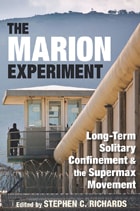
The Marion Experiment
Long-Term Solitary Confinement and the Supermax MovementEdited by Stephen C. Richards
Southern Illinois University Press, 2015
Taking readers into the darkness of solitary confinement, this searing collection of convict experiences, academic research, and policy recommendations shines a light on the proliferation of supermax (super-maximum-security) prisons and the detrimental effects of long-term high-security confinement on prisoners and their families.
Stephen C. Richards, an ex-convict who served time in nine federal prisons before earning his PhD in criminology, argues the supermax prison era began in 1983 at USP Marion in southern Illinois, where the first “control units” were built by the Federal Bureau of Prisons. The Marion Experiment, written from a convict criminology perspective, offers an introduction to long-term solitary confinement and supermax prisons, followed by a series of first-person accounts by prisoners—some of whom are scholars—previously or currently incarcerated in high-security facilities, including some of the roughest prisons in the western world. Scholars also address the widespread “Marionization” of solitary confinement; its impact on female, adolescent, and mentally ill prisoners and families; and international perspectives on imprisonment.
As a bold step toward rethinking supermax prisons, Richards presents the most comprehensive view of the topic to date to raise awareness of the negative aspects of long-term solitary confinement and the need to reevaluate how prisoners are housed and treated.
The Mark of Criminality
Rhetoric, Race, and Gangsta Rap in the War-on-Crime EraBryan J. McCann
University of Alabama Press, 2017
In The Mark of Criminality: Rhetoric, Race, and Gangsta Rap in the War-on-Crime Era, Bryan J. McCann argues that gangsta rap should be viewed as more than a damaging reinforcement of an era’s worst racial stereotypes. Rather, he positions the works of key gangsta rap artists, as well as the controversies their work produced, squarely within the law-and-order politics and popular culture of the 1980s and 1990s to reveal a profoundly complex period in American history when the meanings of crime and criminality were incredibly unstable.
At the center of this era—when politicians sought to prove their “tough-on-crime” credentials—was the mark of criminality, a set of discourses that labeled members of predominantly poor, urban, and minority communities as threats to the social order. Through their use of the mark of criminality, public figures implemented extremely harsh penal polices that have helped make the United States the world’s leading jailer of its adult population.
At the same time when politicians like Ronald Reagan, George H. W. Bush, and Bill Clinton and television shows such as COPS and America’s Most Wanted perpetuated images of gang and drug-filled ghettos, gangsta rap burst out of the hip-hop nation, emanating mainly from the predominantly black neighborhoods of South Central Los Angeles. Groups like NWA and solo artists (including Dr. Dre, Snoop Dogg, and Tupac Shakur) became millionaires by marketing the very discourses political and cultural leaders used to justify their war on crime. For these artists, the mark of criminality was a source of power, credibility, and revenue. By understanding gangsta rap as a potent, if deeply imperfect, enactment of the mark of criminality, we can better understand how crime is always a site of struggle over meaning. Furthermore, by underscoring the nimble rhetorical character of criminality, we can learn lessons that may inform efforts to challenge our nation’s failed policies of mass incarceration.

The Mena File
Barry Seal's Ties to Drug Lords and U.S. OfficialsMara Leveritt
Butler Center for Arkansas Studies, 2016
Inquiries into Seal’s activities, including some by congressional committees, led nowhere. Many of the police files about him were reported lost; others were almost totally redacted. Nevertheless, hundreds of records have survived regarding this backwater of the Iran-Contra saga, pointing to government complicity in Seal’s shipments of cocaine into the United States and the powerful measures taken to obscure that involvement.
In brisk and meticulously footnoted order, The Mena File guides readers from the airstrip in the mountains of rural Arkansas (where Seal based his operation) to Nicaraguan jungles and then to courtrooms across the American South, culminating in a pivotal meeting in the nation’s capital. Menace lurks throughout the tale and, just as darkly, in the evidence of how law-enforcement agents who labored to bring Seal to justice found themselves undermined—and ultimately betrayed—by elected and appointed officials.
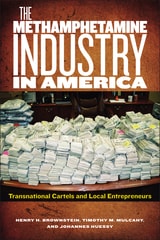
The Methamphetamine Industry in America
Transnational Cartels and Local EntrepreneursBrownstein, Henry H
Rutgers University Press, 2016
The Methamphetamine Industry in America describes the reality that the methamphetamine industry is a social phenomenon connecting local, national, and international communities and markets. The book details the results of a groundbreaking three-stage study, part of a joint initiative of the National Institute on Drug Abuse and the National Institute of Justice, in which police agencies across the United States were surveyed and their responses used to identify likely areas of study. The authors then visited these areas to observe and interview local participants, from users and dealers to law enforcement officers and clinical treatment workers.
Through the eyes and words of these participants, the book tells the story of the evolution of methamphetamine markets in the United States over the past several years, given changes in public policies and practices and changing public opinion about methamphetamine. The authors look closely at how the markets are part of a larger industry, how they are socially organized, and how they operate. They also consider the relationships among the people involved and those around them, and the national, regional, and local culture of the markets. Their work demonstrates the importance of understanding the business of methamphetamine—and by extension other drugs in society—through a lens that focuses on social behavior, social relationships, and the cultural elements that shape the organization and operation of this illicit but effective industry.
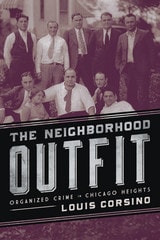
The Neighborhood Outfit
Organized Crime in Chicago HeightsLouis Corsino
University of Illinois Press, 2014
Debunking the popular idea of organized crime as a uniquely Italian enterprise, Corsino delves into the social and cultural forces that contributed to illicit activities. As he shows, discrimination blocked opportunities for Italians' social mobility and the close-knit Italian communities that arose in response to such limits produced a rich supply of social capital Italians used to pursue alternative routes to success that ranged from Italian grocery stores to union organizing to, on occasion, crime.

The New Refugees
Crime and Forced Displacement in Latin AmericaEdited by David James Cantor and Nicolás Rodríguez Serna
University of London Press, 2016
In Latin America, recent years have seen an unprecedented rise in the number of people forced to flee from their homes due to the activities of organized criminal groups. What are the reasons behind this emerging crisis of forced displacement in the Americas? Who are these criminal groups and how do they operate in Central America, Mexico and Colombia? Who are the victims and how can their needs be met in these violent and insecure contexts? Can law and policy offer a humanitarian response to this crisis? As the first book to deal with this rapidly evolving phenomenon, this innovative collection offers a range of fresh perspectives from leading experts working across Latin America.
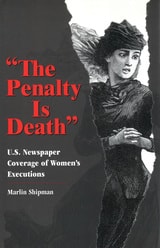
The Penalty Is Death
U.S. Newspaper Coverage of Women's ExecutionsMarlin Shipman
University of Missouri Press, 2002
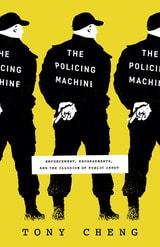
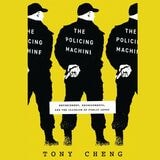
The Policing Machine
Enforcement, Endorsements, and the Illusion of Public InputTony Cheng
University of Chicago Press, 2024
The past few years have seen Americans express passionate demands for police transformation. But even as discussion of no-knock warrants, chokeholds, and body cameras has exploded, any changes to police procedures have only led to the same outcomes. Despite calls for increased accountability, police departments have successfully stonewalled change.
In The Policing Machine, Tony Cheng reveals the stages of that resistance, offering a close look at the deep engagement strategies that NYPD precincts have developed with only subsets of the community in order to counter any truly meaningful, democratic oversight. Cheng spent nearly two years in an unprecedented effort to understand the who and how of police-community relationship building in New York City, documenting the many ways the police strategically distributed power and privilege within the community to increase their own public legitimacy without sacrificing their organizational independence. By setting up community councils that are conveniently run by police allies, handing out favors to local churches that will promote the police to their parishioners, and offering additional support to institutions friendly to the police, the NYPD, like police departments all over the country, cultivates political capital through a strategic politics that involves distributing public resources, offering regulatory leniency, and deploying coercive force. The fundamental challenge with police-community relationships, Cheng shows, is not to build them. It is that they already exist and are motivated by a machinery designed to stymie reform.
The Policing Machine
Enforcement, Endorsements, and the Illusion of Public InputTony Cheng
University of Chicago Press, 2024
A revelatory look at how the NYPD has resisted change through strategic and selective community engagement.
The past few years have seen Americans express passionate demands for police transformation. But even as discussion of no-knock warrants, chokeholds, and body cameras has exploded, any changes to police procedures have only led to the same outcomes. Despite calls for increased accountability, police departments have successfully stonewalled change.
In The Policing Machine, Tony Cheng reveals the stages of that resistance, offering a close look at the deep engagement strategies that NYPD precincts have developed with only subsets of the community in order to counter any truly meaningful, democratic oversight. Cheng spent nearly two years in an unprecedented effort to understand the who and how of police-community relationship building in New York City, documenting the many ways the police strategically distributed power and privilege within the community to increase their own public legitimacy without sacrificing their organizational independence. By setting up community councils that are conveniently run by police allies, handing out favors to local churches that will promote the police to their parishioners, and offering additional support to institutions friendly to the police, the NYPD, like police departments all over the country, cultivates political capital through a strategic politics that involves distributing public resources, offering regulatory leniency, and deploying coercive force. The fundamental challenge with police-community relationships, Cheng shows, is not to build them. It is that they already exist and are motivated by a machinery designed to stymie reform.
The Politics of Corruption
Organized Crime in an American CityJohn A. Gardiner
Russell Sage Foundation, 1970
The Process is the Punishment
Handling Cases in a Lower Criminal CourtMalcolm M. Feeley
Russell Sage Foundation, 1992
The Professional Convict's Tale
The Survival of John O'Neill In and Out of PrisonElmer H. Johnson
Southern Illinois University Press, 2007
Challenging the ideology of treatment in the prison world
The Professional Convict’s Tale: The Survival of John O’Neill In and Out of Prison offers a unique, inside view of life behind bars in the 1960s. Elmer H. Johnson, a criminologist who has specialized in prison life for half a century, gave Menard Penitentiary parolee John O’Neill a tape recorder and a set of questions designed to draw out his opinions and observations about the prison world.
This study frames O’Neill’s responses with Johnson’s analysis. O’Neill’s narrative guides readers through the world beyond the prison gate as he shares his strategies for survival and proposes alternatives to rebellion or submission. He discusses the fractionalization between the keepers and the kept and the effects that subterranean communication, threats of inmate predators, and prison riots can have on the psyche of both inmates and staff.
O’Neill’s frustrations and the inadequate responses from the community to which he was paroled illustrate the social costs and impact of parole for the community and for the parolee. Although O’Neill recorded his comments more than forty years ago, they are still relevant today when thousands of convicts are being released from prison each year.

The Professional Thief
Chic Conwell and Edwin Hardin Sutherland
University of Chicago Press, 1988
The Risks of Knowledge
Investigations into the Death of the Hon. Minister John Robert Ouko in Kenya, 1990David William Cohen
Ohio University Press, 2004
In February 1990 assailants murdered Kenya’s distinguished Minister of Foreign Affairs and International Cooperation, Robert Ouko. The horror of the attack, the images of his mutilated and burned corpse, the evidence of a notorious cover-up, and the revelations of the pressures, conflicts, and fears he faced in his last weeks have engaged Kenya’s publics for years. The Risks of Knowledge minutely examines the multiple and unfinished investigations into the crime.
Among the probes was an extensive 1990 inquiry organized by a New Scotland Yard team invited to Kenya by the government, as well as an open public commission of inquiry appointed by President Daniel arap Moi. The commission ran for seventeen months in 1990-91 before the president shut it down. International and Kenyan unrest over Ouko’s brutal death brought increasing attention to corruption and violence associated with the Moi government, leading in late 1991 to multiparty politics and in December 2002 to the elections that ended the Moi era.
This powerfully argued book raises important issues about the production of knowledge and the politics of memory that will interest a large interdisciplinary audience.
The Roots of Rough Justice
Origins of American LynchingMichael J. Pfeifer
University of Illinois Press, 2014
The Rope, The Chair, and the Needle
Capital Punishment in Texas, 1923-1990By James W. Marquart, Sheldon Ekland-Olson, and Jonathan R. Sorensen
University of Texas Press, 1998
In late summer 1923, legal hangings in Texas came to an end, and the electric chair replaced the gallows. Of 520 convicted capital offenders sentenced to die between 1923 and 1972, 361 were actually executed, thus maintaining Texas’ traditional reputation as a staunch supporter of capital punishment.
This book is the single most comprehensive examination to date of capital punishment in any one state, drawing on data for legal executions from 1819 to 1990. The authors show persuasively how slavery and the racially biased practice of lynching in Texas led to the institutionalization and public approval of executions skewed according to race, class, and gender, and they also track long-term changes in public opinion up to the present.
The stories of the condemned are masterfully interwoven with fact and interpretation to provide compelling reading for scholars of law, criminal justice, race relations, history, and sociology, as well as partisans on both sides of the debate.

The Sound of Thinking
A Listener's Companion to Conceptual MusicCraig Dworkin
University of Chicago Press, 2026
An artist draws two octaves of pitches randomly from a hat, just enough to set each syllable of the dictionary definition of imprimer (to score, to print). Trawling the internet for cute videos of cats “playing” piano, an artist splices together a complete, note-perfect performance of Arnold Schoenberg’s Opus 11. Half a century after the release of Miles Davis’s album Kind of Blue, a jazz quintet spends months of focused practice to reproduce the original exactly. These performances share a common denominator: absolute fidelity to the outcome of a system. From Marcel Duchamp to Yoko Ono, Steve Reich to Sun Ra, The Sound of Thinking brings together a diverse array of musical or sonic works that are algorithmic, automatic, permutational, procedural, or otherwise structured in contrast to the creative expressivity typically associated with artistic production.
In twenty-six short essays, each keyed to a term that begins with a different letter of the alphabet, Dworkin discusses work composed or performed according to a predetermined rule, transforming artistic creation into a system running its course. The pieces detailed here, drawn from more than a century of musical experimentation, offer a fresh perspective on the history of innovative music by decoupling music from expression and by shunting creativity from the level of organizing sounds to the level of devising a system that can do the organizing. Not only does this book spotlight the critical role of music in twentieth-century conceptual art, but it also identifies previously overlooked links among diverse artists and movements.

The Story Within Us
Women Prisoners Reflect on ReadingEdited by Megan Sweeney
University of Illinois Press, 2012
Framing the narratives within an analytic introduction and reflective afterword, Megan Sweeney highlights the crucial intellectual work that the incarcerated women perform despite myriad restrictions on reading and education in U.S. prisons. These women use the limited reading materials available to them as sources of guidance and support and as tools for self-reflection and self-education. Through their creative engagements with books, the women learn to reframe their own life stories, situate their experiences in relation to broader social patterns, deepen their understanding of others, experiment with new ways of being, and maintain a sense of connection with their fellow citizens on both sides of the prison fence.
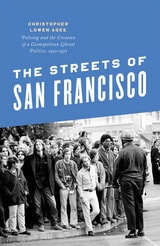
The Streets of San Francisco
Policing and the Creation of a Cosmopolitan Liberal Politics, 1950-1972Christopher Lowen Agee
University of Chicago Press, 2014
The Streets of San Francisco uncovers the seldom reported, street-level interactions between police officers and San Francisco residents and finds that police discretion was the defining feature of mid-century law enforcement. Postwar police officers enjoyed great autonomy when dealing with North Beach beats, African American gang leaders, gay and lesbian bar owners, Haight-Ashbury hippies, artists who created sexually explicit works, Chinese American entrepreneurs, and a wide range of other San Franciscans. Unexpectedly, this police independence grew into a source of both concern and inspiration for the thousands of young professionals streaming into the city's growing financial district. These young professionals ultimately used the issue of police discretion to forge a new cosmopolitan liberal coalition that incorporated both marginalized San Franciscans and rank-and-file police officers. The success of this model in San Francisco resulted in the rise of cosmopolitan liberal coalitions throughout the country, and today, liberal cities across America ground themselves in similar understandings of democracy, emphasizing both broad diversity and strong policing.