Results by title
60 books match the query 'Critique' and 13 start with t
Tarrying with the Negative
Kant, Hegel, and the Critique of IdeologySlavoj Zizek
Duke University Press, 1993
In Tarrying with the Negative, Žižek challenges the contemporary critique of ideology, and in doing so opens the way for a new understanding of social conflict, particularly the recent outbursts of nationalism and ethnic struggle. Are we, Žižek asks, confined to a postmodern universe in which truth is reduced to the contingent effect of various discursive practices and where our subjectivity is dispersed through a multitude of ideological positions? No is his answer, and the way out is a return to philosophy. This revisit to German Idealism allows Žižek to recast the critique of ideology as a tool for disclosing the dynamic of our society, a crucial aspect of which is the debate over nationalism, particularly as it has developed in the Balkans—Žižek's home. He brings the debate over nationalism into the sphere of contemporary cultural politics, breaking the impasse centered on nationalisms simultaneously fascistic and anticolonial aspirations. Provocatively, Žižek argues that what drives nationalistic and ethnic antagonism is a collectively driven refusal of our own enjoyment.
Using examples from popular culture and high theory to illuminate each other—opera, film noir, capitalist universalism, religious and ethnic fundamentalism—this work testifies to the fact that, far more radically than the postmodern sophists, Kant and Hegel are our contemporaries.

Tendentious
Humor as Critique in Postwar and Contemporary PoetryScott Inniss
University of Iowa Press, 2027
The Ascent of Affect
Genealogy and CritiqueRuth Leys
University of Chicago Press, 2017
Ruth Leys’s brilliant, much anticipated history, therefore, is a story of controversy and disagreement. The Ascent of Affect focuses on the post–World War II period, when interest in emotions as an object of study began to revive. Leys analyzes the ongoing debate over how to understand emotions, paying particular attention to the continual conflict between camps that argue for the intentionality or meaning of emotions but have trouble explaining their presence in non-human animals and those that argue for the universality of emotions but struggle when the question turns to meaning. Addressing the work of key figures from across the spectrum, considering the potentially misleading appeal of neuroscience for those working in the humanities, and bringing her story fully up to date by taking in the latest debates, Leys presents here the most thorough analysis available of how we have tried to think about how we feel.
The Critique of Pure Modernity
Hegel, Heidegger, and AfterDavid Kolb
University of Chicago Press, 1986
Kolb offers his own views, proposing the possibility of a meaningful life that is free but still rooted in shared contexts. He concludes with comments on "postmodernity" as discussed by Lyotard and others, arguing persuasively against the presupposition of a unified Modern or Postmodern Age.

The Critique of Scientific Reason
Kurt Hübner
University of Chicago Press, 1983
The Force of Truth
Critique, Genealogy, and Truth-Telling in Michel FoucaultDaniele Lorenzini
University of Chicago Press, 2023
Many blame Michel Foucault for our post-truth and conspiracy-laden society. In this provocative work, Daniele Lorenzini argues that such criticism fundamentally misunderstands the philosopher’s project. Foucault did not question truth itself but what Lorenzini calls “the force of truth,” or how some truth claims are given the power to govern our conduct while others are not. This interest, Lorenzini shows, drove Foucault to articulate a new ethics and politics of truth-telling precisely in order to evade the threat of relativism. The Force of Truth explores this neglected dimension of Foucault’s project by putting his writings on regimes of truth and parrhesia in conversation with early analytic philosophy and by drawing out the “possibilizing” elements of Foucault’s genealogies that remain vital for practicing critique today.
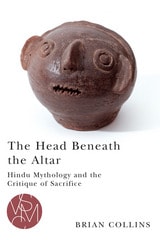
The Head Beneath the Altar
Hindu Mythology and the Critique of SacrificeBrian Collins
Michigan State University Press, 2014
The Limits of Critique
Rita Felski
University of Chicago Press, 2015
Why must critics unmask and demystify literary works? Why do they believe that language is always withholding some truth, that the critic’s task is to reveal the unsaid or repressed? In this book, Rita Felski examines critique, the dominant form of interpretation in literary studies, and situates it as but one method among many, a method with strong allure—but also definite limits.
Felski argues that critique is a sensibility best captured by Paul Ricoeur’s phrase “the hermeneutics of suspicion.” She shows how this suspicion toward texts forecloses many potential readings while providing no guarantee of rigorous or radical thought. Instead, she suggests, literary scholars should try what she calls “postcritical reading”: rather than looking behind a text for hidden causes and motives, literary scholars should place themselves in front of it and reflect on what it suggests and makes possible.
By bringing critique down to earth and exploring new modes of interpretation, The Limits of Critique offers a fresh approach to the relationship between artistic works and the social world.
The Limits of Critique
Rita Felski
University of Chicago Press, 2015
Why must critics unmask and demystify literary works? Why do they believe that language is always withholding some truth, that the critic’s task is to reveal the unsaid or repressed? In this book, Rita Felski examines critique, the dominant form of interpretation in literary studies, and situates it as but one method among many, a method with strong allure—but also definite limits.
Felski argues that critique is a sensibility best captured by Paul Ricoeur’s phrase “the hermeneutics of suspicion.” She shows how this suspicion toward texts forecloses many potential readings while providing no guarantee of rigorous or radical thought. Instead, she suggests, literary scholars should try what she calls “postcritical reading”: rather than looking behind a text for hidden causes and motives, literary scholars should place themselves in front of it and reflect on what it suggests and makes possible.
By bringing critique down to earth and exploring new modes of interpretation, The Limits of Critique offers a fresh approach to the relationship between artistic works and the social world.
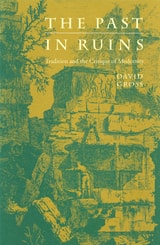
The Past in Ruins
Tradition and the Critique of ModernityDavid Gross
University of Massachusetts Press, 1992
What is the fate of tradition in the modern world? Once a viral source of social cohesion and continuity, many traditions in the West today seem to have been undermined or to have disappeared altogether. Some observers regard this erosion of past values and practices as a disaster, the root cause of contemporary spiritual and social decay. Others see the same phenomenon as emancipatory, making possible new ways of living and new modes of cultural expression.
The Past in Ruins engages and extends this debate beyond these two perspectives. Neither a nostalgic lament for a “world we have lost” nor a celebration of the decline of tradition, the book offers a description of what has disappeared and why, an appraisal of what has survived and how, and a discussion of what to do with tradition now that it no longer serves the integrative function it once did.
In David Gross’s view, the collapse of tradition, though real, can easily be exaggerated. Many traditions have survived at the margins of social life; others have been reconstituted in new forms, or have persisted as “fragments” or “residues.” Yet, though vestiges of tradition remain, they have come to represent something strange or “other.” According to Gross, it is precisely this quality of otherness that makes tradition especially valuable, for today tradition can do what it has rarely done before. It can disturb and unsettle, it can force us to rethink the “givens” of modern life, and it can reconnect us with many of the past’s “lost” or undeveloped possibilities.
The Post-Conflict Environment
Investigation and CritiqueDaniel Bertrand Monk and Jacob Mundy, editors
University of Michigan Press, 2014
The Ruse of Repair
US Neoliberal Empire and the Turn from CritiquePatricia Stuelke
Duke University Press, 2021
The Value of Critique
Exploring the Interrelations of Value, Critique, and Artistic LabourEdited by Isabelle Graw and Christoph Menke
Campus Verlag, 2019