Results by title
160 books match the query 'Cross-cultural studies' and 27 start with t
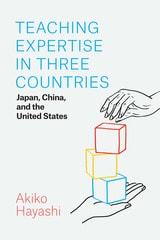
Teaching Expertise in Three Countries
Japan, China, and the United StatesAkiko Hayashi
University of Chicago Press, 2022
In Teaching Expertise in Three Countries, Akiko Hayashi shows how teachers from Japan, China, and the United States think about what it means to be an expert teacher. Based on interviews with teachers conducted over the span of fifteen years and videos taken in their classrooms, Hayashi gives us a valuable portrait of expert teachers in the making. While Hayashi’s research uncovered cultural variations in the different national contexts, her analysis of how teachers adapted their pedagogy throughout their careers also revealed many cross-national similarities. Younger teachers often describe themselves as being in a rush, following scripts, and “talking too much,” while experienced teachers describe themselves as being quieter, knowing children better, and being more present.
Including a foreword by scholar of early childhood education Joseph Tobin, Teaching Expertise in Three Countries provides a foundation for understanding the sequence and pathways of development over the first decade of teaching in three national contexts, demonstrating the value of the field of comparative education in the process.

Terror and Violence
Imagination and the UnimaginableEdited by Pamela J. Stewart, Andrew Strathern, and Neil L. Whitehead
Pluto Press, 2005

The Civilization of Crime
Violence in Town and Country since the Middle AgesEdited by Eric A. Johnson and Eric H. Monkkonen
University of Illinois Press, 1996
of Western culture, has crime itself become more "civilized"?
This book exposes as myths the beliefs that society has become more violent
than it has been in the past and that violence is more likely to occur
in cities than in rural areas.
The product of years of study
by scholars from North America and Europe, The Civilization of Crime
shows that, however violent some large cities may be now, both rural and
urban communities in Sweden, Holland, England, and other countries were
far more violent during the late Middle Ages than any cities are today.
Contributors show that the
dramatic change is due, in part, to the fact that violence was often tolerated
or even accepted as a form of dispute settlement in village-dominated
premodern society. Interpersonal violence declined in the seventeenth
and eighteenth centuries, as dispute resolution was taken over by courts
and other state institutions and the church became increasingly intolerant
of it.
The book also challenges a
number of other historical-sociological theories, among them that contemporary
organized crime is new, and addresses continuing debate about the meaning
and usefulness of crime statistics.
CONTRIBUTORS: Esther Cohen,
Herman Diederiks, Florike Egmond, Eric A. Johnson, Michele Mancino, Eric
H. Monkkonen, Eva Österberg, James A. Sharpe, Pieter Spierenburg,
Jan Sundin, Barbara Weinberger
The Colors of Poverty
Why Racial and Ethnic Disparities PersistAnn Chih Lin
Russell Sage Foundation, 2008
The Construction of Homosexuality
David F. Greenberg
University of Chicago Press, 1990
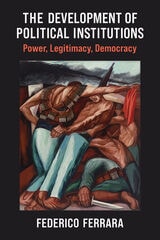
The Development of Political Institutions
Power, Legitimacy, DemocracyFederico Ferrara
University of Michigan Press, 2022
While the literature on “new institutionalism” explains the stability of institutional arrangements within countries and the divergence of paths of institutional development between countries, Federico Ferrara takes a “historical institutionalist” approach to theorize dynamic processes of institutional reproduction, institutional decay, and institutional change in explaining the development of political institutions. Ferrara synthesizes “power-based” or “power-distributional” explanations and “ideas-based” “legitimation explanations.” He specifies the psychological “microfoundations” of processes of institutional development, drawing heavily from the findings of experimental psychology to ensure that the explanation is grounded in clear and realistic assumptions regarding human motivation, cognition, and behavior. Aside from being of interest to scholars and graduate students in political science and other social-scientific disciplines whose research concentrates on the genesis of political institutions, their evolution over time, and their impact on the stability of political order and the quality of governance, the book will be required reading in graduate courses and seminars in comparative politics where the study of institutions and their development ranks among the subfield’s most important subjects.

The Human Drama of Abortion
A Global Search for ConsensusAnibal Faundes
Vanderbilt University Press, 2006
Deeply touched by the tragedies of botched abortions that they witnessed as medical students and young physicians in Chile in the 1940s and later around the world, the authors have attempted in their professional lives and now in this book to establish a framework for dialogue to replace the polarization that exists today.
Doctors Faundes and Barzelatto use their decades of international work to document the personal experiences of different classes of women in different countries and those countries' policies and practices. No other book provides such a comprehensive and reasoned examination of the entire topic of abortion, from the medical to the religious and ethical and from the psychological to the legal, in plain language understandable by non-specialists.
The central thesis is that there are too many induced abortions in the world today, that most are preventable and should be prevented--a middle ground that both pro-life and pro-choice advocates can accept. The first part of the book reviews why women have abortions, as well as the magnitude and consequences. The second part examines values. The third part discusses effective interventions. The final part states conclusions about what can be done to reach a necessary social consensus.
The Portuguese edition of this book was issued at the very end of 2004. The Spanish edition, launched in mid-2005, is already in a second printing. The authors are making presentations at special events sponsored by universities, professional associations, and feminist networks in Argentina, Chile, Mexico, Peru, Uruguay, Colombia, the Dominican Republic, and the United States.
The Institutional Context of Population Change
Patterns of Fertility and Mortality across High-Income NationsFred C. Pampel
University of Chicago Press, 2001
The Institutional Context of Population Change cuts across numerous political and sociological topics, including political sociology, stratification, sex and gender, and aging. It persuasively shows the importance of public policies for understanding the demographic consequences of population change and the importance of demographic change for understanding the consequences of public policies.

The Irish in Us
Irishness, Performativity, and Popular CultureDiane Negra, ed.
Duke University Press, 2006
Examining how Irishness is performed and commodified in the contemporary transnational environment, the contributors explore topics including Van Morrison’s music, Frank McCourt’s writing, the explosion of Irish-themed merchandising, the practices of heritage seekers, the movie The Crying Game, and the significance of red hair. Whether considering the implications of Garth Brooks’s claim of Irishness and his enormous popularity in Ireland, representations of Irish masculinity in the TV series Buffy the Vampire Slayer and Angel, or Americans’ recourse to a consoling Irishness amid the racial and nationalist tensions triggered by the events of September 11, the contributors delve into complex questions of ethnicity, consumerism, and globalization. Ultimately, they call for an increased awareness of the exclusionary effects of claims of Irishness and for the cultivation of flexible, inclusive ways of affiliating with Ireland and the Irish.
Contributors. Natasha Casey, Maeve Connolly, Catherine M. Eagan, Sean Griffin, Michael Malouf, Mary McGlynn, Gerardine Meaney, Diane Negra, Lauren Onkey, Maria Pramaggiore, Stephanie Rains, Amanda Third
The Making of Our Bodies, Ourselves
How Feminism Travels across BordersKathy Davis
Duke University Press, 2007
Kathy Davis tells the story of this remarkable book’s global circulation. Based on interviews with members of the Boston Women’s Health Book Collective, the group of women who created Our Bodies, Ourselves, as well as responses to the book from readers, and discussions with translators from Latin America, Egypt, Thailand, China, Eastern Europe, Francophone Africa, and many other countries and regions, Davis shows why Our Bodies, Ourselves could never have been so influential if it had been just a popular manual on women’s health. It was precisely the book’s distinctive epistemology, inviting women to use their own experiences as resources for producing situated, critical knowledge about their bodies and health, that allowed the book to speak to so many women within and outside the United States. Davis provides a grounded analysis of how feminist knowledge and political practice actually travel, and she shows how the process of transforming Our Bodies, Ourselves offers a glimpse of a truly transnational feminism, one that joins the acknowledgment of difference and diversity among women in different locations with critical reflexivity and political empowerment.
The Many Faces of Strategic Voting
Tactical Behavior in Electoral Systems Around the WorldLaura B. Stephenson, John H. Aldrich, and André Blais, Editors
University of Michigan Press, 2018
Voters do not always choose their preferred candidate on election day. Often they cast their ballots to prevent a particular outcome, as when their own preferred candidate has no hope of winning and they want to prevent another, undesirable candidate’s victory; or, they vote to promote a single-party majority in parliamentary systems, when their own candidate is from a party that has no hope of winning. In their thought-provoking book The Many Faces of Strategic Voting, Laura B. Stephenson, John H. Aldrich, and André Blais first provide a conceptual framework for understanding why people vote strategically, and what the differences are between sincere and strategic voting behaviors. Expert contributors then explore the many facets of strategic voting through case studies in Great Britain, Spain, Canada, Japan, Belgium, Germany, Switzerland, and the European Union.

The Patent Crisis and How the Courts Can Solve It
Dan L. Burk and Mark A. Lemley
University of Chicago Press, 2009
Patent law is crucial to encourage technological innovation. But as the patent system currently stands, diverse industries from pharmaceuticals to software to semiconductors are all governed by the same rules even though they innovate very differently. The result is a crisis in the patent system, where patents calibrated to the needs of prescription drugs wreak havoc on information technologies and vice versa. According to Dan L. Burk and Mark A. Lemley in The Patent Crisis and How the Courts Can Solve It, courts should use the tools the patent system already gives them to treat patents in different industries differently. Industry tailoring is the only way to provide an appropriate level of incentive for each industry.
Burk and Lemley illustrate the barriers to innovation created by the catch-all standards in the current system. Legal tools already present in the patent statute, they contend, offer a solution—courts can tailor patent law, through interpretations and applications, to suit the needs of various types of businesses. The Patent Crisis and How the Courts Can Solve It will be essential reading for those seeking to understand the nexus of economics, business, and law in the twenty-first century.
The Politics of New Immigrant Destinations
Transatlantic PerspectivesStefanie Chambers
Temple University Press, 2017
Migration to new destinations in Europe and the United States has expanded dramatically over the past few decades. Within these destinations, there is a corresponding greater variety of ethnic, cultural, and/or religious diversity. This timely volume, The Politics of New Immigrant Destinations, considers the challenges posed by this proliferation of diversity for governments, majority populations, and immigrants.
The contributors assess the effectiveness of the policy and political responses that have been spawned by increasing diversity in four types of new immigrant destinations: “intermediate” destination countries—Ireland and Italy; culturally distinct regions experiencing new migration such as Catalonia in Spain or the American South; new destinations within traditional destination countries like the state of Utah and rural towns in England; and “early migration cycle” countries including Latvia and Poland.
The Politics of New Immigrant Destinations examines how these new destinations for immigrants compare to traditional destinations, with respect to their policy responses and success at integrating immigrants, offering perspectives from both immigrants and natives.
Contributors include: Dace Akule, Amado Alarcón, Rhys Andrews, Francesca Campomori, Tiziana Caponio, Scott Decker, Erica Dobbs, Melissa M. Goldsmith, Aleksandra Grzymała-Kazłowska, Claudio A. Holzner, Magdalena Lesińska, Paul Lewis, Helen B. Marrow, Laura Morales, Katia Pilati, Marie Provine, Monica Varsanyi, and the editors.

The Pox of Liberty
How the Constitution Left Americans Rich, Free, and Prone to InfectionWerner Troesken
University of Chicago Press, 2015
Werner Troesken looks at the history of the United States with a focus on three diseases—smallpox, typhoid fever, and yellow fever—to show how constitutional rules and provisions that promoted individual liberty and economic prosperity also influenced, for good and for bad, the country’s ability to eradicate infectious disease. Ranging from federalism under the Commerce Clause to the Contract Clause and the Fourteenth Amendment, Troesken argues persuasively that many institutions intended to promote desirable political or economic outcomes also hindered the provision of public health. We are unhealthy, in other words, at least in part because our political and legal institutions function well. Offering a compelling new perspective, The Pox of Liberty challenges many traditional claims that infectious diseases are inexorable forces in human history, beyond the control of individual actors or the state, revealing them instead to be the result of public and private choices.

The Right to Die with Dignity
An Argument in Ethics, Medicine, and LawCohen-Almagor, Raphael
Rutgers University Press, 2001
There are few issues more divisive than what has become known as “the right to die.” One camp upholds “death with dignity,” regarding the terminally ill as autonomous beings capable of forming their own judgment on the timing and process of dying. The other camp advocates “sanctity of life,” regarding life as intrinsically valuable, and that should be sustained as long as possible. Is there a right answer?
Raphael Cohen-Almagor takes a balanced approach in analyzing this emotionally charged debate, viewing the dispute from public policy and international perspectives. He offers an interdisciplinary, compelling study in medicine, law, religion, and ethics. It is a comprehensive look at the troubling question of whether physician-assisted suicide should be allowed. Cohen-Almagor delineates a distinction between active and passive euthanasia and discusses legal measures that have been invoked in the United States and abroad. He outlines reasons non-blood relatives should be given a role in deciding a patient’s last wishes. As he examines euthanasia policies in the Netherlands and the 1994 Oregon Death with Dignity Act, the author suggests amendments and finally makes a circumscribed plea for voluntary physician-assisted suicide.
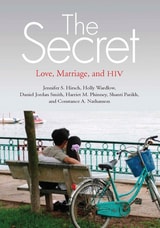
The Secret
Love, Marriage, and HIVJennifer S. Hirsch
Vanderbilt University Press, 2009
For many women around the world, their greatest risk of HIV infection comes from having sex with the very person with whom they are supposed to have sex: their spouse. The Secret situates marital HIV risk within a broader exploration of marital and extramarital sexuality in five diverse settings: Mexico, Nigeria, Uganda, Vietnam, and Papua New Guinea. In these settings, the authors write, men's extramarital sex is an officially secret but actually widespread (and widely acknowledged) social practice, rather than something men do because their bodies demand it and women can't stop them.
Drawing on research conducted as part of an innovative comparative ethnographic study, and modeling a novel approach to collaborative anthropological scholarship, the authors show men's extramarital sex to be a fundamental aspect of gendered social organization. Through theoretically sophisticated yet lucid writing and vivid ethnographic description, drawing on rich data from the marital case studies conducted by research teams in each country, they trace how extramarital opportunity structures, sexual geographies, and concerns about social risk facilitate men's participation in extramarital sex. Also documented throughout is the collision between traditional ways and the new practices of romantic companionate marriage.
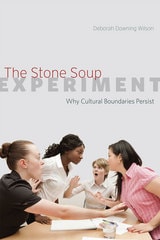
The Stone Soup Experiment
Why Cultural Boundaries PersistDeborah Downing Wilson
University of Chicago Press, 2015
The experience of the Stoners and Traders is a profound testament to human sociality. Even in the form of simulation, even as a game, the participants found themselves quickly—and with real conviction—bound to the ideologies and practices of their in-group. The Stoners enjoyed their days lounging, chatting, and making crafts, while the Traders—through a complex market of playing cards—competed for the highest bankrolls. When they came into contact, misunderstanding, competition, and even manipulation prevailed, to the point that each group became so convinced of its own superiority that even after the simulation’s end the students could not reconcile.
Throughout her riveting narrative, Downing Wilson interweaves fascinating discussions on the importance of play, emotions, and intergroup interaction in the formation and maintenance of group identities, as well as on the dynamic social processes at work when different cultural groups interact. A fascinating account of social experimentation, the book paints a vivid portrait of our deepest social tendencies and the powers they have over how we make friends and enemies alike.
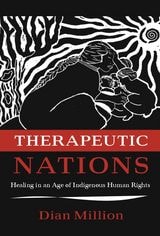
Therapeutic Nations
Healing in an Age of Indigenous Human RightsDian Million
University of Arizona Press, 2013
Million contends that nation-state relations are influenced by a theory of trauma ascendant with the rise of neoliberalism. Such use of trauma theory regarding human rights corresponds to a therapeutic narrative by Western governments negotiating with Indigenous nations as they seek self-determination.
Focusing on Canada and drawing comparisons with the United States and Australia, Million brings a genealogical understanding of trauma against a historical filter. Illustrating how Indigenous people are positioned differently in Canada, Australia, and the United States in their articulation of trauma, the author particularly addresses the violence against women as a language within a greater politic. The book introduces an Indigenous feminist critique of this violence against the medicalized framework of addressing trauma and looks to the larger goals of decolonization. Noting the influence of humanitarian psychiatry, Million goes on to confront the implications of simply dismissing Indigenous healing and storytelling traditions.
Therapeutic Nations is the first book to demonstrate affect and trauma’s wide-ranging historical origins in an Indigenous setting, offering insights into community healing programs. The author’s theoretical sophistication and original research make the book relevant across a range of disciplines as it challenges key concepts of American Indian and Indigenous studies.
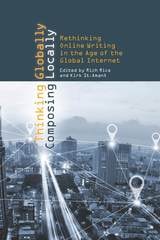
Thinking Globally, Composing Locally
Rethinking Online Writing in the Age of the Global InternetRich Rice
Utah State University Press, 2018
Thinking Globally, Composing Locally explores how writing and its pedagogy should adapt to the ever-expanding environment of international online communication. Communication to a global audience presents a number of new challenges; writers seeking to connect with individuals from many different cultures must rethink their concept of audience. They must also prepare to address friction that may arise from cross-cultural rhetorical situations, variation in available technology and in access between interlocutors, and disparate legal environments.
The volume offers a pedagogical framework that addresses three interconnected and overarching objectives: using online media to contact audiences from other cultures to share ideas; presenting ideas in a manner that invites audiences from other cultures to recognize, understand, and convey or act upon them; and composing ideas to connect with global audiences to engage in ongoing and meaningful exchanges via online media. Chapters explore a diverse range of pedagogical techniques, including digital notebooks designed to create a space for active dialogic and multicultural inquiry, experience mapping to identify communication disruption points in international customer service, and online forums used in global distance education.
Thinking Globally, Composing Locally will prove an invaluable resource for instructors seeking to address the many exigencies of online writing situations in global environments.
Contributors: Suzanne Blum Malley, Katherine Bridgman, Maury Elizabeth Brown, Kaitlin Clinnin, Cynthia Davidson, Susan Delagrange, Scott Lloyd Dewitt, Amber Engelson, Kay Halasek, Lavinia Hirsu, Daniel Hocutt, Vassiliki Kourbani, Tika Lamsal, Liz Lane, Ben Lauren, J. C. Lee, Ben McCorkle, Jen Michaels, Minh-Tam Nguyen, Beau S. Pihlaja, Mª Pilar Milagros, Cynthia L. Selfe, Heather Turner, Don Unger, Josephine Walwema
Thinking Literature across Continents
Ranjan Ghosh and J. Hillis Miller
Duke University Press, 2016

Three Decades of Engendering History
Linda Heidenreich
University of North Texas Press, 2014

Three Faces of Beauty
Casablanca, Paris, CairoSusan Ossman
Duke University Press, 2002
By examining how images from fashion magazines, film, and advertising are enacted in beauty salons, Ossman demonstrates how embodiment is able to display and rework certain hierarchies. While offering the possibility of freedom from the tethers of status, nation, religion, and nature, beauty is created by these very categories and values, Ossman shows. Drawing on hundreds of interviews, she documents the various rituals of welcome, choice-making, pricing practices, and spatial arrangements in multiple salons . She also reveals ways in which patrons in all three cities imagine and co-opt looks they believe are fashionable in the other cities. By observing salons as scenes of instruction, Ossman reveals that beautiful bodies evolve within the intertwining contexts of media, modernity, location, time, postcolonialism, and male expectation.

Through Japanese Eyes
Thirty Years of Studying Aging in AmericaYohko Tsuji
Rutgers University Press, 2021
Through Japanese Eyes offers an ethnography of aging in America from a cross-cultural perspective based on a lengthy period of research. It illustrates how older Americans cope with the gap between the ideal (e.g., independence) and the real (e.g., needing assistance) of growing older, and the changes the author observed over thirty years of research.
To Have and To Hit
CULTURAL PERSPECTIVES ON WIFE BEATINGEdited by Dorothy Ayers Counts, Judith K. Brown, and Jacquelyn C. Campbell
University of Illinois Press, 1999
Translation and Ethnography
The Anthropological Challenge of Intercultural UnderstandingTullio Maranhão
University of Arizona Press, 2003
Translation and Ethnography focuses on issues that arise when we attempt to make significant thematic or symbolic elements of one culture meaningful in terms of another. Its chapters cover a wide range of topics, all stressing the interpretive practices that enable the approximation of meaning: the role of differential power, of language and so-called world view, and of translation itself as a metaphor of many contemporary cross-cultural processes.
The topics covered here represent a global sample of translation, ranging from Papua New Guinea to South America to Europe. Some of the issues addressed include postcolonial translation/transculturation from the perspective of colonized languages, as in the Mexican Zapatista movement; mis-translations of Amerindian conceptions and practices in the Amazon, illustrating the subversive potential of anthropology as a science of translation; Ethiopian oracles translating divine messages for the interpretation of believers; and dreams and clowns as translation media among the Gamk of Sudan.
Anthropologists have long been accustomed to handling translation chains; in this book they open their diaries and show the steps they take toward knowledge. Translation and Ethnography raises issues that will shake up the most obdurate, objectivist translators and stimulate scholars in sociolinguistics, communication, ethnography, and other fields who face the challenges of conveying meaning across human boundaries.
Transnational LGBT Activism
Working for Sexual Rights WorldwideRyan R. Thoreson
University of Minnesota Press, 2014
The International Gay and Lesbian Human Rights Commission (IGLHRC) was founded in 1990 as the first NGO devoted to advancing LGBT human rights worldwide. How, this book asks, is that mission translated into practice? What do transnational LGBT human rights advocates do on a day-to-day basis and for whom? Understanding LGBT human rights claims is impossible, Ryan R. Thoreson contends, without knowing the answers to these questions.
In Transnational LGBT Activism, Thoreson argues that the idea of LGBT human rights is not predetermined but instead is defined by international activists who establish what and who qualifies for protection. He shows how IGLHRC formed and evolved, who is engaged in this work, how they conceptualize LGBT human rights, and how they have institutionalized their views at the United Nations and elsewhere. After a full year of in-depth research in New York City and Cape Town, South Africa, Thoreson is able to reconstruct IGLHRC’s early campaigns and highlight decisive shifts in the organization’s work from its founding to the present day.
Using a number of high-profile campaigns for illustration, he offers insight into why activists have framed particular demands in specific ways and how intergovernmental advocacy shapes the claims that activists ultimately make. The result is a uniquely balanced, empirical response to previous impressionistic and reductive critiques of Western human rights activists—and a clarifying perspective on the nature and practice of global human rights advocacy.
Trickster and Hero
Two Characters in the Oral and Written Traditions of the WorldHarold Scheub
University of Wisconsin Press, 2012
Scheub delves into the importance of trickster mythologies and the shifting relationships between tricksters and heroes. He examines protagonists that figure centrally in a wide range of oral narrative traditions, showing that the true hero is always to some extent a trickster as well. The trickster and hero, Scheub contends, are at the core of storytelling, and all the possibilities of life are there: we are taken apart and rebuilt, dismembered and reborn, defeated and renewed.