Results by title
193 books match the query 'Cultural & Regional' and 32 start with t
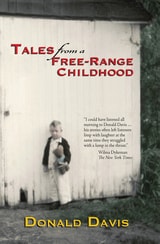
Tales from a Free-Range Childhood
Donald Davis
Parkhurst Brothers, Inc., 2022
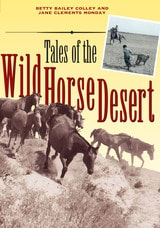
Tales of the Wild Horse Desert
By Betty Bailey Colley and Jane Clements Monday
University of Texas Press, 2001
Highly skilled, hard-working, and loyal to each other and to the ranches that employ them, the Mexican and Mexican American vaqueros who work on the famous King and Kenedy Ranches of South Texas' Wild Horse Desert are some of America's best cowboys. Many of them come from families who have lived and worked on the ranches for over a hundred years. They preserve the memories of ranch life handed down by their grandparents and great-grandparents, even as they use modern technologies to keep the ranches running smoothly in the twenty-first century.
This book tells the stories of the vaqueros of the Wild Horse Desert for fourth- through eighth-grade students. It begins with a brief history of the vaqueros and the King and Kenedy Ranches. Then, using in the words of today's vaqueros and their families, it describes many aspects of past and present life on the ranches. Young readers will learn what it's like to grow up on the ranches and how vaqueros learn their work. They'll also discover how much goes into being a vaquero, from using all the different ropes and equipment, to working a round-up, to showing prize-winning cattle and horses. Teachers and parents will appreciate all the supplemental material in the appendix, including a glossary, lists of related books and websites, hands-on learning activities, and even range and camp house recipes.
Talking to Strangers
Anxieties of Citizenship since Brown v. Board of EducationDanielle Allen
University of Chicago Press, 2004
Returning to the landmark Brown v. Board of Education decision of 1954 and to the famous photograph of Elizabeth Eckford, one of the Little Rock Nine, being cursed by fellow "citizen" Hazel Bryan, Allen argues that we have yet to complete the transition to political friendship that this moment offered. By combining brief readings of philosophers and political theorists with personal reflections on race politics in Chicago, Allen proposes strikingly practical techniques of citizenship. These tools of political friendship, Allen contends, can help us become more trustworthy to others and overcome the fossilized distrust among us.
Sacrifice is the key concept that bridges citizenship and trust, according to Allen. She uncovers the ordinary, daily sacrifices citizens make to keep democracy working—and offers methods for recognizing and reciprocating those sacrifices. Trenchant, incisive, and ultimately hopeful, Talking to Strangers is nothing less than a manifesto for a revitalized democratic citizenry.
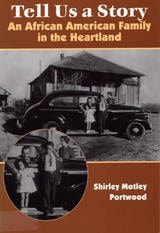
Tell Us a Story
An African American Family in the HeartlandShirley Motley Portwood
Southern Illinois University Press, 2000
Illinois State Historical Society's Certificate of Excellence (2002)
Supplemented by recollections from the present era, Tell Us a Story is a colorful mosaic of African American autobiography and family history set in Springfield, Illinois, and in rural southern Illinois, Missouri, and Arkansas from the 1920s through the 1950s.
Shirley Motley Portwood shares rural, African American family and community history through a collection of vignettes about the Motley family. Initially transcribed accounts of the Motleys’ rich oral history, these stories have been passed among family members for nearly fifty years. In addition to her personal memories, Portwood presents interviews with her father, three brothers, and two sisters plus notes and recollections from their annual family reunions. The result is a composite view of the Motley family.
A historian, Portwood enhances the Motley family story by investigating primary data such as census, marriage, school, and land records, newspaper accounts, city directories, and other sources. The backbone of this saga, however, is oral history gathered from five generations, extending back to Portwood's grandparents, born more than one hundred years ago. Information regarding two earlier generations—her great- grandfather and great-great-grandparents, who were slaves—is based on historical research into state archives, county and local records, plantation records, and manuscript censuses.
A rich source for this material—the Motley family reunions—are week-long retreats where four generations gather at the John Motley house in Burlington, Connecticut, the Portwood home in Godfrey, Illinois, or other locations. Here the Motleys, all natural storytellers, pass on the family traditions. The stories, ranging from humorous to poignant, reveal much about the culture and history of African Americans, especially those from nonurban areas. Like many rural African Americans, the Motleys have a rich and often joyful family history with traditions reaching back to the slave past. They have known the harsh poverty that made even the necessities difficult to obtain and the racial prejudice that divided whites and blacks during the era of Jim Crow segregation and inequality; yet they have kept a tremendous faith in self-improvement through hard work and education.
The Addison Gayle Jr. Reader
Edited by Nathaniel Norment Jr.
University of Illinois Press, 2008

The Black Public Sphere
Edited by The Black Public Sphere Collective
University of Chicago Press, 1995
To think about the black public sphere we have to be willing to rethink the relationship between markets and freedom, commodity and identity, property and pleasure. This book provides more sophisticated approaches to matters historically consigned to inadequate rubrics—"the Negro problem," "subcultures," "minorities," "inner city," and "multicultural." While these rubrics constrict and stereotype, the analytic potential of the black public sphere is that it facilitates new ways to discuss democratic values and citizenship.
The Book Keeper
A Memoir of Race, Love, and LegacyJulia McKenzie Munemo
Ohio University Press, 2020
“A fiercely felt memoir about family shame and the transformative power of love even as it’s also an ongoing meditation on privilege and race in twenty-first-century America. This is a debut striking in its empathetic imagination, observational acuity, and emotional intelligence.” — Jim Shepard, author of Like You’d Understand, Anyway.
In a memoir that’s equal parts love story, investigation, and racial reckoning, Munemo unravels and interrogates her whiteness, a shocking secret, and her family’s history.
When interracial romance novels written by her long-dead father landed on Julia McKenzie Munemo’s kitchen table, she—a white woman—had been married to a black man for six years and their first son was a toddler. Out of shame about her father’s secret career as a writer of “slavery porn,” she hid the books from herself, and from her growing mixed-race family, for more than a decade. But then, with police shootings of African American men more and more in the public eye, she realized that understanding her own legacy was the only way to begin to understand her country.
The Color of Family
History, Race, and the Politics of AncestryMichael O'Malley
University of Chicago Press, 2024
A zealous eugenicist ran Virginia’s Bureau of Vital Statistics in the first half of the twentieth century, misusing his position to reclassify people he suspected of hiding their “true” race. But in addition to being blinded by his prejudices, he and his predecessors were operating more by instinct than by science. Their whole dubious enterprise was subject not just to changing concepts of race but outright error, propagated across generations.
This is how Michael O’Malley, a descendant of a Philadelphia Irish American family, came to have “colored” ancestors in Virginia. In The Color of Family, O’Malley teases out the various changes made to citizens’ names and relationships over the years, and how they affected families as they navigated what it meant to be “white,” “colored,” “mixed race,” and more. In the process, he delves into the interplay of genealogy and history, exploring how the documents that establish identity came about, and how private companies like Ancestry.com increasingly supplant state and federal authorities—and not for the better.
Combining the history of O’Malley’s own family with the broader history of racial classification, The Color of Family is an accessible and lively look at the ever-shifting and often poisoned racial dynamics of the United States.
The Cost of Courage
The Journey of an American CongressmanCarl Elliott
University of Alabama Press, 2001
This deeply moving story chronicles the tenacity and vision that carried Carl Elliott from the hills of northwest Alabama to eight distinguished terms in the United States House of Representatives.
Born in a log cabin on a tenant farm in 1913, Carl Elliott worked his way through The University of Alabama during the Great Depression and was elected to Congress in 1948. With a no-nonsense philosophy of fairness and equal opportunity, he established himself as one of the most effective members of the House of Representatives during the 1950s. He was a progressive Democrat and he fought hard for the dirt farmers and coal miners he grew up with and who sent him to Congress.
In an era when racial segregationists dominated southern politics, Elliott worked with many of the important political leaders of the 20th century, including Presidents Truman, Eisenhower, and Kennedy and powerful House Speaker Sam Rayburn. He was instrumental in passing the National Defense Education Act of 1958, which continues to provide college loans to more than 20 million Americans. But his brave stand against racism and George Wallace in the 1966 Alabama gubernatorial race ruined him professionally (he never returned to elected office) and financially (he cashed in his congressional pension to help fund the campaign). Even as a destitute invalid in his old age, however, Elliott kept his dignity and integrity intact.
The life story of Carl Elliott is full of humor and wry wisdom and explains how he made his way across a stage as big as America, influencing its politics and future, and then emerged, belatedly, as an unsung hero of the fight for civil rights and equality.
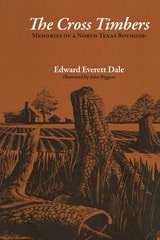
The Cross Timbers
Memories of a North Texas BoyhoodBy Edward Everett Dale
University of Texas Press, 1966
The activities of a young boy on a small farm in the Texas Cross Timbers during the 1880s seem especially distant today. No one can remember the adventure of a sixteen-and-a-half-mile journey, which consumed the greater part of a day; or hurried predawn dressing in a frosty cold loft while the fragrance of a hearty breakfast wafted upward through the floor cracks; or a two-room schoolhouse, where the last half of Friday afternoon was given over to “speaking pieces” or to spelling and ciphering matches.
Through the recollections of Edward Everett Dale we are able to view a pattern of life in rural America now gone forever. For The Cross Timbers is a story which, with but a few minor variations, could have been told about a vast number of small boys on farms cleared from the virgin forests in the timbered regions of many states.
After presenting a brief introduction to the members of the Dale family and the plant, animal, and bird life of the Lower Cross Timbers countryside, the author describes his boyhood of a past century. He tells of his home, its furnishings, and the food served there, as well as the neighbors and relatives who come to visit. We learn of the superstitions, the humorous homespun expressions, the mores of early rural Texans. We hunt and fish with young Master Dale in the thick woods and along the clear creeks. Pioneer life demanded much hard work, but not to the exclusion of a diverting social life—both of which included the youngsters, as the author so graphically relates. Dale tells us also of the religious and secular education of the era, showing the significance of the home in supplementing these two influences.
Anyone reading this volume must be impressed by the great differences in the lifeways of rural children today and of those of the end of the nineteenth century.

The Divided States
Unraveling National Identities in the Twenty-First CenturyEdited by Laura J. Beard and Ricia Anne Chansky
University of Wisconsin Press, 2023
Working across auto/biography studies, American studies, and human geography—all of which deal with the current interest in competing narratives, “alternative facts,” and accountability—the essays engage in and contribute to critical conversations in classrooms, scholarship, and the public sphere. The authors draw from a variety of fields, including anthropology; class analysis; critical race theory; diasporic, refugee, and immigration studies; disability studies; gender studies; graphic and comix studies; Indigenous studies; linguistics; literary studies; sociology; and visual culture. And the genres under scrutiny include diary, epistolary communication, digital narratives, graphic narratives, literary narratives, medical narratives, memoir, oral history, and testimony.
This fresh and theoretically engaged volume will be relevant to anyone interested in the multiplicity of voices that make up the US national narrative.
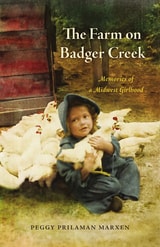
The Farm on Badger Creek
Memories of a Midwest GirlhoodPeggy Prilaman Marxen
Wisconsin Historical Society Press, 2021
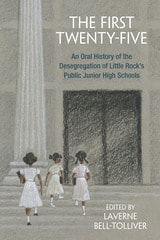
The First Twenty-Five
An Oral History of the Desegregation of Little Rock’s Public Junior High SchoolsLaVerne Bell-Tolliver
University of Arkansas Press, 2018
“It was one of those periods that you got through, as opposed to enjoyed. It wasn’t an environment that . . . was nurturing, so you shut it out. You just got through it. You just took it a day at a time. You excelled if you could. You did your best. You felt as though the eyes of the community were on you.”—Glenda Wilson, East Side Junior High
Much has been written about the historical desegregation of Little Rock Central High School by nine African American students in 1957. History has been silent, however, about the students who desegregated Little Rock’s five public junior high schools—East Side, Forest Heights, Pulaski Heights, Southwest, and West Side—in 1961 and 1962.
The First Twenty-Five gathers the personal stories of these students some fifty years later. They recall what it was like to break down long-standing racial barriers while in their early teens—a developmental stage that often brings emotional vulnerability. In their own words, these individuals share what they saw, heard, and felt as children on the front lines of the civil rights movement, providing insight about this important time in Little Rock, and how these often painful events from their childhoods affected the rest of their lives.
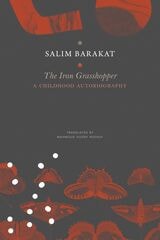
The Iron Grasshopper
A Childhood Autobiography; The Incomplete Biography of a Child Who Saw Nothing but a Fugitive Land, So He Shouted: These Are My Traps, O Sandgrouse!Salim Barakat
Seagull Books, 2025
Through vivid vignettes and lyrical prose, The Iron Grasshopper transcends memoir, immersing readers in the poignant and turbulent realities of a Kurdish childhood in mid-twentieth-century Syria.
Kurdish-Syrian poet and novelist Salim Barakat, one of the most distinctive writers in contemporary Arabic literature, has mesmerized the Arab literary scene since his first volume of poetry appeared in 1972. Now, his unique memoir—first published in 1980—is finally available in English translation.
In The Iron Grasshopper, Barakat offers a poignant and evocative portrayal of his childhood. Set against the backdrop of the mid-twentieth century, Barakat’s memoir recounts his formative years in a small town near the Taurus Mountains. Through a series of vivid and often unsettling vignettes, he captures the turbulence and wonder of growing up in a landscape marked by political upheaval, cultural conflicts, and personal discovery. Barakat’s story intertwines childhood innocence with the harsh realities of violence and discrimination against Kurds, shaping his relationship with his homeland, the Arabic language, and his identity as a writer. The memoir’s rich prose and lyrical reflections invite readers into Barakat’s inner world, where the boundaries between past and present blur, and the simplicity of childhood is juxtaposed with profound existential musings.
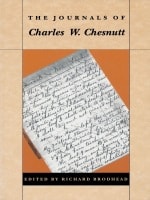
The Journals of Charles W. Chesnutt
Charles W. Chesnutt
Duke University Press, 1993
Though he achieved literary success in his time, Chesnutt has only recently been rediscovered and his contribution to American literature given its due. The only known private diary from a nineteenth-century African American author, these pages offer a fascinating glimpse into Chesnutt's everyday experience as he struggled to win the goods of education in the world of the post-Civil War South. An extraordinary portrait of the self-made man beset by the urgencies and difficulties of self-improvement in a racially discriminatory society, Chesnutt's journals unfold a richly detailed local history of postwar North Carolina. They also show with great force how the world of the postwar South obstructed--and, unexpectedly, assisted--a black man of driving intellectual ambitions.
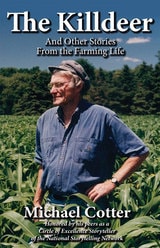
The Killdeer
And Other Stories From the Farming LifeMichael Cotter
Parkhurst Brothers, Inc., 2014
--Rex Ellis, Director of Museum programs, Smithsonian Institution, Washington, D.C.
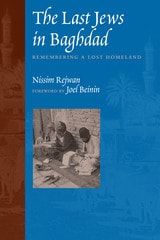
The Last Jews in Baghdad
Remembering a Lost HomelandBy Nissim Rejwan
University of Texas Press, 2004
Once upon a time, Baghdad was home to a flourishing Jewish community. More than a third of the city's people were Jews, and Jewish customs and holidays helped set the pattern of Baghdad's cultural and commercial life. On the city's streets and in the bazaars, Jews, Muslims, and Christians—all native-born Iraqis—intermingled, speaking virtually the same colloquial Arabic and sharing a common sense of national identity. And then, almost overnight it seemed, the state of Israel was born, and lines were drawn between Jews and Arabs. Over the next couple of years, nearly the entire Jewish population of Baghdad fled their Iraqi homeland, never to return.
In this beautifully written memoir, Nissim Rejwan recalls the lost Jewish community of Baghdad, in which he was a child and young man from the 1920s through 1951. He paints a minutely detailed picture of growing up in a barely middle-class family, dealing with a motley assortment of neighbors and landlords, struggling through the local schools, and finally discovering the pleasures of self-education and sexual awakening. Rejwan intertwines his personal story with the story of the cultural renaissance that was flowering in Baghdad during the years of his young manhood, describing how his work as a bookshop manager and a staff writer for the Iraq Times brought him friendships with many of the country's leading intellectual and literary figures. He rounds off his story by remembering how the political and cultural upheavals that accompanied the founding of Israel, as well as broad hints sent back by the first arrivals in the new state, left him with a deep ambivalence as he bid a last farewell to a homeland that had become hostile to its native Jews.
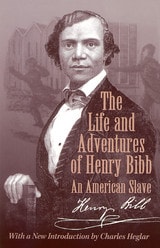
The Life and Adventures of Henry Bibb
An American SlaveHenry Bibb
University of Wisconsin Press, 2001
First published in 1849 and largely unavailable for many years, The Life and Adventures of Henry Bibb is among the most remarkable slave narratives. Born on a Kentucky plantation in 1815, Bibb first attempted to escape from bondage at the age of ten. He was recaptured and escaped several more times before he eventually settled in Detroit, Michigan, and joined the antislavery movement as a lecturer.
Bibb’s story is different in many ways from the widely read Narrative of the Life of Frederick Douglass, An American Slave and Harriet Jacobs’ Incidents in the Life of a Slave Girl. He was owned by a Native American; he is one of the few ex-slave autobiographers who had labored in the Deep South (Louisiana); and he writes about folkways of the slaves, especially how he used conjure to avoid punishment and to win the hearts of women. Most significant, he is unique in exploring the importance of marriage and family to him, recounting his several trips to free his wife and child. This new edition includes an introduction by literary scholar Charles Heglar and a selection of letters and editorials by Bibb.
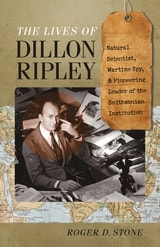
The Lives of Dillon Ripley
Natural Scientist, Wartime Spy, and Pioneering Leader of the Smithsonian InstitutionRoger D. Stone
University Press of New England, 2017
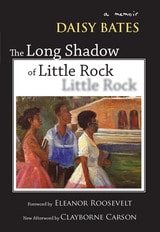
The Long Shadow of Little Rock
A MemoirDaisy Bates
University of Arkansas Press, 2007
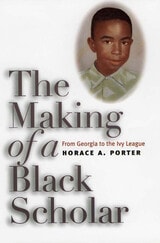
The Making of a Black Scholar
From Georgia to the Ivy LeagueHorace A. Porter
University of Iowa Press, 2003
The Making of a Black Scholar is structured around schools. Porter attends Georgia's segregated black schools until he enters the privileged world of Amherst College. He graduates (spending one semester at Morehouse College) and moves on to graduate study at Yale. He starts his teaching career at Detroit's Wayne State University and spends the 1980s at Dartmouth College and the 1990s at Stanford University.
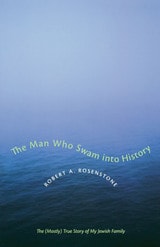
The Man Who Swam into History
The (Mostly) True Story of My Jewish FamilyBy Robert A. Rosenstone
University of Texas Press, 2005
The story begins with a grandfather who heroically escaped from Russia by swimming the Pruth River to Romania—or did he? Then there are stories of another grandfather who kept a lifelong mistress; grandmothers who were ignored except in the kitchen; migrations legal and illegal from Eastern Europe to Canada to California; racketeers on one side of the family and Communists on the other; and a West Coast adolescence in the McCarthy years. All of these (mostly true) stories form a Jewish family's history, a tale of dislocation and assimilation. But in the hands of award-winning historian Robert Rosenstone, they become much more. The fragments of memory so beautifully preserved in The Man Who Swam into History add unforgettable, human characters to the now familiar story of the Jewish diaspora in the twentieth century.
This combination memoir/short story collection recounts the Rosenstone family's passage from Romania to America. Robert Rosenstone tells the story not as a single, linear narrative, but through "tales, sequences, windows, moments, and fragments resurrected from the lives of three generations in my two parental families, set in five countries on two continents over the period of almost a century." This more literary and personal approach allows Rosenstone's relatives to emerge as distinct personalities, voices who quarrel and gossip, share their dreams and fears, and maintain the ties of a loving, if eccentric, family. Among the genre of "coming to America" tales, The Man Who Swam into History is a work of unique vision, one that both records and reconstructs the past even as it continuously—and humorously—questions the truth of its own assertions.
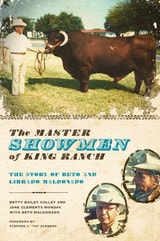
The Master Showmen of King Ranch
The Story of Beto and Librado MaldonadoBy Betty Bailey Colley and Jane Clements Monday, with Beto Maldonado
University of Texas Press, 2009
Winner, San Antonio Conservation Society Citation, 2011
Texas's King Ranch has become legendary for a long list of innovations, the most enduring of which is the development of the first official cattle breed in the Americas, the Santa Gertrudis. Among those who played a crucial role in the breed's success were Librado and Alberto "Beto" Maldonado, master showmen of the King Ranch. A true "bull whisperer," Librado Maldonado developed a method for gentling and training cattle that allowed him and his son Beto to show the Santa Gertrudis to their best advantage at venues ranging from the famous King Ranch auctions to a Chicago television studio to the Dallas–Fort Worth airport. They even boarded a plane with the cattle en route to the International Fair in Casablanca, Morocco, where they introduced the Santa Gertrudis to the African continent.
In The Master Showmen of King Ranch, Beto Maldonado recalls an eventful life of training and showing King Ranch Santa Gertrudis. He engagingly describes the process of teaching two-thousand-pound bulls to behave "like gentlemen" in the show ring, as well as the significant logistical challenges of transporting them to various high-profile venues around the world. His reminiscences, which span more than seventy years of King Ranch history, combine with quotes from other Maldonado family members, co-workers, and ranch owners to shed light on many aspects of ranch life, including day-to-day work routines, family relations, women's roles, annual celebrations, and the enduring ties between King Ranch owners and the vaquero families who worked on the ranch through several generations.

The Moon in Your Sky
An Immigrant's Journey HomeKate Saller
University of Missouri Press, 2014
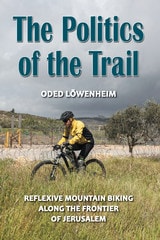
The Politics of the Trail
Reflexive Mountain Biking along the Frontier of JerusalemOded Löwenheim
University of Michigan Press, 2014
In The Politics of the Trail, Löwenheim confronts this tension by focusing on his encounters with three places along the trail: the separation fence between Israel and the Palestinians; the ruins of the Palestinian village Qalunya, demolished in 1948; and the trail connecting the largest 9/11 memorial site outside of the U.S. with a top-secret nuclear-proof bunker for the Israeli cabinet. He shares the stories of the people he meets along the way and considers how his own subjectivity is shaped by the landscape and culture of conflict. Moreover, he deconstructs, challenges, and resists the concepts and institutions that constitute such a culture and invites conversation about the idea of conflict as a culture.
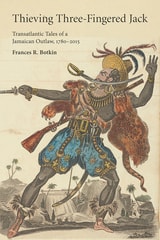
Thieving Three-Fingered Jack
Transatlantic Tales of a Jamaican Outlaw, 1780-2015Botkin, Frances R.
Rutgers University Press, 2018
The fugitive slave known as “Three-Fingered Jack” terrorized colonial Jamaica from 1780 until vanquished by Maroons, self-emancipated Afro-Jamaicans bound by treaty to police the island for runaways and rebels. A thief and a killer, Jack was also a freedom fighter who sabotaged the colonial machine until his grisly death at its behest. Narratives about his exploits shed light on the problems of black rebellion and solutions administered by the colonial state, creating an occasion to consider counter-narratives about its methods of divide and conquer. For more than two centuries, writers, performers, and storytellers in England, Jamaica, and the United States have “thieved" Three Fingered Jack's riveting tale, defining black agency through and against representations of his resistance.
Frances R. Botkin offers a literary and cultural history that explores the persistence of stories about this black rebel, his contributions to constructions of black masculinity in the Atlantic world, and his legacies in Jamaican and United States popular culture.

This Magnetic North
Candid Conversations on a Changing Northern MichiganTim Mulherin
Michigan State University Press, 2025
This book explores a phenomenon occurring around Michigan’s Great Lakes and other high-demand scenic locations across the country: natural landscapes are undergoing profound human and climatological change as people pick up their lives and move to bucolic locations. The Grand Traverse region in northwest lower Michigan has been one of the most impacted regions in the state, with the population increase accelerated by the pandemic and climate change. The impact of this growth is explored through field observations and interviews involving dozens of born-and-raised locals, “boomerangers” (those who grew up, left, then returned), and relocators. The author explores the tensions between newcomers and “natives.” Interviewees include tourist industry leaders, conservationists, business owners, public safety officials, tribal members, Sleeping Bear Dunes National Lakeshore officials, and more. These voices characterize the region’s diverse views, providing insight into how one of the most popular vacation destinations in the country is attempting to balance environmental preservation with an influx of people. Northwest lower Michigan’s story of transformation, as tradition collides with progress, holds many lessons and will resonate with everyone who has ever lived in or visited such an enchanting place and dreams of calling it home.
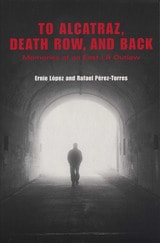
To Alcatraz, Death Row, and Back
Memories of an East LA OutlawBy Ernie López and Rafael Pérez-Torres
University of Texas Press, 2005
When Ernie López was a boy selling newspapers in Depression-era Los Angeles, his father beat him when he failed to bring home the expected eighty to ninety cents a day. When the beatings became unbearable, he took to petty stealing to make up the difference. As his thefts succeeded, Ernie's sense of necessity got tangled up with ambition and adventure. At thirteen, a joyride in a stolen car led to a sentence in California's harshest juvenile reformatory. The system's failure to show any mercy soon propelled López into a cycle of crime and incarceration that resulted in his spending decades in some of America's most notorious prisons, including four and a half years on death row for a murder López insists he did not commit.
To Alcatraz, Death Row, and Back is the personal life story of a man who refused to be broken by either an abusive father or an equally abusive criminal justice system. While López freely admits that "I've been no angel," his insider's account of daily life in Alcatraz and San Quentin graphically reveals the violence, arbitrary infliction of excessive punishment, and unending monotony that give rise to gang cultures within the prisons and practically insure that parolees will commit far worse crimes when they return to the streets. Rafael Pérez-Torres discusses how Ernie López's experiences typify the harsher treatment that ethnic and minority suspects often receive in the American criminal justice system, as well as how they reveal the indomitable resilience of Chicanos/as and their culture. As Pérez-Torres concludes, "López's story presents us with the voice of one who—though subjected to a system meant to destroy his soul—not only endured but survived, and in surviving prevailed."

To Remain Myself
The History of OnghokhamDavid Reeve
National University of Singapore Press, 2022
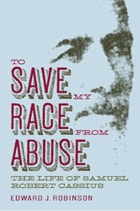
To Save My Race from Abuse
The Life of Samuel Robert CassiusEdward J. Robinson
University of Alabama Press, 2009
Samuel Robert Cassius was born to a slave mother and a white father in Virginia in 1853 and became a member of the Restorationist Movement (Disciples of Christ) while a coal miner in Indiana. For the rest of his long life (he died in 1931 at age 78), Cassius was an active evangelist, prolific publicist, dedicated leader of black Disciples, and an outspoken and uncompromising opponent of racism in religion and society.
An indefatigable preacher, Cassius ranged throughout the Midwest, California, and the southwestern states, founding and encouraging black Stone-Campbell Restorationist congregations. After entering the Oklahoma Territory in 1891, he worked for three decades as an educator, newspaper editor, social activist, postmaster, and Justice of the Peace. Because he consistently incorporated social and racial issues into his religious writings, Cassius often found himself at odds with whites in the Stone-Campbell Movement, the very people he relied on for monetary support. He advocated a Booker T. Washington-style self-help ethos while at the same time firmly resisting racism wherever he encountered it. Largely invisible in a world dominated by such towering figures as Washington, Frederick Douglass, Ida B. Wells, and W. E. B. DuBois, Cassius lived a life of virtual obscurity beyond the circle of the Stone-Campbell Movement. His story is important because, as a racial militant and separatist, he presaged the schism that would engulf and fracture the Churches of Christ in the 1960s, when blacks and whites went their separate ways and formed two distinct groups in one religious fellowship.
By combing through a plethora of primary sources that Cassius left behind in both religious and nonreligious journals, Edward J. Robinson has successfully reconstructed and recaptured the essence of Cassius’ complex and extraordinary life. This book offers the first full-length study of a man of remarkable attainment despite daily obstacles and resistance.
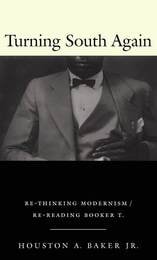
Turning South Again
Re-Thinking Modernism/Re-Reading Booker T.Houston A. Baker Jr.
Duke University Press, 2001
From the holds of slave ships to the peonage of Reconstruction to the contemporary prison system, incarceration has largely defined black life in the United States. Even Washington’s school at Tuskegee, Baker explains, housed and regulated black bodies no longer directly controlled by slave owners. He further implicates Washington by claiming that in enacting his ideas about racial “uplift,” Washington engaged in “mulatto modernism,” a compromised attempt at full citizenship. Combining autobiographical prose, literary criticism, psychoanalytic writing, and, occasionally, blues lyrics and poetry, Baker meditates on the consequences of mulatto modernism for the project of black modernism, which he defines as the achievement of mobile, life-enhancing participation in the public sphere and economic solvency for the majority of African Americans. By including a section about growing up in the South, as well as his recent return to assume a professorship at Duke, Baker contributes further to one of the book’s central concerns: a call to centralize the South in American cultural studies.
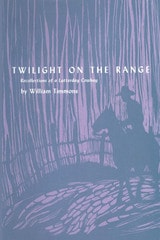
Twilight on the Range
Recollections of a Latterday CowboyBy William Timmons
University of Texas Press, 1962
Billie Timmons was fourteen when he met Charles Goodnight—over a wagonload of manure that had been jammed on a gatepost—and he went to work on the Goodnight Cross J Ranch shortly thereafter. The spirit of helpfulness that led Mr. Goodnight to strip off his coat and lift the wagon free for a lad in need sets the tone of this book, in which the author unwinds a spool of recollections of range-riding in Texas and North Dakota over an eighteen-year period.
When Billie Timmons went to work for Mr. Goodnight in 1892, Texas was undergoing a rapid transition from open range to fences. But around Texas campfires he heard tales about the northern range, told by cowboys who had ridden there and who had seen the northern lights, the tall free grass, swollen streams, and stampeding cattle. A longing to see that exciting country took hold of young Timmons.
His chance came when four buffaloes from the Goodnight ranch needed a nursemaid for their freight car trip to Yellowstone Park. Once in the northern country, Timmons stayed, casting his lot with the cowmen of North Dakota. He became the protégé of an extraordinary man, William Ray; he was foreman, friend, and confidant of banker-rancher Wilse Richards, a member of the Cowboy Hall of Fame. But even during his days in North Dakota he never lost touch with Charles Goodnight, a lifelong friend, and his portrayal of Goodnight provides much insight into the character of the man whose name belongs to the West.
In this book you experience the terror of being lost in the dead-white expanse of a North Dakota snowstorm; the gaiety of cowboy dances, for which there were never enough women available; the excitement of a near-riot in a Hebron, North Dakota, saloon, where cowboys from the 75 Ranch drank up or poured out all the liquor, then smashed all the glasses and bottles—one day before the state became bone-dry; and the loneliness of work on the range, where a flickering lantern on the side of a chuck wagon on a stormy night meant home for many a cowboy. Running like a bright thread through the narrative is Billie Timmons’s love of horses, from whom he learned the wisdom that some horses and some men are to be handled with great care and others are not to be handled at all. His chapter on Buck, his best-loved horse, is memorable.
In North Dakota, as in Texas, fences brought the end of the big herds and the end of cowboying for a man who enjoyed it to the hilt.