Results by title
110 books match the query 'Cultural pluralism' and 18 start with t
Talking to Strangers
Anxieties of Citizenship since Brown v. Board of EducationDanielle Allen
University of Chicago Press, 2004
Returning to the landmark Brown v. Board of Education decision of 1954 and to the famous photograph of Elizabeth Eckford, one of the Little Rock Nine, being cursed by fellow "citizen" Hazel Bryan, Allen argues that we have yet to complete the transition to political friendship that this moment offered. By combining brief readings of philosophers and political theorists with personal reflections on race politics in Chicago, Allen proposes strikingly practical techniques of citizenship. These tools of political friendship, Allen contends, can help us become more trustworthy to others and overcome the fossilized distrust among us.
Sacrifice is the key concept that bridges citizenship and trust, according to Allen. She uncovers the ordinary, daily sacrifices citizens make to keep democracy working—and offers methods for recognizing and reciprocating those sacrifices. Trenchant, incisive, and ultimately hopeful, Talking to Strangers is nothing less than a manifesto for a revitalized democratic citizenry.
Texan Identities
Moving beyond Myth, Memory, and Fallacy in Texas HistoryLight Townsend Cummins
University of North Texas Press, 2016
Thai South and Malay North
Ethnic Interactions on a Plural PeninsulaEdited by Michael J. Montesano and Patrick Jory
National University of Singapore Press, 2008
Thai South and Malay North brings together research by academic specialists working on this border zone who examine a broad range of issues relating to the turmoil afflicting the region. Drawing on a broad historical perspective, the authors explore religious observances and national identity, the relationship between electoral democracy and separatist violence, and interactions between northern Malaysia and southern Thailand.
Intellectually rigorous and theoretically sophisticated, Thai South and Malay North is the most comprehensive work to date on a part of Southeast Asia whose historical, linguistic, and political complexity has long defied scholarly synthesis—essential reading for anyone seeking to understand southern Thailand 's complex past and troubled present.

The Big Empty
The Great Plains in the Twentieth CenturyR. Douglas Hurt
University of Arizona Press, 2011
Using the voices of women homesteaders, agrarian socialists, Jewish farmers, Mexican meatpackers, New Dealers, and Native Americans, this book creates a sweeping survey of contested race relations, radical politics, and agricultural prosperity and decline during the twentieth century. This narrative shows that even though Great Plains history is fraught with personal and group tensions, violence, and distress, the twentieth century also brought about compelling social, economic, and political change.
The only book of its kind, this account will be of interest to historians studying the region and to anyone inspired by the story of the men and women who found an opportunity for a better life in the Great Plains.
The Courage to Connect
Sexuality, Citizenship, and Community in ProvincetownSandra L. Faiman-Silva
University of Illinois Press, 2003
Based on over six years of fieldwork, Sandra L. Faiman-Silva's The Courage to Connect traces the transformation of the Cape Cod community of Provincetown from its nineteenth-century origins as a fishing town where Portuguese immigrants settled to its present status as a welcoming, sexually diverse tourist enclave. Faiman-Silva examines the community’s history and economy as well as how gay and straight cultures intersect in areas such as public education, local government, and law enforcement. Using queer and critical culture theory to deconstruct day-to-day local encounters, Faiman-Silva describes the causes of social conflicts and how these conflicts can be resolved. Capturing the pathos and joy of a community that has struggled to accommodate radical social changes, The Courage to Connect yields understanding of the ways in which communities can construct themselves to overcome differences.
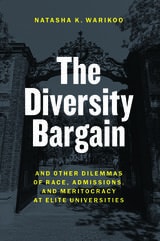
The Diversity Bargain
And Other Dilemmas of Race, Admissions, and Meritocracy at Elite UniversitiesNatasha Warikoo
University of Chicago Press, 2016
What Warikoo uncovers—talking with both white students and students of color at Harvard, Brown, and Oxford—is absolutely illuminating; and some of it is positively shocking. As she shows, many elite white students understand the value of diversity abstractly, but they ignore the real problems that racial inequality causes and that diversity programs are meant to solve. They stand in fear of being labeled a racist, but they are quick to call foul should a diversity program appear at all to hamper their own chances for advancement. The most troubling result of this ambivalence is what she calls the “diversity bargain,” in which white students reluctantly agree with affirmative action as long as it benefits them by providing a diverse learning environment—racial diversity, in this way, is a commodity, a selling point on a brochure. And as Warikoo shows, universities play a big part in creating these situations. The way they talk about race on campus and the kinds of diversity programs they offer have a huge impact on student attitudes, shaping them either toward ambivalence or, in better cases, toward more productive and considerate understandings of racial difference.
Ultimately, this book demonstrates just how slippery the notions of race, merit, and privilege can be. In doing so, it asks important questions not just about college admissions but what the elite students who have succeeded at it—who will be the world’s future leaders—will do with the social inequalities of the wider world.
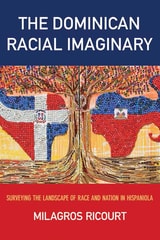
The Dominican Racial Imaginary
Surveying the Landscape of Race and Nation in HispaniolaRicourt, Milagros
Rutgers University Press, 2016
This book begins with a simple question: why do so many Dominicans deny the African components of their DNA, culture, and history?
The Enigma of Diversity
The Language of Race and the Limits of Racial JusticeEllen Berrey
University of Chicago Press, 2015
Ellen Berrey digs deep into those questions in The Enigma of Diversity. Drawing on six years of fieldwork and historical sources dating back to the 1950s and making extensive use of three case studies from widely varying arenas—housing redevelopment in Chicago’s Rogers Park neighborhood, affirmative action in the University of Michigan’s admissions program, and the workings of the human resources department at a Fortune 500 company—Berrey explores the complicated, contradictory, and even troubling meanings and uses of diversity as it is invoked by different groups for different, often symbolic ends. In each case, diversity affirms inclusiveness, especially in the most coveted jobs and colleges, yet it resists fundamental change in the practices and cultures that are the foundation of social inequality. Berrey shows how this has led racial progress itself to be reimagined, transformed from a legal fight for fundamental rights to a celebration of the competitive advantages afforded by cultural differences.
Powerfully argued and surprising in its conclusions, The Enigma of Diversity reveals the true cost of the public embrace of diversity: the taming of demands for racial justice.
The Multicultural Southwest
A ReaderEdited by A. Gabriel Meléndez, M. Jane Young, Patricia Moore, and Patrick Pynes
University of Arizona Press, 2001
As Americans debate what it means to be a multicultural society, one need only turn for lessons to the Southwest, where distinct peoples have coexisted over centuries. Here difference has not only survived but thrived in a melting pot of races and customs.
This book presents a montage of differing perspectives demonstrating that there is no single, definitive description of the Southwest. It brings together a host of writers, from early travelers and historians to contemporary commentators, who explore a region diverse in its people and ecology and show it to be not just a segment of the nation, but rather a border contact zone.
The editors have assembled an interdisciplinary composite, drawing on history, sociology, anthropology, and geography. Fiction, essays, poetry, newspaper articles, and interviews with local inhabitants add a colorful dimension to the coverage. All of the contributions reveal the tremendous impact that everyday occurrences can have and show how life in the Southwest is affected by the interweaving of social, cultural, and ecological forces. Together they demonstrate the role played by personal and cultural memory in creating alternative views of environment, landscape, human social interaction, conquest, dispossession, technological change, and the survival of cultures.
The Multicultural Southwest is a multifaceted work that shows the many ways in which the past continues to affect the present. It will create in readers an awareness of the phenomena that fuel human imagination and creativity as it opens their eyes to the possibilities of the future.
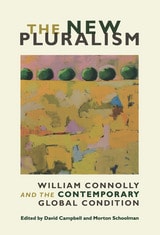
The New Pluralism
William Connolly and the Contemporary Global ConditionDavid Campbell and Morton Schoolman, eds.
Duke University Press, 2008
The contributors show how Connolly has continually revised his ideas about pluralism to take into account radical changes in global politics, incorporate new theories of cognition, and reflect on the centrality of religion in political conflict. They engage his arguments for an agonistic democracy in which all fundamentalisms become the objects of politicization, so that differences are not just tolerated but are productive of debate and the creative source of a politics of becoming. They also explore the implications of his work, often challenging his views to widen the reach of even his most recently developed theories. Connolly’s new pluralism will provoke all citizens who refuse to subordinate their thinking to the regimes in which they reside, to religious authorities tied to the state, or to corporate interests tied to either. The New Pluralism concludes with an interview with Connolly in which he reflects on the evolution of his ideas and expands on his current work.
Contributors: Roland Bleiker, Wendy Brown, David Campbell, William Connolly, James Der Derian, Thomas L. Dumm, Kathy E. Ferguson, Bonnie Honig, George Kateb, Morton Schoolman
Michael J. Shapiro, Stephen K. White
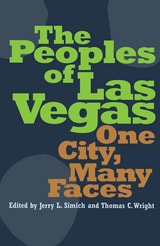
The Peoples Of Las Vegas
One City, Many FacesJerry L Simich
University of Nevada Press, 2005
Beneath the glitzy surface of the resorts and the seemingly cookie-cutter suburban sprawl of Las Vegas lies a vibrant and diverse ethnic life. People of varied origins make up the population of nearly two million and yet, until now, little mention of the city has been made in studies and discussion of ethnicity or immigration. The Peoples of Las Vegas: One City, Many Faces fills this void by presenting the work of seventeen scholars of history, political science, sociology, anthropology, law, urban studies, cultural studies, literature, social work, and ethnic studies to provide profiles of thirteen of the city’s many ethnic groups. The book’s introduction and opening chapters explore the historical and demographic context of these groups, as well as analyze the economic and social conditions that make Las Vegas so attractive to recent immigrants. Each group is the subject of the subsequent chapters, outlining migration motivations and processes, economic pursuits, cultural institutions and means of transmitting culture, involvement in the broader community, ties to homelands, and recent demographic trends.
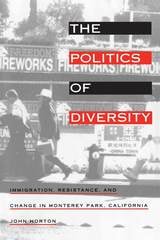
The Politics of Diversity
Immigration, Resistance, and Change in Monterey Park, CaliforniaJohn Horton
Temple University Press, 1995
Advertised in Asia as "The Chinese Beverly Hills," this small city minutes east of downtown Los Angeles, became by the late 1970s a regional springboard for a new type of Chinese immigration—suburban and middle class with a diversified and globally-oriented economy. Freed from the isolation of old Chinatowns, new immigrants now confronted resistance from more established Anglo, Asian American, and Latino neighbors, whose opposition took the form of interconnected "English Only" and slow-growth movements.
In The Politics of Diversity, a multiethnic team of researches employ ethnography, interviewing, and exit polls to capture the process of change as newcomers and established residents come to terms with the meaning of diversity and identity in their everyday lives. The result is an engaging grass-roots account of immigration and change: the decline of the loyal old-boy Anglo network; the rise of women, minorities, and immigrants in the political scene; and a transformation of ethnic and American identities.
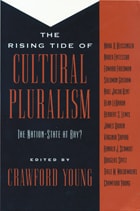
The Rising Tide of Cultural Pluralism
The Nation-State at Bay?Edited by Crawford Young
University of Wisconsin Press, 1993
Crawford Young opens with an overview of the dramatic rise in the political significance of cultural pluralism and of scholars’ changing understanding of what drives and shapes ethnic identification. Mark Beissinger brilliantly explains the demise of the last great empire-state, the USSR, while Edward Friedman notes growing challenges to the apparent cultural homogeneity of China. Nader Entessar suggests intriguing contrasts in Azeri identity politics in Iran and the ex-USSR. Ronald Schmidt and Noel Kent explore the language and racial dimensions of the rising multicultural currents in the United States. Douglas Spitz shows the extent of the decline of the old secular vision of India of the independence generation; Alan LeBaron traces the recent emergence of an assertive Mayan identity among a submerged populace in Guatemala, long thought to be destined for Ladinoization. A case study of the diversity and uncertain future of Ethiopia dramatically emerges from four contrasting contributions: Tekle Woldemikael looks at the potential cultural tensions in Eritrea, Solomon Gashaw offers a central Ethiopian nationalist perspective, Herbert Lewis reflects the perspectives of a restless and disaffected periphery, and James Quirin provides an arresting explanation of the construction of identity amongst the Beta Israel (Ethiopian Jews). Virginia Sapiro steps back from specific regions, offering an original analysis of the interaction between cultural pluralism and gender.
The Toughest Kid We Knew
The Old New West: A Personal HistoryFrank Bergon
University of Nevada Press, 2020
The University Against Itself
The NYU Strike and the Future of the Academic Workplaceedited by Monika Krause, Mary Nolan, Michael Palm and Andrew Ross
Temple University Press, 2008
All of the contributors were either participants in the NYU strike -- graduate students, faculty, and organizers -- or are nationally recognized as writers on academic labor. They are deeply troubled by the ramifications of corporatizing universities. Here they spell out their concerns, offering lessons from one historic strike as well as cautions about the future of all universities.
Contributors include: Stanley Aronowitz, Barbara Bowen, Andrew Cornell, Ashley Dawson, Stephen Duncombe, Steve Fletcher, Greg Grandin, Adam Green, Kitty Krupat, Gordon Lafer, Micki McGee, Sarah Nash, Cary Nelson, Matthew Osypowski, Ed Ott, Ellen Schrecker, Susan Valentine, and the editors.
Transcommunality
From The Politics Of ConversionJohn Brown Childs
Temple University Press, 2003
Twenty-First Century Color Lines
Multiracial Change in Contemporary Americaedited by Andrew Grant-Thomas and Gary Orfield, foreword by Christopher Edley, Jr.
Temple University Press, 2008
The result of work initiated by the Harvard Civil Rights Project, this collection provides an excellent overview of the contemporary racial and ethnic terrain in the United States. The well-respected contributors to Twenty-First Century Color Lines combine theoretical and empirical perspectives, answering fundamental questions about the present and future of multiracialism in the United States: How are racial and ethnic identities promoted and defended across a spectrum of social, geopolitical and cultural contexts? What do two generations of demographic and social shifts around issues of race look like “on the ground?” What are the socio-cultural implications of changing demographics in the U.S.? And what do the answers to these questions portend for our multiracial future?
This illuminating book addresses issues of work, education, family life and nationality for different ethnic groups, including Asians and Latinos as well as African Americans and whites. Such diversity, gathered here in one volume, provides new perspectives on ethnicity in a society marked by profound racial transformations.
Contributors: Luis A. Avilés, Juan Carlos Martínez-Cruzado, Nilanjana Dasgupta, Christina Gómez, Gerald Gurin, Patricia Gurin, Anthony Kwame Harrison, Maria-Rosario Jackson, John Matlock, Nancy McArdle, John Mollenkopf, john a. powell, Doris Ramírez, David Roediger, Anayra Santory-Jorge, Jiannbin Lee Shiao, Mia H. Tuan, Katrina Wade-Golden and the editors.
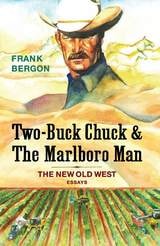
Two-Buck Chuck & The Marlboro Man
The New Old WestFrank Bergon
University of Nevada Press, 2019
Bergon presents a powerful array of rural and small-town Westerners who often see themselves as part of a region and a way of life most Americans aren’t aware of or don’t understand, their voices unheard, their stories untold. In these essays, Westerners from the diverse heritage of the San Joaquin Valley include California’s legendary Fred Franzia, the maker of the world’s best-selling Charles Shaw wines dubbed “Two-Buck Chuck,” and Darrell Winfield, a Dust Bowl migrant and lifelong working cowboy who for more than thirty years reigned as the iconic Marlboro Man. Their voices help us understand the complexities of today’s rural West, where Old West values intersect with New West realities. This is the West (and America today)—a region in conflict with itself.