Results by title
106 books match the query 'Customs & Traditions' and 26 start with t
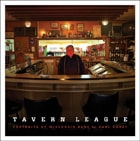
Tavern League
Portraits of Wisconsin BarsCarl Corey
Wisconsin Historical Society Press, 2011
In Tavern League, photographer Carl Corey documents a unique and important segment of the Wisconsin community. Our bars are unique micro-communities, offering patrons a sense of belonging. Many of these bars are the only public gathering place in the rural communities they serve. These simple taverns offer the individual the valuable opportunity for face to face conversation and camaraderie, particularly as people become more physically isolated through the accelerated use of the internet’s social networking, mobile texting, gaming, and the rapid-fire of email.
This collection of 60 pictures captures the Wisconsin tavern as it is today. Carl Corey’s view is both familiar and undeniably unique, his pictures resonant with anyone who has set foot in a Wisconsin tavern. As the Milwaukee Journal Sentinel’s Mary Louise Schumacher has written, “Carl Corey’s photographs . . . document iconic American places that are taken for granted. . . . They are comforting images, places we know, but also eerie and remote, presented with a sense of romance and nostalgia that suggests they are already past.”

The Affinity of the Eye
Writing Nikkei in PeruIgnacio López-Calvo
University of Arizona Press, 2013
In The Affinity of the Eye: Writing Nikkei in Peru, Ignacio López-Calvo rises above the political emergence of the Fujimori phenomenon and uses politics and literature to provide one of the first comprehensive looks at how the Japanese assimilated and inserted themselves into Peruvian culture. Through contemporary writers’ testimonies, essays, fiction, and poetry, López-Calvo constructs an account of the cultural formation of Japanese migrant communities. With deftly sensitive interviews and comments, he portrays the difficulties of being a Japanese Peruvian. Despite a few notable examples, Asian Peruvians have been excluded from a sense of belonging or national identity in Peru, which provides López-Calvo with the opportunity to record what the community says about their own cultural production. In so doing, López-Calvo challenges fixed notions of Japanese Peruvian identity.
The Affinity of the Eye scrutinizes authors such as José Watanabe, Fernando Iwasaki, Augusto Higa, Doris Moromisato, and Carlos Yushimito, discussing their literature and their connections to the past, present, and future. Whether these authors push against or accept what it means to be Japanese Peruvians, they enrich the images and feelings of that experience. Through a close reading of literary and cultural productions, López-Calvo’s analysis challenges and reframes the parameters of being Nikkei in Peru.
Covering both Japanese issues in Peru and Peruvian issues in Japan, the book is more than a compendium of stories, characters, and titles. It proves the fluid, enriching, and ongoing relationship that exists between Peru and Japan.

The Enigma of the Gift
Maurice Godelier
University of Chicago Press, 1998
Beginning with an analysis of the seminal work of Marcel Mauss and Claude Lévi-Strass, and drawing on his own fieldwork in Melanesia, Godelier argues that traditional theories are flawed because they consider only exchangeable gifts. By explaining gift-giving in terms of sacred objects and the authoritative conferral of power associated with them, Godelier challenges both recent and traditional theories of gift-giving, provocatively refreshing a traditional debate.
Elegantly translated by Nora Scott, The Enigma of the Gift is at once a major theoretical contribution and an essential guide to the history of the theory of the gift.
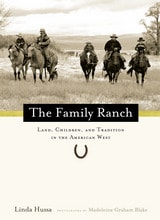
The Family Ranch
Land, Children, and Tradition in the American WestLinda Hussa
University of Nevada Press, 2010
Ranch families in the twenty-first century face many challenges, from competition with government-subsidized agribusiness corporations to tax laws that encourage development over agriculture and prevent the smooth transfer of land from one generation to the next. As a stabilizing force in the American West, ranch families play a critical role in our country, perhaps more so today than ever before, yet their stories have rarely been told. They contribute to our nation with the food they raise, the environments they protect, and the resources they manage, and they preserve our western heritage while holding the West open for the rest of us. In The Family Ranch, award-winning author Linda Hussa offers readers a personal, inside view into the lives of six diverse ranching families and the land that shapes their days and nights. Photographer Madeleine Graham Blake provides engaging and often moving images that portray each family at work and at play. With chapters on the critical issues that face each of them—from grazing rights and water use, to children's education and the emerging rural marketplace—these family profiles are set in a larger context. This is family ranching as it is now, a tracing of how it always was, but made far more complex in modern times. By combining their traditions with the tools of modern technology, these people strengthen the ideal of family and give the business of ranching a vibrant and viable future.The Family Ranch is rich in remarkable stories of what happens when parents, children, work, and nature come together for a lifetime of commitment. It speaks to urban and rural people in important ways, illuminating the realities of the western ranch and the people who make their living, and their lives, on it. Essential reading for people who love the West and care about its future. The Family Ranch inspires thoughts about tradition, values, and responsibility that are applicable to all communities.
The Fortunes of Permanence
Culture and Anarchy in an Age of AmnesiaRoger Kimball
St. Augustine's Press, 2022
“Cultural instructions.” Everyone who has handled a package of seedlings has encountered that enigmatic advisory. This much water and that much sun, certain tips about fertilizer, soil, and drainage. Planting one sort of flower nearby keeps the bugs away but proximity to another sort makes bad things happen. Young shoots might need stakes, and watch out for beetles, weeds, and unseasonable frosts. It’s a complicated business.
But at least since Cicero introduced the term cultura animi (“cultivation of the mind or spirit”), such “cultural instructions” have applied as much to the realm of civilization as to horticulture. In this wide-ranging investigation into the vicissitudes of culture in the twenty-first century, the distinguished critic Roger Kimball traces the deep filiations between cultivation as a spiritual enterprise and the prerequisites of political freedom. Drawing on figures as various as James Burnham, Richard Weaver, G. K. Chesterton, Rudyard Kipling, John Buchan, Friedrich von Hayek, and Leszek Kolakowski, Kimball traces the interconnections between what he calls the fortunes of permanence and such ambassadors of anarchy as relativism, multiculturalism, and the socialist-utopian imperative.
With his signature blend of wit and erudition, Kimball deftly draws on the resources of art, literature, and political philosophy to illuminate some of the wrong turns and dead ends our culture has recently pursued, while also outlining some of the simple if overlooked alternatives to the various tyrannies masquerading as liberation we have again and again fallen prey to. This rich, rewarding, and intelligent volume bristles with insights into what the nineteenth-century novelist Anthony Trollope called “The Way We Live Now.”
Partly an exercise in cultural pathology, The Fortunes of Permanence is also a forward-looking effort of cultural recuperation. It promises to be essential reading for anyone concerned about the direction of Western culture in an age of anti-Western animus and destructive multicultural fantasy.
The Hungry Soul
Eating and the Perfecting of Our NatureLeon R. Kass M.D.
University of Chicago Press, 1999
"Kass is a distinguished and graceful writer. . . . It is astonishing to discover how different is our world from that of the animals, even in that which most evidently betrays that we too are animals—our need and desire for food."—Roger Scruton, Times Literary Supplement
"Yum."—Miss Manners

The Inner Conflict of Tradition
Essays in Indian Ritual, Kingship, and SocietyJ. C. Heesterman
University of Chicago Press, 1985
The Lord's First Night
The Myth of the Droit de CuissageAlain Boureau
University of Chicago Press, 1998
But, as Alain Boureau elegantly demonstrates in this book, the droit de cuissage is a myth. Under contextual examination, nearly all the supposed evidence for this custom melts away—yet belief in it has survived for seven hundred years. Boureau shows how each era turned the mythical custom to its own ends. For instance, in the late Middle Ages, monarchists raised the specter of the droit de cuissage to rally public opinion against local lords, and partisans of the French Revolution pointed to it as proof of the corruption of the Ancien Régime.
A fascinating case study of the folklore of sexuality, The Lord's First Night also offers evocative insights into popular (mis)conceptions of the Middle Ages.
On the French edition: "A richly informative study of attitudes to the past and the manipulation of history down the ages."—Peter Linehan, Times Literary Supplement

The Making and Unmaking of the Haya Lived World
Consumption, Commoditization, and Everyday PracticeBrad Weiss
Duke University Press, 1996
Grounded in a richly detailed ethnography of Haya practice, Weiss’s analysis considers the symbolic qualities and values embedded in goods and transactions across a wide range of cultural activity: agricultural practice and food preparation, the body’s experience of epidemic disease from AIDS to the infant affliction of “plastic teeth,” and long-standing forms of social movement and migration. Weiss emphasizes how Haya images of consumption describe the relationship between their local community and the global economy. Throughout, he demonstrates that particular commodities and more general market processes are always material and meaningful forces with the potential for creativity as well as disruption in Haya social life. By calling attention to the productive dimensions of this spatial and temporal world, his work highlights the importance of human agency in not only the Haya but any sociocultural order.
Offering a significant contribution to the anthropological theories of practice, embodiment, and agency, and enriching our understanding of the lives of a rural African people, The Making and Unmaking of the Haya Lived World will interest historians, anthropologists, ethnographers, and scholars of cultural studies.

The Many Names of Anonymity
Portraitists of the Canton TradeWinnie Wong
University of Chicago Press, 2025
Challenging contemporary procedures for establishing attribution, chronology, and authenticity in Chinese art, Winnie Wong explores the means, methods, and stakes of recovering the names of an anonymous community of artists. To examine how Western art history has misconstrued and miscategorized names and identities in Chinese art, she looks to conflicting features of modernity: the European attachment of singular names to individuals and their works, and the Chinese use of socially contingent names that often are not attached to material labor and sometimes operate against it. Wong charts the genealogy of this naming problem by bringing to life the artists of the Qing Empire’s trade with Europeans at the port of Guangzhou, centering on a group of portraitists known by names that were recorded in a pidgin language: Chin Qua, Chit Qua, Spoilum, Lam Qua, and Ting Qua.
Many of these paintings survive today, yet scholars have identified only a handful of the painters’ identities. Pushing against Western norms that have shaped our understanding of authorship, Wong reveals that these artists shared names, created works in multiples, and signed their pieces with different names or none at all. This lavishly illustrated volume explores portraiture across media, including unfired clay, reverse painting on glass, watercolor on paper, oil on canvas, and the daguerreotype, to propose new ways of studying anonymity, copying, and the emergence of author names in the Sino-European visual culture of the long eighteenth century.
The Marrow of Human Experience
Essays on Folklore by William A. Wilsonedited by William A. Wilson and Jill Terry Rudy
Utah State University Press, 2006
The Native Leisure Class
Consumption and Cultural Creativity in the AndesRudi Colloredo-Mansfeld
University of Chicago Press, 1999
Tracing the connections among newly invented craft traditions, social networks, and consumption patterns, Rudi Colloredo-Mansfeld highlights the way ethnic identities and class cultures materialize in a sensual world that includes luxurious woven belts, powerful stereos, and garlic roasted cuyes (guinea pigs). Yet this case reaches beyond the Andes. He shows how local and global interactions intensify the cultural expression of the world's emerging "native middle classes," at times leaving behind those unable to afford the new trappings of indigenous identity.
Colloredo-Mansfeld also comments on his experiences working as an artist in Otavalo. His drawings, along with numerous photographs, animate this engaging study in economic anthropology.
The Next Conservatism
Paul M. Weyrich and William S. Lind
St. Augustine's Press, 2009
Since November’s election, conservative columnists have filled the op-ed pages with calls for a new conservative agenda. In The Next Conservatism, two of the conservative movement’s best-known thinkers, Paul M. Weyrich and William S. Lind, offer exactly that. More, they offer a new kind of conservative agenda, one that reaches far beyond politics to grapple with the sources of our nation’s cultural decay.
The Next Conservatism recognizes that culture is more powerful than politics. Nevertheless, it offers an engaging menu of political reforms, all under the rubric of “Restore the Republic!” No enthusiasts of Imperial America at home or abroad, Weyrich and Lind seek limited government, jealous guardianship of civil liberties, and a Washington liberated from the power of the New Class, the interests that feed off our nation’s decay. To these frequent conservative themes, Weyrich and Lind offer something new: a warning of a general crisis of legitimacy of the state itself, which can lead to a Hobbesian state of anarchy. How might we save the state while avoiding the jaws of Leviathan? The Next Conservatism offers innovative ways to thread that needle.
Meanwhile, what of America’s culture? Did its decay over the past half-century “just happen”? Weyrich and Lind argue no; rather, much of our degradation was deliberate, the work of the poisonous ideology of cultural Marxism, aka “Political Correctness.” The Next Conservatism takes the reader on a fascinating historical tour of the origins of Political Correctness in the infamous Frankfurt School, a gathering of heretical Marxists whose goal from the outset was the destruction of Western culture.
Weyrich and Lind then proceed to “deconstruct” the left’s program for America, debunking Feminism, “racism,” and environmentalism along the way. Reflecting the thought of Russell Kirk, The Next Conservatism condemns ideologies left and right, calling instead for a return to traditional ways of living, ways that reflect wisdom accumulated generation by generation. Only thus, they argue, can conservatives win a culture war many regard as hopelessly lost.
Old ways, in turn, lead to a Next Conservatism appropriate for hard times. Virtue, Weyrich and Lind offer, is to be found in modest living, not conspicuous consumption. The Next Conservative agenda rejects environmentalism but includes conservation, the return of the family farm, New Urbanism and the revival of such ‘oldies but goodies” as streetcars and passenger trains. A new theme, Retroculture, sums up a conservatism that recognizes that what worked in the past can work again today, and in the future as well. Our ancestors were no fools, the authors suggest, and “Back to the Future!” can serve as a powerful conservative rallying cry.
Having laid the political and cultural groundwork, The Next Conservatism then turns to conservative governance. In foreign policy, the authors call for minimizing foreign entanglements, though with a strong national defense and a military reform to adapt to face Fourth Generation warfare rather than the Second Generation America adheres to. For the economy, the authors call for repairing and expanding our national infrastructure, sound money, and protecting American industry, seeing labor as a potential ally. In both national security and economic security, the authors insist that good governance include moral security; drawing from the New Urbanism, they offer a “moral transect” that allows everyone to do what he wants, but not always where he wants. The public square, they suggest, should be safe for families.
Respecting the careful limits on government power a restored republic would embody, The Next Conservatism calls for redeeming America not through legislation but through a new conservative movement. Unlike the old movement, the next conservative movement would be a league of people who pledged to live their lives by the old rules. While conservatives would remain engaged in politics, they would rely on a vastly more powerful force of example, the examples of lives lived well in traditional ways. This next conservative movement would appeal far beyond the ranks of political conservatives, to all Americans who know that something has gone tragically wrong in the life of our nation.
The Next Conservatism offers a vision of vast sweep, far beyond anything coming out of Washington. At a time when most Americans find life growing more difficult, it proposes a path to a new America that is also the old America, the good, comfortable America we had and have lost.

The Ozarks
An American Survival of Primitive SocietyVance Randolph
University of Arkansas Press, 2017
The Past in Ruins
Tradition and the Critique of ModernityDavid Gross
University of Massachusetts Press, 1992
What is the fate of tradition in the modern world? Once a viral source of social cohesion and continuity, many traditions in the West today seem to have been undermined or to have disappeared altogether. Some observers regard this erosion of past values and practices as a disaster, the root cause of contemporary spiritual and social decay. Others see the same phenomenon as emancipatory, making possible new ways of living and new modes of cultural expression.
The Past in Ruins engages and extends this debate beyond these two perspectives. Neither a nostalgic lament for a “world we have lost” nor a celebration of the decline of tradition, the book offers a description of what has disappeared and why, an appraisal of what has survived and how, and a discussion of what to do with tradition now that it no longer serves the integrative function it once did.
In David Gross’s view, the collapse of tradition, though real, can easily be exaggerated. Many traditions have survived at the margins of social life; others have been reconstituted in new forms, or have persisted as “fragments” or “residues.” Yet, though vestiges of tradition remain, they have come to represent something strange or “other.” According to Gross, it is precisely this quality of otherness that makes tradition especially valuable, for today tradition can do what it has rarely done before. It can disturb and unsettle, it can force us to rethink the “givens” of modern life, and it can reconnect us with many of the past’s “lost” or undeveloped possibilities.
The Poison in the Gift
Ritual, Prestation, and the Dominant Caste in a North Indian VillageGloria Goodwin Raheja
University of Chicago Press, 1988
The Rites of Passage
Arnold van Gennep
University of Chicago Press, 1961

The St. Louis Veiled Prophet Celebration
Power on Parade, 1877-1995Thomas M. Spencer
University of Missouri Press, 2021
The Veiled Prophet organization has been a vital institution in St. Louis for more than a century. Founded in March 1878 by a group of prominent St. Louis businessmen, the organization was fashioned after the New Orleans Carnival society the Mystick Krewe of Comus. In The St. Louis Veiled Prophet Celebration, Thomas Spencer explores the social and cultural functions of the organization's annual celebration—the Veiled Prophet parade and ball—and traces the shifts that occurred over the years in its cultural meaning and importance. Although scholars have researched the more pluralistic parades of the eighteenth and early nineteenth centuries, very little has been done to examine the elite-dominated parades of the late nineteenth and twentieth centuries. This study shows how pluralistic parades ceased to exist in St. Louis and why the upper echelon felt it was so important to end them.
Spencer shows that the celebration originated as the business elite's response to the St. Louis general strike of 1877. Symbolically gaining control of the streets, the elites presented St. Louis history and American history by tracing the triumphs of great men—men who happened to be the Veiled Prophet members' ancestors. The parade, therefore, was intended to awe the masses toward passivity with its symbolic show of power. The members believed that they were helping to boost St. Louis economically and culturally by enticing visitors from the surrounding communities. They also felt that the parades provided the spectators with advice on morals and social issues and distracted them from less desirable behavior like drinking and carousing.
From 1900 to 1965 the celebration continued to include educational and historical elements; thereafter, it began to resemble the commercialized leisure that was increasingly becoming a part of everyday life. The biggest change occurred in the period from 1965 to 1980, when the protests of civil rights groups led many St. Louisans to view the parade and ball as wasteful conspicuous consumption that was often subsidized with taxpayers' money. With membership dropping and the news media giving the organization little notice, it soon began to wither. In response, the leaders of the Veiled Prophet organization decided to have a "VP Fair" over the Fourth of July weekend. The 1990s brought even more changes, and the members began to view the celebration as a way to unite the St. Louis community, with all of its diversity, rather than as a chance to boost the city or teach cultural values. The St. Louis Veiled Prophet Celebration is a valuable addition not only to the cultural history of Missouri and St. Louis but also to recent scholarship on urban culture, city politics, and the history of public celebrations in America.

The Utility of Splendor
Ceremony, Social Life, and Architecture at the Court of Bavaria, 1600-1800Samuel John Klingensmith
University of Chicago Press, 1993
Drawing on a broad range of sources, including building documents, correspondence, diaries, and court regulations, Klingensmith investigates the intricacies of Bavarian court practice and shows that Versailles was only one among several influences on German palace planning. Klingensmith offers a cogent, detailed understanding of the relations between architectural spaces and the ceremonial, social, and private life that both required and used them. Handsomely illustrated with photographs and plans, The Utility of Splendor will appeal to anyone interested in how life was lived among the nobility during the last centuries of the old regime.
Samuel John Klingensmith (1949-1986) was assistant professor of art history at Tulane University.

The Wake of Wellington
Englishness in 1852Peter W. Sinnema
Ohio University Press, 2006
Soldier, hero, and politician, the Duke of Wellington is one of the best-known figures of nineteenth-century England. From his victory at Waterloo over Napoleon in 1815, he rose to become prime minister of his country. But Peter Sinnema finds equal fascination in Victorian England’s response to the duke’s death.
The Wake of Wellington considers Wellington’s spectacular funeral pageant in the fall of 1852—an unprecedented event that attracted one and a half million spectators to London—as a threshold event against which the life of the soldier-hero and High Tory statesman could be re-viewed and represented.
Canvassing a profuse and dramatically proliferating Wellingtoniana, Sinnema examines the various assumptions behind, and implications of, the Times’s celebrated claim that the Irish-born Wellington “was the very type and model of an Englishman.” The dead duke, as Sinnema demonstrates, was repeatedly caught up in interpretive practices that stressed the quasi-symbolic relations between hero and nation.
The Wake of Wellington provides a unique view of how in death Wellington and his career were promoted as the consummation of a national destiny intimately bound up with Englishness itself, and with what it meant to be English at midcentury.
Thrift
A CyclopediaDavid Blankenhorn
Templeton Press, 2008
In today's consumer-driven society, extolling the virtues of thrift might seem like a quaint relic of a bygone era. Americans have embraced the ideas of easy credit, instant gratification, and spending as a tool to combat everything from recessions to the effects of natural disasters and terrorist attacks. In David Blankenhorn's new compendium, Thrift: A Cyclopedia, he reminds readers of a time when thrift was one of America's most cherished cultural values.
Through the Schoolhouse Door
Folklore, Community, CurrriculumPaddy Bowman and Lynne Hamer
Utah State University Press, 2011
The creative traditions and expressive culture of students' families, neighborhoods, towns, religious communities, and peer groups provide opportunities to extend classrooms, sustain learning beyond school buildings, and better connect students and schools with their communities. Folklorists and educators have long worked together to expand curricula through engagement with local knowledge and informal cultural arts-folk arts in education is a familiar rubric for these programs-but the unrealized potential here, for both the folklore scholar and the teacher, is large. The value folklorists "place on the local, the vernacular, and the aesthetics of daily life does not reverberate" throughout public education, even though, in the words of Paddy Bowman and Lynne Hamer, "connecting young people to family and community members and helping them to develop self-identity are vital to civic well-being and to school success."
Through the Schoolhouse Door offers a collection of experiences from exemplary school programs and the analysis of an expert group of folklorists and educators who are dedicated not only to getting students out the door and into their communities to learn about the folk culture all around them but also to honoring the culture teachers and students bring to the classroom.
To Swim with Crocodiles
Land, Violence, and Belonging in South Africa, 1800-1996Jill E Kelly
Michigan State University Press, 2018
Touching Base
Professional Baseball and American Culture in the Progressive EraSteven A. Riess
University of Illinois Press, 1999
Traditions and Reminiscences of Concord, Massachusetts, 1779-1878
Edward Jarvis
University of Massachusetts Press, 1993
A statistician and pioneer in the treatment of the mentally ill, Edward Jarvis (1803–1884) decided late in life to record his recollections of Concord, Massachusetts, the town in which he was raised. Using Lemuel Shattuck's History of Concord as the springboard for his thoughts, Jarvis produced a remarkable document. Traditions and Reminiscences is encyclopedic in scope but intimate in style; it provides an astonishingly detailed account of life in early nineteenth-century Concord. Jarvis escorts us through the family home, making certain we understand the function and value of each item in the domestic scene. Then he is off to the neighbors' houses, to the schoolhouse, the church, the social clubs, the library, the post office, the town hall, and even the tavern, where he unabashedly counts patrons' drinks. Along the way we learn about neighborly cooperation—quiltings, husking bees, and barn raisings—about social manners and respectability, and about local vices. The result is a vast storehouse of information and a vivid portrait of life in an early nineteenth-century preindustrial community. The memoir also provides a first-hand witness to the crusade for moral reform that transformed mid-nineteenth-century New England.
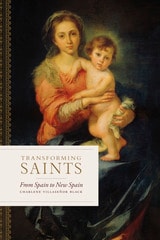
Transforming Saints
From Spain to New SpainCharlene Villaseñor Black
Vanderbilt University Press, 2022
The chapters here examine the rise of the cults of the lactating Madonna, St. Anne, St. Librada, St. Mary Magdalene, and the Suffering Virgin. Concerned with holy figures presented as feminine archetypes—images that came under Inquisition scrutiny—as well as with cults suspected of concealing Indigenous influences, Charlene Villaseñor Black argues that these images would come to reflect the empowerment and agency of women in viceregal Mexico. Her close analysis of the imagery additionally demonstrates artists' innovative responses to Inquisition censorship and the new artistic demands occasioned by conversion.
The concerns that motivated the twenty-first century protests against Chicana artists Yolanda López in 2001 and Alma López in 2003 have a long history in the Hispanic world, in the form of anxieties about the humanization of sacred female bodies and fears of Indigenous influences infiltrating Catholicism. In this context Black also examines a number of important artists in depth, including El Greco, Murillo, Jusepe de Ribera, Pedro de Mena, Baltasar de Echave Ibía, Juan Correa, Cristóbal de Villalpando, and Miguel Cabrera.