Results by title
126 books match the query 'Decolonization' and 22 start with t
The Center Cannot Hold
Decolonial Possibility in the Collapse of a Tanzanian NGOJenna N. Hanchey
Duke University Press, 2023
The Coloniality of the Secular
Race, Religion, and Poetics of World-MakingAn Yountae
Duke University Press, 2024
The Darker Side of Western Modernity
Global Futures, Decolonial OptionsWalter D. Mignolo
Duke University Press, 2011

The Decolonization Of Africa
David Birmingham
Ohio University Press, 1995
The Effluent Eye
Narratives for Decolonial Right-MakingRosemary J. Jolly
University of Minnesota Press, 2024
Why human rights don’t work
In The Effluent Eye, Rosemary J. Jolly argues for the decolonization of human rights, attributing their failure not simply to state and institutional malfeasance but to the very concept of human rights as anthropocentric—and, therefore, fatally shortsighted. In an engaging mix of literary and cultural criticism, Indigenous and Black critique, and substantive forays into the medical humanities, Jolly proposes right-making in the demise of human rights.
Using what she calls an “effluent eye,” Jolly draws on “Fifth Wave” structural public health to confront the concept of human rights—one of the most powerful and widely entrenched liberal ideas. She builds on Indigenous sovereignty work from authors such as Robin Wall Kimmerer, Leanne Betasamosake Simpson, and Mark Rifkin as well as the littoral development in Black studies from Christine Sharpe, Saidiya Hartman, and Tiffany Lethabo King to engage decolonial thinking on a range of urgent topics such as pandemic history and grief; gender-based violence and sexual assault; and the connections between colonial capitalism and substance abuse, the Anthropocene, and climate change.
Combining witnessed experience with an array of decolonial texts, Jolly argues for an effluent form of reading that begins with the understanding that the granting of “rights” to individuals is meaningless in a world compromised by pollution, poverty, and successive pandemics.
Retail e-book files for this title are screen-reader friendly.
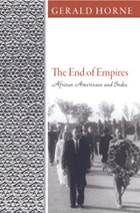
The End of Empires
African Americans and IndiaGerald Horne
Temple University Press, 2009
In the past fifty years, according to Christine So, the narratives of many popular Asian American books have been dominated by economic questions-what money can buy, how money is lost, how money is circulated, and what labor or objects are worth. Focusing on books that have achieved mainstream popularity, Economic Citizens unveils the logic of economic exchange that determined Asian Americans’ transnational migrations and national belonging.
With penetrating insight, So examines literary works that have been successful in the U.S. marketplace but have been read previously by critics largely as narratives of alienation or assimilation, including Fifth Chinese Daughter, Flower Drum Song, Falling Leaves and Turning Japanese. In contrast to other studies that have focused on the marginalization of Asian Americans, Economic Citizens examines how Asian Americans have entered into the public sphere.
The Indigenous Anti-Colonial
A Palestinian Resistance Tradition and a World Beyond Settler ColonialismLinda Tabar
Duke University Press, 2026
The Internal Colony
Race and the American Politics of Global DecolonizationSam Klug
University of Chicago Press, 2025
In The Internal Colony, Sam Klug reveals the central but underappreciated importance of global decolonization to the divergence between mainstream liberalism and the Black freedom movement in postwar America. Klug reconsiders what has long been seen as a matter of primarily domestic policy in light of a series of debates concerning self-determination, postcolonial economic development, and the meanings of colonialism and decolonization. These debates deeply influenced the discord between Black activists and state policymakers and formed a crucial dividing line in national politics in the 1960s and 1970s.
The result is a history that broadens our understanding of ideological formation—particularly how Americans conceptualized racial power and political economy—by revealing a much wider and more dynamic network of influences. Linking intellectual, political, and social movement history, The Internal Colony illuminates how global decolonization transformed the terms of debate over race and social class in the twentieth-century United States.

The Last Empire
Thirty Years of Portuguese DecolonizationAntónio Costa Pinto
Intellect Books, 2003
This book is the result of a conference organised by the Contemporary Portuguese Political History Research Centre (CPHRC) and the University of Dundee that took place during September 2000. The purpose of this conference, and the resulting book, was to bring together various experts in the field to analyse and debate the process of Portuguese decolonisation, which was then 25 years old, and the effects of this on the Portuguese themselves. For over one century, the Portuguese state had defined its foreign policy on the basis of its vast empire &endash; this was the root of its 'Atlanticist' vision. The outbreak of war of liberation in its African territories, which were prompted by the new international support for self determination in colonised territories, was a serious threat that undermined the very foundations of the Portuguese state. This book examines the nature of this threat, how the Portuguese state initially attempted to overcome it by force, and how new pressures within Portuguese society were given space to emerge as a consequence of the colonial wars.
This is the first book that takes a multidisciplinary look at both the causes and the consequences of Portuguese decolonisation &endash; and is the only one that places the loss of Portugal's Eastern Empire in the context of the loss of its African Empire. Furthermore, it is the only English language book that relates the process of Portuguese decolonisation with the search for a new Portuguese vision of its place in the world.
This book is intended for anyone who is interested in regime change, decolonisation, political revolutions and the growth and development of the European Union. It will also be useful for those who are interested in contemporary developments in civil society and state ideologies. Given that a large part of the book is dedicated to the process of change in the various countries of the former Portuguese Empire, it will also be of interest to students of Africa. It will be useful to those who study decolonisation processes within the other former European Empires, as it provides comparative detail. The book will be most useful to academic researchers and students of comparative politics and area studies.
The Minjung Art Movement
Decolonization and Democracy in South KoreaSohl Lee
Duke University Press, 2026
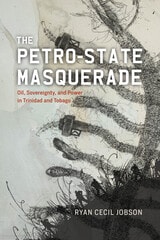
The Petro-state Masquerade
Oil, Sovereignty, and Power in Trinidad and TobagoRyan Cecil Jobson
University of Chicago Press, 2024
Examining the past, present, and future of Trinidad and Tobago’s oil and gas industries, anthropologist Ryan Cecil Jobson traces how a model of governance fashioned during prior oil booms is imperiled by declining fossil fuel production and a loss of state control. Despite the twin-island nation’s increasingly volatile and vulnerable financial condition, however, government officials continue to promote it as a land of inexhaustible resources and potentially limitless profits.
The result is what Jobson calls a “masquerade of permanence” whereby Trinbagonian state actors represent the nation as an interminable reserve of hydrocarbons primed for multinational investment. In The Petro-state Masquerade, Jobson examines the gulf between this narrative crafted by the postcolonial state and the vexed realities of its dwindling petroleum-fueled aspirations. After more than a century of commercial oil production, Trinidad and Tobago instructs us to regard the petro-state as less a permanent form than a fragile relation between fossil fuels and sovereign authority. Foregrounding the concurrent masquerades of oil workers, activists, and Carnival revelers, Jobson argues that the promise of decolonization lies in the disarticulation of natural resources, capital, and political power by ordinary people in the Caribbean.
The Politics of Decolonial Investigations
Walter D. Mignolo
Duke University Press, 2021
The Surrounds
Urban Life within and beyond CaptureAbdouMaliq Simone
Duke University Press, 2022
The Visceral Logics of Decolonization
Neetu Khanna
Duke University Press, 2020

Theory from the Trenches
Decolonization and the Horizons of Subaltern MarxismShozab Raza
Duke University Press, 2027
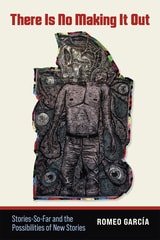
There Is No Making It Out
Stories-So-Far and the Possibilities of New StoriesRomeo García
Utah State University Press, 2025
Third World Studies
Theorizing LiberationGary Y. Okihiro
Duke University Press, 2016
Third World Studies
Theorizing LiberationGary Y. Okihiro
Duke University Press, 2024
Transfigurations Of The Maghreb
Feminism, Decolonization, and LiteraturesWinfred Woodhull
University of Minnesota Press, 1993
Through readings of some of the best-known texts in Algerian literature in French, Woodhull both challenges the separation between French and Francophone literatures and cultures in the academy and explores the ways in which "femininity" has been represented in the texts of North African and French writers since the mid-1950s.
Translating Blackness
Latinx Colonialities in Global PerspectiveLorgia García Peña
Duke University Press, 2022
Transmedia Geographies
Decoloniality, Democratization, Cultural Citizenship, and Media ConvergenceKevin Glynn
Rutgers University Press, 2025
The authors explore the cultural politics that have developed within this new media environment by moving across the mediated landscapes of the first, third, and fourth (Indigenous people’s) worlds, which are deeply intertwined and interconnected under contemporary conditions of neoliberal globalization and emergent regimes of authoritarian postdemocracy. The book attends both to the platforms and digital networks of the new media environment and to the cultural forms and practices that have constituted television as the dominant medium of communication throughout the second half of the twentieth century. In the new media environment, transmediation works on behalf not only of those corporate megaconglomerates that have become all too familiar to media consumers around the world but also of many communities that have previously been excluded from access to the means of electronic textual production and circulation. For the latter, grassroots transmediation has become an important technique for the production of cultural citizenship.
Trustee for the Human Community
Ralph J. Bunche, the United Nations, and the Decolonization of AfricaRobert A. Hill
Ohio University Press, 2010
Ralph J. Bunche (1904–1971), winner of the Nobel Peace Prize in 1950, was a key U.S. diplomat in the planning and creation of the United Nations in 1945. In 1947 he was invited to join the permanent UN Secretariat as director of the new Trusteeship Department. In this position, Bunche played a key role in setting up the trusteeship system that provided important impetus for postwar decolonization ending European control of Africa as well as an international framework for the oversight of the decolonization process after the Second World War.
Trustee for the Human Community is the first volume to examine the totality of Bunche’s unrivalled role in the struggle for African independence both as a key intellectual and an international diplomat and to illuminate it from the broader African American perspective.
These commissioned essays examine the full range of Ralph Bunche’s involvement in Africa. The scholars explore sensitive political issues, such as Bunche’s role in the Congo and his views on the struggle in South Africa. Trustee for the Human Community stands as a monument to the profoundly important role of one of the greatest Americans in one of the greatest political movements in the history of the twentieth century.
Contributors: David Anthony, Ralph A. Austen, Abena P. A. Busia, Neta C. Crawford, Robert R. Edgar, Charles P. Henry, Robert A. Hill, Edmond J. Keller, Martin Kilson, Georges Nzongola-Ntalaja, Jon Olver, Pearl T. Robinson, Elliott P. Skinner, Crawford Young