Results by title
429 books match the query 'Development' and 104 start with t
T?he Commons
Economic Alternatives in the Digital AgeVangelis Papadimitropoulos
University of Westminster Press, 2020
This book explores the potential creation of a broader collaborative economy through commons-based peer production (P2P) and the emergent role of information and communication technologies (ICTs). The book seeks to critically engage in the political discussion of commons-based peer production, which can be classified into three basic arguments: the liberal, the reformist and the anti-capitalist. This book categorises the liberal argument as being in favour of the coexistence of the commons with the market and the state. Reformists, on the other hand, advocate for the gradual adjustment of the state and of capitalism to the commons, while anti-capitalists situate the commons against capitalism and the state. By discussing these three viewpoints, the book contributes to contemporary debates concerning the future of commons-based peer production.
Further, the author argues that for the commons to become a fully operational mode of peer production, it needs to reach critical mass arguing that the liberal argument underestimates the reformist insight that technology has the potential to decentralise production, thereby forcing capitalism to transition to post-capitalism. Surveying the three main strands of commons-based peer production, this book makes the case for a post-capitalist commons-orientated transition that moves beyond neoliberalism.
Technology, Productivity, and Economic Growth
Edited by Susanto Basu, Lucy Eldridge, John Haltiwanger, and Erich Strassner
University of Chicago Press, 2025
A wide-reaching exploration of how technological advancements influence and shape productivity and economic growth.
Current technological developments in several industries, such as the rise of artificial intelligence and innovations associated with the green energy transition, are likely to have significant and wide-ranging effects. This volume explores the implications of rapid changes in advanced technology and considers how to conceptualize and model these advances and improve measures of productivity and economic growth. The study of these issues is facilitated both by new methods for using and integrating disparate data sources and by the availability of new data sources. The chapters in this volume leverage these developments to offer fresh insights into long-standing issues in productivity analysis and technological change.

The Afterlife Is Where We Come From
Alma Gottlieb
University of Chicago Press, 2003
In this unique and engaging ethnography of babies, Alma Gottlieb explores how religious ideology affects every aspect of Beng childrearing practices—from bathing infants to protecting them from disease to teaching them how to crawl and walk—and how widespread poverty limits these practices. A mother of two, Gottlieb includes moving discussions of how her experiences among the Beng changed the way she saw her own parenting. Throughout the book she also draws telling comparisons between Beng and Euro-American parenting, bringing home just how deeply culture matters to the way we all rear our children.
All parents and anyone interested in the place of culture in the lives of infants, and vice versa, will enjoy The Afterlife Is Where We Come From.
"This wonderfully reflective text should provide the impetus for formulating research possibilities about infancy and toddlerhood for this century." — Caren J. Frost, Medical Anthropology Quarterly

The American Country Club
Its Origins and DevelopmentMayo, James M.
Rutgers University Press, 1998
The American country club movement parallels the rise of suburbanization in the United States. Its roots can be found in the exclusive city clubs and summer resorts of the nineteenth century; its growth reflects a desire for permanent and organized places where the wealthy could spend their leisure time. By the late nineteenth century, mass transportation enabled the wealthy to escape the confines of the city, and suburbanization began. Their pursuit of leisure—in the form of city clubs, spas, summer resorts, and elite sports—became the foundation for the country club. Country clubs provided places where the elite could combine their interests in sports, the outdoors, and leisure while separating themselves from those they considered non-elite. The American Country Club chronicles the social and economic evolution of this elite leisure landscape.
The founding clubs were makeshift landscapes that took advantage of existing conditions, but in the early twentieth century, standard club practices emerged. Clubhouse design, golf course layouts, financial arrangements, and the rise of club management furthered the country club movement. Residential developers also learned to use the country club as a way to organize their elite subdivisions and to sell homes. But the Depression and World War II stifled the growth of country clubs. Eventually the country club movement regained its momentum, and corporations began to develop country clubs to meet the growing demand for club life and to treat the country club as a revenue source.
Some critics feel that the country club addresses a basic liberty of social choice whereas others view it as an unnecessary source of social discrimination. Beyond these positions, James Mayo argues that our nation’s political economy is reflected in the country club, which simultaneously thrives as a business and provides social status for its members.

The Colonization of the Amazon
By Anna Luiza Ozorio de Almeida
University of Texas Press, 1992
Deforestation in the Amazon, one of today's top environmental concerns, began during a period of rapid colonization in the 1970s. Throughout that decade, Anna Luiza Ozorio de Almeida, a Stanford-trained economist, conducted a complex and massive economic study of what was going on in the Amazon, who was investing what, what was gained, and what it cost in all its aspects. The Colonization of the Amazon, the resulting work, brings together information on the physical, demographic, institutional, and economic dimensions of directed settlement in the Amazon Basin and raises significant questions about the gains and losses of the settlers, the reasons for these outcomes, and the economic rationale behind the devastation of the rainforest.
Particularly illuminating is Almeida's exploration of the role of the frontier in Brazil and her distinction between types of migrants and migrations. She concludes that the political costs avoided by not undertaking agrarian reform are being paid by devastating the Amazon, with the conflict between distribution and conservation steadily worsening. Today, it can no longer be circumvented.
The Community Forests of Mexico
Managing for Sustainable LandscapesEdited by David Barton Bray, Leticia Merino-Pérez, and Deborah Barry
University of Texas Press, 2005
Mexico leads the world in community management of forests for the commercial production of timber. Yet this success story is not widely known, even in Mexico, despite the fact that communities around the globe are increasingly involved in managing their own forest resources. To assess the achievements and shortcomings of Mexico's community forest management programs and to offer approaches that can be applied in other parts of the world, this book collects fourteen articles that explore community forest management from historical, policy, economic, ecological, sociological, and political perspectives.
The contributors to this book are established researchers in the field, as well as many of the important actors in Mexico's nongovernmental organization sector. Some articles are case studies of community forest management programs in the states of Michoacán, Oaxaca, Durango, Quintana Roo, and Guerrero. Others provide broader historical and contemporary overviews of various aspects of community forest management. As a whole, this volume clearly establishes that the community forest sector in Mexico is large, diverse, and has achieved unusual maturity in doing what communities in the rest of the world are only beginning to explore: how to balance community income with forest conservation. In this process, Mexican communities are also managing for sustainable landscapes and livelihoods.
The Concept of Development
An Issue in the Study of Human BehaviorDale Harris
University of Minnesota Press, 1967
The Decline of Latin American Economies
Growth, Institutions, and CrisesEditied by Sebastian Edwards, Gerardo Esquivel, and Graciela Márquez
University of Chicago Press, 2007
Latin America’s economic performance is mediocre at best, despite abundant natural resources and flourishing neighbors to the north. The perplexing question of how some of the wealthiest nations in the world in the nineteenth century are now the most crisis-prone has long puzzled economists and historians. The Decline of Latin American Economies examines the reality behind the struggling economies of Argentina, Chile, and Mexico.
A distinguished panel of experts argues here that slow growth, rampant protectionism, and rising inflation plagued Latin America for years, where corrupt institutions and political unrest undermined the financial outlook of already besieged economies. Tracing Latin America’s growth and decline through two centuries, this volume illustrates how a once-prosperous continent now lags behind. Of interest to scholars and policymakers alike, it offers new insight into the relationship between political systems and economic development.
The Detroit River
Stories of Development and Industrialization, 1874–1912Richard Gebhart
Michigan State University Press, 2027
Covering the period from the first government survey of the treacherous Limekiln Crossing to the completion of the Livingstone Channel, The Detroit River tells the story of the industrial transformation of the city’s most important waterway.

The Development and Growth of the External Dimensions of the Human Body in the Fetal Period
Richard Scammon
University of Minnesota Press, 1929

The Development of Behavioral States and the Expression of Emotions in Early Infancy
New Proposals for InvestigationPeter H. Wolff
University of Chicago Press, 1987
Wolff argues that a coherent psychobiological theory of early human development must begin with knowledge about the infant's behavioral repertory under free field conditions. Many current theories of human development begin instead with assumptions about the organization of behavior derived from studies of psychological function in the adult; moreover, they appeal to instincts, maturational programs, or genomes to explain the apparent lawfulness in the development of these behavioral categories. Such a priori explanations, Wolff contends, beg the whole question of development. As an alternative to theoretical metaphors that portray the infant as a closed system and suggests that development is controlled by prescient programs that anticipate the mature steady state, Wolff proposes a metaphor of the infant as an open, self-organizing system with partial, mutative mechanisms of development. Applying this metaphor, he addresses the essentially unsolved problem of how novel behavioral forms are induced during ontogenesis.
Wolff presents a study of twenty-two infants who were observed for thirty hours each week in their homes during the first months after birth. He builds a week-by-week description of changes in behavioral states of wakefulness and examines how reversible state changes influence developmental transformations in social-affective behavior and sensori-motor intelligence. The observations and informal experiments emphasize expressions of emotion and the infant's changing relations to persons and things. Pointing out that movements are our only clue to what infants "feel" or "think," Wolff gives special emphasis to the systematic variations in spontaneous and environmentally evoked patterns of motor coordination as a function of behavioral state transitions.
Of great importance to psychologists, psychiatrists, pediatricians, and students of development in general, The Development of Behavioral States and the Expression of Emotions in Early Infancy offers a major empirical, methodological, and theoretical rethinking of the subject to which Wolff has made outstanding contributions.
The Development of Children’s Concepts of Causal Relations
Jean Deutsche
University of Minnesota Press, 1937

The Development of Dogma
A Systematic AccountGuy Mansini, OSB
Catholic University of America Press, 2023
The Development of Future-Oriented Processes
Edited by Marshall M. Haith, Janette B. Benson, Ralph J. Roberts Jr., and Bruce
University of Chicago Press, 1994
Following Marshall Haith's seminal studies on early infant anticipation, this collection begins with a survey of current knowledge about the early development of expectations. Addressing both the state of neural research in this field and the role of language and social context in the development of future orientation, the authors discuss the nature of planning in action, future orientation in humans and in nonhuman primates, and the development of intermediate and long-term expectations with regard to cognitive skills and scientific activity.
Combining developmental and cognitive perspectives, this volume will interest professionals in developmental psychology, child development, and neuropsychology.
The Development of Higher Education and Social Change
Teshome Wagaw
Michigan State University Press, 1990
Begun while the author taught at the Ethiopian National University, this study examines the development of the institutions of higher education and the roles they played in transforming traditional Ethiopian society.
Wagaw sets out to prove that, although other modernizing institutions of learning may contribute significantly to social and economic change, institutions of higher education and their students already have effected profound revolution and proven indispensable to the established order.
His study argues that Ethiopian institutions of higher education were germane to the emerging society. They led Ethiopia down an often unpeaceful path from its oppressively traditional past toward progress and enlightenment.
The Development of Linguistic Skill in Twins, Singletons with Siblings, and Only Children from Age Five to Ten Years
Edith Davis
University of Minnesota Press, 1937

The Development of Political Institutions
Power, Legitimacy, DemocracyFederico Ferrara
University of Michigan Press, 2022
While the literature on “new institutionalism” explains the stability of institutional arrangements within countries and the divergence of paths of institutional development between countries, Federico Ferrara takes a “historical institutionalist” approach to theorize dynamic processes of institutional reproduction, institutional decay, and institutional change in explaining the development of political institutions. Ferrara synthesizes “power-based” or “power-distributional” explanations and “ideas-based” “legitimation explanations.” He specifies the psychological “microfoundations” of processes of institutional development, drawing heavily from the findings of experimental psychology to ensure that the explanation is grounded in clear and realistic assumptions regarding human motivation, cognition, and behavior. Aside from being of interest to scholars and graduate students in political science and other social-scientific disciplines whose research concentrates on the genesis of political institutions, their evolution over time, and their impact on the stability of political order and the quality of governance, the book will be required reading in graduate courses and seminars in comparative politics where the study of institutions and their development ranks among the subfield’s most important subjects.
The Development of Reasoning in Children with Normal and Defective Hearing
Mildred Templin
University of Minnesota Press, 1950

The Development of Southeastern Archaeology
Edited by Jay K. Johnson
University of Alabama Press, 1993
Ten scholars whose specialties range from ethnohistory to remote sensing and lithic analysis to bioarchaeology chronicle changes in the way prehistory in the Southeast has been studied since the 19th century. Each brings to the task the particular perspective of his or her own subdiscipline in this multifaceted overview of the history of archaeology in a region that has had an important but variable role in the overall development of North American archaeology.
Some of the specialties discussed in this book were traditionally relegated to appendixes or ignored completely in site reports more than 20 years old. Today, most are integral parts of such reports, but this integration has been hard won. Other specialties have been and will continue to be of central concern to archaeologists. Each chapter details the way changes in method can be related to changes in theory by reviewing major landmarks in the literature. As a consequence, the reader can compare the development of each subdiscipline.
As the first book of this kind to deal specifically with the region, it be will valuable to archaeologists everywhere. The general reader will find the book of interest because the development of southeastern archaeology reflects trends in the development of social science as a whole.
Contributors include:
Jay K. Johnson, David S. Brose, Jon L. Gibson, Maria O. Smith, Patricia K. Galloway, Elizabeth J. Reitz, Kristen J. Gremillion, Ronald L. Bishop, Veletta Canouts, and W. Fredrick Limp

The Development of Spiritual Life in Bosnia under the Influence of Turkish Rule
Ivo Andric
Duke University Press, 1990
Over his long and distinguished career as a diplomat and man of letters Andric never again so directly or discursively addressed, as a social historian, the impact of Turkish hegemony on the Bosnian people (1463–1878), a theme he returns to again and again in his novels. Although Andric’s fiction was embedded in history, scholars know very little of his actual readings in history and have no other comparable treatment of it from his own pen. This dissertation abounds with topics that Andric incorporated into his early stories and later novels, including a focus on the moral stresses and compromises within Bosnia’s four religious confessions: Catholic, Orthodox, Jew, and Muslim.
Z. B. Juricic provides an extensive introduction describing the circumstances under which this work was written and situating it in Andric’s oeuvre. John F. Loud’s original bibliography drawn from this dissertation stands as the only comprehensive inventory of historical sources known to have been closely familiar to the author at this early stage in his development.
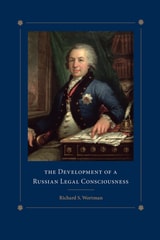
The Development of a Russian Legal Consciousness
Richard S. Wortman
University of Chicago Press, 1976

The Development of a Strategy for Integrated Manufacturing Systems
Norman A. Schofield
The Institution of Engineering and Technology, 1990
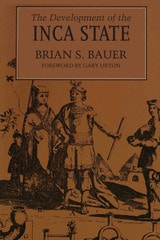
The Development of the Inca State
By Brian S. Bauer
University of Texas Press, 1992
The Inca empire was the largest state in the Americas at the time of the Spanish invasion in 1532. From its political center in the Cuzco Valley, it controlled much of the area included in the modern nations of Ecuador, Peru, Chile, and Bolivia. But how the Inca state became a major pan-Andean power is less certain. In this innovative work, Brian S. Bauer challenges traditional views of Inca state development and offers a new interpretation supported by archaeological, historical, and ethnographic evidence.
Spanish chroniclers of the sixteenth and seventeenth centuries attributed the rapid rise of Inca power to a decisive military victory over the Chanca, their traditional rivals, by Pachacuti Inca Yupanqui. By contrast, Bauer questions the usefulness of literal interpretations of the Spanish chronicles and provides instead a regional perspective on the question of state development. He suggests that incipient state growth in the Cuzco region was marked by the gradual consolidation and centralization of political authority in Cuzco, rather than resulting from a single military victory. Synthesizing regional surveys with excavation, historic, and ethnographic data, and investigating broad categories of social and economic organization, he shifts the focus away from legendary accounts and analyzes more general processes of political, economic, and social change.
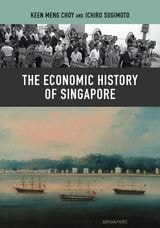
The Economic History of Singapore
Keen Meng Choy and Ichiro Sugimoto
National University of Singapore Press, 2026
What explains Singapore’s economic success? What are the factors behind the many changes it has negotiated over the centuries, first as a regional trading port in the fourteenth century, then as an entrepôt and staple port in the British empire, and finally moving to independence, export-led industrialization, and global-city status as one of the world's most prosperous economies? This comprehensive economic history of Singapore is the first to integrate a long-term view, taking a narrative but analytical approach. At the same time, the book does not lose sight of individuals, firms, and families, and the way economic changes have affected the well-being of Singapore’s people. The Economic History of Singapore also considers recent challenges faced by the country, such as balancing the needs of the nation-state and the global city and managing worsening income distribution.
The Economics of Aging
Edited by David A. Wise
University of Chicago Press, 1988
The Economics of Aging presents results from an ongoing National Bureau of Economic Research project. Contributors consider the housing mobility and living arrangements of the elderly, their labor force participation and retirement, the economics of their health care, and their financial status. The goal of the research is to further our understanding both of the factors that determine the well-being of the elderly and of the consequences that follow from an increasingly older population with longer individual life spans. Each paper is accompanied by critical commentary.

The Economics of Crime
Lessons For and From Latin AmericaEdited by Rafael Di Tella, Sebastian Edwards, and Ernesto Schargrodsky
University of Chicago Press, 2010
The Economics of Marine Resources and Conservation Policy
The Pacific Halibut Case Study with CommentaryEdited by James A. Crutchfield and Arnold Zellner
University of Chicago Press, 2002
This book presents a complete reprint of Crutchfield and Zellner's pioneering study, together with a new introduction by the authors and four new papers by other scholars. These new studies cover the history of the Pacific halibut industry as well as the general and specific contributions of the original work—such as price-oriented conservation policy—to the fields of resource economics and management. The resulting volume integrates theory and practice in a clear, well-contextualized case study that will be important not just for environmental and resource economists, but also for leaders of industries dependent on any natural resource.
The Electric Car
Development and future of battery, hybrid and fuel-cell carsMike H. Westbrook
The Institution of Engineering and Technology, 2001

The Empire Strikes Out
Kurd Lasswitz, Hans Dominik, and the Development of German Science FictionWilliam B. Fischer
University of Wisconsin Press, 1984

The Essential Lapsit Guide
A Multimedia How-To-Do-It Manual and Programming Guide for Stimulating Literacy Development from 12 to 24 MonthsLinda L. Ernst
American Library Association, 2015
Not just a sourcebook or a reference, but a complete multimedia guide, this innovative, comprehensive resource will help you stimulate the minds of your youngest patrons with rhymes, songs, fingerplays, books, and other creative activities. The engaging materials and methods in this book are equally useful for experienced children's librarians looking for new ideas and new librarians starting to build their own program for the very young. Through researching the latest in early learner and developmental theories, Ernst
- Carefully details the physical, mental, emotional, and social development of children 12 to 24 months
- Guides you through using Lapsit programming to perform effective outreach to all segments of your community
- Shows how to build and maintain effective partnerships with caregivers, child-care providers, early childhood educators, and others
- Offers tips for seeking funding for early childhood services
The Evolution of Agrarian Institutions
A Comparative Study of Post-Socialist Hungary and BulgariaMieke Meurs
University of Michigan Press, 2001

The Fair Trade Revolution
Edited by John Bowes
Pluto Press, 2011
Fair Trade is now mainstream, with large companies like Cadbury's and supermarkets such as Sainsbury's producing and stocking many Fair Trade products. The authors of this collection, many of whom were responsible for the initial success of Fair Trade, emphasise the importance of ensuring that farmers and other producers remain the main beneficiaries. Punchy chapters, illustrated with many real-world examples, cover all the important issues including the tensions between large and small operators, the impact of recession, environmental policy and the danger of large operators embracing Fair Trade more in word than in practice.
Written by the leading lights of the Fair Trade movement, including Harriet Lamb (Executive Director of the Fairtrade Foundation) and Bruce Crowther (Establisher of the world's first Fair Trade Town) this book will inspire activists and consumers to keep making the right choices.

The Fair Trade Scandal
Marketing Poverty to Benefit the RichNdongo Sylla
Ohio University Press, 2014
This critical account of the fair trade movement explores the vast gap between the rhetoric of fair trade and its practical results for poor countries, particularly those of Africa. In the Global North, fair trade often is described as a revolutionary tool for transforming the lives of millions across the globe. The growth in sales for fair trade products has been dramatic in recent years, but most of the benefit has accrued to the already wealthy merchandisers at the top of the value chain rather than to the poor producers at the bottom.
Ndongo Sylla has worked for Fairtrade International and offers an insider’s view of how fair trade improves—or doesn’t—the lot of the world’s poorest. His methodological framework first describes the hypotheses on which the fair trade movement is grounded before going on to examine critically the claims made by its proponents. By distinguishing local impact from global impact, Sylla exposes the inequity built into the system and the resulting misallocation of the fair trade premium paid by consumers. The Fair Trade Scandal is an empirically based critique of both fair trade and traditional free trade; it is the more important for exploring the problems of both from the perspective of the peoples of the Global South, the ostensible beneficiaries of the fair trade system.

The Fair Trade Scandal
Marketing Poverty to Benefit the RichNdongo Sylla
Ohio University Press, 0
Ndongo Sylla has worked for Fairtrade International and offers an insider’s view of how fair trade improves?—?or doesn’t?—?the lot of the world’s poorest. His methodological framework first describes the hypotheses on which the fair trade movement is grounded before going on to examine critically the claims made by its proponents. By distinguishing local impact from global impact, Sylla exposes the inequity built into the system and the resulting misallocation of the fair trade premium paid by consumers.
The Fair Trade Scandal is an empirically based critique of both fair trade and traditional free trade; it is the more important for exploring the problems of both from the perspective of the peoples of the Global South, the ostensible beneficiaries of the fair trade system.

The Federal Future of Europe
From the European Community to the European UnionDusan Sidjanski
University of Michigan Press, 2000
The author argues that federalism is the best antidote to the reemergence of nationalism in Europe. It is also the best guarantee for a peaceful community that balances the claims of national, regional, and local identity against the need for large-scale economies that springs from the forces of globalization, competition, and technical change. The Union preserves diversity within a flexible and innovating European system.
This major study of the development of the European project, informed by a thorough knowledge of the Community and Union over the years and by deep understanding of the relevant literatures in political science and political economy is important for all who study the European Union or work with it as officials and business people.
Dusan Sidjanski is founder and Professor Emeritus of the Department of Political Science, University of Geneva and Professor Emeritus, European Institute. He has authored numerous publications, most recently, The ECE in the Age of Change (United Nations Economic Commission for Europe, United Nations).
The Financial Crisis and the Global South
A Development PerspectiveYilmaz Akyuz
Pluto Press, 2013
This book is a major contribution exploring the policy options available for developing and emerging economies in response to the global economic crises.
Written by a highly respected development economist, the book gives a clear-eyed account of the issues particular to these countries and critically evaluates different policy approaches, including reforms in financial, monetary and trade policies. Informed by deep scholarship as well as practical experience, Yilmaz Akyüz draws on empirical data, historical context and theoretical expertise, with special attention paid to issues such as the role of the International Monetary Fund and China.
The Financial Crisis and the Global South is a landmark book that will be of interest to practitioners, scholars, theorists and students of economics and development studies.

The Fixers
Devolution, Development, and Civil Society in Newark, 1960-1990Julia Rabig
University of Chicago Press, 2016
Rabig argues that fixers play dual roles. They support resistance, but also mediation; they fight for reform, but also more radical and far-reaching alternatives; they rally others to a collective cause, but sometimes they broker factions. Fixers reflect longer traditions of organizing while responding to the demands of their times. In so doing, they end up fixing (like a fixative) a new and enduring pattern of activist strategies, reforms, and institutional expectations—a pattern we continue to see today.
The Gender Impact of Social Security Reform
Estelle James, Alejandra Cox Edwards, and Rebeca Wong
University of Chicago Press, 2008
The Gender Impact of Social Security Reform compares the gendered outcomes of social security systems in Chile, Argentina, and Mexico, and presents empirical findings from Eastern and Central European transition economies as well as several OECD countries. Women’s positions have improved relative to men in countries where joint pensions have been required, widows who have worked can keep the joint pension in addition to their own benefit, the public benefit has been targeted toward low earners, and women’s retirement age has been raised to equality with that of men. The Gender Impact of Social Security Reform will force economists and policy makers to reexamine the design features that enable social security systems to achieve desirable gender outcomes.
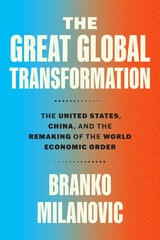
The Great Global Transformation
The United States, China, and the Remaking of the World Economic OrderBranko Milanovic
University of Chicago Press, 2026
The world’s two great economic powers are on opposite trajectories. In the United States, decades of neoliberal policies produced a small class of rich elites and gutted the middle class. In China, the same global forces have created a massive new upper class. The result is the greatest reshuffling of global incomes since the Industrial Revolution—a dramatic shakeup of each country’s political order. As the two powers retreat from one another, the implications for their futures, and for the world economy, are uncertain.
In The Great Global Transformation, acclaimed economist Branko Milanovic draws on original research to chart how these seismic shifts will shape the next century of the global economy. As both the US and China retreat into protectionism, Milanovic shows how a new and multipolar world order will follow—and how rising nationalism will have dramatically different effects on the two countries. And he shows us the fight ahead: as plutocracy returns, global war threatens, and a new system silently shapes our nations, driving populist discontent to the breaking point.
A worthy successor to Capitalism, Alone and his other landmark works, Milanovic’s new book announces the arrival of a new era he terms “national market liberalism,” in which liberalism survives in domestic economies, but not necessarily in the social arena. The Great Global Transformation is Milanovic’s indispensable account of the new twenty-first century now underway.
The Great Global Transformation
The United States, China, and the Remaking of the World Economic OrderBranko Milanovic
University of Chicago Press, 2026
From the essential chronicler of the world economy, a portrait of the Great Powers in transition.
The world’s two great economic powers are on opposite trajectories. In the United States, decades of neoliberal policies produced a small class of rich elites and gutted the middle class. In China, the same global forces have created a massive new upper class. The result is the greatest reshuffling of global incomes since the Industrial Revolution—a dramatic shakeup of each country’s political order. As the two powers retreat from one another, the implications for their futures, and for the world economy, are uncertain.
In The Great Global Transformation, acclaimed economist Branko Milanovic draws on original research to chart how these seismic shifts will shape the next century of the global economy. As both the US and China retreat into protectionism, Milanovic shows how a new and multipolar world order will follow—and how rising nationalism will have dramatically different effects on the two countries. And he shows us the fight ahead: as plutocracy returns, global war threatens, and a new system silently shapes our nations, driving populist discontent to the breaking point.
A worthy successor to Capitalism, Alone and his other landmark works, Milanovic’s new book announces the arrival of a new era he terms “national market liberalism,” in which liberalism survives in domestic economies, but not necessarily in the social arena. The Great Global Transformation is Milanovic’s indispensable account of the new twenty-first century now underway.
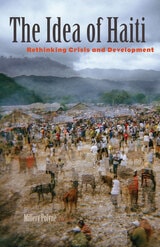
The Idea of Haiti
Rethinking Crisis and DevelopmentMillery Polyné
University of Minnesota Press, 2013
After Haiti was struck by a devastating earthquake on January 12, 2010, aid workers and offers of support poured in from around the world. Tellingly, though, news reports on the catastrophe and relief efforts frequently included a pejorative description of the country that outsiders were determined to rebuild: the troubled island nation, a nation plagued by political violence. There was much talk of inventing a “new” Haiti, which would presumably mimic Western modes of development and thus mitigate political instability and crisis.
As contributors to this wide-ranging book reveal, Haiti has long been marginalized as an embodiment of alterity, as the other, and the idea of a new Haiti is actually nothing new. An investigation of the notion of newness through the lenses of history and literature, urban planning, religion, and governance, The Idea of Haiti illuminates the politics and the narratives of Haiti’s past and present. The essays, which grow from original research and in-depth interviews, examine how race, class, and national development inform the policies that envision re-creating the country.
Together the contributors address important questions: How will the present narratives of deviance affect international relief and rebuilding efforts? What do Haitians themselves think about Haiti, old and new? What are the potential complications and weakness of aid strategies during these trying times? And what do we mean by crisis in Haiti?
Contributors: Yveline Alexis, Rutgers U; Wein Weibert Arthus, State U of Haiti; Greg Beckett, Bowdoin College; Alex Dupuy, Wesleyan U; Harley F. Etienne, U of Michigan; Robert Fatton Jr., U of Virginia; Sibylle Fischer, New York U; Elizabeth McAlister, Wesleyan U; Nick Nesbitt, Princeton U; Karen Richman, U of Notre Dame; Mark Schuller, York College (CUNY); Patrick Sylvain, Brown U; Évelyne Trouillot, State U of Haiti; Tatiana Wah, Columbia U.
The Ills of Aid
An Analysis of Third World Development PoliciesEberhard Reusse
University of Chicago Press, 2002
Very few critiques of foreign development aid have approached the subject from the perspectives of organizational, rural, or epistemic sociology. The Ills of Aid combines all three, and points toward fundamental solutions: more direct accountability to the primary funding base—the international taxpayer—and the privatization of aid. Learned, pragmatic, and important, The Ills of Aid is essential reading for all in the field.Organization, other international and bilateral development programs, and development financing institutions. His field experience embraces more than forty countries.

The Infinite Resource
The Power of Ideas on a Finite PlanetRamez Naam
University Press of New England, 2013
The International Monetary Fund and Latin America
The Argentine Puzzle in ContextClaudia Kedar
Temple University Press, 2013
The International Monetary Fund (IMF) has played a critical role in the global economy since the postwar era. But, claims Claudia Kedar, behind the strictly economic aspects of the IMF’s intervention, there are influential interactions between IMF technocrats and local economists—even when countries are not borrowing money.
In The International Monetary Fund and Latin America, Kedar seeks to expose the motivations and constraints of the operations of both the IMF and borrowers. With access to never-before-seen archive materials, Kedar reveals both the routine and behind-the-scenes practices that have depicted International Monetary Fund–Latin American relations in general and the asymmetrical IMF-Argentina relations in particular.
Kedar also analyzes the “routine of dependency” that characterizes IMF-borrower relations with several Latin American countries such as Chile, Peru, and Brazil. The International Monetary Fund and Latin America shows how debtor countries have adopted IMF’s policies during past decades and why Latin American leaders today largely refrain from knocking at the IMF’s doors again.
The Launch Lens
20 Questions Every Entrepreneur Should AskJim Price
Michigan Publishing Services, 2018
Too often, innovative individuals and teams come up with new-business ideas only to hit the proverbial wall, become discouraged, and fail to follow through. How can you get more traction with your ideas and see them through to fruition? As with so many things in life, half the battle is knowing what questions to ask. In this book, serial entrepreneur and business professor Jim Price illustrates a simple, yet powerful framework known as the Launch Lens. Price’s method leads innovators through a structured process to clearly define and communicate their concept, distinguish the good ideas from the not-so-good, and lay the cornerstones of the startup planning process.
The Launch Lens is comprised of twenty critical questions or Focal Points, organized according the classic new-business planning categories: problem, solution, market, business model, marketing and sales, finance, capital, and team. The book leads readers through explanations of how to address each question, illustrated by useful examples, tips, and red flags. Already in active use by thousands of innovators – ranging from aspiring entrepreneurs to early-stage startup teams and venture investors, from incubators and accelerators to intrapreneurs within established corporations and non-profits – The Launch Lens can help you bring your new-business concepts into clear focus.

The Less Responsive Chamber?
Politics and Development in the Early US SenateJoel Sievert
University of Michigan Press, 2027
Who did members of the early US Senate represent? Many scholarly and popular political accounts of the Antebellum era assume that senators were exclusively representatives of the state governments because pre-reform senators were chosen by state legislatures. However, The Less Responsive Chamber? examines senators’ relationships with three potential targets of representation—the state governments, the state legislature, and the electorate of the state.
Through both empirical analyses and detailed case studies, the book demonstrates that senators cared about the public and did not strictly view their representational role as one of being faithful agents to state governments. While senators’ floor speeches, circulars, and correspondences frequently referenced the state electorate as their primary constituency, they were often directed to represent a variety of interests. Further, senators were aware of and responded to public opinion as well as intrastate political dynamics. By documenting how the interests of political parties, states, and the public influenced the Senate’s behavior during the early years of the United States, this book offers insight into a period whose fraught politics continue to impact our lives today.
The Macroeconomics of Populism in Latin America
Edited by Rudiger Dornbusch and Sebastian Edwards
University of Chicago Press, 1991
Economists and political scientists from the United States and Latin America detail in this volume how and why such programs go wrong and what leads policymakers to repeatedly adopt these policies despite a history of failure. Authors examine this pattern in Argentina, Brazil, Chile, Mexico, Nicaragua, and Peru—and show how Colombia managed to avoid it. Despite differences in how each country implemented its policies, the macroeconomic consequences were remarkably similar.
Scholars of Latin America will find this work a valuable resource, offering a distinctive macroeconomic perspective on the continuing controversy over the dynamics of populism.

The Magical State
Nature, Money, and Modernity in VenezuelaFernando Coronil
University of Chicago Press, 1997

The Making of the Mexican Border
The State, Capitalism, and Society in Nuevo León, 1848-1910By Juan Mora-Torres
University of Texas Press, 2001
The issues that dominate U.S.-Mexico border relations today—integration of economies, policing of boundaries, and the flow of workers from south to north and of capital from north to south—are not recent developments. In this insightful history of the state of Nuevo León, Juan Mora-Torres explores how these processes transformed northern Mexico into a region with distinct economic, political, social, and cultural features that set it apart from the interior of Mexico.
Mora-Torres argues that the years between the establishment of the U.S.-Mexico boundary in 1848 and the outbreak of the Mexican Revolution in 1910 constitute a critical period in Mexican history. The processes of state-building, emergent capitalism, and growing linkages to the United States transformed localities and identities and shaped class formations and struggles in Nuevo León. Monterrey emerged as the leading industrial center and home of the most powerful business elite, while the countryside deteriorated economically, politically, and demographically. By 1910, Mora-Torres concludes, the border states had already assumed much of their modern character: an advanced capitalist economy, some of Mexico's most powerful business groups, and a labor market dependent on massive migrations from central Mexico.

The Maternal Imprint
The Contested Science of Maternal-Fetal EffectsSarah S. Richardson
University of Chicago Press, 2021
The idea that a woman may leave a biological trace on her gestating offspring has long been a commonplace folk intuition and a matter of scientific intrigue, but the form of that idea has changed dramatically over time. Beginning with the advent of modern genetics at the turn of the twentieth century, biomedical scientists dismissed any notion that a mother—except in cases of extreme deprivation or injury—could alter her offspring’s traits. Consensus asserted that a child’s fate was set by a combination of its genes and post-birth upbringing.
Over the last fifty years, however, this consensus was dismantled, and today, research on the intrauterine environment and its effects on the fetus is emerging as a robust program of study in medicine, public health, psychology, evolutionary biology, and genomics. Collectively, these sciences argue that a woman’s experiences, behaviors, and physiology can have life-altering effects on offspring development.
Tracing a genealogy of ideas about heredity and maternal-fetal effects, this book offers a critical analysis of conceptual and ethical issues—in particular, the staggering implications for maternal well-being and reproductive autonomy—provoked by the striking rise of epigenetics and fetal origins science in postgenomic biology today.