Results by title
281 books match the query 'Disease & Health Issues' and 44 start with t

Technopharmacology
Joshua Neves
University of Minnesota Press, 2022
Exploring networked technologies and bioeconomy and their links to biotechnologies, pharmacology, and pharmaceuticals
Being on social media, having pornography or an internet addiction, consciousness hacking, and mundane smartness initiatives are practices embodied in a similar manner to the swallowing of a pill. Such close relations of media technologies to pharmaceuticals and pharmacology is the focus of this book. Technopharmacology is a modest call to expand media theoretical inquiry by attending to the biological, neurological, and pharmacological dimensions of media and centers on emergent affinities between big data and big pharma.

Testing Fate
Tay-Sachs Disease and the Right to Be ResponsibleShelley Z. Reuter
University of Minnesota Press, 2016
In today’s world, responsible biocitizenship has become a new way of belonging in society. Individuals are expected to make “responsible” medical choices, including the decision to be screened for genetic disease. Paradoxically, we have even come to see ourselves as having the right to be responsible vis-à-vis the proactive mitigation of genetic risk. At the same time, the concept of genetic disease has become a new and powerful way of defining the boundaries between human groups. Tay-Sachs, an autosomal recessive disorder, is a case in point—with origins in the period of Eastern European Jewish immigration to the United States and United Kingdom that spanned the late nineteenth and early twentieth centuries, it has a long and fraught history as a marker of Jewish racial difference.
In Testing Fate, Shelley Z. Reuter asks: Can the biocitizen, especially one historically defined as a racialized and pathologized Other, be said to be exercising authentic, free choice in deciding whether to undertake genetic screening? Drawing on a range of historical and contemporary examples—doctors’ medical reports of Tay-Sachs since the first case was documented in 1881, the medical field’s construction of Tay-Sachs as a disease of Jewish immigrants, YouTube videos of children with Tay-Sachs that frame the disease as tragic disability avoidable through a simple genetic test, and medical malpractice suits since the test for the disease became available—Reuter shows that true agency in genetic decision-making can be exercised only from a place of cultural inclusion. Choice in this context is in fact a kind of unfreedom—a moral duty to act that is not really agency at all.
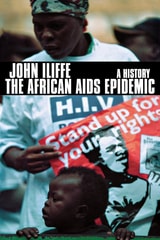
The African AIDS Epidemic
A HistoryJohn Iliffe
Ohio University Press, 2006
A Choice Significant University Press Titles for Undergraduates, 2005–2006
This history of the African AIDS epidemic is a much-needed, accessibly written historical account of the most serious epidemiological catastrophe of modern times. The African AIDS Epidemic: A History answers President Thabo Mbeki’s provocative question as to why Africa has suffered this terrible epidemic.
While Mbeki attributed the causes to poverty and exploitation, others have looked to distinctive sexual systems practiced in African cultures and communities. John Iliffe stresses historical sequence. He argues that Africa has had the worst epidemic because the disease was established in the general population before anyone knew the disease existed. HIV evolved with extraordinary speed and complexity, and because that evolution took place under the eyes of modern medical research scientists, Iliffe has been able to write a history of the virus itself that is probably unique among accounts of human epidemic diseases. In giving the African experience a historical shape, Iliffe has written one of the most important books of our time.
The African experience of AIDS has taught the world much of what it knows about HIV/AIDS, and this fascinating book brings into focus many aspects of the epidemic in the longer context of massive demographic growth, urbanization, and social change in Africa during the latter half of the twentieth century. The African AIDS Epidemic: A History is a brilliant introduction to the many aspects of the epidemic and the distinctive character of the virus.
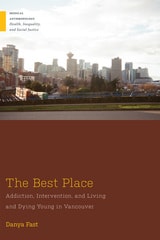
The Best Place
Addiction, Intervention, and Living and Dying Young in VancouverDanya Fast
Rutgers University Press, 2024
Winner of the CASCA Labrecque-Lee Book Prize
In both local and international imaginations, Vancouver, Canada, is often celebrated as one of the world’s most beautiful, cosmopolitan, and livable cities. Simultaneously, the city continues to be ground zero for successive waves of public health emergency and intervention, including a recent and unprecedented drug overdose crisis driven by the proliferation of illicitly manufactured fentanyl and related analogs in the local drug supply. In The Best Place: Addiction, Intervention, and Living and Dying Young in Vancouver, Danya Fast explores these politics of place from the perspectives of young people who use drugs. Those who are the subject of this book were in many ways relegated to the social, spatial, and economic margins of the city. Yet, they were also often at the very center of city life and state projects, including the project of protecting life in the context of the current overdose crisis.
The Big Data Agenda
Data Ethics and Critical Data StudiesAnnika Richterich
University of Westminster Press, 2018
This book highlights that the capacity for gathering, analysing, and utilising vast amounts of digital (user) data raises significant ethical issues. Annika Richterich provides a systematic contemporary overview of the field of critical data studies that reflects on practices of digital data collection and analysis. The book assesses in detail one big data research area: biomedical studies, focused on epidemiological surveillance. Specific case studies explore how big data have been used in academic work.
The Big Data Agenda concludes that the use of big data in research urgently needs to be considered from the vantage point of ethics and social justice. Drawing upon discourse ethics and critical data studies, Richterich argues that entanglements between big data research and technology/ internet corporations have emerged. In consequence, more opportunities for discussing and negotiating emerging research practices and their implications for societal values are needed.
An electronic version of this book is freely available, thanks to the support of libraries working with Knowledge Unlatched. KU is a collaborative initiative designed to make high quality books Open Access for the public good. More information about the initiative and details about KU's Open Access programme can be found at www.knowledgeunlatched.org.
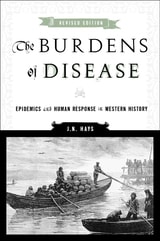
The Burdens of Disease
Epidemics and Human Response in Western HistoryJ.N. Hays
Rutgers University Press, 2009
In this updated volume, with revisions and additions to the original content, including the evolution of drug-resistant diseases and expanded coverage of HIV/AIDS, along with recent data on mortality figures and other relevant statistics, J. N. Hays chronicles perceptions and responses to plague and pestilence over two thousand years of western history. Disease is framed as a multidimensional construct, situated at the intersection of history, politics, culture, and medicine, and rooted in mentalities and social relations as much as in biological conditions of pathology. This revised edition of The Burdens of Disease also studies the victims of epidemics, paying close attention to the relationships among poverty, power, and disease.
The Cancer Within
Reproduction, Cultural Transformation, and Health Care in RomaniaCristina A. Pop
Rutgers University Press, 2022
The Children in Child Health
Negotiating Young Lives and Health in New ZealandJulie Spray
Rutgers University Press, 2020
In the unique context of indigenous Māori and migrant Pacific children in postcolonial New Zealand, Julie Spray explores the intertwining issues of epidemic disease, malnutrition, stress, violence, self-harm, and death to address the problem of how scholars and policy-makers alike can recognize and respond to children as social actors in their health. The Children in Child Health innovatively combines perspectives from childhood studies, medical anthropology, and public health and policy together with evocative ethnography to show how a deep understanding of children’s worlds can change our approach to their care.
The Chronopolitics of Life
Rethinking Temporalities in Health and Biomedicine Beyond the Life CourseEdited by Nolwenn Bühler, Nils Graber, Victoria Boydell, and Cinzia Greco
University College London, 2025
This interdisciplinary collection examines the role of time in inequalities within biomedicine, technology, and healthcare. How is time wielded as a tool of power through its valuation, standardization, and allocation? How has time become an unequally distributed resource in health and biomedicine, and how has it contributed to medical discrimination for patients at different stages of life? To answer these questions, The Chronopolitics of Life draws on real-world examples from across the globe, spanning from reproductive health to chronic disease, and sensitive to both local variations in medicine and the wider forces shaping temporalities in health.
The Death Gap
How Inequality KillsDavid A. Ansell, MD
University of Chicago Press, 2021
While the contrasts and disparities among Chicago’s communities are particularly stark, the death gap is truly a nationwide epidemic—as Ansell shows, there is a thirty-five-year difference in life expectancy between the healthiest and wealthiest and the poorest and sickest American neighborhoods. If you are poor, where you live in America can dictate when you die. It doesn’t need to be this way; such divisions are not inevitable. Ansell calls out the social and cultural arguments that have been raised as ways of explaining or excusing these gaps, and he lays bare the structural violence—the racism, economic exploitation, and discrimination—that is really to blame. Inequality is a disease, Ansell argues, and we need to treat and eradicate it as we would any major illness. To do so, he outlines a vision that will provide the foundation for a healthier nation—for all.
As the COVID-19 mortality rates in underserved communities proved, inequality is all around us, and often the distance between high and low life expectancy can be a matter of just a few blocks. Updated with a new foreword by Chicago mayor Lori Lightfoot and an afterword by Ansell, The Death Gap speaks to the urgency to face this national health crisis head-on.
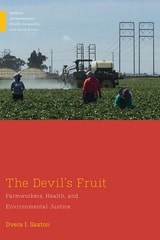
The Devil's Fruit
Farmworkers, Health, and Environmental JusticeDvera I. Saxton
Rutgers University Press, 2021
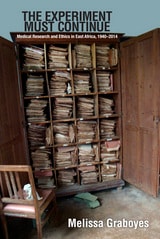
The Experiment Must Continue
Medical Research and Ethics in East Africa, 1940–2014Melissa Graboyes
Ohio University Press, 2015
The Experiment Must Continue is a beautifully articulated ethnographic history of medical experimentation in East Africa from 1940 through 2014. In it, Melissa Graboyes combines her training in public health and in history to treat her subject with the dual sensitivities of a medical ethicist and a fine historian. She breathes life into the fascinating histories of research on human subjects, elucidating the hopes of the interventionists and the experiences of the putative beneficiaries.
Historical case studies highlight failed attempts to eliminate tropical diseases, while modern examples delve into ongoing malaria and HIV/AIDS research. Collectively, these show how East Africans have perceived research differently than researchers do and that the active participation of subjects led to the creation of a hybrid ethical form.
By writing an ethnography of the past and a history of the present, Graboyes casts medical experimentation in a new light, and makes the resounding case that we must readjust our dominant ideas of consent, participation, and exploitation. With global implications, this lively book is as relevant for scholars as it is for anyone invested in the place of medicine in society.
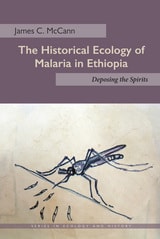
The Historical Ecology of Malaria in Ethiopia
Deposing the SpiritsJames C. McCann
Ohio University Press, 2015
Malaria is an infectious disease like no other: it is a dynamic force of nature and Africa’s most deadly and debilitating malady. James C. McCann tells the story of malaria in human, narrative terms and explains the history and ecology of the disease through the science of landscape change. All malaria is local. Instead of examining the disease at global or continental scale, McCann investigates malaria’s adaptation and persistence in a single region, Ethiopia, over time and at several contrasting sites.
Malaria has evolved along with humankind and has adapted to even modern-day technological efforts to eradicate it or to control its movement. Insecticides, such as DDT, drug prophylaxis, development of experimental vaccines, and even molecular-level genetic manipulation have proven to be only temporary fixes. The failure of each stand-alone solution suggests the necessity of a comprehensive ecological understanding of malaria, its transmission, and its persistence, one that accepts its complexity and its local dynamism as fundamental features.
The story of this disease in Ethiopia includes heroes, heroines, witches, spirits—and a very clever insect—as well as the efforts of scientists in entomology, agroecology, parasitology, and epidemiology. Ethiopia is an ideal case for studying the historical human culture of illness, the dynamism of nature’s disease ecology, and its complexity within malaria.
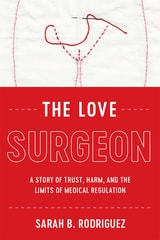
The Love Surgeon
A Story of Trust, Harm, and the Limits of Medical RegulationSarah B. Rodriguez
Rutgers University Press, 2020
It would be easy to dismiss Dr. Burt as a monstrous aberration, a modern-day Dr. Frankenstein. Yet as medical historian Sarah Rodriguez reveals, that’s not the whole story. The Love Surgeon asks tough questions about Burt’s heinous acts and what they reveal about the failures of the medical establishment: How was he able to perform an untested surgical procedure? Why wasn’t he obliged to get informed consent from his patients? And why did it take his peers so long to take action?
The Love Surgeon is both a medical horror story and a cautionary tale about the limits of professional self-regulation.
The Negotiation of Urgency
Economies of Attention in an Italian Emergency RoomMirko Pasquini
Rutgers University Press, 2025
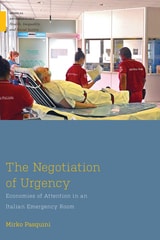
Mirko Pasquini shows that there is more than medical urgency at stake in the ER, where mistrust of medical authority is fueled and violence often sparks. He analyzes the making of urgency, that is triage, not as a neutral medical way of sorting, but as a practice that actively creates difference through economies of attention. The Negotiation of Urgency illustrates both the limits of triage, and how those limits can spark improvisation and creative reinvention.
The Nursing Clio Reader
Histories of Sex, Reproduction, and JusticeJacqueline D. The Nursing Clio Editorial Collective
Rutgers University Press, 2025
The Nursing Clio Reader answers that call, bringing together essays that examine reproductive health through historical research and personal experience. Featuring both new and classic pieces from the Nursing Clio blog, leading historians of reproductive health provide insights that connect past struggles with today’s ongoing battles over bodies, reproductive rights, and health care. This collection offers intimate, urgent scholarship that speaks to the present moment.
A powerful resource for classrooms and individual readers alike, The Nursing Clio Reader invites reflection on how the past informs current debates, urging us to engage deeply with the history of reproductive justice in a time of unprecedented change, underscoring that indeed "the personal is historical."
The Opioid Epidemic and US Culture
Expression, Art, and Politics in an Age of AddictionTravis D. Stimeling
West Virginia University Press, 2020
Written for an audience of people working on the front lines of the opioid crisis, the book is essential reading for social workers, addiction counselors, halfway house managers, and people with opioid use disorder. It will also appeal to the community of scholars interested in understanding how aesthetics shape our engagement with critical social issues, particularly in the fields of literary and film criticism, museum studies, and ethnomusicology.
The Pandemic Workplace
How We Learned to Be Citizens in the OfficeIlana Gershon
University of Chicago Press, 2024
In The Pandemic Workplace, anthropologist Ilana Gershon turns her attention to the US workplace and how it changed—and changed us—during the pandemic. She argues that the unprecedented organizational challenges of the pandemic forced us to radically reexamine our attitudes about work and to think more deeply about how values clash in the workplace. These changes also led us as workers to engage more with the contracts that bind us as we rethought when and how we allow others to tell us what to do.
Based on over two hundred interviews, Gershon’s book reveals how negotiating these tensions during the pandemic made the workplace into a laboratory for democratic living—the key place where Americans are learning how to develop effective political strategies and think about the common good. Exploring the explicit and unspoken ways we are governed (and govern others) at work, this accessible book shows how the workplace teaches us to be democratic citizens.
The Pandemic Workplace
How We Learned to Be Citizens in the OfficeIlana Gershon
University of Chicago Press, 2024
A provocative book arguing that the workplace is where we learn to live democratically.
In The Pandemic Workplace, anthropologist Ilana Gershon turns her attention to the US workplace and how it changed—and changed us—during the pandemic. She argues that the unprecedented organizational challenges of the pandemic forced us to radically reexamine our attitudes about work and to think more deeply about how values clash in the workplace. These changes also led us as workers to engage more with the contracts that bind us as we rethought when and how we allow others to tell us what to do.
Based on over two hundred interviews, Gershon’s book reveals how negotiating these tensions during the pandemic made the workplace into a laboratory for democratic living—the key place where Americans are learning how to develop effective political strategies and think about the common good. Exploring the explicit and unspoken ways we are governed (and govern others) at work, this accessible book shows how the workplace teaches us to be democratic citizens.
The Phenomenology of Pain
Saulius Geniusas
Ohio University Press, 2020
The Phenomenology of Pain is the first book-length investigation of its topic to appear in English. Groundbreaking, systematic, and illuminating, it opens a dialogue between phenomenology and such disciplines as cognitive science and cultural anthropology to argue that science alone cannot clarify the nature of pain experience without incorporating a phenomenological approach. Building on this premise, Saulius Geniusas develops a novel conception of pain grounded in phenomenological principles: pain is an aversive bodily feeling with a distinct experiential quality, which can only be given in original first-hand experience, either as a feeling-sensation or as an emotion.
Geniusas crystallizes the fundamental methodological principles that underlie phenomenological research. On the basis of those principles, he offers a phenomenological clarification of the fundamental structures of pain experience and contests the common conflation of phenomenology with introspectionism. Geniusas analyzes numerous pain dissociation syndromes, brings into focus the de-personalizing and re-personalizing nature of chronic pain experience, and demonstrates what role somatization and psychologization play in pain experience. In the process, he advances Husserlian phenomenology in a direction that is not explicitly worked out in Husserl’s own writings.
The Political Economy of Stigma
HIV, Memoir, Medicine, and Crip PositionalitiesAlly Day
The Ohio State University Press, 2021
In The Political Economy of Stigma, Ally Day offers a compelling critique of neoliberal medical practices in the US by coupling an analysis of HIV memoir with a critical examination of narrative medicine practice. Using insights from feminist disability studies and crip theory, Day argues that stories of illness and disability—such as HIV memoirs—operate within a political economy of stigma, which she defines as the formal and informal circulation of personal illness and disability narratives that benefits some while hindering others. On the one hand, this system decreases access to appropriate medical care for those with chronic conditions by producing narratives of personal illness that frame one’s relationship to structural inequality as a result of personal failure. On the other hand, the political economy of stigma rewards those who procure such narratives and circulate them for public consumption.
The political economy of stigma is theorized from three primary research sites: a reading group with women living with HIV, a reading group with AIDS service workers, and participant observation research and critical close reading of practices in narrative medicine. Ultimately, it is the women living with HIV who provide an alternative way to understand disability and illness narratives, a practice of differential reading that can challenge stigmatizing tropes and reconceptualize the creation, reception, and circulation of patient memoir.
The Politics of Potential
Global Health and Gendered Futures in South AfricaMichelle Pentecost
Rutgers University Press, 2024
The Politics of the Opioid Epidemic
Susan L. Moffitt and Eric M. Patashnik, special issue editors
Duke University Press, 0
Contributors. Amanda Abraham, Christina M. Andrews, Clifford S. Bersamira, Andrea Louise Campbell, Sarah E. Gollust, Colleen M. Grogan, Gali Katznelson, Jin Woo Kim, Miriam Laugesen, Joanne M. Miller, Susan L. Moffitt, Evan Morgan, Brendan Nyhan, Eric M. Patashnik, Elizabeth Peréz-Chiqués, Harold A. Pollack, Marie Schenk, Carmel Shachar, Phillip M. Singer, Bikki Tran Smith, Patricia Strach, Paul Testa, Tess Wise, Katie Zuber
The Provisions of War
Expanding the Boundaries of Food and Conflict, 1840-1990Justin Nordstrom
University of Arkansas Press, 2021
The Provisions of War examines how soldiers, civilians, communities, and institutions have used food and its absence as both a destructive weapon and a unifying force in establishing governmental control and cultural cohesion during times of conflict. Historians as well as scholars of literature, regional studies, and religious studies problematize traditional geographic boundaries and periodization in this essay collection, analyzing various conflicts of the nineteenth and twentieth centuries through a foodways lens to reveal new insights about the parameters of armed interactions.
The subjects covered are as varied and inclusive as the perspectives offered—ranging from topics like military logistics and animal disease in colonial Africa, Indian vegetarian identity, and food in the counterinsurgency of the Malayan Emergency, to investigations of hunger in Egypt after World War I and American soldiers’ role in the making of US–Mexico borderlands. Taken together, the essays here demonstrate the role of food in shaping prewar political debates and postwar realities, revealing how dietary adjustments brought on by military campaigns reshape national and individual foodways and identities long after the cessation of hostilities
The Return of the Neighborhood as an Urban Strategy
Edited by Michael A. Pagano
University of Illinois Press, 2015
The topics focus on sustainable capital and societal investments in people and firms at the neighborhood level. Proposed solutions cover a range of possibilities for enhancing the quality of life for individuals, households, and neighborhoods. These include everything from microenterprises to factories; from social spaces for collective and social action to private facilities; from affordable housing and safety to gated communities; and from neighborhood public education to cooperative, charter, and private schools.
Contributors: Andy Clarno, Teresa Córdova, Nilda Flores-González, Pedro A. Noguera, Alice O'Connor, Mary Pattillo, Janet Smith, Nik Theodore, Elizabeth S. Todd-Breland, Stephanie Truchan, and Rachel Weber.

The River Is in Us
Fighting Toxics in a Mohawk CommunityElizabeth Hoover
University of Minnesota Press, 2017
Winner of the Labriola Center American Indian National Book Award 2017
Mohawk midwife Katsi Cook lives in Akwesasne, an indigenous community in upstate New York that is downwind and downstream from three Superfund sites. For years she witnessed elevated rates of miscarriages, birth defects, and cancer in her town, ultimately drawing connections between environmental contamination and these maladies. When she brought her findings to environmental health researchers, Cook sparked the United States’ first large-scale community-based participatory research project.
In The River Is in Us, author Elizabeth Hoover takes us deep into this remarkable community that has partnered with scientists and developed grassroots programs to fight the contamination of its lands and reclaim its health and culture. Through in-depth research into archives, newspapers, and public meetings, as well as numerous interviews with community members and scientists, Hoover shows the exact efforts taken by Akwesasne’s massive research project and the grassroots efforts to preserve the Native culture and lands. She also documents how contaminants have altered tribal life, including changes to the Mohawk fishing culture and the rise of diabetes in Akwesasne.
Featuring community members such as farmers, health-care providers, area leaders, and environmental specialists, while rigorously evaluating the efficacy of tribal efforts to preserve its culture and protect its health, The River Is in Us offers important lessons for improving environmental health research and health care, plus detailed insights into the struggles and methods of indigenous groups. This moving, uplifting book is an essential read for anyone interested in Native Americans, social justice, and the pollutants contaminating our food, water, and bodies.
The Saloon and the Mission
Addiction, Conversion, and the Politics of Redemption in American CultureEoin F. Cannon
University of Massachusetts Press, 2013
In this book Eoin Cannon illuminates the role that sobriety movements have played in placing notions of personal and societal redemption at the heart of modern American culture. He argues against the dominant scholarly perception that recovery narratives are private and apolitical, showing that in fact the genre's conventions turn private experience to public political purpose. His analysis ranges from neglected social reformer Helen Stuart Campbell's embrace of the "gospel rescue missions" of postbellum New York City to William James's use of recovery stories to consider the regenerative capabilities of the mind, to writers such as Upton Sinclair and Djuna Barnes, who used this narrative form in much different ways.
Cannon argues that rather than isolating recovery from these realms of wider application, the New Deal–era Alcoholics Anonymous refitted the "drunkard's conversion" as a model of selfhood for the liberal era, allowing for a spiritual redemption story that could accommodate a variety of identities and compulsions. He concludes by considering how contemporary recovery narratives represent both a crisis in liberal democracy and a potential for redemptive social progress.
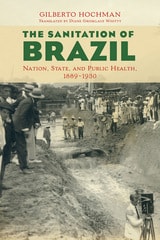
The Sanitation of Brazil
Nation, State, and Public Health, 1889-1930Gilberto Hochman
University of Illinois Press, 2016
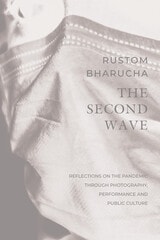
The Second Wave
Reflections on the Pandemic through Photography, Performance and Public CultureRustom Bharucha
Seagull Books, 2022
Focusing on the second wave of the Covid-19 pandemic in India between April and December 2021, Rustom Bharucha’s timely essay reflects on four interconnected realities that haunted this ongoing crisis—death, grief, mourning, and extinction. How do we cope with multiple deaths and the dislocation of rituals when the act of mourning is either postponed or denied? What roles do political surveillance, censorship, the regulation of lockdowns, and the sheer indifference to the lives of people play in the containment of civil liberties? Through vivid examples of photography, theater, dance, visual arts, and the cultures of everyday life, this meditative essay illuminates both the horror of the pandemic as well as its unexpected intimacies and revelations of shared suffering. Against the destruction of nature and the disrespect for the nonhuman, The Second Wave offers lessons in resilience through its reflections on the ethos of waiting and the need to re-envision breath as a vital resource of self-renewal and resistance.
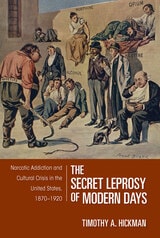
The Secret Leprosy of Modern Days
Narcotic Addiction and Cultural Crisis in the United States, 1870-1920Timothy A. Hickman
University of Massachusetts Press, 2007
Although the topic of habitual narcotic use first surfaced in the United States during the 1820s, it was not until after the Civil War that it became a subject of widespread public attention. Beginning in the 1870s, an increasingly urgent discussion of what some described as a national epidemic of “drug addiction” could be found in both medical journals and the popular press. Today, nearly a century and a half later, the term is so commonplace we speak of people being “addicted” to just about anything. Yet as Timothy A. Hickman argues in this revealing interdisciplinary study, the meaning of addiction has always been as much cultural as scientific and never fixed.
In The Secret Leprosy of Modern Days, Hickman resituates the idea of addiction within its original late nineteenth- and early twentieth-century context. Through close readings of a broad range of literary, medical, and legal texts, he shows how Americans of that era conceptualized the dangers of drug addiction in terms of other preoccupations and fears. Anxieties about the accelerating pace of technological change, the loss of personal autonomy, and the degeneration of society attributed to both foreign influences and a decline of manliness all fed into a widespread sense of cultural crisis—a crisis of which the spiraling “drug problem” was seen as both contributing cause and consequence. Not surprisingly, Hickman points out, deeply held assumptions of class, race, and gender also figured into the popular understanding of addiction. While white middle-class addicts were often depicted as helpless victims of the social and economic pressures of modern life, their less privileged and nonwhite counterparts were regarded as morally weak. Over time the distinction between “addict as patient” and “addict as criminal” came to be accepted by the emerging medical establishment and codified into law, eventually finding expression in the Harrison Narcotics Act of 1914, the first national anti-narcotic legislation in the history of the United States—and the basis for much thinking about addiction and drug policy ever since.
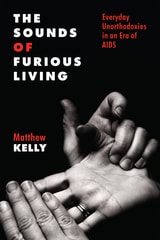
The Sounds of Furious Living
Everyday Unorthodoxies in an Era of AIDSMatthew Kelly
Rutgers University Press, 2024
Four decades have passed since reports of a mysterious “gay cancer” first appeared in US newspapers. In the ensuing years, the pandemic that would come to be called AIDS changed the world in innumerable ways. It also gave rise to one of the late twentieth century’s largest health-based empowerment movements. Scholars across diverse traditions have documented the rise of the AIDS activist movement, chronicling the impassioned echoes of protestors who took to the streets to demand “drugs into bodies.”
And yet not all activism creates echoes. Included among the ranks of 1980s and 1990s-era AIDS activists were individuals whose expressions of empowerment differed markedly from those demanding open access to mainstream pharmaceutical agents. Largely forgotten today, this activist tradition was comprised of individuals who embraced unorthodox approaches for conceptualizing and treating their condition. Rejecting biomedical expertise, they shared alternative clinical paradigms, created underground networks for distributing unorthodox nostrums, and endorsed etiological models that challenged the association between HIV and AIDS. The theatre of their protests was not the streets of New York City’s Greenwich Village but rather their bodies. And their language was not the riotous chants of public demonstration but the often-invisible embrace of contrarian systems for defining and treating their disease.
The Sounds of Furious Living seeks to understand the AIDS activist tradition, identifying the historical currents out of which it arose. Embracing a patient-centered, social historical lens, it traces historic shifts in popular understanding of health and perceptions of biomedicine through the nineteenth and twentieth centuries to explain the lasting appeal of unorthodox health activism into the modern era. In asking how unorthodox health activism flourished during the twentieth century’s last major pandemic, Kelly also seeks to inform our understanding of resistance to biomedical authority in the setting of the twenty-first century’s first major pandemic: COVID-19. As a deeply researched portrait of distrust and disenchantment, The Sounds of Furious Living helps explain the persistence of movements that challenge biomedicine’s authority well into a century marked by biomedical innovation, while simultaneously posing important questions regarding the meaning and metrics of patient empowerment in clinical practice.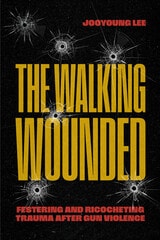
The Walking Wounded
Festering and Ricocheting Trauma After Gun ViolenceJooyoung Lee
University of Chicago Press, 2026
Gun violence is a plague in the United States; even survivors experience suffering that wreaks havoc on their lives and our communities. Although excellent emergency trauma care means that 80 percent of shooting victims do not die from their injuries, surviving is only the first step. Most survivors then find themselves trapped in health care and judicial systems that only amplify their pain, trauma, and uncertainty.
In The Walking Wounded, Jooyoung Lee invites readers into the hospitals, courtrooms, and homes where gunshot victims struggle to rebuild their lives. Drawing from years of fieldwork in Philadelphia, Lee shows how victims’ injuries fester into new problems over time in the absence of meaningful follow-up care. Attempting routine tasks with a wounded body reminds survivors that they are no longer who they used to be—both physically and socially. Lee shows how trauma ricochets through victims’ worlds as their injuries also affect their family and friends. To make matters worse, Lee argues, existing government safety nets place victims into ever more precarious circumstances that compound their suffering.
In the face of health care and judicial systems that fail wounded people, Lee urges a sensible and sensitive rehabilitative process aimed at equipping the walking wounded with ongoing care that aspires for more than mere survival: the regaining of independent lives.
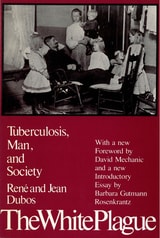
The White Plague
Tuberculosis, Man and SocietyDubos, Jean
Rutgers University Press, 1987
In The White Plague, René and Jean Dubos argue that the great increase of tuberculosis was intimately connected with the rise of an industrial, urbanized society and—a much more controversial idea when this book first appeared forty years ago—that the progress of medical science had very little to do with the marked decline in tuberculosis in the twentieth century.
The White Plague has long been regarded as a classic in the social and environmental history of disease. This reprint of the 1952 edition features new introductory writings by two distinguished practitioners of the sociology and history of medicine. David Mechanic's foreword describes the personal and intellectual experience that shaped René Dubos's view of tuberculosis. Barbara Gutmann Rosenkrantz's historical introduction reexamines The White Plague in light of recent work on the social history of tuberculosis. Her thought-provoking essay pays particular attention to the broader cultural and medical assumptions about sickness and sick people that inform a society’s approach to the conquest of disease.
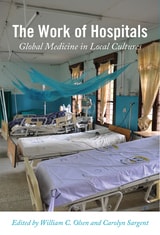
The Work of Hospitals
Global Medicine in Local CulturesWilliam C. Olsen
Rutgers University Press, 2022
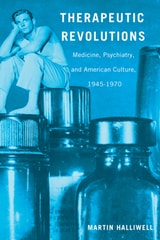
Therapeutic Revolutions
Medicine, Psychiatry, and American Culture, 1945-1970Halliwell, Martin
Rutgers University Press, 2014
Beginning with a discussion of the profound impact of World War II and the Cold War on mental health, Halliwell moves from the influence of work, family, and growing up in the Eisenhower years to the critique of institutional practice and the search for alternative therapeutic communities during the 1960s. Blending a discussion of such influential postwar thinkers as Erich Fromm, William Menninger, Erving Goffman, Erik Erikson, and Herbert Marcuse with perceptive readings of a range of cultural text that illuminate mental health issues--among them Spellbound, Shock Corridor, Revolutionary Road, and I Never Promised You a Rose Garden--this compelling study argues that the postwar therapeutic revolutions closely interlink contrasting discourses of authority and liberation.
Therapy Tech
The Digital Transformation of Mental HealthcareEmma Bedor Hiland
University of Minnesota Press, 2021
A pointed look at the state of tech-based mental healthcare and what we must do to change it
Proponents of technology trumpet it as the solution to the massive increase in the mental distress that confronts our nation. They herald the arrival of algorithms, intelligent chatbots, smartphone applications, telemental healthcare services, and more—but are these technological fixes really as good as they seem? In Therapy Tech, Emma Bedor Hiland presents the first comprehensive study of how technology has transformed mental healthcare, showing that this revolution can’t deliver what it promises.
Far from providing a solution, technological mental healthcare perpetuates preexisting disparities while relying on the same failed focus on personal responsibility that has let us down before. Through vivid, in-depth case studies, Therapy Tech reveals these problems, covering issues including psychosurveillance on websites like Facebook and 7 Cups of Tea, shortcomings of popular AI “doctors on demand” like Woebot, Wysa, and Joy, and even how therapists are being conscripted into the gig economy.
Featuring a vital coda that brings Therapy Tech up to date for the COVID era, this book is the first to give readers a large-scale analysis of mental health technologies and the cultural changes they have enabled. Both a sobering dissection of the current state of mental health and a necessary warning of where things are headed, Therapy Tech makes an important assertion about how to help those in need of mental health services today.
Ties That Enable
Community Solidarity for People Living with Serious Mental Health ProblemsTeresa L. Scheid
Rutgers University Press, 2021
Toward a Healthier Garden State
Beyond Cancer Clusters and COVIDMichael R. Greenberg
Rutgers University Press, 2023
This book uses the past fifty years of New Jersey history as a case study to illustrate just how much public policy decisions and other upstream factors can affect the health of a state’s citizens. It reveals how economic and racial disparities in health care were exacerbated by bad policies regarding everything from zoning to education to environmental regulation. The study further chronicles how New Jersey struggled to deal with public health crises like the AIDS epidemic and the crack epidemic. Yet it also explores how the state has developed some of the nation’s most innovative responses to public health challenges, and then provides policy suggestions for how we might build an even healthier New Jersey.
Transformed States
Medicine, Biotechnology, and American Culture, 1990–2020Martin Halliwell
Rutgers University Press, 2025
Transformed States offers a timely history of the politics, ethics, medical applications, and cultural representations of the biotechnological revolution, from the Human Genome Project to the COVID-19 pandemic. In exploring the entanglements of mental and physical health in an age of biotechnology, it views the post–Cold War 1990s as the horizon for understanding the intersection of technoscience and culture in the early twenty-first century.
The book draws on original research spanning the presidencies of George H. W. Bush and Joe Biden to show how the politics of science and technology shape the medical uses of biotechnology. Some of these technologies reveal fierce ideological conflicts in the arenas of cloning, reproduction, artificial intelligence, longevity, gender affirmation, vaccination and environmental health. Interweaving politics and culture, the book illustrates how these health issues are reflected in and challenged by literary and cinematic texts, from Oryx and Crake to Annihilation, and from Gattaca to Avatar.
By assessing the complex relationship between federal politics and the biomedical industry, Transformed States develops an ecological approach to public health that moves beyond tensions between state governance and private enterprise. To that end, Martin Halliwell analyzes thirty years that radically transformed American science, medicine, and policy, positioning biotechnology in dialogue with fears and fantasies about an emerging future in which health is ever more contested.
Along with the two earlier books, Therapeutic Revolutions (2013) and Voices of Mental Health (2017), Transformed States is the final volume of a landmark cultural and intellectual history of mental health in the United States, journeying from the combat zones of World War II to the global emergency of COVID-19.

Transforming Contagion
Risky Contacts among Bodies, Disciplines, and NationsFahs, Breanne
Rutgers University Press, 2018
Moving from viruses, vaccines, and copycat murder to gay panics, xenophobia, and psychopaths, Transforming Contagion energetically fuses critical humanities and social science perspectives into a boundary-smashing interdisciplinary collection on contagion. The contributors provocatively suggest contagion to be as full of possibilities for revolution and resistance as it is for the descent into madness, malice, and extensive state control. The infectious practices rooted in politics, film, psychological exchanges, social movements, the classroom, and the circulation of a literary text or meme on social media compellingly reveal patterns that emerge in those attempts to re-route, quarantine, define, or even exacerbate various contagions.
Transnational Aging and Reconfigurations of Kin Work
Dossa, Parin
Rutgers University Press, 2017
Transplanting Care
Shifting Commitments in Health and Care in the United StatesHeinemann, Laura L.
Rutgers University Press, 2016
Trauma and Recovery on War's Border
A Guide for Global Health WorkersEdited by Kathleen Allden and Nancy Murakami
Dartmouth College Press, 2015
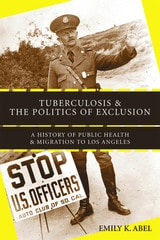
Tuberculosis and the Politics of Exclusion
A History of Public Health and Migration to Los AngelesAbel, Emily K.
Rutgers University Press, 2007
Winner of the 2008 Arthur J. Viseltear Prize from the American Public Health Association and Nominated for the 2008 William H. Welch Medal, AAHM
Though notorious for its polluted air today, the city of Los Angeles once touted itself as a health resort. After the arrival of the transcontinental railroad in 1876, publicists launched a campaign to portray the city as the promised land, circulating countless stories of miraculous cures for the sick and debilitated. As more and more migrants poured in, however, a gap emerged between the city’s glittering image and its dark reality.
Emily K. Abel shows how the association of the disease with “tramps” during the 1880s and 1890s and Dust Bowl refugees during the 1930s provoked exclusionary measures against both groups. In addition, public health officials sought not only to restrict the entry of Mexicans (the majority of immigrants) during the 1920s but also to expel them during the 1930s.
Abel’s revealing account provides a critical lens through which to view both the contemporary debate about immigration and the U.S. response to the emergent global tuberculosis epidemic.