Results by title
198 books match the query 'Educational Policy & Reform' and 44 start with t

Talk about Sex
How Sex Ed Battles Helped Ignite the RightJanice M. Irvine
Temple University Press, 2023
“Must reading for scholars, sexuality researchers, activists, and public policy and public health planners engaged in efforts to promote education on sex, sexually transmitted diseases, and HIV infection prevention for adolescents in schools.”—JAMA
Talk about Sex is a rich social history about the political transformations, cultural dynamics, and emotional rhetorical strategies that helped the right wing manufacture controversies on the local and national levels in the United States. Although the emergence of a politicized Christian Right is commonly dated at the mid-seventies, with the founding of groups like the Moral Majority, Talk about Sex tells the story of a powerful right-wing Christian presence in politics a full decade earlier. These activists used inflammatory sexual rhetoric—oftentimes deceptive and provocative—to capture the terms of public debate, galvanize voters, and reshape the culture according to their own vision.
This 20th Anniversary Edition includes a new preface and epilogue by the author that examines current controversies over public education on sexuality, gender, and race.
Demonstrating how the right wing draws on the cultural power of sexual shame and fear to build a political movement, Talk about Sex explores the complex entanglements of sexual knowledge, politics, and discourses.
Teacher Education across Minority-Serving Institutions
Programs, Policies, and Social JusticePetchauer, Emery
Rutgers University Press, 2017
The first of its kind, Teacher Education across Minority-Serving Institutions brings together innovative work from the family of institutions known as minority-serving institutions: Historically Black Colleges and Universities, Tribal Colleges and Universities, Hispanic Serving Institutions, and Asian American and Native American Pacific Islander Serving Institutions. The book moves beyond a singular focus on teacher racial diversity that has characterized scholarship and policy work in this area. Instead, it pushes for scholars to consider that racial diversity in teacher education is not simply an end in itself but is, a means to accomplish other goals, such as developing justice-oriented and asset-based pedagogies.
Teaching Marianne and Uncle Sam
Public Education, State Centralization, and Teacher Unionism in France and the United StatesNicholas Toloudis
Temple University Press, 2012
Offering the first systematic, comparative examination of the origins of teachers’ unions in two countries—France and the United States—Teaching Marianne and Uncle Sam shows how teachers’ unions came into existence not because of the willful efforts of particular actors, but over the course of decades of conflict over the proper role of professional educators in public politics.
Nicholas Toloudis traces teacher unionism back to the first efforts of governments to centralize public education. He carefully documents how centralization created new understandings of the role of teachers in their societies and generated new sources of conflict within teachers’ corps. Using rare archival source materials, Toloudis illustrates how these internal conflicts became salient in teachers’ battles with governments over their legitimate right to exist as collective claim-makers within the polity.
In the series Politics, History, and Social Change, edited by John C. Torpey
Testing Deaf Students in an Age of Accountability
Robert C. Johnson
Gallaudet University Press, 2008
Despite the idealism represented by the No Child Left Behind law’s mandate for accountability in education, deaf students historically and on average have performed far below grade level on standardized tests. To resolve this contradiction in deaf education, this collection presents a spectrum of perspectives from a diverse corps of education experts to suggest a constructive synthesis of worthy ideals, hard realities, and pragmatic solutions. Contributors to this study include volume editors Robert C. Johnson and Ross E. Mitchell, Ed Bosso, Michael Bello, Betsy J. Case, Patrick Costello, Stephanie W. Cawthon, Joseph E. Fischgrund, Courtney Foster, Christopher Johnstone, Michael Jones, Jana Lollis, Pat Moore, Barbara Raimondo, Suzanne Recane, Richard C. Steffan, Jr., Sandra J. Thompson, Martha L. Thurlow, and Elizabeth Towles-Reeves.
These noted educators and researchers employ experiences from Massachusetts, Delaware, Maryland, North Carolina, Illinois and California to support their findings about the dilemma facing deaf students and their teachers. They assess the intent and flexibility of federal law; achievement data regarding deaf students; potential accommodations and universal design to make tests more accessible; possible alternatives for deaf student not ready for conventional assessments; accounts of varying degrees of cooperation and conflict between schools and state education departments; and the day-to-day efforts of teachers and school administrators to help deaf students measure up to the new standards. By presenting these wide-ranging insights together, Testing Deaf Students in an Age of Accountability provides a unique opportunity to create genuine means to educate deaf students for the only test that matters, that of life.
Testing Education
A Teacher's MemoirKathy Greeley
University of Massachusetts Press, 2024
Since the 2002 implementation of No Child Left Behind, the American public education system has been fundamentally changed. Excessive testing, standardized curriculums, destructive demands on children, corporate-style evaluations, and top-down mandates have become the norm. In response, record numbers of demoralized educators have quit, and millions of students have been left educationally impoverished. This troubling transformation has been exhaustively critiqued by scholars and commentators. Yet one crucial voice has been missing, until now.
In Testing Education, Kathy Greeley recounts the impact of education reform from a teacher’s point of view. Based on a teaching career spanning nearly forty years, Greeley details how schools went from learning communities infused with excitement, intellectual stimulation, and joy to sterile spaces of stress, intimidation, and fear. In this ultimately hopeful memoir, Greeley asks us to learn from the past to reimagine the future of public education.
The Accidental Equalizer
How Luck Determines Pay after CollegeJessi Streib
University of Chicago Press, 2023
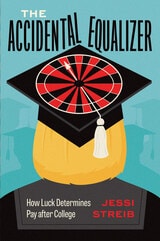
As a gateway to economic opportunity, a college degree is viewed by many as America’s great equalizer. And it’s true: wealthier, more connected, and seemingly better-qualified students earn exactly the same pay as their less privileged peers. Yet, the reasons why may have little to do with bootstraps or self-improvement—it might just be dumb luck. That’s what sociologist Jessi Streib proposes in The Accidental Equalizer, a conclusion she reaches after interviewing dozens of hiring agents and job-seeking graduates.
Streib finds that luck shapes the hiring process from start to finish in a way that limits class privilege in the job market. Employers hide information about how to get ahead and force students to guess which jobs pay the most and how best to obtain them. Without clear routes to success, graduates from all class backgrounds face the same odds at high pay. The Accidental Equalizer is a frank appraisal of how this “luckocracy” works and its implications for the future of higher education and the middle class. Although this system is far from eliminating American inequality, Streib shows that it may just be the best opportunity structure we have—for better and for worse.
The Accidental Equalizer
How Luck Determines Pay after CollegeJessi Streib
University of Chicago Press, 2023
A startling discovery—that job market success after college is largely random—forces a reappraisal of education, opportunity, and the American dream.
As a gateway to economic opportunity, a college degree is viewed by many as America’s great equalizer. And it’s true: wealthier, more connected, and seemingly better-qualified students earn exactly the same pay as their less privileged peers. Yet, the reasons why may have little to do with bootstraps or self-improvement—it might just be dumb luck. That’s what sociologist Jessi Streib proposes in The Accidental Equalizer, a conclusion she reaches after interviewing dozens of hiring agents and job-seeking graduates.
Streib finds that luck shapes the hiring process from start to finish in a way that limits class privilege in the job market. Employers hide information about how to get ahead and force students to guess which jobs pay the most and how best to obtain them. Without clear routes to success, graduates from all class backgrounds face the same odds at high pay. The Accidental Equalizer is a frank appraisal of how this “luckocracy” works and its implications for the future of higher education and the middle class. Although this system is far from eliminating American inequality, Streib shows that it may just be the best opportunity structure we have—for better and for worse.
The Ambitious Elementary School
Its Conception, Design, and Implications for Educational EqualityElizabeth McGhee Hassrick, Stephen W. Raudenbush, and Lisa Rosen
University of Chicago Press, 2017
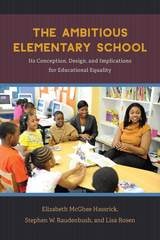
Drawing on an in-depth study of real schools on the South Side of Chicago, Elizabeth McGhee Hassrick, Stephen W. Raudenbush, and Lisa Rosen argue that effectively meeting the challenge of educational inequality requires a complete reorganization of institutional structures as well as wholly new norms, values, and practices that are animated by a relentless commitment to student learning. They examine a model that pulls teachers out of their isolated classrooms and places them into collaborative environments where they can share their curricula, teaching methods, and assessments of student progress with a school-based network of peers, parents, and other professionals. Within this structure, teachers, school leaders, social workers, and parents collaborate to ensure that every child receives instruction tailored to his or her developing skills. Cooperating schools share new tools for assessment and instruction and become sites for the training of new teachers. Parents become respected partners, and expert practitioners work with researchers to evaluate their work and refine their models for educational organization and practice. The authors show not only what such a model looks like but the dramatic results it produces for student learning and achievement.
The result is a fresh, deeply informed, and remarkably clear portrait of school reform that directly addresses the real problems of educational inequality.
The Art of Play
Recess and the Practice of InventionAnna Beresin
Temple University Press, 2013
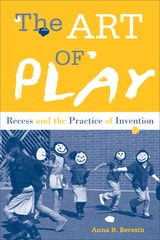
What can the art of play teach us about the art of play? Showcasing the paintings of more than one hundred Philadelphia public elementary school children, folklorist Anna Beresin’s innovative book, The Art of Play, presents images and stories that illustrate what children do at recess, and how it makes them feel.
Beresin provides a nuanced, child-centered discussion of the intersections of play, art, and learning. She describes a widespread institutionalized fear of play and expressive art, and the transformative power of simple materials like chalk and paint. Featuring more than 150 paintings and a dozen surreal photographs of masked children enjoying recess, The Art of Play weaves together the diverse voices of kids and working artists with play scholarship.
This book emerged from Recess Access, a service-learning project that donated chalk, ropes, balls, and hoops to nine schools in different sections of Philadelphia. A portion of the proceeds of The Art of Play will support recess advocacy.
The Autocratic Academy
Reenvisioning Rule within America's UniversitiesTimothy V. Kaufman-Osborn
Duke University Press, 2023
The Case for Contention
Teaching Controversial Issues in American SchoolsJonathan Zimmerman and Emily Robertson
University of Chicago Press, 2017
Zimmerman and Robertson highlight an aspect of American politics that we know all too well: We are terrible at having informed, reasonable debates. We opt instead to hurl insults and accusations at one another or, worse, sit in silence and privately ridicule the other side. Wouldn’t an educational system that focuses on how to have such debates in civil and mutually respectful ways improve our public culture and help us overcome the political impasses that plague us today? To realize such a system, the authors argue that we need to not only better prepare our educators for the teaching of hot-button issues, but also provide them the professional autonomy and legal protection to do so. And we need to know exactly what constitutes a controversy, which is itself a controversial issue. The existence of climate change, for instance, should not be subject to discussion in schools: scientists overwhelmingly agree that it exists. How we prioritize it against other needs, such as economic growth, however—that is worth a debate.
With clarity and common-sense wisdom, Zimmerman and Robertson show that our squeamishness over controversy in the classroom has left our students woefully underserved as future citizens. But they also show that we can fix it: if we all just agree to disagree, in an atmosphere of mutual respect.
The Color of Mind
Why the Origins of the Achievement Gap Matter for JusticeDerrick Darby and John L. Rury
University of Chicago Press, 2018
Telling the story of what they call the Color of Mind—the idea that there are racial differences in intelligence, character, and behavior—they show how philosophers, such as David Hume and Immanuel Kant, and American statesman Thomas Jefferson, contributed to the construction of this pernicious idea, how it influenced the nature of schooling and student achievement, and how voices of dissent such as Frederick Douglass, Frances Ellen Watkins Harper, and W. E. B. Du Bois debunked the Color of Mind and worked to undo its adverse impacts.
Rejecting the view that racial differences in educational achievement are a product of innate or cultural differences, Darby and Rury uncover the historical interplay between ideas about race and American schooling, to show clearly that the racial achievement gap has been socially and institutionally constructed. School leaders striving to bring justice and dignity to American schools today must work to root out the systemic manifestations of these ideas within schools, while still doing what they can to mitigate the negative effects of poverty, segregation, inequality, and other external factors that adversely affect student achievement. While we cannot expect schools alone to solve these vexing social problems, we must demand that they address the dignitary injustices associated with how we track, discipline, and deal with special education that reinforce long-standing racist ideas. That is the only way to expel the Color of Mind from schools, close the racial achievement gap, and afford all children the dignity they deserve.
The Crisis of School Violence
A New PerspectiveMarianna King
Michigan State University Press, 2020
The Crucible of Desegregation
The Uncertain Search for Educational EqualityR. Shep Melnick
University of Chicago Press, 2023
In 1954, the Supreme Court delivered the landmark decision of Brown v. Board of Education—establishing the right to attend a desegregated school as a national constitutional right—but the decision contained fundamental ambiguities. The Supreme Court has never offered a clear definition of what desegregation means or laid out a framework for evaluating competing interpretations. In The Crucible of Desegregation, R. Shep Melnick examines the evolution of federal school desegregation policy from 1954 through the termination of desegregation orders in the first decades of the twenty-first century, combining legal analysis with a focus on institutional relations, particularly the interactions between federal judges and administrators. Melnick argues that years of ambiguous, inconsistent, and meandering Court decisions left lower court judges adrift, forced to apply contradictory Supreme Court precedents in a wide variety of highly charged political and educational contexts. As a result, desegregation policy has been a patchwork, with lower court judges playing a crucial role and with little opportunity to analyze what worked and what didn’t. The Crucible of Desegregation reveals persistent patterns and disagreements that continue to roil education policy.
The Crucible of Desegregation
The Uncertain Search for Educational EqualityR. Shep Melnick
University of Chicago Press, 2023
Examines the patchwork evolution of school desegregation policy.
In 1954, the Supreme Court delivered the landmark decision of Brown v. Board of Education—establishing the right to attend a desegregated school as a national constitutional right—but the decision contained fundamental ambiguities. The Supreme Court has never offered a clear definition of what desegregation means or laid out a framework for evaluating competing interpretations. In The Crucible of Desegregation, R. Shep Melnick examines the evolution of federal school desegregation policy from 1954 through the termination of desegregation orders in the first decades of the twenty-first century, combining legal analysis with a focus on institutional relations, particularly the interactions between federal judges and administrators. Melnick argues that years of ambiguous, inconsistent, and meandering Court decisions left lower court judges adrift, forced to apply contradictory Supreme Court precedents in a wide variety of highly charged political and educational contexts. As a result, desegregation policy has been a patchwork, with lower court judges playing a crucial role and with little opportunity to analyze what worked and what didn’t. The Crucible of Desegregation reveals persistent patterns and disagreements that continue to roil education policy.
The Economics of School Choice
Edited by Caroline M. Hoxby
University of Chicago Press, 2003
Combining the results of empirical research with analyses of the basic economic forces underlying local education markets, The Economics of School Choice presents evidence concerning the impact of school choice on student achievement, school productivity, teachers, and special education. It also tackles difficult questions such as whether school choice affects where people decide to live and how choice can be integrated into a system of school financing that gives children from different backgrounds equal access to resources. Contributors discuss the latest findings on Florida's school choice program as well as voucher programs and charter schools in several other states.
The resulting volume not only reveals the promise of school choice, but examines its pitfalls as well, showing how programs can be designed that exploit the idea's potential but avoid its worst effects. With school choice programs gradually becoming both more possible and more popular, this book stands out as an essential exploration of the effects such programs will have, and a necessary resource for anyone interested in the idea of school choice.
The Enduring Classroom
Teaching Then and NowLarry Cuban
University of Chicago Press, 2023
The quality and effectiveness of teaching are a constant subject of discussion within the profession and among the broader public. Most of that conversation focuses on the question of how teachers should teach. In The Enduring Classroom, veteran teacher and scholar of education Larry Cuban explores different questions, ones that just might be more important: How have teachers actually taught? How do they teach now? And what can we learn from both?
Examining both past and present is crucial, Cuban explains. If reformers want teachers to adopt new techniques, they need to understand what teachers are currently doing if they want to have any hope of having their innovations implemented. Cuban takes us into classrooms then and now, using observations from contemporary research as well as a rich historical archive of classroom accounts, along the way asking larger questions about teacher training and the individual motivations of people in the classroom. Do teachers freely choose how to teach, or are they driven by their beliefs and values about teaching and learning? What role do students play in determining how teachers teach? Do teachers teach as they were taught? By asking and answering these and other policy questions with the aid of concrete data about actual classroom practices, Cuban helps us make a crucial step toward creating reforms that could actually improve instruction.
The Enduring Legacy
Structured Inequality in America's Public SchoolsMark Ryan
University of Michigan Press, 2020
The Era of Education
The Presidents and the Schools, 1965-2001Lawrence J. McAndrews
University of Illinois Press, 2005
The Ethics and Politics of Speech
Communication and Rhetoric in the Twentieth CenturyPat J. Gehrke
Southern Illinois University Press, 2009
In The Ethics and Politics of Speech, Pat J. Gehrke provides an accessible yet intensive history of the speech communication discipline during the twentieth century. Drawing on several previously unpublished or unexamined sources—including essays, conference proceedings, and archival documents—Gehrke traces the evolution of communication studies and the dilemmas that often have faced academics in this field. In his examination, Gehrke not only provides fresh perspectives on old models of thinking; he reveals new methods for approaching future studies of ethical and political communication.
Gehrke begins his history with the first half of the twentieth century, discussing the development of a social psychology of speech and an ethics based on scientific principles, and showing the importance of democracy to teaching and scholarship at this time. He then investigates the shift toward philosophical—especially existential—ways of thinking about communication and ethics starting in the 1950s and continuing through the mid-1970s, a period associated with the rise of rhetoric in the discipline. In the chapters covering the last decades of the twentieth century, Gehrke demonstrates how the ethics and politics of communication were directed back onto the practices of scholarship within the discipline, examining the increased use of postmodern and poststructuralist theories, as well as the new trend toward writing original theory, rather than reinterpreting the past. In offering a thorough history of rhetoric studies, Gehrke sets the stage for new questions and arguments, ultimately emphasizing the deeply moral and political implications that by nature embed themselves in the field of communication.
More than simply a history of the discipline's major developments, The Ethics and Politics of Speech is an account of the philosophical and moral struggles that have faced communication scholars throughout the last century. As Gehrke explores the themes and movements within rhetoric and speech studies of the past, he also provides a better understanding of the powerful forces behind the forging of the field. In doing so, he reveals history’s potential to act as a vehicle for further academic innovation in the future.
The Fantasy Economy
Neoliberalism, Inequality, and the Education Reform MovementKraus, Neil
Temple University Press, 2023
The Fantasy Economy challenges the basic assumptions of the education reform movement of the last few decades. Kraus insists that education cannot control the labor market and unreliable corporate narratives fuel this misinformation. Moreover, misguided public policies, such as accountability and school choice, along with an emphasis on workforce development and STEM over broad-based liberal arts education, have only produced greater inequality.
Ultimately, The Fantasy Economy argues that education should be understood as a social necessity, not an engine of the neoliberal agenda. Kraus’ book advocates for a change in conventional thinking about economic opportunity and the purpose of education in a democracy.
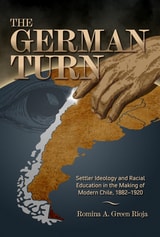
The German Turn
Settler Ideology and Racial Education in the Making of Modern Chile, 1882–1920Romina A. Green Rioja
University of Alabama Press, 2026
How a nation took shape through two classrooms, educating European immigrants in one while assimilating Indigenous peoples in the other, hardwiring race, class, and identity into modern Chile
The German Turn is the history of Chile’s settler ideological project of the 1880s exemplified in education. Romina A. Green Rioja’s big-picture interdisciplinary analysis boasts four historiographies in conversation within the Chilean context. She examines the histories of education, settler colonialism and immigration, Native mission schools, and Mapuche studies at the state and local levels. Chile’s state-building goal was to position the country in the global capitalist economy. Education was seen as a civilizing force for the Mapuche, and the overall goals were to unite the country; teach Chilean students to adhere to class, race, and gender structures; and prepare them for occupations according to these configurations.
Green Rioja finds that Chilean society and state policies demarcated the lines of ethnic, national, and racial preference and exclusion, offering inclusion for those of European ancestry and distance for those of Indigenous descent. Education’s dual role as a tool for inclusion and exclusion ultimately shaped former pupils’ class trajectories and racial belonging. The degrees of belonging depended on community connections, family wealth, and government scholarships that facilitated integration, assimilation, separatism, or the compartmentalization of group identity with the Chilean national identity. The book further considers global-transnational studies on immigration, settler colonialism, and education, showing Chilean policies that appear insular actually align with global patterns and shared policies by other forming nations. This work is a must-read for historians and Latin Americanists to understand Chile’s modernization and its impacts on social structures.
The Grit and the Grind
Building High-Performing Education Systems in an Era of PolarizationJoshua L. Glazer, Cori Egan, William R. Berry, and Amar Fattal
University of Chicago Press, 2026
Offers a much-needed perspective on the connections between community, policymaking, and the improvement of underperforming schools.
School reform remains a fraught issue in the United States as educators, policymakers, and communities strive to improve outcomes for all students. In The Grit and the Grind, Joshua L. Glazer, Cori Egan, William R. Berry, and Amar Fattal examine two ambitious efforts to improve the lowest-performing schools in Memphis, Tennessee. The book offers a rare inside look at the political, organizational, and educational challenges of improving schools at scale.
The two initiatives, the Achievement School District (ASD) and the Shelby County Innovation Zone (iZone), shared a common goal but pursued it through fundamentally different approaches. The ASD was a state-run turnaround district that removed schools from local control and placed them under the management of charter organizations. By contrast, the iZone operated through existing district institutions, relying on local educators and leaders to drive improvement. Despite common goals and substantial resources, the reforms developed in strikingly different ways. Drawing on years of research in Memphis, the authors move beyond familiar debates about charter schools and district reform to explore a deeper question: What does it take to improve schools in complex, pluralistic, and contested democratic societies? Their analysis reveals that educational improvement is simultaneously professional, organizational, and political. Efforts to enhance educational opportunities depend not only on curriculum, leadership, and expertise, but also on the legitimacy, trust, and community support that allow educational systems to learn from experience and sustain improvement.
At once a study of reform, organizations, and politics, The Grit and the Grind challenges simple explanations of success and failure, showing that meaningful improvement is forged through the slow, uncertain work of building systems capable of earning community trust while continuously strengthening teaching and learning.
The Handbook of Broader Impacts
Strategies for Enhancing the Societal Impacts of ResearchLaurie A. Van Egeren
Michigan State University Press, 2026
The Handbook of Broader Impacts is an essential resource for researchers, administrators, policymakers, and anyone interested in the societal benefits of research. The volume brings together experts who trace the history of broader impacts as a U.S. National Science Foundation policy, explore its relationship to engaged scholarship, and provide models for institutional infrastructure and support. The book equips readers with tools to build the institutional capacity to advance the societal impacts of research, from developing researcher identities and competencies to navigating promotion and tenure. The Handbook of Broader Impacts explores a wide range of initiatives—open science, science communication, citizen science, informal STEM learning, K–12 partnerships, undergraduate research, teacher development, international collaborations, and more. By blending policy context, practical strategies, and real-world examples, the handbook spells out the value of broader impacts and demonstrates how research can contribute to direct and meaningful change.
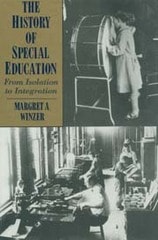
The History of Special Education
From Isolation to IntegrationMargret A. Winzer
Gallaudet University Press, 1993
The Human Right to Language
Communication Access for Deaf ChildrenLawrence Siegel
Gallaudet University Press, 2008
In 1982, the United States Supreme Court ruled that Amy Rowley, a deaf six-year-old, was not entitled to have a sign language interpreter in her public school classroom. Lawrence Siegel wholeheartedly disagrees with this decision in his new book The Human Right to Language: Communication Access for Deaf Children. Instead, he contends that the United States Constitution should protect every deaf and hard of hearing child’s right to communication and language as part of an individual’s right to liberty. Siegel argues that when a deaf or hard of hearing child sits alone in a crowded classroom and is unable to access the rich and varied communication around her, the child is denied any chance of success in life.
In The Human Right to Language, Siegel proposes that the First and Fourteenth Amendments of the Constitution be enforced so that Amy Rowley and her peers can possess that which virtually every other American child takes for granted – the right to receive and express thought in school. He asserts that the common notion of a right to “speech” is too infrequently interpreted in the narrowest sense as the right to “speak” rather than the broader right to receive and transmit information in all ways. Siegel reveals that there are no judicial decisions or laws that recognize this missing right, and offers here a legal and constitutional strategy for change. His well-reasoned hypothesis and many examples of deaf children with inadequate communication access in school combine to make a compelling case for changing the status quo.
The Instruction Myth
Why Higher Education is Hard to Change, and How to Change ItJohn Tagg
Rutgers University Press, 2019
The Instruction Myth argues that yes, higher education can be reformed and reinvigorated, but it will not be an easy process. In fact, it will require universities to abandon their central operating principle, the belief that education revolves around instruction, easily measurable in course syllabi, credits, and enrollments. Acclaimed education scholar John Tagg presents a powerful case that instruction alone is worthless and that universities should instead be centered upon student learning, which is far harder to quantify and standardize. Yet, as he shows, decades of research have indicated how to best promote student learning, but few universities have systematically implemented these suggestions.
This book demonstrates why higher education must undergo radical change if it hopes to survive. More importantly, it offers specific policy suggestions for how universities can break their harmful dependence on the instruction myth. In this extensively researched book, Tagg offers a compelling diagnosis of what’s ailing American higher education and a prescription for how it might still heal itself.
The Other Boston Busing Story
What's Won and Lost Across the Boundary LineSusan E. Eaton
Brandeis University Press, 2020
The Public School Advantage
Why Public Schools Outperform Private SchoolsChristopher A. Lubienski and Sarah Theule Lubienski
University of Chicago Press, 2013
For decades research showing that students at private schools perform better than students at public ones has been used to promote the benefits of the private sector in education, including vouchers and charter schools—but much of these data are now nearly half a century old. Drawing on two recent, large-scale, and nationally representative databases, the Lubienskis show that any benefit seen in private school performance now is more than explained by demographics. Private schools have higher scores not because they are better institutions but because their students largely come from more privileged backgrounds that offer greater educational support. After correcting for demographics, the Lubienskis go on to show that gains in student achievement at public schools are at least as great and often greater than those at private ones. Even more surprising, they show that the very mechanism that market-based reformers champion—autonomy—may be the crucial factor that prevents private schools from performing better. Alternatively, those practices that these reformers castigate, such as teacher certification and professional reforms of curriculum and instruction, turn out to have a significant effect on school improvement.
Despite our politics, we all agree on the fundamental fact: education deserves our utmost care. The Public School Advantage offers exactly that. By examining schools within the diversity of populations in which they actually operate, it provides not ideologies but facts. And the facts say it clearly: education is better off when provided for the public by the public.
The Pursuit of Racial and Ethnic Equality in American Public Schools
Mendez, Brown, and BeyondKristi L. Bowman
Michigan State University Press, 2015
The Rise of Women
The Growing Gender Gap in Education and What it Means for American SchoolsThomas A. DiPrete
Russell Sage Foundation, 2013
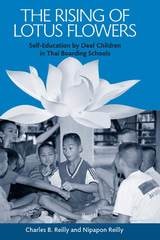
The Rising of Lotus Flowers
Self-Education by Deaf Children in Thai Boarding SchoolsCharles B. Reilly
Gallaudet University Press, 2005
In developed nations around the world, residential schools for deaf students are giving way to the trend of inclusion in regular classrooms. Nonetheless, deaf education continues to lag as the students struggle to communicate. In the Bua School in Thailand, however, 400 residential deaf students ranging in age from 6 to 19 have met with great success in teaching each other Thai Sign Language (TSL) and a world of knowledge once thought to be lost to them. The Rising of Lotus Flowers: Self-Education by Deaf Children in Thai Boarding Schools reveals how their institutionalization allowed them to foster a unique incubator of communication and education.
Charles B. Reilly, a teacher and community organizer in Thailand for eight years, and Nipapon Reilly, a Deaf Thai citizen, studied the students in the Bua School for 14 years, with periodic follow-ups thereafter. They found that the students learned little from their formal instructors, but that they were able to educate each other in time spent away from the classroom. Older students who had learned TSL in the dorms and on the playground successfully passed it on to six-year-olds who had virtually no language at all. The Reillys’ study uncovers an elaborate hierarchy of education among these students, with each group using games and other activities to teach and bring other classmates up to their level. Named for the much admired aquatic plant that blooms in Thailand’s bogs, the Bua School epitomizes the ideal of The Rising of Lotus Flowers, which also offers analytical evidence of the continuing value of residential schools in deaf education.
The Story of Act 31
How Native History Came to Wisconsin ClassroomsJ P Leary
Wisconsin Historical Society Press, 2018
Since its passage in 1989, a state law known as Act 31 requires that all students in Wisconsin learn about the history, culture, and tribal sovereignty of Wisconsin’s federally recognized tribes.
The Story of Act 31 tells the story of the law’s inception—tracing its origins to a court decision in 1983 that affirmed American Indian hunting and fishing treaty rights in Wisconsin, and to the violent public outcry that followed the court’s decision. Author J P Leary paints a picture of controversy stemming from past policy decisions that denied generations of Wisconsin students the opportunity to learn about tribal history.
The Teacher's Attention
Why Our Kids Must and Can Get Smaller Schools and ClassesGarrett Delavan
Temple University Press, 2009
The Teacher’s Attention is a fresh take on relationships in schools. Looking beyond our obsession with raising test scores, this book recognizes that education is a key partner in raising children. Garrett Delavan contends that allowing students, educators and parents to navigate a smaller number of relationships—a concept he calls "relationship load"—provides many benefits, including a better chance at achieving equal access to a good education for all children.
Delavan shows how class size, school size, and longer-term student-teacher relationships are all equally critical components for educating our children ethically and successfully. After examining these proposed reforms in detail, Delavan also considers counterarguments and provides a detailed projection of costs and savings, putting to rest the assumption that smaller classes and smaller schools are necessarily more expensive. Finally, the book discusses possible steps toward implementation, showing how the author's proposed reforms are remarkably practical.
The Testing Charade
Pretending to Make Schools BetterDaniel Koretz
University of Chicago Press, 2017
For decades we’ve been studying, experimenting with, and wrangling over different approaches to improving public education, and there’s still little consensus on what works, and what to do. The one thing people seem to agree on, however, is that schools need to be held accountable—we need to know whether what they’re doing is actually working. But what does that mean in practice?
High-stakes tests. Lots of them. And that has become a major problem. Daniel Koretz, one of the nation’s foremost experts on educational testing, argues in The Testing Charade that the whole idea of test-based accountability has failed—it has increasingly become an end in itself, harming students and corrupting the very ideals of teaching. In this powerful polemic, built on unimpeachable evidence and rooted in decades of experience with educational testing, Koretz calls out high-stakes testing as a sham, a false idol that is ripe for manipulation and shows little evidence of leading to educational improvement. Rather than setting up incentives to divert instructional time to pointless test prep, he argues, we need to measure what matters, and measure it in multiple ways—not just via standardized tests.
Right now, we’re lying to ourselves about whether our children are learning. And the longer we accept that lie, the more damage we do. It’s time to end our blind reliance on high-stakes tests. With The Testing Charade, Daniel Koretz insists that we face the facts and change course, and he gives us a blueprint for doing better.
The Three Cs of Higher Education
Competition, Collaboration and ComplementarityMark O'Hara
Central European University Press, 2019
The University and Social Justice
Struggles Across the GlobeAziz Choudry
Pluto Press, 2020
Whether calling for the decommodification or the decolonization of education, many of these struggles have attempted to draw on (and in turn, resonate with) longer histories of popular resistance, broader social movements and radical visions of a fairer world. In this critical collection, Aziz Choudry, Salim Vally and a host of international contributors bring grounded, analytical accounts of diverse struggles relating to higher education into conversation with each other.
Featuring contributions written by students and staff members on the frontline of struggles from 12 different countries, including Canada, Chile, France, India, Mexico, Nigeria, Occupied Palestine, the Philippines, South Africa, Turkey, the UK and the USA, the book asks what can be learned from these movements' strategies, demands and visions.
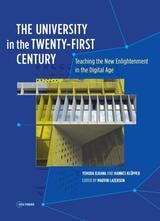
The University in the Twenty-first Century
Teaching the New Enlightenment in the Digital AgeHannes Klöpper
Central European University Press, 2016
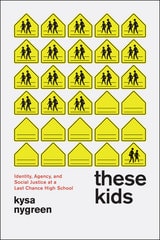
These Kids
Identity, Agency, and Social Justice at a Last Chance High SchoolKysa Nygreen
University of Chicago Press, 2013

Threatened Scholarship, Dynamics of Repression and Forms of Resistance
Towards Academic Freedom as a Transnational Human RightKerry Bystrom
Central European University Press, 2027
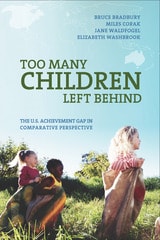
Too Many Children Left Behind
The U.S. Achievement Gap in Comparative PerspectiveBRUCE BRADBURY is associate professor at the Social Policy Research Centre at the University of New South Wales, Australia. MILES CORAK is professor of economics at the Graduate School of Public and International Affairs at the University of Ottawa. JANE WALDFOGFEL is professor of social work and public affairs at the Columbia University School of Social Work and visiting professor at the Centre for Analysis of Social Exclusion at the London School of Economics and Political Science. ELIZABETH WASHBROOK is lecturer in Quantitative Methods for Education at the Graduate School of Education and a member of the Centre for Multilevel Modelling at the University of Bristol, United Kingdom.
Russell Sage Foundation, 2015
The belief that with hard work and determination, all children have the opportunity to succeed in life is a cherished part of the American Dream. Yet, increased inequality in America has made that dream more difficult for many to obtain. In Too Many Children Left Behind, an international team of social scientists assesses how social mobility varies in the United States compared with Australia, Canada, and the United Kingdom. Bruce Bradbury, Miles Corak, Jane Waldfogel, and Elizabeth Washbrook show that the academic achievement gap between disadvantaged American children and their more advantaged peers is far greater than in other wealthy countries, with serious consequences for their future life outcomes. With education the key to expanding opportunities for those born into low socioeconomic status families, Too Many Children Left Behind helps us better understand educational disparities and how to reduce them.
Analyzing data on 8,000 school children in the United States, the authors demonstrate that disadvantages that begin early in life have long lasting effects on academic performance. The social inequalities that children experience before they start school contribute to a large gap in test scores between low- and high-SES students later in life. Many children from low-SES backgrounds lack critical resources, including books, high-quality child care, and other goods and services that foster the stimulating environment necessary for cognitive development. The authors find that not only is a child’s academic success deeply tied to his or her family background, but that this class-based achievement gap does not narrow as the child proceeds through school.
The authors compare test score gaps from the United States with those from three other countries and find smaller achievement gaps and greater social mobility in all three, particularly in Canada. The wider availability of public resources for disadvantaged children in those countries facilitates the early child development that is fundamental for academic success. All three countries provide stronger social services than the United States, including universal health insurance, universal preschool, paid parental leave, and other supports. The authors conclude that the United States could narrow its achievement gap by adopting public policies that expand support for children in the form of tax credits, parenting programs, and pre-K.
With economic inequalities limiting the futures of millions of children, Too Many Children Left Behind is a timely study that uses global evidence to show how the United States can do more to level the playing field.
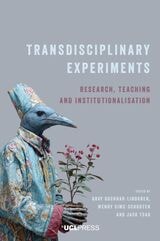
Transdisciplinary Experiments
Research, Teaching and InstitutionalisationEdited by Gray Kochhar-Lindgren, Wendy Sims-Schouten, and Jack Tsao
University College London, 2026
This volume pairs practical and theoretical insights on experimentation while advancing new models of transdisciplinary research, teaching, and institutional transformation.
Transdisciplinary Experiments explores how experimental approaches can reshape research, education, and institutions in higher education to respond to today’s complex and interconnected challenges. Grounded in the idea that experimentation can open up new possibilities, the volume examines how transdisciplinary teaching and learning can inspire change across disciplines, sectors, and cultures.
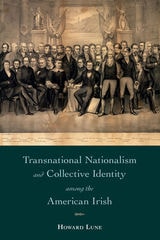
Transnational Nationalism and Collective Identity among the American Irish
Howard Lune
Temple University Press, 2020
In Transnational Nationalism and Collective Identity among the American Irish, Howard Lune considers the development and mobilization of different nationalisms over 125 years of Irish diasporic history (1791–1920) and how these campaigns defined the Irish nation and Irish citizenship.
Lune takes a collective approach to exploring identity, concentrating on social identities in which organizations are the primary creative agent to understand who we are and how we come to define ourselves. As exiled Irishmen moved to the United States, they sought to create a new Irish republic following the American model. Lune traces the construction of Irish American identity through the establishment and development of Irish nationalist organizations in the United States. He looks at how networks—such as societies, clubs, and private organizations—can influence and foster diaspora, nationalism, and nationalist movements.
By separating nationalism from the physical nation, Transnational Nationalism and Collective Identity among the American Irish uniquely captures the processes and mechanisms by which collective identities are constructed, negotiated, and disseminated. Inevitably, this work tackles the question of what it means to be Irish—to have a nationality, a community, or a shared history.
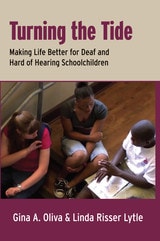
Turning the Tide
Making Life Better for Deaf and Hard of Hearing SchoolchildrenGina A. Oliva
Gallaudet University Press, 2014
Turning the Tide presents a qualitative study of deaf and hard of hearing students who attended mainstream schools. The authors conducted three focus groups in different regions in the country, enlisting six to eight participants with diverse backgrounds for each session. They also gathered information from 113 online respondents who answered the same questions used in the focus groups. The respondents discussed many issues, including the difficulties of finding friends and social access, the struggle to establish an identity, the challenges of K-12 interpreting and class placement, and the vast potential of summer and weekend programs for deaf students. Their empowering stories clearly demonstrate that no deaf or hard of hearing student should be educated alone. The authors also elicited comments on other changes that parents, advocates, and other allies could work toward to improve further the educational environment of deaf children.