Results by title
153 books match the query 'Egypt' and 28 start with t
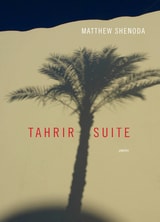
Tahrir Suite
PoemsMatthew Shenoda
Northwestern University Press, 2015
Winner, Arab American National Museum's 2015 George Ellenbogen Poetry Award
Tahrir Suite is a book-length poem that contemplates immigration, homeland, and diaspora in the twenty-first century. The poem, inspired by recent events in Egypt, cycles through the journey of two Egyptians moving across borders, languages, cultures, landscapes, and political systems while their life in the U.S. diaspora evolves and their home country undergoes revolutionary change.
Written from a perspective and about a place that is virtually unexplored in contemporary American poetry, Tahrir Suite works to capture the complicated essence of what it means to be from a specific place that is experiencing such radical change and how our understandings of “home” and “place” constantly evolve. Tahrir Suite is a musical meditation on what it means to be a global citizen in contemporary times.
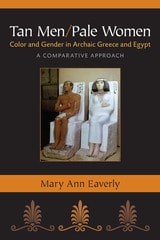
Tan Men/Pale Women
Color and Gender in Archaic Greece and Egypt, a Comparative ApproachMary Ann Eaverly
University of Michigan Press, 2013
One of the most obvious stylistic features of Athenian black-figure vase painting is the use of color to differentiate women from men. By comparing ancient art in Egypt and Greece, Tan Men/Pale Women uncovers the complex history behind the use of color to distinguish between genders, without focusing on race. Author Mary Ann Eaverly considers the significance of this overlooked aspect of ancient art as an indicator of underlying societal ideals about the role and status of women. Such a commonplace method of gender differentiation proved to be a complex and multivalent method for expressing ideas about the relationship between men and women, a method flexible enough to encompass differing worldviews of Pharaonic Egypt and Archaic Greece. Does the standard indoor/outdoor explanation—women are light because they stay indoors—hold true everywhere, or even, in fact, in Greece? How “natural” is color-based gender differentiation, and, more critically, what relationship does color-based gender differentiation have to views about women and the construction of gender identity in the ancient societies that use it?
The depiction of dark men and light women can, as in Egypt, symbolize reconcilable opposites and, as in Greece, seemingly irreconcilable opposites where women are regarded as a distinct species from men. Eaverly challenges traditional ideas about color and gender in ancient Greek painting, reveals an important strategy used by Egyptian artists to support pharaonic ideology and the role of women as complementary opposites to men, and demonstrates that rather than representing an actual difference, skin color marks a society’s ideological view of the varied roles of male and female.
Texts from the Pyramid Age
Nigel C. Strudwick
SBL Press, 2005
The Ancient Egyptian Netherworld Books
John Coleman Darnell
SBL Press, 2018
The first, complete English translation of the ancient Egyptian Netherworld Books
The ancient Egyptian Netherworld Books, important compositions that decorated the New Kingdom royal tombs in the Valley of the Kings, present humanity's oldest surviving attempts to provide a scientific map of the unseen realms beyond the visible cosmos and contain imagery and annotations that represent ancient Egyptian speculation (essentially philosophical and theological) about the events of the solar journey through the twelve hours of the night. The Netherworld Books describe one of the central mysteries of Egyptian religious belief—the union of the solar god Re with the underworldly god Osiris—and provide information on aspects of Egyptian theology and cosmography not present in the now more widely read Book of the Dead. Numerous illustrations provide overview images and individual scenes from each Netherworld Book, emphasizing the unity of text and image within the compositions. The major texts translated include the Book of Adoring Re in the West (the Litany of Re), the Book of the Hidden Chamber (Amduat), the Book of Gates, the Book of Caverns, the Books of the Creation of the Solar Disk, and the Books of the Solar-Osirian Unity.
Features:
- Accessible presentations of the main concepts of the Netherworld Books and the chief features of each text
- Notes and commentary address major theological themes within the texts as well as lexicographic and/or grammatical issues
- An overview of later uses of these compositions during the first millennium BCE
The Ancient Egyptian Pyramid Texts
James P. Allen
SBL Press, 2005
The Ancient Egyptian Pyramid Texts, Second Edition
James P. Allen
SBL Press, 2015
Completely revised and updated
James P. Allen provides a translation of the oldest corpus of ancient Egyptian religious texts from the six royal pyramids of the Fifth and Sixth Dynasties (ca. 2350–2150 BCE). Allen’s revisions take into account recent advances in the understanding of Egyptian grammar.
Features:
- Sequential translations based on all available sources, including texts newly discovered in the last decade
- Texts numbered according to the most widely used numbering system with new numbers from the latest 2013 concordance
- Translations reflect the primarily atemporal verbal system of Old Egyptian, which conveys the timeless quality that the text’s authors understood the texts to have
The Black Death in Egypt and England
A Comparative StudyBy Stuart J. Borsch
University of Texas Press, 2005
Throughout the fourteenth century AD/eighth century H, waves of plague swept out of Central Asia and decimated populations from China to Iceland. So devastating was the Black Death across the Old World that some historians have compared its effects to those of a nuclear holocaust. As countries began to recover from the plague during the following century, sharp contrasts arose between the East, where societies slumped into long-term economic and social decline, and the West, where technological and social innovation set the stage for Europe's dominance into the twentieth century. Why were there such opposite outcomes from the same catastrophic event?
In contrast to previous studies that have looked to differences between Islam and Christianity for the solution to the puzzle, this pioneering work proposes that a country's system of landholding primarily determined how successfully it recovered from the calamity of the Black Death. Stuart Borsch compares the specific cases of Egypt and England, countries whose economies were based in agriculture and whose pre-plague levels of total and agrarian gross domestic product were roughly equivalent. Undertaking a thorough analysis of medieval economic data, he cogently explains why Egypt's centralized and urban landholding system was unable to adapt to massive depopulation, while England's localized and rural landholding system had fully recovered by the year 1500.
The Culture of Ancient Egypt
John A. Wilson
University of Chicago Press, 1956
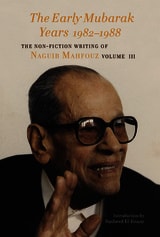
The Early Mubarak Years 1982–1988
The Non-Fiction Writing of Naguib Mahfouz, Volume IIINaguib Mahfouz
Gingko, 2020
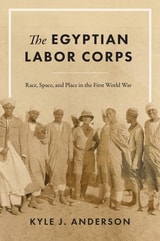
The Egyptian Labor Corps
Race, Space, and Place in the First World WarKyle J. Anderson
University of Texas Press, 2021
During World War I, the British Empire enlisted half a million young men, predominantly from the countryside of Egypt, in the Egyptian Labor Corps (ELC) and put them to work handling military logistics in Europe and the Middle East. British authorities reneged on their promise not to draw Egyptians into the war, and, as Kyle Anderson shows, the ELC was seen by many in Egypt as a form of slavery. The Egyptian Labor Corps tells the forgotten story of these young men, culminating in the essential part they came to play in the 1919 Egyptian Revolution.
Combining sources from archives in four countries, Anderson explores Britain’s role in Egypt during this period and how the ELC came to be, as well as the experiences and hardships these men endured. As he examines the ways they coped—through music, theater, drugs, religion, strikes, and mutiny—he illustrates how Egyptian nationalists, seeing their countrymen in a state akin to slavery, began to grasp that they had been racialized as “people of color.” Documenting the history of the ELC and its work during the First World War, The Egyptian Labor Corps also provides a fascinating reinterpretation of the 1919 revolution through the lens of critical race theory.
The Egyptians
Edited by Sergio Donadoni
University of Chicago Press, 1997
Read consecutively, the portraits merge to create a larger picture of Egyptian culture, state, and society. The framework of the Egyptian state, in particular, is touched upon in each essay, describing the meticulous administration and well-organized hierarchical system that fostered centuries of stability and prosperity.
The Great Name
Ancient Egyptian Royal TitularyRonald J. Leprohon
SBL Press, 2013
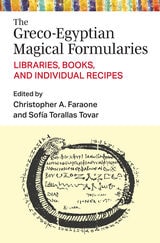
The Greco-Egyptian Magical Formularies
Libraries, Books, and Individual RecipesEdited by Christopher A. Faraone and Sofía Torallas Tovar
University of Michigan Press, 2022
In Greco-Roman Egypt, recipes for magical undertaking, called magical formularies, commonly existed for love potions, curses, attempts to best business rivals—many of the same challenges that modern people might face. In The Greco-Egyptian Magical Formularies: Libraries, Books, and Individual Recipes, volume editors Christopher Faraone and Sofia Torallas Tovar present a series of essays by scholars involved in a multiyear project to reedit and translate the various magical handbooks that were inscribed in the Roman period in the Greek or Egyptian languages. For the first time, the material remains of these papyrus rolls and codices are closely examined, revealing important information about the production of books in Egypt, the scribal culture in which they were produced, and the traffic in single recipes copied from them. Especially important for historians of the book and the Christian Bible are new insights in the historical shift from roll to codex, complicated methods of inscribing the bilingual papyri (in which the Greek script is written left to right and the demotic script right to left), and the new realization that several of the longest extant handbooks are clearly compilations of two or more shorter handbooks, which may have come from different places. The essays also reexamine and rethink the idea that these handbooks came from the personal libraries of practicing magicians or temple scriptoria, in one case going so far as to suggest that two of the handbooks had literary pretensions of a sort and were designed to be read for pleasure rather than for quotidian use in making magical recipes.
The Life and Work of Francis Willey Kelsey
Archaeology, Antiquity, and the ArtsJohn Griffiths Pedley
University of Michigan Press, 2011
President of the Archaeological Institute of America, professor at the University of Michigan from 1889 to 1927, and president of the American Philological Association, Francis Kelsey was crucially involved in the founding or growth of major educational institutions. He came to maturity in a period of great technological change in communications, transportation, and manufacturing. Kelsey took full advantage of such innovations in his ceaseless drive to promote education for all, to further the expansion of knowledge, and to champion the benefits of the study of antiquity.
A vigorous traveler around the United States, Europe, and the Mediterranean, Kelsey strongly believed in the value of personally viewing sites ancient and modern and collecting artifacts that could be used by the new museums and universities that were springing up in the United States. This collecting habit put him in touch with major financiers of the day, including Charles Freer, Andrew Carnegie, and J. P. Morgan, as he sought their help for important projects.
Drawing heavily on Kelsey's daily diaries now held at the University of Michigan's Bentley Historical Library, John Griffiths Pedley gives us a biography that records the wide-ranging activities of a gifted and energetic scholar whose achievements mirrored the creative and contributive innovations of his contemporary Americans.
The Lying Brain
Lie Detection in Science and Science FictionMelissa M. Littlefield
University of Michigan Press, 2011
"The Lying Brain is a study to take seriously. Its argument is timely, clear, and of particular importance to the enlargement of our understanding of the relationships among science studies, literary studies, and technology studies."
---Ronald Schleifer, University of Oklahoma
Real and imagined machines, including mental microscopes, thought translators, and polygraphs, have long promised to detect deception in human beings. Now, via fMRI and EEG, neuroscientists seem to have found what scientists, lawyers, and law enforcement officials have sought for over a century: foolproof lie detection. But are these new lie detection technologies any different from their predecessors? The Lying Brain is the first book to explore the cultural history of an array of lie detection technologies: their ideological assumptions, the scientific and fictional literatures that create and market them, and the literacies required for their interpretation.
By examining a rich archive of materials about lie detection---from science to science fiction---The Lying Brain demonstrates the interconnections of science, literature, and popular culture in the development and dissemination of deception detection in the American cultural imagination. As Melissa Littlefield demonstrates, neuroscience is not building a more accurate lie detector; it is simply recycling centuries-old ideologies about deception and its detection.
Cover art: "Human Brain" © Denis Barbulet, courtesy of Shutterstock.com
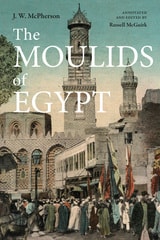
The Moulids of Egypt
Egyptian Saint’s Day FestivalsJ.W. McPherson
Gingko, 2022
First published in Cairo during World War II, The Moulids of Egypt is a study of moulids, the popular Egyptian religious festivals celebrated by both Muslims and Christians in the first half of the twentieth century. The book talks in detail about the secular side of moulids, where sports, games, theatres, dancing, and laughter were as much part of the festivals as the religious processions and the whirling of dervishes. Some of the rites and customs analyzed here date from as far back as the Pharaonic period, but the moulids are gradually dying out; many of the 126 festivals described in Moulids of Egypt have since faded away, making the book of lasting interest.
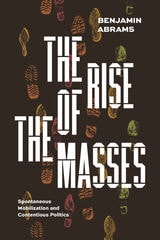
The Rise of the Masses
Spontaneous Mobilization and Contentious PoliticsBenjamin Abrams
University of Chicago Press, 2023
Between 15 and 26 million Americans participated in protests surrounding the murders of George Floyd, Ahmaud Arbery, Breonna Taylor, and others as part of the Black Lives Matter protests in 2020, which is only one of the most recent examples of an immense mobilization of citizens around a cause. In The Rise of the Masses, sociologist Benjamin Abrams addresses why and how people spontaneously protest, riot, and revolt en masse. While most uprisings of such a scale require tremendous resources and organizing, this book focuses on cases where people with no connection to organized movements take to the streets, largely of their own accord. Looking to the Arab Spring, Occupy Wall Street, and the Black Lives Uprising, as well as the historical case of the French Revolution, Abrams lays out a theory of how and why massive mobilizations arise without the large-scale planning that usually goes into staging protests.
Analyzing a breadth of historical and regional cases that provide insight into mass collective behavior, Abrams draws on first-person interviews and archival sources to argue that people organically mobilize when a movement speaks to their pre-existing dispositions and when structural and social conditions make it easier to get involved—what Abrams terms affinity-convergence theory. Shedding a light on the drivers behind large spontaneous protests, The Rise of the Masses offers a significant theory that could help predict movements to come.
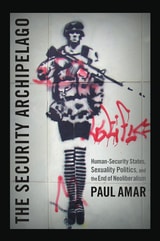
The Security Archipelago
Human-Security States, Sexuality Politics, and the End of NeoliberalismPaul Amar
Duke University Press, 2013
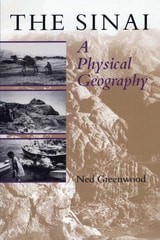
The Sinai
A Physical GeographyBy Ned Greenwood
University of Texas Press, 1997
One of the world's oldest crossroads, the Sinai joins the great continental land masses of Africa and Eurasia. Its physical geography of rugged mountain peaks, desert plains, and sea coasts was formed by the collision of the two continental plates, while the human tides that have swept across the region over millennia have left an intricate web of cultures and ethnicities.
In this book, Ned Greenwood offers a complete, up-to-date physical geography of Sinai. After an introductory chapter that situates Sinai within world history and geography, he focuses in detail on the following areas: plate tectonics and geology, geomorphology and drainage, weather and climate, soils, and biogeography.
In the concluding chapter, Greenwood considers the human geography of Sinai, including the pressures currently posed by population growth, political extremism, and environmental constrictions on development. He offers a fully rounded picture of the physical environment of Sinai that will be vital reading for everyone concerned about the future of this strategic yet fragile land.
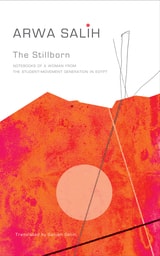
The Stillborn
Notebooks of a Woman from the Student-Movement Generation in EgyptArwa Salih
Seagull Books, 2017
A poignant reckoning with the Marxism of a generation and its militant postcolonial intellectuals.
Arwa Salih was a member of the political bureau of the Egyptian Communist Workers Party, founded in the wake of the Arab–Israeli War and the vibrant Egyptian student movement of the early 1970s. Written more than a decade after Salih quit the party and left political life—and published shortly after she tragically took her own life—The Stillborn offers a devastatingly honest look at the tragic failure of both the national liberation and communist projects in Egypt.
This powerful, unflinching critique speaks not only to and about Salih’s own generation of left-wing activists, but also extends its gaze outward. The Stillborn addresses the broader, still fiercely salient dilemmas of revolutionary politics that continue to echo throughout the developing world in the postcolonial era.
The Time between Places
Stories That Weave In and Out of Egypt and AmericaPauline Kaldas
University of Arkansas Press, 2010
The Turban and the Hat
Sonallah Ibrahim
Seagull Books, 2022
The Napoleonic-era French invasion and occupation of Egypt are often seen as the Arab world’s first encounter with the military and technological prowess of the West—and it came as a terrible shock. The Turban and the Hat tells the story of those three tumultuous years from the perspective of a young Egyptian living in late-eighteenth-century Cairo. Knowing some French, he works as a translator for the occupiers. He meets their scientists and artists, has an affair with Bonaparte’s mistress, and accompanies the disastrous campaign to take Syria, where he witnesses the ravages of the plague and the horrific barbarism of war. He is astonished by the invaders’ lies and propaganda, but he finds that much of what he thought he knew about his fellow Egyptians was also an illusion. Convincing in its history but rich in themes that resonate today, The Turban and the Hat is a story of resistance, but also of collaboration, cooperation, and corruption. Sonallah Ibrahim, one of Egypt’s foremost novelists, gives us a marvelous account of the Western occupation of an Arab land, one that will resonate with contemporary readers. His portrayal of this tragic—and at times comic—“clash of civilizations” is never didactic, even as it reminds us that so many lessons of history go unlearned.
The Unfinished Arab Spring
Micro-Dynamics of Revolts between Change and ContinuityEdited by Fatima El Issawi and Francesco Cavatorta
Gingko, 2020

The Western Bahr Al Ghazal under British Rule, 1898–1956
Mis Af#57Ahmad Alawad Sikainga
Ohio University Press, 1991
The World of Early Egyptian Christianity
Language, Literature, and Social Context (CUA Studies in Early Christianity)James E. Goehring
Catholic University of America Press, 2007
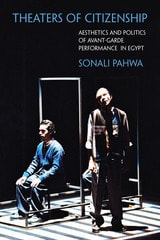
Theaters of Citizenship
Aesthetics and Politics of Avant-Garde Performance in EgyptSonali Pahwa
Northwestern University Press, 2020
In 2004, independent cultural institutions were sites for more democratic forms of youth organization and cultural participation than were Egyptian state theaters. Sonali Pahwa looks at identity formation within this infrastructure for new cultural production: festivals, independent troupes, workshops, and manifesto movements. Bringing institutional changes in dialogue with new performance styles on stages and streets, Pahwa conceptualizes performance culture as a school of citizenship. Independent theater incubated hope in times of despair and pointed to different futures for the nation’s youth than those seen in television and newspapers. Young dramatists countered their generation’s marginalization in the neoliberal economy, media, and political institutions as they performed alternative visions for the nation. An important contribution to the fields of anthropology and performance studies, Pahwa’s analysis will also interest students of sociology and Egyptian history.
Thutmose III
A New BiographyEric H. Cline and David O'Connor, Editors
University of Michigan Press, 2006
Thutmose III was without question one of Egypt's greatest pharaohs. His 54-year reign was packed with momentous events as well as being unusually long. Thutmose III includes an overview of his life, and detailed examinations of civil administration, the religion and cults, the monumental architecture and royal building program, royal tombs and iconography, royal portraiture and ideology, the artistic production, the Northern and Southern campaigns, as well as the Aegean and other foreign visitors to Egypt during Thutmose's time. Finally, the book concludes with a look at the end of his reign and the accession of Amenhotep II.
This extensive treatment of a pivotal figure in the ancient Mediterranean world during the Late Bronze Age will provide a uniquely comprehensive view of one of Egypt's greatest pharaohs and will be of interest to a wide audience, including specialists in Egypt and the Near East, graduate and undergraduate students, and those with a general interest in Egypt.
Eric H. Cline is Associate Professor of Ancient History and Archaeology in the Department of Classical and Semitic Languages and Literatures at George Washington University.
David O'Connor is Lila Acheson Wallace Professor of Ancient Egyptian Art and Archaeology at the New York University Institute of Fine Arts.
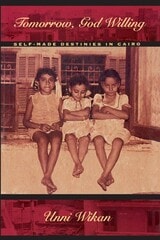
Tomorrow, God Willing
Self-made Destinies in CairoUnni Wikan
University of Chicago Press, 1996
Umm Ali's story is amazing not only for what it reveals about her resourcefulness but for the light it sheds on the resilience of Cairo's poor in the face of disastrous poverty. Like countless other poor people in Cairo, she has developed a personal buoyancy to cope with relentless economic need. It stems from a belief in the ability of people to shape their own destiny and helps explain why Cairo remains virtually free of the social ills—violent street crime and homelessness—that have eroded the lives of poor people in other major cities.
Unni Wikan first met Umm Ali and her family twenty-five years ago and has returned almost every year. She draws on her firsthand experience of their lives to create an intimate portrait of Cairo's back streets and the people who live there. Wikan's innovative approach to ethnographic writing reads like a novel that presents the experiences of Umm Ali's family and neighbors in their own words.
As Umm Ali recounts triumphs and defeats—from forming a savings club with neighbors to the gradual drifting away and eventual return of her husband—she unveils a deeply reflective attitude and her unwavering belief that she can improve her situation. Showing how Egyptian culture interprets poverty and family, this book attests to the capacity of an individual's self-worth to withstand incredible adversity.