Results by title
157 books match the query 'English' and 31 start with t
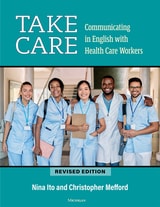
Take Care
Communicating in English with Health Care WorkersNina Ito and Christopher Mefford
University of Michigan Press, 2023
A high level of communicative skills are essential and expected for health care workers. Take Care is designed to give readers the strategies and tools to build, maintain, and repair communication within interactions that take place in health care settings. It is designed for students who are enrolled in health care training as well as nurses or health care workers who are already on the job but may want to improve their English. This text is designed to provide readers with a firm grasp of verbal and non-verbal communication strategies for more successful interactions. It will also help readers develop strategic competence by asking them to practice formulaic phrases needed to get things done. Carefully selected situations will also help readers to understand some of the social situations health care workers need to prepare for, such as apologizing, expressing condolences, or giving advice.
Take Care breaks each unit into the following sections to teach readers new skills:
- Listening for Language
- Dialogue
- Vocabulary
- Communication Strategy
- Pronunciation
- Dialogue Review
- Role Plays
- End-of-Unit Discussion
- Culture Point
This revised edition is updated to include information about pandemics, vaccines, and other medical developments. Audio files for the listening activities are available online.

Take Care
Communicating in English with U.S. Health Care WorkersNina Ito and Christopher Mefford
University of Michigan Press, 2011
Take Care was written to help nursing students and other health care workers communicate better in health care settings, with a focus on improving speaking and listening skills, vocabulary, and pronunciation. The aim was to provide users with the tools and specific communication strategies to build, maintain, or repair interactions that take place on the job. This book is also designed to develop the pragmatic competence necessary to get things done on the job and to understand some of the social situations required by health care workers, like expressing condolences or giving advice.
The individuals most likely to benefit from the material in the book are:
- Nursing students enrolled in community college (e.g., pre-nursing courses or RN students who have a special class)
· ESL students enrolled in specific CNA or medical assistant classes
· ESL students enrolled in U.S. universities who are here to learn more about nursing or health care as profession (they may or may not already have a degree in their own countries)
· Nurses or health care workers who already work in a health care setting but who are not proficient in English and so may be taking an English course sponsored by the hospital or local health system
It is therefore generally assumed that students have some knowledge of common medical and health care terms, so the book does not attempt to teach medical terminology, except in the context of communicating effectively in a health care setting. The various Vocabulary sections in each unit can therefore be used as review or as a new lesson—whatever works best for your students.
Instructors using this book do not need knowledge of the field of nursing or health care because the majority of material covered focuses on the language, not the industry.
Teaching the Pronunciation of English
Focus on Whole CoursesJohn Murphy, Editor
University of Michigan Press, 2017
Teaching the Pronunciation of English illustrates that pronunciation teaching is compatible with communicative, task-based, post-method, and technology-mediated approaches to language teaching. This theme permeates the volume as a whole and is well represented in Chapters 3-12, which are dedicated to specialist-teachers’ firsthand depictions of pronunciation-centered courses. Each of these ten chapters features a set of innovative teaching strategies and contemporary course design structures developed by the chapter contributor(s).
To prepare readers to more fully appreciate the substance and quality of Chapters 3-12, the volume’s two initial chapters are more foundational. Chapters 1 and 2 provide an overview of core topics language teachers need to know about to become pronunciation teachers: suprasegmentals (thought groups, prominence, word stress, intonation, and pitch jumps) and the English consonants and vowel sounds.
Tenderfoot in Colorado
Richard Baxter Townshend
University Press of Colorado, 1968

Textbook of Israeli Hebrew
Haiim B. Rosén
University of Chicago Press, 1976
The work is organized into sections that can be worked through in an academic year—presentation of features, text samples, exercises, grammatical synopses, and individual and comprehensive glossaries. This text may be used by teachers without specialized training in linguistics. It can be used by self-teaching students as well as by those at college level, and it will valuable for immigrants to Israel.
The "Getting to Yes" Guide for ESL Students and Professionals
Principled Negotiation for Non-Native Speakers of EnglishBarrie J. Roberts
University of Michigan Press, 2024
The Getting to Yes Guide for ESL Students and Professionals prepares non-native speakers of English to join the global community of people who use Getting to Yes to negotiate win-win agreements in English. It provides page-by-page explanations of over 1,000 words, phrases, concepts, and examples that these readers may misunderstand; short stories that use these new words and concepts to help readers apply them to new contexts; delightful cartoons to highlight main ideas; optional ESL activities; and a glossary of the key negotiation idioms and terms used in Getting to Yes. In this guide, author Barrie J. Roberts applies her experience as a public interest attorney, court Alternative Dispute Resolution administrator, ESL instructor, and court interpreter trainer to help readers improve their professional-level English along with their negotiation skills.
Benefits for teachers:
- Each Chapter Guide provides a ready-made lesson plan with activities to do before, while, and after reading each chapter of Getting to Yes
- The book can be used as a recommended self-study reference
- This book can be used for selected chapters of Getting to Yes or for a complete standalone course on Getting to Yes for non-native speakers of English or Generation 1.5 students
- Optional activities throughout the book can be assigned for in or out of the classroom. These include activities for reading comprehension, vocabulary building, paraphrasing, critical thinking, discussing, and writing
- Short stories written to accompany each chapter require students to apply new vocabulary and negotiation concepts to real-world disputes

The Alchemy of English
The Spread, Functions, and Models of Non-native EnglishesBraj Kachru
University of Illinois Press, 1990
of an entire field, rather than merely the fruitful exploration of a topic.
. . . [Kachru] is to be congratulated for having taken us as far as he
already has and for doing so in so stimulating and so productive a fashion."
-- World Englishes
"A potent addition to theoretical, sociolinguistic, attitudinal
and methodological explorations vis-à-vis the spread and functions
of, and innovations in, English from the viewpoint of a non-Western scholar."
-- The Language Teacher
Winner of the Joint First Prize, Duke of Edinburgh English Language
Book Competition of the English-Speaking Union of the Commonwealth, 1987
The Basque Language
A Practical IntroductionAlan R. King
University of Nevada Press, 2012
The Coming of the King James Gospels
A Collection of the Translators’ Work-in-ProgressWard S. Allen
University of Arkansas Press, 1994
The Coming of the King James Gospels is a primary publication exploring the handwritten annotations of the Oxford New Testament Company, made as members completed Matthew, Mark, Luke, and John. Their original edited pages, gathered into one binding as the Bodleian Bishops’ Bible ([1602] b.1), offer us the only known surviving record of their monumental work.
Ward Allen’s painstakingly produced collation of this Bishops’ Bible is available for the first time in acessible visual layout. It allows a reader to study simultaneously the three texts, that of the original Bishops’ Bible, the revisions suggested for the 1602 text, and the final King James version of the Gospels. Rejected readings reveal the reasoning which led to the wording of the final text. Beautifully produced, The Coming of the King James Gospels is now a prime resource for all students of the Bible and the English language.
The Concise Greek-English Lexicon of the New Testament
Frederick William Danker
University of Chicago Press, 2009
Frederick William Danker, a world-renowned scholar of New Testament Greek, is widely acclaimed for his 2000 revision of Walter Bauer’s A Greek-English Lexicon of the New Testament and Other Early Christian Literature. With more than a quarter of a million copies in print, it is considered the finest dictionary of its kind.
Danker’s Concise Greek-English Lexicon of the New Testament will prove to be similarly invaluable to ministers, seminarians, translators, and students of biblical Greek. Unlike other lexica of the Greek New Testament, which give only brief glosses for headwords, The Concise Greek-English Lexicon offers extended definitions or explanations in idiomatic English for all Greek terms.
Each entry includes basic etymological information, short renderings, information on usage, and plentiful biblical references. Greek terms that could have different English definitions, depending on context, are thoughtfully keyed to the appropriate passages. An overarching aim of The Concise Greek-English Lexicon is to assist the reader in recognizing the broad linguistic and cultural context for New Testament usage of words.
The Concise Greek-English Lexicon retains all the acclaimed features of A Greek-English Lexicon in a succinct and affordable handbook, perfect for specialists and nonspecialists alike.
The Counselling Speeches of Jim Ka-Nipitehtew
Freda Ahenakew
University of Manitoba Press, 1998

The Cree Language is Our Identity
The La Ronge lectures of Sarah WhitecalfSarah Whitecalf
University of Manitoba Press, 1983
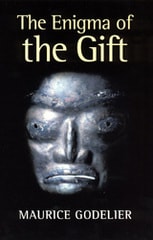
The Enigma of the Gift
Maurice Godelier
University of Chicago Press, 1998
Beginning with an analysis of the seminal work of Marcel Mauss and Claude Lévi-Strass, and drawing on his own fieldwork in Melanesia, Godelier argues that traditional theories are flawed because they consider only exchangeable gifts. By explaining gift-giving in terms of sacred objects and the authoritative conferral of power associated with them, Godelier challenges both recent and traditional theories of gift-giving, provocatively refreshing a traditional debate.
Elegantly translated by Nora Scott, The Enigma of the Gift is at once a major theoretical contribution and an essential guide to the history of the theory of the gift.
The Grammatical Structures of English and Spanish
Robert P. Stockwell, J. Donald Bowen, and John W. Martin
University of Chicago Press, 1965
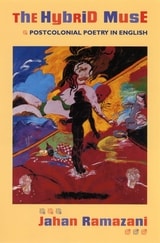
The Hybrid Muse
Postcolonial Poetry in EnglishJahan Ramazani
University of Chicago Press, 2001
In The Hybrid Muse, Jahan Ramazani argues that postcolonial poets have also dramatically expanded the atlas of literature in English, infusing modern and contemporary poetry with indigenous metaphors and creoles. A rich and vibrant poetry, he contends, has issued from the hybridization of the English muse with the long resident muses of Africa, India, and the Caribbean. Starting with the complex case of Ireland, Ramazani closely analyzes the work of leading postcolonial poets and explores key questions about the relationship between poetry and postcolonialism. As inheritors of both imperial and native cultures, poets such as W. B. Yeats, Derek Walcott, Louise Bennett, A. K. Ramanujan, and Okot p'Bitek invent compelling new forms to articulate the tensions and ambiguities of their cultural in-betweeness. They forge hybrid figures, vocabularies, and genres that embody the postcolonial condition.
Engaging an array of critical topics, from the aesthetics of irony and metaphor to the politics of nationalism and anthropology, Ramazani reconceptualizes issues central to our understanding of both postcolonial literatures and twentieth-century poetry. The first book of its kind, The Hybrid Muse will help internationalize the study of poetry, and in turn, strengthen the place of poetry in postcolonial studies.
The King James Version at 400
Assessing Its Genius as Bible Translation and Its Literary InfluenceDavid G. Burke
SBL Press, 2013
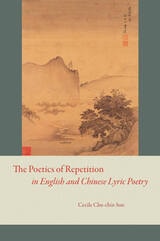
The Poetics of Repetition in English and Chinese Lyric Poetry
Cecile Chu-chin Sun
University of Chicago Press, 2010
For more than half a century, Chinese-Western comparative literature has been recognized as a formal academic discipline, but critics and scholars in the field have done little to develop a viable, common basis for comparison between these disparate literatures. In this pioneering book, Cecile Chu-chin Sun establishes repetition as the ideal perspective from which to compare the poetry and poetics from these two traditions.
Sun contends that repetition is at the heart of all that defines the lyric as a unique art form and, by closely examining its use in Chinese and Western poetry, she demonstrates howone can identify important points of convergence and divergence. Through a representative sampling of poems from both traditions, she illustrates how the irreducible generic nature of the lyric transcends linguistic and cultural barriers but also reveals the fundamental distinctions between the traditions. Most crucially, she dissects the two radically different conceptualizations of reality—mimesis and xing—that serve as underlying principles for the poetic practices of each tradition.
Skillfully integrating theory and practice, The Poetics of Repetition in English and Chinese Lyric Poetryprovides a much-needed model for future study of Chinese and English poetry as well as lucid, succinct interpretations of individual poems.
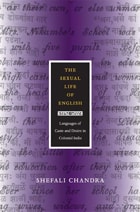
The Sexual Life of English
Languages of Caste and Desire in Colonial IndiaShefali Chandra
Duke University Press, 2012
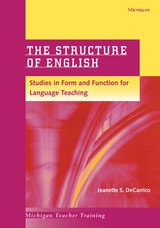
The Structure of English
Studies in Form and Function for Language TeachingJeanette S. DeCarrico
University of Michigan Press, 2000
With an emphasis on discourse function throughout, students are never expected to rely on lists of unrelated, constructed example sentences. Rather, when major points of grammar are presented, the structures are illustrated with rich, "real world" contexts excerpted from literature (mostly American), including novels, short stories, poems, essays, and drama. Exercises in the companion workbook are likewise based on naturally occurring stretches of discourse.
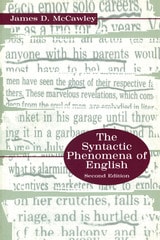
The Syntactic Phenomena of English
James D. McCawley
University of Chicago Press, 1998
And now available from the author! Answers to Selected Exercises.
Instructors using James D. McCawley's The Syntactic Phenomena of English, Second Edition may request a complimentary copy of Answers to Selected Exercises in The Syntactic Phenomena of English by writing on their department's letterhead to the author, James D. McCawley, Department of Linguistics, 1010 E. 59th Street, Chicago, IL 60637. [Note: This material is available only from the author and is not available from the University of Chicago Press.]
The Syntactic Phenomena of English, Volume 1
James D. McCawley
University of Chicago Press, 1988
And now available from the author! Answers to Selected Exercises.
Instructors using James D. McCawley's The Syntactic Phenomena of English, Second Edition may request a complimentary copy of Answers to Selected Exercises in The Syntactic Phenomena of English by writing on their department's letterhead to the author, James D. McCawley, Department of Linguistics, 1010 E. 59th Street, Chicago, IL 60637. [Note: This material is available only from the author and is not available from the University of Chicago Press.]
The Syntactic Phenomena of English, Volume 2
James D. McCawley
University of Chicago Press, 1988
And now available from the author! Answers to Selected Exercises.
Instructors using James D. McCawley's The Syntactic Phenomena of English, Second Edition may request a complimentary copy of Answers to Selected Exercises in The Syntactic Phenomena of English by writing on their department's letterhead to the author, James D. McCawley, Department of Linguistics, 1010 E. 59th Street, Chicago, IL 60637. [Note: This material is available only from the author and is not available from the University of Chicago Press.]
The Teaching of English
James R. Squire
University of Chicago Press, 1977
The University of Chicago Spanish Dictionary, Fifth Edition, Spanish-English, English-Spanish
Universidad de Chicago Diccionario Español-Inglés, Inglés-EspañolEdited by David A. Pharies
University of Chicago Press, 2002
With thousands of added entries, the Dictionary builds on the features that have made it the leader in its field for more than fifty years: authority, scope, clarity, and conciseness. And with this edition, the Dictionary brilliantly captures the current core vocabularies of two rapidly changing—and increasingly connected—languages and cultures.
Entirely bilingual, the fifth edition focuses on two contemporary international languages—American English and a basic, worldwide Spanish that draws from both Latin American and Iberian sources.
Designed for a wide range of users, including travelers, businesspeople, students, teachers, and professionals, the new Dictionary is the essential first resource for speakers of both languages—from beginners to those at all other stages. Up to date, just comprehensive enough, and extraordinarily clear and easy to use, the new edition of The University of Chicago Spanish Dictionary stands alone. No other dictionary offers so many users so much help—or so much value.
The University of Chicago Spanish-English Dictionary, Sixth Edition
Diccionario Universidad de Chicago Inglés-Español, Sexta EdiciónDavid A. Pharies, Editor in Chief
University of Chicago Press, 2012
A concise, authoritative, up-to-date guide to Spanish and English
The University of Chicago Spanish–English Dictionary has long set the standard for concise bilingual dictionaries. Portable yet remarkably thorough, the dictionary enables users to find the precise equivalents of the words and phrases they seek.
The Work of Poverty
Samuel Beckett's Vagabonds and the Theater of CrisisLance Duerfahrd
The Ohio State University Press, 2013
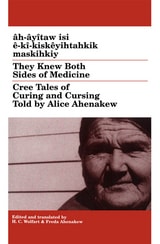
They Knew Both Sides of Medicine
Cree Tales of Curing and Cursing Told by Alice AhenakewH.C. Wolfart
University of Manitoba Press, 2000

Thinking in English, Speaking in Hindi
Translation, Creativity, and Value in Bollywood and BeyondTejaswini Ganti
Duke University Press, 2027
This Africa
Novels by West Africans in English and FrenchJudith Illsley Gleason
Northwestern University Press, 1965
Tohono O'odham/Pima to English, English to Tohono O'odham/Pima Dictionary
Dean Saxton, Lucille Saxton, and Susie Enos
University of Arizona Press, 1983
Treatises on Noah and David
Brian P. St. Ambrose
Catholic University of America Press, 2020
The first treatise presents Noah as a model just man, as Ambrose pairs the literal and the higher or spiritual meaning of the Genesis flood narrative to address topics ranging from the Genesis narrative to Stoic ethics to the Incarnation. In his defense of David to the emperor Theodosius, Ambrose ties David’s sin and repentance to his own close reading of Psalm 51(50), David’s plea for himself in his famous “Miserere.” While the authenticity of the third treatise included in the volume, the Second Apology of David, has long been challenged, recent scholarship suggests that it transmits Ambrose’s own preaching, which applies the lessons of David’s life to the situation of gentile unbelievers, Jews, and the church; even if it is the work of a later imitator, the Second Apology is a compelling and systematic treatment of the David’s sin and repentance as relevant to Christian morality and doctrine.
The three treatises, previously unavailable in English translation, broaden our understanding of exegesis in the Latin West and our interpretation of Ambrose as preacher and exegete.