Results by title
314 books match the query 'Environmental aspects' and 56 start with t
Taking Chances
The Coast after Hurricane SandyO'Neill, Karen M.
Rutgers University Press, 2016
Taking the Land to Make the City
A Bicoastal History of North AmericaBy Mary P. Ryan
University of Texas Press, 2019
The history of the United States is often told as a movement westward, beginning at the Atlantic coast and following farmers across the continent. But cities played an equally important role in the country’s formation. Towns sprung up along the Pacific as well as the Atlantic, as Spaniards and Englishmen took Indian land and converted it into private property. In this reworking of early American history, Mary P. Ryan shows how cities—specifically San Francisco and Baltimore—were essential parties to the creation of the republics of the United States and Mexico.
Baltimore and San Francisco share common roots as early trading centers whose coastal locations immersed them in an international circulation of goods and ideas. Ryan traces their beginnings back to the first human habitation of each area, showing how the juggernaut toward capitalism and nation-building could not commence until Europeans had taken the land for city building. She then recounts how Mexican ayuntamientos and Anglo American city councils pioneered a prescient form of municipal sovereignty that served as both a crucible for democracy and a handmaid of capitalism. Moving into the nineteenth century, Ryan shows how the citizens of Baltimore and San Francisco molded landscape forms associated with the modern city: the gridded downtown, rudimentary streetcar suburbs, and outlying great parks. This history culminates in the era of the Civil War when the economic engines of cities helped forge the East and the West into one nation.

Terracene
A Crude AestheticsSalar Mameni
Duke University Press, 2023
That Which Roots Us
Environmental Issues in the Pacific Northwest & BeyondMarion Dresner
University of Nevada Press, 2023
A work of natural and environmental history.
That Which Roots Us is a work of natural and environmental history that explores the origins of and resolutions to some of the United States’ environmental problems. Marion Dresner discusses the roots of Euro-American environmental exploitative action, starting with the environmental consequences of having treated Pacific Northwest forests as commodities. She shares her experiences visiting sites where animal-centered ice age culture changed to human-centered culture thousands of years ago with the advent of farming. The book explores the origins of the romantic philosophical movement, which arose out of the debilitating conditions of the industrial era. Those romantic attitudes toward nature inspired the twentieth-century preservation movement and America’s progressively modern conservation attitudes.
The book is centered around environmental issues in the Pacific Northwest, contrasting utilitarian views of nature with Native American practices of respect and reciprocity. The elements that make That Which Roots Us a truly unique and important contribution to environmental literature are the author’s personal recollections and interactions with the landscape. Ultimately, Dresner offers hope for a new stewardship of the land and a focus on science literacy and direct experience in the natural world as the most grounded way of knowing the planet.
The Birth of Energy
Fossil Fuels, Thermodynamics, and the Politics of WorkCara New Daggett
Duke University Press, 2019
The Chemical Age
How Chemists Fought Famine and Disease, Killed Millions, and Changed Our Relationship with the EarthFrank A. von Hippel
University of Chicago Press, 2020
For thousands of years, we’ve found ways to scorch, scour, and sterilize our surroundings to make them safer. Sometimes these methods are wonderfully effective. Often, however, they come with catastrophic consequences—consequences that aren’t typically understood for generations.
The Chemical Age tells the captivating story of the scientists who waged war on famine and disease with chemistry. With depth and verve, Frank A. von Hippel explores humanity’s uneasy coexistence with pests, and how their existence, and the battles to exterminate them, have shaped our modern world. Beginning with the potato blight tragedy of the 1840s, which led scientists on an urgent mission to prevent famine using pesticides, von Hippel traces the history of pesticide use to the 1960s, when Rachel Carson’s Silent Spring revealed that those same chemicals were insidiously damaging our health and driving species toward extinction. Telling the story of these pesticides in vivid detail, von Hippel showcases the thrills and complex consequences of scientific discovery. He describes the invention of substances that could protect crops, the emergence of our understanding of the way diseases spread, the creation of chemicals used to kill pests and people, and, finally, how scientists turned those wartime chemicals on the landscape at a massive scale, prompting the vital environmental movement that continues today.
The Chemical Age is a dynamic, sweeping history that exposes how humankind’s affinity for pesticides made the modern world possible—while also threatening its essential fabric.
The Chicken Came First
A primer for renewing and sustaining our communitiesWilliam Henry Asti, AIA
Parkhurst Brothers, Inc., 2011
“Sustainability is not a buzz-word anymore; it’s a matter of survival. Meaningful achievement in sustainability will require significant paradigm shifts in attitudes about how we live, how we consume resources, how we govern ourselves and how we transport people and goods. Asti’s excellent exploration of the issues is a must-read.”
-- Subrata Basu, AIA, AICP Miami-Dade County Department of Planning and Zoning
“Industries, health care, education and others are trying to tread more lightly on our environment. To achieve sustainability goals our times demand, we must work together to maximize the benefit to our communities. Asti has always seen the larger picture and encouraged orchestration of diverse initiatives. The Chicken Came First is full of knowledge, sensitivity, and insights certain to advance the achievement of sustainable communities.”
--Richard Renfro, AIA
Renfro Design Group, AIA, New York City
The Cinematic Footprint
Lights, Camera, Natural ResourcesBozak, Nadia
Rutgers University Press, 2011
Film is often used to represent the natural landscape and, increasingly, to communicate environmentalist messages. Yet behind even today’s “green” movies are ecologically unsustainable production, distribution, and consumption processes. Noting how seemingly immaterial moving images are supported by highly durable resource-dependent infrastructures, The Cinematic Footprint traces the history of how the “hydrocarbon imagination” has been central to the development of film as a medium.
Nadia Bozak’s innovative fusion of film studies and environmental studies makes provocative connections between the disappearance of material resources and the emergence of digital media—with examples ranging from early cinema to Dziga Vertov’s prescient eye, from Chris Marker’s analog experiments to the digital work of Agnès Varda, James Benning, and Zacharias Kunuk. Combining an analysis of cinema technology with a sensitive consideration of film aesthetics, The Cinematic Footprint offers a new perspective on moving images and the natural resources that sustain them.
The Columbia River Treaty Revisited
Transboundary River Governance in the Face of UncertaintyEdited by Barbara Cosens
Oregon State University Press, 2012
The Columbia River Treaty Revisited, with contributions from historians, geographers, environmental scientists, and other experts, is intended to facilitate conversation about the impending expiration. It allows the reader, through the close inspection of the Columbia River Basin, to better grasp the uncertainty of water governance. It aids efforts, already underway, to understand changes in the basin since the treaty was passed, to predict future changes, and to determine whether alteration of the treaty is ultimately advisable.
The Columbia River Treaty Revisited will appeal to those interested in water basin management–scholars, stakeholders, and residents of the Columbia River basin alike.
A Project of the Universities Consoritum on Columbia River Governance
The Universities Consortium on Columbia River Governance, with representatives from universities in the U.S. and Canada, formed to offer a nonpartisan platform to facilitate an informed, inclusive, international dialogue among key decision-makers and other interested people and organizations; to connect university research to problems faced within the basin; and to expose students to a complex water resources problem. The Consortium organized the symposium on which this volume is based.
The Community Forests of Mexico
Managing for Sustainable LandscapesEdited by David Barton Bray, Leticia Merino-Pérez, and Deborah Barry
University of Texas Press, 2005
Mexico leads the world in community management of forests for the commercial production of timber. Yet this success story is not widely known, even in Mexico, despite the fact that communities around the globe are increasingly involved in managing their own forest resources. To assess the achievements and shortcomings of Mexico's community forest management programs and to offer approaches that can be applied in other parts of the world, this book collects fourteen articles that explore community forest management from historical, policy, economic, ecological, sociological, and political perspectives.
The contributors to this book are established researchers in the field, as well as many of the important actors in Mexico's nongovernmental organization sector. Some articles are case studies of community forest management programs in the states of Michoacán, Oaxaca, Durango, Quintana Roo, and Guerrero. Others provide broader historical and contemporary overviews of various aspects of community forest management. As a whole, this volume clearly establishes that the community forest sector in Mexico is large, diverse, and has achieved unusual maturity in doing what communities in the rest of the world are only beginning to explore: how to balance community income with forest conservation. In this process, Mexican communities are also managing for sustainable landscapes and livelihoods.
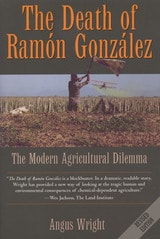
The Death of Ramón González
The Modern Agricultural DilemmaBy Angus Wright
University of Texas Press, 2005
The Death of Ramón González has become a benchmark book since its publication in 1990. It has been taught in undergraduate and graduate courses in every social science discipline, sustainable and alternative agriculture, environmental studies, ecology, ethnic studies, public health, and Mexican, Latin American, and environmental history. The book has also been used at the University of California-Santa Cruz as a model of interdisciplinary work and at the University of Iowa as a model of fine journalism, and has inspired numerous other books, theses, films, and investigative journalism pieces.
This revised edition of The Death of Ramón González updates the science and politics of pesticides and agricultural development. In a new afterword, Angus Wright reconsiders the book's central ideas within the context of globalization, trade liberalization, and NAFTA, showing that in many ways what he called "the modern agricultural dilemma" should now be thought of as a "twenty-first century dilemma" that involves far more than agriculture.
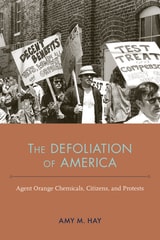
The Defoliation of America
Agent Orange Chemicals, Citizens, and ProtestsAmy M. Hay
University of Alabama Press, 2022
Examines the domestic and international use of phenoxy herbicides by the United States in the mid-twentieth century.
In The Defoliation of America: Agent Orange Chemicals, Citizens, and Protests, Amy M. Hay profiles the attitudes, understandings, and motivations of grassroots activists who rose to fight the use of phenoxy herbicides, or Agent Orange chemicals as they are commonly known, in various aspects of American life during the post-WWII era. Hay focuses her analysis on citizen responses to illuminate how regulatory policies were understood, challenged, and negotiated, contributing to a growing body of research on chemical regulatory policies, risk society, and hazardous chemicals. This volume uncovers new understandings about the authority of the state and its obligation to society, the role of scientific authority and expertise, and the protests made by various groups of citizens.
First introduced in 1946, phenoxy herbicides mimic hormones in broadleaf plants, causing them to “grow to death” while grass, grains, and other monocots remain unaffected. By the 1950s, millions of pounds of these chemicals were produced annually for use in brush control, weed eradication, forest management, and other agricultural applications. Pockets of skepticism and resistance began to appear by the late 1950s, and the trend intensified after 1962 when Rachel Carson’s Silent Spring directed mainstream attention to the harm modern chemicals were causing in the natural world. It wasn’t until the Vietnam War, however, when nearly 19 million gallons of Agent Orange and related herbicides were sprayed to clear the canopy and destroy crops in Southeast Asia, that the long-term damage associated with this group of chemicals began to attract widespread attention and alarm.
Using a wide array of sources and an interdisciplinary approach, Hay contributes to the robust fields of chemical toxicity, regulation, environmental management, and public health. This study of the scientists, health and environmental activists, and veterans who fought US chemical regulatory policies and practices reveals the mechanisms, obligations, and constraints of state and scientific authority in mid-twentieth-century America. Hay also shows how these disparate and mostly forgotten citizen groups challenged the political consensus and contested government and industry narratives of chemical safety.
The Devil's Fruit
Farmworkers, Health, and Environmental JusticeDvera I. Saxton
Rutgers University Press, 2021
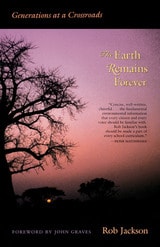
The Earth Remains Forever
Generations at a CrossroadsBy Rob Jackson
University of Texas Press, 2002
Writing especially for people who've tuned out the environmental debate, Rob Jackson persuasively argues that we're at a crucial turning point in environmental history, where choices we make now will determine the quality of life into the unforeseeable future. Laying out the scientific facts in plain language and with flashes of humor, he shows how the escalation of population growth and resource consumption in the twentieth century caused problems from ozone depletion to global warming, habitat destruction, and biodiversity loss. At the same time, however, he highlights ongoing solutions to these problems and ways in which we can create a sustainable future for subsequent generations and all life on earth. His urgent message is not that we've already failed, but that we can succeed.
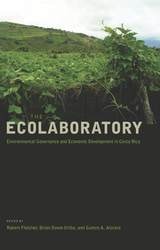
The Ecolaboratory
Environmental Governance and Economic Development in Costa RicaEdited by Robert Fletcher, Brian Dowd-Uribe, and Guntra A. Aistara
University of Arizona Press, 2020
This book explores these challenges, how Costa Rica is responding to them, and the lessons this holds for current and future trends regarding environmental governance and sustainable development. It provides the first comprehensive assessment of successes and challenges as they play out in a variety of sectors, including agricultural development, biodiversity conservation, water management, resource extraction, and climate change policy.
By framing Costa Rica as an “ecolaboratory,” the contributors in this volume examine the lessons learned and offer a path for the future of sustainable development research and policy in Central America and beyond.
The Ecology of Others
Philippe Descola
Prickly Paradigm Press, 2013
Since the end of the nineteenth century, the division between nature and culture has been fundamental to Western thought. In this groundbreaking work, renowned anthropologist Philippe Descola seeks to break down this divide, arguing for a departure from the anthropocentric model and its rigid dualistic conception of nature and culture as distinct phenomena. In its stead, Descola proposes a radical new worldview, in which beings and objects, human and nonhuman, are understood through the complex relationships that they possess with one another.
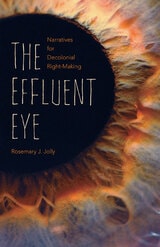
The Effluent Eye
Narratives for Decolonial Right-MakingRosemary J. Jolly
University of Minnesota Press, 2024
Why human rights don’t work
In The Effluent Eye, Rosemary J. Jolly argues for the decolonization of human rights, attributing their failure not simply to state and institutional malfeasance but to the very concept of human rights as anthropocentric—and, therefore, fatally shortsighted. In an engaging mix of literary and cultural criticism, Indigenous and Black critique, and substantive forays into the medical humanities, Jolly proposes right-making in the demise of human rights.
Using what she calls an “effluent eye,” Jolly draws on “Fifth Wave” structural public health to confront the concept of human rights—one of the most powerful and widely entrenched liberal ideas. She builds on Indigenous sovereignty work from authors such as Robin Wall Kimmerer, Leanne Betasamosake Simpson, and Mark Rifkin as well as the littoral development in Black studies from Christine Sharpe, Saidiya Hartman, and Tiffany Lethabo King to engage decolonial thinking on a range of urgent topics such as pandemic history and grief; gender-based violence and sexual assault; and the connections between colonial capitalism and substance abuse, the Anthropocene, and climate change.
Combining witnessed experience with an array of decolonial texts, Jolly argues for an effluent form of reading that begins with the understanding that the granting of “rights” to individuals is meaningless in a world compromised by pollution, poverty, and successive pandemics.
Retail e-book files for this title are screen-reader friendly.
The Environment and the People in American Cities, 1600s-1900s
Disorder, Inequality, and Social ChangeDorceta E. Taylor
Duke University Press, 2009
Taylor traces the progression of several major thrusts in urban environmental activism, including the alleviation of poverty; sanitary reform and public health; safe, affordable, and adequate housing; parks, playgrounds, and open space; occupational health and safety; consumer protection (food and product safety); and land use and urban planning. At the same time, she presents a historical analysis of the ways race, class, and gender shaped experiences and perceptions of the environment as well as environmental activism and the construction of environmental discourses. Throughout her analysis, Taylor illuminates connections between the social and environmental conflicts of the past and those of the present. She describes the displacement of people of color for the production of natural open space for the white and wealthy, the close proximity between garbage and communities of color in early America, the cozy relationship between middle-class environmentalists and the business community, and the continuous resistance against environmental inequalities on the part of ordinary residents from marginal communities.
The Extractive Zone
Social Ecologies and Decolonial PerspectivesMacarena Gómez-Barris
Duke University Press, 2017
The Fire Ant Wars
Nature, Science, and Public Policy in Twentieth-Century AmericaJoshua Blu Buhs
University of Chicago Press, 2004
With political intrigue, environmental tragedy, and such figures as Rachel Carson and E. O. Wilson, The Fire Ant Wars is a grippingly perceptive tale of changing social attitudes and scientific practices. Tracing the political and scientific eradication campaigns, Joshua Buhs's bracing study uses the saga as a means to consider twentieth-century American concepts of nature and environmental stewardship. In telling the story, Buhs explores how human concepts of nature evolve and how these ideas affect the natural and social worlds.
Spotlighting a particular issue to discuss larger questions of science, public perceptions, and public policy—from pre-environmental awareness to the activist years of the early environmental movement—The Fire Ant Wars will appeal to historians of science, environmentalists, and biologists alike.
The Garden at the End of Time
Getting By in the Age of Climate ChangeJohn Hanson Mitchell
University of Massachusetts Press, 2025
John Hanson Mitchell has long written about his garden outside of Boston, and about the plants and animals with whom he shares this land. In 2022, the United Nations and others started reporting the true severity of the climate crisis as the Earth passed a point of no return. All across the globe it was the worst year on record for climate-related disasters, including extinctions, deadly floods, massive fires, and dramatic droughts, all of which have worsened since that year. Mitchell, like so many, felt overwhelmed. He looked to the story of Voltaire’s Candide, and settled on the famous aphorism from that book: “We must cultivate our garden.”
The Garden at the End of Time features Mitchell’s trademark blend of science, literature, and anecdote as he processes both the information he is reading from various sources and what it prompts him to do in his own small corner of the world. The story that unfolds is one of Mitchell diversifying his plantings; fighting what he sees as unnecessary local development; walking through and observing changes in the wild lands nearby; continuing to read the news from around the world; and meditating on other moments, real and imagined, when people sought refuge even as they did their part to improve a personally and collectively stressful situation.
Readers discover the impossibility of separating gardening from global warming, while also seeing the solace that exposure to plants can offer, in addition to their contribution to carbon consumption. With gravitas, kindness, and wit, Mitchell offers a model for maintaining a connection to nature even as it reels from manmade threats.

The Green Economy
Environment, Sustainable Development and the Politics of the FutureMichael Jacobs
Pluto Press, 1992
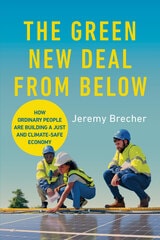
The Green New Deal from Below
How Ordinary People Are Building a Just and Climate-Safe EconomyJeremy Brecher
University of Illinois Press, 2024
A visionary program for national renewal, the Green New Deal aims to protect the earth’s climate while creating good jobs, reducing injustice, and eliminating poverty. Its core principle is to use the necessity for climate protection as a basis for realizing full employment and social justice.
Jeremy Brecher goes beyond the national headlines and introduces readers to the community, municipal, county, state, tribal, and industry efforts advancing the Green New Deal across the United States. Brecher illustrates how such programs from below do the valuable work of building constituencies and providing proofs of concept for new ideas and initiatives. Block by block, these activities have come together to form a Green New Deal built on a strong foundation of small-scale movements and grassroots energy.
A call for hope and a better tomorrow, The Green New Deal from Below offers a blueprint for reconstructing society on new principles to avoid catastrophic climate change.

The Guitar
Tracing the Grain Back to the TreeChris Gibson and Andrew Warren
University of Chicago Press, 2021
Guitars inspire cult-like devotion: an aficionado can tell you precisely when and where their favorite instrument was made, the wood it is made from, and that wood’s unique effect on the instrument’s sound. In The Guitar, Chris Gibson and Andrew Warren follow that fascination around the globe as they trace guitars all the way back to the tree. The authors take us to guitar factories, port cities, log booms, remote sawmills, Indigenous lands, and distant rainforests, on a quest for behind-the-scenes stories and insights into how guitars are made, where the much-cherished guitar timbers ultimately come from, and the people and skills that craft those timbers along the way.
Gibson and Warren interview hundreds of people to give us a first-hand account of the ins and outs of production methods, timber milling, and forest custodianship in diverse corners of the world, including the Pacific Northwest, Madagascar, Spain, Brazil, Germany, Japan, China, Hawaii, and Australia. They unlock surprising insights into longer arcs of world history: on the human exploitation of nature, colonialism, industrial capitalism, cultural tensions, and seismic upheavals. But the authors also strike a hopeful note, offering a parable of wider resonance—of the incredible but underappreciated skill and care that goes into growing forests and felling trees, milling timber, and making enchanting musical instruments, set against the human tendency to reform our use (and abuse) of natural resources only when it may be too late. The Guitar promises to resonate with anyone who has ever fallen in love with a guitar.
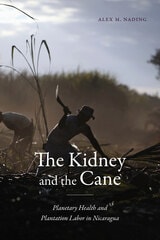
The Kidney and the Cane
Planetary Health and Plantation Labor in NicaraguaAlex M. Nading
Duke University Press, 2025
The Land of the Dead Is Open for Business
Jacob Strautmann
Four Way Books, 2020
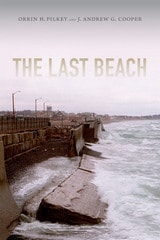
The Last Beach
Orrin H. Pilkey and J. Andrew G. Cooper
Duke University Press, 2014
After explaining beaches as dynamic ecosystems, Pilkey and Cooper assess the harm done by dense oceanfront development accompanied by the construction of massive seawalls to protect new buildings from a shoreline that encroaches as sea levels rise. They discuss the toll taken by sand mining, trash that washes up on beaches, and pollution, which has contaminated not only the water but also, surprisingly, the sand. Acknowledging the challenge of reconciling our actions with our love of beaches, the geologists offer suggestions for reversing course, insisting that given the space, beaches can take care of themselves and provide us with multiple benefits.
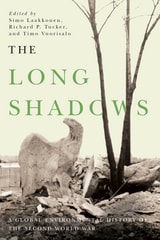
The Long Shadows
A Global Environmental History of the Second World WarSimo Laakkonen
Oregon State University Press, 2017
The Long Shadows is the first book-length work to offer global perspectives on the environmental history of World War II. Based on long-term research, the selected articles represent the best available studies in different fields and countries. With contributions touching on Europe, America, Asia, and Africa, the book has a truly global approach.
While other edited volumes on the environmental history of warfare discuss multiple wars and various time periods, The Long Shadows is devoted exclusively to World War II and its profound and lasting impact on global environments, encompassing polar, temperate and tropical ecological zones. Divided into three main sections, the first offers an introduction to and holistic overview of the War. The second section of the book examines the social and environmental impacts of the conflict, while the third focuses on the history and legacy of resource extraction. A fourth and final section offers conclusions and hypotheses. Numerous themes and topics are explored in these previously unpublished essays, including the new and innovative field of acoustic ecology, the environmental policies of the Third Reich, Japanese imperialism and marine resources, and the control of Typhus fever.
Aimed at researchers and students in the fields of environmental history, military history, and global history, The Long Shadows will also appeal to a general audience interested in the environmental impact of the greatest military conflict in the history of the world.
CONTRIBUTORS
Outi Ampuja
Alla Bolotova
Chris Boyer
Matthew Evenden
Paul Josephson
Simo Laakkonen
Helene Laurent
Carol MacLennan
Gregory Maddox
Ilmo Massa
Evan Mawdsley
Micah Muscolino
William Tsutsui
Richard Tucker
Timo Vuorisalo
Anna-Katharina Wöbse
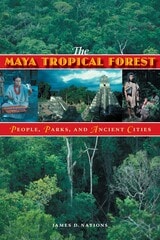
The Maya Tropical Forest
People, Parks, and Ancient CitiesBy James D. Nations
University of Texas Press, 2006
The Maya Tropical Forest, which occupies the lowlands of southern Mexico, Guatemala, and Belize, is the closest rainforest to the United States and one of the most popular tourist destinations in the Western Hemisphere. It has been home to the Maya peoples for nearly four millennia, starting around 1800 BC. Ancient cities in the rainforest such as Palenque, Yaxchilan, Tikal, and Caracol draw thousands of tourists and scholars seeking to learn more about the prehistoric Maya. Their contemporary descendants, the modern Maya, utilize the forest's natural resources in village life and international trade, while striving to protect their homeland from deforestation and environmental degradation.
Writing for both visitors and conservationists, James Nations tells the fascinating story of how ancient and modern Maya peoples have used and guarded the rich natural resources of the Maya Tropical Forest. He opens with a natural history that profiles the forest's significant animals and plants. Nations then describes the Maya peoples, biological preserves, and major archaeological sites in Mexico, Guatemala, and Belize. Drawing on more than twenty-five years of conservation work in the Maya Tropical Forest, Nations tells first-hand stories of the creation of national parks and other protected areas to safeguard the region's natural resources and archaeological heritage. He concludes with an expert assessment of the forest's future in which he calls for expanded archaeological tourism to create an ecologically sustainable economic base for the region.
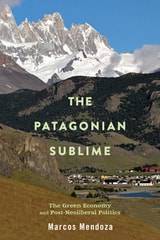
The Patagonian Sublime
The Green Economy and Post-Neoliberal PoliticsMendoza, Marcos
Rutgers University Press, 2019
Mendoza explores the fraught intersection of the green economy with the New Left politics of the Néstor Kirchner and Cristina Fernández de Kirchner governments. Mendoza documents the strategies of capitalist development, national representation, and political rule embedded in the “green productivist” agenda pursued by Kirchner and Fernández. Mendoza shows how Andean Patagonian communities have responded to the challenges of community-based conservation, the fashioning of wilderness zones, and the drive to create place-based monopolies that allow ecotourism destinations to compete in the global consumer economy.
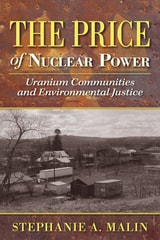
The Price of Nuclear Power
Uranium Communities and Environmental JusticeMalin, Stephanie A.
Rutgers University Press, 2015
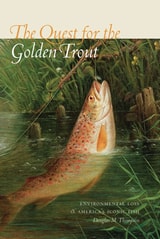
The Quest for the Golden Trout
Environmental Loss and America’s Iconic FishDouglas M. Thompson
University Press of New England, 2013
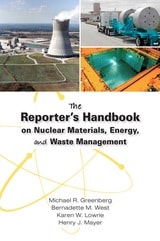
The Reporter's Handbook on Nuclear Materials, Energy & Waste Management
Michael R. Greenberg
Vanderbilt University Press, 2009
Each "brief" is based on interviews with named scientists, engineers, or administrators in a nuclear specialty, and each has been reviewed by a team of independent experts. The objective is not to make a case for or against nuclear-related technologies, but rather to provide definitive background information. (The approach is based on that of The Reporter's Environmental Handbook, published in 1988, which won a special award for journalism from the Sigma Delta Chi Society of professional journalists.)
Other features of the book include: a glossary of hundreds of terms, an introduction to risk assessment, environmental and economic impacts, and public perceptions, an article by an experienced reporter with recommendations about how to cover nuclear issues, quick guides to the history of nuclear power in the United States, important federal legislation and regulations, nuclear position statements, and key organizations, print and electronic resources.
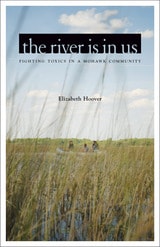
The River Is in Us
Fighting Toxics in a Mohawk CommunityElizabeth Hoover
University of Minnesota Press, 2017
Winner of the Labriola Center American Indian National Book Award 2017
Mohawk midwife Katsi Cook lives in Akwesasne, an indigenous community in upstate New York that is downwind and downstream from three Superfund sites. For years she witnessed elevated rates of miscarriages, birth defects, and cancer in her town, ultimately drawing connections between environmental contamination and these maladies. When she brought her findings to environmental health researchers, Cook sparked the United States’ first large-scale community-based participatory research project.
In The River Is in Us, author Elizabeth Hoover takes us deep into this remarkable community that has partnered with scientists and developed grassroots programs to fight the contamination of its lands and reclaim its health and culture. Through in-depth research into archives, newspapers, and public meetings, as well as numerous interviews with community members and scientists, Hoover shows the exact efforts taken by Akwesasne’s massive research project and the grassroots efforts to preserve the Native culture and lands. She also documents how contaminants have altered tribal life, including changes to the Mohawk fishing culture and the rise of diabetes in Akwesasne.
Featuring community members such as farmers, health-care providers, area leaders, and environmental specialists, while rigorously evaluating the efficacy of tribal efforts to preserve its culture and protect its health, The River Is in Us offers important lessons for improving environmental health research and health care, plus detailed insights into the struggles and methods of indigenous groups. This moving, uplifting book is an essential read for anyone interested in Native Americans, social justice, and the pollutants contaminating our food, water, and bodies.
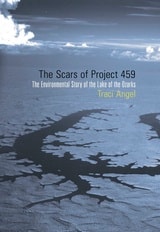
The Scars of Project 459
The Environmental Story of the Lake of the OzarksTraci Angel
University of Arkansas Press, 2014
The Secure and the Dispossessed
How the Military and Corporations Are Shaping a Climate-Changed WorldEdited by Nick Buxton and Ben Hayes
Pluto Press, 2015
The Secure and the Dispossessed gathers together essays by high-profile journalists, academics, and activists, including Christian Parenti, Nafeez Ahmed, and policy analyst Oscar Reyes. They offer a close and critical guide to questions about climate change, showing how they converge with questions about international security and global economic power, as new natural resources become available. This book is an essential guide to the key environmental and political debates which will shape future policies and elections: how managing the world’s supply of oil and gas can be squared with the environmental impact of our continued reliance on those very same fossil fuels.
The Small Matter of Suing Chevron
Suzana Sawyer
Duke University Press, 2022
The Story of N
A Social History of the Nitrogen Cycle and the Challenge of SustainabilityGorman, Hugh S.
Rutgers University Press, 2013
In The Story of N, Hugh S. Gorman analyzes the notion of sustainability from a fresh perspective—the integration of human activities with the biogeochemical cycling of nitrogen—and provides a supportive alternative to studying sustainability through the lens of climate change and the cycling of carbon. It is the first book to examine the social processes by which industrial societies learned to bypass a fundamental ecological limit and, later, began addressing the resulting concerns by establishing limits of their own
The book is organized into three parts. Part I, “The Knowledge of Nature,” explores the emergence of the nitrogen cycle before humans arrived on the scene and the changes that occurred as stationary agricultural societies took root. Part II, “Learning to Bypass an Ecological Limit,” examines the role of science and market capitalism in accelerating the pace of innovation, eventually allowing humans to bypass the activity of nitrogen-fixing bacteria. Part III, “Learning to Establish Human-Defined Limits,” covers the twentieth-century response to the nitrogen-related concerns that emerged as more nitrogenous compounds flowed into the environment. A concluding chapter, “The Challenge of Sustainability,” places the entire story in the context of constructing an ecological economy in which innovations that contribute to sustainable practices are rewarded.
The Sustainable Learning Community
One University’s Journey to the FutureJohn Aber
University of New Hampshire Press, 2009

The Sustainable Library's Cookbook
Raymond Pun
Assoc of College & Research Libraries, 2019
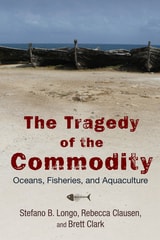
The Tragedy of the Commodity
Oceans, Fisheries, and AquacultureLongo, Stefano B
Rutgers University Press, 2015
Although humans have long depended on oceans and aquatic ecosystems for sustenance and trade, only recently has human influence on these resources dramatically increased, transforming and undermining oceanic environments throughout the world. Marine ecosystems are in a crisis that is global in scope, rapid in pace, and colossal in scale. In The Tragedy of the Commodity, sociologists Stefano B. Longo, Rebecca Clausen, and Brett Clark explore the role human influence plays in this crisis, highlighting the social and economic forces that are at the heart of this looming ecological problem.
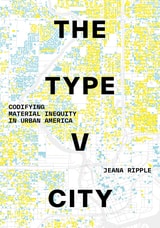
The Type V City
Codifying Material Inequity in Urban AmericaJeana Ripple
University of Texas Press, 2025
How building codes shaped material, social, and environmental landscapes in American cities.
Almost every American city contains neighborhoods dominated by wood frame construction—light, cheap, combustible, and requiring the lowest upfront investment of labor and material in the building industry. Known as a Type V (five) construction in the terminology of building codes, these buildings became ubiquitous in the American urban landscape thanks to the abundance of timber, housing affordability aspirations, and the adoption of a uniform code.
In The Type V City, Jeana Ripple examines the social and spatial history of building codes and material patterns in five cities—New York, Tampa, Chicago, Philadelphia, and Seattle—to reframe the stories of America’s building priorities, methods, negotiations, and assumptions. By examining the development of building materials and codes alongside the environmental, social, economic, and political context of each city’s development, Ripple reveals previously overlooked connections between the power structures underpinning regulatory evolution and the impacts that lay just beyond the frame of city builders’ priorities. Handsomely illustrated and informed by both archival research and insights enabled by contemporary data analysis, The Type V City critiques the homogenous construction practices underlying US urbanization and raises pointed questions for future generations of data-driven city planners and architects.
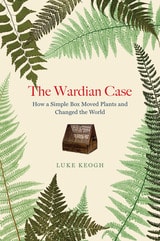
The Wardian Case
How a Simple Box Moved Plants and Changed the WorldLuke Keogh
University of Chicago Press, 2020
Roses, jasmine, fuchsia, chrysanthemums, and rhododendrons bloom in gardens across the world, and yet many of the most common varieties have roots in Asia. How is this global flowering possible? In 1829, surgeon and amateur naturalist Nathaniel Bagshaw Ward placed soil, dried leaves, and the pupa of a sphinx moth into a sealed glass bottle, intending to observe the moth hatch. But when a fern and meadow grass sprouted from the soil, he accidentally discovered that plants enclosed in glass containers could survive for long periods without watering. After four years of experimentation in his London home, Ward created traveling glazed cases that would be able to transport plants around the world. Following a test run from London to Sydney, Ward was proven correct: the Wardian case was born, and the botanical makeup of the world’s flora was forever changed.
In our technologically advanced and globalized contemporary world, it is easy to forget that not long ago it was extremely difficult to transfer plants from place to place, as they often died from mishandling, cold weather, and ocean salt spray. In this first book on the Wardian case, Luke Keogh leads us across centuries and seas to show that Ward’s invention spurred a revolution in the movement of plants—and that many of the repercussions of that revolution are still with us, from new industries to invasive plant species. From the early days of rubber, banana, tea, and cinchona cultivation—the last used in the production of the malaria drug quinine—to the collecting of beautiful and exotic flora like orchids in the first great greenhouses of the United States Botanic Garden in Washington, DC, and England’s Royal Botanic Gardens, Kew, the Wardian case transformed the world’s plant communities, fueled the commercial nursery trade and late nineteenth-century imperialism, and forever altered the global environment.
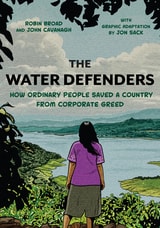
The Water Defenders
How Ordinary People Saved a Country from Corporate GreedRobin Broad and John Cavanagh with Graphic Adaptation by Jon Sack
The Ohio State University Press, 2026
Initially excited by the company’s promises of jobs and prosperity, farmer Vidalina Morales, brothers Marcelo and Miguel Rivera, and others soon realized that the trade-off was catastrophic contamination of El Salvador’s main source of fresh water. Facing corporate machinations and violence, the ordinary people of San Isidro and surrounding communities built a transnational coalition that prevailed over powerful adversaries to score an environmental victory with worldwide repercussions.
Broad and Cavanagh draw on over a decade of research, interviews, and experience as allies and experts in international development to recount the harrowing saga. A blueprint for civic bravery and local-to-global activism, as well as a rich history of Central America’s political conflicts and people’s fights against environmental and economic exploitation, this story will inspire anyone who feels helpless against corporate malfeasance.
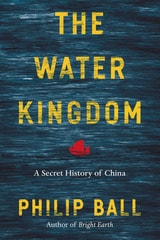
The Water Kingdom
A Secret History of ChinaPhilip Ball
University of Chicago Press, 2017
Water, Ball shows, is a key that unlocks much of Chinese culture. In The Water Kingdom, he takes us on a grand journey through China’s past and present, showing how the complexity and energy of the country and its history repeatedly come back to the challenges, opportunities, and inspiration provided by the waterways. Drawing on stories from travelers and explorers, poets and painters, bureaucrats and activists, all of whom have been influenced by an environment shaped and permeated by water, Ball explores how the ubiquitous relationship of the Chinese people to water has made it an enduring metaphor for philosophical thought and artistic expression. From the Han emperors to Mao, the ability to manage the waters ― to provide irrigation and defend against floods ― was a barometer of political legitimacy, often resulting in engineering works on a gigantic scale. It is a struggle that continues today, as the strain of economic growth on water resources may be the greatest threat to China’s future.
The Water Kingdom offers an unusual and fascinating history, uncovering just how much of China’s art, politics, and outlook have been defined by the links between humanity and nature.
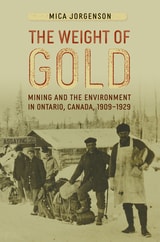
The Weight of Gold
Mining and the Environment in Ontario, Canada, 1909-1929Mica Jorgenson
University of Nevada Press, 2023
Mining in North America has long been criticized for its impact on the natural environment. Mica Jorgenson’s The Weight of Gold explores the history of Ontario, Canada’s rise to prominence in the gold mining industry, while detailing a series of environmental crises related to extraction activities. In Ontario in 1909, the discovery of exceptionally rich hard rock gold deposits in the Abitibi region in the north precipitated industrial development modeled on precedents in Australia, South Africa, and the United States. By the late 1920s, Ontario’s mines had reached their maturity, and in 1928, Minister of Mines Charles McRae called Canada “the mineral treasure house to [the] world.”
Mining companies increasingly depended upon their ability to redistribute the burdens of mining onto surrounding communities—a strategy they continue to use today—both at home and abroad. Jorgenson connects Canadian gold mining to its international context, revealing that Ontario’s gold mines informed extractive knowledge which would go on to shape Canada’s mining industry over the next century.
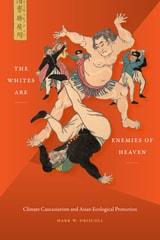
The Whites Are Enemies of Heaven
Climate Caucasianism and Asian Ecological ProtectionMark W. Driscoll
Duke University Press, 2020
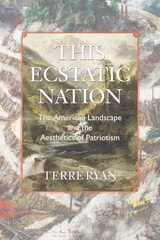
This Ecstatic Nation
The American Landscape and the Aesthetics of PatriotismTerre Ryan
University of Massachusetts Press, 2011
Terre Ryan examines this phenomenon by exploring the overlapping trails of national mythology, landscape aesthetics, patriotic discourse, and public policy. Tracing her journeys around bombing grounds in Nevada, logging sites in Oregon, and energy fields in Wyoming, she argues that business and government agencies often frame commercial projects and national myths according to nineteenth-century beliefs about landscape and bounty. Advertisements and political promotional materials following this aesthetic framework perpetuate frontier-era ideas about the environment as commodity, scenery, and cultural trashlands. Transmitted through all types of media, nineteenth-century perspectives on landscape continue to inform mainstream perceptions of the environment, environmental policies, and representations of American patriotism.
Combining personal narrative with factual reportage, political and cultural critique, and historical analysis, Ryan reframes the images we see every day and places them into a larger national narrative.
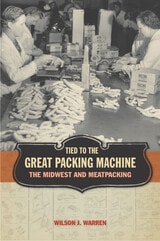
Tied to the Great Packing Machine
The Midwest and MeatpackingWilson J. Warren
University of Iowa Press, 2007
Writing from the vantage point of twenty-five years of extensive research, Warren analyzes the evolution of the packing industry from its early period, dominated by the big terminal markets, through the development of new marketing and technical innovations that transformed the ways animals were gathered, slaughtered, and processed and the final products were distributed. In addition, he concentrates on such cultural impacts as ethnic and racial variations, labor unions, gender issues, and changes in Americans’ attitudes toward the ethics of animal slaughter and patterns of meat consumption and such environmental problems as site-point pollution and microbe contamination, ending with a stimulating discussion of the future of American meatpacking.
Providing an excellent and well-referenced analysis within a regional and temporal framework that ensures a fresh perspective, Tied to the Great Packing Machine is a dynamic narrative that contributes to a fuller understanding of the historical context and contemporary concerns of an extremely important industry.
Touching This Leviathan
Peter Wayne Moe
Oregon State University Press, 2021
Touching This Leviathan asks how we might come to know the unknowable—in this case, whales, animals so large yet so elusive, revealing just a sliver of back, a glimpse of a fluke, or a split-second breach before diving away.
Whale books often sit within disciplinary silos. Touching This Leviathan starts a conversation among them. Drawing on biology, theology, natural history, literature, and writing studies, Peter Wayne Moe offers a deep dive into the alluring and impalpable mysteries of Earth’s largest mammal.
Entertaining, thought-provoking, and swimming with intelligence and wit, Touching is Leviathan is creative nonfiction that gestures toward science and literary criticism as it invites readers into the belly of the whale.