Results by title
60 books match the query 'Era' and 17 start with t
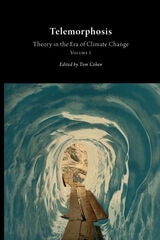
Telemorphosis
Theory in the Era of Climate ChangeTom Cohen
Michigan Publishing Services, 2012
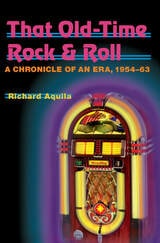
That Old-Time Rock & Roll
A Chronicle of an Era, 1954-63Richard Aquila
University of Illinois Press, 1989
Elvis Presley and Bill Haley. Sam Cooke and the Shirelles. The Crows and the Chords. American Bandstand and Motown. From its first rumblings in the outland alphabet soup of R&B and C&W, rock & roll music promised to change the world--and did it.
Combining social history with a treasure trove of trivia, Richard Aquila unleashes the excitement of rock's first decade and shows how the music reflected American life from the mid-1950s through the dawn of Beatlemania. His year-by-year timelines and a photo essay place the music in historical perspective by linking artists and their hits to the news stories, movies, TV shows, fads, and lifestyles. In addition, he provides a concise biographical dictionary of the performers who made the charts between 1954 and 1963, along with the label and chart position of each of their hit songs.
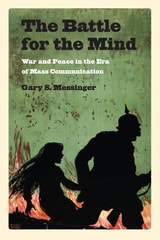
The Battle for the Mind
War and Peace in the Era of Mass CommunicationGary S. Messinger
University of Massachusetts Press, 2011
Most people typically think of armed conflict in physical terms, involving guns and bombs, ships and planes, tanks and missiles. But today, because of mass communication, war and the effort to prevent it are increasingly dependent on non-physical factors—the capacity to persuade combatants and citizens to engage in violence or avoid it, and the packaging of the information on which decision making is based. This book explores the many ways that mass communication has revolutionized international relations, whether the aim is to make war effectively or to prevent it.
Gary Messinger shows that over the last 150 years a succession of breakthroughs in the realm of media has reshaped the making of war and peace. Along with mass newspapers, magazines, books, motion pictures, radio, television, computer software, and telecommunication satellites comes an array of strategies for exploiting these media to control popular beliefs and emotions. Images of war now arrive in many forms and reach billions of people simultaneously. Political and military leaders must react to crowd impulses that sweep around the globe. Nation-states and nongovernmental groups, including terrorists, use mass communication to spread their portrayals of reality.
Drawing on a wide range of media products, from books and articles to films and television programs, as well as his own research in the field of propaganda studies, Messinger offers a fresh and comprehensive overview. He skillfully charts the path that has led us to our current situation and suggests where we might go next.
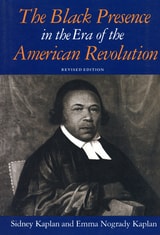
The Black Presence in the Era of the American Revolution
Sidney Kaplan and Emma Nogrady Kaplan
University of Massachusetts Press, 1989
The book is a revised and expanded edition of the authors' classic catalog that accompanied a pioneering exhibition mounted in 1973 by the National Portrait Gallery.
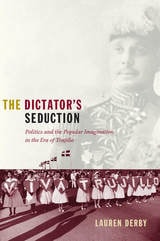
The Dictator's Seduction
Politics and the Popular Imagination in the Era of TrujilloLauren Derby
Duke University Press, 2009
Drawing on previously untapped documents in the Trujillo National Archives and interviews with Dominicans who recall life under the dictator, Derby emphasizes the role that public ritual played in Trujillo’s exercise of power. His regime included the people in affairs of state on a massive scale as never before. Derby pays particular attention to how events and projects were received by the public as she analyzes parades and rallies, the rebuilding of Santo Domingo following a major hurricane, and the staging of a year-long celebration marking the twenty-fifth year of Trujillo’s regime. She looks at representations of Trujillo, exploring how claims that he embodied the popular barrio antihero the tíguere (tiger) stoked a fantasy of upward mobility and how a rumor that he had a personal guardian angel suggested he was uniquely protected from his enemies. The Dictator’s Seduction sheds new light on the cultural contrivances of autocratic power.
The Era of Education
The Presidents and the Schools, 1965-2001Lawrence J. McAndrews
University of Illinois Press, 2005

The Era of Great Disasters
Japan and Its Three Major EarthquakesMakoto Iokibe; Translated by Tony Gonzalez
University of Michigan Press, 2020
The Grit and the Grind
Building High-Performing Education Systems in an Era of PolarizationJoshua L. Glazer, Cori Egan, William R. Berry, and Amar Fattal
University of Chicago Press, 2026
Offers a much-needed perspective on the connections between community, policymaking, and the improvement of underperforming schools.
School reform remains a fraught issue in the United States as educators, policymakers, and communities strive to improve outcomes for all students. In The Grit and the Grind, Joshua L. Glazer, Cori Egan, William R. Berry, and Amar Fattal examine two ambitious efforts to improve the lowest-performing schools in Memphis, Tennessee. The book offers a rare inside look at the political, organizational, and educational challenges of improving schools at scale.
The two initiatives, the Achievement School District (ASD) and the Shelby County Innovation Zone (iZone), shared a common goal but pursued it through fundamentally different approaches. The ASD was a state-run turnaround district that removed schools from local control and placed them under the management of charter organizations. By contrast, the iZone operated through existing district institutions, relying on local educators and leaders to drive improvement. Despite common goals and substantial resources, the reforms developed in strikingly different ways. Drawing on years of research in Memphis, the authors move beyond familiar debates about charter schools and district reform to explore a deeper question: What does it take to improve schools in complex, pluralistic, and contested democratic societies? Their analysis reveals that educational improvement is simultaneously professional, organizational, and political. Efforts to enhance educational opportunities depend not only on curriculum, leadership, and expertise, but also on the legitimacy, trust, and community support that allow educational systems to learn from experience and sustain improvement.
At once a study of reform, organizations, and politics, The Grit and the Grind challenges simple explanations of success and failure, showing that meaningful improvement is forged through the slow, uncertain work of building systems capable of earning community trust while continuously strengthening teaching and learning.
The Powers that Punish
Prison and Politics in the Era of the "Big House", 1920-1955Charles Bright
University of Michigan Press, 1996
In a pathbreaking study of a major state prison, Michigan's Jackson State Penitentiary during the middle years of this century, Charles Bright addresses several aspects of the history and theory of punishment. The study is an institutional history of an American penitentiary, concerned with how a carceral regime was organized and maintained, how prisoners were treated and involved in the creation of a regime of order and how penal practices were explained and defended in public. In addition, it is a meditation upon punishment in modern society and a critical engagement with prevailing theories of punishment coming out of liberal, Marxist and post structuralist traditions. Deploying theory critically in a historic narrative, it applies new, relational theories of power to political institutions and practices. Finally, in studying the history of the Jackson prison, Bright provides a rich account, full of villains and a few heroes, of state politics in Michigan during a period of rapid transition between the 1920s to the 1950s.
The book will be of direct relevance to criminologists and scholars of punishment, and to historians concerned with the history of punishment and prisons in the United States. It will also be useful to political scientists and historians concerned with exploring new approaches to the study of power and with the transformation of state politics in the 1930s and 1940s. Finally Bright tells a story which will fascinate students of modern Michigan history.
Charles Bright is a historian and Lecturer at the Residential College of the University of Michigan.
The University and the People
Envisioning American Higher Education in an Era of Populist ProtestScott M. Gelber
University of Wisconsin Press, 2011
The University and the People chronicles the influence of Populism—a powerful agrarian movement—on public higher education in the late nineteenth century. Revisiting this pivotal era in the history of the American state university, Scott Gelber demonstrates that Populists expressed a surprising degree of enthusiasm for institutions of higher learning. More fundamentally, he argues that the mission of the state university, as we understand it today, evolved from a fractious but productive relationship between public demands and academic authority.
Populists attacked a variety of elites—professionals, executives, scholars—and seemed to confirm academia’s fear of anti-intellectual public oversight. The movement’s vision of the state university highlighted deep tensions in American attitudes toward meritocracy and expertise. Yet Populists also promoted state-supported higher education, with the aims of educating the sons (and sometimes daughters) of ordinary citizens, blurring status distinctions, and promoting civic engagement. Accessibility, utilitarianism, and public service were the bywords of Populist journalists, legislators, trustees, and sympathetic professors. These “academic populists” encouraged state universities to reckon with egalitarian perspectives on admissions, financial aid, curricula, and research. And despite their critiques of college “ivory towers,” Populists supported the humanities and social sciences, tolerated a degree of ideological dissent, and lobbied for record-breaking appropriations for state institutions.
The View from the Helm
Leading the American University during an Era of ChangeJames J. Duderstadt
University of Michigan Press, 2009
Widely regarded as one of the most active and publicly engaged university presidents in modern academia, Duderstadt—who led the University of Michigan from 1988 to 1996—presided over a period of enormous change, not only for his institution, but for universities across the country. His presidency was a time of growth and conflict: of sweeping new affirmative-action and equal-opportunity programs, significant financial expansion, and reenergized student activism on issues from apartheid to codes of student conduct.
Under James Duderstadt’s stewardship, Michigan reaffirmed its reputation as a trailblazer among universities. Part memoir, part history, part commentary, The View from the Helm extracts general lessons from his experiences at the forefront of change in higher education, offering current and future administrators a primer on academic leadership and venturing bold ideas on how higher education should be steered into the twenty-first century.

Theater and Democracy in an Era of Immersion
James R. Ball III
University of Michigan Press, 2027
From theater to virtual reality, we find ourselves making sense of imagined worlds that surround us. Our experience of democracy in the twenty-first century is similar: we are spectators to politics, immersed in 24-hour news, joining candidates on the campaign trail, reflecting on civic life and national memory in spaces of culture. Theater and Democracy in an Era of Immersion draws on extensive interviews with artists to develop a theory of immersive spectatorship as political action, arguing that through our experience of art, we can cultivate practices to navigate the disorientations and disenchantments of our democracy. This theory complements and complicates debates over the democratic promise of participatory performance by theorizing a mode of spectatorship that cuts across media, disciplines, genres, and everyday experiences.
James R. Ball III investigates phenomena that compose our experience of democracy, including campaign trail debates and rallies; electoral microtargeting; misinformation, disinformation, and conspiracy theory; sonic weapons and psychic spying; political assassination; racist state violence; public commemoration; AI in government; and the democratic work of mourning. Theater and Democracy in an Era of Immersion provides a unique performance studies intervention into political theory, indicating new avenues for research into political spectatorship and the theatricality of deliberative and ocular democracy.
Theorizing Discrimination in an Era of Contested Prejudice
Discrimination in the United StatesSamuel Roundfield Lucas
Temple University Press, 2009
Despite several decades of attention, there is still no consensus on the effects of racial or sexual discrimination in the United States. In this landmark work, the well-known sociologist Samuel Lucas shows how discrimination is not simply an action that one person performs in relation to another individual, but something far more insidious: a pervasive dynamic that permeates the environment in which we live and work.
Challenging existing literature on the subject, Lucas makes a clear distinction between prejudice and discrimination. He maintains that when an era of “condoned exploitation” ended, the era of “contested prejudice,” as he terms it, began. He argues that the great strides made in the 1950s and 1960s repudiated prejudice, but not discrimination. Drawing on critical race theory, feminist theory, and a critique of dominant perspectives in the social sciences and law, Lucas offers a new understanding of racial and sexual discrimination that can guide our actions and laws into a more just future.
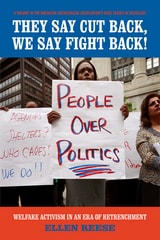
They Say Cutback, We Say Fight Back!
Welfare Activism in an Era of RetrenchmentEllen Reese
Russell Sage Foundation, 2012
Transforming a Business School
Entrepreneurial Leadership in an Era of DisruptionPorat, M. Moshe
Rutgers University Press, 2019

Transnational Ecocinema
Film Culture in an Era of Ecological TransformationEdited by Tommy Gustafsson and Pietari Kääpä
Intellect Books, 2013
Travel Behaviour Reconsidered in an Era of Decarbonisation
David Metz
University College London, 2024
Transport systems are central to daily life, but simultaneously have a salient impact on our environment. However, this perspective has little influence on conventional economic analysis and transport investments, creating dissonance between traditional investment goals and the need to reduce carbon emissions to net zero by 2050. For fifty years, public road and railway expenditures were justified by claims to improve travel time. On the contrary, the average time of travel never changed. Travel Behaviour Reconsidered in an Era of Decarbonisation argues that this outdated economic analysis is misconceived and that fresh perspectives on transport networks are imperative.