Results by title
527 books match the query 'Feminism & Feminist Theory' and 82 start with t

Taboo Memories, Diasporic Voices
Ella Shohat
Duke University Press, 2006
Shohat’s critical method boldly transcends disciplinary and geographical boundaries. She explores such issues as the relations between ethnic studies and area studies, the paradoxical repercussions for audio-visual media of the “graven images” taboo, the allegorization of race through the refiguring of Cleopatra, the allure of imperial popular culture, and the gender politics of medical technologies. She also examines the resistant poetics of exile and displacement; the staging of historical memory through the commemorations of the two 1492s, the anomalies of the “national” in Zionist discourse, the implications of the hyphen in the concept “Arab-Jew,” and the translation of the debates on orientalism and postcolonialism across geographies. Taboo Memories, Diasporic Voices not only illuminates many of the concerns that have animated the study of cultural politics over the past two decades; it also points toward new scholarly possibilities.

Tactical Inclusion
Difference and Vulnerability in U.S. Military AdvertisingJeremiah Favara
University of Illinois Press, 2024
Compelling and eye-opening, Tactical Inclusion combines original analysis with personal experience to chart advertising’s role in building the all-volunteer military.
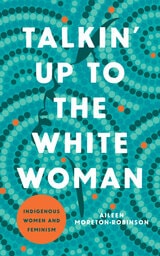
Talkin' Up to the White Woman
Indigenous Women and FeminismAileen Moreton-Robinson
University of Minnesota Press, 2021
A twentieth-anniversary edition of this tour de force in feminism and Indigenous studies, now with a new preface
The twentieth anniversary of the original publication of this influential and prescient work is commemorated with a new edition of Talkin’ Up to the White Woman by Aileen Moreton-Robinson. In this bold book, of its time and ahead of its time, whiteness is made visible in power relations, presenting a dialogic of how white feminists represent Indigenous women in discourse and how Indigenous women self-present.
Moreton-Robinson argues that white feminists benefit from colonization: they are overwhelmingly represented and disproportionately predominant, play the key roles, and constitute the norm, the ordinary, and the standard of womanhood. They do not self-present as white but rather represent themselves as variously classed, sexualized, aged, and abled. The disjuncture between representation and self-presentation of Indigenous women and white feminists illuminates different epistemologies and an incommensurability in the social construction of gender.
Not so much a study of white womanhood, Talkin’ Up to the White Woman instead reveals an invisible racialized subject position represented and deployed in power relations with Indigenous women. The subject position occupied by middle-class white women is embedded in material and discursive conditions that shape the nature of power relations between white feminists and Indigenous women—and the unjust structural relationship between white society and Indigenous society.

Tapestries of Life
Women's Work, Women's Consciousness, and the Meaning of Daily ExperienceBettina Aptheker
University of Massachusetts Press, 1989
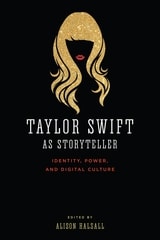
Taylor Swift as Storyteller
Identity, Power, and Digital CultureEdited by Alison Halsall
The Ohio State University Press, 2027
Taylor Swift as Storyteller examines one of the most influential cultural figures of the twenty-first century as both artist and “star text,” arguing that Swift’s global impact is shaped through the dynamic interplay of music, media, fandom, and branding. Bringing together literary scholars, ethnographers, and musicologists, this collection positions Swift as not just a pop figure but a transmedial construct.
Contributors explore how Swift’s carefully curated personae—from girl-next-door to feminist icon to “tortured poet”—generate powerful affective connections with audiences while also functioning as strategic marketing tools. At the same time, contributors retheorize authorship and control in the digital age. By foregrounding the roles of management, branding, and platform circulation, and by interrogating the participatory roles of Swifties as cocreators of meaning, Taylor Swift as Storyteller complicates the idea of singular authorship. Attending to questions of feminism, authorship, nostalgia, and literary adaptation, this collection ultimately reveals how Swift’s enterprise both reflects and reshapes contemporary media culture, illuminating the complex relationship between narrative, identity, and power in the digital age.
Contributors:
Natalie Abbott, Alexander Carpenter, Zixiao Chen, Katie E. Cline, Jennifer Duggan, Rachel M. Friars, Andrea LeMahieu Glaws, Wendy J. Glenn, Alison Halsall, Roxanne Harde, Juliette Holder, Erika Kvistad, Zhimou Li, Sarah E. Maier, Catherine McCarthy, Elly McCausland, Laura Carman McClintock, Adrianna Mirabal, Linh S. Nguy?n, Hazel O’Brien, Anah-Jayne Samuelson, L. M. Schmidt, Katlin Marisol Sweeney-Romero
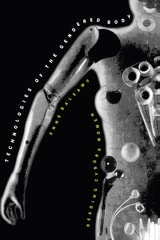
Technologies of the Gendered Body
Reading Cyborg WomenAnne Balsamo
Duke University Press, 1996
Technologies of the Gendered Body combines close readings of popular texts—such as Margaret Atwood’s novel The Handmaid’s Tale, the movie Pumping Iron II: The Women, cyberpunk magazines, and mass media—with analyses of medical literature, public policy documents, and specific technological practices. Balsamo describes the ways in which certain biotechnologies are ideologically shaped by gender considerations and other beliefs about race, physical abilities, and economic and legal status. She presents a view of the conceptual system that structures individuals’ access to and participation in these technologies, as well as an overview of individuals’ rights and responsibilities in this sometimes baffling area. Examining the ways in which the body is gendered in its interactions with new technologies of corporeality, Technologies of the Gendered Body counters the claim that in our scientific culture the material body has become obsolete. With ample evidence that the techno-body is always gendered and marked by race, this book sets the stage for a renewed feminist engagement with contemporary technological narratives.

Teenage Dreams
Girlhood Sexualities in the U.S. Culture WarsCharlie Jeffries
Rutgers University Press, 2022
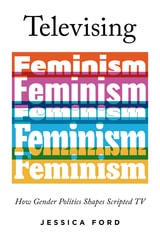
Televising Feminism
How Gender Politics Shapes Scripted TVJessica Ford
University of Illinois Press, 2026
Jessica Ford examines popular media’s tendency to apply the feminist label to all women-centric TV. Focusing on the post-Sex and the City era that began in 2005, Ford explores how women-centric scripted TV absorbed the feminisms of its past. It now televises these feminisms in divergent, diffuse, and distinct ways that find expression as a sensibility rather than a cogent politic, genre, or category. Ford’s analysis examines shows identified as feminist alongside programs that negotiate ideas, offer critiques, generate feelings and sentiments, and deploy aesthetics in both low-key and visible political ways.
Innovative and insightful, Televising Feminism looks at the construction and expression of the many feminisms at work on American scripted television.
Telling to Live
Latina Feminist TestimoniosLatina Feminist Group
Duke University Press, 2001
The complex and rich tapestry of narratives that comprises this book introduces us to an intergenerational group of Latina women who negotiate their place in U.S. society at the cusp of the twenty-first century. These are the stories of women who struggled to reach the echelons of higher education, often against great odds, and constructed relationships of sustenance and creativity along the way. The stories, poetry, memoirs, and reflections of this diverse group of Puerto Rican, Chicana, Native American, Mexican, Cuban, Dominican, Sephardic, mixed-heritage, and Central American women provide new perspectives on feminist theorizing, perspectives located in the borderlands of Latino cultures.
This often heart wrenching, sometimes playful, yet always insightful collection will interest those who wish to understand the challenges U.S. society poses for women of complex cultural heritages who strive to carve out their own spaces in the ivory tower.
Contributors. Luz del Alba Acevedo, Norma Alarcón, Celia Alvarez, Ruth Behar, Rina Benmayor, Norma E. Cantú, Daisy Cocco De Filippis, Gloria Holguín Cuádraz, Liza Fiol-Matta, Yvette Flores-Ortiz, Inés Hernández-Avila, Aurora Levins Morales, Clara Lomas, Iris Ofelia López, Mirtha N. Quintanales, Eliana Rivero, Caridad Souza, Patricia Zavella

Tendings
Feminist Esoterisms and the Abolition of ManNathan Snaza
Duke University Press, 2024
Terrorist Assemblages
Homonationalism in Queer TimesJasbir K. Puar
Duke University Press, 2007
Puar combines transnational feminist and queer theory, Foucauldian biopolitics, Deleuzian philosophy, and technoscience criticism, and draws from an extraordinary range of sources, including governmental texts, legal decisions, films, television, ethnographic data, queer media, and activist organizing materials and manifestos. Looking at various cultural events and phenomena, she highlights troublesome links between terrorism and sexuality: in feminist and queer responses to the Abu Ghraib photographs, in the triumphal responses to the Supreme Court’s Lawrence decision repealing anti-sodomy laws, in the measures Sikh Americans and South Asian diasporic queers take to avoid being profiled as terrorists, and in what Puar argues is a growing Islamophobia within global queer organizing.
Terrorist Assemblages
Homonationalism in Queer TimesJasbir K. Puar
Duke University Press, 2017
Ten years on, Jasbir K. Puar’s pathbreaking Terrorist Assemblages remains one of the most influential queer theory texts and continues to reverberate across multiple political landscapes, activist projects, and scholarly pursuits. Puar argues that configurations of sexuality, race, gender, nation, class, and ethnicity are realigning in relation to contemporary forces of securitization, counterterrorism, and nationalism. She examines how liberal politics incorporate certain queer subjects into the fold of the nation-state, shifting queers from their construction as figures of death to subjects tied to ideas of life and productivity. This tenuous inclusion of some queer subjects depends, however, on the production of populations of Orientalized terrorist bodies. Heteronormative ideologies that the U.S. nation-state has long relied on are now accompanied by what Puar calls homonationalism—a fusing of homosexuality to U.S. pro-war, pro-imperialist agendas.
As a concept and tool of biopolitical management, homonationalism is here to stay. Puar’s incisive analyses of feminist and queer responses to the Abu Ghraib photographs, the decriminalization of sodomy in the wake of the Patriot Act, and the profiling of Sikh Americans and South Asian diasporic queers are not instances of a particular historical moment; rather, they are reflective of the dynamics saturating power, sexuality, race, and politics today.
This Tenth Anniversary Expanded Edition features a new foreword by Tavia Nyong’o and a postscript by Puar entitled “Homonationalism in Trump Times.” Nyong’o and Puar recontextualize the book in light of the current political moment while reposing its original questions to illuminate how Puar’s interventions are even more vital and necessary than ever.
Texts and Contexts from the History of Feminism and Women’s Rights
East Central Europe, Second Half of the Twentieth CenturyZsofia Lorand
Central European University Press, 2024
A compendium of one hundred sources, preceded by a short author’s bio and an introduction, this volume offers an English language selection of the most representative texts on feminism and women’s rights from East Central Europe between the end of the Second World War and the early 1990s. While communist era is the primary focus, the interwar years and the post-1989 transition period also receive attention. All texts are new translations from the original.
The book is organised around themes instead of countries; the similarities and differences between nations are nevertheless pointed out. The editors consider women not only in their local context, but also in conjunction with other systems of thought—including shared agendas with socialism, liberalism, nationalism, and even eugenics.
The choice of texts seeks to demonstrate how feminism as political thought was shaped and organised in the region. They vary in type and format from political treatises, philosophy to literary works, even films and the visual arts, with the necessary inclusion of the personal and the private. Women’s political rights, right to education, their role in nation-building, women, and war (and especially women and peace) are part of the anthology, alongside the gendered division of labour, violence against women, the body, and reproduction.

The Affect Theory Reader
Melissa Gregg and Gregory J. Seigworth, eds.
Duke University Press, 2010
Contributors. Sara Ahmed, Ben Anderson, Lauren Berlant, Lone Bertelsen, Steven D. Brown, Patricia Ticineto Clough, Anna Gibbs,Melissa Gregg, Lawrence Grossberg, Ben Highmore, Brian Massumi, Andrew Murphie, Elspeth Probyn, Gregory J. Seigworth, Kathleen Stewart, Nigel Thrift, Ian Tucker, Megan Watkins

The Affect Theory Reader 2
Worldings, Tensions, FuturesGregory J. Seigworth and Carolyn Pedwell, editors
Duke University Press, 2023
Contributors. Lauren Berlant, Lisa Blackman, Rizvana Bradley, Ann Cvetkovich, Ezekiel J. Dixon-Román, Adam J. Frank, M. Gail Hamner, Omar Kasmani, Cecilia Macón, Hil Malatino, Erin Manning, Derek P. McCormack, Patrick Nickleson, Susanna Paasonen, Tyrone S. Palmer, Carolyn Pedwell, Jasbir K. Puar, Jason Read, Michael Richardson, Dylan Robinson, Tony D. Sampson, Kyla Schuller, Gregory J. Seigworth, Nathan Snaza, Kathleen Stewart, Elizabeth A. Wilson

The Afterlife of Reproductive Slavery
Biocapitalism and Black Feminism’s Philosophy of HistoryAlys Eve Weinbaum
Duke University Press, 2019

The Anzaldúan Theory Handbook
AnaLouise Keating
Duke University Press, 2022
The Archival Turn in Feminism
Outrage in OrderKate Eichhorn
Temple University Press, 2014
A volume in the American Literatures Initiative

The Art of Memes in Feminist Digital Culture
Shana MacDonald
The Ohio State University Press, 2025
In The Art of Memes in Feminist Digital Culture, Shana MacDonald argues that memes are a unique medium of communication that both respond to and reflect the current cultural moment. The book—the first to treat memes as a unique medium of communication distinct from other internet and digital media—examines feminist and queer activist uses of memes as a form of digital resistance, demonstrating through collage, reenactment, and montage that countercultural meme makers intervene in the status quo and offer cultural critiques with potentially broad circulation. In this way, MacDonald situates memes as part of a lineage of aesthetic resistance, exploring the operational logic of bricolage, intertextuality, and intermediality within contemporary internet meme cultures on the left.
MacDonald examines memes from feminist, queer, antiracist, and anticapitalist accounts on Instagram, as well as how meme genres and themes shift when they travel across different platforms and subcultures. By considering memes as a medium, she sheds light on how they operate within contemporary digital culture as a beacon for online public discourse that pushes against dominant norms.
The Biopolitics of Feeling
Race, Sex, and Science in the Nineteenth CenturyKyla Schuller
Duke University Press, 2018
The Black Reproductive
Unfree Labor and Insurgent MotherhoodSara Clarke Kaplan
University of Minnesota Press, 2021
How Black women’s reproduction became integral to white supremacy, capitalism, and heteropatriarchy—and remains key to their dismantling
In the United States, slavery relied on the reproduction and other labors of unfree Black women. Nearly four centuries later, Black reproductivity remains a vital technology for the creation, negotiation, and transformation of sexualized and gendered racial categories. Yet even as Black reproduction has been deployed to resolve the conflicting demands of white supremacy, capitalism, and heteropatriarchy, Sara Clarke Kaplan argues that it also holds the potential to destabilize the oppressive systems it is supposed to maintain.
The Black Reproductive convenes Black literary and cultural studies with feminist and queer theory to read twentieth- and twenty-first-century texts and images alongside their pre-emancipation counterparts. These provocative, unexpected couplings include how Toni Morrison’s depiction of infanticide regenders Orlando Patterson’s theory of social death, and how Mary Prince’s eighteenth-century fugitive slave narrative is resignified through the representational paradoxes of Gayl Jones’s blues novel Corregidora. Throughout, Kaplan offers new perspectives on Black motherhood and gendered labor, from debates over the relationship between President Thomas Jefferson and Sally Hemings, to the demise of racist icon Aunt Jemima, to discussions of Black reproductive freedom and abortion.
The Black Reproductive gives vital insight into the historic and ongoing conditions of Black unfreedom, and points to the possibilities for a Black feminist practice of individual and collective freedom.

The Body of War
Media, Ethnicity, and Gender in the Break-up of YugoslaviaDubravka Zarkov
Duke University Press, 2007
Tracing the links between the war and press representations of ethnicity, gender, and sexuality, Žarkov examines the media’s coverage of two major protests by women who explicitly identified themselves as mothers, of sexual violence against women and men during the war, and of women as militants. She draws on contemporary feminist analyses of violence to scrutinize international and local feminist writings on the war in former Yugoslavia. Demonstrating that some of the same essentialist ideas of gender and sexuality used to produce and reinforce the significance of ethnic differences during the war often have been invoked by feminists, she points out the political and theoretical drawbacks to grounding feminist strategies against violence in ideas of female victimhood.
The Brain's Body
Neuroscience and Corporeal PoliticsVictoria Pitts-Taylor
Duke University Press, 2016
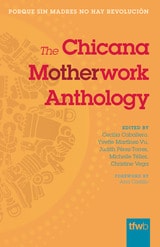
The Chicana Motherwork Anthology
Edited by Cecilia Caballero, Yvette Martínez-Vu, Judith Pérez-Torres, Michelle Téllez, Christine Vega; Foreword by Ana Castillo
University of Arizona Press, 2019
The volume is organized in four parts: (1) separation, migration, state violence, and detention; (2) Chicana/Latina/WOC mother-activists; (3) intergenerational mothering; and (4) loss, reproductive justice, and holistic pregnancy. Contributors offer a just framework for Chicana and Women of Color mother-scholars, activists, and allies to thrive within and outside of the academy. They describe a new interpretation of motherwork that addresses the layers of care work needed for collective resistance to structural oppression and inequality.
This anthology is a call to action for justice. Contributions are both theoretical and epistemological, and they offer an understanding of motherwork through Chicana and Women of Color experiences.
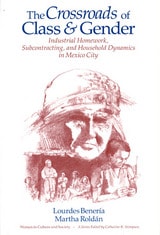
The Crossroads of Class and Gender
Industrial Homework, Subcontracting, and Household Dynamics in Mexico CityLourdes Benería and Martha Roldán
University of Chicago Press, 1987
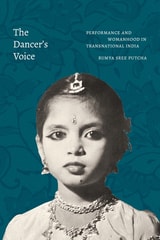
The Dancer's Voice
Performance and Womanhood in Transnational IndiaRumya Sree Putcha
Duke University Press, 2023
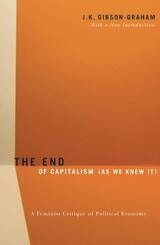
The End Of Capitalism (As We Knew It)
A Feminist Critique of Political EconomyJ. K. Gibson-Graham
University of Minnesota Press, 2006
“Paralyzing problems are banished by this dazzlingly lucid, creative, and practical rethinking of class and economic transformation.” —Meaghan Morris, Lingnan University, Hong Kong
“Profoundly imaginative.” —Eve Kosofsky Sedgwick, City University of New York “Filled with insights, it is clearly written and well supported with good examples of actual, deconstructive practices.” —International Journal of Urban and Regional Research
J. K. Gibson-Graham is the pen name of Katherine Gibson and Julie Graham, feminist economic geographers who work, respectively, at the Australian National University in Canberra and the University of Massachusetts Amherst.

The End of Man
A Feminist CounterapocalypseJoanna Zylinska
University of Minnesota Press, 2018
Debugging the Anthropocene’s insistence on apocalyptic tropes
Where the Anthropocene has become linked to an apocalyptic narrative, and where this narrative carries a widespread escapist belief that salvation will come from a supernatural elsewhere, Joanna Zylinska has a different take. The End of Man rethinks the prophecy of the end of humans, interrogating the rise in populism around the world and offering an ethical vision of a “feminist counterapocalypse,” which challenges many of the masculinist and technicist solutions to our planetary crises. The book is accompanied by a short photo-film, Exit Man, which ultimately asks: If unbridled progress is no longer an option, what kinds of coexistences and collaborations do we create in its aftermath?
Forerunners: Ideas First is a thought-in-process series of breakthrough digital publications. Written between fresh ideas and finished books, Forerunners draws on scholarly work initiated in notable blogs, social media, conference plenaries, journal articles, and the synergy of academic exchange. This is gray literature publishing: where intense thinking, change, and speculation take place in scholarship.

The Erotic Life of Racism
Sharon Patricia Holland
Duke University Press, 2012
Reemphasizing the black/white binary, Holland reinvigorates critical engagement with race and racism. She argues that only by bringing critical race theory, queer theory, and black feminist thought into conversation with each other can we fully envision the relationship between racism and the personal and political dimensions of our desire. The Erotic Life of Racism provocatively redirects our attention to a desire no longer independent of racism but rather embedded within it.

The Essential Lectures of Charlotte Perkins Gilman, 1890–1894
Charlotte Perkins Gilman Edited and with an introduction by Andrew J. Ball
University of Alabama Press, 2024
A foundational archive of Gilman’s early feminist, sociological, and philosophical thought, revealing the origins of a major American intellectual tradition.
The last decades have seen a resurgence of interest in Charlotte Perkins Gilman, now considered among the most important thinkers in US history. She is best known for fiction—such as the classic short story “The Yellow Wall-Paper” (1892)—and nonfiction, including her manifesto Women and Economics (1898), a work of intersectional sociology avant la lettre. Nevertheless, as a young writer, Gilman made her living delivering lectures. One cannot know Gilman without some knowledge of this body of lectures; this book fills that critical gap in Gilman scholarship.
Since the recovery of Charlotte Perkins Gilman began in the late 1960s and continued with the republication of “The Yellow Wall-Paper” in the 1970s, her image in cultural memory has been increasingly celebrated. Andrew J. Ball presents here fifty previously unpublished texts. They trace the development of Gilman’s thoughts on diverse subjects like gender, education, labor, science, theology, and politics—forming an intellectual diary of her growth.
These lectures are not just a testament to Gilman’s personal evolution, but also a crucial contribution to the foundations of American sociology and philosophy. The Essential Lectures of Charlotte Perkins Gilman, 1890–1894 marks a historic moment, unveiling the hidden genius of Gilman's oratory legacy.

The Exciting Life of Being a Woman
Amelia Lee
Intellect Books, 2012

The Fantasy of Feminist History
Joan Wallach Scott
Duke University Press, 2012
The Feminism of Uncertainty
A Gender DiaryAnn Snitow
Duke University Press, 2015

The Feminist Avant-Garde In American Poetry
Elisabeth A. Frost
University of Iowa Press, 2005
The Feminist Avant-Garde in American Poetry offers a historical and theoretical account of avant-garde women poets in America from the 1910s through the 1990s and asserts an alternative tradition to the predominantly male-dominated avant-garde movements. Elisabeth Frost argues that this alternative lineage distinguishes itself by its feminism and its ambivalence toward existing avant-garde projects; she also thoroughly explores feminist avant-garde poets' debts and contributions to their male counterparts.

The Feminist Spectator as Critic
Jill Dolan
University of Michigan Press, 2012
The Feminist Spectator as Criticbroke new ground as one of the pioneering books on feminist spectatorship, encouraging resistant readings to generate feminist meanings in performance. Approaching live spectatorship through a range of interdisciplinary methods, the book has been foundational in theater studies, performance studies, and gender/sexuality/women's studies. This updated and enlarged second edition celebrates the book's twenty-fifth anniversary with a substantial new introduction and up-to-the-moment bibliography, detailing the progress to date in gender equity in theater and the arts, and suggesting how far we have yet to go.
The Impossible Woman
Television, Feminism, and the FutureKristen Hoerl
Rutgers University Press, 2026
The Insubordination of Signs
Political Change, Cultural Transformation, and Poetics of the CrisisNelly Richard
Duke University Press, 2004
In The Insubordination of Signs Richard theorizes the cultural reactions—particularly within the realms of visual arts, literature, and the social sciences—to the oppression of the Chilean dictatorship. She reflects on the role of memory in the historical shadow of the military regime and on the strategies offered by marginal discourses for critiquing institutional systems of power. She considers the importance of Walter Benjamin for the theoretical self-understanding of the Latin American intellectual left, and she offers revisionary interpretations of the Chilean neo-avantgarde in terms of its relationships with the traditional left and postmodernism. Exploring the gap between Chile’s new left social sciences and its “new scene” aesthetic and critical practices, Richard discusses how, with the return of democracy, the energies that had set in motion the democratizing process seemed to exhaust themselves as cultural debate was attenuated in order to reduce any risk of a return to authoritarianism.
The Keloids We Heal
Trauma, Spirituality, and Black Modernity in LiteratureSarah Soanirina Ohmer
University of Illinois Press, 2025
Women of colors and a literature written in corporeal and spiritual scars
The corporeal and spiritual healing in literature by women of colors can be seen to redefine modern thought and printed text. Sarah Soanirina Ohmer traces the impact of colonization and enslavement on Black women and Black women’s contributions to colonial, nineteenth, and twentieth century literature in the US, Brazil, and the Caribbean.
Drawing on intersectional analysis, Ohmer focuses on portrayals of trauma and spirituality in works by Toni Morrison, Conceição Evaristo, Maryse Condé, Gloria Anzaldúa, the Quilombhoje poets, and María de los Reyes Castillo. Ohmer compares literature from different countries along four thematic pathways: ghosts, mirrors, naming, and motherhood. Her analysis unlocks the literature’s power to heal through gut-wrenching descriptions of wounds and thrilling passages of hope and liberation. Throughout, Ohmer weaves in her life story as a Black woman as she reflects on how colonialism, racism, sexism, and capitalism have impacted her work, traumas, and faith journey.

The Kurdish Women’s Movement
History, Theory, PracticeDilar Dirik
Pluto Press, 2021
'One the foremost writers and participants in the Kurdish women's movement' - Harsha Walia
The Kurdish women's movement is at the heart of the most exciting revolutionary experiment in the world today: Rojava. Forged over decades of struggle, most recently in the fight against ISIS, Rojava embodies a radical commitment to ecology, democracy and gender equality. But while striking images of Kurdish women in desert fatigues proliferate, a true understanding of the women's movement remains elusive.
Taking apart the superficial and Orientalist frameworks that dominate, Dilar Dirik offers instead an empirically rich account of the women's movement in Kurdistan. Drawing on original research and ethnographic fieldwork, she surveys the movement's historical origins, ideological evolution, and political practice over the past forty years. Going beyond abstract ideas, Dirik locates the movement's culture and ideology in its concrete work for women's liberation and radical democracy.
Taking the reader from the guerrilla camps in the mountains to radical women's academies and self-organized refugee camps, the book invites readers around the world to engage with the revolution in Kurdistan, both theoretically and practically, as a vital touchstone in the wider struggle for a militant anti-fascist, anti-capitalist feminist internationalism.

The Matrixial Borderspace
Bracha Ettinger
University of Minnesota Press, 2006
Concerned with collective trauma and memory, Ettinger’s own experience as an Israeli living with the memory of the Holocaust is a deep source of inspiration for her paintings, several of which are reproduced in the book. The paintings, like the essays, replay the relation between the visible and invisible, the sayable and ineffable; the gaze, the subject, and the other.
Bracha Ettinger is a painter and a senior clinical psychologist. She is professor of psychoanalysis and aesthetics at the University of Leeds, England, and Bezalel Academy, Jerusalem.
Judith Butler is professor of rhetoric and comparative literature at the University of California, Berkeley. Griselda Pollock is professor of fine arts at the University of Leeds. Brian Massumi is professor of communication at the University of Montreal.
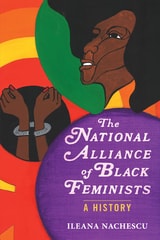
The National Alliance of Black Feminists
A HistoryIleana Nachescu
University of Illinois Press, 2025
Ileana Nachescu places the NABF’s history as the bridge between Black women’s social activism in the 1970s and the intellectual activism of the 1980s. Her account details the NABF’s work and how it reflected the group’s strong humanist belief in the transformation of all human beings. Nachescu also shows that the NABF’s post-Eighties erasure from movement histories is consistent with how many white feminists marginalized women of color and rejected their leadership. From there, Nachescu examines Black lesbians’ vibrant support of the NABF and shows how respectability politics pressured the group to support its lesbian membership in private but maintain a public silence on the issue.
A rare in-depth look at an overlooked organization, The National Alliance of Black Feminists tells an untold story of Black women’s liberation in the Midwest.
The Neoliberal Self in Bollywood
Cinema, Popular Culture, and IdentityNamrata Rele Sathe
Intellect Books, 2025
The neoliberal self, far from being a stable marker of urban, liberal, millennial Indian identity, is replete with contradictions and oppositions. This study of the unstable neoliberal identity lays bare the sense of precarity and inherent inequality that neoliberal regimes confer upon their subjects.
This analysis draws upon theories of feminist media studies, popular culture analyses, and film studies to critique mainstream Hindi cinema texts produced in the last two decades. Rele Sathe also examines a variety of peripheral subjects and texts, including the film star, the urban space, web series, YouTube videos, and social media content.
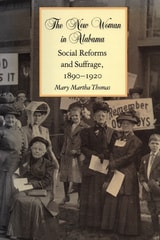
The New Woman in Alabama
Social Reforms and Suffrage, 1890–1920Mary Martha Thomas
University of Alabama Press, 1992
How Alabama women reshaped public life during the Progressive Era.
Between 1890 and 1920, middle-class white and black Alabama women created many clubs and organizations that took them out of the home and provided them with roles in the public sphere. Beginning with the Alabama Woman’s Christian Temperance Union in the 1880s and followed by the Alabama Federation of Women’s Clubs and the Alabama Federation of Colored Women’s Clubs in the 1890s, women spearheaded the drive to eliminate child labor, worked to improve the educational system, upgraded the jails and prisons, and created reform schools for both boys and girls.
Suffrage was also an item on the Progressive agenda. After a brief surge of activity during the 1890s, the suffrage drive lay dormant until 1912, when women created the Alabama Equal Suffrage Association. During their campaigns in the 1915 and 1919 to persuade the legislature to enfranchise women, the leaders learned the art of politics—how to educate, organize, lobby, and count votes. Women seeking validation for their roles as homemakers and mother demanded a hearing in the political arena for issues that affected them and their families. In the process they began to erase the line between the public world of men and the private world of women. These were the New Women who tackled the problems created by the industrialization and urbanization of the New South. By 1920 Alabama women had created new public spaces for themselves in these voluntary associations. As a consequence of their involvement in reform crusades, the women’s club movement, and the campaign for woman suffrage, women were no longer passive and dependent. They were willing and able to be rightful participants.
Thomas’s book is the first of its kind to focus on the reform activities of women during the Progressive Era, and the first to consider the southern woman and all the organizations of middle-class black and white women in the South and particularly in Alabama. It is also the first to explore the drive of Alabama women to obtain the vote. The development of political power among southern women progressed slowly. Demolishing as it did the myth of the “Southern Lady.” Traditionally confined to the domestic sphere, southern women had no experience in public decision making and were discouraged from attaining the skills necessary for participation in public debate. The division of women by race and class further impeded their political education. But through their participation in so-called women’s issues—child labor laws, temperance, and educational reform—women gained experience in influencing political leaders. Black and white women’s clubs provided the framework for state-wide lobbying.
Only in the wake of their success with domestic issues tackled through club organizations and temperance unions did women dare seek the right to vote. They learned how to wield political power through acceptable “ladylike” avenues, and it was this experience that led to their long but eventually successful drive for woman suffrage. The New Woman eventually found a way to replace the Southern Lady.

The Perils of Populism
Sarah Tobias
Rutgers University Press, 2022
The Perils of Populism shows how a feminist lens can help diagnose the factors behind the global rise of right-wing populism and teach us how to resist the threat it presents to democracy. Featuring interdisciplinary essays about politics in the United States, the Middle East, Europe, and India from a variety of acclaimed theorists and activists, the volume contributes to a rapidly expanding literature on gender and the far right. Together, these chapters offer a truly intersectional analysis of the problem, addressing everything from how populism has thrived in a “post-truth” era to the ways it appeals to working-class voters looking for an alternative to neoliberalism. Yet the authors also find reasons to be hopeful, as they showcase forms of grassroots feminist activism that challenge right-wing populism by advocating for racial and economic justice.

The Play in the System
The Art of Parasitical ResistanceAnna Watkins Fisher
Duke University Press, 2020

The Price of Safety
Hidden Costs and Unintended Consequences for Women in the Domestic Violence Service SystemSara Shoener
Vanderbilt University Press, 2017
Through detailed observations of services such as court procedures, public benefits processes, and community-based IPV programs as well as in-depth interviews with dozens of IPV survivors and practitioners, Shoener describes how our current institutional response to IPV is often not useful--and sometimes quite harmful--for IPV survivors with the least material, social, and cultural capital to spare. For these women, as the interviews vividly record, IPV has long-term economic and social consequences, disrupting career paths and creating social isolation.
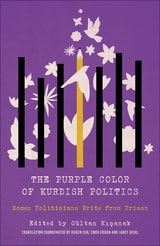
The Purple Color of Kurdish Politics
Women Politicians Write from PrisonGultan Kisanak
Pluto Press, 2022
Prison writings from twenty-two Kurdish women who were elected to office in Turkey and then imprisoned by the state on political grounds.
Gültan Kışanak, a Kurdish journalist and former MP, was elected co-mayor of Diyarbakır in 2014. Two years later, the Turkish state arrested and imprisoned her. Her story is remarkable, but not unique. While behind bars, she wrote about her own experiences and collected similar accounts from other Kurdish women, all co-chairs, co-mayors, and MPs in Turkey; all incarcerated on political grounds.
The Purple Colour of Kurdish Politics is a one-of-a-kind collection of prison writings from twenty-two Kurdish women politicians. Here they reflect on their personal and collective struggles against patriarchy and anti-Kurdish repression in Turkey; on the radical feminist principles and practices through which they transformed the political structures and state offices in which they operated. They discuss what worked and what didn’t, and the ways in which Turkey’s anti-capitalist and socialist movements closely informed their political stances and practices.
Demonstrating Kurdish women’s ceaseless political determination and refusal to be silenced – even when behind bars – the book ultimately hopes to inspire women living under even the most unjust conditions to engage in collective resistance.
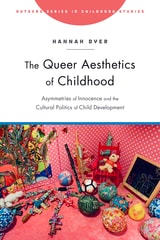
The Queer Aesthetics of Childhood
Asymmetries of Innocence and the Cultural Politics of Child DevelopmentHannah Dyer
Rutgers University Press, 2020
In The Queer Aesthetics of Childhood, Hannah Dyer offers a study of how children’s art and art about childhood can forecast new models of social life that redistribute care, belonging, and political value. Dyer suggests that childhood’s cultural expressions offer insight into the persisting residues of colonial history, nation building, homophobia, and related violence. Drawing from queer and feminist theory, psychoanalysis, settler-colonial studies, and cultural studies, this book helps to explain how some theories of childhood can hurt children. Dyer’s analysis moves between diverse sites and scales, including photographs and an art installation, children’s drawings after experiencing war in Gaza, a novel about gay love and childhood trauma, and debates in sex-education. In the cultural formations of art, she finds new theories of childhood that attend to the knowledge, trauma, fortitude and experience that children might possess. In addressing aggressions against children, ambivalences towards child protection, and the vital contributions children make to transnational politics, she seeks new and queer theories of childhood.
The Question of Women in Chinese Feminism
Tani E. Barlow
Duke University Press, 2004

The Quiet Zone
Caribbean Expressive Cultures and the Feminist Aesthetics of DisturbancePetal Kimberly Samuel
Rutgers University Press, 2026